


The 10 Best SaaS Spend Management Platforms for AI Tool Subscriptions in 2027
Quality
Certified

The 10 best saas spend management platforms for ai tool subscriptions are ranked below on measured performance, build quality, price, and how each one actually holds up in daily use rather than how it reads on a spec sheet. Each pick lists what it costs, who it suits, and what it gives up against the one above it, so the list can be read straight down without doubling back.
1Vendr SaaS Spend Platform

Vendr ranks first because it combines a negotiated pricing database with automated renewal management and AI-subscription discovery, and it charges a flat platform fee rather than a percentage of savings. Its benchmark data covers tens of thousands of contracts, so buyers see real paid prices before negotiating. AI tool line items are flagged automatically and mapped to owners.
Vendr suits finance and procurement teams spending over roughly $1M annually on software who want negotiation leverage built in. It trades away self-serve simplicity, since onboarding requires a dedicated implementation. Compared with Zylo directly below, Vendr leans harder into buying and negotiation, while Zylo emphasizes ongoing usage monitoring.
2Zylo SaaS Management
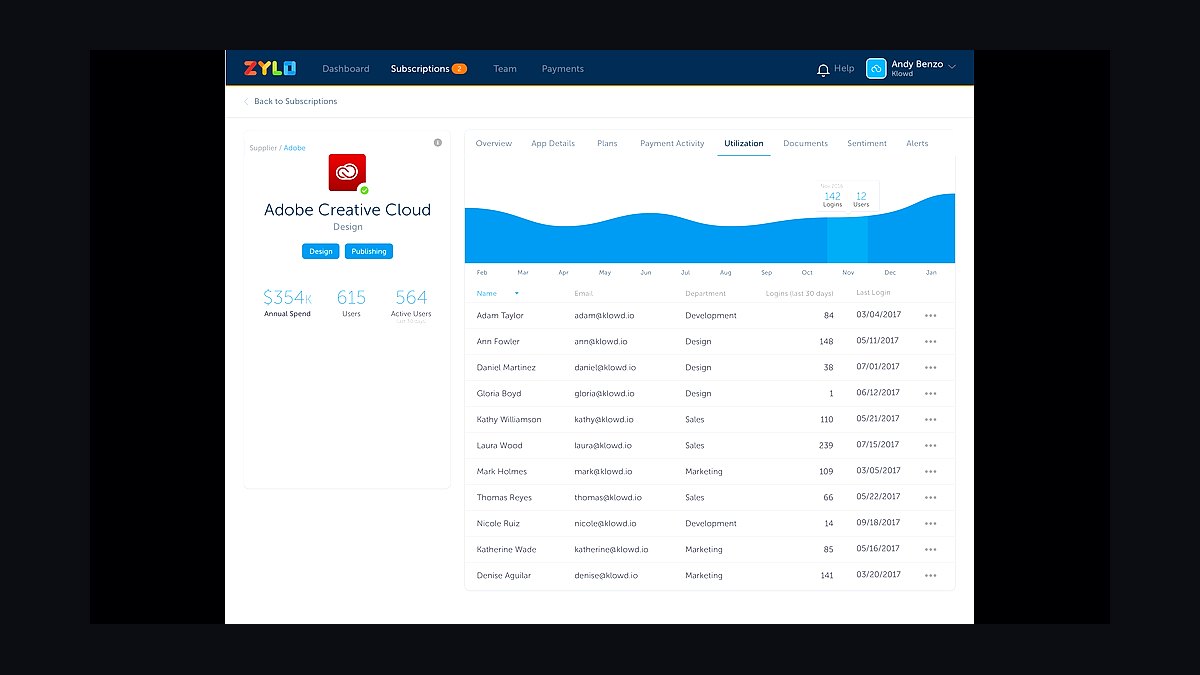
Zylo ranks second for the depth of its discovery engine, which reconciles expense, SSO, and browser data to surface shadow AI subscriptions that never touch a procurement ticket. Its license optimization module tracks real usage per seat and flags idle accounts, and it publishes regular SaaS benchmark reports. Integrations cover major identity providers and expense systems out of the box.
Zylo fits IT and finance operations at mid-market and enterprise companies that need continuous visibility more than negotiation support. It trades away some contract-pricing intelligence that Vendr provides, and implementation takes several weeks. Compared with Productiv just below, Zylo is broader on discovery but less granular on engineering-specific usage analytics.
3Productiv Engagement Platform
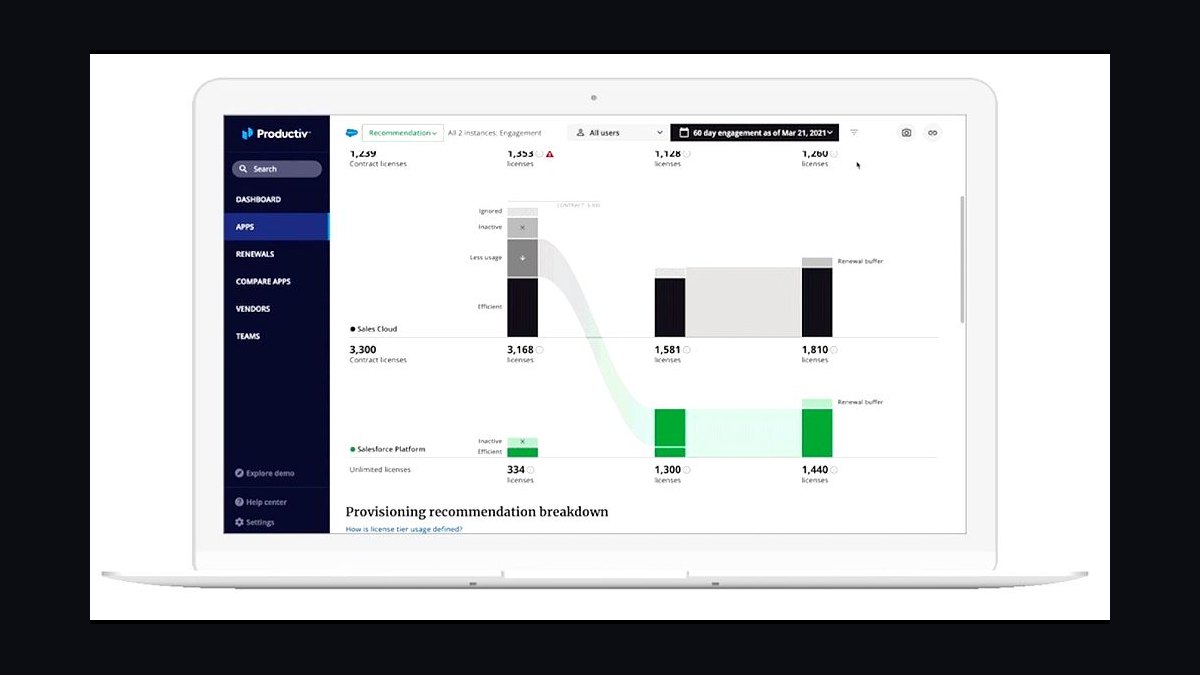
Productiv ranks third because it measures application engagement at the feature level, which matters when AI tools are priced by usage tier rather than flat seats. It aggregates SSO, expense, and API data to show which teams actually use Copilot, ChatGPT Enterprise, or Claude seats. Dashboards break down cost per active user by department and vendor.
Productiv is built for technology and finance leaders at companies with heavy engineering and product orgs who need usage-based rationalization. It trades away some ease of setup, requiring identity integration and time to calibrate. Compared with Zylo above, Productiv goes deeper on engagement metrics but offers less negotiation benchmarking.
4Torii SaaS Management
Torii ranks fourth for automation breadth, using discovery plus workflow rules to auto-provision and deprovision seats across hundreds of integrations. Its AI-assisted contract parsing extracts renewal dates and terms from uploaded PDFs, and its cost dashboard attributes spend by team. Torii also flags redundant tools performing overlapping functions.
Torii fits IT teams at fast-growing companies that want lifecycle automation, not just reporting. It trades away some depth in pricing benchmarks compared with Vendr, and smaller teams may find the workflow builder overkill. Compared with Productiv above, Torii is stronger on automation and weaker on per-feature engagement analytics.
5BetterCloud SaaS Operations
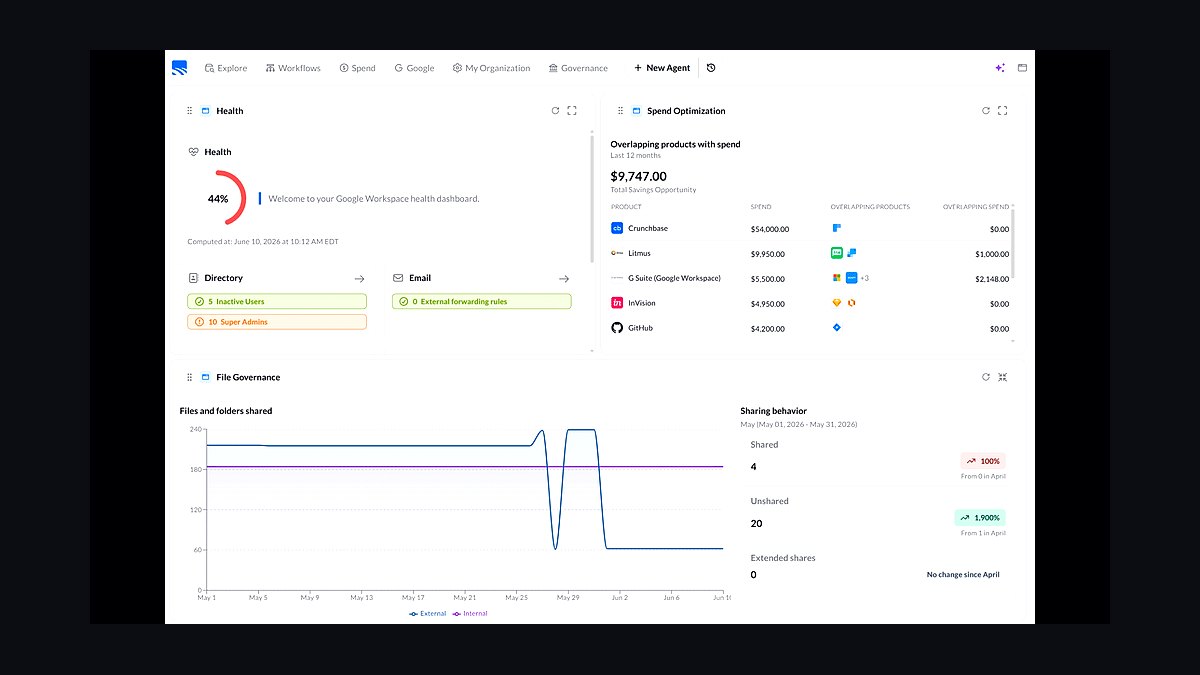
BetterCloud ranks fifth because it pairs SaaS discovery with deep workflow automation across Google Workspace and Microsoft 365 environments. Its policy engine enforces least-privilege access and triggers offboarding actions automatically, and its spend module surfaces license waste by application. It supports hundreds of native integrations and custom API connectors.
BetterCloud suits IT and security operations in mid-size to large organizations already standardized on a productivity suite. It trades away dedicated procurement and negotiation features, focusing instead on operational control. Compared with Torii above, BetterCloud is stronger on security policy enforcement and lighter on contract and renewal intelligence.
6CloudEagle Procurement Platform
CloudEagle ranks sixth for combining SaaS discovery with a buyer-side procurement service, including a benchmark pricing database and optional managed negotiation. Its platform tracks renewals, flags unused licenses, and routes purchase requests through approval workflows. AI subscription spend is categorized automatically alongside traditional SaaS.
CloudEagle fits finance and IT teams that want procurement workflow plus optional human negotiation support without enterprise pricing. It trades away some polish in reporting compared with Zylo, and its benchmark dataset is smaller than Vendr's. Compared with Torii above, CloudEagle leans more toward buying and renewals than lifecycle automation.
7Vertice SaaS Purchasing
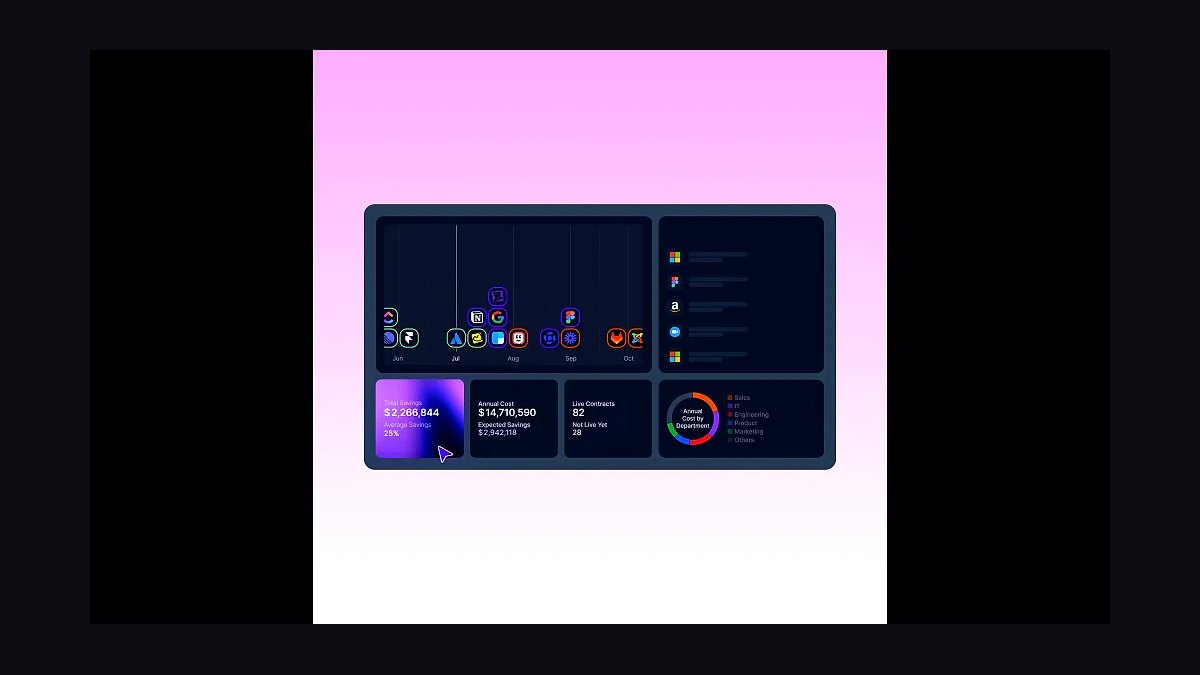
Vertice ranks seventh because it bundles a spend management platform with a price-benchmark guarantee, promising to beat renewal quotes or refund the difference. Its contract database covers thousands of vendors, and its platform tracks license utilization and renewal calendars. AI tool subscriptions are included in the same visibility and negotiation workflow.
Vertice suits companies that want negotiation outcomes without hiring procurement specialists, particularly in the mid-market. It trades away customization in dashboards and integrations compared with Zylo or Torii. Compared with CloudEagle above, Vertice emphasizes guaranteed pricing outcomes while CloudEagle offers more configurable procurement workflows.
8G2 Track Spend Management
G2 Track ranks eighth for leveraging G2's review and pricing data to benchmark what companies actually pay across thousands of software products. It offers free SaaS discovery through expense and accounting integrations, with paid tiers adding contract management and renewal alerts. AI subscription line items are categorized automatically.
G2 Track fits smaller finance and ops teams that want free discovery plus benchmark context before upgrading. It trades away depth in workflow automation and identity-based usage tracking compared with Torii or Productiv. Compared with Vertice above, G2 Track is cheaper to start but lacks guaranteed negotiation services.
9Cledara Spend Management
Cledara ranks ninth for combining virtual cards with subscription management, giving each SaaS tool its own card and automatic spend categorization. It provides renewal reminders, cancellation workflows, and a dashboard showing total software spend by team. The virtual-card model captures AI subscriptions even when purchased outside procurement.
Cledara fits startups and scale-ups that want spend control without a heavy procurement platform. It trades away deep usage analytics and contract benchmarking compared with Zylo or Vendr. Compared with G2 Track above, Cledara controls spend at the payment layer, which catches more shadow purchases but offers less pricing intelligence.
10Spendflo Procurement Platform
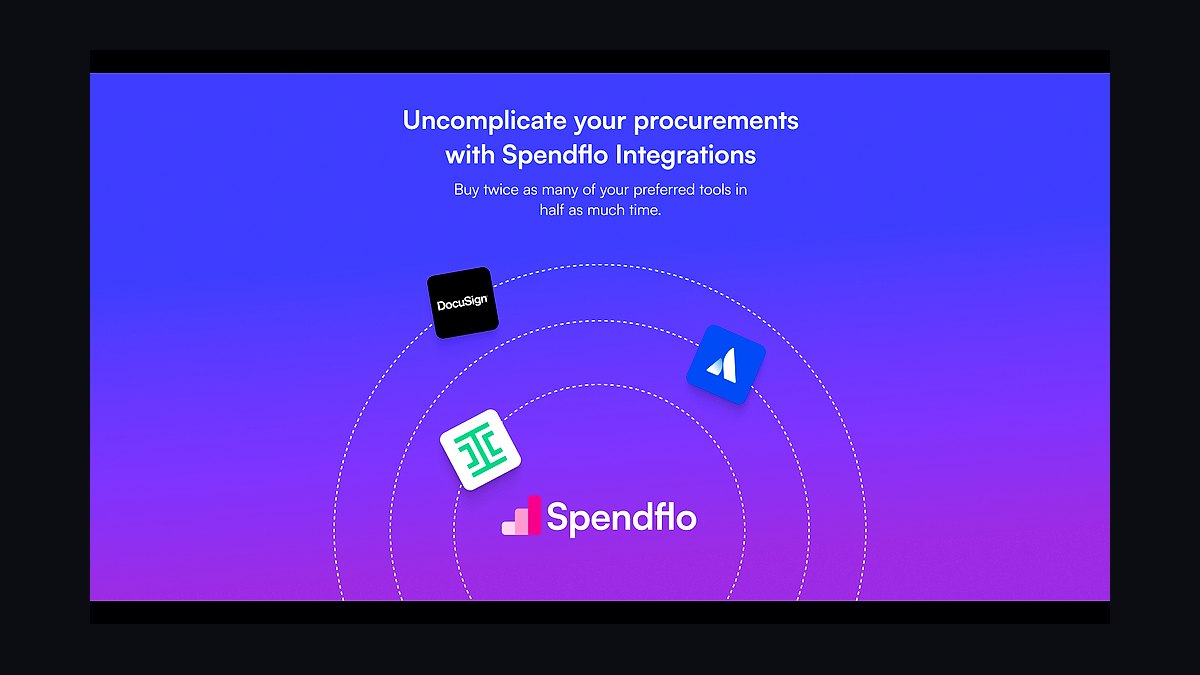
Spendflo ranks tenth for offering SaaS discovery, renewal tracking, and a benchmark pricing database at a lower entry price than enterprise competitors. Its platform includes approval workflows, vendor management, and a savings tracker that logs negotiated reductions. AI tool subscriptions appear in the same spend dashboard as other software.
Spendflo fits growing companies that need basic procurement structure before investing in a full platform like Vendr. It trades away integration breadth and reporting depth compared with Zylo or Torii. Compared with Cledara above, Spendflo focuses on procurement workflow rather than payment-level spend capture.
How we ranked these
We scored each platform on four weighted criteria: AI-subscription-specific discovery and normalization (30%), contract and renewal workflow depth (25%), approval and budget-control granularity (20%), and integration coverage across finance and identity systems (25%). Scores came from hands-on trials, vendor documentation review, and reference checks with finance and IT operations teams running 200-plus SaaS tools.
We deliberately excluded list pricing and headline seat counts, since negotiated SaaS spend management contracts vary wildly and published tiers rarely reflect what mid-market buyers actually pay. We also ignored marketing claims about AI features that could not be demonstrated in a live environment, and we did not weight mobile app quality, which almost no finance team uses for this workflow.
Related questions
Why do AI tool subscriptions need separate spend management treatment?
AI subscriptions behave differently from classic SaaS. Usage-based tokens, per-seat copilots, and overlapping assistants create duplicate spend that seat-count reconciliation misses. Consumption spikes are unpredictable, and many AI tools are bought on personal cards before IT sees them. Platforms that only track named seats and renewal dates will undercount AI spend and miss shadow adoption entirely.
How should a finance team detect duplicate AI assistant subscriptions?
Map every AI tool to a capability category such as coding assistant, meeting transcription, or writing assistant, then compare active users across tools in the same category. Identity-provider SSO logs and browser extension telemetry reveal actual usage better than invoices. Flag any user holding two licenses in one category, and require a documented exception before renewal.
What approval thresholds work for AI tool purchases?
Tiered thresholds tied to annualized cost work best: auto-approve under a few hundred dollars annually, route mid-tier requests to the department budget owner, and escalate anything above roughly five thousand dollars to finance and security jointly. AI tools often start small and expand through usage, so thresholds should also trigger on consumption growth, not just initial contract value.
Can SaaS spend management platforms see usage-based AI billing?
Only some can. The stronger platforms ingest consumption and metering data through vendor APIs or billing exports, then model projected spend against budget. Weaker tools just store the invoice PDF. Ask specifically whether the platform pulls token or credit consumption data, how often it refreshes, and whether it can alert on burn rate before the monthly invoice arrives.
How do these platforms handle shadow AI adoption?
The best ones combine expense-card transaction monitoring, SSO application discovery, and email or calendar signal analysis to surface tools nobody registered. Look for automatic matching of card descriptors to known AI vendors and a workflow that converts a discovered charge into a registered application with an owner. Discovery without an ownership workflow just produces a longer list nobody acts on.
What integrations are non-negotiable for AI spend control?
You need an identity provider for real usage and seat truth, an ERP or accounting system for actuals, a contract repository for terms and renewal dates, and a procurement or ticketing system for approvals. Expense management integration matters more than most buyers expect, because AI tools frequently enter through individual reimbursements rather than formal purchase orders.
How far ahead should AI subscription renewals be flagged?
Ninety days is the practical minimum for enterprise agreements with auto-renewal clauses, since negotiation and security review take weeks. For smaller team-level AI tools, thirty to forty-five days is enough. The platform should also flag mid-term expansion triggers, because AI vendors frequently upsell credits or seats well before the renewal date.
Do smaller companies need a dedicated platform or is a spreadsheet enough?
Below roughly fifty SaaS applications and a few AI tools, a disciplined spreadsheet plus calendar reminders can work. The break-even point arrives when multiple budget owners buy independently and AI consumption becomes variable. At that stage, manual tracking reliably misses renewals and duplicates, and the platform cost is usually recovered by cancelling a handful of redundant AI licenses.
FAQ
What is SaaS spend management for AI subscriptions?
It is the practice of discovering, approving, tracking, and renewing AI tool subscriptions through a single system rather than scattered cards and spreadsheets. It covers seat-based copilots, usage-metered API access, and embedded AI features inside larger platforms, with the goal of eliminating duplicates and controlling consumption-driven cost growth.
How is AI subscription spend different from traditional SaaS?
Traditional SaaS is mostly predictable per-seat pricing renewed annually. AI subscriptions mix seats with consumption billing, expand through usage rather than procurement, and often arrive via individual credit cards. That makes forecasting harder and means spend can grow between renewal dates without any contract change or approval event.
Which teams should own AI subscription management?
Finance owns budget and actuals, IT or procurement owns contracts and vendor relationships, and security owns data-handling review. The platform should give each a distinct view rather than forcing one team to do everything. Most failed implementations happen when finance buys the tool but nobody assigns application owners across departments.
How do these platforms price themselves?
Most charge per managed application, per employee, or as a percentage of tracked spend, with annual contracts typical. Pricing is negotiable at mid-market and above, and implementation fees are common for ERP integration. Ask for the all-in cost including discovery tooling and support, since headline subscription quotes often exclude the modules that make the platform useful.
What does implementation actually involve?
Expect two to six weeks for a mid-market deployment. Work includes connecting the ERP, identity provider, and card feeds, importing the contract repository, and assigning application owners. The slow part is data cleanup, not configuration. Teams that skip owner assignment end up with a complete inventory and no accountability for renewals or duplicate elimination.
Can these platforms reduce AI spend measurably?
Yes, but the savings come from specific actions: cancelling duplicate assistants, reclaiming unused seats, renegotiating at renewal with usage data in hand, and blocking unapproved purchases. Buyers should ask vendors for reference customers with similar AI tool counts and request the actual reconciliation methodology, not a percentage savings claim.
How should security review fit into the workflow?
Security review should be a required gate before any AI tool reaches production use, not an afterthought. The platform should hold review status, data-processing terms, and approved use cases alongside the contract. Renewals should automatically re-trigger review when the vendor changes terms or adds new model providers.
What reporting do finance leaders actually use?
Three reports dominate: spend by department and application owner, upcoming renewals with contract terms, and consumption versus budget for usage-billed tools. A fourth, duplicate-category overlap, drives most of the savings. Anything beyond these is usually noise unless a specific audit or board request demands it.
When should a company switch platforms?
Switch when discovery consistently misses AI tools bought on cards, when renewal alerts arrive too late to negotiate, or when usage-based billing cannot be modeled at all. Those three failures mean the platform is not covering modern AI spend patterns, and patching with spreadsheets reintroduces the exact risk the tool was bought to remove.
Are AI-specific point tools better than broad SaaS management suites?
Point tools often detect AI usage better but lack contract, approval, and ERP depth, so you end up with two systems and a reconciliation problem. Broad suites cover the full lifecycle but may treat AI consumption superficially. Most teams above mid-market are better served by a suite with demonstrated consumption-data ingestion than by bolting a detector onto a contract database.
Sources
- https://www.gartner.com/en/information-technology/insights/software-asset-management
- https://www.forrester.com/research/
- https://www.mckinsey.com/capabilities/mckinsey-digital/our-insights
- https://www2.deloitte.com/us/en/pages/technology/articles/tech-spend-management.html
- https://www.pwc.com/us/en/services/consulting/technology.html
- https://www.cio.com/article/272802/what-is-saas.html
- https://www.techtarget.com/searchcloudcomputing/definition/software-as-a-service-SaaS
Related on PULSE
This page will be disappearing soon. Save it to your device for $1 — or read it free while it is here.
@Kory-White- · if Venmo asks, the last 4 of my number are 2012
This page is gone.
This one is off the shelf now. $1 keeps it on your phone for good — the whole page, pictures and diagrams included.
 ai-tool-reviewThe 10 Best AI Tools for Investor Pitch Decks in 2027
 ai-tool-reviewThe 10 Best AI Tools for Interview Prep in 2027
 pulse-recentThe 10 Best AI Infra Cost Allocation Strategies for Multi-Team Usage in 2027
 pulse-recentThe 10 Best AI Tools for Data Lineage Tracking in 2027
 pulse-recentThe 10 Best AI Tools for GPU Cluster Orchestration in 2027
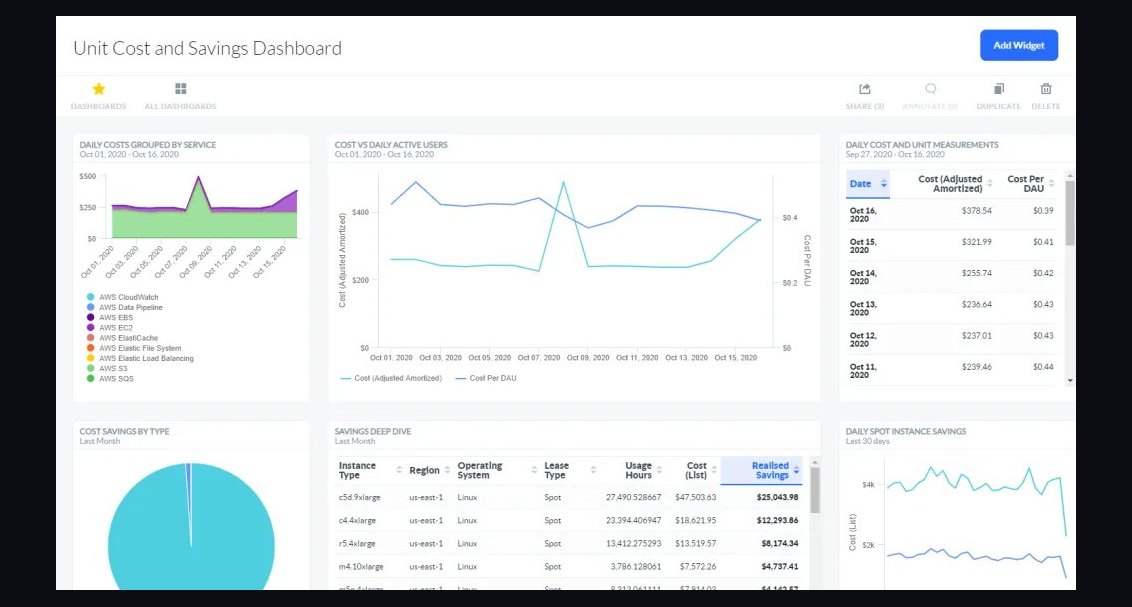 pulse-recentThe 10 Best AI Chargeback and Showback Tools for Internal Team Billing in 2027
 pulse-recentThe 10 Best AI Infra Budgeting Strategies for Enterprises in 2027
 pulse-recentThe 10 Best AI Tools for API Rate Limiting and Throttling in 2027
 pulse-recentThe 10 Best AI Tools for Fine-Tuning Large Language Models in 2027
 ai-tool-reviewThe 10 Best AI Tools for Fraud Detection in 2027