
Best Cars for Snow and Winter Driving in 2027
 Curated byKory White · Fractional CRO · Maryland
 PULSEKNOWLEDGE LIBRARY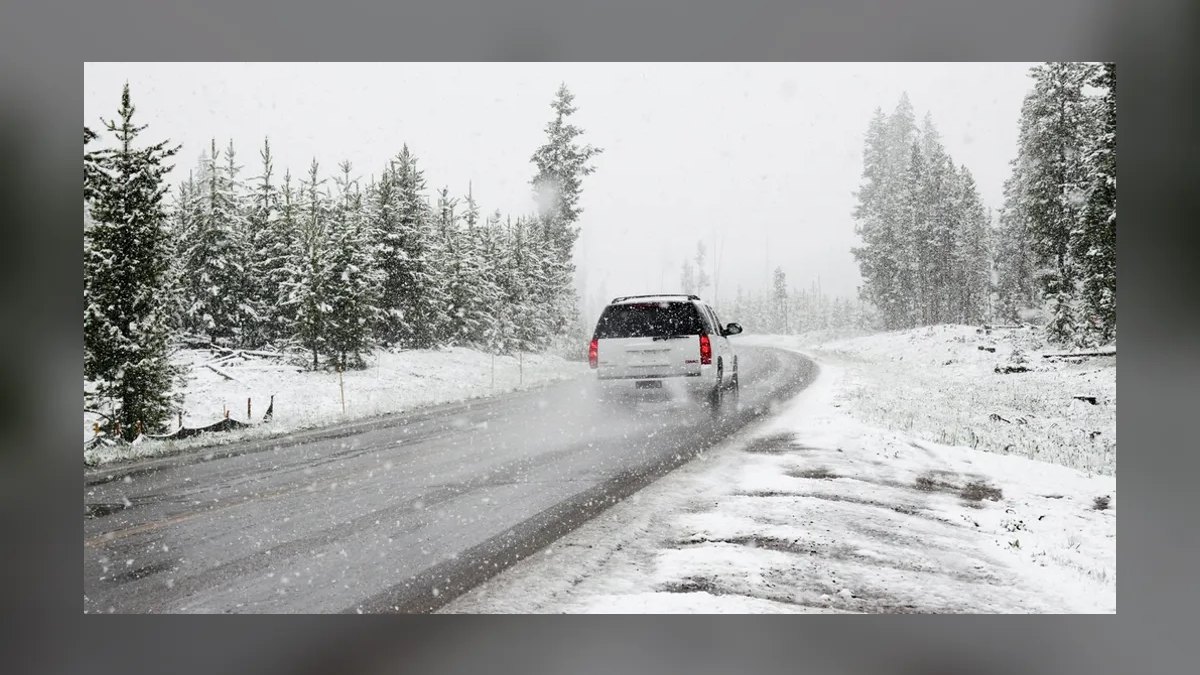
The best snow car pairs full-time all-wheel drive with roughly 8 inches of ground clearance, a snow drive mode, and — most importantly — four dedicated winter tires. Subaru's symmetrical AWD lineup leads on value and safety; body-on-frame SUVs and 4x4 trucks handle unplowed rural roads; torque-vectoring EVs excel if you manage cold-weather range loss.
A February morning that decides which car you actually needed
Picture two commuters leaving the same subdivision at 6:40 a.m. after six inches fell overnight. The plow has done the arterial but not the side streets. The first driver has an all-wheel-drive crossover on the all-season tires it left the lot with. The second has a front-wheel-drive sedan on four dedicated winter tires. Both pull onto the unplowed street. The AWD crossover gets moving easily — four driven wheels claw through the fresh powder without drama. The sedan takes a little more throttle and a little more patience to get rolling.
Then they both reach the stop sign at the bottom of a grade.
This is the moment that separates marketing from physics. All-wheel drive is a system for *putting power down*. It has essentially nothing to do with stopping or steering, because braking and cornering forces are transmitted through all four contact patches regardless of which wheels are driven. The AWD crossover on all-seasons slides through the intersection. The front-drive sedan on winter rubber stops short of the line. Every winter, tow operators and body shops see the same pattern: a disproportionate share of the vehicles in the ditch have all-wheel drive, because AWD builds confidence during acceleration that the tires cannot honor during deceleration.
That scenario should frame every purchase decision. The question "what are the best cars for snow and winter driving" is really three questions stacked on top of each other, and they have different answers:
- Can I get moving? Answered by drivetrain — AWD, 4WD, or FWD with weight over the driven wheels.
- Can I get through? Answered by ground clearance, approach angle, and how much snow sits between your undertray and the pavement.
- Can I stop and steer? Answered almost entirely by tire compound and tread design, and secondarily by ABS and stability-control calibration.
A vehicle that only wins the first question is a liability. A vehicle that wins all three is what people mean by a great winter car. The buying advice that follows is organized around that hierarchy rather than around brand loyalty, because the same $38,000 spent on a mid-trim crossover plus a proper winter tire-and-wheel package will out-perform $52,000 spent on a bigger crossover riding on the summer-biased performance tires that came with the sport package.
There's a business angle here too, and it's not a stretch. Fleet managers at HVAC companies, home-services outfits, and regional distributors run this calculation every autumn, because a truck that can't reach a job site on February 3rd is lost revenue that never comes back — the appointment doesn't reschedule cleanly, the technician is paid anyway, and the customer calls a competitor. Companies that budget winter tires as a line item rather than an exception consistently report fewer missed calls per storm day. Consumer buyers rarely think in those terms, but the logic is identical: the cost of the tires is small and predictable; the cost of not being able to move is large and lumpy.

How all-wheel drive, ground clearance, and tire compound actually work together
Start with the drivetrain, because it's the most misunderstood layer. Not all AWD is the same, and the differences matter in exactly the conditions you bought it for.
Reactive (on-demand) AWD is what most mainstream crossovers use. The vehicle drives the front wheels normally, and a coupling — usually an electronically controlled clutch pack — sends torque rearward once sensors detect slip. It's efficient and cheap, but there is a detection delay. On a slick uphill launch you may feel the front wheels spin briefly before the rear axle joins in. Modern versions have shrunk this delay to near-imperceptible and many now pre-emptively engage based on throttle position, steering angle, wiper status, and ambient temperature.
Full-time symmetrical AWD, Subaru's signature layout, splits torque continuously through a center differential with a longitudinally mounted engine and equal-length half-shafts. There's no waiting for slip because torque is already at all four corners. The practical benefit isn't dramatic on a plowed highway; it shows up on a slippery incline from a dead stop, in a rutted parking lot, and when the surface changes mid-corner.

Torque-vectoring and multi-plate systems in performance-oriented luxury vehicles — Audi's quattro among them — go further, actively over-driving an outside wheel to help rotate the car through a corner. On ice this can feel almost uncanny.
Electric dual- and quad-motor AWD is the newest and arguably the most capable in principle. With an independent motor per axle (or per wheel), the control unit adjusts torque thousands of times per second, far faster than any mechanical clutch pack. There's no driveshaft, no torque split to negotiate — just software deciding how much each motor contributes. The trade-off is that instant torque is easy to over-apply on ice, and cold weather cuts usable range meaningfully.
Part-time 4WD with low range, found in body-on-frame SUVs and pickups, is a different tool entirely. It locks the front and rear driveshafts together for maximum traction in deep snow and gives you a low-range gear multiplier for creeping control on steep, slick descents. It's the right answer for unplowed rural roads and the wrong answer for wet, plowed highways, where a locked center can bind in tight turns.
Ground clearance is the second layer, and it's simpler: if the snow is deeper than the distance from your lowest point to the pavement, you are no longer driving on tires — you are plowing with the underside of your car, and traction collapses because weight transfers off the contact patches. Roughly 6.5 to 7 inches handles typical plowed-road slush and modest accumulation. Eight inches or more is the practical threshold for unplowed side streets and the compacted berm a plow leaves at the end of a driveway. Beyond about 9 inches you're in body-on-frame or air-suspension territory, and the cost is a higher center of gravity and worse fuel economy year-round.
Tires are the third layer and the one that dominates. Winter tire compounds stay pliable below roughly 45°F, where all-season rubber begins to stiffen and lose the microscopic conformity that generates grip. Winter treads also use dense siping — thousands of tiny slits that open under load to bite into snow — and deeper, more open channels that evacuate slush instead of hydroplaning on it. Testing by tire retailers and automotive outlets consistently shows dramatically shorter stopping distances on packed snow and ice for winter tires versus all-seasons on the identical vehicle.
The diagram makes the ranking obvious: the drivetrain and clearance layers are fixed at purchase and cost thousands to change, while the tire layer is a recurring seasonal decision that costs a fraction as much and delivers the largest single improvement in the failure mode that actually hurts people — not getting stuck, but not stopping.
Real numbers: clearance, economy, pricing, and cold-weather range
Here are the specification bands that matter when you're cross-shopping, drawn from how these segments are typically configured.
Ground clearance by segment. Compact and mid-size crossovers cluster in the 7.5–8.7 inch range. Subaru's Outback and Crosstrek sit near the top of that band at roughly 8.7 inches, which is unusual for vehicles at their price and part of why they've earned their winter reputation. The Toyota RAV4 lands around 8.4 inches, the Volvo XC60 near 8.5, the Hyundai Santa Fe around 8.3, and the Honda CR-V around 8.2. Body-on-frame SUVs like the Toyota 4Runner reach roughly 9 inches. Air-suspension EVs such as the Rivian R1S can raise to well over 14 inches at their tallest setting — genuinely deep-snow capable, though at that height the vehicle is not meant for sustained highway speed.
Price bands. Entry-level capability starts near $26,000 for a Crosstrek-class compact with standard AWD. The mainstream sweet spot — Outback, RAV4, CR-V — runs roughly $30,000 to $32,000 to start, with AWD either standard or a modest option. Feature-heavy value plays like the Santa Fe land near $35,000. Serious capability moves up: a 4Runner starts around $42,000 and a 4x4 crew-cab F-150 lands near $48,000, the same neighborhood as luxury crossovers like the Audi Q5 quattro and Volvo XC60. Premium three-row EVs like the R1S start around $78,000. Add roughly $800–$1,500 for a dedicated winter tire-and-wheel package depending on size, and note that mounting winters on their own steel or alloy wheels eliminates seasonal mount-and-balance labor and pays for itself over three or four winters.
Fuel economy and the cold penalty. Highway figures land near 34 mpg for a Crosstrek, 32 for an Outback, and around 24 for a 4Runner — the honest cost of body-on-frame capability. Hybrid versions change the math substantially: RAV4 Hybrid around 39 mpg combined, CR-V Hybrid around 40. Hybrids with an electrically driven rear axle are quietly excellent winter vehicles, because the rear motor responds faster than any mechanical coupling and adds traction precisely when you need it.
Every one of those numbers degrades in winter, and buyers routinely underestimate by how much. Cold-dense air raises aerodynamic drag, engine oil and driveline fluids thicken, cabin heat is pure parasitic load in a combustion vehicle only because of blower draw but a real energy cost in an EV, and snow-covered roads increase rolling resistance. Expect a meaningful real-world drop in combustion economy through a hard winter, and plan for roughly 20–30% range reduction in an EV at freezing temperatures. That EV penalty is not fixed — it's heavily influenced by two technologies worth insisting on:

- A heat pump rather than resistive cabin heating. Resistive heat converts electricity to warmth at roughly one-to-one; a heat pump moves ambient heat and delivers substantially more thermal output per kilowatt-hour, which directly protects range.
- Battery preconditioning, which warms the pack before a fast-charge session. A cold pack accepts charge slowly to protect cell chemistry, so an unconditioned winter DC fast-charge stop can take dramatically longer than the same stop in summer. Navigation-linked preconditioning that triggers automatically when you route to a charger is the feature to look for.
Safety ratings. Prioritize vehicles with strong independent crash-test results and standard driver-assistance suites — Subaru's EyeSight and Honda Sensing are examples of systems bundled as standard rather than as expensive option packages. Winter driving stresses these systems in specific ways: radar sensors behind the grille pack with slush, cameras behind the windshield fog or ice over, and ultrasonic parking sensors give false alerts when caked. Vehicles with heated washer nozzles, heated wiper park areas, and sensor washers hold their capability better through a storm. It's a small detail that only shows up after you've driven a car through a real winter.
Trade-offs: what you give up for each kind of winter capability
There is no single best answer, because the vehicle that dominates an unplowed mountain road is a poor daily commuter, and vice versa. Every choice trades something.

Body-on-frame capability costs efficiency and refinement. A 4Runner or an F-150 4x4 will go places a crossover simply cannot, and both tow — meaningful if your winter includes a snowmobile trailer or a plow attachment. You pay in fuel economy in the mid-20s, a truck-like ride, and a higher center of gravity. Trucks also have a specific winter weakness: an empty bed leaves very little weight over the rear axle, which is why experienced owners add sandbags or tube sand behind the rear wheels. Do it correctly — weight positioned over or slightly behind the axle, secured so it can't shift under braking.
Luxury refinement costs money and sometimes tires. The Q5 and XC60 bring superb cold-weather cabins — heated seats front and rear, heated steering wheels, and in the Volvo's case heated washer nozzles, a detail that betrays where the company does its testing. Their driver-assistance suites are genuinely valuable in low-visibility conditions. The catch is that premium trims frequently ship on wide, low-profile performance tires with summer-biased compounds. A wide tire is worse in deep snow than a narrow one, because a narrow contact patch concentrates load and cuts down to firmer surface rather than floating on top. Buyers of luxury crossovers should budget for a narrower winter wheel-and-tire setup, often one size down from stock.
EV capability costs range and charging predictability. Motor-per-axle traction control is exceptional, and air suspension that lifts to serious clearance is a real capability. But winter range loss is unavoidable, public charging is slower when the pack is cold, and if a storm strands traffic, an EV's ability to keep the cabin warm for many hours on a partial charge is actually a strength worth knowing — climate load while stationary is modest compared to driving. The honest summary: an EV with a heat pump, preconditioning, and winter tires is an excellent snow vehicle whose main constraint is trip planning, not traction.
Small-and-cheap costs cargo and highway composure. A compact like the Crosstrek delivers most of the winter capability of its larger sibling in a package that's easier to place on a narrow, snow-choked street and cheaper to run. You give up cargo volume, some highway quiet, and passing power when loaded. For a single commuter or a couple, that's often the smartest money in the entire category.

FWD-plus-winter-tires costs launch traction and nothing else. This deserves defending, because it's the option most buyers dismiss. A front-drive vehicle carries engine weight over the driven wheels, and on four winter tires it stops and steers as well as anything on the road. What it lacks is launch grip on a slippery uphill from a stop. If your commute is flat and plowed, that limitation may never bind — and you'll have saved thousands in purchase price, drivetrain weight, and fuel.
Pitfalls that put good vehicles in ditches
Buying AWD and skipping winter tires. This is the dominant mistake and the reason the ditch is full of crossovers. Four driven wheels on hard all-season rubber will out-accelerate a front-driver and under-brake it. If your budget forces a choice, take FWD plus winters over AWD plus all-seasons every time.
Buying two winter tires instead of four. Mismatched grip front-to-rear is worse than uniform mediocre grip. Winters on the front of a rear-drive car makes the tail loose under braking; winters on the front of a front-driver does the same. Always four.
Ignoring tread depth on tires that look fine. Winter tires lose their snow performance long before they reach the legal wear limit — the deep channels that evacuate slush and the siping density both degrade with wear. A winter tire worn to half its original depth is functionally an all-season. Check depth every autumn before mounting, not in January.
Storing winter tires badly. Heat and UV age rubber. Store mounted sets stacked flat in a cool, dark place, bagged if possible, and note that a winter compound that's been baking in an uninsulated garage attic for three summers has hardened measurably.
Forgetting tire pressure drops with temperature. Pressure falls roughly one psi for every 10°F decline. A set inflated on a mild October afternoon will be several psi low by the first hard freeze — enough to trigger the TPMS light and, more importantly, enough to degrade handling and wear. Check pressures monthly all winter, and check them cold, before driving.
Trusting a drive mode to substitute for technique. Snow and terrain modes soften throttle response, shift earlier, and adjust stability-control thresholds. They're useful. They do not add grip. The underlying technique still applies: gentle inputs, look far ahead, brake in a straight line before the corner rather than in it, and if the vehicle starts to rotate, steer where you want to go and get off the brake.

Neglecting the un-glamorous maintenance. Winter-rated washer fluid rated well below freezing, fresh wiper blades, a battery load-tested in autumn (cold cranking is where marginal batteries die), and a tested block heater if you're in genuinely severe cold. A dead battery at −10°F strands you as thoroughly as any snowbank.
Assuming a taller vehicle is always safer. Height helps clearance and visibility; it hurts rollover resistance and raises the center of gravity, which makes a slide harder to recover. Stability control compensates well, but physics still applies on an icy off-camber curve.
Under-preparing for the stranded case. Keep a blanket, a shovel, traction aids, gloves, a charged power bank, and water in the vehicle from November through March. Multi-hour highway closures happen every winter somewhere, and the difference between an inconvenience and an emergency is a bag in the cargo area.
Related questions
Is four-wheel drive better than all-wheel drive for snow?
Not generally. Part-time 4WD with low range is superior in deep, unplowed snow and on steep slick grades. AWD is better on mixed and plowed surfaces because it works continuously without binding in turns. Choose 4WD only if you routinely face unmaintained roads.
Do I need winter tires if I only drive on plowed roads?
Usually yes. Plowed roads still develop black ice, refrozen melt, and packed snow at intersections. Since winter compounds outperform all-seasons at any temperature below about 45°F, the benefit applies on cold dry pavement too — not just visible snow.
How much cold-weather range do EVs actually lose?
Plan for roughly 20–30% reduction at freezing temperatures, worse in severe cold or with heavy cabin heating. A heat pump and battery preconditioning materially reduce that penalty. DC fast-charging is also slower on a cold pack unless preconditioning runs first.
Does adding weight to a truck bed really help?
Yes, for rear-wheel-drive and lightly loaded 4x4 pickups. Weight over or just behind the rear axle improves traction on the driven wheels. Secure it so it cannot shift forward under hard braking, and remove it in spring to recover fuel economy.
Are hybrids good winter vehicles?
Often excellent. Hybrids with an electrically driven rear axle deliver rear torque faster than a mechanical clutch pack can engage, and the battery adds low-mounted mass. The main caution is reduced regenerative braking on a cold battery, which changes pedal feel.
FAQ
Do I really need all-wheel drive for winter driving?
Not necessarily. Front-wheel drive with quality winter tires handles most snow conditions competently, because the engine's weight sits over the driven wheels. All-wheel drive improves acceleration and traction on slippery surfaces, but it does not improve braking or steering — those depend almost entirely on your tires. The best combination is AWD plus winter tires; the worst common combination is AWD plus worn all-seasons, because it produces confidence the vehicle cannot back up when you need to stop.
How much ground clearance is enough for snow?
For moderate, regularly plowed conditions, 6.5 to 7 inches is generally sufficient. For deep accumulation or roads that go unplowed for hours, 8 inches or more is the practical threshold — that's roughly where you stop dragging the undertray through drifts and losing traction as weight transfers off the contact patches. Most compact and mid-size crossovers offer 7 to 8.7 inches; body-on-frame SUVs and trucks exceed 9, and air-suspension EVs can raise well beyond that.
Can I just use all-season tires instead of winter tires?
All-season tires are a compromise designed to be adequate everywhere and excellent nowhere. Their compound stiffens below roughly 45°F, which reduces the rubber's ability to conform to the road surface and generate grip. Winter tires use softer compounds and dense siping to bite into snow and ice, and independent testing consistently shows substantially shorter stopping distances on winter surfaces. If you experience regular freezing temperatures, dedicated winter tires are the single most effective upgrade available.
What's the best budget-friendly winter vehicle?
A compact crossover with standard full-time all-wheel drive and around 8.7 inches of clearance — the Subaru Crosstrek class — starts near $26,000 and delivers most of the capability of much more expensive vehicles. Alternatively, buy a well-maintained used front-drive compact and spend the savings on a proper winter tire-and-wheel package plus a battery and wiper refresh. That second path frequently produces better real-world winter performance per dollar.
Does vehicle weight matter for snow driving?
Less than people assume. Heavier vehicles feel planted in crosswinds and resist being pushed around by ruts, but they also carry more momentum, which lengthens stopping distances and makes a slide harder to arrest. Weight distribution matters more than mass: weight over the driven wheels aids traction, which is why front-drive cars and loaded pickups behave differently than empty rear-drive trucks. Tires and driving technique outweigh both.
Will an electric vehicle work well in winter?
Yes, with planning. Dual- and quad-motor EVs offer exceptionally fine traction control because each motor is adjusted independently and far faster than a mechanical coupling can react. Expect roughly 20–30% range loss at freezing temperatures, mitigated substantially by a heat pump and battery preconditioning. Instant torque can overwhelm grip on ice, so winter tires are arguably more important on an EV than on a combustion vehicle, not less.
Sources
- https://www.iihs.org/ratings — Insurance Institute for Highway Safety vehicle safety ratings
- https://www.nhtsa.gov/winter-driving-tips — NHTSA winter driving safety guidance
- https://www.fueleconomy.gov/feg/coldweather.shtml — U.S. DOE/EPA on cold-weather fuel economy and EV range
- https://www.tirerack.com/research/testing — Tire Rack winter versus all-season tire testing
- https://www.consumerreports.org/cars/tires/winter-tires/ — Consumer Reports winter tire guidance
- https://www.caranddriver.com/features/ — Car and Driver vehicle reviews and comparison testing
- https://www.edmunds.com/car-reviews/ — Edmunds specifications, pricing, and reviews
- https://www.kbb.com/car-reviews/ — Kelley Blue Book pricing and vehicle guides
- https://www.aaa.com/autorepair/articles/winter-car-care-tips — AAA winter vehicle preparation
Related on PULSE
- [Best Cars for City Driving in 2027](/knowledge/ca0308)
- [Top 10 Long-Range Electric Cars in 2027](/knowledge/ca0991)
- [Top 10 Performance Electric Cars in 2027](/knowledge/ca0993)
- [Best Used Hybrid Cars Under $35,000 in 2027 (Ranked)](/knowledge/ca0952)
- [Top 10 High-Performance Muscle Cars in 2027](/knowledge/ca0985)
- [Top 10 Sports Cars Under $100,000 in 2027](/knowledge/ca0979)
This page will be disappearing soon. Save it to your device for $1 — or read it free while it is here.
@Kory-White- · if Venmo asks, the last 4 of my number are 2012
 pulse-carsTop 10 Hot Hatchbacks 2027 — Best Overall + Best Value
 pulse-carsBest Used AWD Cars Under $20,000 in 2027 (Ranked)
 pulse-carsTop 10 Sports Cars 1981 — Best Overall + Best Value
 pulse-carsBest Nissan Juke Model Years (Ranked) in 2027
 pulse-carsTop 10 Sports Sedans 2027 — Best Overall + Best Value
 pulse-carsBest Audi A3 Model Years (Ranked) in 2027
 pulse-carsBest Mazda RX-8 Model Years (Ranked) in 2027
 pulse-carsTop 10 Supercars 2027 — Best Overall + Best Value
 pulse-carsBest Ford Falcon Model Years (Ranked) in 2027
 pulse-carsBest Used Hybrid Cars Under $40,000 in 2027 (Ranked)