
Best Cars for Towing in 2027
 Curated byKory White · Fractional CRO · Maryland
 PULSEKNOWLEDGE LIBRARY
The best towing vehicles in 2027 are full-size half-ton pickups for most buyers, led by the Ford F-150 at up to 13,500 pounds and matched closely by the Silverado and Sierra at 13,300. Heavy trailers above 15,000 pounds require a diesel heavy-duty truck; families who tow occasionally should look at full-size SUVs.
The boat ramp that ends a lot of first tows
Picture a Saturday in late spring at a reservoir launch. A buyer bought a 24-foot bowrider on a tandem-axle trailer — the dealer's brochure said 4,900 pounds dry — and hitched it to a half-ton crew cab rated at 9,800 pounds. On paper this is a comfortable margin. In practice, the trailer left the ramp closer to 6,800 pounds: 70 gallons of fuel in the boat (about 420 pounds), two batteries, a full 30-gallon freshwater tank, an anchor and rode, four adults' worth of gear in the cabin, a cooler, and the trailer itself at 1,400 pounds. Tongue weight came in around 750 pounds. The truck was carrying five people and a loaded bed. And the truck ran out of *payload* — not tow rating — before it ever ran out of engine.
This is the single most common failure mode in real-world towing, and it is why the "best cars for towing" question almost never gets answered correctly by a max-tow number alone. Max tow ratings are published for a specific configuration: usually a regular-cab, two-wheel-drive, longest-bed, highest-axle-ratio truck with one 150-pound driver aboard and nothing else. The crew-cab 4x4 with a sunroof and a moonroof that most people actually buy will be rated thousands of pounds lower, and its payload — the number stamped on the yellow sticker inside the driver's door jamb — will often be under 1,700 pounds. Subtract 750 pounds of tongue weight, subtract 600 pounds of passengers, and there is almost nothing left for gear.
The framing that actually works is this: pick the class first, then pick the truck. Under roughly 6,500 pounds of loaded trailer, a midsize like the Toyota Tacoma does the job and is dramatically easier to park, garage, and live with. Between 9,000 and 13,500 pounds, half-ton pickups are the sweet spot and the segment where the towing technology is genuinely best. Above about 15,000 pounds regularly, or with any fifth-wheel or gooseneck setup, heavy-duty diesels are the only honest answer. And if the trailer is secondary to hauling seven people, a full-size SUV trades a few thousand pounds of capacity for three usable rows.
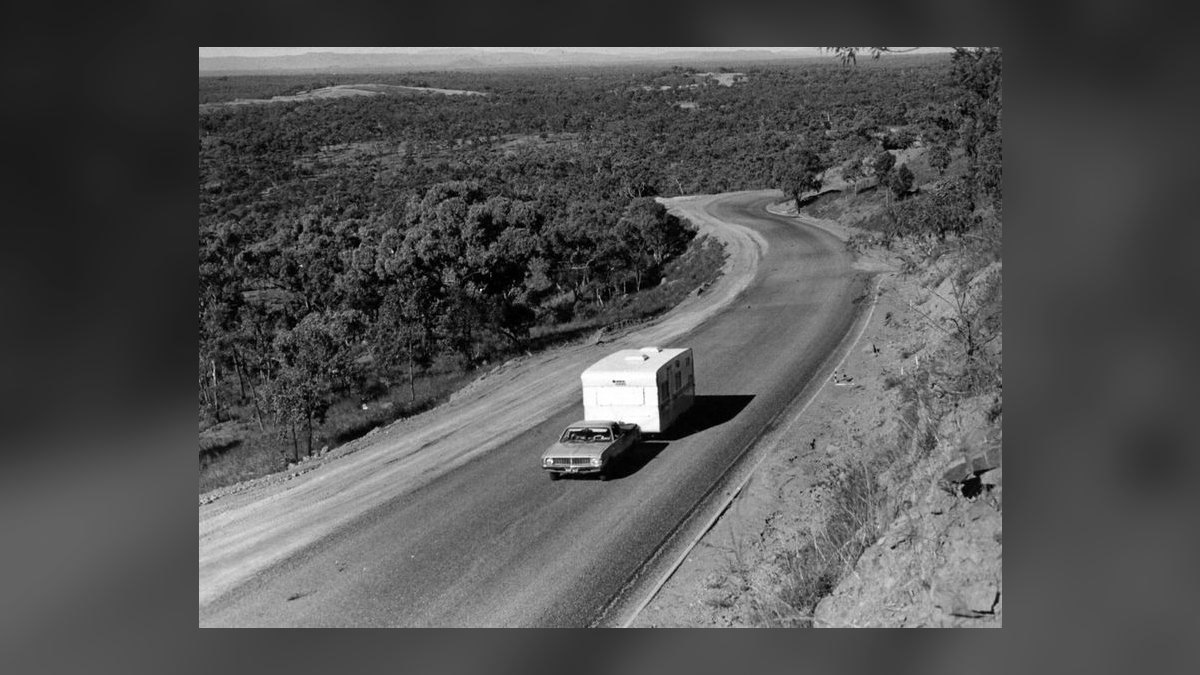
The buyer at the ramp did not need a bigger engine. They needed either a lighter load in the cab or a truck with 2,400 pounds of payload. That distinction — capacity versus capability — runs through every recommendation below.
How a tow rating is actually constructed
Tow ratings are not a single engineering property. They are the smallest of several independently calculated limits, and understanding which one binds first tells you which truck to buy.

Start with GCWR — Gross Combined Weight Rating. This is the manufacturer's ceiling for truck plus trailer plus everything in both, and it is derived from cooling capacity, transmission thermal limits, brake performance on a specified grade, and drivetrain durability testing. Max tow rating is simply GCWR minus the truck's curb weight in that exact configuration. Add a crew cab, four-wheel drive, and a heavier trim, and curb weight climbs several hundred pounds — every one of which comes straight off the tow number.
Next is GVWR — Gross Vehicle Weight Rating, the maximum the truck itself may weigh, loaded. Payload is GVWR minus curb weight. Tongue weight from a conventional bumper-pull trailer should be 10 to 15 percent of trailer weight, and every pound of it lands on the truck's payload budget. A 12,000-pound trailer puts roughly 1,200 to 1,800 pounds on the hitch. That is more than the entire payload of many crew-cab half-tons, which is exactly why the industry pushes buyers with 12,000-pound trailers toward three-quarter-ton trucks even though a half-ton's tow rating technically covers it.
Then the axle ratings — front and rear GAWR — which govern how the load distributes. A heavy tongue transfers weight rearward and also *lifts* the front axle, which is why weight-distributing hitches exist. A WDH uses spring bars to lever some of that tongue load back onto the front axle and out onto the trailer axles. Most manufacturers require one above a specified trailer weight, often around 5,000 pounds; ignoring that requirement voids the rating and produces the light, wandering steering that makes highway towing feel dangerous.

Finally, braking. Trailer brakes become mandatory in nearly every state above a threshold that varies from 1,500 to 3,000 pounds. An integrated brake controller — factory-wired, tuned to the truck's own ABS system, and adjustable from the cab — is the single most valuable towing feature on any vehicle, and it is why aftermarket controllers on older vehicles are a meaningful downgrade.
The practical takeaway: run the numbers in that order — payload, then GCWR, then axle, then brakes — and the correct vehicle class usually selects itself before you ever compare badges.

What the 2027 numbers actually look like
Across the half-ton class, the top of the range clusters tightly. The Ford F-150, properly configured with the 3.5-liter EcoBoost V6 producing 400 horsepower and 500 lb-ft, leads the segment at up to 13,500 pounds, with base MSRPs starting around $38,810. The Chevrolet Silverado 1500 and its corporate twin the GMC Sierra 1500 both reach 13,300 pounds with the 6.2-liter V8 making 420 horsepower and 460 lb-ft, starting near $38,395 and $39,295 respectively. The Ram 1500 tops out lower at 11,550 pounds using the 3.0-liter Hurricane twin-turbo inline-six, which produces 540 lb-ft — more torque than the GM V8 — but the Ram's coil-spring rear suspension trades some outright capacity for the best unladen ride in the class. It starts around $40,275.
Two things are worth noticing about that spread. First, the difference between 13,500 and 11,550 pounds is about 14 percent, and almost nobody tows at their maximum. If your loaded trailer is 7,500 pounds, that gap is irrelevant and ride quality, cabin comfort, and trailer tech matter far more. Second, the *torque* ranking and the *tow rating* ranking do not match. Ram makes the most torque and tows the least of the four, because tow rating is a system limit, not an engine limit.
Step up to heavy duty and the numbers change character entirely. The Ford F-250 Super Duty, with the 6.7-liter Power Stroke turbodiesel V8 making up to 1,200 lb-ft, tows well over 20,000 pounds conventionally — and considerably more with a gooseneck — from roughly $48,000. The Ram 2500 Heavy Duty, running the 6.7-liter Cummins turbodiesel inline-six at up to 1,075 lb-ft, reaches roughly 20,000 pounds from about $46,500, and does it with a rear coil or air suspension that makes it noticeably more civilized empty than a leaf-sprung competitor. A well-optioned HD diesel crew cab can exceed $80,000.

Full-size SUVs occupy a distinct band. The Ford Expedition leads at 9,300 pounds with the 3.5-liter EcoBoost making 440 lb-ft, from around $56,000, and it inherits the F-150's trailer electronics. The Toyota Sequoia, with the 3.4-liter i-FORCE MAX twin-turbo hybrid V6 at 437 horsepower and 583 lb-ft, actually edges it at 9,520 pounds, though from a higher $63,000 starting point. The Chevrolet Tahoe with the 5.3-liter V8 tows 8,400 pounds from about $58,200 while seating up to nine — the best pure people-plus-trailer compromise on the list.
At the entry end, the Toyota Tacoma starts near $32,995 and tows up to 6,500 pounds with its turbocharged 2.4-liter i-FORCE four making up to 278 horsepower, with an i-FORCE MAX hybrid available for more torque. That covers a small boat, a utility trailer, a pair of side-by-sides, or a genuinely light travel trailer — and it fits in a normal garage.
Fuel economy while towing is the number nobody publishes and everybody feels. As a working planning figure, expect a half-ton gas truck to fall to roughly half its unladen highway mpg with a large box trailer, and expect a diesel HD to hold up better proportionally under heavy load, which is a real part of the diesel value case on high-mileage haulers. Prices and availability vary by trim, options, and market conditions; treat every MSRP above as a starting point, not a transaction price.
Choosing between classes, powertrains, and the things that aren't trucks
The half-ton versus heavy-duty decision is the big one, and the honest threshold is not a weight — it is a *frequency*. A half-ton pulling 11,000 pounds twice a year on flat interstate is fine. The same truck pulling 11,000 pounds every weekend through mountain grades will show it in the transmission and the brakes. If heavy towing is a routine rather than an occasion, buy the heavier truck; the ride penalty is real but the margin buys you stability, braking, and resale to another tow-heavy buyer.
Gas versus diesel is more nuanced than the forums suggest. Diesel wins on low-end torque, on sustained grade climbing, on fuel economy under load, and on engine braking — an exhaust brake holding a heavy trailer down a long descent without cooking the service brakes is genuinely hard to replicate. Diesel loses on purchase price (frequently a five-figure option), on maintenance cost, on emissions-system complexity, and on short-trip duty cycles where the DPF never gets hot enough to regenerate cleanly. A modern gas turbo like the EcoBoost matches or beats diesel tow ratings in the half-ton class outright. The rough decision rule: if you tow heavy more than about 5,000 miles a year, or you live somewhere with long sustained grades, diesel earns its premium. Otherwise gas is the better financial answer.

Then there are the adjacent options people forget. A full-size SUV gives up 3,000 to 4,000 pounds of capacity versus a comparable pickup but gains an enclosed, climate-controlled third row and secure cargo — for a family that tows a 6,000-pound camper and drives 300 miles to get there with three kids, that is often the correct trade. A midsize truck gives up capacity but wins on garage fit, parking, tire cost, and depreciation. And for the specific case of very heavy trailers, a fifth-wheel or gooseneck hitch changes the physics: placing the pin weight over the rear axle instead of behind it dramatically improves stability and raises effective capacity, which is why the biggest travel trailers and equipment haulers use them and why they require an HD truck with a bed-mounted hitch.
Electrified towing deserves an honest mention. Hybrid systems like Toyota's i-FORCE MAX add usable low-end torque and are a straightforward win. Fully electric trucks tow capably in terms of raw pulling force, but aerodynamic drag from a box trailer collapses range disproportionately — planning around roughly half of rated range, sometimes less, is realistic, and public charging with a trailer attached is still logistically awkward at most sites. For short-haul towing on a home-charging routine, an EV works. For a 900-mile RV trip, it currently does not.

The mistakes that cost people trailers
Using dry weight instead of loaded weight. Manufacturer dry weight excludes propane, batteries, fresh water, waste tanks, and every item you put inside. A travel trailer advertised at 6,200 pounds dry routinely crosses 7,800 pounds loaded. Water alone runs 8.34 pounds per gallon — a 40-gallon tank is 334 pounds. Find the trailer's GVWR sticker and plan against that number, then verify on a public scale.
Ignoring the payload sticker. The yellow "the combined weight of occupants and cargo should never exceed X" label in the driver's door jamb is specific to your VIN, not to the brochure. It is the number that actually binds on most crew-cab trucks pulling heavy trailers. Read it before you sign anything.
Towing at 100 percent of rating. Ratings are ceilings validated under controlled conditions, not targets. Staying at or under roughly 80 percent of max tow leaves margin for heat, altitude, headwinds, and the fact that your trailer will get heavier every year you own it. That margin is what turns an emergency stop from a survivable event into a non-event.

Loading the trailer wrong. Too little tongue weight — under about 10 percent — is the classic cause of trailer sway, and sway builds on itself until it takes the truck with it. The fix is loading heavy items ahead of the trailer's axles and verifying tongue weight at a scale, not guessing. Sway control bars and integrated trailer sway control in the truck's stability system help, but they are a backstop for correct loading, not a substitute.
Skipping the weight-distributing hitch. If the manufacturer specifies one above a given trailer weight, that is a rating condition, not a suggestion. Without it, the front axle unloads, steering goes vague, and headlights point at the trees.

Neglecting tires and brakes. Trailer tires age out before they wear out — sidewall date codes matter, and five to six years is a common replacement window regardless of tread. Trailer brakes need periodic inspection and adjustment; a controller set correctly against worn shoes is still bad brakes. Truck tire pressure should go to the door-jamb tow spec, typically the higher rear figure.
Forgetting cooling and transmission care. Tow/haul mode is not a gimmick — it changes shift scheduling to reduce hunting and increases engine braking. Use it. On sustained climbs, watch transmission temperature; on sustained descents, downshift rather than riding the brakes. If you tow regularly and heavily, shorter transmission fluid intervals are cheap insurance against an expensive rebuild.
Underestimating the skills gap. Backing a trailer is a learned skill, and it is where most parking-lot damage happens. This is the single strongest argument for modern trailer tech: Ford's Pro Trailer Backup Assist lets you steer a trailer in reverse with a knob, Pro Trailer Hitch Assist lines up the ball automatically, and Smart Hitch reports tongue load directly. GM's ProGrade Trailering System bundles fifteen trailer-specific functions with up to fourteen camera views, including a transparent-trailer view that renders the road behind as if the trailer weren't there. For a first-time hauler, that suite is worth more than 2,000 pounds of extra rating.
Related questions
Does four-wheel drive increase tow rating?
No — 4x4 typically *reduces* max tow rating by a few hundred pounds because the extra hardware raises curb weight, which subtracts from GCWR headroom. What 4x4 does buy is traction on wet or gravel boat ramps, where two-wheel-drive trucks genuinely get stuck.
How much does towing hurt fuel economy?
Plan on roughly half your unladen highway mpg with a large box trailer, and worse with a tall, blunt travel trailer at highway speed. Aerodynamic drag matters more than weight above about 55 mph, which is why slowing down is the cheapest fuel savings available.
Do I need a special license to tow?
For most consumer setups, no. Requirements vary by state and typically trigger on combined weight — often around 26,000 pounds — which is above nearly all pickup-and-trailer combinations. Check your state's specific thresholds if you run a heavy fifth-wheel or a commercial rig.
Is a used truck a reasonable towing buy?
Often yes, especially since integrated brake controllers and tow packages became widespread. Verify the factory tow package is actually present, check the door-jamb payload sticker, and have the transmission and cooling system inspected — a truck that towed hard for a previous owner shows it there first.
What about towing with a crossover or minivan?
Light-duty only. Many unibody crossovers and minivans are rated between 3,500 and 5,000 pounds, which covers a small utility trailer, a jet ski pair, or a pop-up camper. They lack the frame, brakes, and cooling for anything approaching a travel trailer.
FAQ
Is a diesel engine always better for towing?
Not necessarily. Diesel offers more low-end torque, better fuel economy under load, and exhaust braking on descents, but modern gasoline turbos like Ford's 3.5-liter EcoBoost match or exceed diesel tow ratings in the half-ton class. Diesel costs more upfront and carries higher maintenance and emissions-system complexity, so the choice depends on how often and how heavily you tow.
Can a midsize truck really tow a travel trailer?
Yes, but only smaller ones. Midsize trucks like the Toyota Tacoma top out around 6,500 pounds, which suits lightweight campers, small boats, and utility trailers. Once you account for real loaded weight rather than dry weight, most conventional travel trailers exceed that — so anything over about 7,000 pounds loaded needs a half-ton or heavier.
What's the most important feature for towing safety?
An integrated trailer brake controller, without close competition. It lets you tune braking force from the cab and is wired into the truck's own stability system. After that, blind-spot monitoring extended to cover the trailer's length and a usable rear camera suite do the most to prevent lane-change and maneuvering incidents.
Do I need a heavy-duty truck for towing over 10,000 pounds?
For regular towing above 10,000 pounds, yes — a heavy-duty truck is strongly recommended. Half-ton trucks are rated as high as 13,500 pounds in ideal configurations, but their suspension, brakes, transmission, and especially payload are working near the limit there. HD trucks buy margin, and margin is what you are actually paying for.
How much does a good towing vehicle cost in 2027?
Ranges are wide. Capable midsize trucks start around $33,000, half-tons start in the high $30,000s and land in the $50,000–$70,000 range well-equipped, and heavy-duty diesels start in the mid-$40,000s and can exceed $80,000 loaded. Actual transaction prices depend on trim, options, incentives, and market conditions.
Can an SUV tow as well as a pickup truck?
Close, but not quite. Full-size SUVs like the Ford Expedition and Toyota Sequoia reach roughly 9,300–9,520 pounds, which overlaps the lower half-ton range. Pickups still win on maximum rating, payload, and bed access for hitch hardware. SUVs win decisively when you need three rows and enclosed cargo alongside occasional towing.
Sources
- https://www.ford.com/trucks/f150/
- https://www.chevrolet.com/trucks/silverado/1500
- https://www.ramtrucks.com/1500.html
- https://www.gmc.com/trucks/sierra/1500
- https://www.toyota.com/tacoma/
- https://www.caranddriver.com/features/
- https://www.motortrend.com/trucks/
- https://www.kbb.com/car-advice/
- https://www.nhtsa.gov/equipment/tires
- https://www.edmunds.com/car-buying/
Related on PULSE
- [Top 10 Diesel Trucks for Towing in 2027](/knowledge/ca0987)
- [Top 10 Performance Electric Cars in 2027](/knowledge/ca0993)
- [Top 10 Long-Range Electric Cars in 2027](/knowledge/ca0991)
- [Top 10 High-Performance Muscle Cars in 2027](/knowledge/ca0985)
- [Top 10 Sports Cars Under $100,000 in 2027](/knowledge/ca0979)
- [Best Used Hybrid Cars Under $35,000 in 2027 (Ranked)](/knowledge/ca0952)
This page will be disappearing soon. Save it to your device for $1 — or read it free while it is here.
@Kory-White- · if Venmo asks, the last 4 of my number are 2012
 pulse-carsBest Ford EcoSport Model Years (Ranked) in 2027
 pulse-carsBest Honda Crosstour Model Years (Ranked) in 2027
 pulse-carsTop 10 Luxury Pickup Trucks 2026 — Best Overall + Best Value
 pulse-carsBest Chrysler PT Cruiser Model Years (Ranked) in 2027
 pulse-carsBest Acura Models in 2027
 pulse-carsTop 10 Luxury EVs 2027 — Best Overall + Best Value
 pulse-carsTop 10 Diesel Trucks 2024 — Best Overall + Best Value
 pulse-carsBest Cadillac XT6 Model Years (Ranked) in 2027
 pulse-carsBest Used Crossovers Under $25,000 in 2027 (Ranked)
 pulse-carsTop 10 Sedans 2010 — Best Overall + Best Value