
Best Toyota Models in 2027
 Curated byKory White · Fractional CRO · Maryland
 PULSEKNOWLEDGE LIBRARY
The 2027 Toyota RAV4 Hybrid is the best overall Toyota, starting near $32,300 with 219 combined horsepower and roughly 39 mpg. The Corolla is the best value at about $23,200, with a hybrid returning up to 50 mpg. Both pair standard Toyota Safety Sense 3.0 with class-leading resale.
What the 2027 lineup actually is, and why the hybrid shift matters
Toyota's 2027 range is no longer a gas lineup with a few hybrid options bolted on. The Camry is hybrid-only. The Sienna is hybrid-only. The Highlander offers a hybrid across most of the range, and the truck and body-on-frame SUV side now has i-FORCE MAX hybrid variants on the Tacoma, Tundra, and 4Runner. That single structural fact changes how you should shop the brand, because the question stopped being "hybrid or gas" and became "which body style, and how much capability do you actually need."
The practical effect shows up in the fuel numbers. A front-drive Camry returns up to 51 mpg combined. A Corolla Hybrid lands near 50. The Sienna, a seven-or-eight-seat minivan, is EPA-rated around 36 mpg combined — a figure that would have been respectable for a compact sedan a decade ago. The Highlander Hybrid sits around 35 mpg while carrying three rows. Compared with a conventional midsize SUV in the low-to-mid 20s, that gap compounds. At 15,000 miles a year and $3.50 a gallon, moving from 24 mpg to 35 mpg saves roughly $600 annually — not life-changing, but real money that lands on the ownership side of the ledger every single year.

The second thing worth understanding is the platform consolidation. The Tacoma, Tundra, Sequoia, and the redesigned 4Runner all ride on Toyota's TNGA-F body-on-frame architecture. Shared architecture means shared powertrains, shared electronics, and shared parts logistics. For a buyer, the upshot is that off-road hardware once reserved for the halo trims — locking rear differentials, disconnecting front sway bars, genuine ground clearance — is now available across a wider slice of the lineup, and the interiors finally caught up to the competition instead of feeling like a decade-old rental.
Where this connects to something beyond a spec sheet: fleets buy on total cost of ownership, not sticker. A regional service company running twenty vehicles cares about uptime, resale at 100,000 miles, and predictable maintenance intervals. Toyota's reputation is built on exactly those three, which is why the same models that top consumer shopping lists also dominate light-duty commercial fleets. If a vehicle is off the road, the revenue attached to that route stops. That's the same math a household runs when the second car dies during a work week — just with more zeros.
The step-by-step process for picking the right model
Shopping Toyota well is a sequencing problem. Most buyers start with a model name and back into justification. Reverse it. Start with the constraint that cannot be negotiated, then let the constraint eliminate models until few enough remain that a test drive settles it.

Step one — fix the body style by hard requirement. Do you need an open bed? That's Tacoma or Tundra, and nothing else in the lineup substitutes. Do you need to move seven people regularly, not occasionally? That's Sienna or Highlander, and the Sienna wins on third-row access every time because sliding doors in a tight parking space are worth more than the styling penalty. Do you need genuine trail capability with body-on-frame durability? That's 4Runner. Everything else — RAV4, Corolla, Camry, Crown, GR Corolla — is a car-shaped answer to a car-shaped problem.
Step two — set the towing number honestly. People routinely over-buy here. A Tacoma with the turbo four handles most utility trailers, small boats, and a pair of dirt bikes. If you're pulling a heavy travel trailer or a car hauler, the Tundra's twin-turbo V6 at up to 389 horsepower — or the i-FORCE MAX at 437 hp and 583 lb-ft — is the correct tool, with maximum towing above 12,000 pounds when properly equipped. Buying full-size for a load a midsize handles costs you fuel, parking ease, and a chunk of purchase price.

Step three — price the trim ladder, not the base MSRP. A Tacoma opens around $32,000 but a loaded TRD Pro or Trailhunter runs well past $55,000. A 4Runner starts near $42,000 and climbs past $66,000 at the top. The spread inside a single nameplate is often larger than the gap between two different nameplates. Decide which specific hardware you're paying for — the locker, the sway-bar disconnect, the 33-inch tires — rather than buying a badge.
Step four — model the fuel and insurance line for three years, not one. The Corolla wins here on every axis: cheap to insure, cheap to fuel, cheap to fix. The GR Corolla loses on every axis for the same reasons in reverse — performance tires, a performance insurance class, and a 300-horsepower turbo three that wants premium.
Step five — drive the two finalists back to back on the same day. Ride quality differences between a Camry XSE and a Camry LE, or between a Highlander and a Sienna, do not survive a written comparison. They're obvious inside ninety seconds of the same stretch of road.

Costs, timelines, and typical ranges across the lineup
Here is the shape of the 2027 range in round numbers, entry price first. Corolla opens around $23,200 for the gas car and roughly $25,500 for the hybrid. Camry LE starts near $29,000, with an XSE AWD past $35,000. RAV4 Hybrid begins around $32,300. Tacoma opens near $32,000. Sienna starts around $39,000 and tops past $56,000 in Platinum trim. Highlander opens near $41,000 and passes $54,000 at Platinum. Tundra and 4Runner both start around $42,000, with the Tundra reaching past $75,000 in Capstone form and the 4Runner past $66,000 in TRD Pro or Trailhunter. Crown starts near $42,000 and tops past $54,000. GR Corolla sits around $38,000.
Read that list twice and a pattern appears: the lineup clusters into three price bands. Under $33,000 you get Corolla, Camry, RAV4 Hybrid, and Tacoma — the volume core. Between $38,000 and $43,000 you get the GR Corolla, Sienna, Highlander, Tundra, 4Runner, and Crown entry points. Above $55,000, you are almost always paying for a specific hardware package or a leather-and-screens trim, not for a different vehicle.

On powertrain output, the spread is wide. RAV4 Hybrid makes 219 combined horsepower; the RAV4 Prime plug-in pushes to 302 hp with about 42 miles of electric range. Camry lands at 232 hp front-drive and 225 with all-wheel drive. Highlander's turbo 2.4-liter makes 265 hp. Sienna's hybrid system totals 245 hp. Crown runs 236 hp standard and 340 hp with Hybrid MAX. Tacoma's turbo four reaches 278 hp, or 326 hp and 465 lb-ft as an i-FORCE MAX hybrid — the same headline numbers the new 4Runner hybrid posts. GR Corolla's turbo 1.6-liter triple makes 300 hp and 295 lb-ft through GR-FOUR all-wheel drive, with a six-speed manual standard and an eight-speed automatic available for 2027.
On timelines, the thing nobody budgets for is availability. High-demand configurations — hybrid trucks, TRD Pro and Trailhunter trims, and popular RAV4 Hybrid colors — have historically moved fast, and a factory order can stretch weeks or months depending on region and allocation. If you need a vehicle by a fixed date, widen your acceptable trim and color list before you widen your price ceiling. Trading a sunroof for a delivery date is usually the cheaper concession.
One more cost that hides: cargo geometry. RAV4 offers roughly 37.5 cubic feet behind the rear seats and past 69 with them folded. That number decides whether you buy one vehicle or two. Households that under-measure cargo end up renting a truck four weekends a year, which quietly erases the savings from buying the smaller crossover in the first place.

Where buyers and fleet managers get this wrong
Mistake one: buying the badge instead of the hardware. A TRD Pro badge does not, by itself, get you through a rutted forest road. The locking rear differential, the disconnecting front sway bar, and the tires do. Buyers routinely pay a five-figure premium for a trim, then never engage the hardware that justified it. If you off-road twice a year on maintained gravel, a mid-trim 4Runner with good all-terrains is the honest answer, and the $20,000 you didn't spend is the best off-road accessory available.
Mistake two: treating the hybrid premium as a payback calculation only. The spreadsheet says a hybrid needs X years to break even on fuel. The spreadsheet is missing resale. Hybrid variants of high-demand Toyota models have generally held value well, and the trade-in figure lands in year four or five, exactly when the fuel-only math still looks marginal. Run the numbers with a residual estimate included or you'll systematically under-value the hybrid.
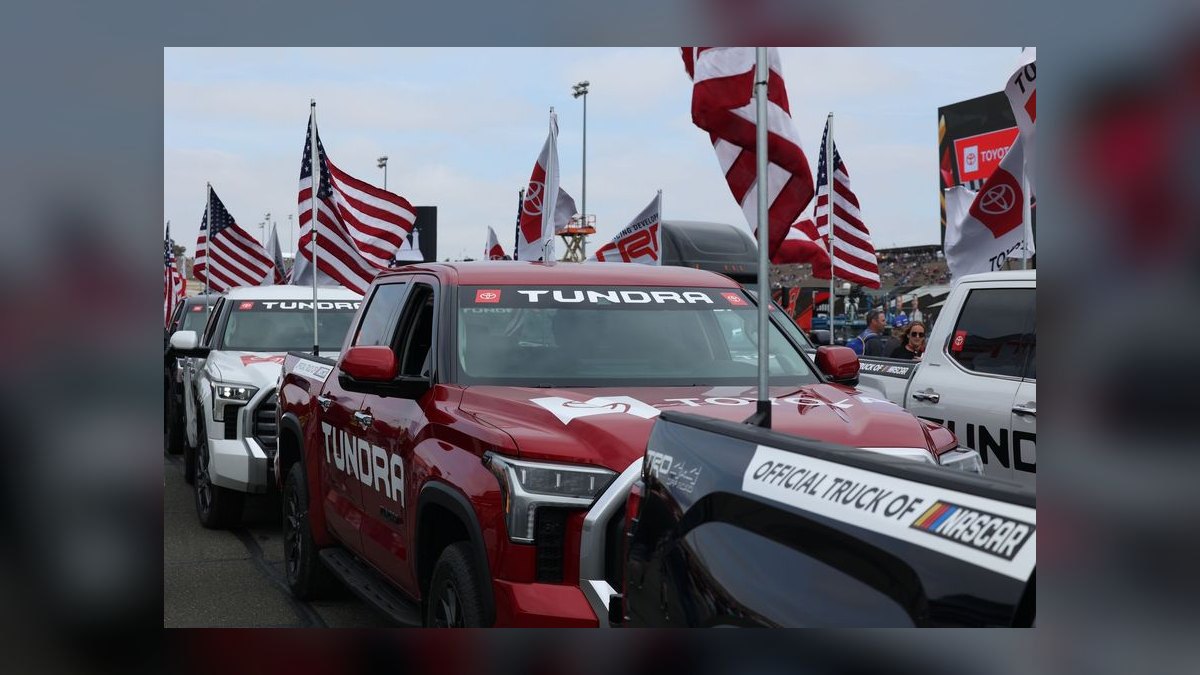
Mistake three: over-truck. This is the single most expensive error in the lineup. A Tundra that spends its life in a suburban driveway hauling nothing costs more to buy, more to fuel, more to insure, and more to park than the Tacoma that would have covered every actual job. Write down the heaviest thing you towed in the last three years. That number, not the number you imagine towing, sets the truck.
Mistake four: skipping the third-row reality check. The Highlander's third row is tighter than the Grand Highlander's. If adults will sit back there for more than a school run, sit in it yourself with the second row set where you'd actually use it. Families discover this after purchase constantly, and the fix is expensive.
Mistake five, on the commercial side: ignoring downtime cost. Fleet buyers who spec on purchase price alone routinely under-weight uptime. If a service van sits at a shop for three days, the revenue attached to those routes doesn't reschedule cleanly — it leaks to whoever answered the phone next. That's why the reliability reputation attached to models like the Tacoma, Sienna, and Highlander shows up on commercial lots far out of proportion to their sticker advantage. The same logic applies to a two-car household where one vehicle is load-bearing for income.
Mistake six: assuming trim safety gaps. Toyota Safety Sense 3.0 is standard down to the cheapest Corolla — adaptive cruise, lane tracing, automatic emergency braking. Do not pay up a trim expecting to unlock basic driver assistance you already have.
Decision framework: matching the model to the job
The cleanest way to think about the 2027 lineup is by job, not by segment. Four jobs cover almost every buyer.
Job one — one vehicle that does nearly everything. RAV4 Hybrid. All-wheel drive is standard on the hybrid via Toyota's electronic on-demand system, cargo room handles a Costco run and a road trip, efficiency is strong, and resale is class-leading. If you can only own one car and you don't need a bed or a third row, this is the default and the burden of proof sits with anything that displaces it.
Job two — minimum total cost of ownership. Corolla, hybrid if the budget stretches. Cheap to buy, cheap to insure, cheap to fuel, and the reliability record is the whole point. The hatchback adds cargo flexibility for buyers who want it. This is the correct answer for a commuter, a student, or a second household car, and it is not a compromise — it is the rational choice with a low price attached.
Job three — capability. Tacoma for midsize maneuverability and legendary resale, Tundra when the trailer is genuinely heavy, 4Runner when the terrain is the point and body-on-frame durability matters more than pavement manners. Note the convergence: all three now offer i-FORCE MAX hybrid options, so you are no longer trading efficiency away for capability.

Job four — people and stuff. Sienna if maximum interior volume and sliding-door access win; Highlander if you want a smaller footprint and only occasional third-row use. The Sienna's hybrid-only powertrain and roughly 36 mpg combined make it the efficiency answer here, and the built-in vacuum and refrigerated console on upper trims are genuinely useful rather than brochure filler.
Two models sit outside the four jobs and are better for it. The GR Corolla is a rally-bred hot hatch with adjustable torque split and available Torsen limited-slip differentials front and rear — buy it because you want it, not because it's rational. The Crown is the quiet-luxury play: lifted ride height, standard all-wheel drive, around 41 mpg in standard form, and a cabin that reads Lexus-adjacent at a Toyota price. For empty-nesters who want elevated seating without an SUV footprint, it's the most interesting car in the range.
Related questions
Which 2027 Toyota holds its value best?
Tacoma and RAV4 have historically led Toyota's resale rankings, with 4Runner close behind. Body-on-frame trucks and high-demand hybrid crossovers both benefit from constrained supply and durable reputations. Check current Kelley Blue Book residual data before assuming, since rankings shift year to year.
Is the RAV4 Prime worth the premium over the standard hybrid?
If your daily driving fits inside roughly 42 miles of electric range and you can charge at home, yes — you'll run mostly on electricity with 302 horsepower available when needed. Without home charging, the standard hybrid is the better financial choice.
Can a Tacoma do everything a Tundra can?
No. The Tacoma covers most utility trailers and light towing comfortably, but the Tundra's twin-turbo V6 and above-12,000-pound maximum rating handle loads the midsize truck should not attempt. Match the truck to your heaviest real load, not your largest imagined one.
Does the Camry still offer a non-hybrid option?
No. This Camry generation is hybrid-only, returning up to 51 mpg combined in front-drive form. All-wheel drive is available, producing 225 combined horsepower versus 232 for front-drive. If you want a gas-only Toyota sedan, the Corolla remains available.
Which Toyota makes the most sense for a small business fleet?
Tacoma for trades needing a bed, Sienna for passenger or courier work where cargo volume and fuel economy both matter, and RAV4 Hybrid for mobile service roles. All three combine strong uptime records with resale strength that protects the residual on the back end.
FAQ
Does the 2027 RAV4 Hybrid come with all-wheel drive on every trim?
Yes. All RAV4 Hybrid trims include Toyota's Electronic On-Demand All-Wheel Drive as standard. The system sends power rearward when traction drops, helping in rain, snow, and light off-road conditions without meaningfully hurting the roughly 39 mpg combined rating. There is no front-drive-only hybrid trim to accidentally order.
How much horsepower does the GR Corolla make, and is it usable daily?
The turbocharged 1.6-liter three-cylinder makes 300 horsepower and 295 lb-ft through standard GR-FOUR all-wheel drive. It is usable daily, but it is stiffer and louder than a standard Corolla, with less sound deadening and firmer suspension. Expect a genuine performance car's compromises, not a hot-hatch-flavored commuter.
What is the fuel economy difference between the Highlander and the Sienna?
The Highlander Hybrid returns roughly 35 mpg combined; the Sienna, which is hybrid-only, is EPA-rated around 36 mpg combined. They are close enough that fuel economy should not decide between them. Choose on door type, third-row access, and footprint instead — those differences are large and permanent.
Which Toyota trucks offer a hybrid powertrain in 2027?
Tacoma and Tundra both offer i-FORCE MAX hybrid options, and the redesigned 4Runner does as well. Tacoma and 4Runner hybrids reach up to 326 horsepower and 465 lb-ft; the Tundra's i-FORCE MAX reaches 437 horsepower and 583 lb-ft. All three share the TNGA-F body-on-frame platform.
Is Toyota Safety Sense 3.0 standard, or does it require a trim upgrade?
It is standard, including on the least expensive Corolla. The suite covers adaptive cruise control, lane tracing assist, and automatic emergency braking. Do not pay for a higher trim expecting to unlock baseline driver assistance — spend that money on hardware that actually differs between trims, like drivetrain or off-road equipment.
How should a business evaluate these models for work use?
Model total cost over the full hold period: purchase price, fuel at your real annual mileage, insurance class, expected maintenance, and residual value at trade-in. Then weight uptime heavily, because a vehicle in the shop stops the revenue attached to its route. Toyota's reliability record is the reason these models over-index on commercial lots.
Sources
- https://www.toyota.com/
- https://www.fueleconomy.gov/
- https://www.edmunds.com/toyota/
- https://www.caranddriver.com/toyota
- https://www.motortrend.com/cars/toyota/
- https://www.kbb.com/toyota/
- https://www.iihs.org/ratings
- https://www.nhtsa.gov/ratings
- https://www.consumerreports.org/cars/toyota/
Related on PULSE
- [Best Acura Models in 2027](/knowledge/ca0377)
- [Best Volvo Models in 2027](/knowledge/ca0379)
- [Best Cadillac Models in 2027](/knowledge/ca0378)
- [Best Tesla Models in 2027](/knowledge/ca0357)
- [Best Subaru Models in 2027](/knowledge/ca0356)
- [Best GMC Models in 2027](/knowledge/ca0353)
This page will be disappearing soon. Save it to your device for $1 — or read it free while it is here.
@Kory-White- · if Venmo asks, the last 4 of my number are 2012
 pulse-carsTop 10 Affordable Cars 2027 — Best Overall + Best Value
 pulse-carsTop 10 Luxury Sedans in 2027
 pulse-carsBest Used AWD Cars Under $20,000 in 2027 (Ranked)
 pulse-carsBest Used Hybrid Cars Under $40,000 in 2027 (Ranked)
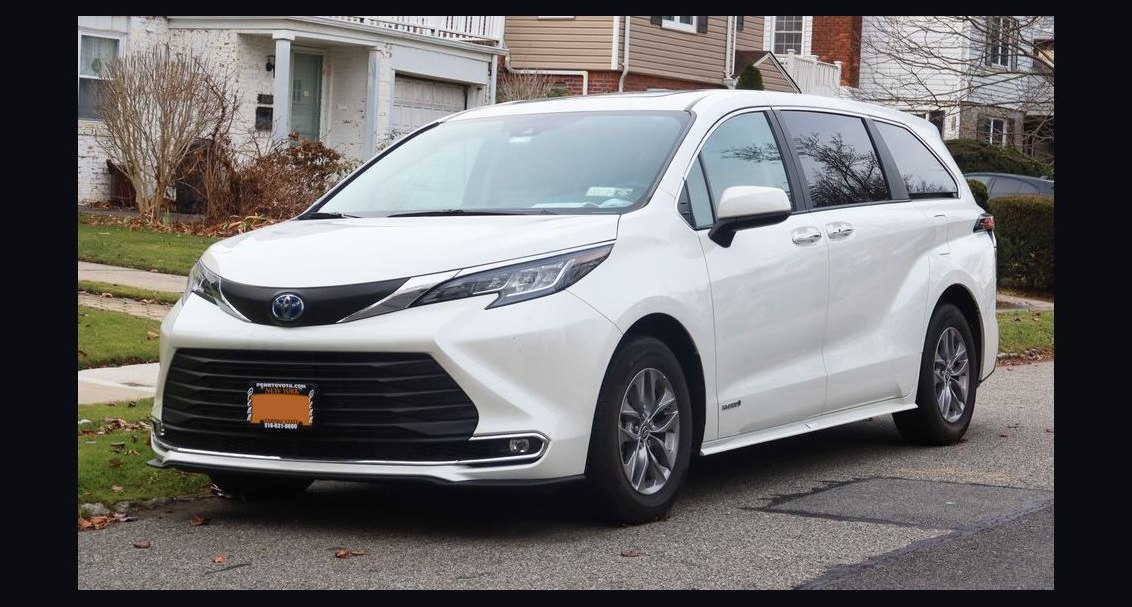 pulse-carsTop 10 Hybrid Minivans in 2027
 pulse-carsTop 10 Electric Sedans 2024 — Best Overall + Best Value
 pulse-carsBest Volkswagen GTI Generations (Ranked) in 2027
 pulse-carsBest Chrysler PT Cruiser Model Years (Ranked) in 2027
 pulse-carsBest Audi TT Model Years (Ranked) in 2027
 pulse-carsBest Acura NSX Generations (Ranked) in 2027