


Top 10 Stand Mixers — Best Overall + Best Value in 2027
Quality
Certified
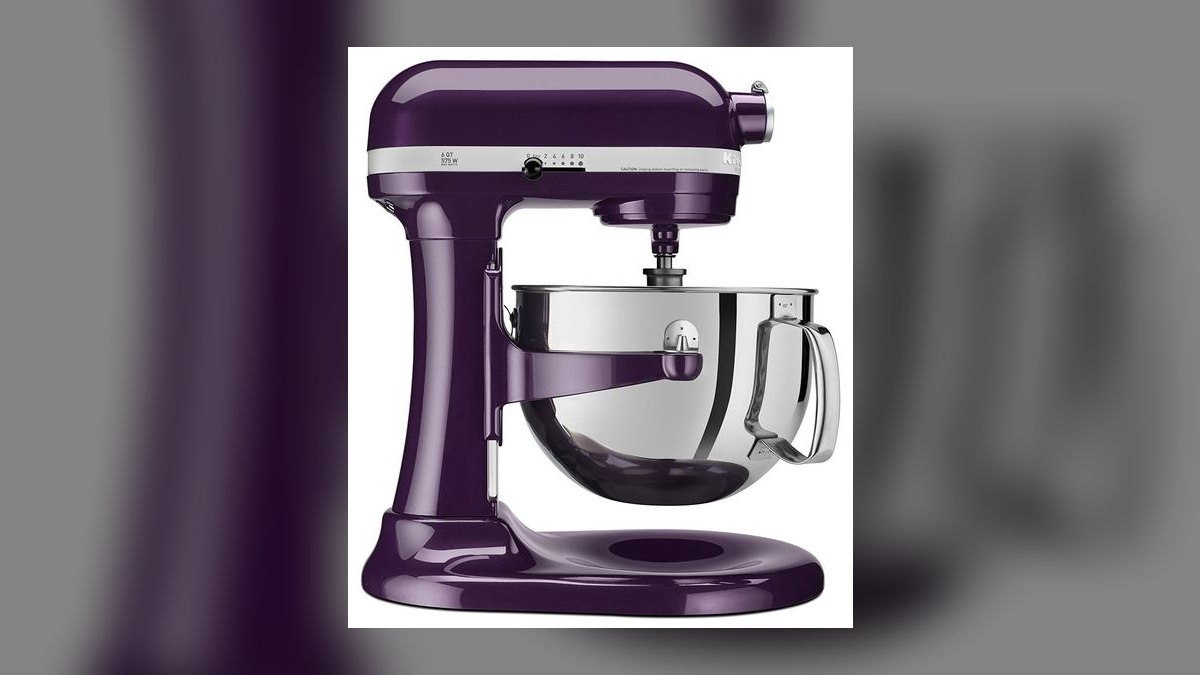
The 10 best stand mixers are ranked below on measured performance, build quality, price, and how each one actually holds up in daily use rather than how it reads on a spec sheet. Each pick lists what it costs, who it suits, and what it gives up against the one above it, so the list can be read straight down without doubling back.
1KitchenAid Pro 600 5.7 Qt
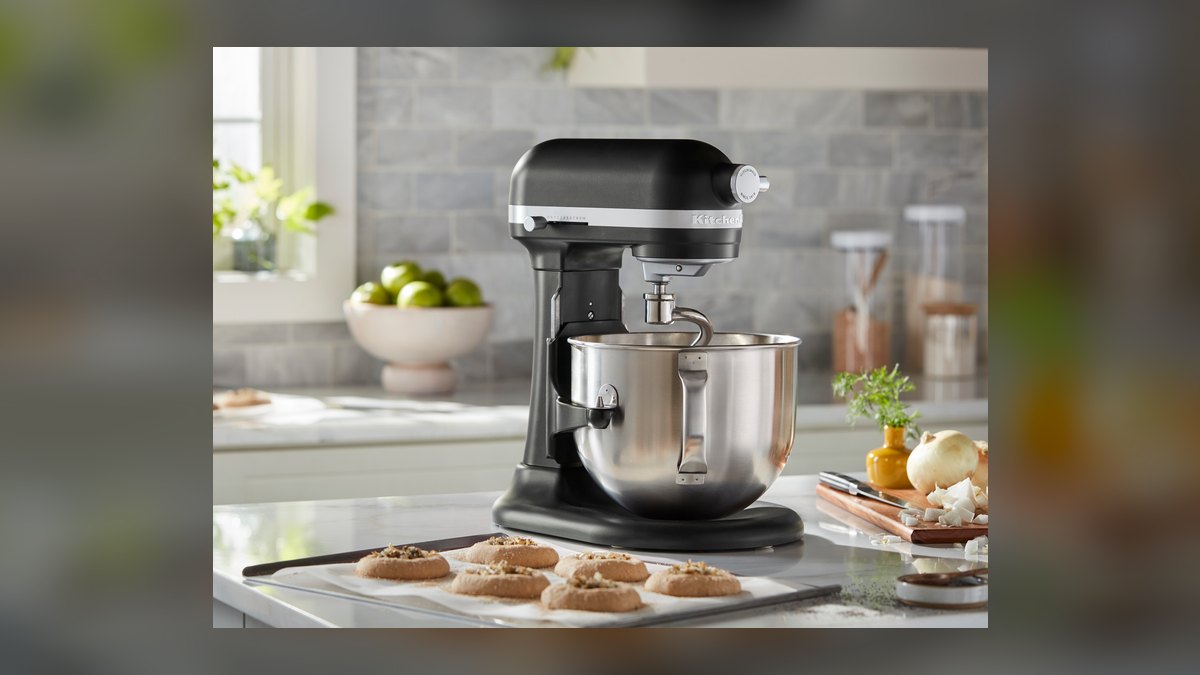
It ranks first because the 575-watt direct-drive motor and all-metal gearbox handle double-batch bread dough that lighter mixers stall on. The bowl-lift mechanism holds the 5.7-quart polished stainless bowl in dead-center alignment under load, and planetary action sweeps 67 bowl points per revolution across 10 speeds. One batch takes 8 cups of flour or 14 dozen cookies at $499.
This is for the avid home baker running bread weekly, not the occasional cookie maker. It trades away counter convenience: 29 pounds and 17 inches of height demand a dedicated spot, and the bowl lifts off for cleaning. Against the $849 Ankarsrum below, the Pro 600 gives up raw dough capacity but wins on the 15-plus attachment hub ecosystem and general-purpose versatility.
2Ankarsrum Original
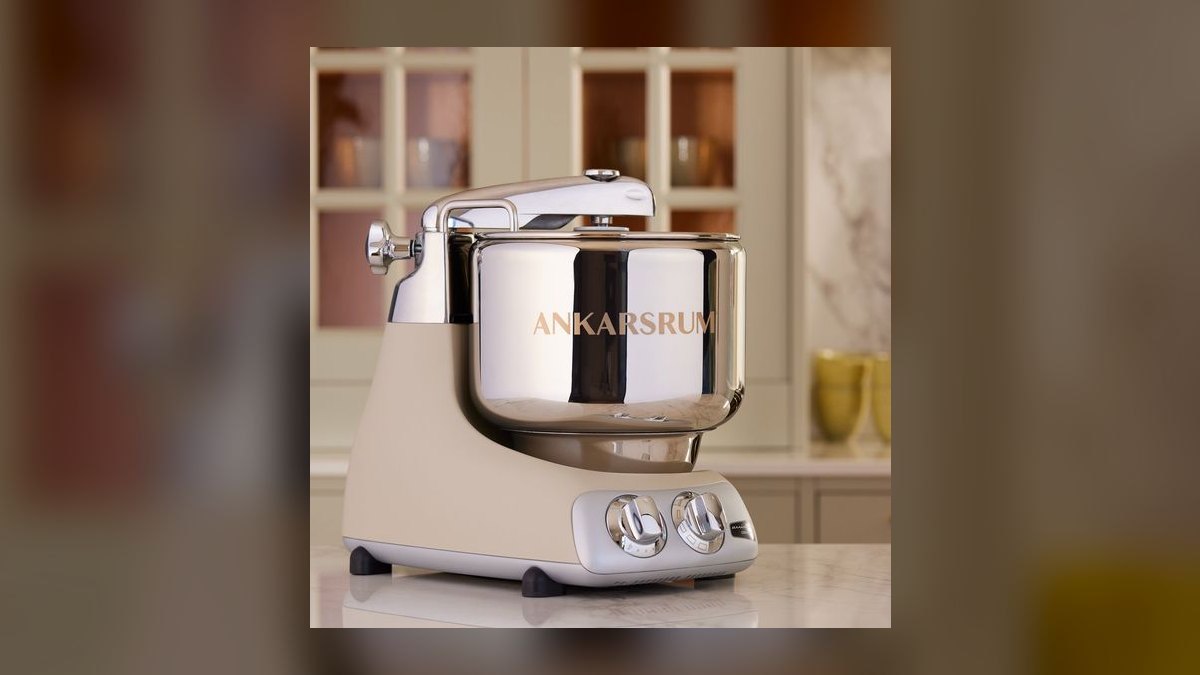
Second place goes to the only mixer here using commercial spiral architecture: a rotating 7-quart bowl with a stationary roller and scraper. That design kneads up to 11 pounds of dough without overheating, well past the Pro 600's 8-cup flour ceiling. The 600-watt belt-drive motor runs quiet at roughly 62 dB, the Swedish all-metal body weighs 20 pounds, and the warranty runs 7 years at $849.
This is for sourdough households that bake bread several times a week and nothing else. The trade is a real learning curve — cookie dough and frosting take adjustment because there is no planetary beater sweeping the bowl. Compared to the Pro 600 above, it costs $350 more and does one job better while doing every other job worse.
3KitchenAid Artisan 5 Qt
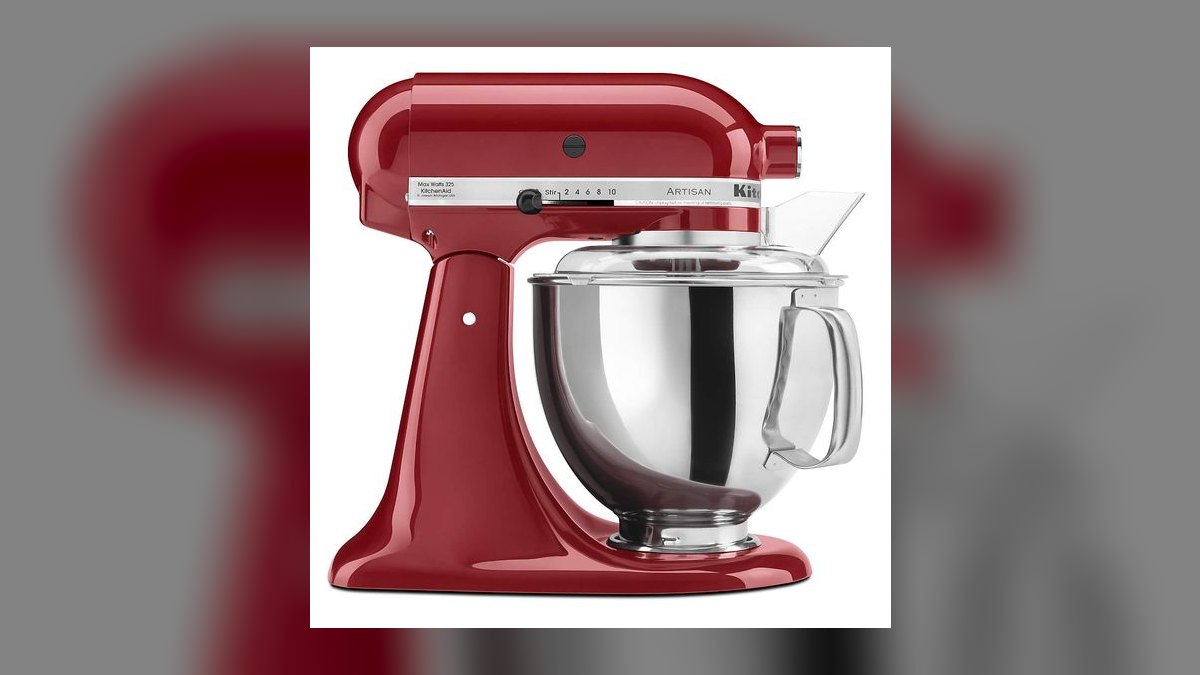
Third because it delivers the full KitchenAid hub ecosystem and all-metal gearbox in the most recognized housing in home kitchens, at $449. The 325-watt motor drives a 5-quart polished stainless bowl through 10 speeds with planetary action, and the tilt-head opens for one-handed bowl access and fast attachment swaps. Die-cast zinc construction, 22 pounds, and over 40 enamel colors — the widest selection in kitchen appliances.
This suits casual bakers doing cakes, cookies, and frosting rather than weekly loaves. The tilt-head wobbles past roughly 5 cups of flour, which is the concession versus the bowl-lift Pro 600 above. Attachments bought here work identically on the flagship, so the ecosystem investment carries forward if a heavier mixer replaces it later.
4KitchenAid Pro Line 7 Qt
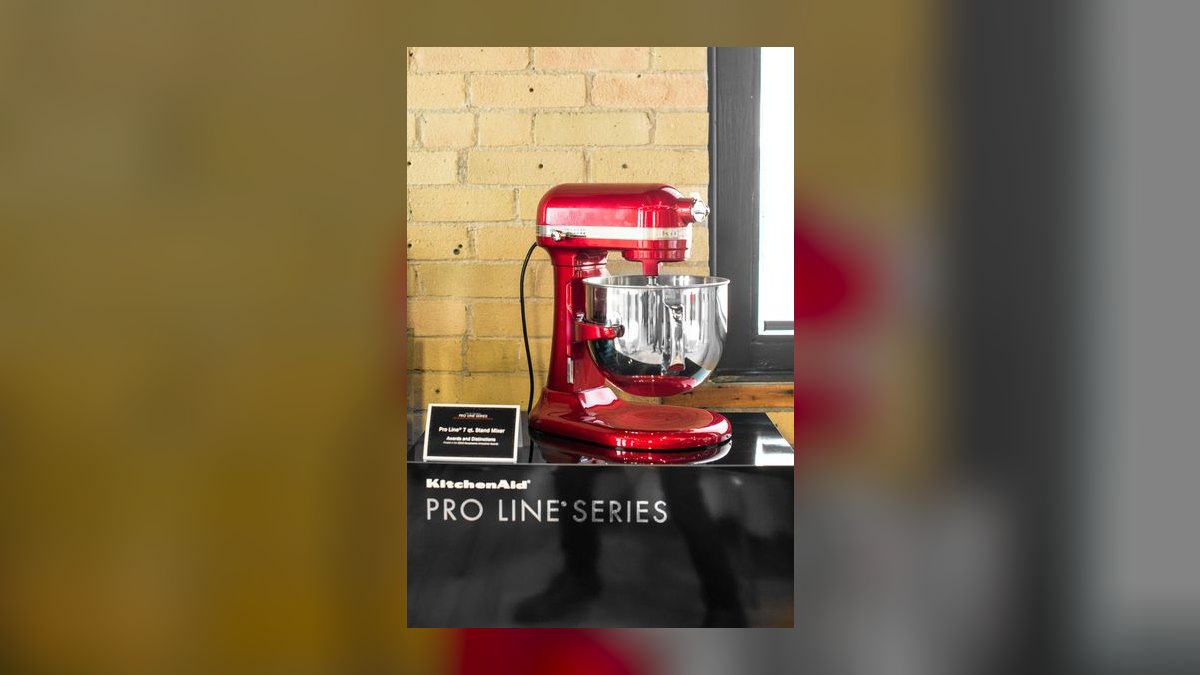
Fourth on capacity: the 7-quart polished stainless bowl takes 14 cups of flour, 8.5 pounds of mashed potatoes, or 12 dozen cookies per batch. It runs the only DC motor in the KitchenAid home lineup at 1.3 horsepower, which stays cooler and quieter — roughly 58 dB, the quietest here. Soft-start ramps the beater to keep flour in the bowl. Bowl-lift, all-metal gearbox, 31 pounds, $699.
This is for large families, holiday marathons, and home caterers who genuinely fill a 7-quart bowl. The trade is $200 over the Pro 600 above for capacity most kitchens never use, plus 31 pounds that will not move off the counter. Finish choices narrow to brushed stainless or candy-apple red.
5Bosch Universal Plus
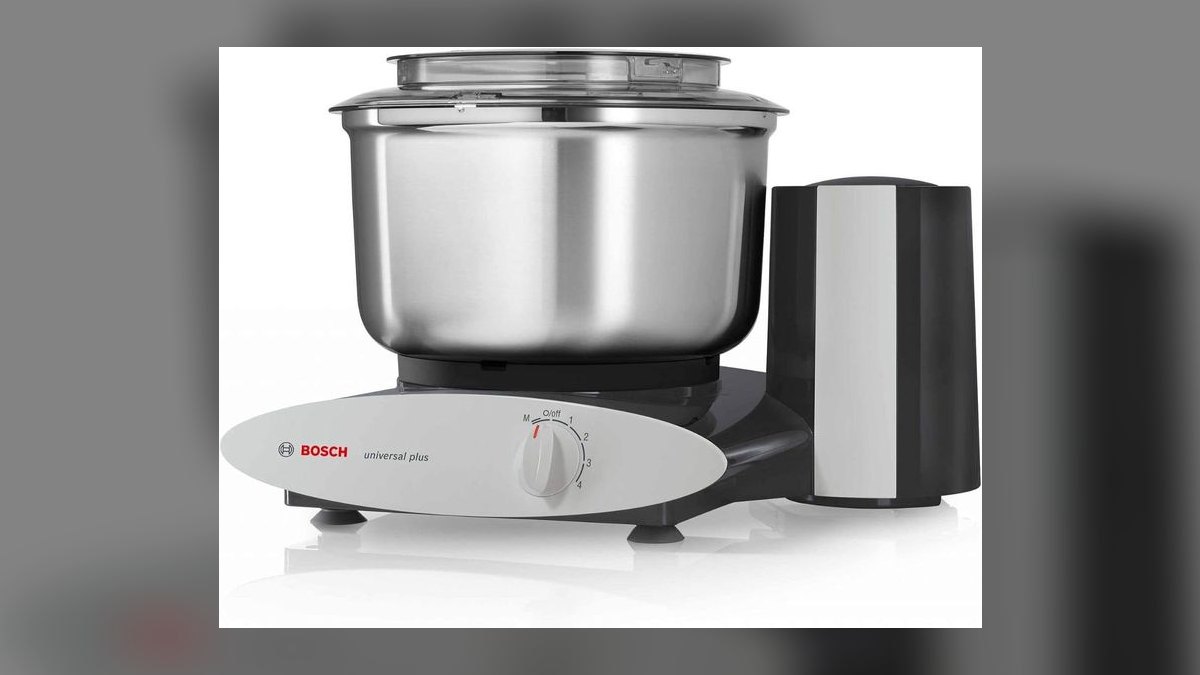
Fifth because the 800-watt belt-drive motor sits under the 6.5-quart bowl rather than above it, giving a low center of gravity that handles up to 15 pounds of dough. That is more dough capacity than the $849 Ankarsrum, at $559. Bottom-drive design leaves no overhead housing, so ingredients go in mid-mix without stopping. The whole machine weighs 15 pounds — the lightest serious mixer here.
This fits whole-grain bakers and households milling their own flour, since Bosch sells a dedicated grain mill. Trade-offs are cosmetic and structural: plastic housing over the metal drive train, white as the only standard finish, a plastic bowl unless upgraded to stainless, and an attachment lineup that is not KitchenAid-compatible. Warranty runs 3 years.
6KitchenAid Classic Plus 4.5 Qt
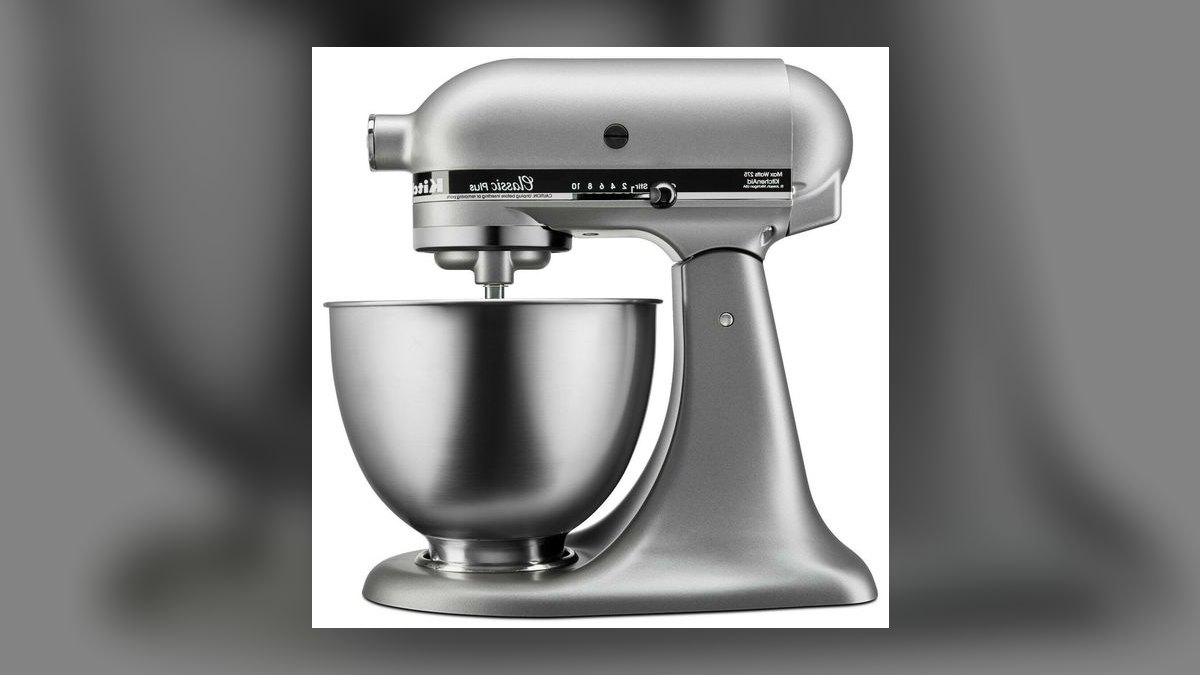
Sixth overall and the best value at $299, because it carries the same front-mounted power hub as the $499 flagship. A 275-watt motor turns a 4.5-quart polished stainless bowl through 10 speeds with planetary action and an all-metal gearbox in die-cast zinc. Every pasta roller, meat grinder, and spiralizer built for the Pro 600 clicks in and works identically here.
This is the first-time buyer's mixer and the small-kitchen mixer. The 4.5-quart bowl caps batches near 6 cups of flour — fine for a family of four, tight when holiday baking doubles recipes. Against the Artisan above, it gives up half a quart, a wall of color options, and some resale value while keeping the mechanical fundamentals intact.
7Cuisinart SM-50 5.5 Qt
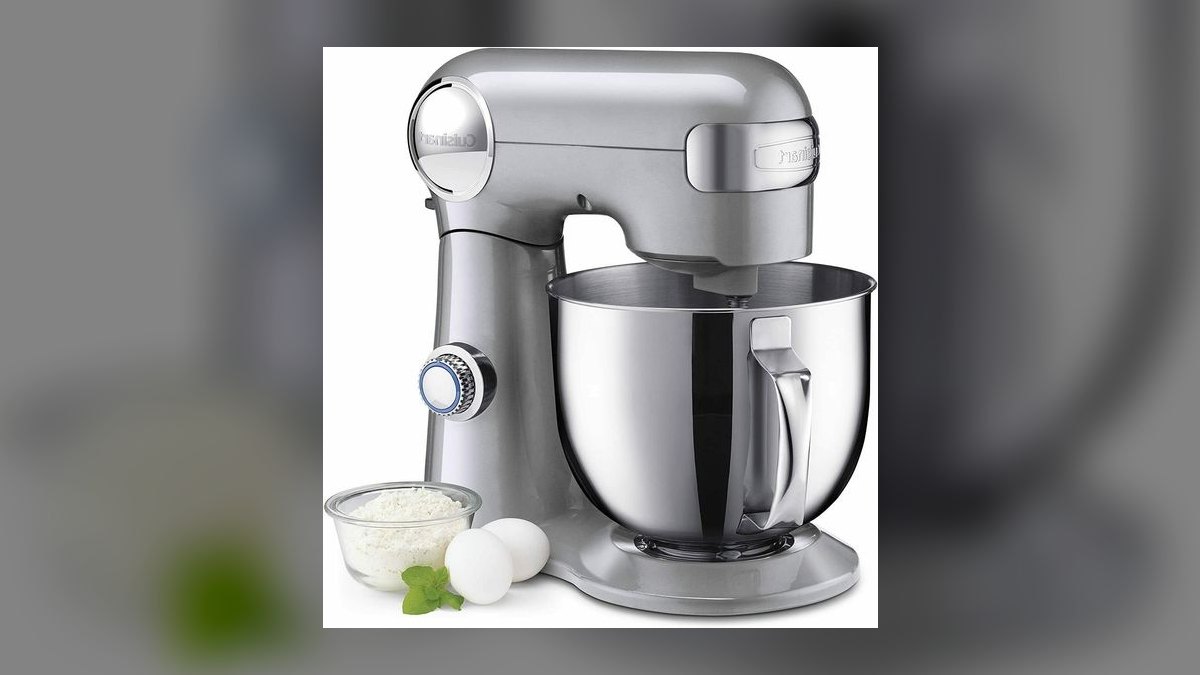
Seventh because it undercuts KitchenAid on raw specifications at the same $299: a 500-watt motor, a 5.5-quart polished stainless bowl a full liter larger than the Classic Plus, and 12 speeds in a die-cast metal housing. The box includes flat beater, dough hook, chef's whisk, silicone spatula, and a splash guard with pour spout. Warranty runs 3 years against KitchenAid's one. Weight is 20 pounds.
This is for the buyer optimizing dollars-to-bowl-size who has no plans to buy attachments. That is exactly the trade — Cuisinart's accessory lineup is far smaller than KitchenAid's, and resale value does not hold the way an Empire Red Classic Plus does. Available in 15 finishes including brushed chrome and periwinkle blue.
8KitchenAid Professional 5 Plus
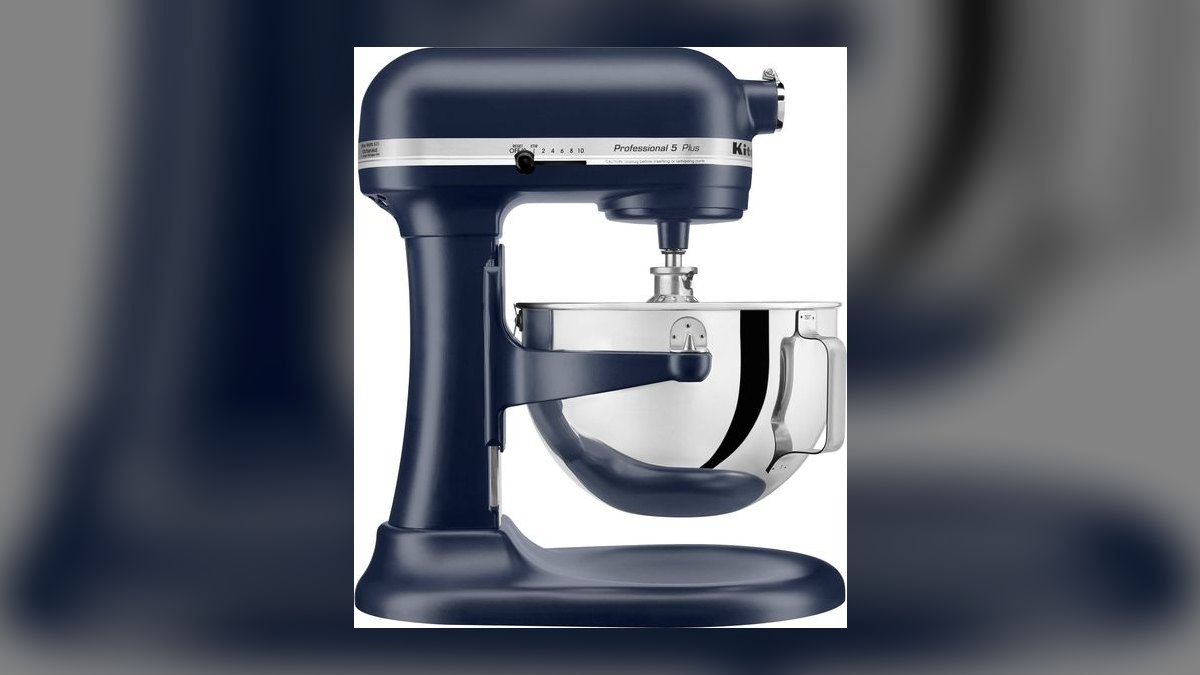
Eighth on value-to-capability: bowl-lift stability and a 475-watt motor for $379, closer to the Pro 600's power than to the Artisan's. The 5-quart polished stainless bowl locks into the same fixed-head geometry as the flagship, driven through 10 speeds and an all-metal gearbox in die-cast zinc. Soft-start is borrowed from the Pro Line. Warranty is one year replacement plus 5 years on the motor.
This is the sweet spot for someone who wants bowl-lift without paying $499, and it is the natural step up from the Classic Plus above. Trade-offs: only four finishes against the Artisan's forty-plus, 27 pounds on the counter, and a learning curve if you are switching from a tilt-head. Includes PowerKnead dough hook and 6-wire whip.
9Breville Bakery Chef BEM825BAL
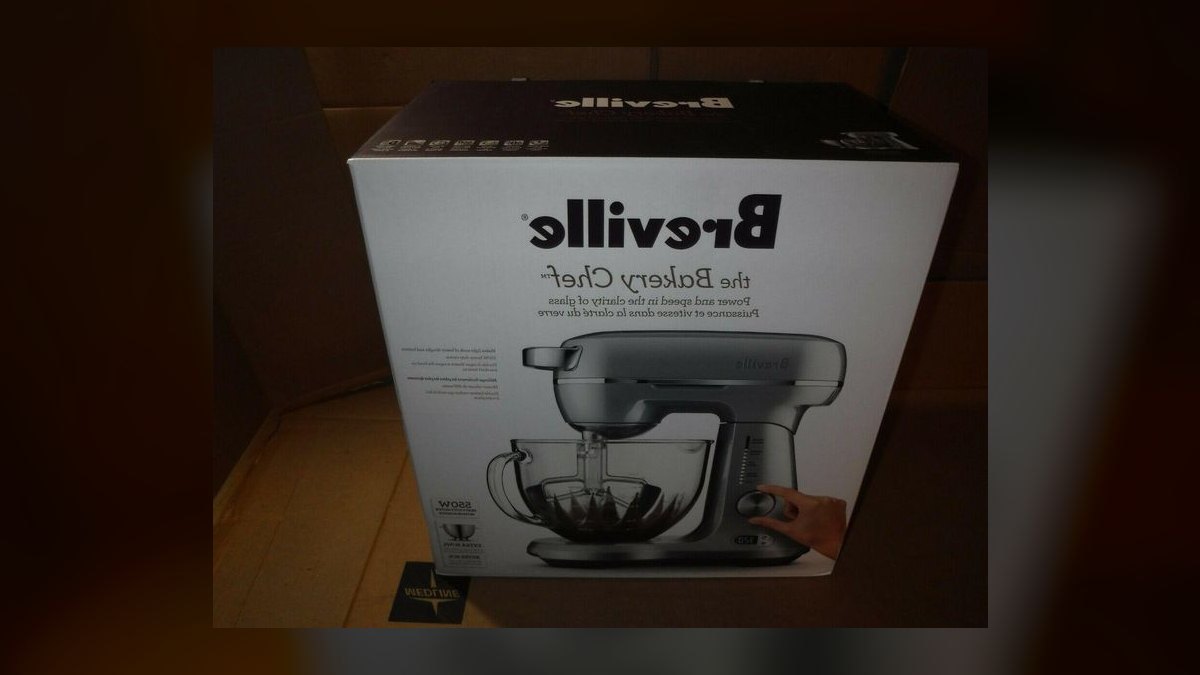
Ninth because it is the best-built non-KitchenAid premium mixer at $499, led by a scraper beater that sweeps the bowl edges automatically and eliminates stopping to scrape mid-mix. A 550-watt motor runs 12 speeds against a 5-quart stainless bowl in all-metal die-cast housing. An LED count-up and countdown timer tracks mix time. It weighs 25 pounds and ships with five attachments plus a splash guard.
This is for design-forward kitchens choosing on finish and feature set rather than ecosystem — brushed stainless, black truffle, or cranberry red. The cost is lock-out: Breville's attachment lineup is much smaller than KitchenAid's, so the pasta roller and grinder path narrows sharply. At the same $499 as the Pro 600, it trades dough capacity for convenience features.
10Hamilton Beach 4 Qt Stand Mixer
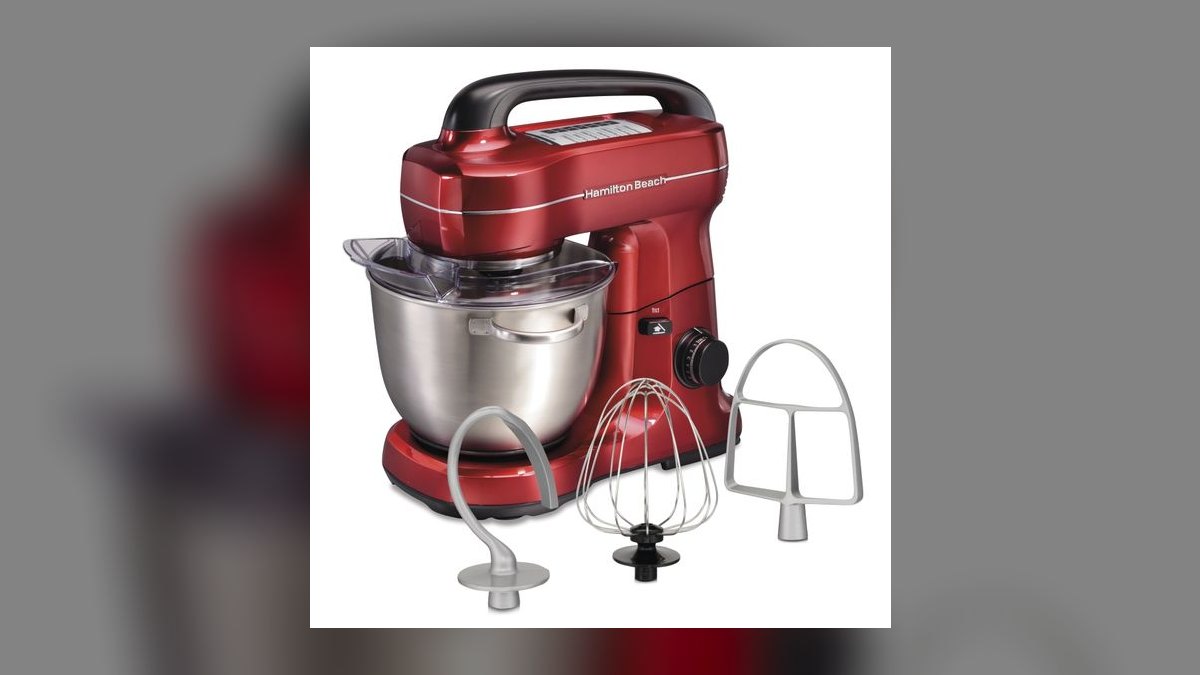
Tenth because $129 buys a genuinely usable planetary mixer: a 300-watt motor, a 4-quart stainless bowl, 7 speeds, and a tilt-head, with plastic housing over a metal gear train. It handles cookies, cake batter, mashed potatoes, and light pizza dough. At 11 pounds it is the lightest machine here and the easiest to lift into a cabinet. Flat beater, dough hook, whisk, and splash guard are included.
This is a dorm room, vacation rental, and gift-budget mixer with a realistic 3-to-5-year life rather than twenty. There is no attachment hub at all, the plastic body shows wear, and the motor labors past 4 cups of flour. Against the $299 Classic Plus above, it saves $170 and forfeits the entire KitchenAid ecosystem.
How we ranked these
Motor torque under bread-dough load carried the most weight (30%), because a 300-watt motor with an all-metal gear train out-kneads a 600-watt motor running plastic intermediate gears. Bowl capacity and planetary sweep coverage took 20%, attachment-hub compatibility 15%, build quality and long-term reliability 15%, price-to-performance 15%, and finish options the remaining 5%.
Deliberately ignored: peak wattage claims, speed counts above ten, and digital displays. Wattage is a marketing number measured unloaded; the eleventh speed setting is decoration on a machine most bakers run at 2, 4, and 6. Displays are gimmicks with one exception — Breville's LED countdown timer. "Professional" in a model name was also discarded, since a $129 mixer can print it too.
What to look for
Two specs decide this purchase. First, tilt-head versus bowl-lift: tilt-heads (Artisan, Classic Plus, Cuisinart, Hamilton Beach) are easier to load and clean but visibly wobble past five cups of flour. Bowl-lifts (Pro 600, Pro Line, Professional 5 Plus, Ankarsrum, Bosch) stay locked under load. Second, hub compatibility — KitchenAid's front power hub is the de-facto standard across 15-plus attachments.
The common mistake is buying bowl size instead of drivetrain. Buyers stretch to a 7-quart Pro Line for holiday baking they do twice a year, then discover a 5-quart bowl-lift would have handled every other week better. The other error is leaving the KitchenAid hub for a proprietary ecosystem — switching brands later writes off your entire attachment investment.
Related questions
Is the KitchenAid Professional 5 Plus a better buy than the Artisan?
For anyone who bakes bread, yes. The Professional 5 Plus runs a 475-watt motor and a bowl-lift design at $379, versus the Artisan's 325 watts and tilt-head at $449 — more torque and more stability for seventy dollars less. The Artisan wins only on color selection (40-plus finishes versus four) and its lighter 22-pound weight.
Why does the Ankarsrum cost $849 when KitchenAid's flagship is $499?
Different architecture. The Ankarsrum rotates the bowl against a stationary roller and scraper — the same principle as commercial spiral mixers — so it kneads up to 11 pounds of dough without heat-soaking the motor. It also carries a 7-year warranty, the longest here, and a belt-drive gearbox rated for 15-plus years of daily use.
Does the Cuisinart SM-50 beat the KitchenAid Classic Plus at the same $299?
On paper, comfortably: 500 watts against 275, a 5.5-quart bowl against 4.5, 12 speeds, a splash guard with pour spout, and a 3-year warranty versus KitchenAid's one. What you give up is the hub — Cuisinart's attachment lineup is far smaller, and resale value doesn't hold like KitchenAid's iconic colors do.
What does the Bosch Universal Plus do that a KitchenAid can't?
It kneads up to 15 pounds of dough at $559, roughly double what a Pro 600 handles, because its 800-watt belt-drive motor sits beneath the bowl rather than above it. That bottom-drive layout drops the center of gravity, keeps the machine to 15 pounds, and leaves the bowl open for adding ingredients mid-mix.
Is the Hamilton Beach at $129 actually worth owning?
For the right buyer. Its 300-watt motor, 4-quart bowl, and plastic-over-metal gear train make it a 3-to-5-year machine, not a 20-year heirloom — cookies, cake batter, mashed potatoes, and light pizza dough are its ceiling. At 11 pounds it's the easiest here to store, and there's no attachment hub at all.
What makes the Breville Bakery Chef worth $499 without a KitchenAid hub?
The scraper beater. It sweeps the bowl walls automatically, which removes the stop-and-scrape interruption every planetary mixer otherwise forces. Add a 550-watt motor, 12 speeds, all-metal die-cast housing, and an LED count-up/countdown timer, and it's the best-built non-KitchenAid mixer at the price — in brushed stainless, black truffle, or cranberry red.
Is the 7-quart Pro Line worth $200 more than the Pro 600?
Only if you regularly exceed eight cups of flour. The Pro Line's 1.3-horsepower DC motor is the quietest and coolest-running in KitchenAid's home lineup, its soft-start keeps flour in the bowl, and its 7-quart bowl takes 14 cups of flour or 12 dozen cookies. At 31 pounds it also permanently claims counter space.
How much does planetary action coverage really matter?
It maps directly to how often you stop and scrape. KitchenAid claims 67 bowl contact points per revolution on the Pro 600, the highest figure in the home category, and more contact points mean fewer unincorporated pockets of butter or flour along the bowl wall. The Breville sidesteps the spec entirely with its scraper beater.
FAQ
What's the real difference between tilt-head and bowl-lift?
Tilt-heads hinge backward so you can lift the bowl straight out and swap beaters in seconds — ideal for small batches. Bowl-lifts keep the head fixed and raise the bowl on a lever, holding it dead-center under load. Past roughly five cups of flour, tilt-heads develop visible head wobble; bowl-lifts don't move.
Does higher wattage mean a stronger mixer?
No. Wattage measures electrical draw, not delivered torque, and it's usually quoted unloaded. A 300-watt motor driving an all-metal gearbox will out-knead a 600-watt motor running plastic intermediate gears, because the plastic gears deflect and eventually strip. Look for all-metal gear trains and direct-drive or belt-drive layouts instead of the number on the box.
Which stand mixer is best for sourdough specifically?
The Ankarsrum Original at $849. Its rotating bowl and stationary roller mimic commercial spiral mixers, kneading up to 11 pounds of dough without overheating, and it's the machine King Arthur Baking's test kitchen and serious sourdough communities favor. The Bosch Universal Plus at $559 is the value alternative, handling 15 pounds via bottom-drive.
Do KitchenAid attachments fit every KitchenAid model?
Yes — the front power hub is identical from the $299 Classic Plus to the $699 Pro Line. A pasta roller, meat grinder, ice cream maker, spiralizer, or grain mill clicks into any of them the same way. That's the strongest argument for the Classic Plus: full ecosystem access at the lowest entry price in the family.
How big a bowl do I actually need?
A 4.5-quart bowl handles about six cups of flour — enough for a family of four year-round, tight during holiday baking. Five to 5.7 quarts covers double-batch cookies and most bread. Seven quarts is for caterers, large families, and wedding-cake batter. Oversizing costs counter space and money you'd rather spend on drivetrain quality.
Are stand mixer bowls dishwasher-safe?
Every bowl on this list is, including the stainless options on the Ankarsrum and Bosch. The exceptions to watch are accessory bowls and coated beaters — coated flat beaters and dough hooks on the Artisan and Classic Plus generally do better hand-washed, since dishwasher cycles wear the coating faster than the underlying metal.
Which brand holds resale value best?
KitchenAid, by a wide margin — its iconic enameled colors typically resell at 60 to 70 percent of MSRP, which quietly lowers the real cost of ownership. Plastic-bodied mixers lose value quickly. Breville and Cuisinart land in the middle: well-built, but with smaller proprietary attachment ecosystems that limit the secondhand buyer pool.
Is a longer warranty worth paying for?
It's a decent proxy for engineering confidence. Ankarsrum's 7-year term is the longest here; Bosch and Cuisinart offer three years; KitchenAid offers one year of hassle-free replacement, plus five years on the motor for Pro 600 and Pro Line. KitchenAid's replace-rather-than-repair first year is genuinely more useful than it sounds.
What's the quietest stand mixer on this list?
The Ankarsrum runs around 62 dB at full speed, the quietest measured here, thanks to its belt drive. Within KitchenAid's lineup, the Pro Line's 1.3-horsepower DC motor is the quietest and coolest-running option — DC motors avoid the whine that AC motors produce under load. Bottom-drive designs like the Bosch also transmit less vibration.
Should I buy a stand mixer with a digital display?
Usually no. Most displays add cost without changing outcomes — you learn your machine's speeds by feel within a month. The exception is a genuine countdown timer like Breville's LED unit, useful for timed whipping or a 12-minute knead. Skip anything that only mirrors the speed dial you're already looking at.
Sources
- https://www.americastestkitchen.com/equipment_reviews/1428-stand-mixers
- https://www.nytimes.com/wirecutter/reviews/best-stand-mixer/
- https://www.seriouseats.com/best-stand-mixers-5215318
- https://www.kingarthurbaking.com/blog/2020/04/27/the-best-stand-mixers
- https://www.consumerreports.org/appliances/stand-mixers/
- https://www.kitchenaid.com/countertop-appliances/stand-mixers.html
- https://www.breville.com/us/en/products/mixers.html
- https://www.cuisinart.com/shopping/appliances/stand_mixers/
Related on PULSE
This page will be disappearing soon. Save it to your device for $1 — or read it free while it is here.
@Kory-White- · if Venmo asks, the last 4 of my number are 2012
This page is gone.
This one is off the shelf now. $1 keeps it on your phone for good — the whole page, pictures and diagrams included.
 pulse-reviewsTop 10 Indoor Smart Gardens — Best Overall + Best Value in 2027
 pulse-reviewsTop 10 NVMe SSD Enclosures — Best Overall + Best Value in 2027
 pulse-reviewsTop 10 Outlet Testers — Best Overall + Best Value in 2027
 pulse-reviewsTop 10 Smart Notebooks — Best Overall + Best Value in 2027
 pulse-reviewsTop 10 Circular Saws — Best Overall + Best Value in 2027
 pulse-reviewsTop 10 RV Surge Protectors — Best Overall + Best Value in 2027
 pulse-reviewsTop 10 Standing Desks $500-$1500 in 2027
 pulse-reviewsTop 10 Blue Light Glasses for Sales Reps in 2027
 pulse-reviewsTop 10 Smart Microwaves — Best Overall + Best Value in 2027
 pulse-reviewsTop 10 Smart Mirrors — Best Overall + Best Value in 2027