


What is the price range for good noise-cancelling headphones in 2027?
Quality
Certified

Good noise-cancelling headphones in 2027 span roughly $80 to $450. Solid mid-tier over-ears land near $150–$250, flagship models from Sony, Bose, and Apple sit around $350–$450, and budget ANC that genuinely cancels engine drone starts near $80–$120. Under about $60, cancellation quality drops sharply.
The outcome you should expect
Set your expectation by tier, not by brand. The price range for good noise-cancelling headphones is wide because "good" means different things at each rung, and the jump in perceived quiet between rungs is not linear. Spending twice as much rarely gives you twice the silence — it gives you a better midrange, more reliable microphones, longer battery, and a companion app that does not crash.
At the entry rung, roughly $80 to $120, you are buying single-mode feedforward or hybrid ANC that flattens steady low-frequency noise. Airplane cabin rumble, a bus engine, an HVAC return, the hum of an open-plan office ceiling — those drop noticeably. What does not drop is speech. A coworker two desks over is still intelligible. Keyboard clatter still comes through. If your actual problem is a chatty office rather than a commute, entry-tier cancellation will disappoint you regardless of how the box is marketed.
The middle rung, roughly $150 to $250, is where most buyers should land. This is the tier where hybrid ANC with both feedforward and feedback microphones becomes standard, where adaptive modes adjust cancellation strength to the room, and where the transparency mode stops sounding like a cheap hearing aid. Battery life in this band typically runs 30 to 50 hours with ANC engaged. Multipoint Bluetooth — connecting to a laptop and a phone simultaneously — is common but not universal, so check the spec sheet rather than assuming.
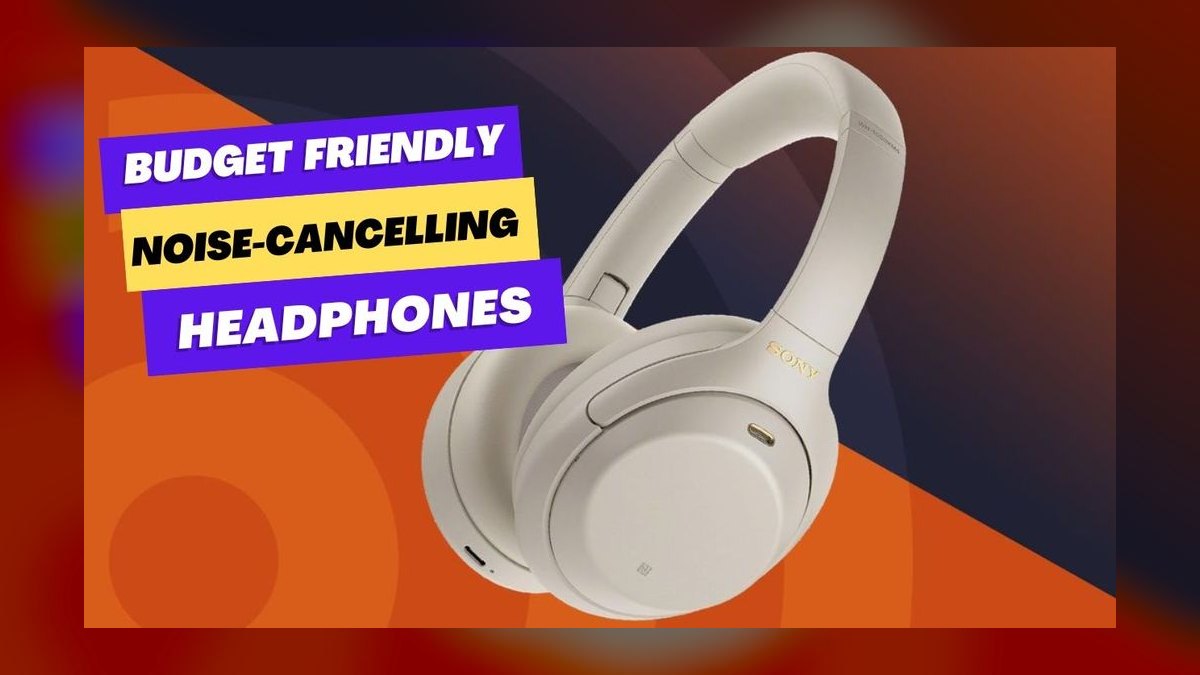
The flagship rung, roughly $300 to $450, buys the last increment of quiet plus the ecosystem features. Sony's WH-1000X line, Bose's QuietComfort Ultra family, and Apple's AirPods Max all sit in or near this band at list price. Here you get the best speech attenuation available in consumer gear, spatial audio with head tracking, call microphones that survive wind, and firmware that keeps improving for years after purchase. You also get the most aggressive discounting: flagships from the prior generation routinely fall into the $200s during major sale events, which is the single best value play in the entire category.
Above $450 you are in audiophile and specialty territory — planar magnetic designs, luxury materials, aviation-certified headsets. Cancellation stops being the reason for the price. If your goal is a quiet commute or a focused workday, nothing above $450 will make you meaningfully happier than a discounted flagship.
The practical takeaway: pick the rung that matches your dominant noise source, then wait for a sale rather than paying list. Most people who spend $400 would have been equally satisfied at $220.
What drives that outcome

Three forces set the price of noise-cancelling headphones, and understanding them tells you where your money actually goes.
The first is the microphone and processing stack. Basic ANC uses one microphone outside each earcup — feedforward — to sample incoming noise and generate an inverted waveform. It is cheap and it works on predictable low-frequency sound. Hybrid ANC adds a second microphone inside the cup, next to the driver, so the system hears what actually reached your ear and corrects for leakage, ear shape, and glasses arms breaking the seal. That inner microphone plus the digital signal processing to run both loops is a real bill-of-materials cost, and it is the clearest dividing line between the $90 tier and the $200 tier.
The second is passive isolation, which costs money in ways buyers underrate. Cancellation circuits handle low frequencies well and high frequencies poorly — physics makes short wavelengths hard to invert in real time. Everything above roughly 1 kHz is blocked mechanically, by the clamp of the headband, the density of the earpad foam, and the seal against your skull. Good pads use layered memory foam with protein leather that stays supple for years. Cheap pads use a single foam density that flattens in months, at which point cancellation performance drops even though the electronics are unchanged. When people say their $100 headphones "stopped cancelling," the pads are usually the culprit, not the chip.

The third is software and support lifetime. A flagship ships with a companion app that offers adjustable ANC strength, EQ presets, custom EQ, ear-tip or seal testing, wear detection, and firmware updates. That app is maintained by an engineering team for the life of the product, and its cost is amortized across every unit sold. Budget brands often ship an app once and abandon it. If you plan to keep headphones five years, support lifetime is worth real money.
There is a fourth, quieter driver: form factor. Over-ear headphones cancel better than in-ear buds at the same price because the earcup gives you a large sealed volume and room for bigger drivers and more microphones. Noise-cancelling earbuds in the $150–$300 band are competitive on convenience but generally trail same-price over-ears on sustained low-frequency attenuation. If maximum quiet per dollar is the goal, over-ear wins. If pocketability matters more, you are paying a premium for the miniaturization.
Benchmarks and realistic ranges
Use these as sanity checks when you compare listings.
Under $60. Treat ANC here as a marketing checkbox. Some models produce a faint pressure sensation and a modest reduction in low rumble; many produce audible hiss that is worse than the noise it replaces. If your budget is genuinely this tight, well-sealed passive over-ears or foam-tip in-ears often deliver more real-world quiet than cheap active circuitry, and they never hiss.
$80–$120. The legitimate entry point. Expect meaningful reduction of engine and HVAC noise, 25 to 40 hours of battery, USB-C charging, and a transparency mode that is usable but noticeably processed. Call quality is the usual weak spot — the microphone array is small and wind handling is poor. Good for students, gym use, and travel where you mostly listen rather than talk.

$150–$250. The value sweet spot and where most buyers should aim. Hybrid ANC, adaptive modes, 30 to 50 hours with ANC on, multipoint on most models, folding hinges and a real case, and pads worth replacing rather than discarding. Codec support broadens here — aptX Adaptive or LDAC on Android-oriented models, AAC everywhere. Firmware support is typically several years.
$300–$450. Flagship list pricing. Best-in-class cancellation including partial speech attenuation, the best call microphones, spatial audio with head tracking, seal-detection routines that tune ANC to your head, and multi-year firmware cadence. Prior-generation flagships discount hard, which is the arbitrage worth waiting for.
$450 and up. Specialty. Audiophile ANC, luxury build, or aviation headsets built to a different standard entirely. Diminishing returns on quiet.
A few cross-cutting benchmarks. Battery: anything claiming over 60 hours with ANC engaged deserves scrutiny, and published figures are usually measured at modest volume. Weight: over-ears above roughly 300 grams get uncomfortable past two hours regardless of padding. Warranty: one year is standard, two years signals a manufacturer confident in its hinges — hinges and headband joints are the most common mechanical failure point in this category. Replacement pads: confirm they are sold separately before you buy, because a $25 pad set at year three effectively resets the headphone.
On timing, the price range compresses predictably. Flagships launch at their highest price, hold it for six to nine months, then settle 15 to 25 percent below list once the next generation is announced. Mid-tier models discount less dramatically but more frequently. Buying a one-generation-old flagship in the $220–$280 window is consistently the strongest value in the whole market, and the cancellation gap versus the current model is small enough that most listeners cannot identify it blind.
Risks, edge cases, and failure modes

The most common mistake is buying for the wrong noise. Cancellation is excellent on periodic low-frequency sound and mediocre on transient, broadband, high-frequency sound. A jet engine is nearly ideal — steady, low, predictable. A toddler, a barking dog, a leaf blower, or a nearby conversation is nearly worst-case. Buyers who spend $400 hoping to silence an open-plan office are frequently disappointed, not because the product failed but because the physics never promised that. If speech is your problem, prioritize passive seal and clamp force, and accept that you will likely still need masking audio or white noise on top of ANC.
The second failure mode is fit. Glasses break the earpad seal, and a broken seal degrades both passive isolation and the feedback loop's accuracy. Some flagships compensate with adaptive routines that re-measure the seal; budget models do not. If you wear glasses daily, weight your decision toward thicker, softer pads and toward models with seal-detection, and be prepared to try more than one before committing.
Third, cabin pressure sensation. A minority of listeners experience active cancellation as an uncomfortable pressure or "suction" feeling, particularly at maximum strength. This is not correlated with price — expensive models often cancel harder and therefore trigger it more. Adjustable ANC strength, common at $150 and above, is the mitigation. If you are sensitive, buy from a retailer with a real return window and test on an actual commute rather than in a store.
Fourth, hiss and self-noise. Every active circuit adds a small noise floor. Well-engineered systems keep it inaudible; cheap ones do not. Judge this in silence with music paused, which is precisely the condition store demos avoid.
Fifth, obsolescence risk that is not about sound. Bluetooth versions advance, codec licensing changes, and companion apps lose OS compatibility. A five-year-old headphone with abandoned firmware can lose multipoint reliability or stop pairing cleanly with a new phone. Cheap models carry more of this risk because the vendor has less incentive to maintain them.
Sixth, the refurbished and grey-market trap. Manufacturer-refurbished units from the brand's own store are usually a genuinely good deal with warranty intact. Anonymous marketplace listings at implausible discounts are a different animal — counterfeit flagships are common in this category, and they look convincing until you use them. Verify serial numbers through the manufacturer's app where that is supported, and be suspicious of any flagship priced far below the prevailing street price.
Finally, consider the adjacent question of whether headphones are the right purchase at all. For a home office, a $150 pair plus modest acoustic treatment often beats a $400 pair alone. For frequent flyers, a mid-tier over-ear plus a good case beats a flagship with no protection. For gym use, sweat resistance matters more than cancellation depth, and no over-ear is the right answer. The price range question always resolves better once the use-case is nailed down first.
A practical rollout plan
Treat this like a small procurement rather than an impulse buy, especially if you are equipping a team.
Start by logging your noise for one week. Note where you listen, for how long, and what the dominant sound is. Most people discover their real problem is two hours of commute and four hours of ambient office hum, not the eight hours of chaos they imagined. That log determines your rung.
Next, set a ceiling and a floor. The floor keeps you out of the sub-$60 hiss zone. The ceiling keeps you from paying flagship list price for a feature set you will not use. For most individual buyers, $120 to $260 is the honest window.
Then shortlist three models across two rungs — two mid-tier and one discounted prior-generation flagship — and compare on the four specs that actually matter: hybrid versus feedforward ANC, rated battery with ANC on, multipoint support, and whether replacement pads are sold. Ignore driver diameter marketing.
Buy from a retailer with a genuine return window and test in your real environment. Wear them for a full commute and a full work block. Check for pressure sensation, hiss with music paused, glasses seal, and comfort past the two-hour mark.
For teams, the calculus shifts. Standardizing on one mid-tier model at $150–$200 simplifies support, spare-parts inventory, and onboarding far more than letting everyone pick a flagship. Buy a small number of units first, circulate them, and let people who genuinely need the flagship tier make that case individually. Budget for pad replacement as a recurring line item rather than treating a worn headphone as a failed asset — replacing pads on a two-year-old mid-tier pair typically costs a fraction of a new purchase and restores most of the lost isolation.
Related questions
Are noise-cancelling earbuds cheaper than over-ear headphones?
Roughly comparable at list price, but you get less cancellation per dollar. A $200 over-ear generally out-cancels a $200 earbud on sustained low-frequency noise because the sealed earcup gives the system more to work with. Earbuds win on portability, not quiet.
Does more expensive always mean quieter?
No. The curve flattens above roughly $250. Beyond that you are buying microphone quality, call performance, app features, build materials, and firmware longevity. The difference in raw attenuation between a $250 mid-tier and a $400 flagship is real but modest for most listeners.
When is the best time to buy?
After a new flagship generation is announced. The outgoing model typically drops 15 to 25 percent below list and holds that price. Major seasonal sale events compress the range further, often putting last-generation flagships into the $220–$280 band.
Do noise-cancelling headphones block voices?
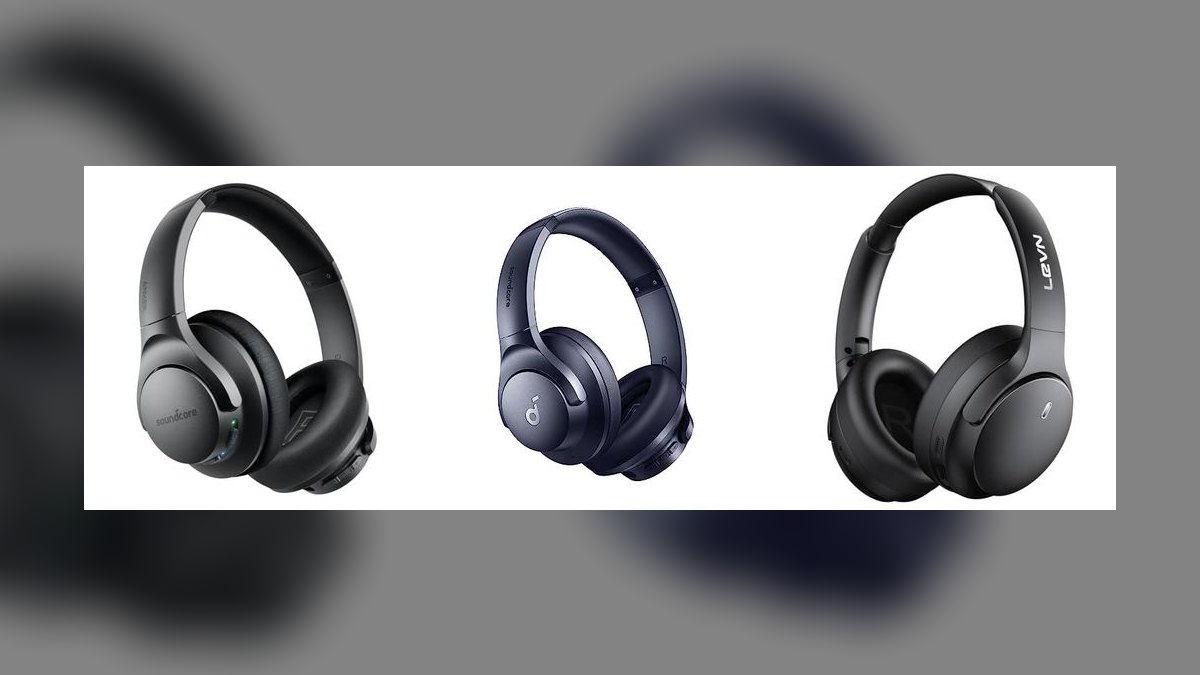
Only partially, and only at the top of the price range. Cancellation circuits work best below about 1 kHz; speech lives largely above that and is blocked mechanically by the earpad seal. Flagships attenuate voices noticeably but never eliminate them.
Is it worth repairing rather than replacing?
Often yes. Earpads and headband cushions are the usual wear items and are frequently sold separately for a small fraction of the headphone price. Replacing them restores most of the lost passive isolation. Hinge cracks are harder and usually signal replacement time.
FAQ
What is a realistic minimum price for noise-cancelling headphones that actually work?
About $80. Below that, active circuits tend to introduce audible hiss or produce so little attenuation that they are effectively decorative. In the $80–$120 band you get genuine reduction of engine and HVAC noise, decent battery, and usable transparency — enough for commuting and travel, though call quality and speech blocking remain weak.
Why do flagship models cost three to four times the entry tier?
The added cost goes into hybrid microphone arrays, more capable digital signal processing, better passive isolation from denser layered pads, superior call microphones with wind handling, spatial audio, and multi-year firmware support from a maintained engineering team. Raw cancellation improves too, but far less than the price difference suggests.
How much should I expect to spend if I mainly work in a noisy open-plan office?
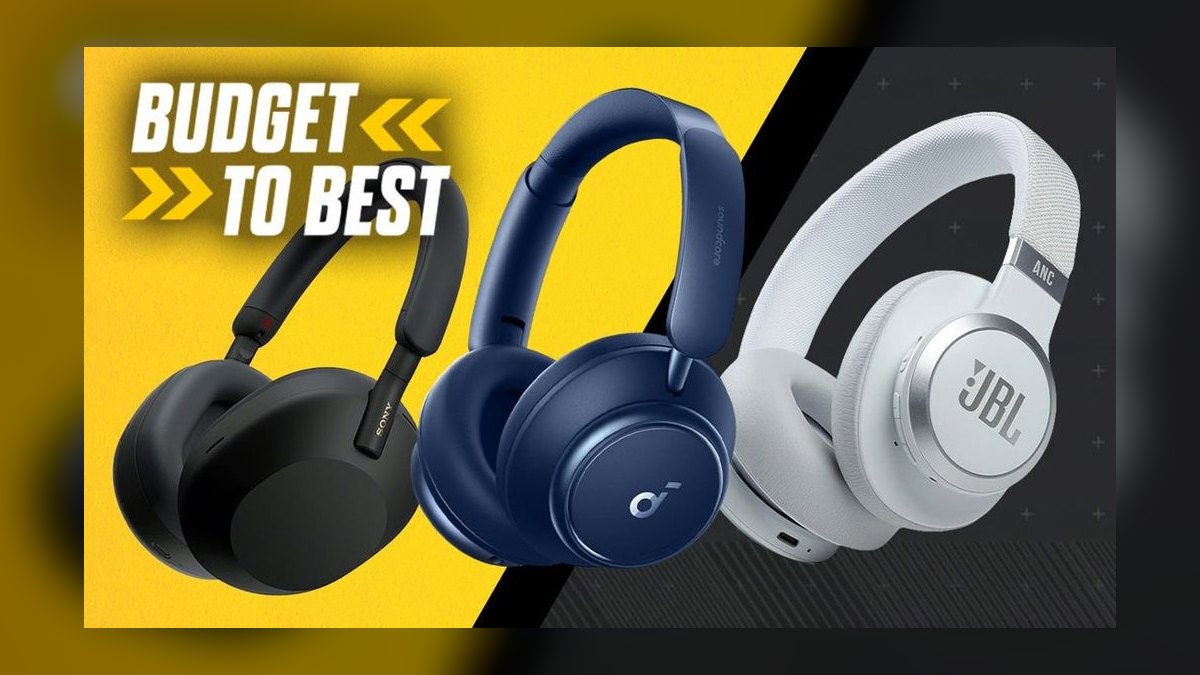
Budget toward the $200–$350 band and prioritize passive seal and clamp force over headline cancellation numbers. Office noise is dominated by speech, which sits above the frequency range where cancellation is strongest. Pair the headphones with masking audio; that combination outperforms spending more on ANC alone.
Do the same price ranges apply to noise-cancelling earbuds?
The bands are similar — roughly $80 entry, $150–$250 mid, $250–$350 flagship — but the value per dollar differs. Earbuds trade some low-frequency attenuation for portability and ear-tip dependence. Tip fit matters enormously; a poorly sized tip can cost more performance than several hundred dollars of upgrade.
How long should headphones at each price last?
Entry-tier units typically give two to three years before pads flatten and battery capacity fades. Mid-tier and flagship models with replaceable pads commonly reach five years or more. Battery degradation and abandoned firmware, not cancellation failure, are the usual reasons people replace them.
Should I buy refurbished to get flagship performance for a mid-tier price?
Manufacturer-refurbished units sold through the brand's own store are generally a strong value with warranty intact. Anonymous marketplace listings at implausible prices are risky — counterfeits are common in this category. Verify through the manufacturer's app where supported, and be wary of pricing far below prevailing street levels.
Sources
- https://www.sony.com/electronics/headband-headphones
- https://www.bose.com/c/headphones
- https://www.apple.com/airpods-max/
- https://www.rtings.com/headphones
- https://www.consumerreports.org/electronics/headphones/
- https://www.nytimes.com/wirecutter/reviews/best-noise-cancelling-headphones/
- https://www.cdc.gov/niosh/topics/noise/default.html
- https://www.bluetooth.com/learn-about-bluetooth/tech-overview/
- https://www.nidcd.nih.gov/health/noise-induced-hearing-loss
Related on PULSE
- How do you choose headphones for a noisy open-plan office?
- What is the difference between active and passive noise isolation?
- How long do wireless headphone batteries actually last?
- When should you replace earpads instead of buying new headphones?
- Are noise-cancelling earbuds worth it for daily commuting?
This page will be disappearing soon. Save it to your device for $1 — or read it free while it is here.
@Kory-White- · if Venmo asks, the last 4 of my number are 2012
This page is gone.
This one is off the shelf now. $1 keeps it on your phone for good — the whole page, pictures and diagrams included.
 pulse-reviewsTop 10 Mini PCs — Best Overall + Best Value in 2027
 electronic-reviewWhat does it really cost to run a large home theater receiver in 2027?
 pulse-reviewsTop 10 Soft Box Lighting Kits — Best Overall + Best Value in 2027
 pulse-reviewsTop 10 USB-C Hubs for Sales Travel in 2027
 pulse-reviewsTop 10 85-Inch TVs — Best Overall + Best Value in 2027
 electronic-reviewTop 10 Smart Display Alarm Clocks — Best Overall + Best Value in 2027 in 2027
 pulse-reviewsTop 10 Laptop Sleeves — Best Overall + Best Value in 2027
 electronic-reviewTop 10 Noise-Cancelling Headphones Under $200 in 2027
 pulse-reviewsTop 10 360 Cameras — Best Overall + Best Value in 2027
 pulse-reviewsTop 10 Transmission Jacks — Best Overall + Best Value in 2027