


Do wireless earbuds lose battery capacity over time the same way phone batteries do in 2027?
Quality
Certified
Yes, but not identically. Wireless earbuds use the same lithium-ion chemistry as phones, so they lose capacity the same way — roughly 2-3% per year at room temperature, faster with heat and full charges. The difference is scale: tiny earbud cells hold 40-80 mAh, so the same absolute loss hurts them sooner.
What it is and why it matters
Lithium-ion batteries age through two mechanisms that happen simultaneously whether they sit in a phone or an earbud. The first is calendar aging: electrolyte decomposition at the electrode surfaces, which proceeds even when the cell is idle, and which roughly doubles in rate for every 10°C rise in storage temperature. The second is cycle aging: the physical expansion and contraction of the anode as lithium ions shuttle in and out, which cracks the solid electrolyte interphase layer and permanently consumes lithium inventory. Both mechanisms reduce the amount of lithium that can be reversibly cycled, which is what "losing capacity" actually means at the electrochemical level.
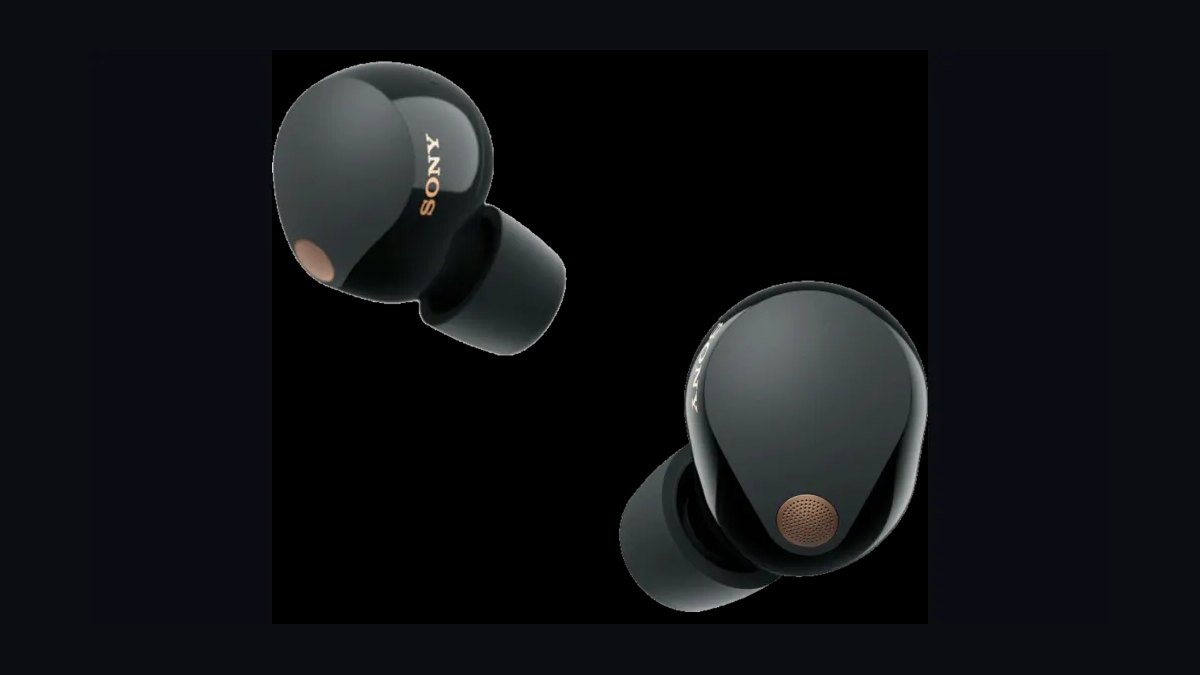
The chemistry is not the differentiator. A phone battery and an earbud battery are both typically lithium-ion with a graphite anode and a metal-oxide cathode, charged to a nominal 4.2V or 4.35V per cell and cut off at around 3.0V. What differs is everything around the chemistry. Phones use one or two cells of 3,000-5,000 mAh in a chassis with a large thermal mass, a dedicated battery-management IC, and often a vapor chamber or graphite spreader. Earbuds use one cell per bud of roughly 40-80 mAh plus a case cell of 300-500 mAh, packed into a shell smaller than a sugar cube with no active cooling and almost no thermal mass.
That packaging difference drives the practical outcome. A 60 mAh earbud cell that loses 20% of its capacity has 12 mAh less to work with, which on a 6-hour runtime is about 72 minutes of lost playback. A 4,000 mAh phone cell losing the same 20% has 800 mAh less, which on a 10-hour screen-on runtime is about 2 hours. In percentage terms the degradation is identical; in user-perceived terms the earbud feels dramatically worse because the absolute runtime was already short and the listener notices every minute.
Why this matters in 2027 specifically: earbud vendors have pushed runtime claims up (8-12 hours per charge is now common) while shrinking or holding cell size, which means the cells are being cycled harder relative to their capacity. At the same time, many 2027 earbuds ship with fast-charge cases that push 2-3C charge rates into a 60 mAh cell, and high C-rate charging is one of the most reliable accelerators of capacity fade. A phone charging at 30W into a 4,000 mAh cell is charging at roughly 0.5-0.7C; an earbud charging at 3W into a 60 mAh cell is charging at well over 1C, sometimes approaching 2C. The earbud is doing the more stressful thing to a smaller, hotter, less protected cell.
The practical consequence is that the answer to "do they degrade the same way" splits into two parts. Mechanistically, yes — same chemistry, same two aging modes, same temperature and state-of-charge sensitivities. In observed timeline and user experience, no — earbuds typically show noticeable runtime loss in 18-24 months of heavy use, while phones with comparable use patterns often go 2-3 years before the loss becomes annoying. The gap comes from cell size, thermal environment, charge rate, and the fact that earbuds sit in a case that is often left in a hot car or a pocket.
There is also a measurement problem that makes earbud degradation feel worse than it is. Phone operating systems report battery health as a percentage, which gives users a single number to track. Most earbuds do not report battery health at all; the user only notices degradation when the runtime stops covering their commute or workout. That means earbud degradation is often perceived as sudden failure rather than gradual decline, even though the underlying curve is smooth.
One more structural factor: earbud cells are frequently non-replaceable in any practical sense. The cell is potted or glued into the bud shell, the shell is ultrasonically welded or clipped with no serviceable fasteners, and the vendor does not sell replacement cells. A phone battery can be replaced for $50-90 at a repair shop, which resets the degradation clock. An earbud with a degraded cell is usually e-waste, which means the degradation curve is terminal rather than recoverable. That asymmetry is arguably the most important practical difference between the two product categories, and it is not a chemistry difference at all — it is a design and serviceability difference.
The step-by-step process
The degradation sequence inside an earbud cell follows a predictable path. Understanding it step by step makes the timeline and the mitigation options concrete.
Step 1 — Formation and first charge. At the factory, the cell is charged and discharged once or twice to build the initial solid electrolyte interphase layer on the anode. This consumes a small amount of lithium permanently, typically 5-10% of nameplate capacity. This is why a brand-new earbud rarely delivers its full rated runtime on the first charge; the rated number is usually measured after formation and at a specific temperature and volume level.
Step 2 — Early-life plateau. For roughly the first 100-200 full equivalent cycles, capacity loss is slow and roughly linear. A 60 mAh cell might drop to 57-58 mAh. The user does not notice. This phase lasts roughly 3-6 months for a heavy user who charges the buds daily and the case every 2-3 days.
Step 3 — Accelerated fade begins. Once the cell has seen a few hundred cycles and has spent meaningful time at high state of charge, the SEI layer thickens and begins to crack. Each crack exposes fresh anode surface, which consumes more lithium to re-form the layer. Capacity loss accelerates. This is where the runtime curve starts to bend visibly — a bud that used to do 7 hours now does 6.
Step 4 — Impedance rise. Simultaneously, the cell's internal resistance climbs. This has two effects: the bud delivers less voltage under load (so it may shut down early even though capacity remains), and it generates more heat during both discharge and charge, which feeds back into step 3. This is the phase where users report that the bud "dies at 20%" or that the case seems to stop charging the buds as fully.
Step 5 — Thermal runaway risk threshold. At end of life, typically defined as 80% of original capacity, the cell is not dangerous, but it is more sensitive to abuse. Over-discharge (leaving a bud dead in a drawer for months) can push the cell below 2.0V, at which point copper dissolution on the anode can cause internal short risk on the next charge. This is why a deeply discharged earbud that has sat unused for a year should be charged slowly and watched, not thrown on a fast charger.
The timeline for each step depends heavily on use pattern. A user who charges buds once a day and runs them to empty will hit step 4 in roughly 12-18 months. A user who tops up mid-day and rarely runs below 30% may take 24-30 months to reach the same point. Temperature matters as much as cycling: a bud stored in a car that reaches 50°C in summer will age two to three times faster than one stored at 22°C, because calendar aging roughly doubles per 10°C.
Costs, timelines, and typical ranges

Concrete numbers help here, with the caveat that vendor claims and independent tests diverge. For 2027-era true wireless earbuds, per-bud cell capacity typically falls in the 40-80 mAh range, and case capacity in the 300-600 mAh range. Total system energy is roughly 0.5-1.5 Wh, compared to 15-20 Wh for a phone. That is a 15-30x difference in energy content.
Expected capacity retention, based on general lithium-ion behavior rather than any single vendor's claim:
- After 100 full equivalent cycles (roughly 3-6 months of daily use): 95-97% retention. Not noticeable.
- After 300 cycles (roughly 12-18 months): 85-90% retention. Runtime drops from 8 hours to 7, which most users notice.
- After 500 cycles (roughly 24-30 months): 75-82% retention. Runtime drops from 8 hours to 6, which is clearly annoying.
- After 800 cycles (roughly 3-4 years): 65-75% retention. The bud is functionally compromised for most users.
Charge rate matters. A bud charged at 0.5C will typically retain 5-10 percentage points more capacity at 500 cycles than one charged at 2C, all else equal. Many 2027 earbuds charge the buds at 1-2C in the case to hit "10 minutes for 2 hours" claims, which trades long-term capacity for short-term convenience. There is no free lunch in the electrochemistry.
Temperature matters more than most users realize. Storing earbuds at 40°C instead of 25°C roughly doubles the calendar aging rate. A case left on a car dashboard in summer can see 60°C+, which is genuinely damaging. The same case left in an air-conditioned room sees 22-25°C and ages slowly. Over a two-year period, that storage difference alone can account for 10-15 percentage points of capacity difference between two otherwise identical units.

Depth of discharge matters. Running a bud to 0% every day is harder on the cell than running it to 30% and topping up. The reason is that the anode expands most at high state of charge and contracts most at low state of charge; the mechanical stress is concentrated at the extremes. Keeping the cell between roughly 20% and 80% state of charge, which is impractical for most earbud users but possible for those who charge mid-day, meaningfully extends cycle life.
Replacement cost is the practical bottom line. A phone battery replacement in 2027 typically runs $50-90 parts and labor at a reputable shop, and it resets the degradation clock for another 2-3 years. Earbud battery replacement is generally not offered by the manufacturer and, when offered by third parties, often costs $40-70 per bud plus shipping, which approaches the price of a new mid-range pair. That economic reality is why earbud degradation is effectively terminal while phone degradation is recoverable.
Warranty coverage varies. Most earbud warranties run 12 months and cover manufacturing defects, not capacity fade. A bud that drops to 70% capacity in 14 months is usually not covered, because the warranty terms typically define a defect as failure to function, not failure to hold a charge. Some premium brands offer extended coverage, but it is the exception.
Where teams get it wrong

The most common error is assuming that because the chemistry is the same, the experience will be the same. It is not, and the reason is the ratio of cell size to thermal and electrical stress. A phone cell has enough mass and enough surface area that heat generated during fast charging is dissipated without much temperature rise. An earbud cell has almost no mass and is wrapped in plastic and foam inside a sealed shell, so heat has nowhere to go. The result is that the same charge rate in C terms produces a much larger temperature rise in the earbud, and temperature is the single biggest accelerator of capacity fade.
The second error is treating "battery life" as a single number. Vendors quote runtime at a specific volume level, usually 50%, and often with ANC off. Real-world use at 70% volume with ANC on can cut runtime by 30-40%, which means the user is cycling the cell harder than the spec sheet implies. A bud rated for 8 hours but used for 5 hours per day is seeing 1.6 cycles per day, not 1, which accelerates the timeline.
The third error is ignoring the case. The case battery ages too, and it is often the first thing to fail because it sits at high state of charge for long periods (users charge the case to full and leave it) and is frequently exposed to heat (pockets, cars, bags). A case that has lost 30% of its capacity will deliver fewer full bud charges, which users often misattribute to the buds themselves. When diagnosing "my earbuds don't last as long," check whether the case is delivering the same number of charges as when new.
The fourth error is assuming that a firmware update can fix degradation. It cannot. Firmware can change the charge termination voltage, the discharge cutoff, and the reported percentage, all of which can make the battery appear healthier or last slightly longer per cycle, but it cannot restore lost lithium inventory. A vendor that pushes a firmware update claiming "improved battery life" is almost always changing the reporting or the cutoff, not the chemistry.

The fifth error is comparing earbud degradation to phone degradation using percentage thresholds. A phone at 80% health is often still usable for a full day because the original capacity was large. An earbud at 80% health may drop below the user's required runtime, because the original capacity was barely enough. The threshold that matters is not percentage of original capacity but absolute runtime versus the user's daily need, and those are different numbers.
The sixth error is storage. Users leave earbuds in a case at 100% charge in a hot car or a gym bag for weeks. That is close to the worst-case storage condition for lithium-ion: high state of charge plus elevated temperature. Storing at 50% charge in a cool place roughly halves calendar aging, but almost no earbud user does this because the case is designed to keep the buds topped up. The design and the chemistry are working against each other.
Decision framework: when to choose what
The practical question is not whether earbuds degrade — they do — but what to do about it given the user's situation. The framework below maps use patterns to the right choice.
If runtime is critical and you run buds to empty daily: expect noticeable degradation in 12-18 months. Mitigate by charging mid-day to avoid deep discharges, keeping the case out of heat, and accepting that replacement is likely on a roughly 2-year cadence. Buying a model with a larger per-bud cell (toward the 80 mAh end) buys more margin.
If you use buds lightly (1-2 hours per day, top up every few days): expect 3-4 years before degradation is annoying. The cell sees fewer cycles and spends less time at high state of charge. This is the use pattern where earbuds approach phone-like longevity.

If you need guaranteed multi-year runtime: consider over-ear headphones instead. Their cells are 500-1,000 mAh, they have more thermal mass, and some models have user-replaceable batteries. The degradation chemistry is the same, but the larger cell means the absolute loss is smaller relative to daily runtime, and the serviceability is often better.
If you are buying for a hot climate or outdoor use: prioritize models with documented thermal management (some 2027 models advertise charge-temperature limits) and avoid leaving the case in direct sun. The single highest-leverage behavior change is keeping the case below 30°C.
If you want to maximize lifespan on a budget: buy a model with a moderate charge rate rather than the fastest-charging option, charge the case to 80% rather than 100% when you can, and store buds in the case but the case in a cool place. These three behaviors together can add 6-12 months of useful life.
The decision hinges on three variables: daily runtime required, ambient temperature, and whether the user is willing to change charging habits. Users who cannot change habits and need long runtime should buy over-ears. Users who can top up mid-day and store cool can get phone-like longevity from earbuds. Everyone else lands in the middle, replacing buds every 18-30 months.
Related questions
Do earbuds degrade faster than phones even with identical chemistry?
Yes, in practice. The chemistry is the same, but earbud cells are 15-30x smaller, have almost no thermal mass, and are often charged at higher C-rates. Those factors accelerate the same aging mechanisms, so earbuds typically show noticeable runtime loss in 18-24 months versus 2-3 years for phones.
Can I check my earbuds' battery health?

Most earbuds do not expose a battery health percentage. Some companion apps show remaining capacity or cycle count, but coverage is spotty. The practical proxy is runtime: if a bud that used to deliver 8 hours now delivers 6, it has lost roughly 25% of usable capacity.
Does fast charging in the case damage earbud batteries?
It accelerates capacity fade. Charging a 60 mAh cell at 1-2C generates more heat per unit volume than charging a phone cell at 0.5C, and heat is the dominant aging accelerator. Slower charging overnight, if the case supports it, extends cycle life.
Should I store earbuds at full charge?
No. High state of charge plus elevated temperature is the worst-case storage condition for lithium-ion. If you will not use the buds for weeks, charge them to roughly 50% and store the case in a cool, dry place. Leaving them at 100% in a hot car is the fastest way to lose capacity.
Are earbud batteries replaceable?
Generally no. Most 2027 earbuds have cells potted or glued into sealed shells with no serviceable fasteners, and vendors do not sell replacement cells. Some third-party services offer replacement, but the cost often approaches a new pair, which makes degradation effectively terminal.
FAQ
Do wireless earbuds lose battery capacity the same way phone batteries do?
Mechanistically yes — same lithium-ion chemistry, same calendar and cycle aging, same sensitivity to heat and state of charge. In practice no — earbud cells are far smaller, run hotter, and are charged at higher C-rates, so they show noticeable capacity loss in 18-24 months versus 2-3 years for phones.

How much capacity do earbuds lose per year?
Roughly 5-10% per year for a typical user, faster with heavy cycling or heat exposure. After 300 full equivalent cycles, expect 85-90% retention. After 500 cycles, 75-82%. The curve is not linear; loss accelerates as the cell ages.
Why do my earbuds die faster than they used to?
Two reasons usually combine. The bud cell has lost capacity, and the case cell has also degraded, so it delivers fewer full charges. Check both. If the case takes noticeably longer to charge or tops up the buds fewer times, the case is part of the problem.
Does ANC use more battery and shorten lifespan?
ANC increases discharge current, so the cell sees more cycles per hour of use. That accelerates cycle aging modestly. It does not change the chemistry or the fundamental degradation mechanism, but it does mean ANC-heavy users hit the same capacity threshold sooner.
Can firmware updates restore lost battery capacity?
No. Firmware can change charge termination voltage, discharge cutoff, and reported percentages, which may make runtime appear slightly better or the health indicator look healthier. It cannot restore lithium inventory that has been permanently consumed by SEI growth.
How can I make earbud batteries last longer?
Charge mid-day to avoid deep discharges, keep the case below 30°C, avoid leaving buds at 100% in a hot car, and prefer slower charging when the case supports it. Together these behaviors can add 6-12 months of useful life before replacement is needed.
Sources
- https://www.rtings.com/headphones/learn/battery-life
- https://www.batteryuniversity.com/article/bu-808-how-to-prolong-lithium-based-batteries
- https://www.cnet.com/tech/mobile/how-to-make-your-phone-battery-last-longer/
- https://www.tomsguide.com/news/how-to-make-wireless-earbuds-last-longer
- https://www.techradar.com/how-to/how-to-make-your-wireless-earbuds-last-longer
- https://www.nytimes.com/wirecutter/reviews/best-wireless-earbuds/
- https://www.pcmag.com/explainers/how-to-extend-battery-life
- https://www.ifixit.com/Wiki/Why_Do_Batteries_Die
Related on PULSE
This page will be disappearing soon. Save it to your device for $1 — or read it free while it is here.
@Kory-White- · if Venmo asks, the last 4 of my number are 2012
This page is gone.
This one is off the shelf now. $1 keeps it on your phone for good — the whole page, pictures and diagrams included.
 pulse-reviewsTop 10 USB-C Hubs for Sales Travel in 2027
 pulse-recentHow do I choose the right desk setup for a small apartment home office in 2027?
 pulse-reviewsTop 10 Cordless Brad Nailers — Best Overall + Best Value in 2027
 pulse-reviewsTop 10 RV Surge Protectors — Best Overall + Best Value in 2027
 pulse-reviewsTop 10 Radar Detectors — Best Overall + Best Value in 2027
 pulse-reviewsTop 10 85-Inch TVs — Best Overall + Best Value in 2027
 pulse-reviewsTop 10 Electric Hot Pots — Best Overall + Best Value in 2027
 pulse-reviewsTop 10 Posture Correctors — Best Overall + Best Value in 2027
 pulse-reviewsTop 10 Smart Mirrors — Best Overall + Best Value in 2027
 pulse-reviewsTop 10 Thermal Label Printers — Best Overall + Best Value in 2027