


Should I open or buy an Auntie Anne's franchise in 2027?
Quality
Certified
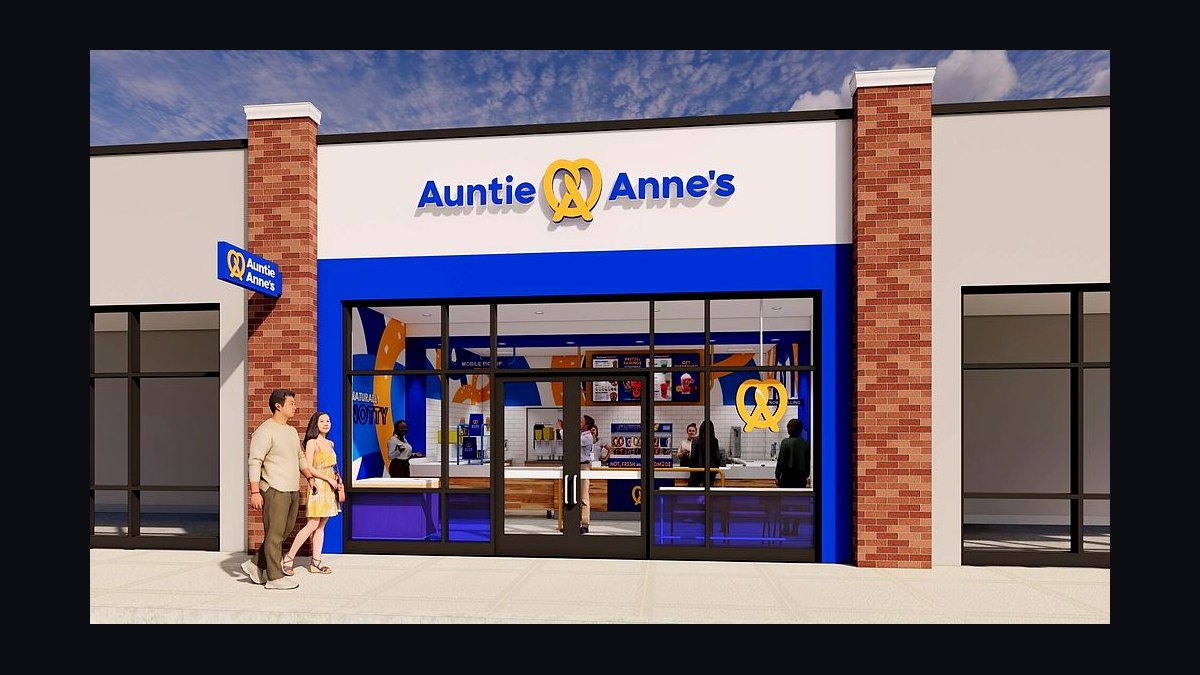
Probably not, unless you can secure an airport, stadium, or travel-plaza location and bring $300K–$500K in liquid capital plus multi-unit ambition. A mall-based Auntie Anne's in 2027 is a declining-traffic bet: roughly 8.75% in combined fees against a median mall AUV near $713,000. Captive travel venues change the math entirely.
The mall kiosk that looked like a sure thing
Picture a buyer we'll call the typical discovery-day attendee. She has $310,000 liquid from a business sale, twenty years of operations experience in a non-food industry, and a regional mall twelve minutes from her house that she has visited since she was a teenager. The food court still smells right. There's a line at the pretzel counter on a Saturday afternoon. She runs the numbers on a napkin: a $713,000 median mall unit, maybe 12% owner cash flow, call it $85,000 a year on a $400,000 build. Not spectacular, but she'd own something.
The napkin is not wrong. It's incomplete in three specific ways that only show up in year two.
First, the $713,000 is a *median*, and the distribution around it is not symmetric. Class-A regional malls with intact anchors and 8–12 million annual visitors sit well above it. Class-B and class-C properties — the ones where a JCPenney or a Sears went dark between 2018 and 2024 and never got backfilled with anything but a trampoline park — sit far below it. Her mall lost an anchor in 2021. The space is now a regional gym. Gyms bring visitors; they do not bring food-court visitors, because a person leaving a workout is the single least likely mall patron to buy a butter-dipped pretzel.
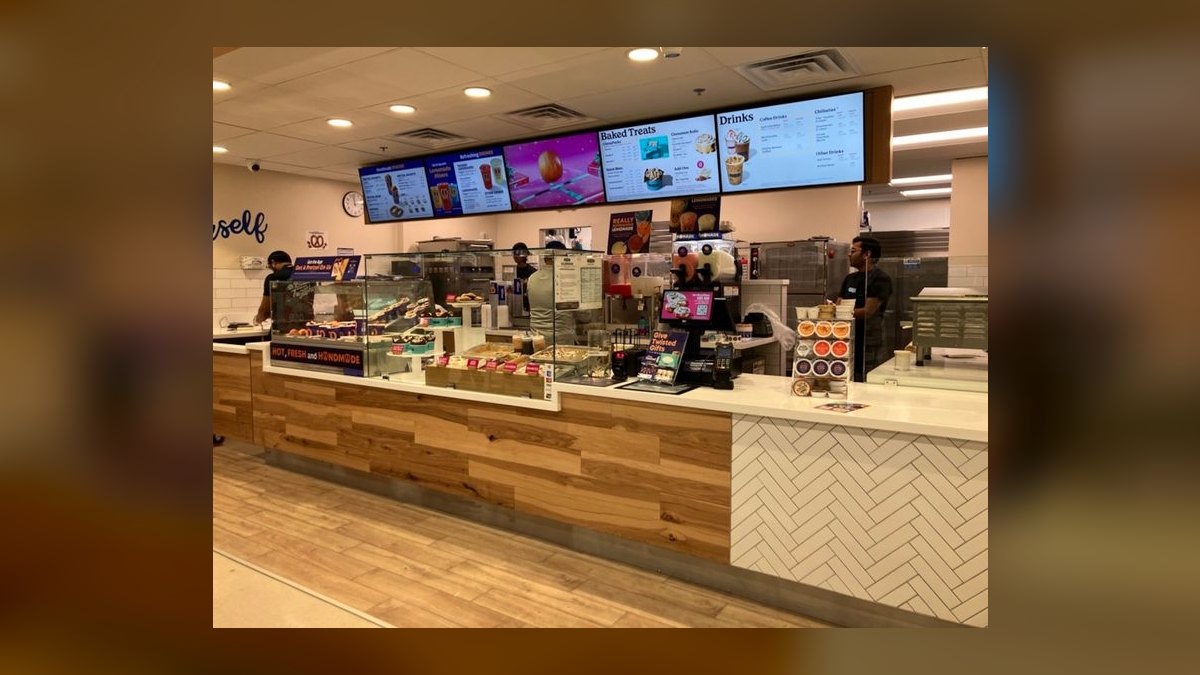
Second, her lease has a floor. Mall food-court leases in this format typically carry a minimum guaranteed rent plus percentage rent above a breakpoint. That structure is asymmetric by design: if sales climb, the landlord participates through percentage rent; if sales fall 25%, the floor rent does not fall with it. Rent that penciled at 15% of revenue at $713,000 becomes 20% of revenue at $535,000, and those five points come directly out of the 12% owner line — which is to say, they eat more than half of it.
Third, she is buying a single-daypart, single-product concept in a venue whose traffic she does not control and cannot influence. She has no drive-thru. She has no breakfast business. She has no dinner mix. She has no delivery flywheel worth the commission. Her entire revenue function is: mall traffic × capture rate × ticket. She owns exactly one of those three variables.
That's the frame. The question "should I open or buy an Auntie Anne's franchise in 2027" is really the question "can I get a venue where the traffic is structurally guaranteed rather than structurally declining." Everything else — the food cost, the labor benchmark, the royalty — is the same across every operator in the system. Venue is the only variable with real dispersion, and it's the one most first-time buyers treat as a detail.
How the money actually moves through the unit
The mechanism is worth walking slowly, because the fee stack is where the brand-versus-independent argument lives.
Gross sales come in at the register. Before anything else is paid, the franchisor's take comes off the top of *gross*, not profit: a royalty in the 7% range, a brand fund or national marketing contribution around 1%, and a local marketing minimum in the sub-1% range. Combined, that's roughly 8.75 cents of every dollar leaving before you've paid for a single bag of flour. That's not unusual for the category — it's toward the higher end of QSR norms but not an outlier — and the 2025 FDD reserves the franchisor's right to raise the royalty to 8% at renewal, which is another point of gross on a twenty-year term.
Then the operating stack. Food cost lands near 28% for this format; the ingredient deck is cheap (flour, butter, salt, sugar, cheese, a small drink program) but the mandated supply program caps your sourcing flexibility. You buy from approved distributors at program pricing. When butter spikes, you feel it on the same schedule as every other operator in the system, and you cannot go find a local dairy to hedge it. That's the trade you make for the brand: identical product, identical cost curve, no procurement upside.
Labor runs near 30% for a well-run unit and is the single largest source of margin dispersion between good and bad operators. A mall kiosk's traffic is *lumpy* — dead from 10 a.m. to noon on a Tuesday, a wall from 6 to 8 p.m. on a Friday. A disciplined operator flexes hourly staff against that curve in fifteen-minute increments and hits 30%. A new operator schedules for comfort, over-staffs the dead hours because it feels irresponsible to run one person, and prints 34–36% instead. Those four to six points are the difference between an acceptable return and a job that pays less than the manager's salary.
Occupancy runs near 15% in a mall at median volume. Utilities, supplies, insurance, POS fees, and repairs run near 6%. What's left — the EBITDAR line before debt service and before owner's own labor — lands near 12% of revenue. On a $713,000 median mall unit, that's roughly $85,000. On a $400,000 all-in build, that's a payback in the high-four-to-five-year range before you reserve a dollar for the mandated brand-image refresh every seven to ten years.
And note the word *before debt service*. If you financed 75% of a $400,000 build through an SBA 7(a) at prevailing rates over ten years, annual debt service consumes a meaningful share of that $85,000. The true owner cash on a leveraged median mall unit is materially thinner than the headline 12% suggests — often in the $40,000–$60,000 range. That is the number to underwrite against, not the EBITDAR line the discovery day will show you.
The diagram makes the structural point visible: every line item except venue is roughly fixed across the system. Two operators with identical discipline, identical menus, and identical fee stacks will produce wildly different outcomes purely as a function of where the door is. That is unusual. In most franchise categories, operator skill explains a large share of variance. In a captive-venue snack format, venue explains most of it, and skill mostly determines whether you capture the venue's potential or waste it.
The numbers a 2027 buyer is actually signing against
A buyer in 2027 signs against the most recently filed FDD — which, until the spring refresh, means the 2025 document covering the fiscal year ending in December 2024. Know which document you're reading and what fiscal year its Item 19 covers; a surprising number of buyers quote figures from a franchise-portal article that recycled a three-year-old filing.
Investment (Item 7). The disclosed total initial investment range spans roughly $156,000 at the low end to roughly $638,000 at the high end. That spread is not noise — it's the difference between taking over a turnkey second-generation kiosk in an existing food court and building a full inline store with custom millwork in a new terminal. The components:
- Initial franchise fee: roughly $35,500 for a single unit.
- Build-out and leasehold improvements: the widest single line, from tens of thousands to well over $300,000.
- Equipment package — mixer, ovens, proofing, refrigeration, POS: roughly $35,000–$120,000.
- Signage and décor: roughly $8,000–$40,000.
- Opening inventory: single-digit thousands.
- Training and travel: low single-digit thousands.
- Three months of working capital: roughly $20,000–$116,000.
Term is 20 years. Understand what a 20-year term means in a mall: you are betting on the property's viability for a period longer than most class-B malls have left as retail. Negotiate co-tenancy and go-dark protections, or accept that you may be paying floor rent in a mostly-empty building in year twelve.
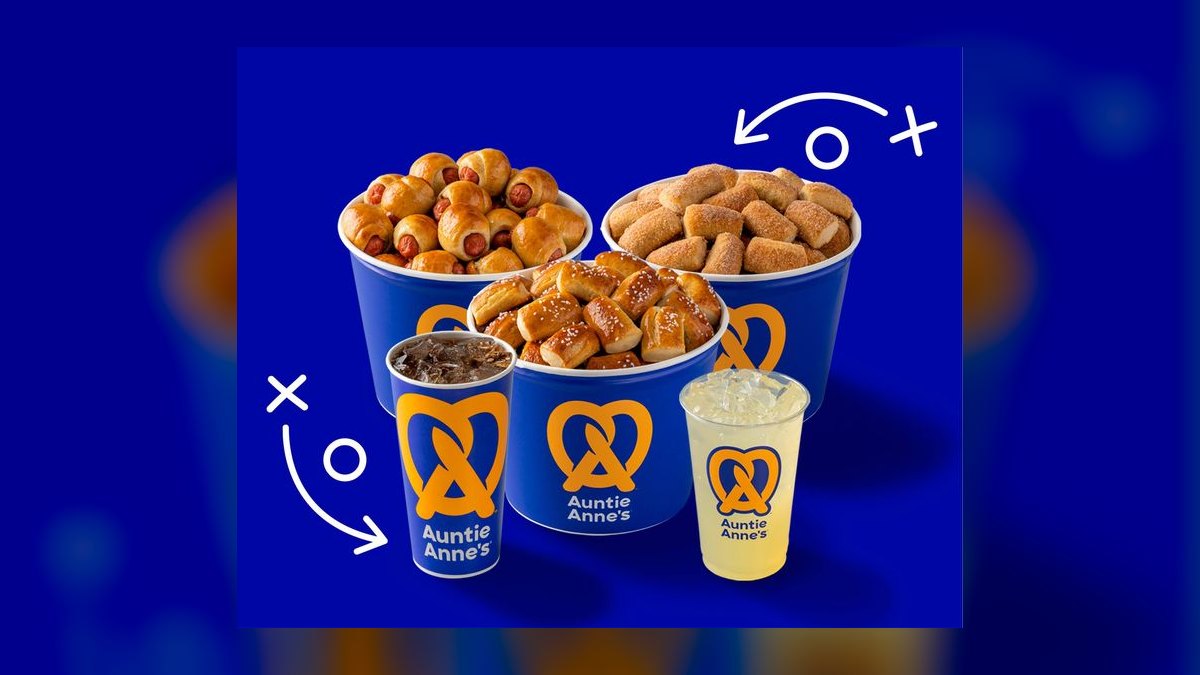
Revenue (Item 19). This is where venue dispersion becomes undeniable. Enclosed-mall units — the bulk of the reporting base, several hundred locations — average in the mid-$700Ks with a median near $713,000. Outlet centers run lower, in the low-$600Ks. The blended system figure sits near $768,000 average and $705,000 median. Airport units are the outlier: average unit volumes in the neighborhood of $1.8 million, with medians well above $1.6 million. Universities, travel plazas, and stadiums land in between, near $890,000 average.
Read that spread again. An airport unit does roughly two and a half times the volume of a median mall unit on a fee stack that's identical in percentage terms and a build that's only modestly more expensive. The absolute dollars of owner cash are not 2.5× — captive-venue leases extract more, concessionaire agreements take their cut, and airport labor is expensive and hard to staff — but even after all of that, the airport unit is the only variant in the system that competes with mainstream QSR yield benchmarks.
Item 20 is the section nobody reads and everybody should. It's the outlet-status table: openings, closures, terminations, non-renewals, and transfers by year and by state. Two signals matter. First, the closure rate as a percentage of system count — a sustained rate above roughly 5% annually is a structural warning, not a rounding error. Second, the *transfer* rate, which is franchisees selling to other franchisees. High transfers with low closures can mean a healthy resale market; high transfers concentrated in one state can mean a regional operator is quietly exiting. Item 20 also gives you the franchisee contact list, which is the single most valuable page in the document.
Item 21 is the franchisor's own financials. You want to know that the entity backing your 20-year agreement is solvent and that the parent's capital structure isn't going to force decisions that hurt unit-level operators. Auntie Anne's sits under GoTo Foods (the former Focus Brands), itself under Roark Capital — a portfolio that includes Cinnabon, Carvel, Jamba, Moe's, McAlister's, and Schlotzsky's. That matters two ways: it gives you co-branding paths (an Auntie Anne's/Cinnabon combined unit in an airport is a real and common configuration that lifts revenue per square foot substantially), and it means franchise-level decisions get made inside a large multi-brand platform with its own priorities.
What's happening to the venue base. US enclosed-mall foot traffic fell sharply between 2019 and 2024 and continues to decline in the class-B and class-C tiers, while class-A properties have largely stabilized or recovered. Every anchor closure pulls a disproportionate share of food-court traffic with it, because anchors are what convert a "going to the mall" trip into a multi-hour dwell. Meanwhile, TSA daily throughput has hit record highs, and new development in this format skews heavily toward non-mall venues. The system's growth is migrating to airports, travel centers, stadiums, and university unions. If you are buying into the mall base in 2027, you are buying into the part of the system the franchisor itself is de-emphasizing.
Labor cost pressure by geography. California's fast-food minimum-wage floor materially raised labor cost for covered units, and comparable legislation has been introduced or enacted in other states. A 30% labor benchmark modeled on a national average is simply wrong in a high-floor state; model your actual market's wage curve or your pro forma is fiction.
What else that capital could do, and where the pretzel wins
The honest way to evaluate any franchise is against the alternatives for the same capital and the same operator hours, not against zero.
Broader-daypart QSR. Formats with breakfast, lunch, and dinner mixes — sandwich shops, smoothie and bowl concepts, fast-casual chicken — generally carry higher AUVs and comparable royalty structures, and critically, they can sit in strip centers and endcaps with drive-thrus rather than depending on someone else's mall traffic. The build is often more expensive and the labor model heavier, but you own your traffic. A concept where you can influence demand through local marketing, catering, and third-party delivery is fundamentally a different asset than a kiosk whose demand is set by a landlord's leasing decisions.
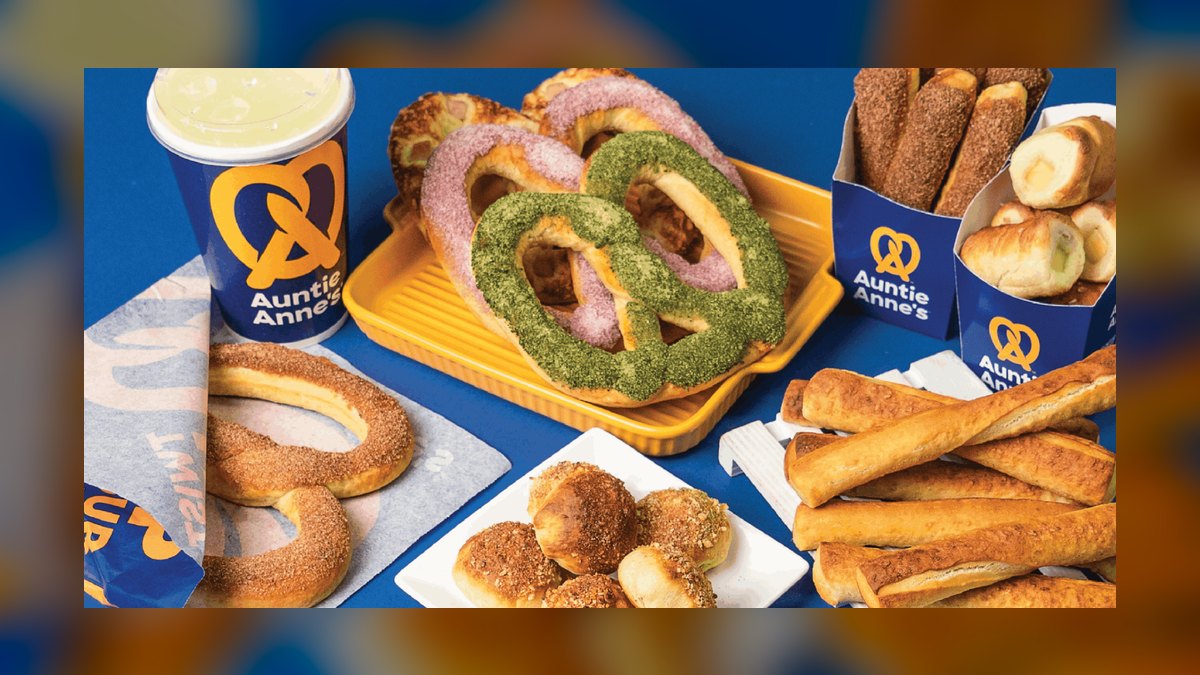
Other snack and treat concepts. Cookie, ice cream, and dessert franchises share the mood-purchase dynamic but many have already migrated their footprints out of malls. A direct pretzel competitor with a substantially non-mall footprint gives you the same product economics with better venue optionality — worth diligence if the pretzel category itself is what attracts you.
Co-branding inside the same platform. Because Auntie Anne's and Cinnabon sit under the same parent, combined units are an established configuration, particularly in airports and travel plazas. One lease, one labor pool, two dayparts (Cinnabon skews morning, Auntie Anne's skews afternoon), and materially higher revenue per square foot. If you're pursuing a captive venue, ask about the co-brand path early — it can be the difference between an acceptable and an excellent concession bid.
Going independent. The uncomfortable question: what does the 8.75% actually buy you? In a mall food court, it buys real recognition — the smell and the logo do genuine conversion work on an impulse purchase from a stranger who will never come back. That's worth paying for. In a neighborhood strip center where you'd be building a local following anyway, the brand premium is much harder to justify, because the ingredient deck and equipment package for soft pretzels are not proprietary and the operating knowledge is learnable. The brand's value is highest exactly where impulse traffic is highest and lowest where relationship traffic dominates.
Buying an existing unit instead of building. Resales deserve serious consideration and get too little. You get twelve to twenty-four months of actual P&L instead of a pro forma, a trained crew, an existing lease with known terms, and no construction risk or ramp period. You pay a multiple of cash flow rather than a build cost, and you inherit whatever deferred maintenance and remodel obligation the seller has been avoiding. Underwrite the remaining lease term and the remodel clock hard — a unit with three years left on a lease and a mandated refresh due is worth dramatically less than the same unit with twelve years and a fresh build-out. Ask why they're selling, then ask the neighboring tenants the same question.
Where first-time buyers lose the money
The failure patterns in this format are consistent enough to enumerate, and each has a specific countermeasure.
Underwriting to the median instead of to your actual venue. The median is a system-wide artifact that includes hundreds of units in properties nothing like yours. Get venue-specific traffic data — commercial foot-traffic analytics products can give you annual visit counts and trend lines by property — and reject any mall below a meaningful visitor threshold. If the trend line over the past three years is down and the anchor roster is thinning, no operating discipline will save the unit.
Taking the pro forma at face value and skipping the franchisee calls. Item 20 gives you names and phone numbers. Call at least a dozen, deliberately split between mall and non-mall operators, and deliberately including operators who have *left* the system — those are the most informative calls you will make. Ask the same five questions every time: actual net sales the last twelve months, actual labor percentage, actual occupancy percentage, actual owner draw after debt service, and would you sign again today. Write the answers in a spreadsheet. If the discovery-day presentation contradicts what a dozen operators told you, believe the operators.
Ignoring the floor-rent asymmetry. Negotiate the minimum guaranteed rent down and the percentage-rent breakpoint up. Push for a co-tenancy clause that reduces rent if anchor occupancy falls below a threshold, and a kick-out right if sales don't hit a stated level by a stated date. Landlords in soft properties grant more of this than buyers ask for, because the alternative is dark space. Ask for a tenant-improvement allowance; in this format a meaningful per-square-foot contribution is a normal ask for a small footprint.
Modeling labor from the benchmark rather than the schedule. Build the actual schedule, hour by hour, against the venue's actual traffic curve, at your market's actual wage. Then add payroll taxes, workers' comp, and the reality that you will be short-staffed on some Saturdays and will pay overtime. If the honest schedule doesn't hit the benchmark, the benchmark is wrong for your market — adjust the pro forma, don't adjust the schedule to fit the pro forma.
Not reserving for the remodel. Brand-image refreshes on a defined cycle are a contractual obligation, not a suggestion, and they land at a scale that will surprise a buyer who hasn't reserved. Put a monthly amount into a separate account from month one. Operators who arrive at renewal with no reserve lose all their negotiating leverage, because the franchisor's renewal terms are conditioned on the refresh.
Forgetting the royalty escalator. A reserved right to raise the royalty at renewal is a real cost in year eleven. One additional point of gross on a median mall unit is roughly $7,000 a year, and it comes out of a $40,000–$60,000 true-cash line. Model the back half of the term at the higher rate.
Buying a single unit when the economics reward three. The overhead of this business — your own time, the district-manager layer, training and travel, accounting, the learning curve on scheduling — amortizes badly across one location and well across three to five. A single-unit owner-operator is working 40–50 hours a week for a return that resembles a manager's salary plus modest equity. At three units with a competent GM structure, the same person is working supervisory hours for meaningfully more cash and a business that's actually saleable. If you don't want three, seriously ask whether you want one.
Skipping the 90-day discipline. A workable sequence: request the current FDD and read Items 5, 6, 7, 17, 19, 20, and 21 line by line in week one; pull the Item 20 outlet-status table and count closures, terminations, and transfers over the trailing three years in week two; call twelve-plus franchisees in weeks three and four; run venue traffic analytics on your three specific target properties in weeks five and six; get a franchise-experienced CPA to model your specific lease and labor market and stress-test at a 20% revenue decline in weeks seven and eight; secure SBA pre-approval from a franchise-active lender in weeks nine and ten; negotiate the TI allowance and rent protections in weeks eleven and twelve; then sign or walk. Note that the updated federal franchise rule lengthened the mandatory disclosure waiting period before signing — use that time rather than treating it as a formality.
Related questions
How long until an Auntie Anne's franchise breaks even?
A median mall unit at roughly $400,000 all-in and ~$85,000 EBITDAR pays back in the four-to-five-year range before debt service and before reserving for the mandated remodel. Leveraged, true owner cash is thinner and payback stretches. Airport units pay back dramatically faster.
Is an airport Auntie Anne's really that much better?
Yes. Airport average unit volumes run near $1.8 million against a median mall unit near $713,000 — roughly 2.5× the revenue on an identical fee percentage. Captive-venue leases and higher labor costs eat some of the gap, but not most of it.
Should I buy an existing unit instead of building new?
Often, yes. A resale gives you real trailing P&L instead of a pro forma, a trained crew, and no construction or ramp risk. Underwrite the remaining lease term and the remodel obligation hard, and find out honestly why the seller is exiting.
Can I run one as an absentee owner?
Not at one unit. Expect 40–50 hours weekly as a single-unit owner-operator. Semi-absentee becomes realistic at roughly three units with a competent GM and district-manager structure — which is also where the overhead economics start working in your favor.
What's the biggest single predictor of success?
Venue. Fee stack, food cost, and equipment are effectively constant across the system, so location traffic explains most of the variance in outcomes. Secure the venue first; the rest is execution discipline you can learn.
FAQ
What does it cost to open an Auntie Anne's franchise?
The disclosed total initial investment spans roughly $156,000 to $638,000 depending on venue and build scope, including a franchise fee around $35,500, equipment, signage, opening inventory, training, and three months of working capital. Financial qualification generally means meaningful liquid capital plus net worth well into seven figures. Confirm current figures in Item 7 of the FDD you are actually signing against.
What are the ongoing fees?
Roughly 7% royalty on gross sales, about 1% to the brand fund, and a local marketing minimum under 1% — call it 8.75% combined off the top of gross, before any operating expense. The FDD reserves the franchisor's right to raise the royalty to 8% at renewal, so model the back half of a 20-year term at the higher rate.
How much does a typical location actually make?
Median enclosed-mall net sales sit near $713,000 with system-wide medians near $705,000. At roughly 12% EBITDAR, that's about $85,000 before debt service and before reserving for the remodel cycle. Airport units average near $1.8 million and are the only variant that competes with mainstream QSR yield benchmarks.
Is 2027 a bad year to buy into this brand?
It's a bad year to buy a class-B mall unit and a defensible year to buy a captive-venue unit. Mall traffic in the lower tiers continues to decline while air travel volumes set records, and new development in the system skews strongly non-mall. The brand's own growth is telling you where the money is.
Do I have to commit to multiple units?
Single-unit deals exist, but the overhead — your hours, training and travel, accounting, the district-manager layer — amortizes badly across one location. Franchisors generally favor multi-unit operators, and the economics reward three to five stores under one supervisory structure. If you don't want three, question whether you want one.
What should I read first in the FDD?
Item 7 for investment range, Item 19 for revenue by venue type, Item 20 for the outlet-status table and the franchisee contact list, Item 21 for the franchisor's financials, and Items 6 and 17 for fees and term. Item 20 is the one most buyers skim and the one that most reliably predicts trouble.
Sources
- https://www.ftc.gov/business-guidance/resources/franchise-rule-compliance-guide
- https://www.ftc.gov/business-guidance/industry/franchises
- https://www.sba.gov/funding-programs/loans/7a-loans
- https://www.sba.gov/partners/lenders/7a-loan-program/sba-franchise-directory
- https://www.tsa.gov/travel/passenger-volumes
- https://www.bls.gov/oes/current/oes352021.htm
- https://www.franchise.org/
- https://www.gotofoods.com/
- https://www.auntieannes.com/
- https://www.restaurantbusinessonline.com/
Related on PULSE
This page will be disappearing soon. Save it to your device for $1 — or read it free while it is here.
@Kory-White- · if Venmo asks, the last 4 of my number are 2012
This page is gone.
This one is off the shelf now. $1 keeps it on your phone for good — the whole page, pictures and diagrams included.
 franchiseShould I open or buy a Sonic Drive-In franchise in 2027?
 franchiseShould I open or buy a Take 5 Oil Change franchise in 2027?
 franchiseShould I open or buy a Mathnasium franchise in 2027?
 franchiseShould I open or buy a Wienerschnitzel franchise in 2027?
 franchiseShould I open or buy a Planet Fitness franchise in 2027?
 franchiseShould I open or buy a Cinnabon franchise in 2027?
 franchiseShould I open or buy a Subway franchise in 2027?
 franchiseShould I open or buy a Papa John's franchise in 2027?
 franchiseShould I open or buy an Orangetheory Fitness franchise in 2027?
 franchiseShould I open or buy a Hand and Stone Massage franchise in 2027?