


Should I open or buy a Planet Fitness franchise in 2027?
Quality
Certified
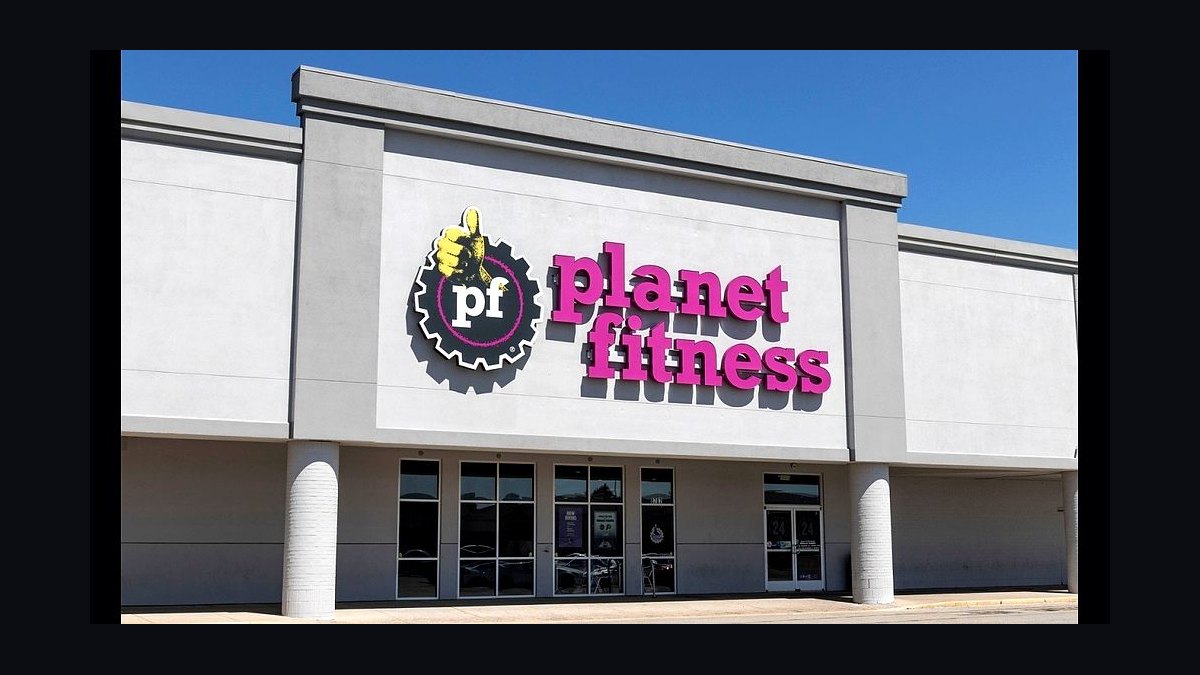
Most likely no. Planet Fitness in 2027 is a mature, multi-unit franchise: corporate awards area development agreements, not single clubs, and initial investment runs roughly $1.5M to $5.2M per location with a 7% royalty. Unless you have real estate depth, multi-million liquidity, and patience for a four-to-seven-year payback, choose a smaller-footprint fitness concept instead.
What a Planet Fitness franchise actually is in 2027
The mistake nearly every first-time inquirer makes is thinking of Planet Fitness as a gym business. It is not. Structurally, it is a real estate arbitrage business wearing a fitness wrapper, and once you internalize that, most of the confusing parts of the model snap into focus.
Here is the shape of the thing. A club occupies roughly 15,000 to 25,000 square feet of second-generation retail — the carcass of a dead grocery store, a shuttered Sears wing, a big-box furniture showroom that gave up. That space is cheap per square foot precisely because almost no other tenant wants it. Planet Fitness wants it. The brand's entire cost advantage begins with taking on real estate that other retailers have written off, filling it with cardio and fixed-strength equipment, staffing it at levels that would embarrass a fast-food restaurant, and selling memberships at a price point most people never bother to cancel.
The revenue model is membership subscription and essentially nothing else. There are two tiers: the Classic Card and the PF Black Card, the latter carrying a meaningful premium and bundling perks like guest privileges, tanning, massage chairs, and reciprocal access to other locations. Black Card penetration — the share of your members on the higher tier — is the single most-watched club metric after headcount, because every point of mix shift drops almost entirely to the bottom line. There is no personal training revenue line of consequence, no supplement retail, no juice bar. You are running a subscription business with a physical plant.
That matters for why the brand pushes multi-unit. A single club is a fixed-cost machine: rent, utilities, equipment leases, and a skeleton staff, all of which exist whether you have 4,000 members or 9,000. Revenue above the break-even membership count is nearly pure margin; revenue below it is a bleeding wound. Corporate learned across two decades that operators who could survive one weak club by cross-subsidizing from three strong ones built durable systems, while single-unit owners in a soft market simply failed. So the franchisor stopped selling ones. New growth flows through area development agreements — commitments to open a defined number of clubs on a defined schedule — and increasingly through consolidation, where large operator groups backed by institutional capital roll up smaller franchisees.
The practical consequence for you in 2027: if you approach as an individual with a million dollars and enthusiasm, you will not get a meeting that goes anywhere. The realistic paths are (a) qualify for a multi-unit development agreement in a market with genuine white space, or (b) buy an existing franchisee group in a secondary-market transaction rather than open anything new. Path (b) is where most of the actual deal flow lives now, and it is a fundamentally different skill set — it is M&A, with diligence on leases, deferred equipment capex, and membership churn quality, not a startup exercise.
Adjacent point worth absorbing: this same pattern — franchisor pushing single-unit operators out in favor of institutional multi-unit groups — has already played out in QSR, in car washes, and in urgent care. If you are drawn to Planet Fitness because it looks like a passive, real-estate-driven cash machine, the honest read is that you are attracted to a category, not a brand. That category includes self-storage, laundromats at scale, and multi-tenant flex industrial, all of which will take your capital without a franchise agreement attached.
The step-by-step process from inquiry to open doors
The sequence below is the real one, and the timeline is unforgiving. From first serious inquiry to a club with members walking through the door, plan on 12 to 24 months. People consistently underestimate the middle third — the stretch between signing and construction — because that is where landlords, municipalities, and equipment lead times all take their turn.
Stage one: qualification. You submit financial information and the franchisor evaluates liquidity, net worth, and — more importantly — operating background. Multi-unit restaurant experience, commercial real estate development, or existing fitness ownership all read well. A W-2 executive career with a big brokerage account reads poorly, because the franchisor is underwriting your ability to execute ten build-outs, not your ability to write one check.
Stage two: the FDD and diligence. You receive the Franchise Disclosure Document and are legally entitled to a waiting period before signing anything. Read Item 5 (initial fees), Item 6 (ongoing fees — royalty, national advertising, local marketing minimums, technology charges), Item 7 (estimated initial investment, which is where the $1.5M–$5.2M range lives), Item 19 (financial performance representations, including average and median unit volumes), Item 20 (outlet counts, transfers, terminations, and the franchisee contact list), and Item 21 (audited financials of the franchisor). Item 20's transfer and termination tables are the most honest page in the document — a spike in transfers tells you operators are exiting.
Stage three: territory and the development schedule. You negotiate an area development agreement specifying how many clubs by when. This is the highest-stakes negotiation in the entire process and the one prospects treat most casually. A schedule that requires a club every nine months in a market where you have not yet secured a single lease is a default waiting to happen. Push for milestone flexibility tied to site availability, and understand exactly what happens if you miss — typically loss of territory rights, sometimes termination.
Stage four: site selection and lease. Now the real work starts. You are hunting second-generation big-box space with adequate parking, proper zoning for assembly occupancy, and the structural capacity for heavy equipment loads. Rent as a percentage of revenue is the number that determines whether the club is a good one or a mediocre one for its entire life. Experienced operators target a materially lower ratio than newcomers achieve, and the gap comes from knowing how to structure tenant improvement allowances, negotiate free rent during build-out, and cap common area maintenance escalators.
Stage five: permits and construction. Assembly-use conversions trigger sprinkler requirements, ADA compliance, restroom counts, and HVAC capacity upgrades. A 20,000-square-foot space full of exercising humans has cooling loads a furniture store never had. Municipal permitting alone can consume three to six months in restrictive jurisdictions.

Stage six: equipment and pre-sale. Equipment is ordered against lead times that remain elevated relative to pre-2020 norms — plan months, not weeks. In parallel you run pre-sale, which is genuinely the most important marketing you will ever do for that club. A strong pre-sale bank means opening day cash flow instead of opening day panic.
Stage seven: open and stabilize. Membership ramps over 12 to 24 months toward a mature run rate. New clubs do not perform at system-average volume in year one, and modeling as though they will is the most common way prospects talk themselves into a bad deal.
Costs, timelines, and the ranges that actually matter
The headline range from the disclosure document is roughly $1.5 million to $5.2 million per club, and that spread is not noise — it is the difference between a landlord who funds most of your build-out in a soft tertiary market and a landlord in a competitive metro who funds almost none of it. Two operators can sign the same franchise agreement and have a 3x difference in capital at risk. Understanding which side of that spread you are on is the whole game.
Break it into components. The initial franchise fee is a modest five-figure amount per club — genuinely the smallest line item and not worth negotiating hard over. Real estate build-out is the monster: demolition of the prior tenant's improvements, flooring, mirrors, locker rooms, HVAC capacity, electrical service upgrades, sprinklers, and signage. This is where the range lives, and it is where a tenant improvement allowance from the landlord either saves you or doesn't. Equipment is the second major block — a full floor of cardio, fixed-strength circuits, and the Black Card amenity package. Multi-unit operators buy this at meaningfully better pricing than first-timers, which is one of several structural reasons scale wins. Grand opening marketing and working capital round it out, and working capital is chronically underfunded by new operators who assume pre-sale cash covers the ramp.
On the ongoing side: a 7% royalty on gross revenue, a national advertising fee around 2% with disclosed intent to move higher, a local marketing minimum that is substantial in its own right, plus technology and software charges. Add those up honestly before you model anything. Roughly a sixth of your top line is committed to the system before you pay rent, labor, or utilities.
Unit volumes: franchised clubs average in the neighborhood of $1.8 million to $1.9 million annually, with the median somewhat below the mean — which tells you the distribution is right-skewed and a handful of very strong clubs pull the average up. Do not model the average. Model the median, then stress it downward 15% and ask whether you still service debt.
Club-level EBITDA spreads enormously by tier. Bottom-third clubs generate figures low enough that after debt service there is essentially nothing left for the owner. Middle-third clubs produce a real but unspectacular return. Top-third clubs produce genuinely attractive cash flow. Payback on invested capital therefore ranges from roughly two and a half years at the top to eight-plus years at the bottom, and the honest planning number for a competent first-time multi-unit operator is four to seven years.
The recurring costs people forget: equipment refresh on a five-to-seven-year cycle, mandated by the agreement, running into the high six figures across a portfolio and capable of consuming an entire year's cash flow if you have not reserved for it. Lease renewals at rates set by a market that has moved since you signed. Utilities on a building that runs long hours with heavy HVAC load. Insurance, which has escalated across the fitness category. And labor, where front-desk wage floors have risen materially in most states.
One structural feature worth understanding: annual membership fees billed once a year create a large one-time cash spike. This is real money and it is also a trap, because operators who spend it as though it were monthly cash flow discover in the fall that they have a hole. Treat the annual fee event as a capex reserve deposit, not income.
Where prospective owners get this wrong

They model the average club. The single most damaging error. Item 19 gives you a distribution, and prospects read the top of it. A new club in a market you do not know, operated by someone who has never run one, is not an average club — it is a below-median club for at least two years while membership ramps.
They treat rent as a line item instead of the outcome. Rent as a percentage of revenue is the variable with the widest spread between good and bad operators, and it is locked in permanently on the day you sign the lease. Every subsequent operational improvement is small relative to that one decision. If you cannot negotiate commercial leases at a professional level, hire someone who can and pay them well — it is the highest-ROI spend in the entire project.
They underestimate the development schedule as an obligation. An ADA is a promise to deploy capital on someone else's timetable. Markets soften, sites fall through, financing tightens. If your schedule has no flexibility and your capital has no reserve, a missed milestone costs you territory you already paid to develop.
They bring fitness passion instead of operations discipline. The brand is deliberately positioned for the casual, intimidated, non-gym-person market. The equipment mix, the no-intimidation policy, the price point — all of it is engineered against the serious-lifter demographic. Operators who arrive wanting to build a training culture, add heavy free weights beyond spec, or run community programming end up in brand compliance conflicts. Your job is to run a clean, well-lit, reliably functioning facility and manage the P&L. If that sounds boring, it is, and that is the point.
They buy at the wrong multiple. For those pursuing acquisition rather than development — which, again, is most of the realistic deal flow — the temptation is to pay up for a package in a good market. Multiples in the fitness franchise resale market have expanded meaningfully from historical norms. Paying a premium multiple for clubs with deferred equipment capex and leases coming up for renewal is how buyers manufacture losses out of profitable businesses. Underwrite the capex you will inherit and the rent you will renew into, then decide what the package is worth.
They ignore the G&A scale threshold. A group of three to eight clubs is an awkward size: too big to run from a spreadsheet on nights and weekends, too small to support a real back office of accounting, HR, legal, and IT. Operators frequently describe the mid-teens club count as the point where in-house overhead starts to earn its keep. Below it, you are either overpaying for outsourced services or under-serving the function. Plan your growth path with that threshold in mind rather than stalling at five.

They misjudge the regulatory drift. Membership cancellation and auto-renewal rules have tightened at the state level and continue moving at the federal level. Easier cancellation is directionally good for consumers and directionally bad for a business model whose economics depend partly on members who pay and rarely attend. Model retention conservatively and assume the friction that historically protected subscription revenue keeps eroding.
Adjacent plays and the wider fitness franchise landscape
If the multi-unit bar disqualifies you — and for most individual buyers it does — the useful question shifts from "how do I get in" to "what am I actually trying to own." Two very different answers hide behind the same inquiry.
If you want real-estate-driven, low-touch cash flow, Planet Fitness was never the only route and is arguably a poor one, because you take franchise obligations on top of the real estate risk. Self-storage delivers similar landlord economics with far less operational surface area and no royalty. Multi-tenant flex industrial, small-bay warehouse, and even parking assets scratch the same itch. Laundromats at scale are the closest analog in consumer services: high fixed cost, low labor, revenue driven by location and demographics. If the appeal of a gym was the passive-real-estate story, go get the real estate story without the 7%.
If you want to be in fitness specifically, the landscape below Planet Fitness's footprint is where single-unit economics still work. Smaller-footprint 24-hour gym concepts operate out of 4,000 to 6,000 square feet with initial investments in the mid-six figures rather than the millions, and correspondingly lower unit volumes — the return profile is different but the entry bar is human-scaled. Mid-market full-service brands sit between the two and generally remain more open to smaller operators. Boutique studio formats — HIIT, cycling, strength-and-conditioning, recovery-focused concepts — carry the lowest capital requirements and the highest operator-involvement demands. They live or die on instructor quality and community, which is a real business but the opposite of passive.
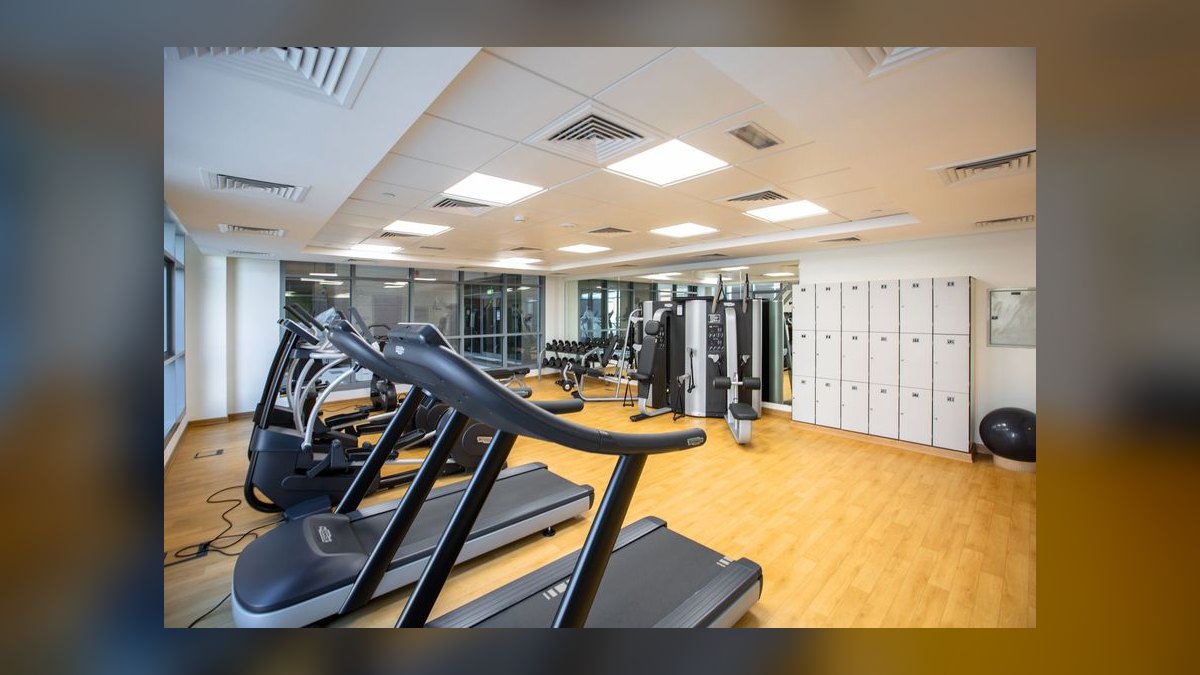
There is also independent ownership, which is systematically underrated by people who have been reading franchise marketing. You forfeit brand pull, national advertising, and a proven playbook. You keep 7% of revenue plus the ad fee plus the local marketing minimum, and you keep total control over equipment, programming, and pricing. In an underserved secondary market with an operator who genuinely knows the category, the independent path frequently produces better owner earnings than a franchise at the same revenue. The franchise premium is worth paying when brand recognition drives your customer acquisition; in fitness, where the buying decision is overwhelmingly "which gym is closest to my commute," that premium is more debatable than in, say, quick-service food.
Upstream and downstream angles worth knowing. Upstream: the equipment supply chain has consolidated, lead times normalized but remain longer than pre-2020, and used-equipment markets are deep because gym failures are common. A buyer with patience can furnish an independent facility at a fraction of new cost — an option a franchise agreement forecloses. Downstream: churn management has become the operational center of gravity across the whole category, with predictive analytics on cancellation risk and app-based self-service check-in reducing front-desk labor. Those tools are increasingly available to independents through third-party gym management platforms, narrowing another traditional franchise advantage.
Comparable dynamics elsewhere. The same consolidation arc — franchisor favors institutional multi-unit groups, single operators squeezed to acquisition-only entry — is visible in urgent care, express car wash, and several QSR brands. The lesson generalizes: mature franchise systems in capital-intensive categories eventually stop selling to individuals. If you are shopping for an owner-operator business, screen for systems still in the growth phase where the franchisor still needs individual capital, or screen out franchising entirely.
Decision framework: open, buy, or walk away

Run the logic in this order, and be honest at each gate. The failure mode is answering "maybe" at a gate that requires a yes and proceeding anyway.
Gate one is capital. Not net worth on paper — liquid capital plus committed financing, after reserving for the ramp and for the first equipment refresh cycle. If a single soft club would force you to sell something, you are undercapitalized for a multi-unit commitment.
Gate two is the development obligation. Can you realistically open the number of clubs the agreement demands, on the schedule it demands, in the territory offered? Walk the territory. Count the viable second-generation boxes. If you cannot identify credible sites for at least the first two or three clubs before signing, the schedule is fiction.
Gate three is the real estate skill. Do you, personally or through a partner on your payroll, know how to negotiate a big-box lease with tenant improvement allowances, free rent, capped escalators, and co-tenancy protections? If no, either hire it or accept that you will sign leases at newcomer rates and live with permanently compressed margins.
Gate four is temperament. This is a compliance-heavy, low-drama, delegate-and-monitor business. If you want to be on the floor coaching members, you are in the wrong brand and probably the wrong category.
If you clear all four, the remaining choice is open versus buy. Opening gives you site selection control, fresh equipment with a full useful life ahead, and no inherited membership quality problems — at the cost of a two-year ramp and full construction risk. Buying gives you day-one cash flow and a known membership base — at the cost of paying a multiple, inheriting whatever capex the seller deferred, and taking leases you did not negotiate. In a market with expanded resale multiples, opening tends to look better on paper and worse on risk; buying looks safer and is frequently mispriced. The discipline is to underwrite the acquisition as though you were buying the leases and the equipment schedule, because you are.
If you fail any gate, do not force it. Downshift to a smaller-footprint fitness brand where single-unit economics still function, or step out of franchising entirely into either independent ownership or the real estate assets that produced the appeal in the first place.
Related questions
Can I still buy a single Planet Fitness club?
Not as a new franchise award. Corporate directs new growth through multi-unit area development agreements. The realistic single-club route is acquiring an existing location from a current franchisee, subject to franchisor approval, transfer fees, and your meeting the same financial qualification standards.
How long until a new club breaks even?
Membership ramps over roughly 12 to 24 months toward mature run rate. Cash-flow break-even typically arrives well before full ramp, but return of invested capital takes four to seven years for a competent operator, longer for a below-median club or an over-rented site.
Is the equipment refresh really mandatory?
Yes. The franchise agreement obligates periodic replacement on a defined cycle, generally every five to seven years. Deferring it triggers default notices and, more practically, drives member churn as equipment degrades. Reserve for it from year one rather than discovering it in year six.
What matters more, location demographics or rent?
Both, but rent as a percentage of revenue is the harder constraint because it is fixed at lease signing and compounds for the lease term. Great demographics at a bad rent ratio produce a mediocre club; decent demographics at an excellent rent ratio produce a good one.
Are boutique fitness franchises a better entry point?
For capital-constrained buyers, often yes — entry costs run in the low-to-mid six figures rather than millions. The trade-off is active-operator demand and dependence on instructor quality and local community, which is a genuinely different business from running a low-touch subscription facility.
FAQ
What is the total investment to open a Planet Fitness club?
Disclosure documents put the range at roughly $1.5 million to $5.2 million per location. The spread is driven almost entirely by build-out cost and how much of it a landlord funds through tenant improvement allowances. Second-generation space in a soft tertiary market lands near the low end; a competitive metro conversion lands near the high end.
What ongoing fees does a franchisee pay?
A 7% royalty on gross revenue, a national advertising fee around 2% with disclosed plans to increase, a local marketing minimum, and technology or software charges. Budget roughly a sixth of top-line revenue committed to system fees before rent, labor, utilities, or debt service.
What does an average club generate in revenue?
System-wide franchised average unit volume sits near the $1.8 to $1.9 million range, with the median somewhat lower. The gap between mean and median indicates a right-skewed distribution — model against the median and stress it downward, because a new club underperforms system averages during its ramp.
Why does Planet Fitness require multi-unit commitments?
Because a single club is a fixed-cost machine that fails hard when membership softens, while a portfolio can absorb one weak location. The franchisor observed that multi-unit operators build more durable systems and better back-office scale, so it directs new development toward operators who can commit to a schedule of clubs.
Is buying an existing franchisee group better than opening new?
It depends entirely on the multiple and what you inherit. Buying delivers day-one cash flow and a known member base but exposes you to deferred equipment capex, leases you did not negotiate, and expanded resale multiples. Opening carries construction risk and a two-year ramp but gives you site and lease control.
What alternatives should I consider if I do not qualify?
Smaller-footprint 24-hour gym brands operate at mid-six-figure investment levels with genuine single-unit economics. Boutique studio formats sit lower still but demand an active operator. And if the underlying appeal was passive real-estate-style cash flow, self-storage or small-bay flex industrial delivers that without a franchise agreement layered on top.
Sources
- https://www.sec.gov/cgi-bin/browse-edgar?action=getcompany&CIK=PLNT&type=10-K — Planet Fitness, Inc. annual reports on SEC EDGAR
- https://investor.planetfitness.com/ — Planet Fitness investor relations, earnings releases and presentations
- https://www.franchise.org/ — International Franchise Association, franchise economic outlook and disclosure guidance
- https://www.ftc.gov/business-guidance/industry/franchises-business-opportunities — FTC guidance on the Franchise Rule and Franchise Disclosure Documents
- https://www.wisconsindfi.org/apps/FranchiseSearch/MainSearch.aspx — Wisconsin DFI franchise registration search, a public source for filed FDDs
- https://www.franchisechatter.com/ — Franchise Chatter, brand-level FDD reviews and unit economics analysis
- https://www.ibisworld.com/united-states/market-research-reports/gym-health-fitness-clubs-industry/ — IBISWorld industry report on US gyms and fitness clubs
- https://www.franchisetimes.com/ — Franchise Times, multi-unit franchisee rankings and industry reporting
- https://healthandfitness.org/ — Health & Fitness Association, industry membership and participation data
- https://www.sba.gov/funding-programs/loans — US Small Business Administration loan program details relevant to franchise financing
Related on PULSE
- Should I open or buy a Snap Fitness franchise in 2027?
- Should I open or buy an EOS Fitness franchise in 2027?
- Should I open or buy a Fitness 19 franchise in 2027?
- Best fitness and gym franchises to buy in 2027
- Should I open or buy a Planet Smoothie franchise in 2027?
- Should I open or buy a Bath Planet franchise in 2027?
This page will be disappearing soon. Save it to your device for $1 — or read it free while it is here.
@Kory-White- · if Venmo asks, the last 4 of my number are 2012
This page is gone.
This one is off the shelf now. $1 keeps it on your phone for good — the whole page, pictures and diagrams included.
 franchiseShould I open or buy a Cold Stone Creamery franchise in 2027?
 franchiseShould I open or buy a Papa John's franchise in 2027?
 franchiseShould I open or buy a Cook Out franchise in 2027?
 franchiseShould I open or buy a Big O Tires franchise in 2027?
 franchiseShould I open or buy a Culver's franchise in 2027?
 franchiseShould I open or buy a Jamba franchise in 2027?
 franchiseShould I open or buy a Goddard School franchise in 2027?
 franchiseShould I open or buy a Hand and Stone Massage franchise in 2027?
 frShould I open or buy a McDonald's franchise in 2027?
 franchiseShould I open or buy a UPS Store franchise in 2027?