


Should I open or buy a Massage Envy franchise in 2027?
Quality
Certified
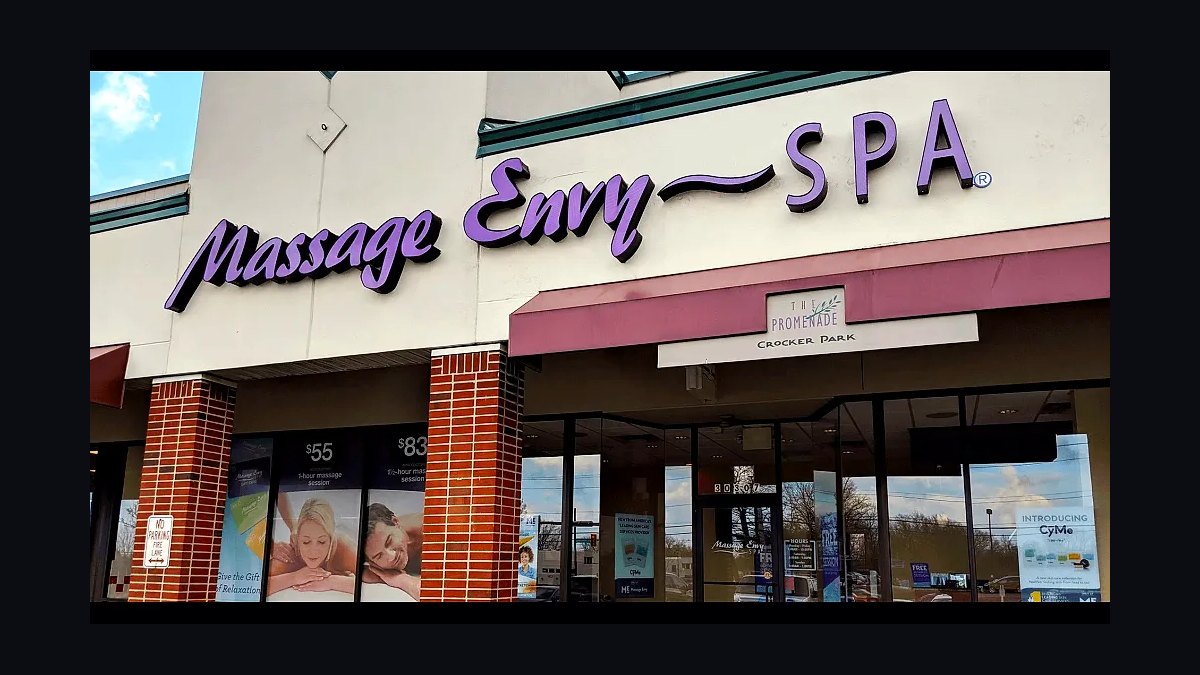
Only if you can write a $300K+ equity check, sign personally on a $700K–$1.1M project, and accept a three-to-five-year payback in a system that has been shrinking, not growing. Massage Envy is the largest US massage franchise, but single-unit economics are thin. Multi-unit pods or a profitable resale are the smarter 2027 entries.
What a Massage Envy franchise actually is, and why the model matters
Strip away the spa aesthetics and Massage Envy is a membership subscription business that happens to deliver massage. That distinction governs every decision you will make as an owner. A traditional day spa lives on walk-in traffic and gift certificates; it earns high margin per transaction and starves between holidays. Massage Envy sells a recurring monthly membership — the member is billed whether or not they book — and the overwhelming majority of clinic revenue arrives through that recurring channel rather than through one-off guests. Industry coverage of the brand and the company's own franchising materials consistently describe membership as the core revenue engine, with non-member traffic acting as the top of the conversion funnel rather than the business itself.
The practical consequence is that you are not running a massage business. You are running a retention business with a labor-supply constraint bolted onto it. Your front desk staff are, functionally, inside salespeople: their job is converting first-time guests into members and holding existing members through billing objections. Your licensed massage therapists (LMTs) are the fulfillment capacity that makes the membership feel worth keeping. If either half breaks, the clinic unwinds fast — a clinic with great therapists and a weak front desk never builds the membership base to cover fixed cost, and a clinic with a great front desk and no therapist bench sells memberships it cannot fulfill, which produces cancellations at exactly the moment your billing base should be compounding.
This is the same structural shape as a boutique fitness franchise, a chiropractic membership clinic, or a med-spa injectables program, and it is worth naming because the closest analogues to your future problems are not other massage brands — they are Orangetheory, Planet Fitness, and The Joint Chiropractic. Those systems taught the market the same lessons: recurring revenue is beautiful when it compounds and brutal when it churns, because the churn is invisible for ninety days and then shows up all at once in a deposit report. Operators coming out of gyms, salons with membership programs, or dental/chiro practice management adapt to Massage Envy quickly. Operators coming from restaurants, retail, or professional services frequently do not, because those businesses train you to optimize the transaction rather than the relationship.

Why it matters *in 2027* specifically: the brand is smaller than it was at its peak. Massage Envy expanded aggressively through the 2010s and has contracted meaningfully since — a system that once counted well over a thousand US locations has closed a material number of units, and franchise trade coverage has documented the net decline year after year. A shrinking system is not automatically a bad investment; sometimes contraction is a system pruning weak markets and weak operators, which improves the survivors' territory quality. But it flips the burden of proof. In a growing system, the default assumption is that the model works and you have to explain why your unit would fail. In a contracting system, the default assumption is that the model is under stress and you have to explain why your unit would be one of the ones that works. Most prospective franchisees never make that argument to themselves honestly, and that is the single most common reason first-timers lose their equity here.
There is one more structural feature worth internalizing before you go further. Because the revenue is contractual and the delivery is labor, your gross margin is set almost entirely by therapist pay and utilization, not by pricing. You have limited pricing power — membership rates are brand-influenced and competitively anchored against Hand & Stone and Elements in most markets — and you have no control over the labor market. That combination means your P&L improves mainly through operational levers: therapist retention, schedule density, add-on attachment (enhancements, stretch services, skin care), and membership freeze/cancel management. If those four levers are not things you find interesting, you will be miserable running this business, regardless of whether it makes money.
How the deal actually gets done, start to finish

The path from "I'm curious" to "I own a clinic" runs about nine to twelve months for a new build and three to five months for a resale. Compressing it is how people get hurt.
Qualification and disclosure. You submit an application, have an introductory call with franchise development, and receive the Franchise Disclosure Document. Federal franchise rules require you to receive the FDD at least 14 calendar days before you sign anything or pay any money. That waiting period is not a formality — it is the only structurally protected time you have to read the document without a salesperson on the phone. The items that decide your outcome are Item 5 and 7 (fees and initial investment), Item 6 (ongoing fees), Item 11 (what the franchisor actually promises to do for you), Item 12 (territory — read this twice), Item 19 (financial performance representations), and Item 20 (unit counts, transfers, terminations, and the franchisee contact lists).
Item 20 is the one prospects skim and veterans read first. It gives you the outlet tables showing openings, closures, terminations, non-renewals, and transfers by state, plus contact information for current and former franchisees. Former franchisees are the highest-value calls you will make in the entire process, and the franchisor cannot stop you from making them.
Validation. Call at least ten current owners and every former owner you can reach in your region. Ask specific questions, not general ones. "How's it going?" gets you nothing. Ask: what is your therapist turnover rate; how many treatment rooms do you run and how many are staffed on a Tuesday at 2pm; what percentage of your revenue is membership versus retail; what did your first twelve months of cash burn look like versus your plan; what does corporate actually do for you; would you buy another one. The gap between the median answer and the enthusiastic answer tells you how much variance the system carries.

Market and site. Franchise development will show you available territories. Do your own demographic work anyway, using a commercial site-selection tool or a competent local retail broker. You are looking for household density and income within a tight drive ring, daytime population, co-tenancy that pulls your demographic (grocery-anchored centers, fitness, beauty), and — the criterion most people skip — the local supply of licensed massage therapists. Find the massage therapy schools within commuting distance and call them. Ask how many students graduate per cohort and where they place. A market with no LMT pipeline is a market where you will pay above-scale wages forever and still run empty rooms.
Financing. Most deals in this range are SBA 7(a) loans, which typically require meaningful equity injection, a personal guarantee, and often a lien on your home if you have equity in it. Rates float with prime. Work with a lender that has funded this brand before; brand-experienced lenders underwrite faster and are more realistic about the ramp. Get pre-qualified before you fall in love with a site.
Documents, build, open. Franchise agreement review by a franchise-specialist attorney — not your business generalist. Then lease negotiation, which for a build of this size runs several months and where you should be fighting hard for tenant improvement allowance, free rent during build, and a co-tenancy clause. Then permitting and construction, which is where timelines slip and where plumbing for a facility with many treatment rooms and wet areas gets expensive. Then hiring, which should start before you open, not at opening. Then presale — signing founding members during construction — which is the single best predictor of whether your first year is survivable.
What it costs, how long it takes, and what the money looks like
Take every number below as a planning framework to be verified against the current FDD, not as a quote. FDD figures change annually, vary by market, and Item 19 performance data describes existing units — not yours.

The initial investment. A new Massage Envy build in this era generally lands in the high six figures to low seven figures all-in. The stack is: an initial franchise fee in the tens of thousands; leasehold improvements, which are the dominant line because a multi-room clinic needs extensive plumbing, HVAC zoning, soundproofing, and finish work; furniture, fixtures, tables, and equipment; technology and point-of-sale; opening inventory of retail and supplies; grand-opening marketing; training and travel; insurance, permits, and licensing; and working capital. Veterans typically receive a franchise fee discount through the brand's veteran program.
The line item that determines whether you survive is working capital, and the FDD's stated range should be read as a floor rather than a plan. The disclosed working capital figure typically covers roughly the first three months. Your clinic will not be at breakeven in three months. Membership businesses ramp on a curve — you are stacking recurring revenue one member at a time against fixed rent and payroll that arrive at full size on day one. Plan for materially more runway than the document suggests, because running out of cash in month eight, with a half-built membership base and a good clinic, is the most avoidable way to lose this business.
Ongoing fees. Royalty on gross sales plus a national advertising fund contribution, with a local marketing spend requirement layered on top. The combined drag is real money against a service business with labor-heavy cost of delivery, and it is charged on top line, not profit — you pay it in your worst months too. Model it that way.
The unit economics. The public performance data for this brand has historically shown median annual unit volume around the seven-figure mark, with a wide spread between top and bottom quartile. That spread is the whole story. Two clinics with identical build costs and identical brand support can differ by hundreds of thousands in annual revenue purely on therapist retention and front-desk conversion. Below the AUV line, therapist compensation is the largest cost, typically consuming a large share of service revenue; then rent, then manager and front-desk payroll, then royalty and marketing, then supplies and insurance. What is left at the clinic level is a single-digit-to-mid-teens margin at median volume — healthy at high volume, uncomfortable at low volume, and negative in the bottom quartile once debt service is applied.

Then subtract debt service. A loan of several hundred thousand dollars amortized over ten years at prevailing SBA rates carries a substantial annual principal-and-interest payment. Run the arithmetic honestly: median-volume clinic EBITDA minus debt service is often a modest five-figure owner income in year two or three — for a person working full-time in the business. That is not a criticism of the brand; it is the arithmetic of a leveraged, labor-intensive single unit anywhere. It is why the operators who make real money here own three or more.
Timeline. Roughly two to four months from application to signed franchise agreement if you are disciplined; two to five months for site selection and lease execution; four to seven months for permitting and construction; and then a ramp to membership breakeven measured in quarters, not weeks. Total: nine to fifteen months of spending before the business supports itself. A resale compresses that to sixty to ninety days and starts you at existing cash flow, which is why experienced buyers gravitate to resales even at a premium.
The resale alternative, priced. Service businesses of this type generally trade on a multiple of seller's discretionary earnings, and small franchised service units typically transact in the low-single-digit multiple range. A profitable clinic with a stable therapist roster and a healthy membership base is worth paying up for, because you are buying the two things that take a new build eighteen months to create: a staffed schedule and a billing base. Diligence on a resale is different from diligence on a new build — you are auditing membership counts, freeze and cancellation rates, therapist tenure, deferred maintenance on tables and HVAC, remaining lease term, remaining franchise term, and required remodel obligations. The remodel obligation is the classic buyer's trap: acquiring a clinic with two years left on its term and a mandatory refresh coming means you inherited a capital expenditure you did not price.
Where owners get this wrong
Modeling median instead of bottom quartile. Almost every failed pro forma I have seen for a membership service business used the system median as the base case. Use the bottom quartile as your base case and the median as your upside. If the deal only works at median, you have no margin for a slow ramp, a therapist walkout, or a competitor opening two miles away. If it works at bottom quartile, everything above that is profit.
Treating this as semi-absentee from day one. The brand's marketing, and franchise brokers generally, sell the semi-absentee dream. It is achievable — at year three, with a proven manager you trained yourself, in your second or third unit. It is not achievable in year one. A first-time owner who keeps their W-2 job and hires a manager they met three weeks earlier is running an unsupervised sales operation with high staff turnover. The membership conversion funnel degrades quietly, the deposits shrink two quarters later, and by the time it is visible in the P&L the damage takes a year to reverse.
Underestimating therapist economics. Massage therapy is physically demanding work with a real burnout curve; therapists have limited hands-on hours per week before quality and health decline. That means capacity is not "rooms × hours" — it is "rooms × hours × sustainable therapist availability." Turnover in the field is high across the industry. Wage pressure has been persistent. And in several states, the worker-classification question — whether therapists are contractors or employees — has been tightening, with California's ABC-test framework the most cited example and other states moving in similar directions. Reclassification adds payroll taxes, benefits eligibility, and workers' comp exposure to a cost line that is already your largest. Model your market's rules as they are trending, not as they were.
Buying a territory without auditing local competition. Hand & Stone, Elements Massage, The NOW, LaVida, Massage Heights, plus independents and the increasingly common massage add-on inside gyms, chiropractic offices, and med spas. In an overbuilt suburb, the third membership massage concept does not grow the category — it splits it. Drive the trade area at 6pm on a Wednesday and count cars. Read two years of Google reviews for every competitor within five miles; review velocity is a decent proxy for traffic, and complaint patterns tell you where the incumbent is weak.

Skipping former franchisees. Current owners have an incentive to be optimistic — they may want to sell you their clinic someday, and nobody enjoys telling a stranger their investment disappointed them. Former owners have no such incentive. The Item 20 list gives you their contact information. Call every one you can.
Signing the lease before the franchise agreement is understood, or vice versa. These two contracts have to be negotiated with each other in mind. Lease term should match or exceed franchise term. Assignment rights in the lease must permit transfer to a future buyer and to the franchisor under the collateral-assignment agreement. A ten-year franchise term against a five-year lease with one option means your resale value collapses in year four.
Ignoring the adjacent revenue. Skin care, stretch services, enhancements, and retail product are meaningful margin contributors and are frequently under-executed. Owners who treat the clinic as a massage-only shop leave real dollars on the table; owners who build attachment into the front-desk script and the therapist handoff lift revenue per visit without adding a single room. This is the same lever a med spa pulls with membership-plus-injectables and a gym pulls with personal training attachment.
Choosing between new build, resale, competitor, and walking away
Here is the decision framework I would actually apply, in order.
First gate — capital. Do you have the liquid equity and net worth to fund the project *plus* a genuine reserve beyond the FDD's working capital figure, without mortgaging your ability to survive an eighteen-month ramp? If no, stop. There is no clever financing structure that fixes being undercapitalized in a fixed-cost business.
Second gate — labor supply. Is there a functioning LMT pipeline within commuting distance, and can you name the schools? If no, a single unit is a coin flip regardless of demographics, because you will be bidding against every competitor for the same short roster.
Third gate — bottom-quartile math. Does the deal clear debt service and pay you something at bottom-quartile volume? If no, you are betting on above-average execution as a first-time operator, which is the bet that produced most of the system's closures.
Fourth gate — scale intent. Are you building toward three or more clinics in one DMA? Multi-unit is where this model changes character: a shared regional manager, one recruiting funnel feeding several clinics, a float pool of therapists who can cover call-outs across locations, and marketing spend amortized over more revenue. The economics of the third clinic are meaningfully better than the economics of the first, because the overhead you already built gets reused.
Fifth gate — build versus buy. If a profitable resale exists in an acceptable market, it usually beats a new build on a risk-adjusted basis: proven cash flow, existing staff, no construction risk, faster path to income, at the cost of a purchase premium and inherited problems you must diligence. New build wins when no quality resale exists, when the available territory is genuinely underserved, or when you want the clinic configured your way from day one.
And the honest alternative set. If Massage Envy does not clear your gates, the same operator profile and capital range maps onto Hand & Stone and Elements Massage in the direct-competitor lane; The Joint Chiropractic for a membership model with lower buildout and a different labor constraint; Restore Hyper Wellness or similar recovery concepts for a broader service mix with less proven unit economics; and an independent studio at a fraction of the capital, no royalty drag, and the full burden of building brand and member acquisition yourself. The independent path is underrated for operators who already have a book of clients or a strong local reputation — you trade the brand's lead flow and playbook for keeping every dollar of the top line.
Related questions
Is buying an existing Massage Envy safer than opening a new one?
Usually yes, on a risk-adjusted basis. A resale delivers proven cash flow, a staffed schedule, and an existing membership base in sixty to ninety days instead of twelve months. The trade-off is a purchase premium and inherited problems — verify membership counts, therapist tenure, lease term, and any pending remodel obligation.
How many clinics do I need to make real money?

Most operators describe single-unit ownership as a job with equity attached and three-plus clinics in one market as an actual business. The third unit reuses the regional manager, recruiting funnel, and therapist float pool you already built, so incremental overhead is small relative to incremental revenue.
What kills a membership massage clinic fastest?
Therapist attrition. Losing two experienced LMTs in a month collapses available appointment capacity, members cannot book, cancellations spike about ninety days later, and your recurring revenue base shrinks while rent and royalty stay fixed. Retention beats recruiting every time.
Do I need massage or spa experience to qualify?
No. Franchisors in this category generally recruit business operators rather than practitioners. Relevant backgrounds are recurring-revenue, hourly-labor businesses — fitness, salons, chiropractic practice management, multi-unit retail. What you cannot outsource is the willingness to manage staffing and conversion daily.
Is the massage category itself still growing?
The broader wellness and massage services category has grown over the past decade, but growth is uneven and consumer subscription fatigue is real. Category growth does not protect an individual clinic in an overbuilt trade area — local saturation matters more than national trend lines.
FAQ
How much does it cost to open a Massage Envy franchise?
Total project cost for a new clinic generally lands in the high six figures to low seven figures, driven mostly by leasehold improvements for a multi-room facility with significant plumbing and HVAC work. Add the initial franchise fee, equipment, technology, grand-opening marketing, insurance, and working capital. Verify current ranges in Item 7 of the most recent FDD — the numbers change annually and by market.

What are the ongoing fees?
A royalty on gross sales plus a contribution to the national advertising fund, with a local marketing spend requirement on top. These are charged against top-line revenue regardless of profitability, so model them as a fixed drag in your slow months, not just your good ones. Item 6 of the FDD is the authoritative list.
Can I run it semi-absentee?
Eventually, not initially. Semi-absentee operation works at year three with a manager you personally trained and a stable therapist roster. In year one, absentee ownership with an unproven manager is the most reliable way to watch membership conversion degrade before you notice it in the deposits.
Is the Massage Envy system growing or shrinking?
The system has contracted from its peak unit count, and franchise trade press has documented net closures across recent years. That does not automatically disqualify the investment, but it shifts the burden of proof onto you to explain why your specific unit and market would outperform. The Item 20 outlet tables in the current FDD give you the exact figures by state.
How do I verify the financial claims a franchise salesperson makes?
Only Item 19 of the FDD contains permitted financial performance representations, and salespeople may not make earnings claims outside it. Everything else you should validate by phone with current and former franchisees from the Item 20 contact lists. Ask for specific figures, not impressions, and weight former owners' answers heavily.
What is the single most important thing to check before signing?
The local licensed massage therapist supply. Demographics, co-tenancy, and competition all matter, but a clinic that cannot staff its rooms cannot serve its members, and a membership business that cannot serve members loses them. Name the massage therapy schools within commuting distance before you name your site.
Sources
- Federal Trade Commission — Franchise Rule and buying-a-franchise consumer guidance: https://www.ftc.gov/business-guidance/industry/franchises
- U.S. Small Business Administration — 7(a) loan program terms and eligibility: https://www.sba.gov/funding-programs/loans/7a-loans
- Bureau of Labor Statistics — Occupational Outlook Handbook, Massage Therapists: https://www.bls.gov/ooh/personal-care-and-service/massage-therapists.htm
- International Franchise Association — franchise research and economic outlook: https://www.franchise.org/
- Minnesota Department of Commerce — CARDS franchise disclosure document search: https://www.cards.commerce.state.mn.us/
- Massage Envy — official franchise development site: https://www.massageenvyfranchising.com/
- Franchise Times — franchise industry reporting and unit-count coverage: https://www.franchisetimes.com/
- Entrepreneur Franchise 500 — Massage Envy listing: https://www.entrepreneur.com/franchises/directory/massage-envy
- American Massage Therapy Association — industry research and workforce data: https://www.amtamassage.org/
- U.S. Department of Labor — Wage and Hour Division, employee vs. independent contractor classification: https://www.dol.gov/agencies/whd/flsa/misclassification
Related on PULSE
- Should I open or buy a Hand and Stone Massage franchise in 2027?
- Should I open or buy an Elements Massage franchise in 2027?
- Should I open or buy a Massage Heights (re-do) franchise in 2027?
- Should I open or buy a The NOW Massage franchise in 2027?
- Should I open or buy a LaVida Massage franchise in 2027?
This page will be disappearing soon. Save it to your device for $1 — or read it free while it is here.
@Kory-White- · if Venmo asks, the last 4 of my number are 2012
This page is gone.
This one is off the shelf now. $1 keeps it on your phone for good — the whole page, pictures and diagrams included.
 franchiseShould I open or buy a Servpro franchise in 2027?
 franchiseShould I open or buy a Bojangles franchise in 2027?
 franchiseShould I open or buy a Panera Bread franchise in 2027?
 franchiseShould I open or buy a Cold Stone Creamery franchise in 2027?
 franchiseShould I open or buy a Mathnasium franchise in 2027?
 frShould I open or buy a McDonald's franchise in 2027?
 franchiseShould I open or buy a Jamba franchise in 2027?
 franchiseShould I open or buy a Hand and Stone Massage franchise in 2027?
 franchiseShould I open or buy a Cinnabon franchise in 2027?
 franchiseShould I open or buy a Sonic Drive-In franchise in 2027?