


Should I open or buy an Applebee's franchise in 2027?
Quality
Certified
Probably not as a new build. Applebee's carries a $1.97M–$7.07M initial investment, a 4% royalty plus roughly 4.25% in ad and marketing fees, and a system averaging near $2.64M per unit inside a contracting casual-dining segment. If you open anything, make it a distressed acquisition or dual-brand conversion — never ground-up.
The outcome you should expect
Run the arithmetic before the romance. A unit doing the system-average $2.64M in gross sales pays about $105,600 a year in royalty and roughly $112,200 in combined national ad fund and local marketing minimum. That's $217,800 gone before a single food invoice clears. Prime cost in casual dining lands around 62% of sales once you blend food, beverage, and hourly labor; occupancy takes another 7–9% depending on whether you own the dirt or signed at peak-2019 rents. What survives at the store level for a mature, well-run unit is a 9–13% EBITDA margin. On $2.64M, that's roughly $240,000 to $340,000 — and that number is *before* debt service.
Now layer on the debt. Finance 70% of a $4.5M ground-up build at prevailing SBA 7(a) variable rates and you're servicing something in the neighborhood of $385,000 annually across principal and interest. Set that against $240K–$340K of store-level cash flow and the outcome is not a thin profit. It's a hole. A new build also doesn't hit mature margins in year one — expect 4–7% while you're still training a crew, absorbing waste, and burning off the opening-honeymoon traffic bump that always fades by month seven or nine. That's the mechanical reason payback on a ground-up unit runs six to nine years, and why conversions that reuse an existing shell compress it to three to five.
The honest expectation, then: a first-time single-unit buyer who builds new in 2027 should expect negative levered cash flow for two to three years, a personal guarantee on several million dollars of debt, and an exit multiple lower than the one they bought in at. A multi-unit operator acquiring a cash-flowing store at 3.5–4.5x seller's discretionary earnings — or converting a tired legacy box into a dual-brand pad — should expect positive levered cash flow inside twelve months. Same brand, same royalty, wildly different outcome. The variable isn't Applebee's. It's your entry price and your existing operating infrastructure.
One more framing worth internalizing: this is a *turnaround* asset class, not a growth one. Applebee's has shed 300-plus net units since 2020, and Dine Brands' own guidance for full-year 2026 called for net domestic unit growth in the range of negative fifteen to negative five. A shrinking system is not automatically a bad investment — shrinking systems concentrate volume into the surviving boxes, and the operators who buy those boxes cheap do fine. But you must underwrite it as a turnaround. Model flat-to-declining traffic offset by 2–3% menu price, and if the deal only works at 3% traffic growth, you don't have a deal. You have a hope.
What drives that outcome
Four levers move the entire model, and only two of them are inside your control.
Entry price is lever one, and it dominates everything. Existing Applebee's units traded around 5–6x SDE in 2019; by 2026 the market had reset to roughly 3.5–4.5x, with genuinely distressed portfolios clearing lower. Every turn of multiple you avoid paying is a year knocked off payback. A buyer who pays 3.0x for a $600K-SDE store is in for $1.8M with cash flow on day one. A buyer who builds the same volume ground-up is in for $4.5M with cash flow in year three. Identical revenue line, radically different return on invested capital. This is why sophisticated capital in this segment hunts bankruptcy dockets and retirement-driven transfers rather than site-selection maps.
Real estate is lever two. The operators getting crushed right now aren't failing on food cost — they're failing on rent signed at the top of the market against a revenue line that never grew into it. Occupancy at 7% of sales is workable; at 12% it eats the entire margin. Own the pad if you can. If you lease, underwrite the renewal options, the CAM escalators, and the percentage-rent clause with the same rigor you'd apply to the purchase price, because a twenty-year lease is functionally debt you can't refinance.
Format is lever three. The dual-brand Applebee's/IHOP prototype is the most interesting structural development in the system. It converts a lower-volume legacy box into an eighteen-hour operation — IHOP capturing breakfast and mid-morning, Applebee's capturing dinner and late-night bar — across a shared kitchen and a shared labor pool. Fixed costs stay roughly flat while dayparts double. Operators report meaningful AUV lift post-conversion at conversion costs well below a ground-up build. That's the best risk-adjusted math in the system, and it's why Flynn Group, the largest franchisee in the world, committed to twenty-five new U.S. units over seven years in early 2025. Sophisticated operators don't commit that capital to a format they think is dying.
Operating depth is lever four, and it's the one nobody underwrites. Casual dining is a labor-scheduling business wearing a food costume. The gap between a 9% store-level margin and a 13% one is almost entirely GM quality, scheduling discipline, and bench depth. An operator running thirty-plus units has an HR function, a regional trainer, a controller who catches invoice variance weekly, and a bullpen of assistant managers ready to promote. A single-unit owner has themselves. When their one good GM quits in month fourteen, margin collapses and there's no backfill.
Benchmarks and realistic ranges
Price the deal off the Franchise Disclosure Document, not off a broker's spreadsheet. Item 7 gives you the initial-investment range, Item 19 gives you the financial performance representation, Item 20 gives you the outlet and franchisee-turnover tables, and Item 21 gives you the franchisor's audited financials. Read them in that order and you'll know within an afternoon whether to keep going.
Here's the stack, with the ranges you should hold in your head:
Franchise fee: $35,000 per restaurant, non-refundable, with a smaller development fee typically attaching to each additional unit committed under a development agreement. This is the least significant number in the entire deal and the one prospective buyers fixate on hardest.
Building and leasehold improvements: roughly $750,000 on a clean second-generation conversion in a tertiary market up to $3.8M on a ground-up prototype in the 5,500–6,000 square foot range. Conversions save meaningful money — a shell that already has grease trap, hood, three-phase power, and a drive-approved parking count is worth hundreds of thousands relative to raw dirt.
FF&E: roughly $475,000 to $1.1M, including the required point-of-sale and handheld server technology. Get two equipment quotes outside the approved-vendor list purely to benchmark markup. You may still be contractually required to buy through the approved channel, but you'll negotiate better knowing the spread.
Signage: $50,000 to $250,000 — a range that looks absurd until you've priced a pylon sign in a municipality with a strict sign ordinance versus a simple building-mounted set.
Pre-opening labor and training: $125,000 to $400,000. Training runs several weeks at the franchisor's facility and lodging is on you. The high end of this range is where undercapitalized operators first discover they're short.
Liquor license: anywhere from about $3,000 to $300,000 depending entirely on whether your state issues licenses freely or runs a quota system with a secondary market. In quota states this single line can move your total investment by six figures. Confirm it with your state's alcoholic beverage control authority before you sign anything, not after.
Working capital: $400,000 to $900,000 for three months, and the franchisor's own recommendation for new operators runs to six months. Take the six-month number. The failure pattern for first-timers is almost never a bad concept — it's running dry in month seven when the opening bump fades and the second wave of repairs hits simultaneously.
Total Item 7 range: roughly $1.97M to $7.07M. Understand what the low end assumes: a second-generation conversion in a low-cost tertiary market with a cheap liquor license and a landlord contributing tenant improvement allowance. That combination exists but it is not the median outcome. Underwrite toward the middle-upper portion of the range and treat the low end as a best case you'd be delighted to hit.
Revenue and margin: system AUV sits near $2.64M, with individual units realistically spanning roughly $2.4M to $3.2M. Top-quartile operators run above that; the bottom quartile is where the closures come from. Store-level EBITDA of 9–13% at maturity, 4–7% in year one. Off-premise mix has settled near a quarter of sales — a structural shift that permanently changed the labor-leverage math, since you're staffing a dining room and a takeout line off the same kitchen.
The one benchmark most buyers skip: Item 20's closure and transfer counts. Compute the annualized closure rate as a percentage of the system. A system-wide closure rate meaningfully above 4% tells you the tail of the operator base is failing, and you need to know whether that's geographic, format-related, or lease-driven before you assume your unit will be different.
Risks, edge cases, and failure modes
The failure pattern in this system is remarkably consistent, which is good news — consistent failures are diagnosable in advance.
The mid-scale trap. The single most instructive event in the recent history of the brand was a fifty-three-unit franchisee across Florida, Georgia, and Alabama filing Chapter 11 in March 2026 after closing nine units in 2025 and five more in the first quarter of 2026, with EBITDA going negative the year prior. Fifty-three units sounds like scale. It isn't — not in this business. It's the worst possible size: too large to run lean out of the owner's truck, too small to command corporate-grade vendor terms or absorb a regional support overhead structure. Operators at fifteen to sixty units carry the cost structure of a company without the purchasing power of one. Either stay small and owner-present, or get to the scale where you're negotiating proprietary supplier rebates worth a point or two of margin. The middle is where portfolios go to die.
Deferred maintenance on acquired units. When you buy a distressed store, you are buying its HVAC, its walk-in compressors, its roof, its parking lot, and its dining-room soft goods — all of which the prior owner stopped spending on the moment cash got tight. Budget a capital reserve on top of the purchase price and get a mechanical inspection with the same seriousness you'd apply to a house. A $200,000 surprise in month four turns a good multiple into a bad one.
Undercapitalization. The classic version: buyer anchors on the $1.97M low end of Item 7, raises $2.2M, comes in at $4.4M on actual bids, fills the gap with expensive mezzanine debt, and is insolvent before the first anniversary. The liquid-capital requirement in the FDD isn't a hoop to jump through — it's the empirically derived floor at which operators survive their first downturn.
Structural traffic decline. Casual dining as a segment has been losing share to fast-casual for a decade. That's not an Applebee's problem specifically; it's a category problem that also pressures the adjacent bar-and-grill and family-dining formats. Layer on labor inflation running 4.5–6% annually in most markets, beef and chicken commodity volatility, ongoing state-level minimum-wage expansion following California's fast-food wage legislation, and the still-unquantified but directionally real effect of GLP-1 medication adoption on appetizer and dessert attach rates. Any one of those is manageable. Together, they mean your model must survive flat traffic. If it needs growth, it isn't a model, it's a wish.
Edge case worth knowing — the transfer-friction problem. Buying an existing unit means the franchisor must approve you, approve the transfer, and often require the unit be brought to current image standards as a condition of approval. That remodel obligation can add several hundred thousand dollars that never appears in the broker's SDE calculation. Ask explicitly, in writing, what image-compliance capital the franchisor will require post-transfer, and price it into your offer.
The honest edge case in your favor. If you already operate multiple casual-dining units in a market where an Applebee's franchisee is exiting under pressure, you are the single best-positioned buyer on earth for that asset. You can absorb it into existing regional overhead, your GM bench can staff it, your vendor terms travel with you, and you're the only bidder who doesn't need to build infrastructure. That's the scenario where the answer flips from "probably not" to "yes, aggressively" — and it's a narrow scenario.
A practical rollout plan
Ninety days is enough to reach a defensible yes or no. Structure it so the cheap disqualifying work happens first.
Days 1–10 — Get the document. Request the current FDD directly from the franchisor. Read Items 7, 19, 20, and 21 in that order. Compute the closure rate from Item 20 yourself; don't accept a summary. If the tail is failing faster than 4% annually, you need a market-specific reason to believe you're exempt.
Days 11–20 — Validate the cost stack in your actual market. Three real general-contractor bids on a specific candidate conversion site, not national averages. Two equipment package quotes for benchmarking. A firm liquor-license cost from your state authority. Your local numbers will diverge from Item 7 and the divergence is the whole point of this step.
Days 21–35 — Talk to twelve-plus operators, including ex-operators. Pull the full franchisee roster from Item 20 rather than accepting a curated reference list, and make a point of calling operators who exited the system in the last twenty-four months. Departed franchisees tell you things current ones can't. Ask about actual food and labor percentages, chargebacks, technology fees, and how hard the transfer approval process was.
Days 36–50 — Source acquisition targets before you consider building. Work restaurant-specialty brokers, work the franchisor's own transfer list, and if a franchisee is in Chapter 11, contact the trustee or debtor's counsel directly about asset sales. At current entry multiples, acquisition beats new construction on nearly every risk-adjusted measure.
Days 51–65 — Build the five-year model. Underwrite at 0% traffic growth, roughly 2.5% menu inflation, and 5% labor inflation. Run a downside case with a 5% traffic decline. If levered IRR doesn't clear your hurdle at 0% growth, the deal fails — you don't get to fix that with optimism about a marketing campaign.
Days 66–75 — Lock financing with competition. SBA 7(a) covers up to $5 million and is the natural instrument for a single-unit acquisition; conventional or a hybrid structure handles anything larger. Get two competing term sheets. The spread between a good and a mediocre term sheet on $3M of debt is worth more than most operational improvements you'll make in year one.
Days 76–85 — Site visit and franchisor interview. Bring whoever will actually run the business — your operating partner, your controller. The franchisor is evaluating you, and a buyer who shows up with an operating bench rather than an enthusiasm deck gets approved faster and often gets better territory conversation.
Days 86–90 — Decide, and be willing to walk. Most qualified buyers who complete this process honestly should walk. That's not a failure of the process; it's the process working. The adjacent plays deserve a fair comparison here: breakfast-and-lunch concepts with no liquor exposure and shorter operating hours, fitness franchises with membership-based recurring revenue and far higher EBITDA margins, service-retail formats with low build costs and B2B revenue mix, or express car-wash tunnels that combine strong margins with real-estate equity accumulation. Model at least two of those against your Applebee's case at the same capital outlay. If a non-restaurant format wins on risk-adjusted IRR — and for a first-time franchisee it usually does — that's your answer.
Related questions
Is buying an existing Applebee's safer than building one?
Generally yes. An existing unit has a proven revenue history, immediate cash flow, and an entry multiple around 3.5–4.5x SDE versus a ground-up build's six-to-nine-year payback. The trade-off is inherited deferred maintenance and possible franchisor-mandated remodel costs at transfer.
How much liquid capital do I actually need?
Plan on roughly $2 million liquid behind a mid-range build, plus six months of working capital rather than three. The stated minimums are survival floors derived from which operators make it through a downturn, not aspirational targets.
Does the dual-brand format change the math?
Materially. Sharing one kitchen and one labor pool across breakfast and dinner dayparts lifts volume against roughly flat fixed cost, at a conversion cost well below ground-up construction. It's the strongest risk-adjusted return currently available in the system.
What closure rate should worry me?
Compute annualized closures from Item 20 as a share of total outlets. Above roughly 4% system-wide means the weakest quartile of operators is being eliminated, and you need a concrete, market-specific reason to believe your unit sits outside that quartile.
Can a first-time franchisee succeed here?
Rarely alone. The realistic path is partnering with or working under an established multi-unit operator first, then acquiring a single cash-flowing store with that operator's support structure available. Solo, unbanked first-timers building ground-up are the segment's most reliable failures.
FAQ
What is the total investment range to open an Applebee's franchise?
Roughly $1.97 million to $7.07 million per Item 7, including a $35,000 franchise fee. The low end assumes a second-generation conversion in a low-cost market with a cheap liquor license; the upper half of the range is far more representative of a ground-up build in a typical suburban trade area.
What are the ongoing fees?
A 4% royalty on gross sales, a 3.5% national advertising fund contribution, and a local marketing minimum around 0.75%, for roughly 8.25% of gross off the top. All of it is computed on gross sales, not net — so a discount-driven traffic campaign costs you royalty on revenue you discounted.
What should I expect to earn in year one?
Mature units run 9–13% store-level EBITDA, but a new build typically lands at 4–7% in year one while the operation stabilizes. On a system-average volume, that's meaningfully less than the $240,000–$340,000 a mature unit produces — and all of it is before debt service, which on a leveraged new build often exceeds store-level cash flow entirely.
Is Applebee's growing or shrinking?
Shrinking on unit count — more than 300 net closures since 2020, with guidance pointing to continued net negative domestic unit growth. Same-store sales showed improvement in early 2026 off a weak base. Treat it as a turnaround asset: buy cheap, operate well, don't underwrite growth.
Should I build new or buy existing?
Buy existing, or convert. At current entry multiples an acquisition delivers day-one cash flow and a three-to-five-year payback, while ground-up construction carries a six-to-nine-year payback and negative levered cash flow through the ramp. New construction only makes sense for operators with existing regional infrastructure and a genuinely underserved trade area.
What qualifies me as a franchisee?
Multi-unit casual-dining operating experience, roughly $2 million in liquid capital, and demonstrated net worth well above that. The franchisor is screening for operators who can survive a downturn without the system absorbing another closure, so a strong operating résumé often matters more than the balance sheet alone.
Sources
- https://www.sec.gov/edgar/browse/?CIK=0000049754
- https://investors.dinebrands.com/
- https://www.nrn.com/
- https://www.restaurantdive.com/
- https://www.franchise.org/
- https://www.ftc.gov/business-guidance/industry/franchises
- https://www.sba.gov/funding-programs/loans/7a-loans
- https://www.qsrmagazine.com/
- https://www.ibisworld.com/united-states/market-research-reports/chain-restaurants-industry/
Related on PULSE
This page will be disappearing soon. Save it to your device for $1 — or read it free while it is here.
@Kory-White- · if Venmo asks, the last 4 of my number are 2012
This page is gone.
This one is off the shelf now. $1 keeps it on your phone for good — the whole page, pictures and diagrams included.
 franchiseShould I open or buy a Crumbl Cookies franchise in 2027?
 franchiseShould I open or buy a Servpro franchise in 2027?
 franchiseShould I open or buy a Bojangles franchise in 2027?
 franchiseShould I open or buy a Panera Bread franchise in 2027?
 franchiseShould I open or buy a Cold Stone Creamery franchise in 2027?
 franchiseShould I open or buy a Mathnasium franchise in 2027?
 franchiseShould I open or buy a Jiffy Lube franchise in 2027?
 frShould I open or buy a McDonald's franchise in 2027?
 franchiseShould I open or buy a Jamba franchise in 2027?
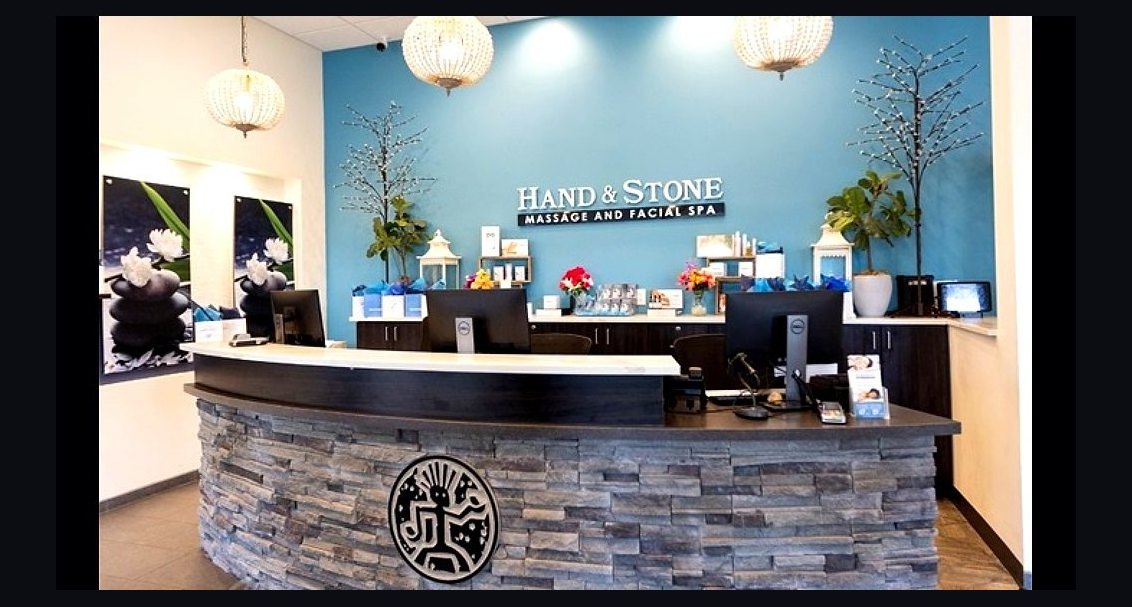 franchiseShould I open or buy a Hand and Stone Massage franchise in 2027?