


Should I open or buy a Gong Cha franchise in 2027?
Quality
Certified
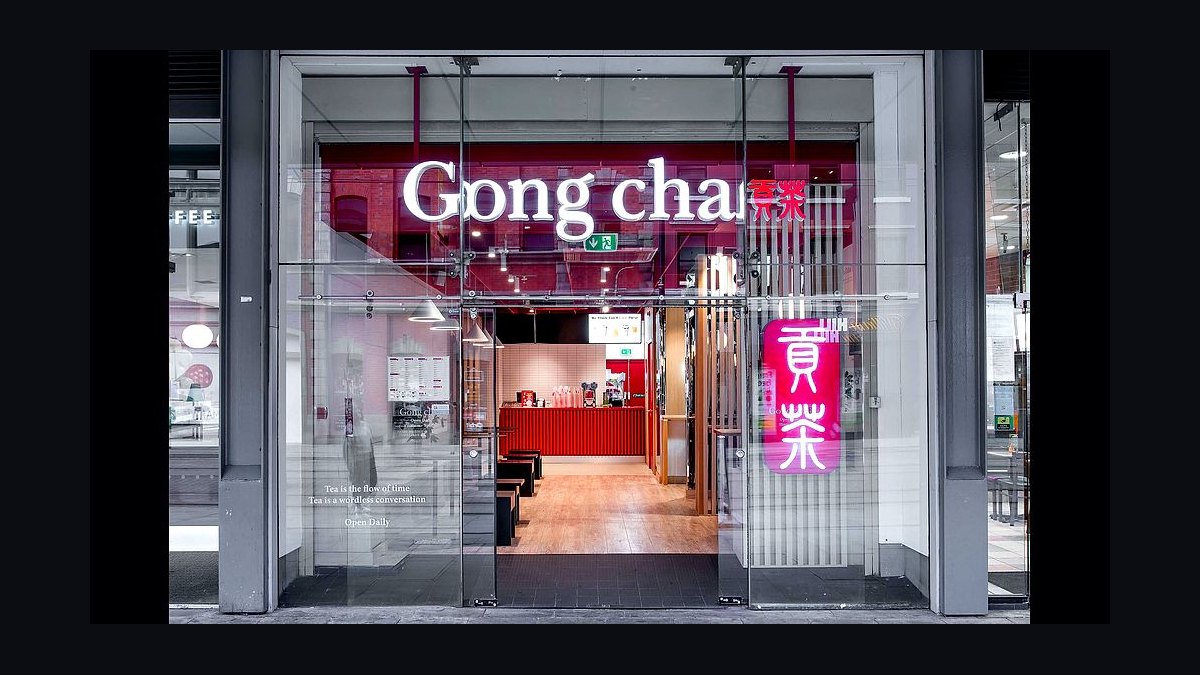
Yes — if you can secure a Tier-1 college campus, Asian-cluster suburb, or dense urban corridor with $250K–$450K of liquid capital, and accept that you're entering a now-corporate-controlled system where the franchisor bought back 170 master-franchisee stores in 2024. Real 2025 FDD Item 7 ranges $184,500 to $627,060 total investment, with a $40,000–$45,000 initial franchise fee, 6% royalty, and 1% brand fund (which can rise to 2% on 90-day notice). Strong locations clear $683,000 AUV with 15–22% store-level EBITDA, putting conservative Year-1 owner cash flow at $90K–$140K and payback at 36–48 months. Probably not — unless you have a real-estate edge or operator experience in beverage QSR. Saturated suburban strips with a Kung Fu Tea, Tiger Sugar, or Sharetea within a mile will not clear the math.
The Real Numbers
Gong Cha's 2025 FDD (the operative document for any 2027 opening because new-unit packets are drafted 12–18 months pre-open) breaks the total initial investment between $184,500 on the low end and $627,060 on the high end. The variance is almost entirely build-out and rent deposit: a converted endcap with existing plumbing and HVAC lands near the floor; a vanilla-shell mall inline with full grease-trap and exhaust work lands near the ceiling. Item 19 disclosed system AUV of $683,000 in the most recent reporting period, though bottom-quartile stores reported $401,211 in gross sales — a roughly 70% spread between the worst and median performers, which is consistent with bubble tea's hyper-local nature.
| Cost Bucket | Low ($) | High ($) | Notes |
|---|---|---|---|
| Initial franchise fee (Item 5) | 40,000 | 45,000 | Single-unit; multi-unit deposits negotiated separately |
| Leasehold improvements / build-out | 60,000 | 280,000 | Endcap conversion vs. vanilla shell |
| Equipment package (Super Wu system) | 45,000 | 95,000 | Tea brewers, sealers, POS, walk-in cooler |
| Signage & furniture | 12,000 | 35,000 | Exterior + interior brand kit |
| Opening inventory | 8,000 | 18,000 | Tapioca, tea, syrups, cups, lids |
| Initial training (14 days NY) | 4,500 | 12,000 | Travel + lodging for owner + 1 manager |
| Grand-opening marketing | 5,000 | 15,000 | Required minimum spend |
| 3 months working capital | 10,000 | 127,060 | Rent, payroll, utilities runway |
| TOTAL (Item 7) | 184,500 | 627,060 | Excludes real-estate purchase |
| Ongoing royalty | 6.0% | 6.0% | Weekly on net sales |
| Brand fund | 1.0% | 2.0% | Can rise on 90-day notice |
| System AUV (Item 19 mid) | — | 683,000 | Bottom quartile: $401,211 |
| Store-level EBITDA margin | 15% | 22% | After royalty + brand fund |
| Year-1 owner cash flow (median store) | 90,000 | 140,000 | Owner-operator, post-debt-service |
| Payback period | 36 mo | 48 mo | 70% SBA-financed scenario |

The unit economics math is real: bubble tea COGS sits at 18–25% of sales (tapioca and tea leaves are cheap; sealed cups and straws are the volume cost), labor runs 28–34%, rent on a good A1 site is 8–12%, and utilities/repairs/marketing eats another 6–9%. That puts prime cost at roughly 53–62% before the 7% royalty + brand fund, leaving 15–22% store-level EBITDA in a stabilized year. The IBISWorld bubble tea industry report puts U.S. category growth at 7.1% CAGR through 2028, well above broader QSR — the rising tide is real, but the floor is uneven.
Who Wins With This Business
Operators with a sourced location adjacent to a Tier-1 university (UCLA, NYU, UT-Austin, Michigan, Purdue, Georgia Tech) win first — campus density delivers the 150–250 transactions/day the model needs and average ticket of $7.20 with add-on toppings. Asian-American suburban clusters (Cupertino, Plano, Bellevue, Edison NJ, Quincy MA) are the second tier; these consumers know the brand from Taiwan, Korea, and Singapore, and drive repeat frequency of 2.4x/month vs. the U.S. category average of 1.6x. Multi-unit operators with 2–5 existing QSR locations win on shared regional manager overhead and supplier consolidation. Owner-operators willing to work the counter for the first 18 months capture the $90K–$140K Year-1 cash flow; absentee operators give back $45K–$60K of that to a full-time GM. Real-estate-led entrepreneurs — those who already control or can secure a 1,000–1,400 sq ft endcap with drive-thru on a major arterial near a regional mall, big-box anchor, or college — win because site quality drives 60% of bubble tea unit economics.
Who Loses With This Business
Suburban strip-center operators within a mile of an existing Kung Fu Tea, Tiger Sugar, Sharetea, or CoCo Fresh Tea lose hard — the bubble tea category cannibalizes itself faster than coffee because customers don't have brand loyalty the way Starbucks regulars do. Drive-thru-only sites in non-Asian DMAs underperform; bubble tea is still a discovery purchase for half the U.S. market, and walk-by traffic + visible craft preparation drives 35% of first-time trial. Absentee owners with no QSR experience routinely miss the 22% labor-cost ceiling and end up at 31–35%, which pushes store-level EBITDA below 8%. Operators undercapitalized below $200K liquid discover the 3-month working-capital figure in Item 7 is optimistic — most stores need 6 months of runway because ramp to AUV takes 14–18 months. Anyone counting on the Item 19 median ($683K) as a planning number for Year 1 is buying disappointment; plan to Year-1 sales of $480K–$540K and let outperformance be upside. Investors hoping for a passive returns play also lose — bubble tea is a 60-hour-a-week owner-operator business until you stack 4+ units.
2027 Market Conditions
Gong Cha is now a corporate-owned U.S. operation, not a master-franchisee patchwork. In 2024 the parent company bought back 170 stores across 13 states from its prior North American master franchisee — New York, New Jersey, Pennsylvania, Connecticut, Massachusetts, Rhode Island, New Hampshire, Texas, Oklahoma, Florida and three others. The strategic read: TA Associates (the PE owner) is grooming the asset for a reported $2 billion sale, which means 2027 franchisees should expect tighter unit-economics scrutiny, more required tech adoption (Super Wu prep system, Gong Cha 2.0 digital stack), and likely a royalty increase or brand-fund step-up to 2% within the next 24 months.
The broader bubble tea category is growing at 7.1% U.S. CAGR through 2028 per IBISWorld, with U.S. unit count now over 4,500 — but white-space markets are thinning. Mountain West, Upper Midwest, and Gulf-South secondary cities (Boise, Des Moines, Mobile, Lubbock) remain underpenetrated; coastal metros above 250K Asian-American population are saturated. Competitive pressure from Tiger Sugar, Xing Fu Tang, Tea Stori, and Kung Fu Tea is real — five-brand-deep tea corridors now exist in Flushing, Arcadia, Sugar Land and Edison. Commodity tapioca prices stabilized in Q4 2026 after the 2024–2025 Thailand drought spike, restoring COGS to the 18–22% target band. Labor remains the wildcard: $17–$19/hour starting wages in CA, NY, MA, WA push labor to 32% in those states vs. 26% in TX, GA, FL.
The 90-Day Decision Tree
- Days 1–10: Pull the 2026 or 2027 FDD directly from Gong Cha USA (gongchausa.com franchise inquiry) — not a third-party site. Read Items 5, 6, 7, 19, 20, and 21 in full; flag any AUV restatement or royalty change versus the 2025 doc above.
- Days 11–25: Build your real-estate brief. Pull demographics for your target DMA: Asian-American population density, median HHI above $85K, college student count within 2 miles, and existing bubble tea competitor map. Walk away from any site with three or more bubble tea operators within 1.5 miles.
- Days 26–40: Call 8–12 current Gong Cha franchisees from the Item 20 list. Ask specifically: (a) actual Year-1 sales, (b) actual labor %, (c) was Item 19 accurate, (d) corporate support since the 2024 takeover, (e) would you sign again. Three "no" answers = stop.
- Days 41–55: Secure pre-approval for SBA 7(a) or 504 financing — most bubble tea deals close at 70% LTC, 10-year term, prime + 2.75%. Confirm your $250K liquid + $1M net worth clears franchisor underwriting.
- Days 56–70: Hire a franchise attorney (look for one with 20+ FDD reviews in the QSR beverage space) to redline the FDA. Negotiate transfer rights, territory radius, and a sales-floor renewal cap. Budget $6K–$12K legal.
- Days 71–85: Site letter of intent + landlord package. Target 10-year primary term + two 5-year options, 8–10% of sales rent cap, 90-day fixturing period rent-free, and a co-tenancy clause if you're in a center.
- Day 86–90: Final go/no-go. Re-run your pro forma with Year-1 sales at $480K, labor at 32%, rent at 11%. If that scenario still clears 8% store EBITDA, sign. If not, walk.
Alternative Plays
Kung Fu Tea is the most credible direct alternative — lower franchise fee ($30K vs. $45K), comparable AUV ($550K–$700K), and broader U.S. footprint (350+ units) mean less site cannibalization. Sharetea is the value play at $25K franchise fee and 5% royalty, though brand awareness lags Gong Cha outside California and Texas. Tiger Sugar is the premium play — higher AUV ($800K+) and brown-sugar-pearl differentiation, but $50K franchise fee + $400K–$700K all-in. CoCo Fresh Tea & Juice offers global scale (5,000+ units worldwide) and is the strongest international resale-exit story. For operators wanting to own the asset outright with no royalty, an independent bubble tea concept built on a Wanpo or Possmei wholesale program runs $150K–$280K all-in and keeps the 7% royalty + brand fund — but trades brand pull for a 14–24 month longer ramp. For passive investors, Crumbl Cookies, Jeremiah's Italian Ice, or Dave's Hot Chicken offer comparable check sizes with more proven absentee-operator playbooks.
FAQ
What is the total investment range to open a Gong Cha franchise?
The 2025 FDD Item 7 shows a total investment range of $184,500 to $627,060. This covers equipment, build-out, permits, and initial inventory, though actual costs depend heavily on location size and lease terms.
How much liquid capital do I need to qualify? Franchisees typically need $250,000 to $450,000 in liquid capital. This ensures you can cover the initial franchise fee of $40,000–$45,000, plus operating expenses until the store reaches positive cash flow.
What are the ongoing royalty and marketing fees? You'll pay a 6% royalty on gross sales and a 1% brand fund contribution, which the franchisor can increase to 2% with 90 days' notice. These fees are standard for beverage QSR franchises.
How long does it take to break even and start earning profit? Conservative payback periods range from 36 to 48 months. Strong locations with annual unit volumes around $683,000 and store-level EBITDA of 15–22% can generate Year-1 owner cash flow of $90,000–$140,000.
Is Gong Cha still a good opportunity after the 2024 corporate buyback? The 2024 buyback of 170 master-franchisee stores shifted control to corporate, which can mean more standardized support but less local flexibility. It's a viable option if you secure a prime location—like a college campus or dense urban corridor—and have beverage QSR experience.
What locations should I avoid for a Gong Cha franchise? Avoid saturated suburban strips where competitors like Kung Fu Tea, Tiger Sugar, or Sharetea operate within a mile. These areas often lack the foot traffic needed to clear the financial math, especially with the 6% royalty and 1–2% brand fund.
Bottom Line
Gong Cha is a real franchise system with real unit economics, but the easy money was made between 2018 and 2023. In 2027 you are buying into a corporate-controlled, PE-grooming-for-exit system at $250K–$450K all-in, with a 6% royalty heading to a 7% royalty-equivalent and a 7.1% growth tailwind that is materially uneven by DMA. Win conditions are narrow but well-defined: Tier-1 college site, Asian-cluster suburb, owner-operator labor, real-estate edge, and 6 months of working capital. Outside those guardrails, this is a $90K-down lesson in QSR difficulty. Pull the actual 2026 or 2027 FDD before any signing, call 10+ franchisees, and stress-test your pro forma at $480K Year-1 sales — if the math still clears 8% store EBITDA at that floor, sign.
Sources
- Gong Cha Franchise Insights: FDD, Costs & Fees — VettedBiz
- Gong Cha Franchise (Costs + Fees + FDD) — Franchise Direct
- Gong Cha Franchise FDD, Profits & Costs 2025 — Sharpsheets
- Gong Cha Franchise Cost and Requirements for 2026 — IFPG
- Gong cha takes ownership of franchise territories in 13 states — Restaurant Business
- Gong cha Strives to Own U.S. Bubble Tea Market — QSR Magazine
- Gong cha buys 170 US stores from master franchisee — Restaurant Dive
- Bubble Tea Shop KPIs: AOV, Margin, and Breakeven — Financial Models Lab
- Gong Cha Franchise FDD, Costs & Fees 2026 — Franchise Payback
- Top 11 Bubble Tea Franchise Opportunities in USA for 2026 — TopFranchise
- How To Start Gong Cha Franchise In USA 2026 — StartupYo
- Gong Cha — Wikipedia
Related on PULSE
This page will be disappearing soon. Save it to your device for $1 — or read it free while it is here.
@Kory-White- · if Venmo asks, the last 4 of my number are 2012
This page is gone.
This one is off the shelf now. $1 keeps it on your phone for good — the whole page, pictures and diagrams included.
 franchiseShould I open or buy a Merry Maids franchise in 2027?
 franchiseShould I open or buy a Take 5 Oil Change franchise in 2027?
 franchiseShould I open or buy a Wingstop franchise in 2027?
 franchiseShould I open or buy a Supercuts franchise in 2027?
 franchiseShould I open or buy a Little Caesars franchise in 2027?
 franchiseShould I open or buy a Bruster's Real Ice Cream franchise in 2027?
 franchiseShould I open or buy a Primrose Schools franchise in 2027?
 franchiseShould I open or buy an Orangetheory Fitness franchise in 2027?
 franchiseShould I open or buy a UPS Store franchise in 2027?
 frShould I open or buy a McDonald's franchise in 2027?