


Should I open or buy a Smart Style franchise in 2027?
Quality
Certified
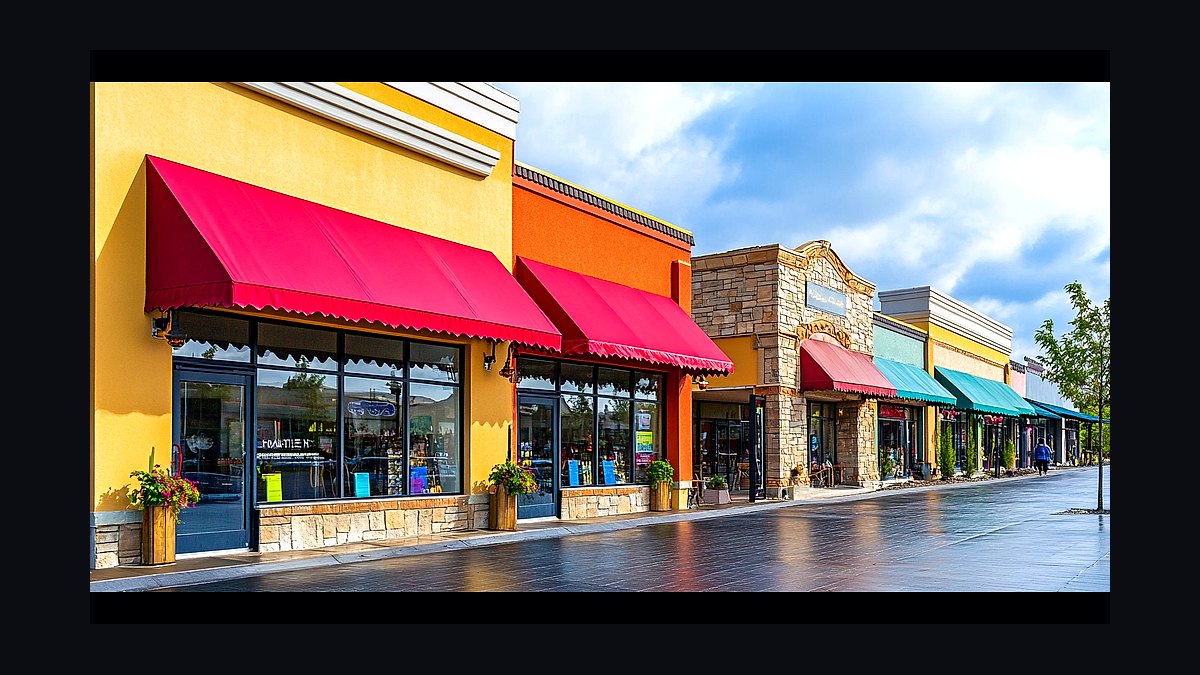
Opening a single, greenfield Smart Style franchise in 2027 is a weak bet for a first-time owner: the system has shrunk every year since 2018, labor is tight, and Year-1 owner cash flow often lands at just $18,000–$45,000 against a $184,000–$326,000 investment. The math only works if you're buying an existing multi-unit cluster inside a stable, high-traffic Walmart Supercenter, or if you're a working cosmetologist buying the chair you already sit in.
A Walmart vestibule on a Tuesday afternoon
Picture two different people standing in the same Smart Style vestibule inside the same Supercenter. The first is a first-time franchise buyer who has never managed an hourly workforce, has $200,000 in savings, and is comparing this franchise against three other options a broker handed him on a laminated one-pager. The second is a licensed cosmetologist who has worked this exact chair for six years, knows every regular customer's name and color formula by heart, and is being offered first right of refusal when the current owner retires next spring. Those two buyers are evaluating the same real estate, the same royalty stack, and the same Item 19 performance numbers — and they should reach opposite conclusions.
That's the core tension in any 2027 Smart Style decision. The franchise itself is not inherently broken: it still produces $300,000–$420,000 in average annual gross sales per unit, and the Walmart host store still delivers walk-in traffic that an independent strip-mall salon simply cannot match on marketing spend alone. What's changed is the system around it. Smart Style's parent, Regis Corporation, has watched the brand's unit count fall every year since a 2018 closure of 597 underperforming locations, and net-new franchise openings have been negative in every fiscal year since. A franchise that is shrinking at the system level can still be a good investment for a specific buyer in a specific store — but it stops being a good investment for someone opening a single unaffiliated unit and hoping foot traffic alone carries them through a 14-to-22-month breakeven window.
The scenario also plays out differently depending on what else is happening in that Walmart's trade area. A Supercenter that just absorbed a nearby store closure, or one sitting in a ZIP code with rising household formation, behaves nothing like a Supercenter in a market that's lost a major employer. Franchise brokers rarely volunteer that distinction because their commission doesn't depend on it, which is exactly why a serious buyer has to do the legwork of walking the store, watching the vestibule across a weekday lunch rush and a Saturday morning, and asking the store manager directly about any planned remodel. The question "should I open or buy" really splits into two very different questions depending on who's asking, and the rest of this answer treats them separately: what it costs and earns either way, and who actually comes out ahead.
How the Smart Style franchise economics actually work
The mechanism is simpler than most franchise systems because nearly every variable flows from one relationship: Regis negotiates vestibule space inside a Walmart Supercenter, sublets it to a franchisee, and collects a royalty on top of whatever rent Walmart charges. Understanding that chain explains almost every outcome a franchisee experiences, from why margins stay thin even at healthy sales volume to why multi-unit operators consistently outperform single-unit owners under an identical fee structure.

Every dollar a customer spends gets split three ways before the owner sees anything: the royalty and marketing fee go to Regis, the percentage rent goes to Walmart Realty once sales cross a breakpoint, and stylist payroll — typically 52–58% of service revenue — goes out before any owner draw. That stacked structure is why the business is so sensitive to unit performance. A top-quartile store clearing $450,000–$520,000 a year absorbs those fixed percentage costs easily; a bottom-quartile store at $185,000–$240,000 can slide into a loss, because the royalty, rent, and labor floor don't shrink proportionally with weak sales.
This is also why multi-unit operators do better than single-unit owners under the identical fee structure: a regional manager, a shared product-purchasing account, and cross-store stylist scheduling all reduce the fixed cost per unit, which is the one lever an owner actually controls inside a franchise system that sets royalty rates, retail pricing, and service menus from the top. A single-unit owner has almost no pricing leverage — the price list, the retail product mix, and the promotional calendar are all dictated centrally — so the only real variables left in their control are staffing quality, retention, and how tightly they manage hours against walk-in demand curves. That's a much narrower set of levers than an independent salon owner has, and it's worth sitting with before signing a franchise agreement that locks in an 8% top-line tax for the life of the term.
It's also worth understanding how this mechanism compares to adjacent service-retail hosting arrangements, because Smart Style isn't the only brand built on a host-store sublease. Vision centers inside big-box retailers, nail salons inside strip-mall anchors, and quick-lube bays attached to tire stores all run on a similar logic: borrow someone else's foot traffic, pay for it with rent plus a cut of revenue, and hope the host's draw outlasts your lease term. The lesson transfers directly — any time a franchise's value proposition rests on someone else's real estate, the franchisee's downside is tied to a landlord's decisions they don't control, which is precisely the risk that shows up later when a specific Walmart store remodels or closes.
The real numbers behind a 2027 Smart Style decision

Any serious evaluation has to start with FDD Item 7 — the estimated initial investment range governing 2027 openings. All-in startup cost runs $184,000 to $326,000, built from a $39,500 initial franchise fee, $55,000–$135,000 in vestibule build-out, $35,000–$65,000 in fixtures and equipment, opening inventory, signage, mandatory corporate training, pre-opening payroll, and three months of working capital. On top of that initial outlay sits an ongoing 5% royalty on gross sales plus a 2% brand marketing fee — an effective 8% tax on top-line revenue before rent even enters the picture. Walmart's sublease typically runs $2,800–$4,800 per month base plus percentage rent above a sales breakpoint.
Performance data from Item 19 shows the spread that determines whether any of this pencils out. Average gross sales per franchised unit run $315,000–$385,000; top-quartile units reach $450,000–$520,000; bottom-quartile units fall to $185,000–$240,000 and are often unprofitable outright. EBITDA margins for franchisees average just 6–12% after royalty, rent, and a full stylist payroll — well below the 18–25% margin benchmark for independent salons reported industry-wide. That gap is the single clearest argument against a single-unit greenfield open: you're paying a franchise fee and an 8% royalty stack for a traffic advantage that, on its own, doesn't close the margin gap versus owning an independent shop outright.

Payback period tells the same story from a different angle: 4.5–7 years at average performance, but only 2.8–3.5 years for top-quartile multi-unit operators. Labor economics compound the pressure. Median hairdresser and cosmetologist wages sit around $16.42 an hour nationally, but commission-plus-base structures push effective labor cost to 52–58% of service revenue at Smart Style units specifically — the single largest line on the P&L, and one that's rising as cosmetology-school enrollment has fallen roughly 31% from 2019 levels while projected demand for licensed stylists keeps climbing. Financing terms matter too: SBA 7(a) loans are the typical vehicle for a purchase this size, generally requiring 10–20% owner equity and running 10-year amortization on the non-real-estate portion, which means the debt service on a $250,000 purchase can easily run $2,800–$3,600 a month before any owner draw is possible — a number that has to be weighed against that same 6–12% EBITDA margin.
Resale economics also matter: existing Smart Style units in stable Walmart stores typically trade at 2.0–2.8x seller's discretionary earnings, a noticeably cheaper entry multiple than the 3.5–5x independent salons command — which is exactly why buying an existing cluster, rather than opening fresh, is where the better risk-adjusted numbers live. For context on how that multiple compares across adjacent service-retail categories: quick-service salon suites and barbershop franchises with stronger unit growth have traded closer to 3–4x in recent years, while declining-unit systems across franchising broadly tend to compress toward 1.5–2.5x, which puts Smart Style's resale multiple roughly where the brand's growth trajectory would predict.
Trade-offs: Smart Style versus the alternatives

Once the numbers are on the table, the decision becomes a trade-off between four distinct paths rather than a simple yes/no on one franchise. Opening a brand-new single Smart Style unit trades a known, recognizable brand and guaranteed Walmart foot traffic for thin margins, a shrinking system, and real estate risk tied entirely to one host store's remodel and closure decisions. Buying an existing multi-unit cluster trades the greenfield build-out risk for a higher purchase price but immediate cash flow, trained stylists already in place, and a 2.0–2.8x SDE multiple that's genuinely attractive relative to the broader salon industry.
The two non-Smart-Style paths matter just as much to the decision. An independent salon acquisition at 2.5–3.5x SDE removes the royalty stack entirely and hands the owner full pricing control, trading away Walmart's guaranteed walk-in traffic for 18–25% margins instead of 6–12%. A salon-suite franchise model — leasing stations to independent stylists rather than employing them directly — sidesteps the labor-turnover problem altogether by collecting rent instead of running payroll, with EBITDA margins commonly in the 28–38% range because the operator never has to hire, train, or retain a stylist workforce. A franchise in a growing system with a stronger Item 19 and a larger store count offers a comparable W-2 salon model but without fighting a shrinking brand's downward unit trend.
There's a fifth option worth naming even though it isn't a franchise at all: staying an employee or independent contractor stylist for another two to three years while banking capital and building a client book, then buying into an existing Smart Style cluster once first right of refusal or an internal sale comes up. This path sacrifices the "ownership now" timeline but matches almost exactly the profile this answer identifies as the winning buyer — a stylist who already knows the chair, the clientele, and the store's foot-traffic pattern before any capital changes hands. None of these alternatives eliminates the underlying labor-market squeeze — stylist wages are rising everywhere, and competition for licensed talent is intensifying as cosmetology-school enrollment keeps falling — but each one changes who absorbs that squeeze and how much margin is left over afterward.
Common pitfalls when opening or buying a Smart Style unit

The first and most common pitfall is treating the brand's historical foot-traffic advantage as permanent. A Smart Style's lease is tied to one specific Walmart location, and a store closure or major remodel can force a relocation or shutdown with very short notice — unlike a strip-center salon, there's no transferable real estate to fall back on. Before committing capital, walk the actual host store, count foot traffic across a peak weekend window, and check the surrounding market's broader retail trajectory rather than trusting a static brochure traffic figure. Ask the store manager directly whether a remodel or footprint change is on the five-year capital plan; store-level staff often know before it becomes public.
The second pitfall is underestimating labor cost sensitivity. Because effective stylist labor already runs 52–58% of service revenue, even a modest local wage increase can erase the thin margin a single unit was counting on. Pull county-level wage data before signing anything; a county with elevated cosmetologist wages relative to the national median will compress margins below break-even under the standard commission grid, and no amount of operational discipline fixes a labor-cost problem baked into the local market. Related to this: don't underestimate how long it now takes to fully staff a chair rotation. With cosmetology-school enrollment down roughly 31% since 2019, hiring timelines that used to run four to six weeks can now stretch past three months in competitive labor markets, which directly delays the revenue ramp a new owner is counting on to hit breakeven inside the 14-to-22-month window.

The third pitfall is buying on broker enthusiasm instead of talking to existing franchisees directly — specifically ones in both strong and weak markets — about actual gross sales, turnover, and whether they'd make the same decision again. A franchise broker's incentive structure rewards a closed deal, not a correctly-sized one, and the Item 19 ranges in the FDD are averages that can mask a wide dispersion between a store's best and worst years.
The fourth pitfall is underfinancing the purchase itself. Buyers who stretch to the minimum SBA equity injection and finance the rest often have no cushion left for the inventory restock, payroll gap, or minor build-out surprise that almost always shows up in the first ninety days, and a unit that's cash-tight from day one rarely recovers its footing before the lease's next renewal decision forces the issue.
The fifth and final pitfall is going in as a single-unit, first-time operator with no existing team and no cushion beyond the FDD's working-capital minimum; the owners who do well in this system are almost uniformly either multi-unit operators who've amortized overhead across several stores, or licensed stylists who draw both an owner margin and a stylist wage from the same chair. Anyone outside those two groups should treat a Smart Style franchise purchase in 2027 as a significantly higher-risk bet than the brand recognition alone would suggest.
Related questions
How long does it take to open a franchise and break even in 2027?

Most single-unit hair-salon franchises, including Smart Style, run a 14-to-22-month breakeven window at average performance, extending to several years before the initial investment is fully recovered.
Is it better to buy an existing franchise unit or open a new one?
Buying an existing, profitable unit is generally lower-risk than opening greenfield, since it comes with proven traffic, trained staff, and a purchase multiple that's often cheaper than the all-in cost of a new build.
What makes a franchise system "shrinking" versus "growing"?
A shrinking system shows negative net unit growth year over year — more closures than new openings — which signals weaker site economics or franchisor support, regardless of individual unit profitability.
How much does labor cost eat into salon franchise margins?
Stylist labor commonly runs over half of service revenue in commission-based salon franchises, making it the single largest controllable cost and the first place margin erodes when local wages rise.
What financing is typically used to buy a franchise like this?
SBA 7(a) loans are the standard vehicle, usually requiring 10–20% owner equity with the balance amortized over roughly ten years, so debt service must be weighed against the unit's thin EBITDA margin before committing.
FAQ

Is Smart Style still expanding in 2027? No — the franchisor's unit count has declined year over year for several years, so new openings are rare and concentrated among existing multi-unit operators adding to their portfolios rather than first-time greenfield buyers.
What's the single biggest financial risk in opening a Smart Style franchise? Thin Year-1 cash flow combined with a fixed royalty and rent stack that doesn't shrink when sales underperform — a bottom-quartile unit can struggle to clear break-even even with reasonable foot traffic.
How much capital does a 2027 Smart Style franchise require? All-in startup costs range from roughly $184,000 to $326,000, including a $39,500 franchise fee, plus working capital to cover well over a year of operations before breakeven.
Can someone run a Smart Style franchise as a passive, semi-absentee owner? It's difficult. The model requires hands-on management of W-2 stylists, inventory, and retail sales, and the thin margins leave little room for the inefficiency a purely passive ownership structure introduces.
What happens to a franchise unit if the host Walmart closes or remodels? The lease is tied to that specific store, so a closure or major remodel can force relocation or shutdown with limited notice, and there's typically no guaranteed replacement site or compensation for the disruption.
Is this a good franchise to open with no prior salon experience? Generally no — the combination of workforce management, retail operations, and host-store negotiation favors buyers who already understand either the labor side (as a stylist) or the multi-unit operating side of the business.
Sources
- U.S. Securities and Exchange Commission — Regis Corporation 10-K Annual Report filings (sec.gov)
- U.S. Bureau of Labor Statistics — Occupational Employment and Wage Statistics (bls.gov/oes)
- U.S. Bureau of Labor Statistics — Occupational Outlook Handbook, Personal Appearance Workers (bls.gov/ooh)
- U.S. Small Business Administration — SBA 7(a) Loan Program overview (sba.gov)
- IBISWorld — Hair Salons in the US industry report (ibisworld.com)
- International Franchise Association — Franchise Business Economic Outlook (franchise.org)
- Entrepreneur — Franchise 500 directory (entrepreneur.com/franchise500)
- Franchise Times — Top 400 franchise systems ranking (franchisetimes.com)
- 1851 Franchise — franchise cost and profitability analysis library (1851franchise.com)
Related on PULSE
This page will be disappearing soon. Save it to your device for $1 — or read it free while it is here.
@Kory-White- · if Venmo asks, the last 4 of my number are 2012
This page is gone.
This one is off the shelf now. $1 keeps it on your phone for good — the whole page, pictures and diagrams included.
 franchiseShould I open or buy a Dairy Queen franchise in 2027?
 franchiseShould I open or buy a KinderCare franchise in 2027?
 franchiseShould I open or buy a Wingstop franchise in 2027?
 franchiseShould I open or buy a Whataburger franchise in 2027?
 franchiseShould I open or buy a Taco Bell franchise in 2027?
 franchiseShould I open or buy a Jeremiah's Italian Ice franchise in 2027?
 franchiseShould I open or buy a Mathnasium franchise in 2027?
 franchiseShould I open or buy a Stanley Steemer franchise in 2027?
 franchiseShould I open or buy a Marco's Pizza franchise in 2027?
 franchiseShould I open or buy a Dunkin' franchise in 2027?