


Should I open or buy a Gotcha Covered franchise in 2027?
Quality
Certified
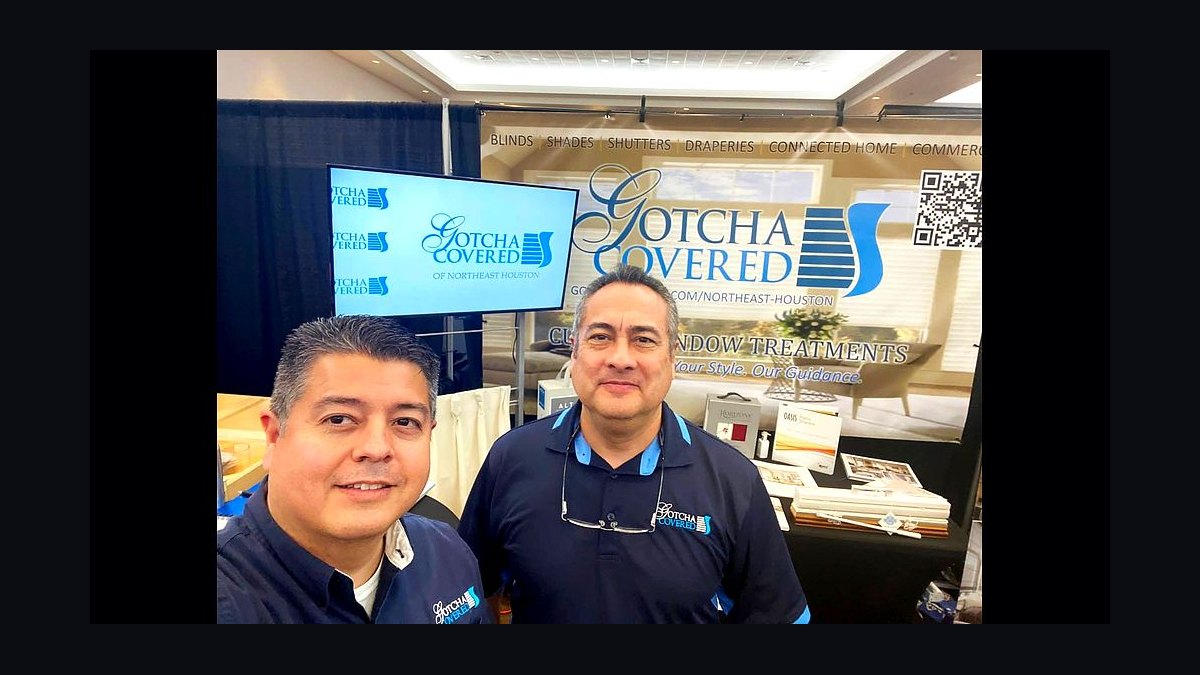
Yes — opening or buying a Gotcha Covered franchise in 2027 is a reasonable move for a design-and-sales-minded operator, because the model is low-capital, home-based, and carries strong margins with no retail lease. The real decision isn't whether to buy into the brand, but which door you walk through: a brand-new territory for roughly $60,000–$130,000 with a 12–18 month ramp, or an existing territory priced at a premium for immediate cash flow. Your capital, timeline, and risk tolerance should decide which path, not the brand itself.
The two paths into a Gotcha Covered franchise: open new or buy existing
Anyone seriously evaluating whether to open a Gotcha Covered franchise in 2027 runs into the same fork almost immediately: build a brand-new territory from scratch, or acquire an already-operating territory from a franchisee who's exiting. Both routes land you in the same brand, the same shop-at-home window-treatment model, and the same royalty structure, but the lived experience of year one — and the check you write to get there — are almost nothing alike.
A new-build territory costs you the Item 7 range from the current Franchise Disclosure Document: a flat franchise fee near $50,000, plus $10,000 to $80,000 in sample kits, design software, vehicle setup, licensing, initial marketing, and working capital, totaling $60,000 to $130,000. What you get for that is a blank map — no existing client list, no referral relationships with real estate agents or designers, no local brand recognition. National marketing helps you look legitimate when a prospect checks, but it does nothing to generate the first call in your specific zip codes; that has to be built by hand. Most new owners don't reach a comfortable $30,000–$50,000 monthly run-rate until somewhere between month twelve and month eighteen, which means the Item 7 number understates what you actually need. Realistic planning adds another $20,000 to $40,000 of personal runway on top of the franchise fee, purely to cover living costs while the pipeline fills.
Buying an existing territory inverts every part of that equation. You're no longer paying for a toolkit and a training manual — you're paying for a stream of cash flow that already exists, typically priced at 2.5x to 4x the seller's annual discretionary earnings. On a mature territory doing $500,000 in revenue and netting $125,000 to $175,000 to the owner, that multiple lands the purchase price somewhere between $300,000 and $600,000-plus, depending on how much of the revenue is tied to referral relationships that transfer cleanly versus relationships that live and die with the departing owner's personal reputation. That's a far larger check than the new-build range, but it buys away the single scariest variable in franchising: the unknown ramp.
This isn't purely a financial calculation — it's a personality fit. People who do well opening new territories tend to be comfortable sitting with uncertainty for a year or more, patient through slow months, and genuinely energized by building a client base from nothing. People who buy existing territories are usually optimizing for speed and predictability of owner income, and they're willing to pay a real premium, usually financed through SBA debt or seller-carried notes, to skip the empty-pipeline phase entirely. Neither preference is wrong; each is priced into a different transaction.
A less obvious factor belongs in this comparison too: territory inventory. Gotcha Covered sells exclusive geographic territories, and in many metro areas the most attractive new-build zones — dense, affluent suburbs with active remodeling and new-construction activity — are already claimed by existing owners. If your target market has no open new territory left, the "open new or buy existing" decision has effectively already been made for you by availability, not by preference, and it's worth checking territory maps before you fall in love with either plan.
How to decide between opening new and buying resale
Work the decision in this order, because each gate removes an option before you spend time weighing preference against it. Start with hard availability: Gotcha Covered won't sell you a brand-new territory that overlaps an existing owner's exclusive zone, so if your market is already carved up, "open new" isn't on the table regardless of what you'd prefer. Next, test financing reality against the resale price band. A purchase in the $300,000 to $600,000 range generally requires either substantial liquid capital, an SBA 7(a) loan (commonly 10–20% down with strong personal credit), or a seller willing to carry a note — and not every departing owner is willing to finance their own exit, nor will every bank underwrite a service-business acquisition at that size without a demonstrated track record from the buyer.
Then be honest about your personal runway. If you're working with six months of savings and need the business replacing a salary quickly, a new territory's 12–18 month ramp is a genuine risk — you can run out of personal capital before the territory matures, even though the up-front investment looked smaller on paper. A resale territory already clearing $400,000-plus in annual revenue removes that specific risk at the cost of a much larger initial outlay and ongoing debt service on the acquisition loan.
Finally, understand exactly what you're buying when you buy existing. Resale territories are not interchangeable. Some are heavily dependent on the departing owner's personal relationships and will see revenue dip 15–30% in the first post-transition year as referral sources adjust to a new face behind the brand. Others have institutionalized their lead flow — a real CRM, documented referral partnerships with stagers and builders, a subcontracted installer bench that isn't tied to the seller personally — and those transfer far more cleanly. Diligence here means pulling two to three years of financials, interviewing top referral sources directly where the seller permits it, and asking the franchisor for the territory's documented performance history rather than taking the seller's pitch at face value.
The concrete numbers behind each option

New-territory investment, built from the current Item 7 disclosure: franchise fee around $50,000 flat; sample kits and design equipment $6,000–$25,000; vehicle setup (most owners repurpose an existing SUV or pickup rather than buying new) $0–$12,000; technology, CRM, and estimating software $3,000–$12,000; initial marketing and lead generation $10,000–$30,000; insurance and licensing $2,000–$10,000; training and travel $4,000–$12,000; working capital for the opening quarter $8,000–$25,000. That lands total new-build investment at roughly $60,000 to $130,000. The number that doesn't show up in the FDD's Item 7 estimate, but matters more than almost anything else, is the extra $20,000 to $40,000 in personal liquidity most owners need to bridge the realistic 12–18 month ramp — underfunding this bridge is the single most common reason a new franchisee stalls out before the territory ever matures.
Resale pricing follows a different logic entirely. Mature territories in the system — generally three years old or more — average somewhere around $550,000 in annual gross revenue, with top performers clearing $900,000. Cost of goods, meaning blinds, shades, hardware, and installation labor, runs roughly 35–45% of revenue depending on product mix; motorized and smart-home shades carry a higher cost basis but also a higher ticket, which tends to be close to a wash on margin percentage even though it raises absolute dollars per sale. After the royalty (near 5% of gross sales), a marketing fee (1–2%), vehicle and insurance costs, and a modest home-office deduction, net profit before owner compensation typically lands in the 25–35% range. On $500,000 in sales, that's $125,000 to $175,000 in pre-tax profit, most of which becomes the owner's income directly. Buyers typically pay 2.5x to 4x that discretionary-earnings figure, so a territory clearing $150,000 a year commonly trades for $375,000 to $600,000, financed through some blend of SBA debt, seller financing, and buyer equity.

Ongoing fees are identical regardless of which door you walked through: royalty near 5% of gross sales, marketing fee around 1–2%, and — this is the structural advantage of the whole category — no inventory carrying cost and no showroom lease, because the business is home-based and shop-at-home by design. If you use installation subcontractors rather than installing yourself, expect to pay $50–$100 per window or $150–$300 per job, a real cost that eats directly into that 25–35% margin band but frees the owner's hours for selling, which is almost always the higher-leverage use of time once lead flow is established.
Zoom out to the category level for 2027 context: window treatments and home furnishings have tracked as a steady, largely non-cyclical slice of home improvement spending, and the motorization and smart-home-integration tier (shades that talk to Alexa or Google Home) has added a genuine premium layer that big-box retailers and pure e-commerce sellers struggle to replicate without an in-home design consultation. That consultative, measure-and-recommend service is Gotcha Covered's durable differentiator against both big-box and online competition, and it's the reason the category has sustained premium pricing even as price-sensitive buyers increasingly shop DIY online for simpler jobs.
What makes Gotcha Covered different from adjacent home-services franchises

It's worth sizing Gotcha Covered against the handful of franchise concepts that occupy similar ground, because the comparison sharpens what you're actually buying. Budget Blinds is the category's larger incumbent — more territories, more brand recognition, a longer operating history — which generally means an easier time generating inbound trust but also more saturated territory maps in desirable metros. Made in the Shade Blinds runs a lower-capital, more mobile-first model that trims the sample-kit and showroom-adjacent costs even further, at the cost of some of the full-service design positioning. Floor Coverings International applies the same shop-at-home, in-home-consultation structure to flooring instead of window treatments, which is a useful benchmark if you're drawn to the business model itself more than the specific product category — the underlying unit economics (home-based overhead, consultative selling, subcontracted installation, royalty-plus-marketing-fee structure) look remarkably similar across all of them.
What distinguishes Gotcha Covered within that set is less about the franchise fee and more about the product category's margin resilience. Window coverings are a recurring, non-discretionary category tied to both new construction and remodeling cycles, and the measure-and-recommend consultation is genuinely hard for an online seller to replicate at the premium end of the market. That said, the category isn't immune to broader housing cycles — new-construction slowdowns and remodeling pullbacks during tighter credit periods will compress lead volume for any window-treatment franchise, Gotcha Covered included, so a 2027 buyer should weight local housing turnover and new-construction permits as seriously as the franchise's own numbers.
For an owner-operator comparing concepts side by side, the honest framing is that Gotcha Covered sits in a sweet spot of capital efficiency relative to revenue ceiling — a new-build investment well under $150,000 against a mature-territory ceiling north of $900,000 in some markets is a genuinely attractive ratio compared to many retail or food-service franchise categories that require six-figure buildouts for a fraction of the eventual revenue ceiling. The trade-off is that reaching that ceiling depends almost entirely on the owner's personal selling and relationship-building skill, since there's no foot traffic and no storefront doing any of the work for you.
Implementation: sequencing your first 90 days and beyond

Whichever path you choose, the first fifteen days belong entirely to diligence: read the full current FDD start to finish, with particular attention to Items 5, 6, 7, 19, and 20 — fees, the total investment range, and any financial performance representations the franchisor discloses. If you're leaning toward resale, this is also the window to request the seller's financials and the franchisor's documented territory performance history in parallel, rather than sequentially.
Days sixteen through thirty should be spent calling at least eight current franchisees — some suggested by the franchisor, some found independently through franchise forums or LinkedIn, because the second group tends to speak more candidly. Ask pointed questions: actual take-home income by year, how long their own ramp genuinely took versus what they expected, and what they wish someone had told them about lead generation before they signed.
Days thirty-one through forty-five diverge sharply depending on which path you're on. New-territory buyers should be validating that their target zip codes have real density of affluent suburban homeowners with active remodeling and new-construction activity — the demand base the entire model depends on. Resale buyers, instead, should be auditing the seller's referral mix in detail: what share of revenue comes from repeat and referral business versus paid leads, whether installer relationships are genuinely transferable or tied personally to the departing owner, and whether the territory's growth trajectory is still climbing or has already started to flatten.

Days forty-six through fifty-five are operational setup regardless of path: ordering the sample kit (budget $5,000 to $15,000 beyond the base starter kit if you want full fabric, wood, and motorized-shade coverage from day one), standing up a CRM, and establishing a design and estimating software workflow you'll actually use in the field. Days fifty-six through seventy-five are when lead generation has to go live in earnest — building relationships with real estate agents, home stagers, builders, and interior designers, while simultaneously standing up Google Local Services ads and a local SEO presence. Owners who commit $1,000 to $2,000 a month to Local Services ads in year one, combined with strong reviews and fast response times, commonly report returns in the 4:1 to 6:1 range on that specific spend. Days seventy-six through ninety should produce your first real in-home consultations and installed jobs — many owners self-install at this stage, which is sensible both to learn the product intimately and to protect installation quality before handing that work to subcontractors.
Beyond the ninety-day mark, growth tends to come from two adjacent levers worth planning for early rather than discovering by accident: motorized and smart-home upsells, which carry premium tickets and track exactly where the category's growth is concentrated, and commercial work — small offices, medical suites, and rental-property accounts — which several of the faster-growing franchisees in the system use specifically to smooth out the lumpiness of pure residential lead flow during slower seasonal stretches.
Financing, risk, and exit considerations for 2027 buyers

Financing shapes which door is realistically open to you more than almost any other factor. New-territory buyers typically self-fund the $60,000–$130,000 investment through personal savings, a home-equity line, or a smaller SBA loan, since the amount is modest enough that most lenders and most households can cover it without a complex capital stack. Resale buyers are a different animal: at $300,000 to $600,000-plus, most transactions blend two or three sources — an SBA 7(a) loan, a seller-financed note covering some portion of the purchase price, and buyer equity to bridge the gap. Sellers willing to carry paper are often more motivated and more flexible than a bank, but they also expect the buyer to demonstrate real competence during transition, since their remaining note payments depend on the business continuing to perform after they leave.
Risk profiles differ by path in a way worth naming explicitly. The dominant risk in opening new is underfunding the ramp — spending the full Item 7 budget on launch costs and then running low on personal capital exactly when the territory is finally starting to produce consistent revenue, forcing a premature retreat or a distress sale of a territory that just needed a few more months. The dominant risk in buying existing is relationship concentration — discovering, after closing, that 40% of the territory's revenue rode on the departing owner's personal rapport with two or three referral sources who quietly cool off once the familiar face is gone. Both risks are manageable with the right diligence, but they require looking in different places: new-territory buyers should stress-test their own cash runway against a pessimistic twenty-four-month ramp, while resale buyers should stress-test the seller's referral book against a reasonable deterioration scenario.
Exit planning is worth a passing thought even at the entry stage, since both paths eventually become sellable assets themselves. A new-build territory that reaches maturity and institutionalizes its own referral relationships — rather than remaining personally dependent on the founding owner — becomes a materially more valuable, more easily financed resale asset for the next buyer down the line, which is one more reason to build systems and documented processes early rather than treating years one and two as pure hustle with no infrastructure behind it.
Related questions

How long does it take a new Gotcha Covered territory to break even?
Most new franchisees reach a consistent $30,000–$50,000 monthly revenue run-rate in 12–18 months, not the faster timeline the FDD's Item 7 estimate might suggest — plan personal runway around the realistic timeline, not the optimistic one.
Is Gotcha Covered better than Budget Blinds for a first-time franchise owner?
Budget Blinds is larger with more territories and stronger brand recognition; Gotcha Covered offers a comparably low-capital, home-based structure at a smaller scale — compare territory availability and FDD Item 19 earnings data for your specific market.
Can I run a Gotcha Covered franchise part-time?
Not realistically in year one. Early on you're the primary designer and salesperson, typically working 40–50 hours weekly including evenings and weekends, before scaling back toward 30–35 hours once a referral pipeline matures.
What financing options exist for buying an existing Gotcha Covered territory?
SBA 7(a) loans, seller-financed notes, and conventional bank debt are the common routes; buyers typically combine two of the three, since resale prices often exceed $300,000 and few buyers cover that fully in cash.
Does Gotcha Covered require retail or design experience before buying in?
No. The franchisor trains owners on the shop-at-home design and sales system from the ground up; prior interior design or home-improvement sales experience helps but is not a prerequisite to open.
FAQ

What is the total investment to open a new Gotcha Covered franchise? The total investment ranges from about $60,000 to $130,000, including a roughly $50,000 franchise fee. Because the model is home-based with no showroom or carried inventory, this is considered a low entry cost relative to most retail franchise concepts.
How much more does it cost to buy an existing territory instead of opening new? Existing, mature territories typically sell for 2.5x to 4x annual discretionary earnings — often $300,000 to $600,000 or more — because the buyer is purchasing established cash flow, referral relationships, and a trained installer network rather than starting from zero.
What ongoing fees apply regardless of which path I choose? Both new and resale owners pay a royalty near 5% of gross sales and a marketing fee of roughly 1–2%. There are no inventory or showroom costs since the business operates entirely home-based and shop-at-home.
How much can I expect to earn as a Gotcha Covered franchisee? Mature territories generate $400,000 to $1,000,000 in annual gross revenue, with owners typically clearing $90,000 to $220,000 in net income, depending on territory maturity, market density, and how aggressively the owner pursues lead generation and referral partnerships.
What's the biggest risk when buying an existing territory versus opening new? The biggest resale risk is revenue concentrated in the departing owner's personal relationships, which can decline 15–30% during transition if referral sources aren't institutionalized. The biggest new-territory risk is underfunding the 12–18 month ramp to consistent revenue.
Should I install the window treatments myself or subcontract from day one? Most successful owners self-install in year one to learn the product and protect installation quality, then shift to a subcontracted installer network, typically $50–$100 per window, by year two or three as sales volume outpaces what one person can install alone.
Sources
- Gotcha Covered official franchise site — gotchacovered.com
- Entrepreneur Franchise listings — entrepreneur.com/franchises
- International Franchise Association — franchise.org
- Franchise Business Review — franchisebusinessreview.com
- IBISWorld industry research — ibisworld.com
- Statista — statista.com
- Joint Center for Housing Studies, Harvard University — jchs.harvard.edu
- U.S. Small Business Administration, SBA 7(a) loan program — sba.gov
Related on PULSE
- How long does it take to open a franchise and break even in 2027?
- Should I open or buy a Tommy Gun's Original Barbershop franchise in 2027?
- Should I open or buy a Painting with a Twist franchise in 2027?
- Should I open or buy a Budget Blinds franchise in 2027?
- Should I open or buy a Floor Coverings International franchise in 2027?
This page will be disappearing soon. Save it to your device for $1 — or read it free while it is here.
@Kory-White- · if Venmo asks, the last 4 of my number are 2012
This page is gone.
This one is off the shelf now. $1 keeps it on your phone for good — the whole page, pictures and diagrams included.
 franchiseShould I open or buy a Jamba franchise in 2027?
 franchiseShould I open or buy a Papa John's franchise in 2027?
 franchiseShould I open or buy a Cook Out franchise in 2027?
 franchiseShould I open or buy a Stanley Steemer franchise in 2027?
 franchiseShould I open or buy a Hand and Stone Massage franchise in 2027?
 franchiseShould I open or buy an Orangetheory Fitness franchise in 2027?
 franchiseShould I open or buy a Culver's franchise in 2027?
 franchiseShould I open or buy a Dunkin' franchise in 2027?
 franchiseShould I open or buy a Rita's Italian Ice franchise in 2027?
 franchiseShould I open or buy a Goddard School franchise in 2027?