


Should I open a consignment sneaker shop or buy a Stadium Goods franchise in 2027?
Quality
Certified
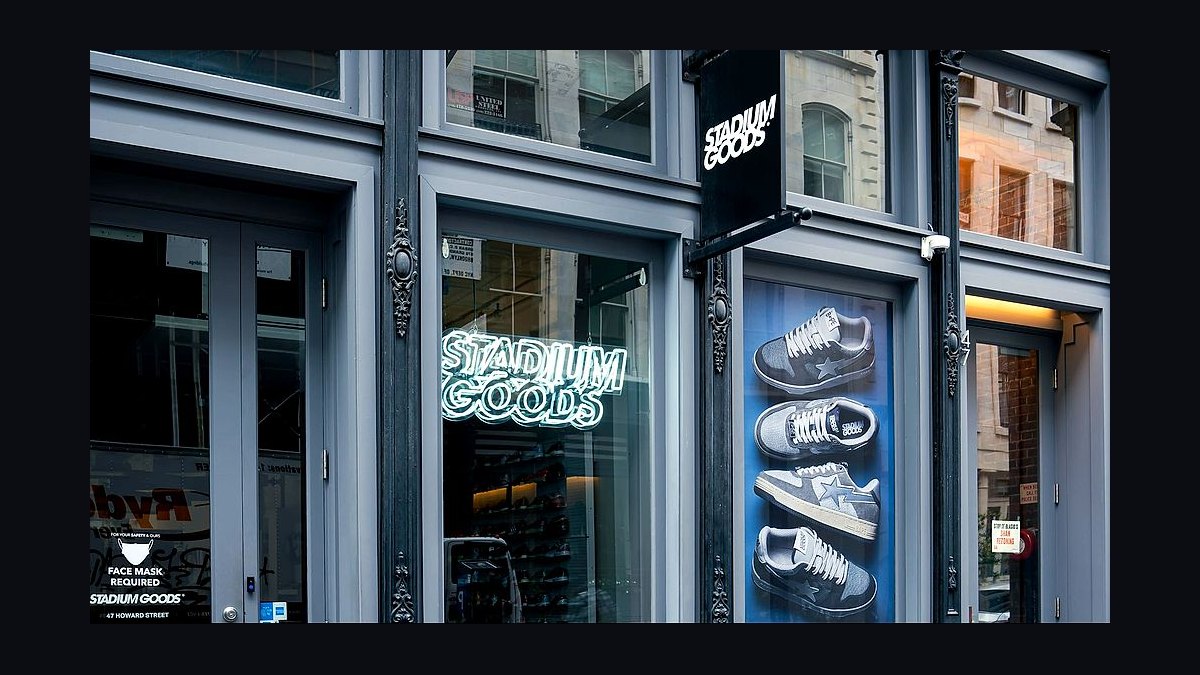
Open the consignment shop. Stadium Goods does not publish a franchise program, so "buying a Stadium Goods franchise" usually means buying an existing store, a license, or a lookalike offer — demand an FDD before you believe it. Consignment lets you trade on inventory you do not own, which is the real structural edge in 2027.
The scenario on the whiteboard
Picture the version of this decision that actually lands on a desk. You have somewhere around $150,000 to $250,000 of committed capital — some cash, some from a home equity line, maybe an SBA 7(a) pre-qualification. You have a 1,400-square-foot second-generation retail space you can get for a manageable base rent in a neighborhood with real foot traffic, and a landlord willing to talk about a 60-day build-out abatement. You have a personal collection of maybe 200 pairs, a decade of buying and reselling, and a phone full of contacts who will move product through you. And you have a broker or a business-for-sale listing dangling something that reads like "Stadium Goods franchise opportunity."
The first thing that has to happen is a reality check on the second option, because the entire comparison collapses if the franchise leg is imaginary. Stadium Goods is a New York consignment retailer founded in 2015 that built its reputation on high-end sneaker and streetwear consignment, a physical SoHo location, and marketplace distribution. It was acquired by Farfetch in 2018, and Farfetch's own assets were subsequently taken over by Coupang after Farfetch's financial collapse in late 2023 and early 2024. At no point in that chain has the brand run a publicly documented, FDD-backed franchise program the way a Subway or a Great Clips does. There is no franchise development page, no franchise sales team, no publicly circulated Item 7 investment table.
That matters because franchising in the United States is not a vibe — it is a legal category. Under the FTC Franchise Rule, if someone is offering you a trademark license, exerts significant control or gives significant assistance over your method of operation, and charges you a required payment, they are selling a franchise and they must give you a Franchise Disclosure Document at least 14 calendar days before you sign anything or pay a dime. If the person pitching you cannot produce a current FDD with audited financial statements in Item 21 and a franchisee/outlet roster in Item 20, one of three things is true: they are selling you something other than a franchise, they are selling you an unregistered franchise illegally, or they are selling you nothing at all.

So the honest framing of the whiteboard is not "consignment shop versus franchise." It is: an independent consignment sneaker shop you build and control, versus an acquisition or license of an established brand that may or may not exist as a purchasable unit. And once you frame it that way, the analysis stops being about brand prestige and starts being about the two things that actually determine whether a sneaker retail business survives: who owns the inventory risk, and who owns the demand.
The independent consignment model answers both in your favor at the start and against you later. You own no inventory, so your downside on a slow quarter is rent and payroll rather than a stockroom full of dead deadstock. But you also own no demand — nobody drives across town for a store they have never heard of. The branded path inverts it: the name pulls people in, but you pay for that pull forever in fees, and in most acquisition structures you also inherit the seller's inventory, their consignor relationships, and their liabilities. That inversion is the whole decision, and it is worth being extremely concrete about how the money moves before choosing a side.
How the consignment mechanism actually moves cash
A consignment sneaker shop is not a retail store that happens to sell used shoes. It is a two-sided marketplace with a lease, and understanding the cash mechanics is what separates the operators who last from the ones who close in month fourteen.

Here is the flow. A consignor — a local reseller, a collector cleaning out a closet, a kid who won three raffles — brings you pairs. You authenticate them, agree a list price, tag them, and put them on the floor. You never pay for them. The shoes sit on your shelves as the consignor's property under a bailment; you are holding goods you do not own. When a pair sells for $400 at a 20% commission, you keep $80 and owe the consignor $320, typically paid out on a stated schedule — weekly, biweekly, or on-demand via an app.
Three consequences fall out of that structure immediately.
First, your gross margin is your commission rate, not a retail markup. A traditional boutique buying wholesale at keystone might run 50% gross margin. You are running 15% to 30% on gross merchandise value, with 20% being the most commonly quoted split in the sneaker trade. That means your revenue line and your GMV line are wildly different numbers, and anyone who quotes you "the store does $1.2 million" without specifying which one is either confused or selling you something.
Second, you are sitting on other people's money between the sale and the payout. That float feels like working capital and it is not. Spending consignor payouts on rent is the single most common way these shops die, and it converts a cash-flow problem into a conversion claim.
Third — and this is the part almost nobody models — consigned goods are exposed to your creditors unless you handle the paperwork. Under UCC Article 9, consignment is generally treated as a security interest, and if the consignor does not perfect by filing a UCC-1 and giving notice, the goods on your floor can be reached by your secured lender in a default. Sophisticated consignors know this. Your consignor agreement should say plainly who bears that risk, and your insurance needs an explicit "property of others" endorsement, because a standard business owner's policy covers your inventory and you have none.
The operational implication of that diagram is that your two real jobs are intake quality and aging discipline. Intake quality means authentication — a single confirmed fake sold at retail can end a young shop's reputation in a market where buyers talk constantly. Aging discipline means a written markdown ladder in the consignor agreement: a pair that has not sold in 30 days drops a set percentage, at 60 days it drops again, at 90 days it either goes to a wholesale channel or goes home. Without that clause, your floor slowly fills with overpriced pairs that consignors refuse to reprice, your sell-through rate collapses, and your commission revenue dies while your rent does not.
The numbers you actually have to model
Build the model in GMV first, then convert. Everything else is guesswork dressed as a spreadsheet.
Start with sell-through, not with revenue. For a physical consignment floor, the number to solve for is how many pairs sell per month and at what average ticket. If you hold 800 pairs and turn 12% of the floor per month, that is 96 sales. At a $220 average ticket that is roughly $21,000 in GMV. At a 20% commission that is about $4,200 in monthly revenue — which does not cover a single retail lease anywhere worth having a store. That arithmetic is the whole reason pure-consignment sneaker shops almost never work as pure consignment.
So model the hybrid, because that is what real shops run. The surviving structure is usually a three-legged one: consignment for volume and floor density, buy-outright for margin on pairs you are confident in, and marketplace listing so the same inventory is exposed to national demand while it sits in your store. On buy-outright, you are pricing to a target gross margin — commonly 20% to 35% of the resale value, which means offering a consignor 65 to 80 cents on the estimated sale price for immediate cash. Many sellers take the haircut for speed. That leg is where actual dollars come from, and it is also where your capital gets consumed and your risk concentrates.
Then the fixed base. Model rent as a monthly number and, separately, as a percentage of projected revenue — retail leases become dangerous when occupancy cost passes roughly 10% to 12% of revenue, and a shop that signs at 20% is dead on the paperwork. Add payroll for at least two part-time staff plus yourself, because a one-person shop cannot both work the floor and process intake. Add card processing at roughly 2.5% to 3.5% of every dollar that crosses the counter — and note that on consignment you are eating processing on the full ticket while earning only your commission, so a 3% fee on a 20% commission is really a 15% haircut on your actual revenue. Add insurance with the property-of-others rider, POS and consignment management software, security, utilities, and a build-out amortization.
Now price the branded path. If a genuine franchise offer materializes, the FDD tells you almost everything in three items. Item 5 is the initial franchise fee. Item 6 is your ongoing obligations — royalties in retail franchising commonly run 4% to 8% of gross sales plus a 1% to 3% advertising fund contribution. Item 7 is the estimated initial investment range, low to high, including the working capital they think you need for the initial period. Item 19 is the financial performance representation, and it is optional — if a franchisor omits Item 19, they are legally barred from telling you what you will earn, and any verbal projection is a red flag worth walking away over.
Run the royalty math against the consignment margin and the problem is immediate. A royalty is charged on gross sales. If "gross sales" is defined as GMV rather than commission revenue, a 6% royalty on a 20% commission is 30% of your actual revenue gone before rent. Whether the agreement defines royalty base as gross merchandise value or as net commission is not a detail — it is the single most consequential line in the contract for a consignment concept.

If what is actually on offer is an acquisition of an existing store, price it on seller's discretionary earnings, verify with three years of tax returns rather than a QuickBooks export, and treat consigned inventory as excluded from the asset purchase — you cannot buy what the seller does not own. Get the consignor list, and understand that consignors are not contractually bound to you; they can walk the day the name on the door changes. Assume meaningful consignor attrition in your first-year model and see whether the deal still clears.
Trade-offs, and the two options nobody pitched
The comparison is not binary, and the two paths that were never on the whiteboard are frequently better than either.
Independent consignment shop. You keep 100% of the economics, you set your own commission splits, you can pivot the concept in a weekend, and you have no royalty drag. You also build zero enterprise value in a brand you do not own, you carry the entire authentication liability yourself, and you spend your first 18 months buying awareness one Instagram post and one sneaker event at a time. Your moat, if you build one, is local: you become the place consignors trust to pay on time and the place buyers trust not to sell fakes. That is a real moat but it accrues slowly.
Branded unit — franchise or acquisition. You buy demand on day one. The trade is permanent margin, contractual constraint on how you operate, a territory definition that may be narrower than you assume, and a transfer clause that controls whether you can ever sell. Read Item 17 for the term, renewal conditions, and post-termination non-compete. A 10-year term with a 20-mile, two-year non-compete means that if the relationship sours you are out of the sneaker business in your own city.

Option three: marketplace-first with no lease. Run the same consignment book out of a small industrial unit or a shared space, list everything on the established resale marketplaces, and skip retail rent entirely. You give up walk-in margin and pay marketplace seller fees, but your fixed cost drops by an order of magnitude and your addressable buyer pool goes national. Many of the strongest operators run this for 12 to 24 months, prove the intake pipeline works, and only then sign a lease — with a real revenue history that makes the landlord negotiation and the SBA application dramatically easier.
Option four: consignment desk inside an existing retailer. Barbershops, streetwear boutiques, and skate shops with traffic and no sneaker program will often take a revenue share for floor space. You get foot traffic without a lease and a live test of local demand for a fraction of the capital.
The way to actually resolve it: build one spreadsheet with identical GMV assumptions and run both structures through it. Same sell-through, same average ticket, same rent, same payroll. The only variables that change are commission retained, royalty and ad fund, and the initial capital consumed. If the branded path does not win by a wide enough margin to justify a decade of contractual constraint, it does not win at all — because the constraint is permanent and the brand lift is not guaranteed.
Where these deals fall apart
The offer is not what it says it is. By far the most common failure is that "franchise" was marketing language for a license agreement, a dealer arrangement, or a business broker's listing of a struggling independent store using a big name for attention. Verify the franchisor's identity, check whether they are registered in franchise registration states, and ask directly, in writing: are you offering a franchise as defined by 16 CFR Part 436, and can you provide the FDD? A real franchisor answers that in one email. Anyone who deflects has told you the answer.

Consignor payout float gets spent. Keep consignor money in a separate account and reconcile weekly. The moment operating cash and payout obligations mix, you lose the ability to see whether the business is solvent, and by the time you find out, you owe fifty people money you do not have.
Authentication is treated as a skill instead of a system. Your eye is not a system. A system is: two-person verification on anything above a threshold price, photographed intake with tag and box label captured, a written record of who brought what, a permanent ban list, and a stated buyer guarantee you will actually honor. Budget for third-party authentication on high-value pairs rather than pretending you can catch every current-generation fake.
Aging is not enforced. Consignors anchor on the price a pair hit at its peak. Without a contractual markdown ladder and a hard 90-day return-or-wholesale trigger, your floor becomes a museum. Track sell-through by intake cohort, not in aggregate, so you can see which consignors bring product that actually moves and prune the ones who do not.
The lease outruns the concept. Do not sign five years on an unproven concept. Push for a three-year term with options, negotiate a personal guarantee that burns off, and cap occupancy cost against a revenue percentage you have actually observed rather than projected.
Concentration risk in the consignor book. If three sellers supply 60% of your floor, you do not have a shop, you have three business partners who can leave without notice. Track supplier concentration monthly the same way you would track customer concentration in any other business.

Sales tax and inventory accounting get handled late. In most jurisdictions the shop is the retailer of record on a consigned sale and owes the tax on the full ticket, not on the commission. Get that confirmed with a local CPA before the first sale, and set up your books so consignment payouts are a liability rather than an expense, or your P&L will be fiction and your tax filing will be worse.
No exit is designed in. An independent consignment shop with documented systems, a stable consignor roster, verified financials, and a transferable lease is a sellable asset. One that lives entirely in the owner's head and phone is a job. Decide on day one which one you are building, because the difference is mostly bookkeeping discipline you either start with or never add.
Related questions
Does Stadium Goods franchise?
There is no publicly documented Stadium Goods franchise program, no franchise development materials, and no circulated FDD. Anyone presenting a "Stadium Goods franchise" should be asked to produce the disclosure document. Absent that, treat the offer as a license, a resale listing, or a misrepresentation.
What commission should a sneaker consignment shop charge?
Most physical sneaker consignment operations land between 15% and 30%, with 20% the most commonly quoted split. Lower rates buy inventory density from high-volume resellers; higher rates require you to deliver something they cannot get from a marketplace, like instant payout or authentication.
Do I need an FDD before paying a franchise deposit?
Yes. The FTC Franchise Rule requires the franchisor to deliver the disclosure document at least 14 calendar days before you sign a binding agreement or make any payment. A deposit demanded before that window is a violation, and it is sufficient reason to end the conversation.
Can I run consignment without a retail lease?

Yes, and it is often the smarter first move. Operate from a small unit, list on established resale marketplaces, and prove your intake pipeline and sell-through for a year before committing to rent. You trade walk-in margin for a tiny fixed-cost base.
Who owns consigned sneakers if my shop fails?
Legally the consignor, but practically it depends on filing. Under UCC Article 9, unperfected consigned goods can be reached by the shop's secured creditors. Consignors who file a UCC-1 and give notice protect themselves; those who do not may lose the pairs.
FAQ
Which option is better if I have never run retail before?
Start marketplace-first without a lease. The single largest destroyer of first-time sneaker shops is fixed occupancy cost meeting a commission-based revenue line. Running the consignment book out of a low-cost space for twelve to twenty-four months teaches you intake quality, aging discipline, payout mechanics, and real sell-through rates on your own money. If the numbers work without rent, they will work better with it. If they do not work without rent, a storefront will not save them.
How much capital does an independent consignment sneaker shop realistically need?
Model it as build-out plus deposits plus at least six months of full operating expense, and then add a separate buy-outright inventory budget if you plan to run the hybrid model, because that capital is not available for rent. The most common under-capitalization error is funding the build-out precisely and leaving nothing for the eight to twelve months it takes to build a consignor roster and local awareness.

What is the most important clause in a franchise agreement for a consignment concept?
The definition of the royalty base. If royalties are charged on gross merchandise value rather than on the commission you actually retain, the economics almost certainly do not work, because you would be paying a percentage of money that belongs to consignors. Read the definition section, not the summary. Second most important: Item 17's territory, transfer, and post-termination non-compete terms.
How do I handle fakes without a lab?
Build a process rather than relying on expertise. Two-person verification above a price threshold, photographed intake records, a documented ban list, third-party authentication on high-value pairs, and a written buyer guarantee you honor without argument. Publish the process. In sneaker retail, a visible authentication standard is a marketing asset, not just a control.
Is buying an existing sneaker shop safer than starting one?
Only if you can verify the earnings and retain the consignor relationships. Consignors are not transferable assets — they are individuals who can walk when the name changes. Verify with tax returns rather than bookkeeping exports, exclude consigned inventory from the asset purchase since the seller does not own it, and model meaningful consignor attrition into year one before agreeing a price.
Should I sign a five-year lease to get better rent?
Not on an unproven concept. Push for a shorter initial term with renewal options, negotiate a personal guarantee that burns off after a defined period, and evaluate the deal against occupancy cost as a percentage of realistic revenue rather than against the headline rate. A cheap rate on a term you cannot exit is more expensive than a high rate you can walk away from.
Sources
- https://www.ftc.gov/business-guidance/resources/franchise-rule-compliance-guide
- https://www.ftc.gov/business-guidance/resources/consumers-guide-buying-franchise
- https://www.ftc.gov/legal-library/browse/rules/franchise-rule
- https://www.sba.gov/business-guide/plan-your-business/calculate-your-startup-costs
- https://www.law.cornell.edu/ucc/9/9-319
- https://www.irs.gov/publications/p334
- https://www.census.gov/retail/index.html
- https://www.stadiumgoods.com/
- https://stockx.com/
- https://www.goat.com/
Related on PULSE
- Should I open a vintage clothing store or a streetwear boutique in 2027?
- How do I value a small retail business before making an offer?
- What does a franchise disclosure document actually tell me?
- Marketplace-first vs storefront-first: which retail launch order wins?
- How do I structure a consignment agreement that protects both sides?
This page will be disappearing soon. Save it to your device for $1 — or read it free while it is here.
@Kory-White- · if Venmo asks, the last 4 of my number are 2012
This page is gone.
This one is off the shelf now. $1 keeps it on your phone for good — the whole page, pictures and diagrams included.
 franchiseShould I open or buy a Wendy's franchise in 2027?
 franchiseShould I open or buy a Stanley Steemer franchise in 2027?
 franchiseShould I open or buy a Take 5 Oil Change franchise in 2027?
 franchiseShould I open or buy an F45 Training franchise in 2027?
 franchiseShould I open or buy a Bojangles franchise in 2027?
 franchiseShould I open or buy a Smoothie King franchise in 2027?
 franchiseShould I open or buy a Mac Tools franchise in 2027?
 franchiseShould I open or buy a Goddard School franchise in 2027?
 franchiseShould I open or buy a Sonic Drive-In franchise in 2027?
 frShould I open or buy a McDonald's franchise in 2027?