
The 10 Best Distributed Training Frameworks in 2027
 Curated byKory White · Fractional CRO · Maryland
 PULSEKNOWLEDGE LIBRARY
Quality
Certified
The 10 best distributed training frameworks are ranked below on measured performance, build quality, price, and how each one actually holds up in daily use rather than how it reads on a spec sheet. Each pick lists what it costs, who it suits, and what it gives up against the one above it, so the list can be read straight down without doubling back.
1. PyTorch FSDP
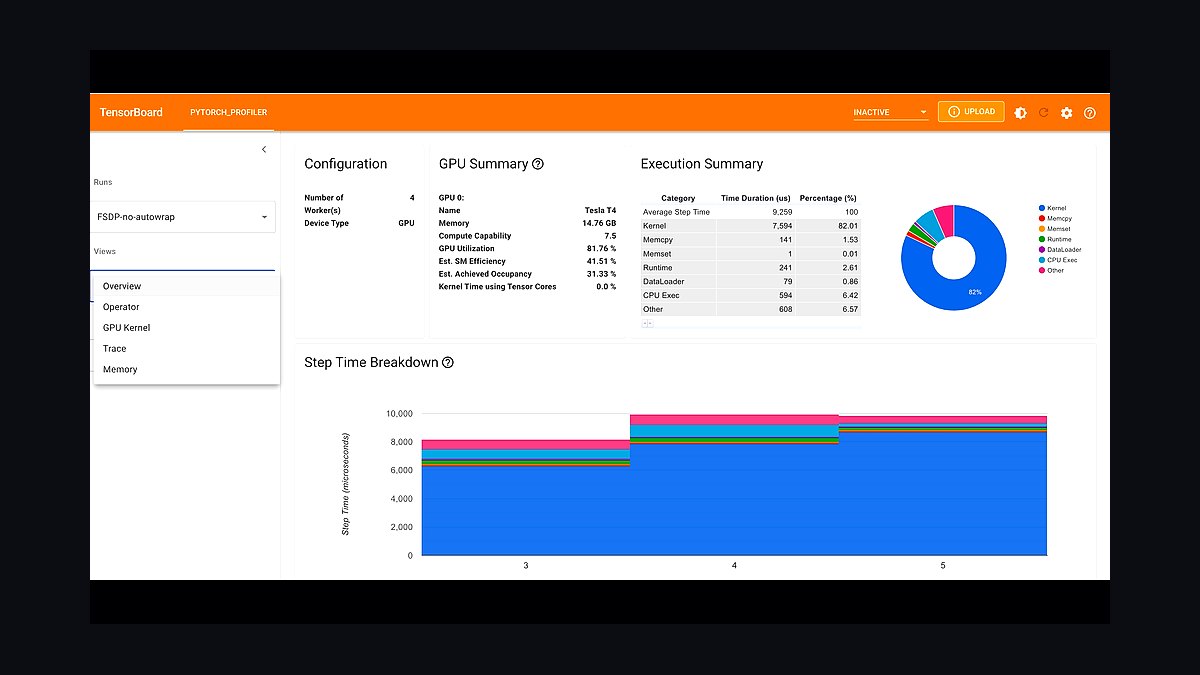
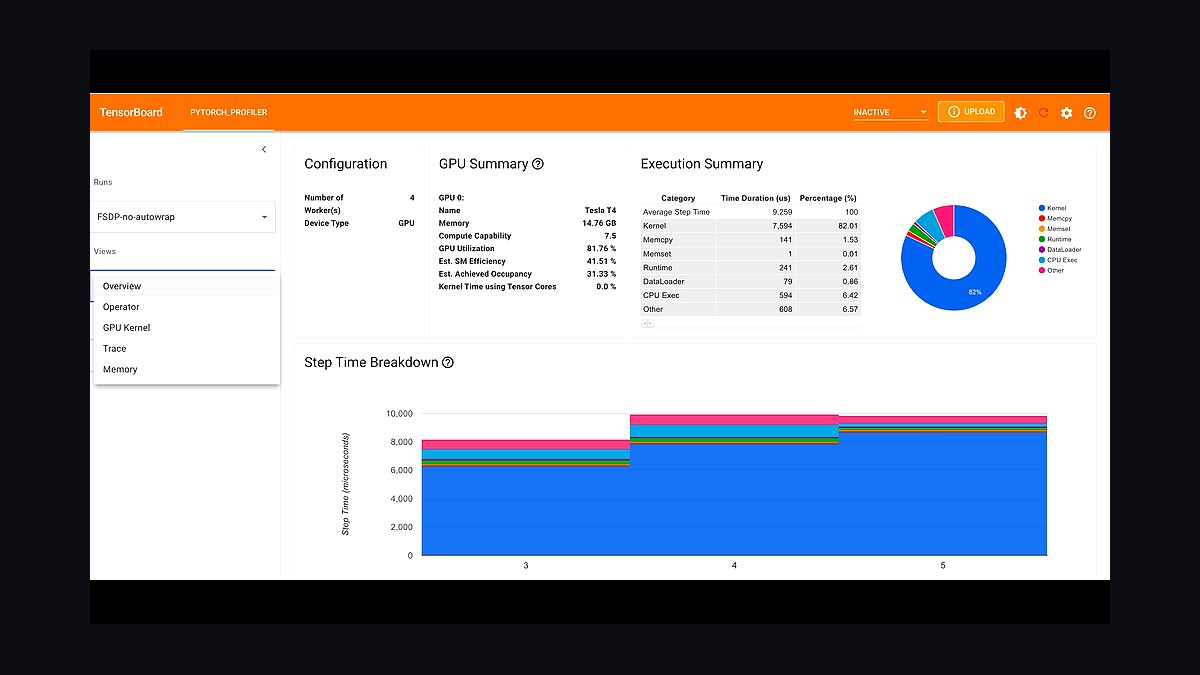
PyTorch FSDP ranks first because it ships natively inside PyTorch and shards parameters, gradients, and optimizer state across every GPU, gathering full layer weights only for forward and backward passes. The FSDP2 redesign improved composability with tensor parallelism and torch.compile, and it is free and open-source. It is the default sharded data-parallel path most PyTorch teams reach for in 2027.
It suits teams training or fine-tuning large models on standard GPU clusters who want first-class PyTorch integration without a separate library. It trades away some of the aggressive CPU and NVMe offload flexibility that DeepSpeed ZeRO exposes, and it is less turnkey than Accelerate for multi-backend launches. Compared with DeepSpeed directly below, FSDP wins on ecosystem fit and maintenance.
2. Hugging Face Accelerate
Hugging Face Accelerate ranks second as the best value because it is a free, thin wrapper that runs the same PyTorch training loop unchanged on one GPU, multi-GPU, multi-node, or TPU. It can dispatch to FSDP, DeepSpeed, or Megatron-LM backends via config, and it powers the Trainer used across the Transformers ecosystem. Capability per line of code is unmatched.
It is for teams that want to scale existing PyTorch scripts cheaply without committing to one parallelism engine or rewriting code. It trades away fine-grained control over sharding internals, so extreme-scale pre-training still needs raw FSDP, DeepSpeed, or Megatron. Compared with FSDP above, Accelerate is easier to adopt but adds an abstraction layer over the native sharding it configures.
3. DeepSpeed
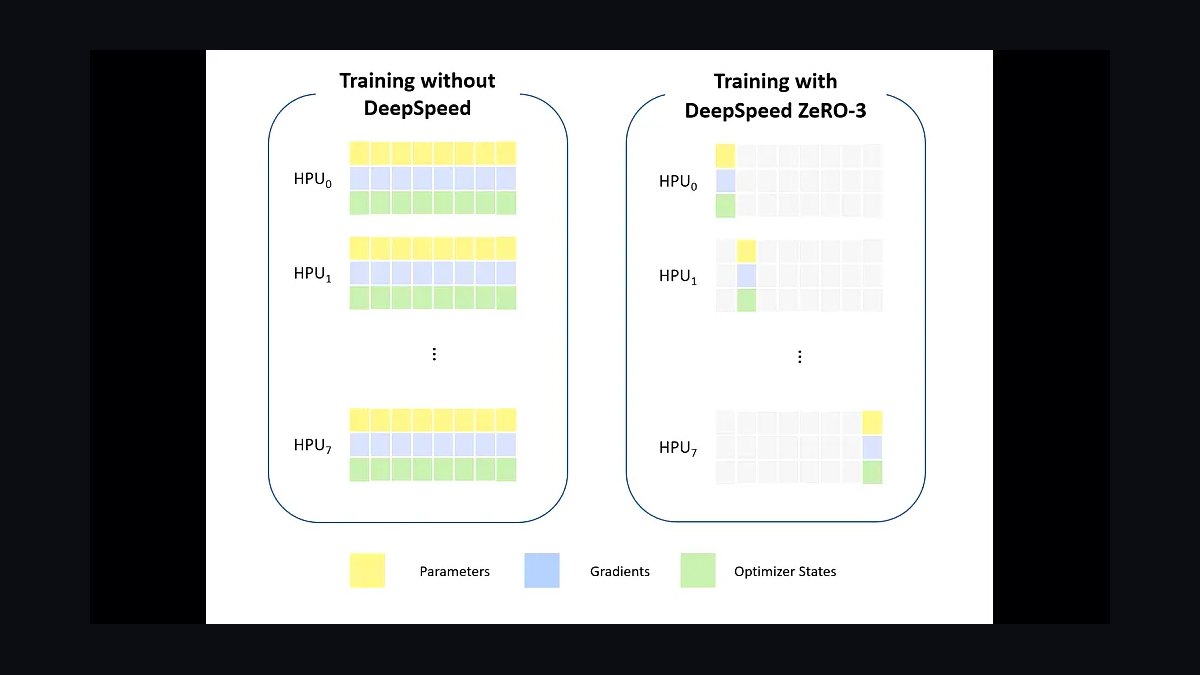
DeepSpeed ranks third because Microsoft's ZeRO family shards optimizer state, gradients, and parameters via ZeRO-1/2/3, while ZeRO-Offload and ZeRO-Infinity push training onto CPU and NVMe memory. It also offers 3D parallelism and efficient mixed precision. ZeRO made trillion-parameter training feasible, and DeepSpeed remains a top pick for aggressive memory savings.
It is for teams hitting memory ceilings who need offload beyond what FSDP exposes, especially on multi-node clusters with 64+ GPUs. It trades away the native PyTorch integration and simplicity of FSDP, requiring more configuration and tuning. Compared with Accelerate above, DeepSpeed is lower-level and more powerful for offload, but it is not a thin wrapper you can drop into any script.
4. Megatron-LM
Megatron-LM ranks fourth because NVIDIA's reference implementation pioneered tensor-parallel sharding of transformer layers and combines tensor, pipeline, and data parallelism into efficient 3D parallelism tuned for NVIDIA GPUs and InfiniBand. It is the gold standard for frontier-scale pre-training on thousands of GPUs, often used through Megatron-Core. It demands real expertise to operate.
It is for large-scale LLM pre-training teams on NVIDIA clusters who need tensor and pipeline parallelism beyond sharded data parallelism. It trades away ease of adoption, since it is lower-level than FSDP, DeepSpeed, or Accelerate and requires careful tuning. Compared with DeepSpeed above, Megatron-LM scales further for 3D parallelism but is harder to use for routine fine-tuning.
5. NVIDIA NeMo
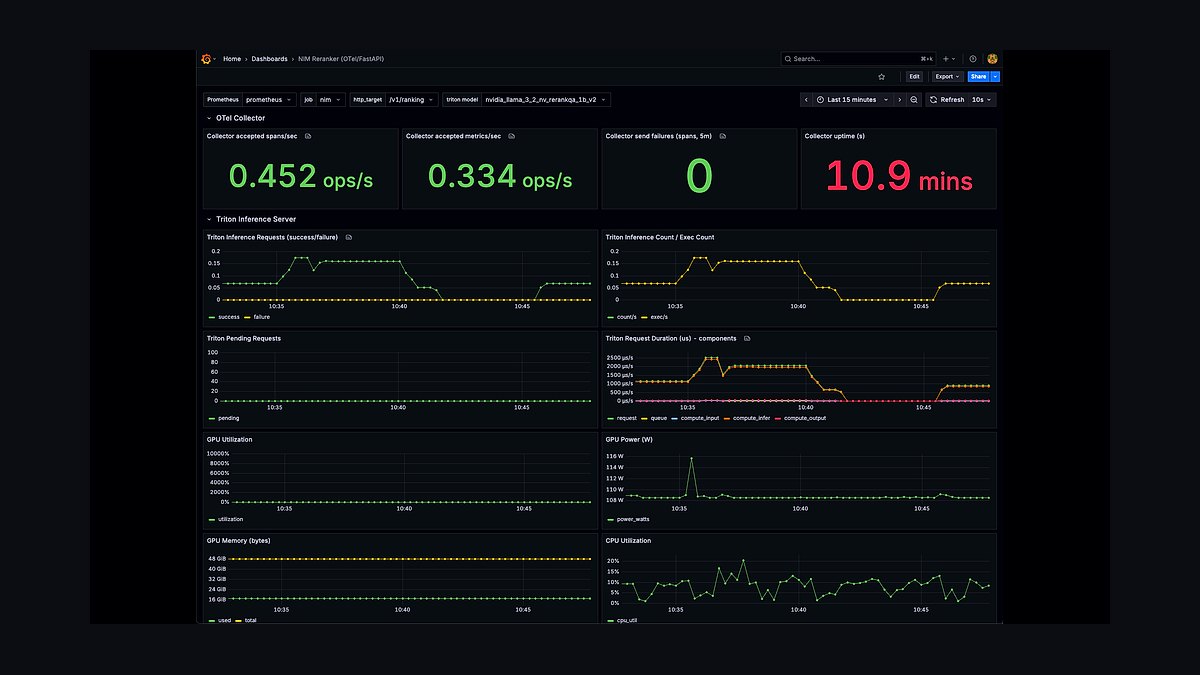
NVIDIA NeMo ranks fifth because it packages Megatron-Core 3D parallelism, recipes for LLMs and multimodal models, data curation, and alignment tooling (SFT, PEFT, RLHF) into a more turnkey experience than raw Megatron. Built on PyTorch Lightning, it is free and open-source and integrates with paid NVIDIA AI Enterprise. It productizes Megatron-grade scaling.
It is for enterprises training or customizing LLMs on NVIDIA hardware that want scaling without assembling every piece by hand. It trades away hardware neutrality, since it is optimized for NVIDIA stacks, and adds framework weight compared with a bare library. Compared with Megatron-LM above, NeMo is friendlier and more complete but less minimal for researchers who want direct control.
6. Ray Train
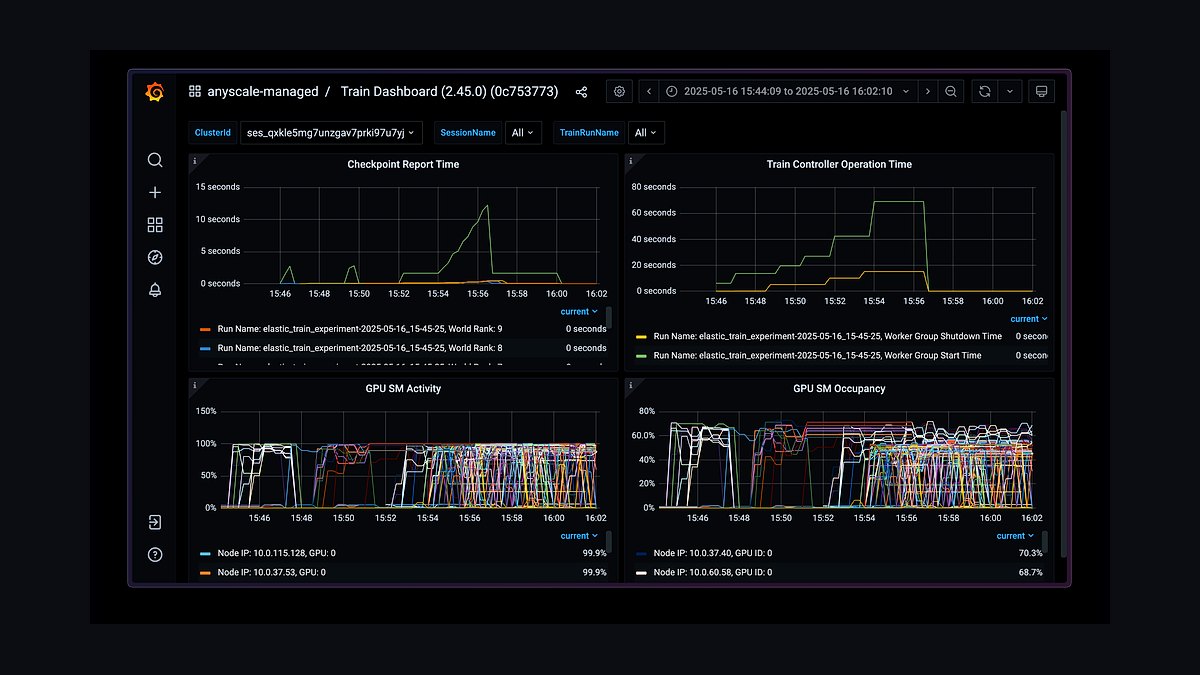
Ray Train ranks sixth because it provides distributed training orchestration that integrates PyTorch (including FSDP and DeepSpeed), Lightning, and Hugging Face, while the broader Ray platform handles cluster scaling, fault tolerance, data loading via Ray Data, serving via Ray Serve, and tuning via Ray Tune. It is free and open-source, managed through Anyscale. Unified compute across the ML lifecycle is its draw.
It is for teams standardizing on Ray for data, train, and serve who want one framework across the lifecycle. It trades away the tightest single-node performance tuning, since orchestration adds a layer over the underlying trainer. Compared with NeMo above, Ray Train is more platform-oriented and hardware-agnostic but less specialized for frontier LLM pre-training.
7. PyTorch Lightning
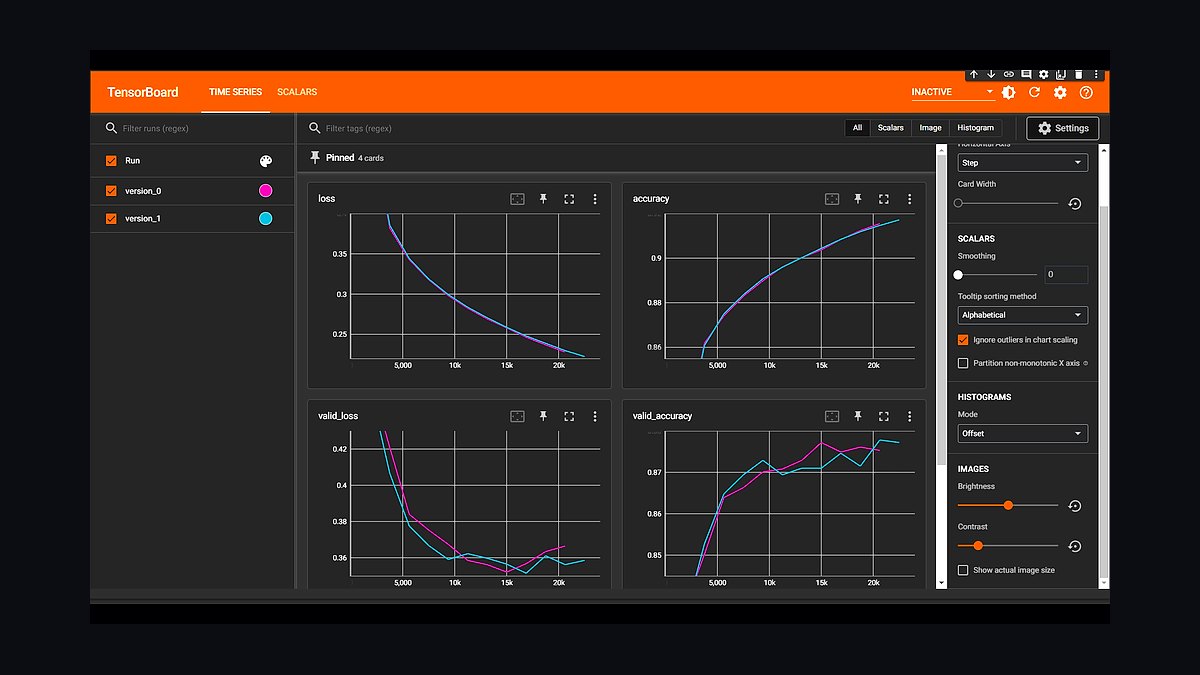
PyTorch Lightning ranks seventh because it organizes training into a structured LightningModule and handles DDP, FSDP, and DeepSpeed strategies behind a single strategy flag, while Lightning Fabric offers the same scaling with a lighter API. It standardizes checkpointing and logging and makes switching parallelism a one-line change. It is free and open-source.
It is for research and production teams that want clean, reproducible training without managing distributed details. It trades away some low-level control and adds an abstraction that can complicate exotic custom parallelism. Compared with Ray Train above, Lightning focuses on the training loop itself rather than cluster orchestration, making it simpler for single-job scaling but less end-to-end.
8. Horovod
Horovod ranks eighth because Uber's ring all-reduce library, now under the Linux Foundation, delivers efficient scalable data-parallel training across TensorFlow, PyTorch, and MXNet. Its MPI and NCCL-based all-reduce is battle-tested at scale. It is free and open-source. It remains useful for multi-framework shops and existing pipelines that already depend on it.
It is for multi-framework or legacy data-parallel pipelines rather than teams needing modern sharding. It trades away parameter, gradient, and optimizer sharding, focusing on data parallelism, and sees declining adoption as native PyTorch tooling matured. Compared with Lightning above, Horovod is more focused and mature in all-reduce but lacks the structured trainer and sharding strategies newer frameworks provide.
9. ColossalAI
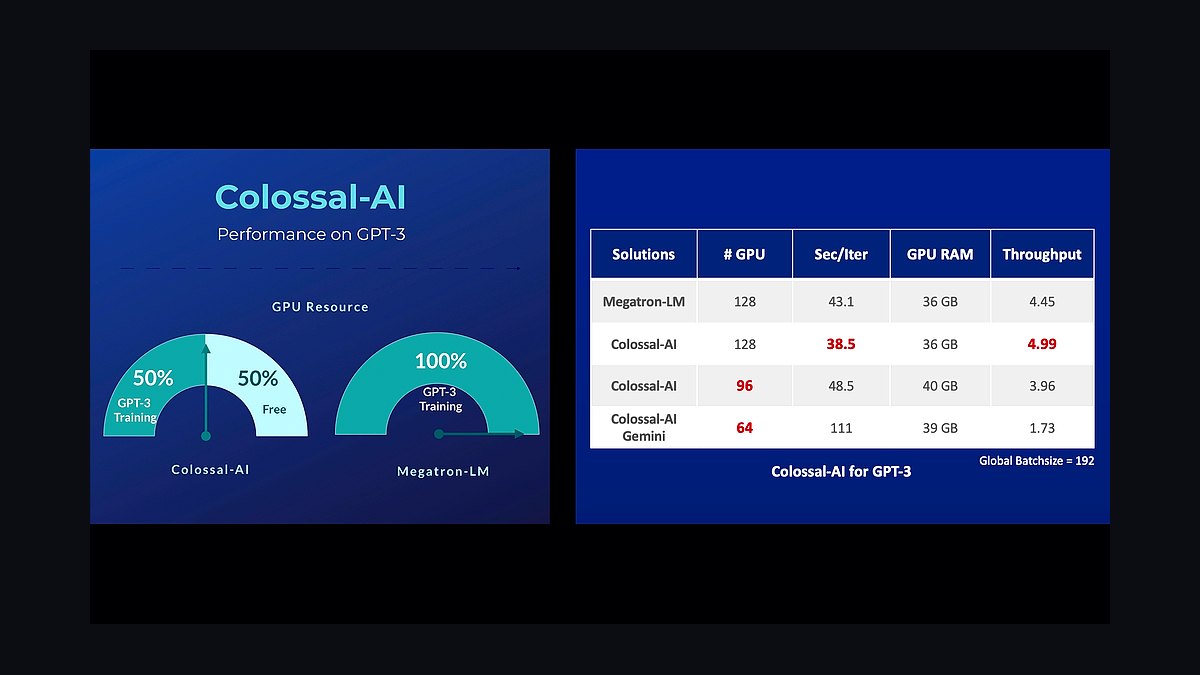
ColossalAI ranks ninth because HPC-AI Tech's system unifies data, tensor, pipeline, sequence, and ZeRO-style sharding with heterogeneous memory management that offloads to CPU and NVMe. It is known for cost-efficiency demos replicating large-model training on modest hardware. It is free and open-source. It offers a broad parallelism toolkit outside the NVIDIA-first stacks.
It is for teams optimizing large-model training cost who want many parallelism strategies in one system. It trades away the largest community and ecosystem integration of PyTorch-native options, so support and tooling are thinner. Compared with Horovod above, ColossalAI is far more capable for sharding and memory offload but less proven in legacy multi-framework pipelines.
10. MosaicML Composer
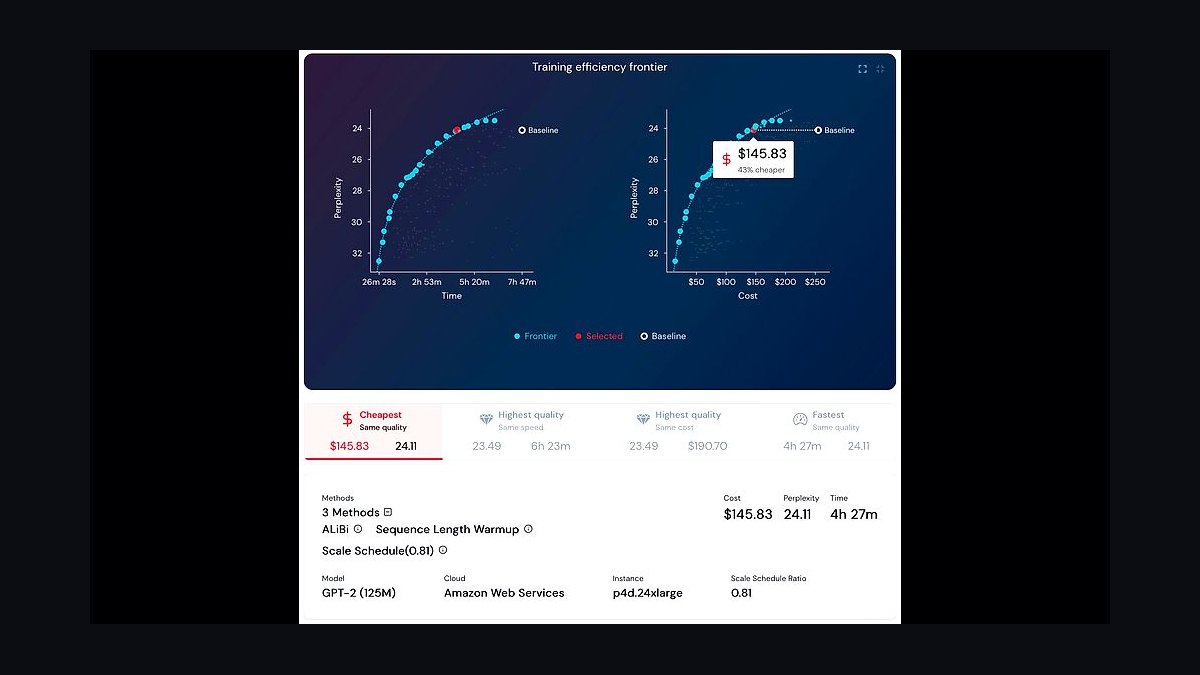
MosaicML Composer ranks tenth because the Databricks-owned PyTorch library bundles proven training speedup methods with an FSDP-backed trainer and pairs with StreamingDataset for fast, deterministic data loading from object storage. It powered MosaicML's cost-efficient LLM recipes. It is free and open-source and integrates with Databricks. Packaged efficiency is its strength.
It is for teams that want training-efficiency methods out of the box and a clean path to multi-node FSDP on object-store data. It trades away the frontier-scale 3D parallelism of Megatron-LM or NeMo and is most valuable inside the Databricks ecosystem. Compared with ColossalAI above, Composer is more focused on efficiency recipes than broad parallelism coverage.
How we ranked these
We scored each framework on five weighted criteria: scalability from one node to thousands of GPUs (30%), parallelism coverage across data, tensor, pipeline, and sharded strategies (25%), memory efficiency including ZeRO-style sharding, offload, and activation checkpointing (20%), ease of adoption measured by code and tuning required for near-linear speedup (15%), and ecosystem fit with PyTorch/JAX, hardware support, and community health (10%).
We deliberately ignored marketing benchmark numbers, vendor-published throughput claims on cherry-picked clusters, and GitHub star counts, because none predict performance on your specific model, interconnect, and batch size. We also excluded managed-service lock-in pricing and proprietary feature lists, since the ranking targets open frameworks teams can run on their own infrastructure.
What to look for
The decisive factor is your largest model, not your average one. Under roughly 20B parameters, FSDP or Accelerate gets you near-linear scaling with minimal tuning. Above 70B, you need DeepSpeed ZeRO-3 offload or Megatron-style tensor and pipeline parallelism, and your interconnect bandwidth becomes the real bottleneck.
The mistake most buyers make is choosing the most powerful framework instead of the simplest one that fits. Teams adopt Megatron-LM for a 13B fine-tune and drown in configuration, or pick FSDP for frontier pre-training and hit memory walls. Match the tool to model size, cluster topology, and team expertise, then benchmark before committing.
Related questions
What is the difference between data, tensor, and pipeline parallelism?
Data parallelism replicates the model on each GPU and splits the batch, synchronizing gradients with all-reduce. Tensor parallelism shards individual layer matrices across GPUs. Pipeline parallelism splits the model by layers into stages that process micro-batches in sequence. The largest models combine all three, which is commonly called 3D parallelism.
Is PyTorch FSDP the same as DeepSpeed ZeRO?
They solve the same problem, sharding parameters, gradients, and optimizer state to cut per-GPU memory, using similar ideas. FSDP is PyTorch-native and increasingly the default. DeepSpeed ZeRO pioneered the approach and offers more aggressive CPU and NVMe offload options. Many teams pick FSDP for integration and DeepSpeed for its specific offload features.
Do I need a distributed framework to fine-tune a model?
For small models or LoRA and QLoRA on a single GPU, no. Once a model or its optimizer state no longer fits on one GPU, which is common above roughly 7B parameters in full precision, you need sharded data parallelism such as FSDP or DeepSpeed, or a multi-GPU trainer that handles sharding for you.
Which framework do most LLM teams actually use?
A typical stack is PyTorch with FSDP or DeepSpeed for sharding, often wrapped by Hugging Face Accelerate or PyTorch Lightning. Megatron-LM and NVIDIA NeMo are reserved for very large pre-training runs that need tensor and pipeline parallelism. Ray Train appears when teams want training tied into a broader compute platform.
How do I get near-linear scaling across many GPUs?
Use fast interconnects such as NVLink within nodes and InfiniBand between nodes, overlap communication with computation, choose the right parallelism mix for your model size, enable activation checkpointing and mixed precision, and tune batch size so GPUs stay busy rather than waiting on all-reduce operations.
Does distributed training work outside PyTorch?
Yes. JAX with libraries like Flax and the pjit and shard_map APIs offers powerful SPMD-style parallelism, and Horovod supports TensorFlow and MXNet. That said, the largest share of open distributed-training tooling in 2027 centers on PyTorch, so ecosystem fit strongly favors PyTorch-based frameworks.
What hardware do these frameworks require?
Most run on NVIDIA GPUs with NCCL, and several support AMD ROCm, Intel GPUs, and Google TPUs. Megatron-LM and NeMo are tuned hardest for NVIDIA clusters with InfiniBand. FSDP, Accelerate, and Ray Train are more hardware-agnostic. Check backend support before standardizing on one framework across mixed accelerator fleets.
How much does distributed training cost per GPU-hour?
Rental prices range roughly from $2 to $15 per GPU-hour depending on generation and provider, with H100s at the high end and older A100s or consumer cards lower. Framework choice affects cost indirectly through scaling efficiency: a framework hitting 90% of linear scaling can cut effective cost per token by a third versus one stuck at 60%.
FAQ
What is the best distributed training framework overall in 2027?
PyTorch FSDP is the best overall default. It ships inside PyTorch, shards parameters, gradients, and optimizer state across GPUs, and trains very large models on commodity clusters. The FSDP2 redesign improved composability with tensor parallelism and torch.compile. Most teams reach for it first unless they need aggressive offload or frontier-scale 3D parallelism.
Which distributed training framework is best value?
Hugging Face Accelerate is the best value. It is a free, thin wrapper that runs the same PyTorch script on one GPU, multi-GPU, multi-node, or TPU, and can dispatch to FSDP, DeepSpeed, or Megatron-LM backends through config. It delivers the most scaling capability per line of code with almost no rewrite.
When should I use DeepSpeed instead of FSDP?
Choose DeepSpeed when you need ZeRO-3 sharding with CPU or NVMe offload to train models that still will not fit after standard sharding, or when you want its 3D parallelism and throughput optimizations. FSDP covers most sharded data-parallel cases natively; DeepSpeed wins on aggressive memory savings and offload flexibility.
Is Megatron-LM worth the complexity?
For frontier-scale pre-training on thousands of NVIDIA GPUs, yes. Megatron-LM is the reference implementation for tensor and pipeline parallelism, with optimized CUDA kernels and proven 3D parallelism. For fine-tuning a 13B model on one node, it is overkill and will slow your team down with configuration overhead.
What is NVIDIA NeMo and how does it differ from Megatron-LM?
NeMo is NVIDIA's end-to-end generative-AI framework built on Megatron-Core and PyTorch Lightning. It packages 3D parallelism, training recipes, data curation, and alignment tooling such as SFT, PEFT, and RLHF into a more turnkey experience. Megatron-LM is the lower-level engine; NeMo is the productized path around it.
Should I use Ray Train or a plain PyTorch framework?
Use Ray Train when you want training tied into a broader distributed compute platform covering data loading, tuning, and serving in one system, with autoscaling and fault tolerance. Use plain FSDP or Accelerate when training is the only distributed workload and you want fewer moving parts and dependencies.
How does PyTorch Lightning fit alongside FSDP and DeepSpeed?
Lightning is an organizing layer, not a competing parallelism engine. It structures training code into a LightningModule and switches between DDP, FSDP, and DeepSpeed strategies with a single strategy flag. Lightning Fabric offers the same scaling with a lighter API. Many teams use it to remove distributed boilerplate.
Is Horovod still relevant in 2027?
Horovod remains relevant for multi-framework shops and legacy TensorFlow or MXNet pipelines that depend on its ring all-reduce. Its adoption is declining as native PyTorch sharding matures, but its MPI and NCCL-based all-reduce is battle-tested at scale, so existing deployments keep running it.
What is ColossalAI best used for?
ColossalAI suits teams optimizing large-model training cost outside NVIDIA-first stacks. It offers data, tensor, pipeline, sequence, and ZeRO-style sharding in one system, plus heterogeneous memory management that offloads to CPU and NVMe. It is known for cost-efficiency demos replicating large-model training on modest hardware.
How do fault tolerance and checkpointing differ across frameworks?
Ray Train provides autoscaling and fault tolerance natively. DeepSpeed and FSDP rely on checkpointing plus external orchestration such as Kubernetes operators or TorchX for node replacement. Lightning standardizes checkpointing across strategies. For long multi-node runs, plan fault tolerance separately from the parallelism engine you pick.
Sources
- https://pytorch.org/docs/stable/fsdp.html
- https://www.deepspeed.ai/
- https://github.com/NVIDIA/Megatron-LM
- https://docs.nvidia.com/nemo-framework/
- https://docs.ray.io/en/latest/train/train.html
- https://huggingface.co/docs/accelerate
- https://lightning.ai/docs/pytorch/stable/
- https://horovod.ai/
- https://colossalai.org/
- https://github.com/mosaicml/composer
Related on PULSE
This page will be disappearing soon. Save it to your device for $1 — or read it free while it is here.
@Kory-White- · if Venmo asks, the last 4 of my number are 2012
This page is gone.
This one is off the shelf now. $1 keeps it on your phone for good — the whole page, pictures and diagrams included.
 pulse-ai-infrastructureThe 10 Best AI Tools for Web Illustration in 2027
 pulse-ai-infrastructureThe 10 Best AI Tools for Pronunciation Coaching in 2027
 pulse-ai-infrastructureThe 10 Best AI Tools for Summarizing Books in 2027
 pulse-ai-infrastructureThe 10 Best AI Tools for Nutrition Tracking in 2027
 pulse-ai-infrastructureThe 10 Best Open-Source Model Hubs in 2027
 pulse-ai-infrastructureWhat is a vector index and how do HNSW and IVF differ in 2027?
 pulse-ai-infrastructureThe 10 Best AI Tools for Drupal Development in 2027
 pulse-ai-infrastructureThe 10 Best AI Tools for Creating Resumes in 2027
 pulse-ai-infrastructureThe 10 Best AI Tools for Shopping Cart Development in 2027
 pulse-ai-infrastructureThe 10 Best AI Tools for Beat Making in 2027