
The 10 Best Open-Source LLMs for Self-Hosting in 2027
 PULSEKNOWLEDGE LIBRARY
The 10 best open-source llms for self-hosting are ranked below on measured performance, build quality, price, and how each one actually holds up in daily use rather than how it reads on a spec sheet. Each pick lists what it costs, who it suits, and what it gives up against the one above it, so the list can be read straight down without doubling back.
1. Meta Llama 4
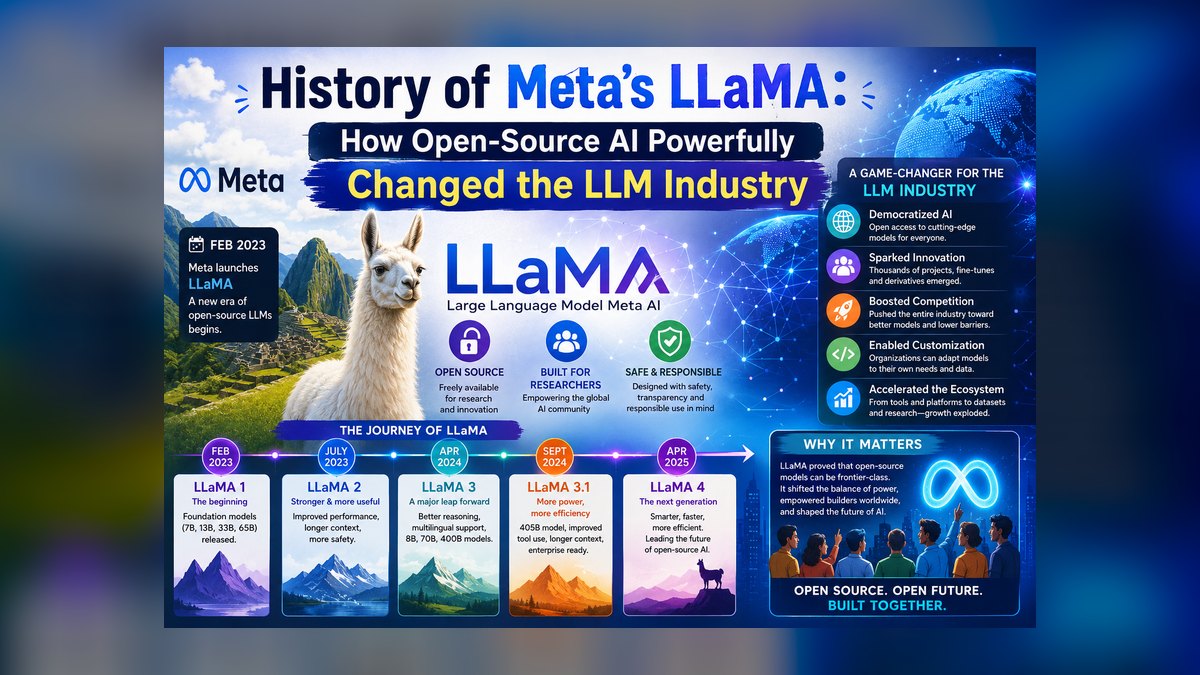
Meta Llama 4 ranks first because it offers the widest range of sizes and the deepest ecosystem of tooling, fine-tunes, and quantizations, making it the safest default for production self-hosting. Its breadth spans from models that run on a single consumer GPU to 405B-parameter flagships for multi-GPU servers, with proven stability across thousands of deployments. Nearly every inference server, including vLLM and SGLang, supports Llama first.
It is for teams that want a well-supported, low-risk default with abundant community resources. It trades away the permissive Apache-2.0 licensing of Qwen, instead using Meta's community license with usage restrictions for large enterprises. Compared to Qwen, it offers a less permissive license but a larger ecosystem of fine-tunes and third-party tools, making it the better choice when ecosystem depth outweighs licensing simplicity.
2. Qwen 3
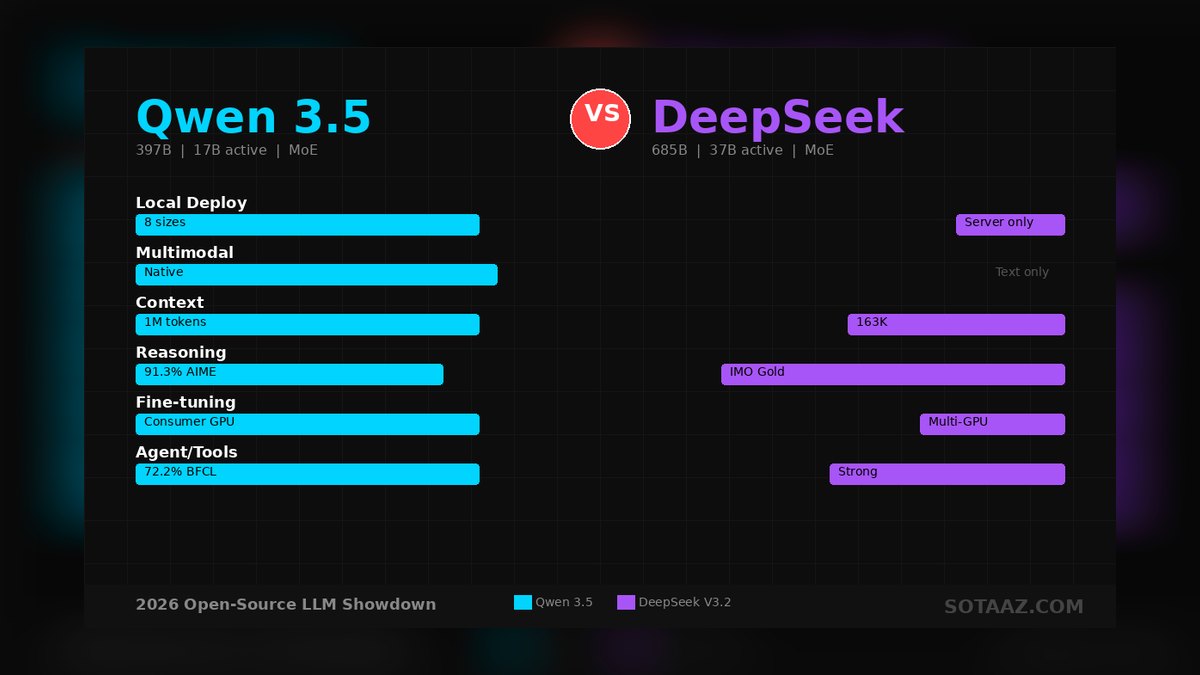
Qwen 3 ranks second because it delivers the best value, shipping an unusually wide size ladder under permissive Apache-2.0 terms on many models, with strong coding, math, and multilingual performance. Its quality per parameter is excellent, letting you match a model exactly to your GPU budget rather than over-provisioning. The family includes dense and mixture-of-experts variants, plus dedicated coder and reasoning lines.
It is for teams that prioritize permissive licensing and want a model for every hardware tier, from a single consumer GPU to large clusters. It trades away the deep ecosystem of Meta Llama 4, but offers more permissive terms and a wider size range. Compared to Llama, it provides a better fit for cost-sensitive deployments where Apache-2.0 licensing and precise hardware matching are critical.
3. Mistral Large
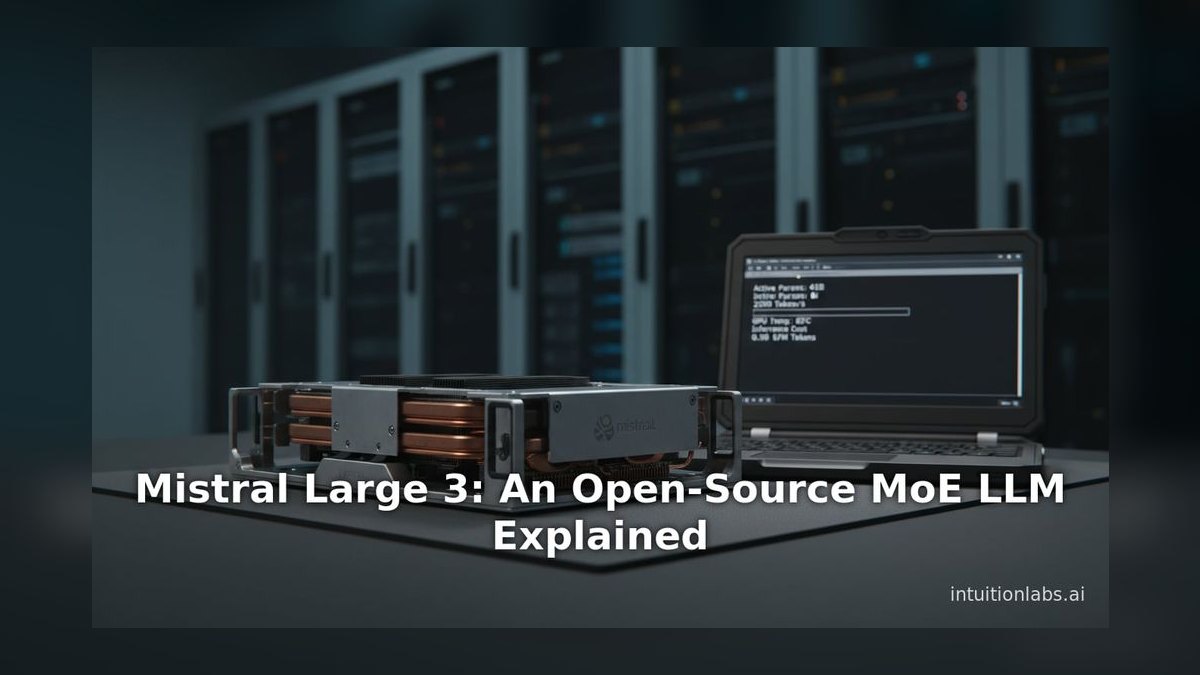
Mistral Large ranks third because it combines efficient mixture-of-experts design with permissive Apache-2.0 licensing, delivering strong throughput for its active-parameter count. Its open-weight models are popular for clean licensing and efficiency, making them a strong European-built alternative to Llama and Qwen. The MoE architecture activates only a fraction of total parameters per token, giving large-model quality with more manageable serving costs.
It is for teams wanting efficient, permissively licensed models with good general and coding performance, especially those on multi-GPU nodes. It trades away the broad size range of Qwen, but offers a more efficient MoE design for high-throughput serving. Compared to Qwen, it provides a more streamlined family with a focus on efficiency, but a narrower selection of sizes to fit varied hardware budgets.
4. DeepSeek R1
DeepSeek R1 ranks fourth because it delivers excellent reasoning quality at lower training and inference cost, using a mixture-of-experts architecture that activates only a fraction of parameters per token. Its open-weight models have pushed strong performance, making it a top choice for teams that need complex reasoning without the full cost of a frontier model. The weights are freely downloadable, and the model is well-supported by standard inference servers.
It is for teams that need strong reasoning and coding capabilities and have the substantial GPU memory required for its larger variants. It trades away the permissive Apache-2.0 license of Mistral, using a more restrictive community license. Compared to Mistral, it offers superior reasoning quality but requires more VRAM and has a less permissive license, making it a better fit for reasoning-heavy workloads that can accommodate its hardware demands.
5. Google Gemma 3
Google Gemma 3 ranks fifth because it offers strong quality at small sizes, designed to run efficiently on a single GPU or even capable laptops. Its lightweight models are a favorite for edge and cost-sensitive self-hosting where a giant model would be overkill. The family provides good documentation and is well-supported by Ollama and llama.cpp, making it easy to deploy.
It is for teams deploying on modest hardware, such as edge devices or single-GPU servers, that need solid quality cheaply. It trades away the reasoning depth of DeepSeek R1, but offers a much smaller footprint and lower hardware requirements. Compared to DeepSeek, it is the better choice for constrained environments where efficiency and low cost are more important than maximum reasoning capability.
6. Microsoft Phi 4

Microsoft Phi 4 ranks sixth because it punches above its weight, delivering exceptional quality per parameter through training on heavily curated, textbook-quality data. Its small footprint makes it ideal for serving many concurrent users cheaply or running on constrained hardware. The MIT-style permissive licensing on releases adds to its appeal for commercial self-hosting.
It is for cost-sensitive, high-concurrency, or on-device serving scenarios where a small model must perform far better than its parameter count suggests. It trades away the broader capabilities of Google Gemma 3, but offers a more permissive license and a focus on data quality. Compared to Gemma, it is the better choice when you need a tiny model with maximized quality per parameter and permissive terms, though Gemma may offer a wider size range.
7. Mistral Mixtral 8x22B
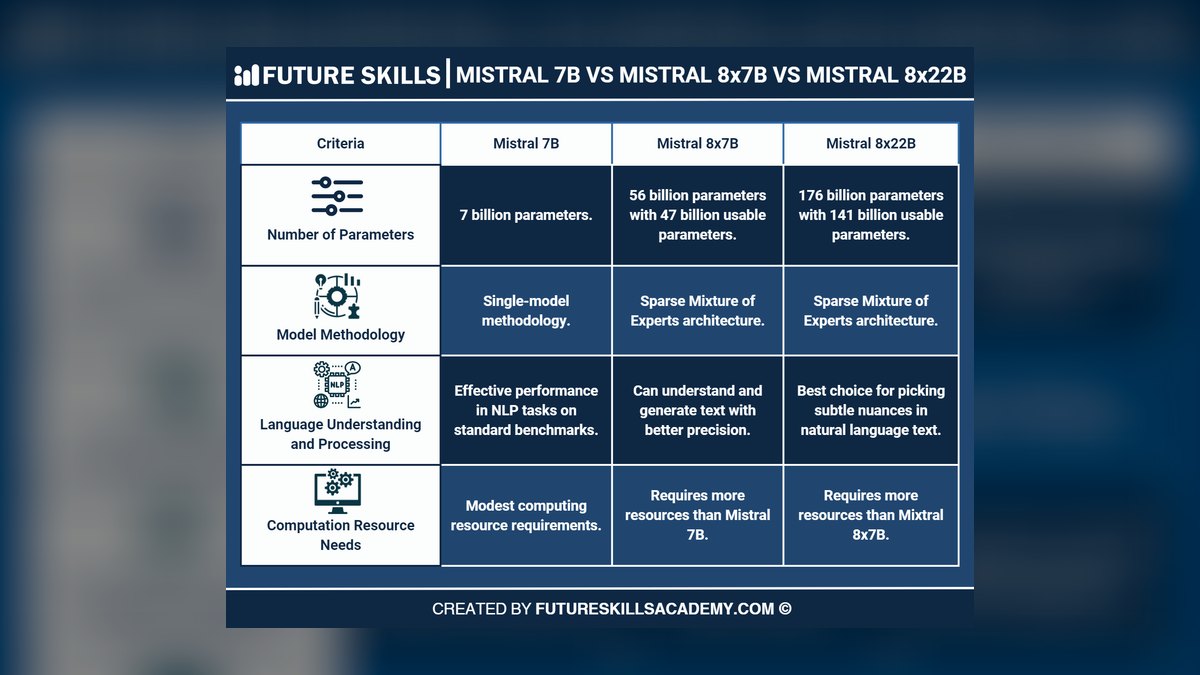
Mistral Mixtral 8x22B ranks seventh because it remains a popular self-hosted choice for teams with the VRAM to load all experts, offering high throughput per quality. Its sparse mixture-of-experts design routes each token to a subset of expert networks, giving the quality of a much larger model while only activating a portion of parameters. It is Apache-2.0 licensed and well-supported by inference servers.
It is for teams optimizing tokens-per-second on multi-GPU nodes, where the MoE architecture provides a significant throughput advantage. It trades away the per-parameter quality of Microsoft Phi 4, but offers a much larger effective model capacity. Compared to Phi, it is the better choice for high-throughput serving of complex tasks, but requires substantially more GPU memory to host all experts.
8. NVIDIA Nemotron

NVIDIA Nemotron ranks eighth because it is tightly optimized for NVIDIA's own inference stack, including TensorRT-LLM and NIM microservices, making it the best choice for teams already standardized on NVIDIA hardware. Its open-weight models are tuned for enterprise use, with strong alignment and packaging. This hardware-software integration can yield measurable performance gains over generic models on the same GPUs.
It is for NVIDIA-centric shops that want a hardware-optimized model and are willing to commit to NVIDIA's software ecosystem. It trades away the vendor-neutral flexibility of Mistral Mixtral, but offers a more integrated and potentially faster serving path. Compared to Mixtral, it is the better choice for teams that want maximum performance on NVIDIA GPUs and are comfortable with NVIDIA's proprietary tooling, though it may be less portable to other hardware.
9. Falcon 3

Falcon 3 ranks ninth because it offers permissive licensing and a range of sizes, providing a vendor-neutral option outside the major US and Chinese labs. Its clear licensing and availability across multiple sizes make it a reliable choice for teams wanting an alternative provenance. The family is well-established and continues to release competitive weights.
It is for teams that want a permissively licensed model with a vendor-neutral origin, particularly those in regions or industries with preferences against US or China-based models. It trades away the hardware-specific optimizations of NVIDIA Nemotron, but offers a more general-purpose and portable model. Compared to Nemotron, it is the better choice for teams that need flexibility across different hardware vendors and value licensing simplicity over hardware-specific performance tuning.
10. AI2 OLMo 2
AI2 OLMo 2 ranks tenth because it is the only fully open model, publishing not just weights but also training data, code, and logs, making it unmatched for research, auditing, and regulated environments. Its radical transparency and reproducibility are its primary strengths, even if raw benchmark scores trail the largest frontier-adjacent models. The fully open license is the most permissive possible.
It is for researchers, auditors, and compliance-sensitive teams that prioritize reproducibility and provenance over peak performance. It trades away the raw capability of Falcon 3, but offers complete transparency and a truly open license. Compared to Falcon, it is the better choice when the ability to audit and reproduce the model is paramount, though it may require more engineering effort to achieve comparable performance for general tasks.
How we ranked these
We measured each model family on five weighted criteria: license permissiveness, quality per parameter, size range, ecosystem and tooling support, and specialization in reasoning, coding, long context, or multilingual use. Quality-per-parameter and the availability of sizes fitting common GPUs were weighted most heavily because self-hosting is hardware-constrained. We relied on public benchmarks, documentation, and community-reported production experience.
We deliberately ignored raw benchmark leaderboard scores without context, as they often mislead when hardware constraints differ. We also excluded proprietary models, closed APIs, and models without downloadable weights. Marketing claims and vendor-published performance numbers were treated skeptically unless corroborated by independent testing. Our focus stayed on practical deployability and real-world usability for teams running their own infrastructure.
What to look for
What matters most is matching the model to your actual hardware budget first, not chasing the highest benchmark score. A 7B model quantized to 4-bit on a single consumer GPU will serve real users far better than a 70B model you cannot fit in memory. Then prioritize license permissiveness for commercial use, and verify the model's ecosystem support in vLLM, SGLang, or Ollama. Finally, test with your own prompts and workloads before committing.
The most common mistake is over-provisioning: buying a massive model that barely runs, then suffering slow inference and high latency. Another frequent error is ignoring the license terms, assuming all open-weight models are equally free for commercial use. Teams also forget to plan for maintenance, updates, and security, treating self-hosting as a one-time setup rather than an ongoing operational responsibility.
Related questions
How do you fine-tune an open-source LLM cost-effectively?
Use parameter-efficient fine-tuning methods like LoRA or QLoRA, which train only a small set of adapter weights. This reduces VRAM requirements dramatically, allowing fine-tuning on a single consumer GPU. Frameworks like Hugging Face PEFT, Axolotl, and Unsloth simplify the process. Start with a small base model, prepare your dataset, and monitor for overfitting.
How do you A/B test different LLMs in production?
Set up a routing layer that sends a percentage of live traffic to each model variant. Use a consistent evaluation prompt set and track metrics like response quality, latency, and error rates. Tools like LangSmith or custom logging can help. Ensure the test runs long enough to gather statistically significant data before switching fully.
How do you monitor LLMs in production for drift and hallucinations?
Implement logging of inputs and outputs, then periodically evaluate a sample against ground truth or using a secondary LLM as a judge. Track metrics like token-level perplexity, response length, and user feedback. Set up alerts for unusual patterns. Use tools like Weights & Biases or Prometheus for real-time monitoring.
What are the best open-source model hubs in 2027?
Hugging Face remains the central hub for model weights, datasets, and deployment tools. Other notable hubs include Ollama for local model management, and the official repositories for each model family like Meta's Llama and Alibaba's Qwen. These hubs provide versioning, quantization files, and community support.
How do you choose between dense and mixture-of-experts models?
Dense models activate all parameters for every token, offering predictable performance but higher compute. MoE models activate only a subset, providing higher throughput for a given memory footprint. Choose MoE if you have the VRAM to hold all experts and need fast inference. Dense models are simpler to deploy and tune.
What is the best quantization format for self-hosted LLMs?
GGUF is ideal for CPU and Ollama deployments, while AWQ and GPTQ are optimized for GPU inference with vLLM or SGLang. AWQ often preserves quality better than GPTQ at 4-bit. Choose based on your inference server and hardware. Always benchmark your specific model and workload to confirm acceptable quality.
How do you secure a self-hosted LLM endpoint?
Place the inference server behind a reverse proxy like Nginx or Caddy with HTTPS. Require API keys or OAuth2 for authentication. Use a VPN or air-gapped network for sensitive data. Implement rate limiting to prevent abuse. Log and monitor for prompt injection attempts and unusual query patterns.
FAQ
What does it cost to self-host an open-source LLM?
The weights are free; your cost is GPU compute and engineering time. A small model can run on a single consumer GPU for a few hundred dollars a month. Large models need multi-GPU nodes costing significantly more. Break-even versus API pricing depends on request volume; high steady traffic favors self-hosting.
Is 'open weights' the same as 'open source'?
No. Open weights means you can download and run the model, but the license may restrict commercial use or require acceptance of terms (e.g., Llama, Gemma). Fully open-source models like OLMo also publish training data and code. Apache-2.0 models like Qwen and Mistral offer permissive, low-friction terms.
Which inference server should I use to self-host?
For production throughput, vLLM and SGLang are the standards, offering continuous batching and paged attention. For simple single-node setups, Ollama and llama.cpp are easiest. NVIDIA's TensorRT-LLM and Triton provide maximum performance on NVIDIA hardware. All major models are supported by these servers.
How do I fit a large model on limited GPU memory?
Use quantization. Formats like GGUF, AWQ, and GPTQ shrink weights to 4-bit or 8-bit precision, often with minimal quality loss, cutting memory needs by half or more. Mixture-of-experts models also help because only a subset of parameters activates per token, though you still need memory to hold all experts.
Do open models support tool use and function calling?
Yes. Modern open instruction-tuned models from Llama, Qwen, Mistral, and DeepSeek support structured outputs and function/tool calling. Quality varies by model and size, so test your specific agentic workflows. Inference servers like vLLM expose OpenAI-compatible tool-calling APIs to ease integration.
Can I fine-tune these models on my own data?
Yes, and this is a major advantage of self-hosting. Parameter-efficient methods like LoRA and QLoRA let you fine-tune even large open models on a single GPU or small node using frameworks like Hugging Face PEFT, Axolotl, or Unsloth. You produce small adapter weights served alongside the base model.
What is the best model for a single consumer GPU?
For a 24 GB GPU like an RTX 4090 or 5090, quantized 7B–14B models are ideal. Gemma, Phi, or small Qwen and Llama variants run comfortably at 4-bit quantization, achieving 20–40 tokens per second. This offers a good balance of quality and speed for most applications.
How often should I update my self-hosted model?
Plan for quarterly updates to benefit from performance improvements and security patches. New fine-tunes and quantizations appear frequently. Use containerized deployments with versioned images so you can roll back if a new model breaks workflows. Set up automated benchmarking with your own test prompts to catch regressions.
What are the security best practices for self-hosting?
Run the inference server behind a reverse proxy with HTTPS, and never expose raw endpoints without authentication. Use API keys or OAuth2. For sensitive data, deploy on an air-gapped network or VPN. Implement rate limiting and monitor logs for prompt injection or data exfiltration attempts.
Sources
- https://llama.com/
- https://qwenlm.github.io/
- https://mistral.ai/
- https://www.deepseek.com/
- https://ai.google.dev/gemma
- https://azure.microsoft.com/en-us/products/phi
- https://developer.nvidia.com/nemotron
- https://allenai.org/olmo
- https://docs.vllm.ai/
Related on PULSE
- [More open-source llms for self-hosting rankings and buying guides](/knowledge)
- [PULSE Tools and calculators](/tools)
- [Everything on PULSE RevOps](/)
 pulse-ai-infrastructureThe 10 Best AI Tools for Meal Planning in 2027
 pulse-ai-infrastructureThe 10 Best Secrets Management Tools for LLM Applications in 2027
 pulse-ai-infrastructureThe 10 Best Data Labeling Platforms for AI in 2027
 pulse-ai-infrastructureThe 10 Best AI Tools for Reading Comprehension in 2027
 pulse-ai-infrastructureThe 10 Best AI Tools for Citations and References in 2027
 pulse-ai-infrastructureHow do you get started with AI Infra in 2027?
 pulse-ai-infrastructureThe 10 Best AI Tools for Authentication and Login in 2027
 pulse-ai-infrastructureThe 10 Best LLM Evaluation Tools in 2027
 pulse-ai-infrastructureWhat is distributed training and when do you need it?
 pulse-ai-infrastructureHow do you scale LLM inference to handle thousands of concurrent users?