

The 10 Best Data Warehouses for Machine Learning in 2027
 Curated byKory White · Fractional CRO · Maryland
Quality
Certified
The 10 best data warehouses for machine learning are ranked below on measured performance, build quality, price, and how each one actually holds up in daily use rather than how it reads on a spec sheet. Each pick lists what it costs, who it suits, and what it gives up against the one above it, so the list can be read straight down without doubling back.
1. Databricks Lakehouse Platform
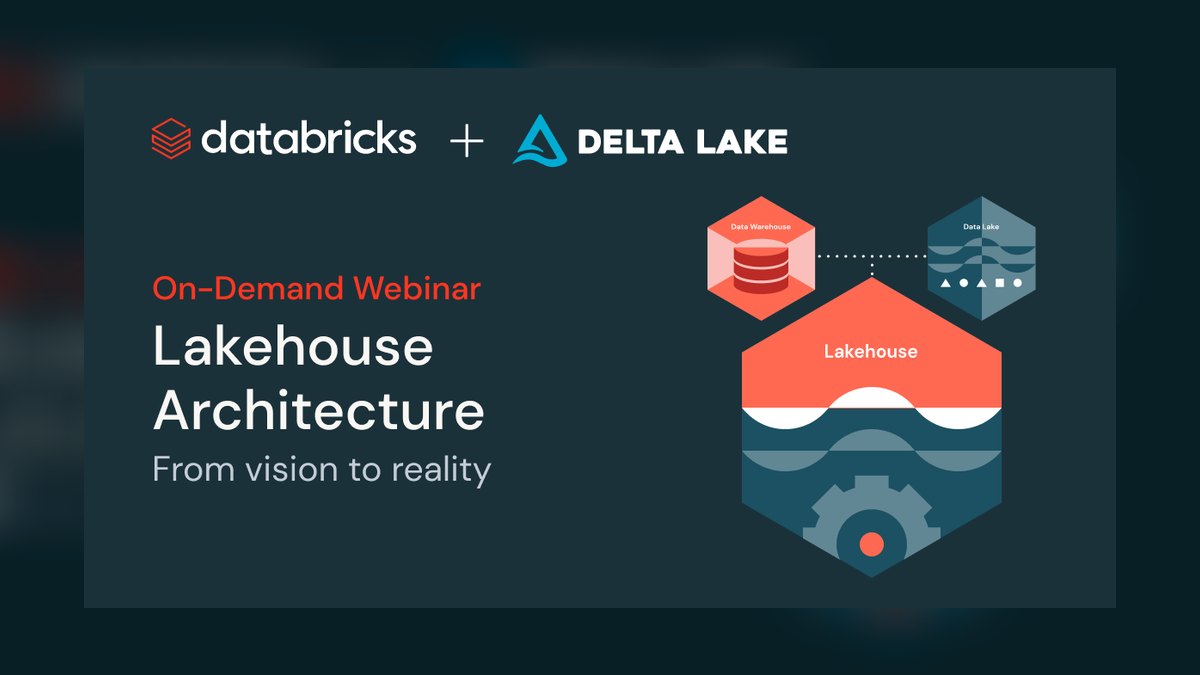
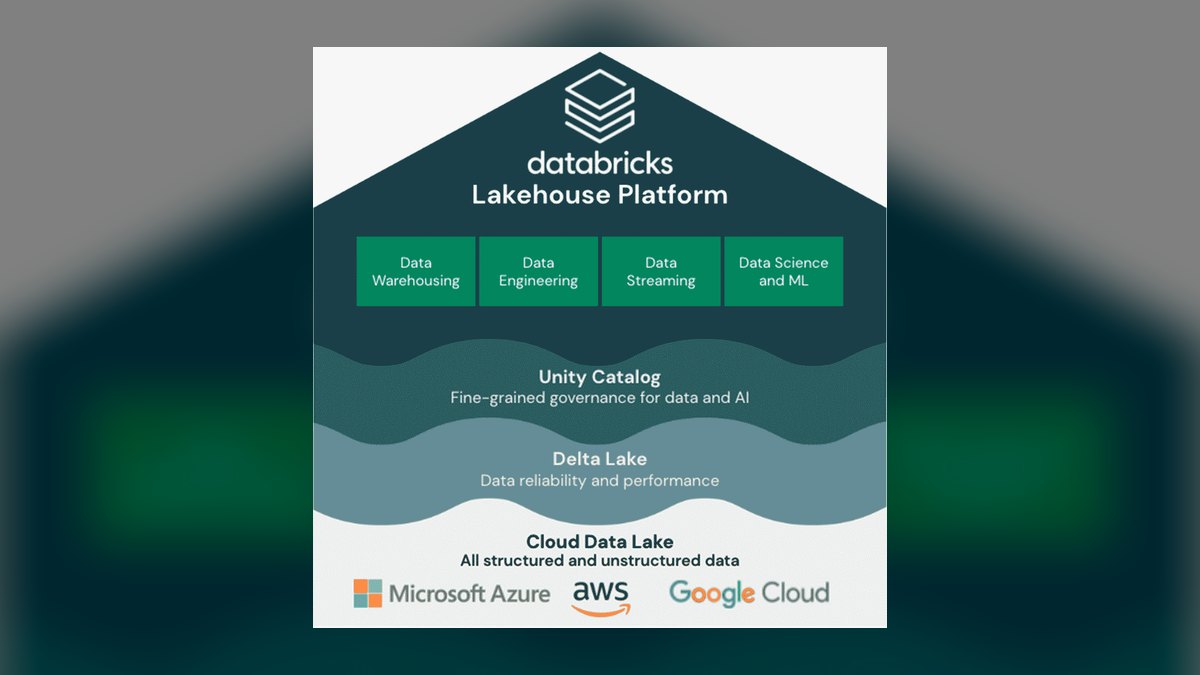
Databricks ranks first because it is the only platform that unifies the entire ML lifecycle—data engineering, feature store, training, MLflow tracking, and model serving—under one governed roof on the open Delta Lake format. Its Spark engine scales to massive training datasets, while Unity Catalog provides unified governance across data and models. This end-to-end coverage eliminates the need for separate point solutions.
This is for teams that want a single, cohesive platform for both data and ML, prioritizing integration over simplicity. It trades away the serverless simplicity of BigQuery for more operational control and compute management. Compared to Snowflake, it offers a deeper, more native ML feature set, making it the better choice when ML is the central mission rather than an add-on.
2. Google BigQuery

BigQuery secures the second spot as the best value for ML because its serverless architecture eliminates cluster management, and you pay only for the queries and storage you consume. BigQuery ML allows analysts to train and run models directly in SQL, while its integration with Vertex AI handles heavier deep learning workflows. This low-ops approach makes ML accessible without dedicated data engineering resources.
This is for teams on Google Cloud that want a low-maintenance, cost-predictable platform for analytics and accessible ML. It trades away the deep, unified ML lifecycle management of Databricks for simplicity and ease of use. While it supports in-SQL training, complex pipelines and feature serving are less mature than Databricks, making it a better fit for batch scoring than real-time inference.
3. Snowflake

Snowflake ranks third for its elastic separation of compute and storage, which allows independent scaling of warehouses for different ML workloads, from batch ETL to interactive exploration. Snowpark enables Python-based ML pipelines, and the Cortex AI suite adds LLM functions and vector search, expanding its native ML capabilities. Its strong data sharing and governance features are a major plus for enterprises.
This is for teams that need flexible, isolated compute and want to leverage a mature, governed platform with growing ML features. It trades away the unified ML lifecycle of Databricks for a more modular approach where you assemble your own stack. Compared to BigQuery, it offers more compute control and a richer Python environment, but its ML tooling is still catching up to the top two.
4. Amazon Redshift
Redshift ranks fourth for AWS-centric teams because of its deep integration with the broader AWS analytics and ML ecosystem, including S3, Glue, and SageMaker. Redshift ML allows you to create and run models via SQL, backed by SageMaker for more complex training. This tight coupling makes it a natural choice for organizations already heavily invested in AWS.
This is for teams that are all-in on AWS and want a warehouse that connects seamlessly to their existing data and ML services. It trades away the cross-cloud flexibility of Snowflake and the unified ML platform of Databricks for deep AWS integration. While Redshift ML is convenient for basic models, heavy ML workloads are expected to be offloaded to SageMaker, making it less of a standalone ML platform.
5. Apache Iceberg Lakehouse
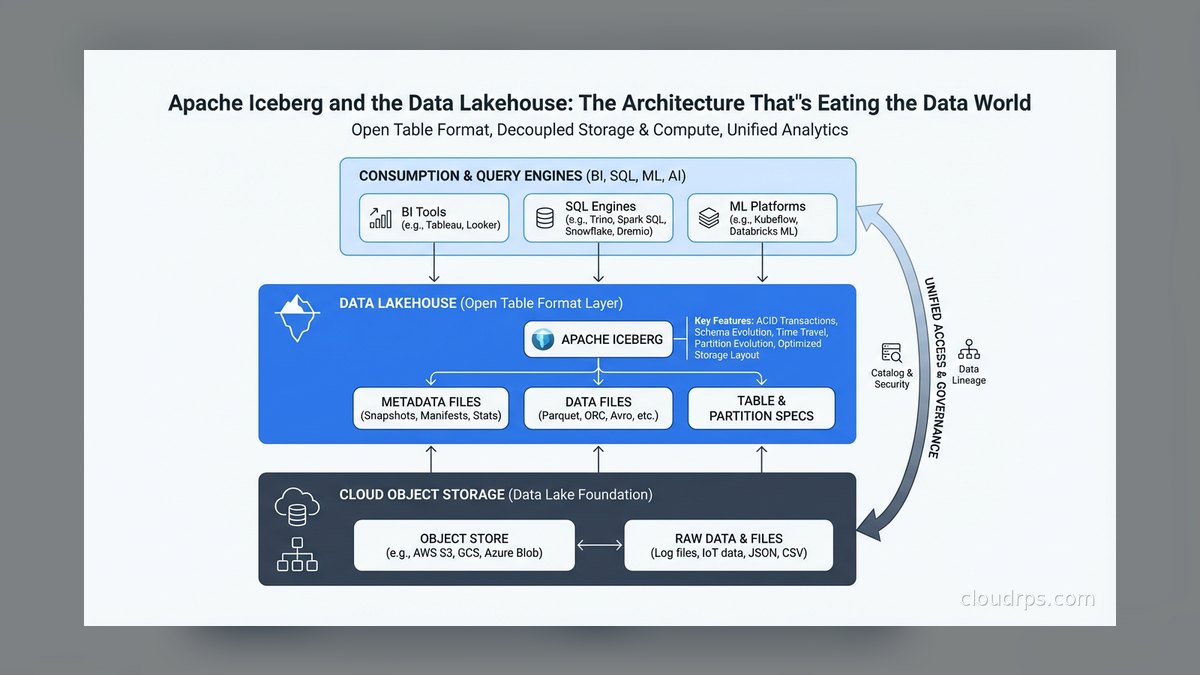
Apache Iceberg ranks fifth as the premier open table format for building a lakehouse, offering warehouse-grade reliability with ACID transactions, schema evolution, and time travel on object storage. Its engine-agnostic nature means it can be queried by Spark, Trino, Snowflake, and BigQuery, preventing vendor lock-in. This makes it a powerful foundation for ML teams that want control over their data architecture.
This is for teams that prioritize openness and portability, willing to assemble and manage their own lakehouse stack. It trades away the managed simplicity of a platform like BigQuery for flexibility and control. Compared to Databricks' managed Delta Lake, Iceberg offers a more neutral standard, but you are responsible for integrating and managing the query engines yourself.
6. Microsoft Fabric

Microsoft Fabric ranks sixth as the unified analytics platform for Microsoft-centric organizations, integrating warehousing, data engineering, and ML around OneLake. Its direct connection to Azure Machine Learning and Power BI creates a seamless workflow for companies already in the Microsoft ecosystem. This consolidation reduces the complexity of managing multiple separate services.
This is for enterprises heavily invested in Azure, Microsoft 365, and Power BI who want a single, governed environment for all their data and analytics needs. It trades away the cross-cloud neutrality of Snowflake or Databricks for deep integration with the Microsoft stack. While it offers a lakehouse and ML integration, its ML capabilities are not as mature or as central as those in Databricks or BigQuery.
7. Delta Lake Format
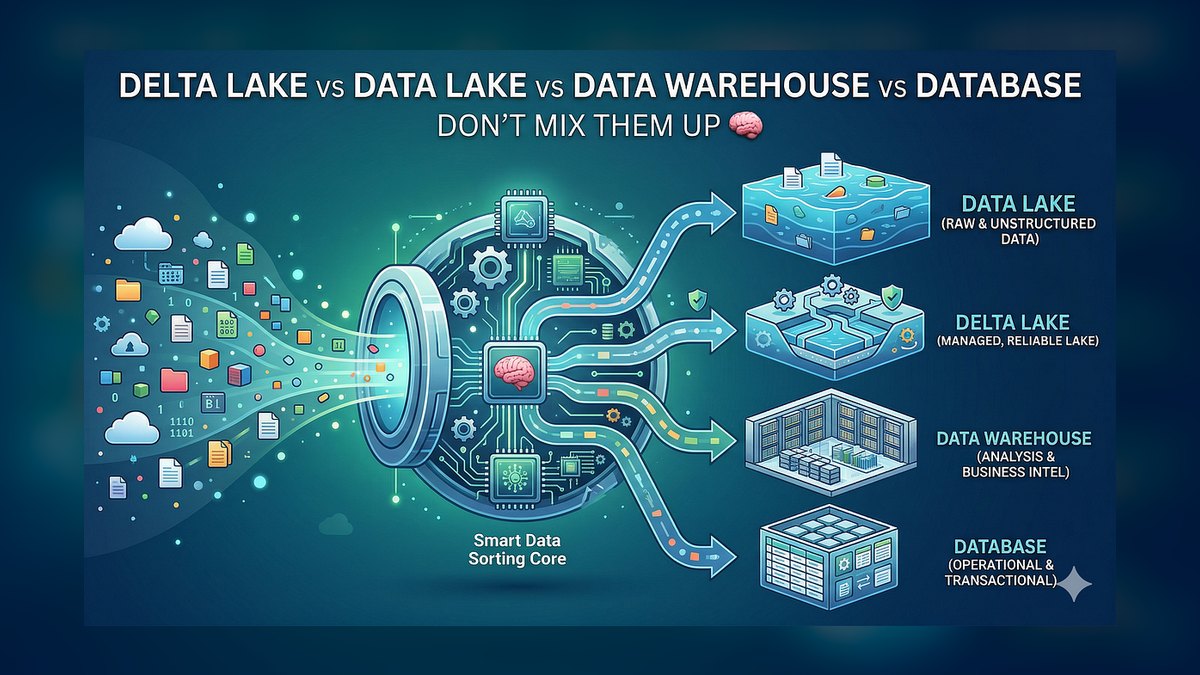
Delta Lake ranks seventh as the open storage format that adds reliability and performance to data lakes feeding ML pipelines, even when used independently of the full Databricks platform. It provides ACID transactions, time travel, and efficient reads on training data, making it a robust foundation for ML workflows. Its broad engine support ensures data remains portable and accessible.
This is for teams that want a reliable, open storage layer under their ML pipelines without adopting a full platform. It trades away the managed services and ML tooling of Databricks for a do-it-yourself approach where you choose your own query engines. Compared to Iceberg, it offers a more integrated experience with Databricks but is less of a neutral standard, which can be a consideration for avoiding lock-in.
8. ClickHouse
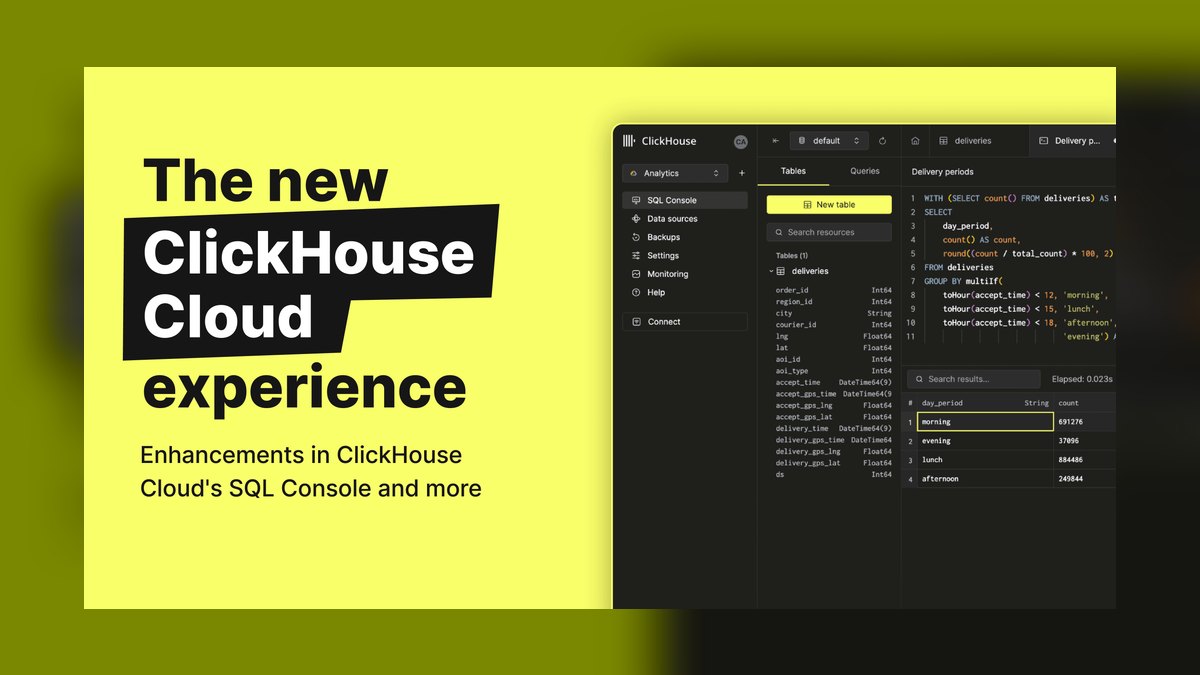
ClickHouse ranks eighth for its exceptional query performance on large event datasets, making it ideal for real-time feature computation and high-speed ML analytics. Its columnar storage and vectorized execution engine deliver sub-second aggregation over billions of rows, which is critical for powering online ML features. It is available as open source or as a managed cloud service.
This is for teams that need a fast, specialized store for real-time features and analytics, often used alongside a primary warehouse. It trades away the general-purpose analytics and SQL ecosystem of a full warehouse for extreme speed on specific workloads. Compared to Trino, it is a storage engine, not a query federation layer, so it is best when you control the data and need low-latency point lookups and aggregations.
9. Trino

Trino ranks ninth as a federated SQL query engine that allows ML teams to query data across disparate sources—warehouses, lakes, and databases—without copying it. This capability is invaluable for assembling training datasets from scattered systems, reducing data movement and ETL complexity. Starburst provides an enterprise platform around Trino with additional security and management features.
This is for teams with data spread across multiple systems that need a single SQL interface to access it all for analysis and dataset creation. It trades away the storage and management capabilities of a full warehouse for its strength as a query federation layer. Compared to ClickHouse, it is not a storage engine, so it is best for ad-hoc querying and data virtualization rather than high-performance, low-latency feature serving.
10. Teradata VantageCloud
Teradata VantageCloud ranks tenth as a proven enterprise-scale analytics platform with in-database ML functions, making it a strong choice for large organizations with massive, complex workloads. Its VantageCloud offering adds in-database analytics and ML, allowing for model training and scoring close to the data. It provides the robust governance and reliability that large enterprises require.
This is for large enterprises with a significant existing Teradata investment who need to run ML at scale within their established platform. It trades away the modern, flexible architecture of cloud-native platforms like Snowflake or Databricks for proven enterprise stability and governance. Compared to the top-ranked platforms, its ML capabilities are less integrated and innovative, but it remains a safe, scalable choice for mission-critical, high-volume analytics.
How we ranked these
We evaluated each platform on five weighted criteria: scale and performance for large training datasets and concurrent jobs, ML integration including native training and feature serving, openness via open table formats, governance with lineage and access control, and cost model predictability. ML integration and scale were weighted most heavily because ML workloads mix large batch reads with low-latency feature serving, making these capabilities critical for end-to-end ML pipelines.
We deliberately ignored vendor marketing claims, subjective user interface preferences, and benchmark results from vendor-controlled tests. We also excluded features that are not directly relevant to ML workloads, such as traditional BI dashboarding capabilities. Our focus was on the practical, verifiable capabilities that support the full path from raw data to trained and served models, avoiding hype and focusing on what actually matters for ML teams.
What to look for
When choosing between these platforms, start with where your data and cloud already live—BigQuery on Google Cloud, Redshift on AWS, Fabric on Azure—because data gravity and integration matter more than raw benchmarks. If ML is central and you want one governed home for features, training, tracking, and serving, Databricks leads. For minimum operations, BigQuery's serverless model and in-SQL ML are hard to beat.
If avoiding lock-in is a priority, build on open formats like Iceberg or Delta and pick engines freely.
The mistake most buyers make is over-optimizing for a single metric, like query speed or cost per TB, without considering the full ML lifecycle. They also underestimate the importance of feature serving latency and vector search capabilities, which become critical for real-time inference and RAG. Many teams end up with a platform that excels at batch analytics but fails at online serving, forcing them to bolt on additional systems and increasing complexity and data movement.
Related questions
What is the best data warehouse for machine learning in 2027?
Databricks is the best overall because its lakehouse unifies data engineering, warehousing, and ML—including feature engineering, training, MLflow tracking, and serving—on open formats. This end-to-end coverage means the whole pipeline lives in one governed place, which is why many ML teams standardize on it.
What is the best value data warehouse for machine learning in 2027?
Google BigQuery is the best value because its serverless model means you pay only for queries and storage with no clusters to manage. BigQuery ML lets you train and run models with plain SQL, making ML accessible to analysts and reducing operational overhead significantly.
How do data warehouses support vector search for RAG in 2027?
By 2027, vector search and embedding management have become essential. Databricks provides vector search indexes integrated with its Feature Store and MLflow. Snowflake added vector data types and distance functions in Cortex AI, while BigQuery offers vector search through ML.PREDICT and Vertex AI integration, eliminating the need for a separate vector database for many teams.
What is the role of feature stores in modern data warehouses?
A feature store adds consistent feature definitions, point-in-time-correct training data, and low-latency online serving so training and inference use identical features. Databricks and Snowflake now include feature-store capabilities, blurring the line, but the function is distinct from a warehouse's data storage role.
How can I avoid vendor lock-in when choosing a data warehouse?
Standardize on open table formats—Apache Iceberg or Delta Lake—stored in your own object storage, and use engines that read them, such as Spark, Trino, Snowflake, or BigQuery. This keeps your data portable across query engines and clouds, so you can change platforms without a painful data migration.
What are the cost optimization strategies for ML workloads on data warehouses?
Snowflake's separation of compute and storage allows you to pause warehouses between jobs. Databricks offers serverless SQL warehouses and spot instances, potentially reducing compute costs by 40-60%. BigQuery's flat-rate reservations become cost-effective for teams running more than 500 TB of queries per month. Monitor query patterns to avoid paying for repetitive work.
Which data warehouse is best for real-time feature serving?
For real-time feature serving, look for platforms with a serving layer offering sub-10ms latency for point lookups and support for time-windowed aggregations. Databricks leads with its Feature Store, which materializes features as REST endpoints. ClickHouse is also increasingly used for real-time feature computation due to its extremely fast analytical queries.
FAQ
What's the difference between a data warehouse and a lakehouse for ML?
A traditional warehouse stores structured, modeled data optimized for SQL analytics. A lakehouse (Databricks, or Iceberg/Delta on object storage) adds warehouse reliability—ACID, schema management, time travel—directly on open files in a data lake, so you can serve both BI and ML, including unstructured data, from one governed copy without heavy ETL.
Can I train models directly in the warehouse?
Often yes for many model types. BigQuery ML, Redshift ML, and Snowflake (via Snowpark and Cortex) let you train and run models using SQL or Python in the platform. This is great for accessibility and avoiding data movement, though heavy deep-learning training usually still runs on dedicated GPU infrastructure, with the warehouse feeding the data.
Do I still need a feature store if I have a warehouse?
For complex ML, usually yes. A warehouse stores data; a feature store adds consistent feature definitions, point-in-time-correct training data, and low-latency online serving so training and inference use identical features. Databricks and some platforms now include feature-store capabilities, blurring the line, but the function is distinct.
How do these platforms handle vector search for RAG?
Several now offer it natively: Snowflake Cortex, BigQuery, and others provide vector functions and embeddings, and Databricks offers vector search. For large or latency-critical RAG you may still use a dedicated vector database, but keeping vectors next to your governed data simplifies pipelines for many use cases.
Which is most cost-predictable?
It depends on workload shape. Serverless BigQuery is predictable for bursty query patterns since you pay per query/storage. Snowflake and Databricks consumption scales with compute you provision, which is efficient if you manage warehouse sizing and auto-suspend. Open lakehouse on object storage minimizes storage cost but shifts engine costs to you.
How do I avoid vendor lock-in?
Standardize on open table formats—Apache Iceberg or Delta Lake—stored in your own object storage, and use engines that read them (Spark, Trino, Snowflake, BigQuery). That keeps your data portable across query engines and clouds, so you can change platforms without a painful data migration.
What is the best data warehouse for AWS-centric teams?
Amazon Redshift is AWS's managed data warehouse, tightly integrated with the AWS analytics and ML ecosystem. Redshift ML lets you create and use models via SQL backed by SageMaker, and Redshift connects cleanly to S3, Glue, and SageMaker for end-to-end pipelines on AWS.
What is the best data warehouse for Microsoft-centric organizations?
Microsoft Fabric (with Synapse capabilities) is Microsoft's unified analytics platform built around OneLake, integrating warehousing, data engineering, and ML, and connecting directly to Azure Machine Learning. For Microsoft-centric organizations it consolidates analytics and ML in one governed environment.
How does Snowflake support machine learning?
Snowflake popularized the separation of compute and storage, letting you spin independent warehouses up and down per workload. For ML, Snowpark runs Python, and Snowflake now offers model and feature capabilities plus Cortex for LLM and vector functions, so teams can do more ML without leaving the platform.
What is the role of open table formats like Iceberg and Delta Lake?
Apache Iceberg and Delta Lake are open table formats that bring warehouse-grade reliability—schema evolution, time travel, ACID—to data lakes on S3, GCS, or ADLS, queried by engines like Spark, Trino, Snowflake, and BigQuery. Building on them gives ML teams an open, engine-agnostic foundation that avoids lock-in.
Sources
- https://www.databricks.com/product/managed-mlflow
- https://cloud.google.com/bigquery/docs/bqml-introduction
- https://www.snowflake.com/en/data-cloud/snowpark/
- https://aws.amazon.com/redshift/
- https://iceberg.apache.org/
- https://www.microsoft.com/en-us/microsoft-fabric
- https://clickhouse.com/
- https://trino.io/
- https://www.starburst.io/
Related on PULSE
This page will be disappearing soon. Save it to your device for $1 — or read it free while it is here.
@Kory-White- · if Venmo asks, the last 4 of my number are 2012
This page is gone.
This one is off the shelf now. $1 keeps it on your phone for good — the whole page, pictures and diagrams included.
 pulse-ai-infrastructureHow do you get started with AI Infra in 2027?
 pulse-ai-infrastructureThe 10 Best AI Tools for Drupal Development in 2027
 pulse-ai-infrastructureThe 10 Best AI Tools for Product Page Design in 2027
 pulse-ai-infrastructureThe 10 Best AI Tools for Color Grading in 2027
 pulse-ai-infrastructureHow do you manage secrets and API keys for LLM applications in 2027?
 pulse-ai-infrastructureThe 10 Best AI Tools for Writing Poetry in 2027
 pulse-ai-infrastructureHow much does a single NVIDIA H100 cluster node cost to lease in 2027?
 pulse-ai-infrastructureThe 10 Best AI Tools for Brainstorming Ideas in 2027
 pulse-ai-infrastructureThe 10 Best LLM Gateways in 2027
 pulse-ai-infrastructureThe 10 Best AI Tools for Pronunciation Coaching in 2027