


Little Red Book of Selling by Jeffrey Gitomer — Cliff Notes Summary & Key Takeaways
Quality
Certified

*Little Red Book of Selling* (Jeffrey Gitomer, Bard Press, 2004) compresses selling into 12.5 principles built on one thesis: people don't like to be sold, but they love to buy. It shifts the seller's job from pushing product to earning preference — through preparation, value delivered first, humor, personal brand, and relentless risk reduction.
What the book actually is and why it still matters
Strip away the red cover and the oversized pull-quotes and what you have is a behavioral operating manual for an individual seller. It is not a methodology in the sense that MEDDPICC or SPIN are methodologies — there is no qualification checklist, no deal-scoring rubric, no forecast hygiene. Gitomer wrote a book about the person doing the selling, not the process the selling flows through. That distinction explains both its longevity and its blind spots, and it is the single most useful frame for deciding whether to hand it to your team.
The structure is deliberately anti-corporate. Twelve principles plus a half — the 0.5 being Gitomer's admission that no system is ever finished — each running roughly ten to fifteen pages, each self-contained enough that you can open to any chapter cold. The physical book runs about 200 pages in a pocket format, which is a design decision, not a printing accident. Gitomer built it to be re-read, not read. A rep who finishes it in one sitting has used it wrong; a rep who reads one principle every Monday morning for thirteen weeks has used it right.
The lineage matters for context. Dale Carnegie's *How to Win Friends and Influence People* (1936) established that commercial outcomes follow interpersonal ones. Zig Ziglar's *Secrets of Closing the Sale* (1984) and Tom Hopkins' *How to Master the Art of Selling* (1980) turned that into tactical closing craft. Neil Rackham's *SPIN Selling* (1988) brought research discipline and question sequencing. Gitomer landed in 2004 between the motivational era and the analytical era, and did something neither camp did — he insisted that the seller's own visibility, reputation, and published output were commercial assets. He was writing a weekly email newsletter to a large opt-in list years before anyone used the phrase "creator economy," and the book argues, in 2004, that being known is as valuable as knowing people. That single claim is why the book reads current two decades later while its contemporaries read like museum pieces.
The core thesis — people don't like to be sold, but they love to buy — is doing more work than it appears. It is not a cute inversion. It is an instruction to relocate the entire sales conversation from the seller's agenda to the buyer's. Every one of the 12.5 principles is downstream of that relocation: prepare because the buyer's business is the subject, ask questions because the buyer's conclusion beats yours, reduce risk because fear is what actually stops a purchase, use third-party proof because your own claims are structurally discounted. Read that way, the book is far more coherent than its scattershot presentation suggests.
Where it matters most today is onboarding. A rep in year one has usually been handed a CRM, a sequence tool, a pitch deck, and a quota, and has no personal operating system underneath any of it. The Little Red Book supplies that layer — cheaply, in an afternoon, in language that does not require an enablement translator. For a rep in year eight running eight-figure enterprise cycles across a ten-person buying committee, the book is a recalibration read, not a playbook. Both uses are legitimate; confusing them is the most common way teams waste the investment.
Working through the 12.5 principles in sequence
The principles are numbered but not strictly sequential in Gitomer's telling. They do, however, map cleanly onto a working cycle, which is the most practical way to use them.
Principle 1 — Kick Your Own Ass. The foundation: nobody is coming to save you. Not the manager, not marketing, not a better comp plan. Gitomer frames the rep as a self-contained business unit responsible for their own pipeline, their own follow-up, and their own honest post-loss review. He prescribes an early-morning discipline — reading, writing, planning before the day starts making demands. The tone is tough-love and unmistakably 2004; the substance, that effort is the one input a manager cannot supply for you, is unarguable.
Principle 2 — Prepare to Win, or Lose to Someone Who Is. Preparation here means research about the buyer's business, not rehearsal of your own deck. Read their filings, walk their stores, talk to their customers, arrive with something they haven't seen about their own operation. This is the principle that most directly anticipates *The Challenger Sale* (Dixon and Adamson, 2011) — teach, tailor, take control is, functionally, principle 2 in enterprise clothing seven years later.
Principle 3 — Personal Brand IS Sales. It's who you know *and* who knows you. In 2004 this was contrarian. It is now the default assumption of every seller with a LinkedIn presence. Build the audience before you need the audience.
Principle 4 — It's All About Value, It's All About Relationship, It's NOT All About Price. Price is the objection you cannot out-argue. Value and relationship make price a secondary question rather than the first one. The prescription is concrete: deliver something useful before the buyer asks for a quote — a benchmark, a referral, an observation about their market.
Principle 5 — It's NOT Work, It's Network. Events, associations, and industry gatherings are the job, not the after-hours obligation. Show up early. Sit somewhere different each time. Follow up within a day with a note referencing something the person actually said, not a generic pleasure-to-meet-you.
Principle 6 — Get in Front of the Real Decision Maker. The chapter title is deliberately confrontational and would not survive a modern enablement review, but the substance is right: time spent with people who cannot authorize spend is time spent losing. Getting to the economic buyer is itself a skill — via internal referral, via executive-level correspondence, via showing up where executives speak. MEDDPICC's Economic Buyer pillar is the descendant.
Principle 7 — Engage Me and You Can Make Me Convince Myself. SPIN in plain language. Ask what made them choose their current vendor, what they'd change if they could, where they see this in two years. The buyer surfaces the dissatisfaction; the rep never has to attack the incumbent.
Principle 8 — If You Can Make Them Laugh, You Can Make Them Buy. The most-quoted line in the book. Likability outranks polish. The evidence is anecdotal, but the mechanism — laughter lowers guard, shared humor creates the feeling of an existing relationship — is not controversial.
Principle 9 — Use Creativity to Differentiate and Dominate. An anti-template manifesto against identical decks, identical follow-ups, identical leave-behinds. The modern descendants are personalized video, custom research artifacts, and signal-based outreach.
Principle 10 — Reduce Their Risk and You Will Convert Selling to Buying. The principle that closes the loop back to the thesis. Scared buyers do not buy. Dismantle the fear systematically: pilots, references, guarantees, staged commitments, transparent exit terms.
Principle 11 — When You Say It About Yourself It's Bragging; When Someone Else Says It, It's Proof. Gitomer's two-list exercise: ask your top ten customers, in writing, *why they buy from you*, and separately *why they buy the category at all*. The first isolates personal loyalty; the second isolates market demand. Use their words verbatim. This is the cleanest testimonial-sourcing method in any sales book, and the spiritual parent of modern peer-review platforms.
Principle 12 — Antennas Up. Notice everything. The photos, the diploma, the trophy, the book on the shelf. Each is a hook and a relationship deposit. The digital-era version is research before the call, but the underlying behavior — attend to the human, not the org chart — is unchanged.
Principle 12.5 — Resign Your Position as General Manager of the Universe. Stop trying to control what you can't: the buyer's timeline, the competitor's price, the economy. Control prep, follow-up, attitude, next call. In a burnout-aware era this reads less like a wink and more like clinical advice.
What it costs to actually implement, and how long it takes
The book itself is a trivial purchase — a paperback in the range of a lunch. The real cost is time and behavior change, and that's where teams underestimate.
Reading time. Two to three hours cover to cover. Realistically, plan thirteen weeks at one principle per Monday, fifteen minutes each — roughly three hours of reading spread across a quarter, which is how the format was designed to be consumed.
Principle 3, personal brand. This is the largest time commitment and the one with the longest lag. Budget 20–30 minutes a day, five days a week, for posting and engagement. Expect very little for the first three months, early inbound signal somewhere in months four through eight, and meaningful sourced pipeline past the one-year mark if the cadence held. Sellers who quit at week six conclude the principle doesn't work; what actually happened is they sampled the flat part of a compounding curve. If your team cannot sustain twelve months, don't start — a half-abandoned profile is worse than a quiet one.
Principle 2, preparation. Adds roughly 20–45 minutes of genuine research per first meeting — filings, recent announcements, product-review scanning, a look at their customers' complaints. Reps resist this because it feels like unbillable time. The trade is real and worth naming out loud: fewer meetings, better ones. A rep running fifteen shallow first meetings a week will usually be outperformed by one running eight prepared ones, but only after the pipeline math catches up, which takes a full cycle.
Principle 11, the two-list exercise. The cheapest, fastest ROI in the book. Ten written customer requests, maybe 90 minutes to compose and send. Expect a 30–50% response rate on a warm list; follow up once and you'll do better. Two to three weeks to collect, another hour to pull the verbatim language into your talk track and collateral. Total investment: under half a day. It reliably surfaces at least one purchase driver the team did not know it had — the reason customers *actually* buy is very often not the reason the deck leads with.
Principle 10, risk reduction. This one costs money, not just time, and it isn't the rep's decision alone. Pilots consume implementation capacity. Guarantees carry balance-sheet exposure. Reference programs require someone to own customer relationships and manage reference fatigue. A rep can apply principle 10 conversationally on day one — naming the buyer's fear out loud and addressing it directly is free — but the structural version needs leadership sign-off and a quarter or more to stand up.
Team rollout. For a squad of ten reps: books plus a one-hour kickoff, then thirteen weekly fifteen-minute standup segments where one rep presents one principle and how they applied it that week. Total manager time is around four to five hours across a quarter. Skip the standup component and adoption collapses — a book handed out without a discussion rhythm is a book that stays on the shelf. That's the single highest-leverage implementation detail in this entire page.
Where the money actually goes. Most teams that "invest in Gitomer" spend nothing on the book and thousands in opportunity cost by treating it as inspiration rather than practice. The correct budget line is manager attention, not procurement.
Where teams get this wrong
Treating it as a methodology. It isn't one. There is no qualification framework, no stage-exit criteria, no forecast discipline. Teams that adopt the Little Red Book *instead of* a methodology end up with enthusiastic reps and an unmanageable pipeline. Run it as the mindset layer underneath MEDDPICC or Challenger or Gap Selling, never as a replacement.
Reading it once. The pocket format is a re-read format. One pass produces a pleasant afternoon and roughly zero behavior change. The thirteen-week cadence exists because behavior change requires repeated exposure at the moment of application.

Copying the 2004 tone instead of the 2004 substance. Gitomer's voice is brash, sometimes abrasive, occasionally sexist in the way business books of that era were. Principle 6's title alone would not clear an enablement review today. Reps who imitate the tone rather than extract the mechanism come across as swaggering rather than credible, particularly with technical or procurement-led buyers who read confidence-without-substance instantly.
Misapplying humor. "Make them laugh" does not mean "tell jokes." It means lower the temperature and be a person. On a video call with a buying committee spread across multiple countries and cultures, the safe register is self-deprecating and observational — a wry remark about your own product's rough edge, or a shared industry absurdity. Prepared material, political humor, and anything at a third party's expense all land badly and are unrecoverable in a group setting.
Assuming the solo-seller model. The book pictures one rep, one buyer, one relationship. Modern B2B routinely involves six to ten stakeholders, a procurement gate, a security review, and a legal redline cycle. Every principle still applies — but per stakeholder, which multiplies the work in a way Gitomer never accounts for. You now need risk reduction tailored to the CFO's exposure and separately to the security reviewer's, and third-party proof relevant to each. Teams that read the book and then run it against a committee as though it were an individual get pleasant meetings and a stalled deal.
Over-indexing on personal brand at the expense of pipeline. Principle 3 is the most seductive chapter and the most abusable. A rep who posts daily and prospects never has built a hobby. The correct read is that brand is a compounding *supplement* to outbound, not a substitute. Gitomer himself was relentlessly working accounts the entire time he was publishing.

Ignoring principle 12.5 because it sounds soft. It's the closer for a reason. Sellers burn out chasing controllables that aren't — the buyer's board timeline, a competitor's discount, a reorg. Reps who internalize this one keep their pipeline hygiene intact through bad quarters, which is precisely when hygiene matters most.
Skipping the written version of the two-list exercise. Asking customers verbally produces polite, useless answers. Asking in writing produces considered ones you can quote. The medium is the point.
Choosing what to read, and when, alongside it
The Little Red Book is one input in a stack. Choosing badly wastes a quarter of a rep's development time, so it's worth being explicit about the sequencing logic and the adjacent literature.
If the rep is new (0–2 years). Start here. It supplies the operator's voice that every later framework assumes you already have. Pair it with Gitomer's own *Sales Bible* (1994) as a desk reference — that's the comprehensive tactical manual, several hundred pages, organized by situation rather than principle. Read the Little Red Book quarterly; consult the Sales Bible when you hit a specific problem.
If the rep is mid-career and losing on differentiation. *The Challenger Sale* is the right next read — it operationalizes principle 2 into a repeatable commercial-teaching motion, with the research base Gitomer never provided. Gap Selling (Keenan) sharpens the diagnostic side of principle 7.
If the rep is losing on price. Principle 4 diagnoses it; it does not fully solve it. Pair with negotiation-focused work — *Never Split the Difference* for the tactical conversation, and structured value-quantification practice for the business case. Gitomer's answer to price pressure is essentially "build enough value that price becomes secondary," which is true and insufficient in a procurement-led cycle.

If the deals stall at the committee. This is the book's genuine blind spot. Go to MEDDPICC for the qualification structure and to multi-threading discipline for the stakeholder coverage. Come back to principle 10 afterward and apply risk reduction per persona rather than per deal.
If the rep's problem is activity and resilience, not skill. Principles 1 and 12.5 are the whole prescription, and they cost nothing to apply. Most managers reach for a new tool or a new sequence when the actual gap is that the rep stopped doing the unglamorous work. Read those two chapters together — one demands effort, the other releases the outcome — and they balance in a way neither does alone.
Adjacent motion worth noting. The book's downstream effects touch marketing and customer success more than its sales framing suggests. Principle 4's give-value-first rule is, in practice, a content strategy: the useful thing you send before the quote is an asset marketing could be producing at scale. Principle 11's verbatim customer language is the highest-quality raw material a positioning exercise can have — better than any survey instrument, because it's unprompted. And principle 10's risk-reduction inventory is really a joint sales–CS artifact; the reference program, the pilot scoping, the onboarding guarantee all live downstream of the close. Teams that route these outputs to the right function get compounding value from a $15 paperback.
Related questions
How long does the Little Red Book take to read?
Two to three hours straight through. The intended use is different: one principle per week for thirteen weeks, roughly fifteen minutes each Monday, so the material lands next to real deals rather than in one undigested sitting.
Is it better than The Sales Bible?
Different jobs. The *Sales Bible* (1994) is a several-hundred-page situational reference you consult; the Little Red Book is 12.5 principles you re-read for recalibration. Most teams keep both — the Bible on the desk, the Red Book in the bag.
Does it work for enterprise SaaS?
The mindset transfers cleanly; the mechanics need scaling. Every principle applies per stakeholder rather than per buyer, which multiplies the work across a six-to-ten-person committee. Pair it with a qualification framework that handles multi-threading, which the book does not address.
What is the 0.5 principle?
Principle 12.5 — "Resign Your Position as General Manager of the Universe." Stop managing what you can't control: the buyer's timeline, competitor pricing, the economy. The half-number is Gitomer signaling that no system is ever complete.
Which principle should a new rep start with?
Principle 11's two-list exercise — ask ten customers in writing why they buy from you, and why they buy the category. It's under half a day of work and produces language you can use immediately, which builds belief in the rest of the book.
FAQ
Is the Little Red Book of Selling still worth reading?
Yes, with a clear expectation of what it delivers. It is a mindset and behavior book, not a process book, and it is the cheapest, fastest way to give a seller the operating instincts that later frameworks assume. Read it before *The Challenger Sale* or *Gap Selling*, not after — those methodologies presume a practitioner who already knows how to prepare, be likable, and follow up.
What is the single most quoted idea in the book?
"If you can make them laugh, you can make them buy," from principle 8. The broader thesis — people don't like to be sold, but they love to buy — is the more consequential idea, but the humor line is the one that stuck. Both point at the same mechanism: buyers move toward people they want to spend money with.
How does this compare to MEDDPICC or Challenger?
They operate at different layers and don't compete. MEDDPICC is a qualification and deal-inspection framework. Challenger is a commercial-teaching motion with a research base. The Little Red Book is the personal operating system underneath — the preparation habit, the humor, the follow-up discipline, the resilience — that determines whether either framework actually works in a given rep's hands.
Does the personal-brand principle really matter for a quota-carrying rep?
Yes, but on a long timeline and as a supplement, not a substitute. Budget 20–30 minutes daily and expect little visible return for the first several months, with compounding inbound past the one-year mark. A rep who posts instead of prospecting has built a hobby; a rep who does both has built a durable advantage that follows them between employers.
What has aged badly?
The tone, primarily. The tough-love framing of principle 1 reads harshly in a mental-health-aware era, and modern coaching pairs accountability with recovery in a way Gitomer does not. Principle 6's confrontational title would not clear an enablement review. The humor guidance needs recalibration for multicultural, remote buying committees. And the solo-seller model does not account for modern committee dynamics.
How should a manager roll this out to a team?
Books plus a one-hour kickoff, then thirteen weekly fifteen-minute standup segments where one rep presents one principle and how they applied it to a live deal that week. Total manager time is four to five hours across a quarter. Without the recurring discussion, adoption collapses — the distribution is easy, the rhythm is the actual work.
Sources
- https://www.gitomer.com/
- https://www.bardpress.com/
- https://www.goodreads.com/book/show/33969.Little_Red_Book_of_Selling
- https://www.harpercollins.com/products/the-sales-bible-new-edition-jeffrey-gitomer
- https://www.challengerinc.com/
- https://hbr.org/2012/07/the-end-of-solution-sales
- https://www.mheducation.com/highered/product/spin-selling-rackham/9780070511132.html
- https://www.simonandschuster.com/books/How-to-Win-Friends-and-Influence-People/Dale-Carnegie/9780671027032
- https://www.penguinrandomhouse.com/books/207603/the-challenger-sale-by-matthew-dixon-and-brent-adamson/
Related on PULSE
- The Sales Bible by Jeffrey Gitomer — Cliff Notes Summary & Key Takeaways
- SPIN Selling by Neil Rackham: Summary, Key Lessons, and RevOps Takeaways
- Gap Selling by Keenan: Summary, Key Lessons, and RevOps Takeaways
- Secrets of Question-Based Selling by Thomas Freese: Summary, Key Lessons, and RevOps Takeaways
- How to Become a Rainmaker by Jeffrey Fox — Cliff Notes Summary
This page will be disappearing soon. Save it to your device for $1 — or read it free while it is here.
@Kory-White- · if Venmo asks, the last 4 of my number are 2012
This page is gone.
This one is off the shelf now. $1 keeps it on your phone for good — the whole page, pictures and diagrams included.
 book-summaryThe Sales Bible by Jeffrey Gitomer — Cliff Notes Summary & Key Takeaways
 pulse-recentHow I Raised Myself from Failure to Success in Selling by Frank Bettger — Top 10 Key Takeaways for Sales Leaders in 2027
 pulse-recentHow do you implement the Sandler Rules by David Mattson in your first 30 days as a new sales manager in 2027?
 pulse-recentHow do you implement the Sandler Rules in your first 30 days as a new sales rep in 2027?
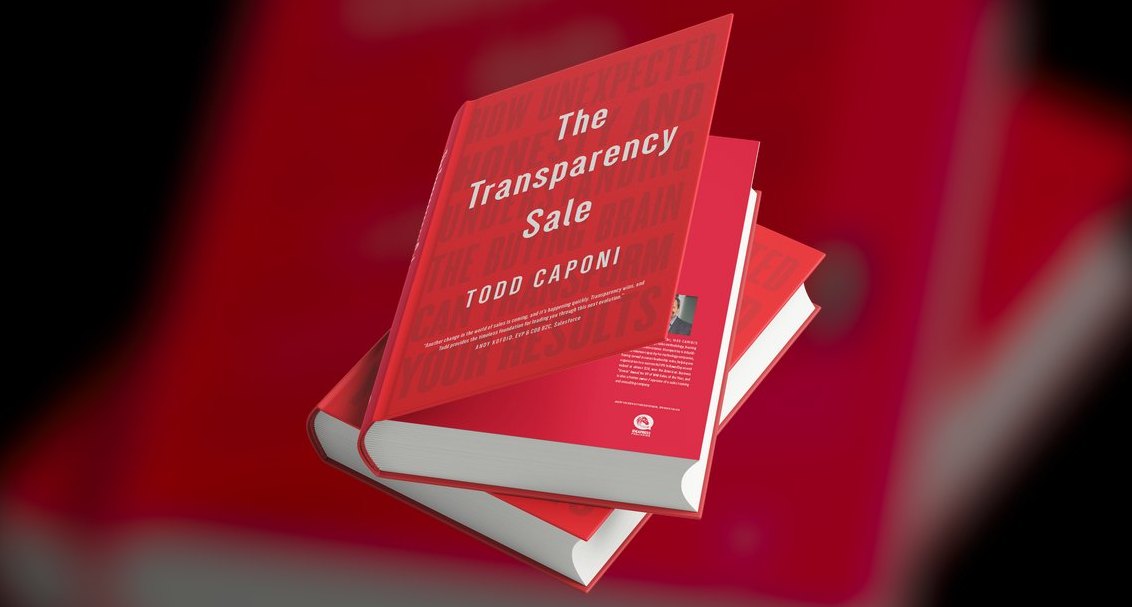 pulse-recentThe Transparency Sale by Todd Caponi — Top 10 Key Takeaways for Sales Leaders in 2027
 pulse-recentHyper Sales Growth by Jack Daly — Top 10 Key Takeaways for Sales Leaders in 2027
 pulse-recentSPIN Selling by Neil Rackham — Top 10 Key Takeaways for Sales Leaders in 2027
 pulse-recentWhat are the concrete steps to implement the Sandler Rules for Sales Leaders by David Mattson in 2027?
 pulse-recentThe Closer’s Survival Guide by Grant Cardone — Top 10 Key Takeaways for Sales Leaders in 2027
 pulse-recentConceptual Selling by Robert Miller and Stephen Heiman — Top 10 Key Takeaways for Sales Leaders in 2027