


Steve Jobs by Walter Isaacson — Cliff Notes Summary for Sellers
Quality
Certified

Walter Isaacson's *Steve Jobs* (Simon & Schuster, 2011) is the authorized biography built on 40+ interviews with Jobs before his October 2011 death. For sellers it is the source text on evangelism selling: concrete-benefit positioning, the rehearsed keynote as launch vehicle, and end-to-end product control. Steal the persuasion strategy; leave the personal cruelty behind.
What you actually get out of reading it
Most sellers pick this book up expecting a business manual and get a 656-page life story instead. That mismatch is worth naming up front, because it determines how you should read it. Isaacson is a biographer — he wrote *Benjamin Franklin: An American Life* (2003) and *Einstein: His Life and Universe* (2007) before Jobs approached him in 2009 and asked him to do the same treatment — and his method is narrative, not prescriptive. There is no chapter called "How to Close." There is no framework diagram. What there is instead is roughly a dozen scenes, scattered across four decades, where you watch a person sell something impossible to someone who has every reason to say no, and you get the full context of why it worked.
The practical yield for a working seller is narrower than the page count suggests but deeper than a listicle can capture. Concretely, you should expect to walk away with four transferable things. First, a positioning test: "1,000 songs in your pocket" versus "5GB MP3 player," which is the cleanest illustration in modern business writing of translating a spec into a lived benefit. Second, a preparation standard — Jobs rehearsed major keynotes for two full days, which reframes what "prepared" means for a first call or an executive demo. Third, a hiring and team-composition argument, the A-players-only doctrine, which matters if you manage. Fourth, and least comfortable, a case study in how far conviction can be pushed before it becomes abuse, with the receipts on both sides laid out by someone who had no incentive to sanitize.
What you should not expect is a repeatable process. Jobs was not running a methodology; he was running an unusually forceful personality against a market that happened to reward it at a specific moment in computing history. Books like *The Challenger Sale* or *SPIN Selling* give you a diagnostic and a sequence you can teach to a team of thirty. This gives you an archetype. The distinction matters for how you allocate reading time — if your quarter depends on tightening discovery, read the methodology book first. Read this when you need to think about *why* your product deserves conviction, or when you're building the narrative layer that sits above your process.

There's also a straightforward professional-literacy argument. The founder mythology that shapes how technology companies present themselves — the visionary CEO, the keynote unveiling, the product-as-manifesto — largely traces to this book and the events it documents. If you sell into technology, sell to founders, or work anywhere near venture-backed companies, you are operating inside a culture that reads this. Knowing the actual text, including the unflattering parts, is more useful than knowing the mythology secondhand.
The scenes that carry the selling lessons
If you're reading with a highlighter and limited time, a handful of episodes carry nearly all the transferable value. The Xerox PARC visit in December 1979 is the first. Jobs traded Xerox a pre-IPO stake for three days inside their research center, saw the graphical user interface and mouse, and immediately understood what the people who built it did not: that this was a consumer product, not a research artifact. The seller's lesson isn't about stealing ideas. It's about recognizing that the person closest to a technology is often the worst judge of its commercial framing, which is exactly the gap a good salesperson fills between engineering and a customer.

The Sculley recruitment in 1983 is the most-quoted scene and deserves its reputation. Jobs wanted John Sculley, then running PepsiCo, and after months of failed persuasion asked him whether he wanted to sell sugared water for the rest of his life or come change the world. Sculley joined in April 1983. What makes this a genuine sales lesson rather than a clever line is the structure underneath it: Jobs reframed the decision from a compensation-and-risk comparison — where Apple loses badly — to an identity-and-legacy comparison, where Apple wins. That reframe is available in enterprise deals constantly. When you're losing on price and feature parity, you are being evaluated on the wrong axis, and your job is to move the axis.
The Markkula one-pager from 1977 is the least famous and possibly the most immediately usable. Mike Markkula, a retired Intel marketing executive, wrote a short document laying out three principles — empathy, focus, impute — that governed Apple launches for decades. Empathy means understanding the customer better than competitors do. Focus means eliminating the unimportant. Impute means people form judgments about substance from surface signals, so the packaging, the deck, the demo environment all carry information about the product's quality whether you intend them to or not. That third one is the one sellers under-weight. A sloppy proposal document communicates something about your implementation team, fairly or not.
The 1997 turnaround is where the strategy lessons concentrate. Apple was near collapse; the Copland operating system project had failed; the company acquired NeXT for $429 million in December 1996 largely to get NeXTSTEP, the software Jobs's wilderness-years company had built after its $6,500 workstation failed in the education market. By July 1997 Jobs was interim CEO. He then cancelled roughly seventy percent of the product line, killed the Newton, and ended Mac clone licensing. For anyone who has sat in a portfolio review arguing that the company sells too many things to too many segments, this is your reference case: focus was the intervention, and it worked before any new product shipped.

Two later scenes complete the set. The iMac launch in August 1998 at $1,299, with no floppy drive and USB-only ports, sold 800,000 units in 139 days and demonstrated that removing a beloved feature can be a positioning decision rather than a cost decision. And the iTunes Music Store in April 2003, priced at 99 cents a song, required Jobs personally negotiating the major labels into a deal they did not want — a multi-party enterprise negotiation where every counterparty had veto power and a rational reason to refuse. That chapter reads like a complex-sale case study, because it is one.
How the persuasion machine actually worked
The phrase "Reality Distortion Field" comes from Bud Tribble, a member of the original Mac team, who borrowed it from *Star Trek* around 1981 to describe what happened to engineers in Jobs's presence — impossible schedules became merely difficult, and then they got hit. It has since been flattened into a synonym for lying confidently, which is a misreading that will get you fired if you try to apply it that way. The actual mechanism had components, and they separate cleanly into the parts you can use and the parts you cannot.
The usable parts are three. First, refusal to accept a constraint as fixed without interrogating where it came from. When an engineer said something would take three weeks, Jobs asked why, and often the three weeks contained assumptions nobody had re-examined. In a deal, this is the discipline of asking why a procurement timeline, a budget cycle, or a technical requirement exists before accepting it as a boundary. Second, absolute conviction in the product's importance, sustained in front of skeptics. This is not a trick. Jobs genuinely believed the products mattered, and conviction that isn't real is legible as performance within about ninety seconds. Third, framing the work as participation in something significant rather than as a transaction — the Sculley move, applied internally.

The unusable parts are the ones that made it work in 1984 and would end a career now: public humiliation of subordinates, calling work "shit" in front of the room, taking credit for others' contributions. The Atari episode is the early tell. Nolan Bushnell gave Jobs the *Breakout* assignment with a bonus for reducing chip count; Jobs subcontracted Wozniak, who eliminated dozens of chips overnight, and Jobs paid him the base fee while keeping the bonus. Isaacson presents it without editorial cushioning, and it establishes a pattern the rest of the book returns to: extraordinary outcome, ethically jagged execution.
Sellers who try to run the field without the conviction underneath end up with the residue — pressure tactics, manufactured urgency, hostility to objections — and buyers detect this quickly. The honest version of the lesson is that the distortion field was downstream of belief, not a substitute for it. If you cannot generate real conviction about what you sell, the fix is a different product or a different job, not better technique.
The keynote method, and what it costs to copy
The presentation discipline is the single most portable thing in the book, and it's worth separating what Jobs actually did from what the imitators picked up. What the imitators picked up: black turtleneck, minimal slides, "one more thing." What he actually did: rehearsed for two full days before major keynotes, specified every transition, rewrote positioning lines dozens of times, and controlled the demo environment down to which machine was on stage and what state it was in.
Two days of rehearsal for a ninety-minute presentation is roughly a ten-to-one preparation ratio. Apply that honestly to your own work and the implications are uncomfortable. A forty-five-minute executive demo would warrant something like six to seven hours of preparation — not building slides, which is a different activity, but running the actual demo out loud, in sequence, against the actual environment. Most sellers put in fifteen minutes of deck review and improvise the rest. The gap between those two numbers is where deals are lost to a demo that stalls on a loading screen or a discovery answer that wanders.

The rehearsal ratio is the part worth stealing, but there are three subsidiary techniques underneath it. One: the positioning line gets written before the deck. "1,000 songs in your pocket" existed as a sentence before the iPod slides did, and the presentation was built to deliver that sentence. Most demos are built feature-first with the value statement bolted on at the end. Two: the demo runs on a known-good environment, rehearsed in the actual room where possible. Three: the reveal has a defined shape — problem, existing bad options, the thing, price. That sequence appears repeatedly across launches from 1984 through 2010, and it maps directly onto a discovery-to-proposal arc.
Carmine Gallo's *The Presentation Secrets of Steve Jobs* (McGraw-Hill, 2009) is the dedicated teardown if you want the technique isolated from the biography. It's a faster read and more directly instructional, and pairing it with Isaacson gives you the mechanics plus the context for why they mattered. Read Gallo for the how; read Isaacson for the why the person doing it believed it was worth two days.
One caution on copying the aesthetic. The minimal-slide, high-drama keynote works when you're unveiling something genuinely new to an audience that came to see it. In a competitive enterprise evaluation with a committee of eight and a scoring matrix, theatrical minimalism reads as evasive — the security lead needs the architecture diagram, and withholding it for dramatic effect costs you. Match the format to the room. The preparation discipline transfers universally; the showmanship does not.
Where the book's advice breaks down
There are four places where applying this material directly will hurt you, and they're worth stating plainly because the book's admiring reception tends to sand them off.

The first is survivorship. Jobs is the visible case; the many founders who were equally abrasive and equally certain and shipped nothing are not in any book. The behaviors that look causal in retrospect — the refusal to compromise, the willingness to burn relationships — appear identically in failures, where they are correctly labeled as the reason for failure. Isaacson himself is careful about this, and *Becoming Steve Jobs* (Crown Business, 2015) by Brent Schlender and Rick Tetzeli argues explicitly that the cruelty was incidental to the brilliance rather than its engine, and that the post-1997 Jobs was measurably better to work with and produced better results. If the abuse were load-bearing, the mellower late period should have underperformed. It didn't.
The second is context transfer. Jobs controlled hardware, software, retail, and distribution end-to-end, which is what let him refuse compromises. A seller inside a company that does not control its channel, its roadmap, or its pricing cannot simply decide to reject a customer requirement. Attempting Jobs-style refusal without Jobs-style leverage produces one outcome: you lose the deal and your manager asks what happened. Assess your actual leverage before importing the posture.
The third is the health chapter, which is the book's most sobering passage and its clearest warning against the archetype's core trait. Diagnosed in October 2003 with a pancreatic neuroendocrine tumor — the rare, slow-growing, frequently operable variety — Jobs refused surgery for nine months and pursued dietary and alternative treatments while his wife, his doctors, and his friends pleaded with him. Isaacson names it the worst decision of Jobs's life. The same refusal-to-accept-reality that bent engineering schedules was applied to an oncologist's recommendation, and reality did not bend. That is the cleanest available illustration of the trait's failure mode, and it's fatal.
The fourth is temporal. The book was published in 2011 and documents workplace behavior from 1976 to 2011. Norms have moved substantially since — much of what's described would trigger HR intervention on first incident at any company with a functioning people function. Reading it as a leadership manual without that filter is a genuine career risk for a manager, and new managers in particular sometimes read the intensity as permission. It isn't. The product discipline and the persuasion strategy transfer; the interpersonal conduct is a historical record, not a template.
Reading it with a purpose

Treat this as a working document rather than a linear read, especially if you're picking it up for professional reasons rather than curiosity.
Start with the 1997 return and run forward. Chapters covering the NeXT acquisition, the product-line cull, the Think Different campaign, the iMac, the retail stores, and the iPod contain nearly all the strategy and positioning material. That's roughly the back half of the book's middle, and it stands alone. The early chapters — the 1955 adoption, the Reed College dropout and the calligraphy class that later produced the Mac's typography, the India trip, the Atari years — are excellent narrative and give you the psychology, but they're context rather than instruction. Read them second, when you want to understand why the person behaved as he did.
While you read, keep a two-column list: transferable and not. This sounds like a study-skills gimmick, but it does real work on a book this seductive. Every scene where Jobs gets a result, ask whether the result came from the persuasion or from the leverage — from the argument he made or from the fact that he could fire you. Most sellers have the first and none of the second. Sorting them as you go prevents the book's momentum from carrying you into behaviors you can't back up.

After finishing, pick exactly three things to change and let the rest go. Concretely: rewrite your top value proposition against the "1,000 songs in your pocket" standard, meaning it names an outcome a buyer can picture rather than a capability they'd have to translate. Adopt a rehearsal minimum for high-stakes calls — even two full run-throughs out loud puts you ahead of most of your peers. And run the Markkula one-pager against your account plans: does the plan demonstrate empathy with this specific buyer, does it show focus rather than a feature catalog, and does the artifact itself impute quality?
Pair it deliberately. *Insanely Simple* by Ken Segall (Portfolio, 2012), written by the Chiat\Day creative director who named the iMac, gives you the agency-side view of how the messaging was actually made. *Creativity, Inc.* by Ed Catmull (Random House, 2014) covers the Pixar years — Jobs bought the Graphics Group from Lucasfilm for $5 million in February 1986 and funded it for a decade before *Toy Story* opened in November 1995 — from the perspective of someone managing creative teams sustainably. Catmull is the corrective: same outcomes, humane method. Reading them together is more useful than reading either alone.
Finally, calibrate the time investment. At 656 pages this is a fifteen-to-twenty-hour commitment at ordinary reading speed. If your goal is purely tactical — better demos, sharper positioning — Gallo delivers that in a fraction of the time. Read Isaacson when you want the fuller thing: how a company's strategy, its product decisions, and one person's temperament compounded across thirty-five years into an outcome nobody could have modeled in advance. That understanding doesn't close a deal next Tuesday. It changes what you think is possible to build and sell, which is a slower and more durable return.
Related questions
Is this better than *Becoming Steve Jobs*?
Different, not better. Isaacson has the authorized access and 40+ direct interviews; Schlender and Tetzeli knew Jobs personally for 25 years and argue his growth arc was underplayed. Read Isaacson for completeness, the counter-biography for a fairer view of the later years.
Which chapters should a seller not skip?

The 1997 NeXT acquisition and product-line cull, the iMac launch, the Apple Store and iPod chapters, and the Sculley recruitment. Those five carry the positioning, focus, and persuasion material. Everything else is context you can read at leisure.
Does the Reality Distortion Field work in enterprise sales?
Partially. The interrogate-every-constraint and conviction-under-skepticism components transfer well. The intimidation and public-criticism components do not — enterprise buying committees have long memories and back channels, and a reputation for pressure closes doors permanently.
What's the single most usable idea in the book?
Markkula's empathy-focus-impute one-pager from 1977. It fits on an index card, applies directly to account planning, and the "impute" principle explains why proposal quality signals implementation quality to buyers who cannot yet evaluate your product.
FAQ
Is this a business book or a biography?
A biography, unambiguously. Isaacson is a narrative biographer who previously wrote about Franklin and Einstein, and the structure is chronological life story rather than thematic instruction. The business lessons are embedded in scenes and must be extracted by the reader. If you want the material pre-extracted, Carmine Gallo's presentation-focused books do that work for you.
How long is it and can I skip parts?
Roughly 656 pages, or fifteen to twenty hours. You can absolutely skip parts. Start at the 1997 return to Apple and read forward for the strategy and product material, then loop back for the childhood, Reed College, and Atari chapters when you want the psychology behind the behavior. Nothing in the early chapters is required to understand the later ones.

Does Isaacson defend Jobs or criticize him?
Neither, deliberately. Jobs requested the biography, gave 40+ interviews, and explicitly did not ask for editorial control or a preview. The result includes the paternity denial regarding his daughter Lisa, the public humiliation of employees, the Atari bonus episode, and the nine-month refusal of cancer surgery — presented without softening and without prosecution.
Is a 2011 book still relevant for selling today?
The positioning and preparation material is, because it addresses how humans process value claims rather than how any specific market worked. Concrete-benefit framing and rehearsal discipline age well. The management conduct has aged badly and should be read as history. The product-category specifics are dated but were never the point.
What should I read alongside it?
Ken Segall's *Insanely Simple* for the messaging craft from the agency side, Ed Catmull's *Creativity, Inc.* for the Pixar years and a humane model of managing creative work, and Gallo's *The Presentation Secrets of Steve Jobs* if the keynote method is your primary interest. Schlender and Tetzeli's *Becoming Steve Jobs* is the essential counterweight.
Can I use these tactics without becoming difficult to work with?
Yes, and you should. Separate the conviction and preparation from the interpersonal conduct — they were never causally linked, which the mellower and more successful post-1997 period demonstrates. Believe in what you sell, prepare beyond what the situation seems to require, frame benefits concretely, and treat colleagues decently. The last item costs nothing and protects everything else.
Sources
- https://www.simonandschuster.com/books/Steve-Jobs/Walter-Isaacson/9781451648539
- https://news.stanford.edu/2005/06/12/youve-got-find-love-jobs-says/
- https://hbr.org/2012/04/the-real-leadership-lessons-of-steve-jobs
- https://www.folklore.org/
- https://www.apple.com/newsroom/2011/10/05Apple-Media-Advisory/
- https://www.britannica.com/biography/Steve-Jobs
- https://www.penguinrandomhouse.com/books/218271/becoming-steve-jobs-by-brent-schlender-and-rick-tetzeli/
- https://www.penguinrandomhouse.com/books/223954/creativity-inc-by-ed-catmull-with-amy-wallace/
- https://www.computerhistory.org/revolution/personal-computers/17/312
- https://www.loc.gov/item/2011023603/
Related on PULSE
- The Four Steps to the Epiphany by Steve Blank: Summary, Key Lessons, and RevOps Takeaways
- 100 Ways to Motivate Yourself by Steve Chandler — Cliff Notes Summary
- The Joy of Selling by Steve Chandler — Cliff Notes Summary
- Heavy Hitter Sales Wisdom by Steve W. Martin — Cliff Notes Summary
- The 12 Week Year by Brian Moran and Michael Lennington — Cliff Notes Summary for Sellers
- Contagious by Jonah Berger — Cliff Notes Summary for Sellers
This page will be disappearing soon. Save it to your device for $1 — or read it free while it is here.
@Kory-White- · if Venmo asks, the last 4 of my number are 2012
This page is gone.
This one is off the shelf now. $1 keeps it on your phone for good — the whole page, pictures and diagrams included.
 book-summaryMajor Account Sales Strategy by Neil Rackham: Summary, Key Lessons, and RevOps Takeaways
 pulse-recentCrossing the Chasm by Geoffrey Moore — Top 10 Key Takeaways for Sales Leaders in 2027
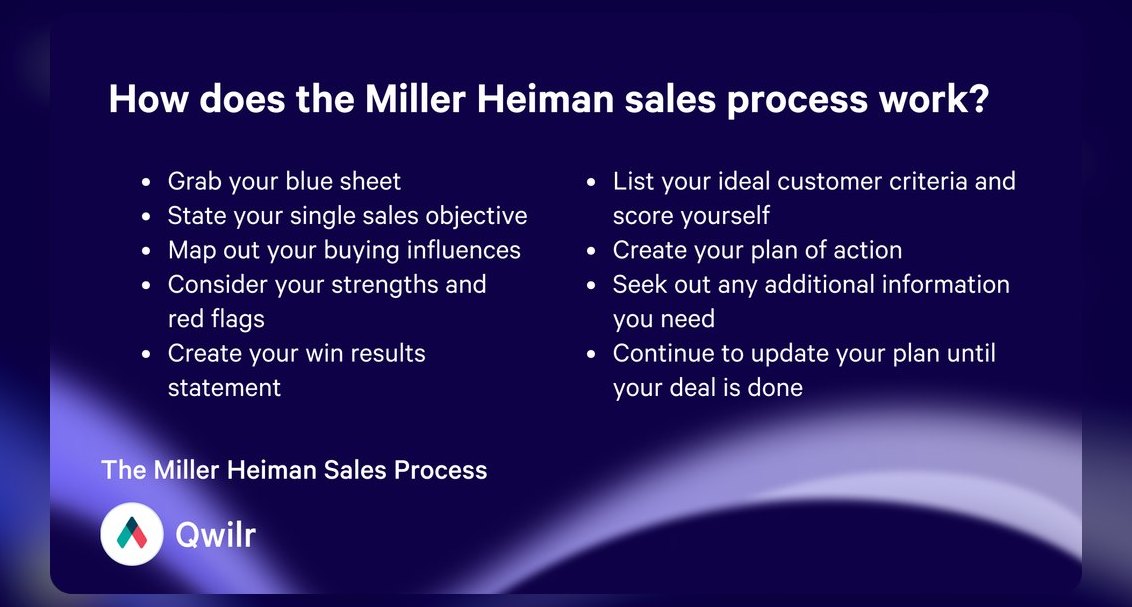 pulse-recentWhat is the step-by-step process for Strategic Selling by Miller Heiman in 2027?
 pulse-recentWhat are the concrete steps to implement the Sandler Rules for Sales Leaders by David Mattson in 2027?
 pulse-recentThe Customer Success Professional’s Handbook by Ashvin Vaidyanathan — Top 10 Key Takeaways for Sales Leaders in 2027
 pulse-recentStart with No by Jim Camp — Top 10 Key Takeaways for Sales Leaders in 2027
 pulse-recentWhat is the first concrete step in The Sandler Rules by David Mattson for building a sales plan in 2027?
 pulse-recentNever Lose a Customer Again by Joey Coleman — Top 10 Key Takeaways for Sales Leaders in 2027
 pulse-recentTraction by Gabriel Weinberg and Justin Mares — Top 10 Key Takeaways for Sales Leaders in 2027
 pulse-recentSales Engagement by Manny Medina — Top 10 Key Takeaways for Sales Leaders in 2027