


Heavy Hitter Sales Wisdom by Steve W. Martin — Cliff Notes Summary
Quality
Certified
Heavy Hitter Sales Wisdom (Wiley, 2006) is Steve W. Martin's field-research playbook drawn from interviews with top-1% enterprise sellers. It argues elite reps cluster into six personality patterns, select one of four competitive warfare strategies based on position, and mirror the buyer's dominant sensory language — making it a hiring, coaching, and deal-strategy rubric rather than a script.
What the book is and why it still gets assigned
Steve W. Martin wrote four Heavy Hitter books; this is the second, sitting between *Heavy Hitter Selling* (2004), which laid the research foundation, and *Heavy Hitter Sales Linguistics* (2011), which drills furthest into language. Martin's background matters to how you read it: he sold enterprise systems at IBM, then taught sales at the USC Marshall School of Business. The book is not a lab study and does not pretend to be. It is ethnography — Martin rode along on customer meetings, sat in on post-deal debriefs, and interviewed sellers who were clearing President's Club and multiples of quota in deals that ran from the high six figures into the eight figures.
That method is the book's distinguishing feature against its shelf-mates. Neil Rackham's *SPIN Selling* was built on large-scale observation of sales calls, heavily weighted toward smaller and mid-market transactions. Robert Cialdini's *Influence* was psychology-lab work generalized outward to persuasion at large. Martin went narrow and deep instead: a specific population — enterprise sellers at large technology vendors of the era, IBM, Microsoft, HP, Cisco, Oracle, EMC, Symantec — observed in their actual rooms. The tradeoff is obvious. You get texture and pattern recognition you cannot get from surveys, and you get sample bias you cannot correct for. Treat the findings as well-observed heuristics from one industry at one moment, not as universal law.
The reason it survives on syllabi and in enablement libraries two decades later is that it answers a question most methodologies dodge. SPIN, Challenger, MEDDPICC, Command of the Message — these tell a rep what to *do*. Martin's Wisdom asks who the rep *is*, who the buyer *is*, and what position you actually occupy in the deal before any technique gets picked. That is the layer underneath the methodology, which is why it pairs rather than competes. A sales leader who has already standardized on MEDDPICC can drop Martin's typology on top of it as the hiring and coaching lens without ripping anything out.

The adjacent value is in territory design and team composition, not just individual skill. If you accept even loosely that sellers have durable defaults, then your hiring funnel, your patch assignments, and your pairing model are all decisions the book has an opinion about. That makes it more useful to a VP of Sales or a RevOps leader building a coverage model than to a rep looking for a Monday-morning call script.
The six personality patterns and how to actually use them
Martin's six archetypes are the most-cited part of the book, and the most-misused. They are: the Self-Actualizer, the Soldier, the Maverick, the Politician, the Storyteller, and the Mind-Reader.
The Self-Actualizer sells for mastery. They read the prospect's annual report on the plane, they know the vertical's regulatory calendar, they treat each deal as craft. They concentrate naturally in long-cycle categories — enterprise infrastructure, clinical systems, industrial equipment — where accumulated expertise compounds into credibility. They struggle when the motion demands velocity over depth, and they will over-invest in a deal that a colder read would have disqualified in week two.
The Soldier runs the playbook exactly as written. Every call logged, every stage gate honored, forecast hygiene immaculate. Martin's sharp observation is that most organizations *over-hire* this profile, because Soldiers interview beautifully and manage easily. They are the safe pick in a structured interview loop. A team composed entirely of Soldiers executes a known motion competently and never invents a new one, which is fine in a mature category with a stable buying process and quietly fatal in an emerging one.

The Maverick breaks the rule to win the deal. Calls the CEO after being told the CFO owns it. Prices off-script. Declines the RFP to force a sole-source conversation. Mavericks produce both the outsized wins and the outsized messes. The practical prescription is containment rather than correction: hire a small number, put strong deal desk and sales ops around them, and never assign them a commodity renewal patch where their instincts have nothing to push against.
The Politician maps the room. In enterprise committees that routinely run past a dozen stakeholders, the Politician instinctively identifies economic buyer, technical evaluator, champion, coach, and blocker — and works the blocker before the blocker works them. They rarely lose to internal politics because they have already priced the politics in. Martin's pairing suggestion is a good one: Politician plus Self-Actualizer, where one carries substance and the other carries navigation.
The Storyteller sells through narrative. They open with a customer situation that rhymes with the prospect's, and the prospect's own words come back mapped onto that story weeks later in the internal justification meeting. This is the archetype whose value is easiest to underrate on a scorecard and hardest to replace in a competitive late stage.
The Mind-Reader is the empath — reads the pause, the shifted posture, the sentence the buyer started and abandoned. Martin found this profile concentrated among the very top of his sample. Parts of it are trainable through structured active-listening practice and call review; parts of it plainly are not.
The correct use of the typology is diagnostic, not classificatory. Nobody is one type. Everyone is a primary with a secondary, and the useful question is not "which am I" but "which two do I default to under pressure, and which two are missing from this deal team." Used as a fixed label on a rep's profile, the framework becomes an excuse — *he lost it because he's a Maverick* — which is precisely the failure mode any personality instrument invites.
The step-by-step process for running a deal Martin's way

Martin's material reads as separate chapters but assembles into a single sequence you can run on any live opportunity. It front-loads reading over pitching, which is the whole point.
Step one — read the buyer. In the first two calls, before any demo, place each key stakeholder against the six patterns. You are listening for what they optimize for: the Self-Actualizer buyer asks architecture questions three layers past what they need; the Soldier buyer asks about your implementation methodology and reference process; the Politician buyer asks who else internally you have spoken to.
Step two — identify the sensory channel. Martin borrows from the Bandler and Grinder neuro-linguistic programming work of the 1970s: buyers reveal a dominant channel in their verbs. Visual buyers say *I see what you mean*, *show me*, *let's get a picture of it*. Auditory buyers say *that sounds right*, *tell me more*, *I hear you*. Kinesthetic buyers say *that feels right*, *I need to get my hands on it*, *walk me through it*. The prescription is to match the medium to the channel — diagrams and screenshots for visual, reference calls and voice conversation for auditory, sandbox access and hands-on trial for kinesthetic.
Step three — assess your competitive position honestly. Are you the incumbent defending, the credible challenger, the niche specialist, or the unknown new entrant? This is the step teams skip, because the honest answer is usually less flattering than the one in the deal review.
Step four — choose the warfare strategy that matches the position, not the one that feels comfortable.
Step five — apply the persuasion pattern. Honest questions over trap questions, and language bridges that move the conversation without cornering anyone.
Step six — mirror the channel in every follow-up, including written ones. The visual buyer gets an annotated screenshot; the auditory buyer gets a fifteen-minute call offer; the kinesthetic buyer gets trial credentials.

The persuasion layer deserves its own note. Martin's Honest Sales Question idea is that every discovery question should be one the buyer can answer truthfully without feeling trapped. *Wouldn't you agree that downtime is costing you money?* is a trap; it produces a defensive answer and teaches the buyer to guard. *What would have to be true for this to work here?* is honest; it surfaces the real evaluation criteria, including the ones nobody wrote in the RFP. His language bridges are the practical form of this — *help me understand*, *it sounds like you're saying*, *if I could show you, would that* — phrases that open depth or confirm understanding without applying pressure. Pattern Persuasion is the companion idea: some buyers decide in chunks, assembling a conclusion piece by piece, and some need the whole picture before they will commit to any part of it. Push a whole-picture buyer to decide component by component and you will stall the deal without ever learning why.
The four warfare strategies, with the cost and timeline each implies
Martin's strategy chapters draw openly on Sun Tzu, Clausewitz, and the Ries and Trout *Marketing Warfare* lineage. Four postures, selected by position.
Frontal. Head-to-head, feature by feature, on the buyer's stated evaluation criteria. It is the default most sellers reach for and the one most of them have no right to. Frontal works only when you have demonstrable product superiority *and* comparable brand credibility. Missing either, you are funding the incumbent's evaluation process. The cost profile is heavy: full technical bake-offs, proof-of-concept engineering time, security and procurement review — the expensive parts of enterprise selling, all of them.
Flanking. Attack the segment or use case the incumbent ignores or serves badly. The canonical examples are well documented in business history: Salesforce built early momentum by targeting smaller organizations and the sales user rather than the enterprise IT buyer that Siebel owned; Slack grew from developer and product teams upward rather than winning a central IT bake-off against incumbent enterprise communication tools. Flanking is usually the highest-return posture for a challenger because it declines the fight on the incumbent's chosen ground.

Defensive. The incumbent protecting installed base. The toolkit is deeper integration, multi-year renewal in exchange for pricing concession, executive relationship reinforcement, and raising the perceived risk of switching. Martin's caution is organizational rather than tactical: teams that run Defensive for years atrophy their hunting muscles, hold their individual accounts, and lose category share slowly enough that nobody notices in a quarterly review.
Guerrilla. Small, fast, non-traditional moves that the incumbent cannot economically match. Sponsor the niche event they skip. Publish the free tool that owns the search term. Build the feature their roadmap has deprioritized for three years. HubSpot's free inbound tooling and Zoom's frictionless one-click join are the widely cited modern illustrations of this posture.
On cost and timeline, be concrete about what each posture actually consumes, while treating the numbers as shape rather than benchmark. Frontal is the most expensive per deal and the slowest — full enterprise evaluations commonly run two to four quarters and pull in solutions engineering, security review, and legal. Flanking compresses cycle time substantially because you are not being compared against a hardened incumbent on their criteria; the tradeoff is smaller initial contract value and a longer expansion runway, so the payback logic depends on net revenue retention rather than first-year bookings. Defensive is the cheapest per dollar retained and shows up as margin erosion — every renewal discount you concede to lock a multi-year term is a permanent price reset you will negotiate against forever. Guerrilla has the lowest per-attempt cost and the highest variance; most attempts return nothing, and the model only works if the cheap attempts are genuinely cheap and you run enough of them.
The forecasting implication is the practical one. If your team tags deals by posture, you can stop applying a single stage-based probability curve to structurally different motions. A Frontal deal at 60 percent and a Flanking deal at 60 percent are not the same asset, and treating them identically is a large share of why enterprise forecasts miss.
Where teams get this wrong

The first and largest failure is running the wrong posture for your actual position. Nearly every avoidable enterprise loss traces here. A challenger with 4 percent market share runs a Frontal bake-off against an entrenched incumbent, loses on integration depth and reference density, and writes *lost on price* in the CRM. The diagnostic is easy and uncomfortable: pull your last twenty closed-lost deals, tag each by the posture you actually ran and the position you actually held, and count the mismatches. In most organizations the mismatch rate is high enough to be the single biggest addressable loss driver on the board.
The second is hiring monoculture. Structured interview loops reward the Soldier profile — clean process answers, tidy metrics, no rough edges. The Maverick interviews badly and the Mind-Reader is nearly invisible in a panel format. Over three or four hiring cycles you end up with a team that executes the known motion well and cannot open a new segment. The fix is not to lower the bar; it is to write the scorecard so that at least one interview stage tests for something other than process discipline, and to accept that a Maverick hire needs a containment plan before the offer, not after the first incident.
The third is treating the typology as fate. The moment a personality label becomes a fixed field in the CRM, it becomes an excuse for both the rep and the manager. The framework is a coaching lens, refreshed by observation, not a permanent classification.

The fourth is overselling the sensory-channel science. Neuro-linguistic programming as a scientific framework has been widely challenged in academic psychology; the specific preferred-representational-system claim in particular has not held up well under controlled replication. Martin's chapters lean on that foundation. The honest position is that mirroring a buyer's vocabulary and sending them information in the modality they keep asking for is good practice on plain communication grounds, regardless of whether the underlying NLP theory holds. Sell it internally as a communication heuristic. Sell it as neuroscience and the first analytically minded person in the room correctly discounts everything else you brought.
The fifth is skipping the follow-up mirror. Reps who adapt beautifully in the room revert to a standard templated email afterward, and the adaptation evaporates precisely where the buyer builds their internal case. The follow-up artifact is what circulates when you are not in the room.
The sixth is a timing error: reading the buyer too late. Personality and channel are cheap to detect in the first two conversations and expensive to act on after a demo has already been delivered in the wrong modality. Front-load the read.
Deciding which posture and which lens to use
The decision framework compresses to a short sequence of honest questions, run at qualification rather than at the deal review when the answer is already academic.
Start with position. If you hold the account and the competitor is knocking, you are Defensive — spend on integration depth and executive relationships, and understand that the discount you give for a three-year term is a permanent reset. If you are a credible alternative but not the safe default, you are Flanking — find the use case or business unit the incumbent under-serves, win it narrowly, expand from the beachhead. If you are unknown, you are Guerrilla — do not enter the formal evaluation on the incumbent's criteria, because a formal evaluation is a fight you have pre-lost. If you genuinely have both product superiority and brand credibility, Frontal is available. Say it out loud in a deal review and see whether anyone flinches, because most claimed superiority does not survive being spoken.

Then layer team composition on top. Match the coverage to the committee: your Politician works the org map, your Storyteller works the emotional champion, your Self-Actualizer works the technical evaluator, your Soldier keeps the process from falling apart. Coaching style should track the type as well — Self-Actualizers want technical depth in feedback, Soldiers want process clarity and numbers, Mavericks want air cover rather than supervision, Politicians want org intelligence, Storytellers want narrative reps, Mind-Readers want a sparring partner in deal debriefs.
The adjacent question worth asking is how this maps onto motions Martin never saw. Product-led growth did not exist in 2006 in the form it takes now, but the posture logic transfers cleanly. Guerrilla maps to bottom-up self-serve adoption that lands before procurement is aware of it. Flanking maps to land-and-expand into an under-served team. Frontal maps to the top-down enterprise RFP win. Defensive maps to the renewal and expansion motion, where a customer success organization now runs plays a 2006 account executive would recognize immediately.
The other modern development is that conversation-intelligence platforms — Gong, Chorus, and their peers — now transcribe and analyze call audio at a scale Martin could only approximate with a notebook and a ride-along. Talk-ratio, question rate, topic coverage, and language patterns are measurable per rep and per deal today. That does not retroactively validate the NLP theory. It does mean the observational work Martin did by hand is now partly instrumented, and a manager who wants to test whether a rep actually adapts to different buyer styles can check the recordings instead of guessing.
Related questions
How does Heavy Hitter Sales Wisdom compare to The Challenger Sale?
They operate on different sides of the table. Challenger prescribes a seller behavior — teach, tailor, take control — validated against large-scale performance data. Martin's Wisdom teaches buyer-side reading and self-awareness: which archetype, which channel, which competitive position. Read Challenger for the motion, Martin for the diagnosis underneath it.
Which Heavy Hitter book should I read first?

Start with *Heavy Hitter Selling* (2004) for the underlying research and the language material in its original context. *Heavy Hitter Sales Wisdom* (2006) is the consolidated strategy and coaching playbook. *Heavy Hitter Sales Linguistics* (2011) goes deepest on call-level language for senior sellers.
Is the sensory-channel mirroring scientifically valid?
The neuro-linguistic programming foundation, including the preferred-representational-system claim, has been broadly challenged in academic psychology and has not replicated well. Treat channel mirroring as a plain communication heuristic — send people information in the format they keep requesting — rather than as validated cognitive science.
Can this framework work for SMB or transactional sales?
Partially. The warfare-posture logic transfers to any competitive market. The personality typology matters less when cycles are short and stakeholders number one or two, because there is no committee to map and little time to read anyone deeply. The framework's value scales with deal complexity.
How do I apply the archetypes without stereotyping my reps?
Use them as coaching hypotheses refreshed by observation, never as fields in a system of record. Ask which two patterns a rep defaults to under pressure and which are missing from a given deal team. The moment a label explains a loss, the framework has stopped working.
FAQ
Who is Steve W. Martin and what qualifies him to write this?
Martin sold enterprise technology at IBM before moving into sales consulting and teaching at the USC Marshall School of Business. His authority rests on primary field research — interviews, ride-alongs, and observed customer meetings with top-performing enterprise sellers at large technology vendors — rather than on academic study design or proprietary survey data.

Is the research sample still relevant given it was gathered in the early 2000s?
The population studied — large-vendor enterprise technology sellers — is narrow and of its era, and the named case studies are historical. The behavioral patterns generalize better than the examples do. Read the archetypes and posture logic as durable; read the specific accounts as period illustration.
Does this replace MEDDPICC or a formal sales methodology?
No, and it is not trying to. MEDDPICC is a qualification and deal-inspection discipline. Martin's material is a diagnostic layer above it — who the buyer is, who your rep is, what position you occupy. Most teams run both, using the methodology for stage gates and Martin's lenses for coaching and deal strategy.
How would a RevOps team operationalize any of this?
Add a competitive-position field at qualification and a posture tag on each opportunity, then segment win rates and cycle length by posture rather than by stage alone. Use archetype coverage in territory and pod design rather than as a rep-level attribute. Review posture-to-position mismatch in closed-lost analysis every quarter.
What is the single most actionable idea in the book?
The position audit. Before choosing tactics, state honestly whether you are the incumbent, the challenger, the niche player, or the unknown, then run the posture that matches. Most avoidable enterprise losses are a comfortable posture applied to an uncomfortable position.
Is the military framing a problem in a modern sales organization?
The warfare metaphor reads dated and lands badly with some teams and buyers. The underlying logic — choose tactics from competitive position rather than from habit — is unaffected. Many organizations simply relabel it competitive positioning and keep the four postures intact.
Sources
- https://www.wiley.com/en-us/Heavy+Hitter+Sales+Wisdom%3A+Proven+Sales+Warfare+Strategies%2C+Secrets+of+Persuasion%2C+and+Common+Sense+Tips+for+Success-p-9780470045022
- https://www.marshall.usc.edu/
- https://hbr.org/2011/07/why-sales-teams-should-hire-a-veteran
- https://www.britannica.com/topic/The-Art-of-War-treatise-by-Sunzi
- https://en.wikipedia.org/wiki/Neuro-linguistic_programming
- https://www.apa.org/
- https://www.gong.io/resources/
- https://www.goodreads.com/book/show/1101425.Heavy_Hitter_Sales_Wisdom
- https://www.salesforce.com/company/news-press/stories/
- https://www.mheducation.com/
Related on PULSE
- The Four Steps to the Epiphany by Steve Blank: Summary, Key Lessons, and RevOps Takeaways
- Major Account Sales Strategy by Neil Rackham: Summary, Key Lessons, and RevOps Takeaways
- The Advantage by Patrick Lencioni — Cliff Notes Summary for Sales Leaders
- Steve Jobs by Walter Isaacson — Cliff Notes Summary for Sellers
- 100 Ways to Motivate Yourself by Steve Chandler — Cliff Notes Summary
- The Joy of Selling by Steve Chandler — Cliff Notes Summary
This page will be disappearing soon. Save it to your device for $1 — or read it free while it is here.
@Kory-White- · if Venmo asks, the last 4 of my number are 2012
This page is gone.
This one is off the shelf now. $1 keeps it on your phone for good — the whole page, pictures and diagrams included.
 pulse-recentThe Transparency Sale by Todd Caponi — Top 10 Key Takeaways for Sales Leaders in 2027
 pulse-recentHyper Sales Growth by Jack Daly — Top 10 Key Takeaways for Sales Leaders in 2027
 pulse-recentBlueprints for a SaaS Sales Organization by Jacco van der Kooij — Top 10 Key Takeaways for Sales Leaders in 2027
 pulse-recentGetting to Yes by Roger Fisher and William Ury — Top 10 Key Takeaways for Sales Leaders in 2027
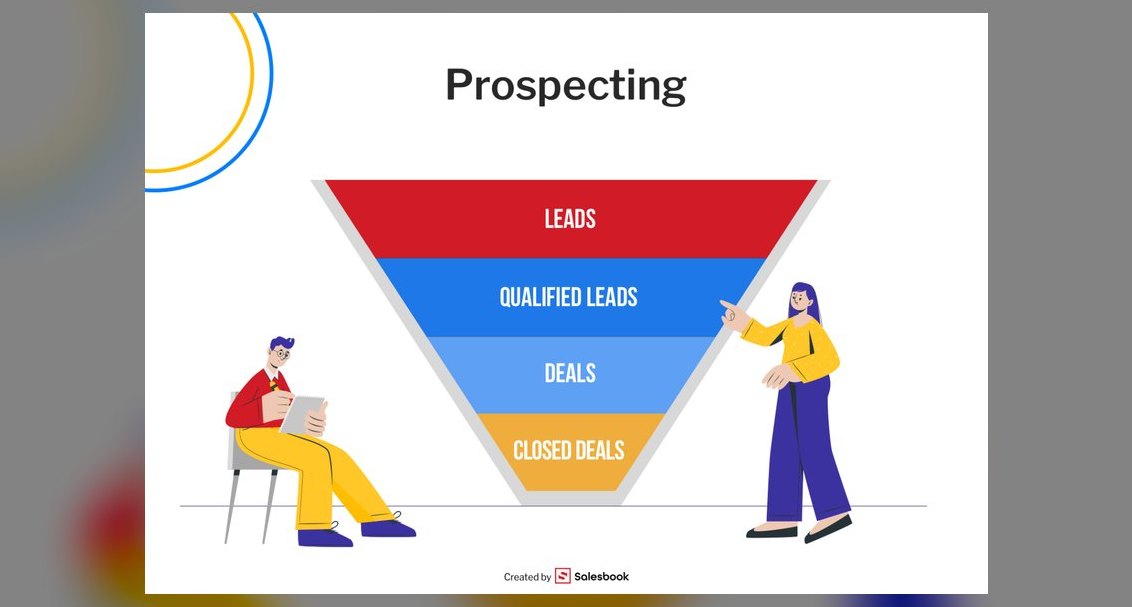 pulse-recentHigh-Profit Prospecting by Mark Hunter — Top 10 Key Takeaways for Sales Leaders in 2027
 pulse-recentThe Collaborative Sale by Keith Eades — Top 10 Key Takeaways for Sales Leaders in 2027
 pulse-recentThe Challenger Customer by Brent Adamson — Top 10 Key Takeaways for Sales Leaders in 2027
 pulse-recentHow does *The New Strategic Selling* define the first step in qualifying an opportunity in 2027?
 book-summaryMajor Account Sales Strategy by Neil Rackham: Summary, Key Lessons, and RevOps Takeaways
 pulse-recentWhat is the most actionable step in The Sandler Rules for Sales Leaders by David Mattson to improve discovery in 2027?