


What You Do Is Who You Are by Ben Horowitz — Cliff Notes Summary
Quality
Certified
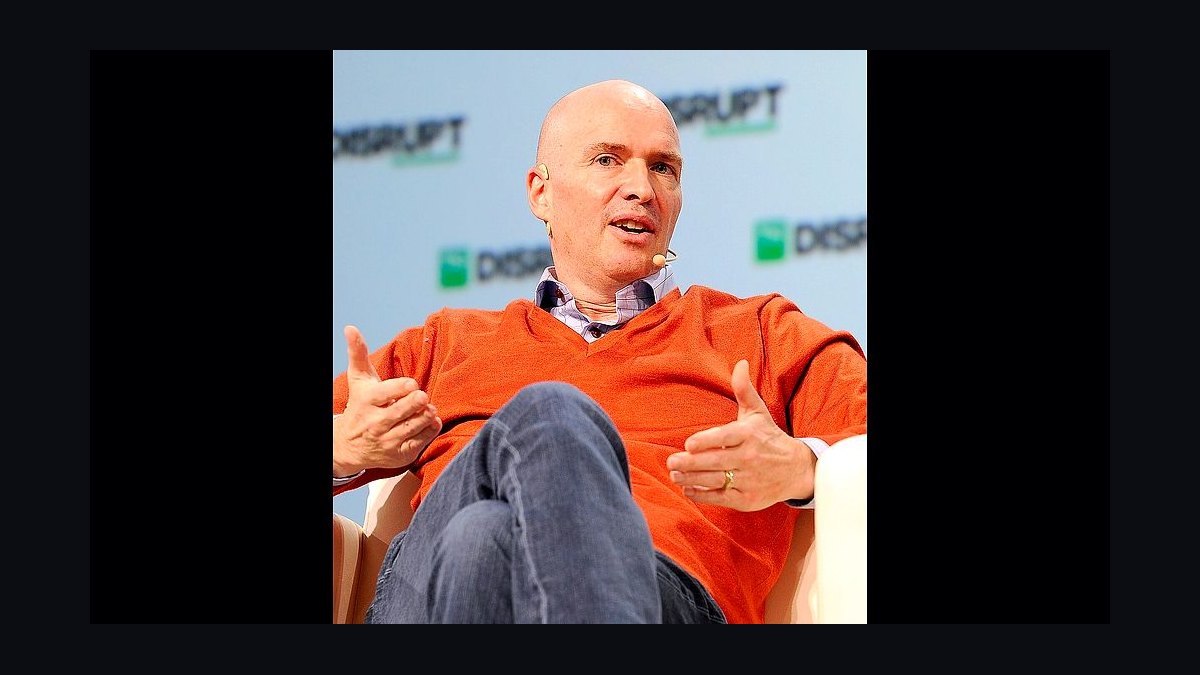
*What You Do Is Who You Are* by Ben Horowitz argues that culture is not your posted values, perks, or mission statement — it is what people actually do when the CEO is not in the room. Horowitz teaches it through four historical cases and one portable strategy: shocking rules, attached rituals, specific stories, and public consequences for the first violator.
The two competing models of culture design — and why Horowitz picks one
Almost every culture conversation collapses into two rival models, and this Cliff Notes summary of Horowitz's book is really a long argument for one of them over the other.
Model A — culture as stated belief. You define values, write them down, put them on the wall, cover them in onboarding, print them on the offsite T-shirt. "Integrity." "Customer obsession." "Innovation." The mechanism of transmission is *communication*: if people know the values, they will act on them. This is the dominant model in corporate America, and it is the one almost every leader defaults to because it is cheap, fast, and produces a visible artifact you can point at in a board deck.
Model B — culture as observed behavior. You define virtues (behaviors), attach a ritual or rule that makes each one costly to ignore, and then demonstrate the hierarchy through decisions — especially painful ones. The mechanism of transmission is *imitation*: people copy what gets rewarded, tolerated, and punished. This is Horowitz's model, and his terminology is deliberate: Virtues, not Values. Values are what you believe; virtues are what you do. Values are aspirational; virtues are observable.

The reason Horowitz refuses to teach from modern business case studies is that the sanitized retelling of a successful company always describes Model A while the company was actually running Model B. So he goes to four cases where the behavior is undeniable: Toussaint Louverture and the Haitian revolt (1791–1804), the Bushido samurai code, Genghis Khan's Mongol empire, and Shaka Senghor, who spent nineteen years in a Michigan prison — seven in solitary — and rebuilt a gang's culture from the inside.
The trade-off between the models is not "one is right, one is dumb." Model A is genuinely cheaper and it scales language. The problem is that Model A has no failure mode of its own — nothing in it breaks when reality diverges from the poster. Model B is expensive (you have to fire people, lose revenue, hold rituals nobody enjoys) but it is self-correcting, because every violation forces a visible decision. Horowitz's practical claim is that you cannot run Model A alone: the moment your stated value collides with a quota, the quota wins, and everyone learns the real hierarchy in one afternoon.
His most-quoted line is the compressed version of this: "what you tolerate is what you encourage." Note what it implies operationally — you do not need to *do* anything wrong to set a bad culture. Passive tolerance is an active cultural act. A CRO who never once says anything about a top rep's sandbagging has, in fact, published a policy on sandbagging.
How to decide which mechanism a given behavior needs

Not every behavior you want deserves the same intervention. Horowitz's four case studies actually supply four *different* mechanisms, and picking the wrong one is the most common way culture work fails — you write a memo when you needed a firing, or you fire someone when a ritual would have done it.
The mechanisms, ranked by cost and by durability:
- Words (cheapest, weakest alone). Sharpen the vocabulary and you sharpen the behavior. Steve Jobs's "insanely great" instead of "good." Jeff Bezos's "Day 1" instead of "Day 2." Andy Grove's "only the paranoid survive." Each is a two-to-three word operating doctrine that gets repeated thousands of times a year for free. Vague language produces vague culture. Use this when the target behavior is a *bar* — a level of quality or urgency — rather than a discrete act.
- Shocking rules (cheap, surprisingly strong). A rule is shocking when it is unusual enough that nobody can execute it on autopilot, which forces the underlying virtue into conscious view every single time. Bezos banning PowerPoint in executive meetings and requiring six-page narrative memos read in silence — the rule is weird, so *clarity of thought* gets re-taught weekly. Andy Grove putting Intel executives in open cubicles with no corner offices in an era when the corner office *was* the reward — egalitarianism, made unavoidable. Reed Hastings's unlimited vacation and no expense policy beyond "act in Netflix's best interest" — adult responsibility, enforced by absence of rules. Toussaint forbidding officers from taking mistresses among soldiers' wives, a rule so unusual in an 18th-century army that it broadcast *we are not the French* every day.
- Rituals (moderate cost, very durable). Bushido lasted roughly eight hundred years because each of the seven virtues — Rectitude (Gi), Courage (Yu), Benevolence (Jin), Respect (Rei), Honesty (Makoto), Honor (Meiyo), Loyalty (Chuugi) — had a specific practiced behavior attached. The extreme case is seppuku attached to rectitude; the everyday cases are the tea ceremony, sword care, dueling protocol. The portable principle: a virtue with no ritual is an aspiration. Use rituals when the behavior needs to survive turnover and time, not just this quarter.
- Public decisions (most expensive, strongest). Toussaint publicly punished officers who looted, including his own nephew. Horowitz's business version — call it the Toussaint Rule — is that when a high-status person breaks the new rule the *first* time, you make a public example of them, and after that nobody crosses the line. This is the only mechanism that works against the strongest counter-pressure: revenue.
The decision logic below is the one to run before you pick.

One more selection rule from Genghis Khan, which is really a mechanism about *inclusion*: the Khan promoted on demonstrated competence and ignored birth and tribe — his top general Subutai was a blacksmith's son. He protected Christians, Muslims, Buddhists, and shamans in an era when European powers burned heretics, and conquered populations cooperated instead of resisting. He integrated captured engineers, doctors, and scholars rather than killing them, so each successive army was smarter than the last. The business translation is blunt: culture eats demographics. If you want a meritocratic company you do not get there with a poster; you get there by promoting outsiders into visible top jobs, publicly, the way Genghis promoted Subutai.
The concrete cost of each mechanism, and what you actually spend
Culture advice is usually free-floating because nobody prices it. Horowitz's cases are useful precisely because each mechanism has a legible cost, and the strength of a mechanism tracks its price almost perfectly.
Words cost repetition, not money. The realistic input is a leader saying the same three-to-five phrases in every all-hands, every skip-level, every deal review, for a year or more before they show up in other people's mouths unprompted. The honest failure mode: leaders get bored of their own vocabulary roughly six months before the org has absorbed it, then swap phrases, and the reset costs the whole prior investment. If you cannot commit to saying a phrase for four to eight quarters, do not launch it.

Shocking rules cost friction and complaints. Bezos's memo rule means every meeting owner writes six pages instead of ten slides — that is real hours per meeting, and it slows meeting creation on purpose. Grove's open cubicles cost the executive perks that senior hires expect and negotiate for. Hastings's no-policy policy costs you the small percentage of people who abuse it and the finance team's ability to enforce spend mechanically. The rule of thumb: if a proposed rule generates zero pushback, it is not shocking, and it will be ignored inside a quarter.
Rituals cost calendar. Bushido's durability came from practices repeated for centuries. Modern equivalents cost recurring, non-cancellable time: a weekly session where deals are torn apart, a monthly written retro that gets read aloud, an onboarding week where new hires do frontline work. The number that matters is not the length of the ritual but its cancellation rate. A ritual cancelled twice in a row is dead, and killing it quietly teaches the org that the underlying virtue was optional.
Public decisions cost revenue, headcount, and sleep. This is the expensive one and Horowitz does not soften it. His example: a startup facing the choice between firing a top engineer who harassed a colleague or preserving engineering velocity. Firing was the only culture-preserving option, and every employee watched the decision. In sales the analogue is sharper because the cost is denominated in dollars — removing a rep carrying a meaningful share of a team's number means a quarter or two of pipeline damage, ramp time for a replacement (typically months, not weeks, in complex B2B), and possible account churn. That is the actual price of the Toussaint Rule. The counter-price, which leaders systematically underweight, is that keeping the person teaches every remaining employee that the stated virtue is conditional on revenue contribution — and that lesson never expires.

The comp-plan cost, which Horowitz gestures at but does not name. For a revenue team, the compensation plan is the highest-bandwidth culture document in the company. It is read carefully, quarterly, by every person it governs, and it is the only artifact where the company converts a stated priority into cash. Posted values cannot override a comp plan that rewards the opposite. If you pay on new logos only, you will get a culture indifferent to renewals no matter how many times "customer for life" appears on a slide. If you pay accelerators on discounted deals, you have funded discounting. When you change a comp plan, you are doing culture work whether or not anyone in the room calls it that.
The story cost is near zero, which is why it is underused. Tony Hsieh at Zappos and the "deliver wow" story about a rep who stayed on a single customer call for hours — repeated until it became operational shorthand for the whole service culture. Shaka Senghor's version inside the prison block: he told and retold one specific story about a member who chose discipline over revenge, and that story became the anchor. The requirements are strict, though: a culture-defining story needs a named person, a specific decision, and a specific outcome. "We put customers first" is not a story and changes nothing. "Marcus rebuilt the integration on a Saturday and told the customer the truth about why it broke" is a story, and it will be repeated.
Implementation: sequencing a culture change without burning the org
Knowing the mechanisms is not the hard part. Sequencing them is, because doing them in the wrong order produces cynicism — and cynicism is the one cultural state that is nearly impossible to reverse.
Step one: audit what people actually do. Horowitz's harshest point about business comes from the Senghor chapter: most CEOs do not know what their people do when the CEO is not in the room, and they are usually shocked when they find out. In a prison block there is nowhere to hide, so Senghor knew. Your job is to engineer that visibility. Practically: read the deal notes, not the forecast roll-up. Sit in on customer calls unannounced. Ask new hires at day 30 what surprised them — they are the only people in the building who can still see your culture, and that window closes in about a quarter.

Step two: pick one virtue, not six. Six virtues means zero virtues. Choose the behavior whose absence is currently costing you the most, and state it as an observable act, not a belief. Not "transparency" — instead, "bad news travels up within 24 hours." Not "customer obsession" — instead, "every demo opens with a one-sentence hypothesis about the customer's business."
Step three: attach one shocking rule. For a sales org, shocking rules land fast because the norms are so entrenched: no PowerPoint in customer meetings, only a handwritten plan; no forecast call without a signed mutual action plan; the rep presents the customer's business case, not the product deck. Each one is unusual enough that it cannot be performed on autopilot.
Step four: attach a ritual and put it on the calendar as non-cancellable. This is where most programs quietly die. Book it, name it, and treat a cancellation as a cultural event requiring an explanation.
Step five: wait for the first violation, then act publicly. You will not have to wait long. The rule is that the *first* violator sets the price, and if the first violator is your best performer, that is not bad luck — that is the actual test, and it is the only version of the test that counts. Everyone already knows who the exception cases are.
Step six: tell the story, by name, until it is boring. The decision only becomes culture when it is narrated. A firing nobody understands reads as arbitrary cruelty; the same firing, explained in terms of the virtue it protected, reads as proof that the virtue is real.
Subcultures are a sequencing problem too. Horowitz acknowledges what most culture books skip: every large company has them. Sales does not run like engineering, which does not run like finance, and the CEO's job is not to homogenize the rituals — it is to make sure the core virtues survive across all of them. The cancer case is when a subculture's local virtue *contradicts* the corporate one: a sales team that quietly rewards sandbagging while the company preaches transparency. At that point the CRO either brings the team into compliance or the company's stated transparency is simply a lie, and everyone in sales knows it.
What holds up, what has aged, and where the strategy needs updating

Holds up. Virtues-over-values has become the default frame in operator writing. "What you tolerate is what you encourage" travels intact into CRO and COO practice, because it maps cleanly onto comp plans and manager behavior. The Toussaint Rule survives untouched — every leader who has publicly removed a top performer for a culture violation is running it, whether they have read the book or not. And the founder chapter's closing argument still lands: culture starts with the founder's actual character, not the stated one. If a founder claims customer-centricity but avoids customer calls, the company will avoid customer calls. The founder is the original culture artifact, which makes self-awareness the precondition for any of this working.
Has aged. The book was written before distributed work became normal, and it assumes co-located observation as the default. Culture-by-osmosis — the hallway, the overheard call, watching a senior person handle a hard moment — does not happen by accident in a remote or hybrid org. The remote-first adaptation is that everything Horowitz treats as ambient has to become explicit: written virtues, recorded stories, rituals scheduled rather than emergent, and deliberate exposure of junior people to senior decision-making. The mechanisms are unchanged; the delivery is now manual.
Underweighted. The comp-plan point above is the biggest gap. Horowitz circles it but never names it as the primary cultural instrument of a revenue organization, which for a sales team it plainly is.

New territory. The rise of capable AI tooling introduces a question the book could not have anticipated: what do you build by hand, what do you automate, and who is allowed to decide? That choice is now a culture artifact at every company. A team where anyone can ship AI-assisted work with no review has published a virtue about speed over craft. A team that bans the tools outright has published a different one about control. Neither is stated anywhere; both are being learned by every new hire in their first week — which is exactly Horowitz's point, arriving in a domain he never wrote about.
How to read it against the neighbors. This book is the culture-design companion to Horowitz's *The Hard Thing About Hard Things*, which handles the emotional and tactical reality of running a company under pressure. *Trillion Dollar Coach* covers the same territory through relationships and coaching rather than rules and rituals. *The Five Dysfunctions of a Team* handles trust mechanics inside a single team, one level below Horowitz's altitude. Read together, they answer different questions: Horowitz tells you how to engineer behavior at the org level, Lencioni tells you why a specific team is not functioning, and Schmidt's book tells you how the individual relationships get maintained.
Bottom line. Pick one virtue, attach one shocking rule, tell one specific story, and the first time anyone violates it — especially your top performer — apply the Toussaint Rule in public. That is the entire strategy, and it is harder than any of the alternatives, which is precisely why almost nobody runs it.
Related questions
Is this book worth reading if you already read The Hard Thing About Hard Things?
Yes — they solve different problems. *Hard Thing* is about surviving as a CEO under pressure. *What You Do Is Who You Are* is a design manual for organizational behavior. Minimal overlap in content, though the voice and the bluntness are the same.
What is a "shocking rule" in one sentence?
A rule unusual enough that nobody can follow it on autopilot, which forces the underlying virtue into conscious view every time it is applied — like Amazon's six-page memo requirement replacing PowerPoint in executive meetings.
Why does Horowitz use history instead of company case studies?

Because sanitized business retellings describe what companies *said* while hiding what they *did*. Historical cases — a slave revolt, a samurai code, a Mongol empire, a prison block — leave behavior visible and consequences undeniable, which is the whole point.
Does any of this apply to a 10-person startup?
Yes, and it is easier there. With ten people, the founder's behavior is directly observable by everyone, so a single public decision sets the norm instantly. The mechanisms scale up; they do not require scale to start.
What is the fastest thing a sales leader can apply?
Audit what your comp plan actually pays for, then compare it to your stated values. Where they disagree, the comp plan is your real culture. Fix that before writing anything on a wall.
FAQ
What does "culture is what you do, not what you say" actually mean in practice?
It means your real culture is defined by which behaviors get rewarded, tolerated, or punished — not by mission statements or posters. If you say you value transparency but the person who raises a concern gets sidelined, your operating culture is caution. Horowitz's framing is that culture is the set of assumptions people use to resolve everyday problems when nobody is watching, so you have to design for those moments rather than for the all-hands.
What is the difference between virtues and values in Horowitz's framework?
Values are abstract beliefs — integrity, innovation, excellence. Virtues are specific observable behaviors — admit a mistake within 24 hours, never let bad news reach a customer before it reaches your manager. Virtues are enforceable because you can see whether they happened. Values are not, which is why they end up on walls instead of in behavior.

How do you apply the Toussaint Rule without seeming arbitrary or cruel?
Narrate it. The decision has to be attached publicly to the virtue it protects, in language people already recognize from your stated rules. Toussaint punished his own nephew for looting — the relationship is what made it legible as principle rather than politics. If your team cannot articulate which rule was broken, you did the enforcement half and skipped the culture half.
Does the book give a step-by-step process, or is it mostly stories?
Mostly stories, with the techniques extracted in the later chapters — shocking rules, symbols and dress, specific stories, walking the talk, and decisions that demonstrate priorities. It is not a checklist book. Readers who want a linear process usually build their own sequence from the mechanisms, which is roughly what this Cliff Notes summary lays out above.
How does this apply to a remote or hybrid team?
Every mechanism still works, but none of them happen by accident anymore. Shocking rules and public decisions travel fine over text. Rituals need explicit scheduling. Stories need to be written down and retold, because nobody is overhearing them in a hallway. The main loss is ambient observation, and the fix is deliberate exposure — record decisions, explain reasoning in writing, put junior people in rooms where hard calls get made.
Is culture design the CEO's job or can a mid-level manager do it?
Both, at different altitudes. A manager cannot override a comp plan or a company-wide norm, but they fully control their own team's rituals, vocabulary, stories, and what they tolerate. Senghor changed a culture from inside a prison with no formal authority at all, which is the strongest possible argument that positional power is not the prerequisite.
Sources
- https://www.harpercollins.com/products/what-you-do-is-who-you-are-ben-horowitz
- https://a16z.com/books/
- https://www.aboutamazon.com/news/company-news/2016-letter-to-shareholders
- https://jobs.netflix.com/culture
- https://www.gutenberg.org/ebooks/12096
- https://www.britannica.com/biography/Toussaint-Louverture
- https://www.britannica.com/biography/Genghis-Khan
- https://www.ted.com/speakers/shaka_senghor
- https://www.tablegroup.com/product/dysfunctions/
- https://www.penguinrandomhouse.com/books/56309/start-with-why-by-simon-sinek/
Related on PULSE
This page will be disappearing soon. Save it to your device for $1 — or read it free while it is here.
@Kory-White- · if Venmo asks, the last 4 of my number are 2012
This page is gone.
This one is off the shelf now. $1 keeps it on your phone for good — the whole page, pictures and diagrams included.
 pulse-recentSell or Be Sold by Grant Cardone — Top 10 Key Takeaways for Sales Leaders in 2027
 pulse-recentHow do you implement the Sandler Rules in your first 30 days as a new sales rep in 2027?
 pulse-recentInsight Selling by Mike Schultz and John Doerr — Top 10 Key Takeaways for Sales Leaders in 2027
 pulse-recentWhat is the first concrete step in SPIN Selling by Neil Rackham for structuring a discovery call in 2027?
 pulse-recentGetting to Yes by Roger Fisher and William Ury — Top 10 Key Takeaways for Sales Leaders in 2027
 pulse-recentHyper Sales Growth by Jack Daly — Top 10 Key Takeaways for Sales Leaders in 2027
 pulse-recentSelling Above and Below the Line by Skip Miller — Top 10 Key Takeaways for Sales Leaders in 2027
 pulse-recentThe Collaborative Sale by Keith Eades — Top 10 Key Takeaways for Sales Leaders in 2027
 pulse-recentFanatical Prospecting by Jeb Blount — Top 10 Key Takeaways for Sales Leaders in 2027
 pulse-recentSPIN Selling by Neil Rackham — Top 10 Key Takeaways for Sales Leaders in 2027