


Exactly What to Say by Phil M. Jones — Cliff Notes Summary for Sellers
Quality
Certified
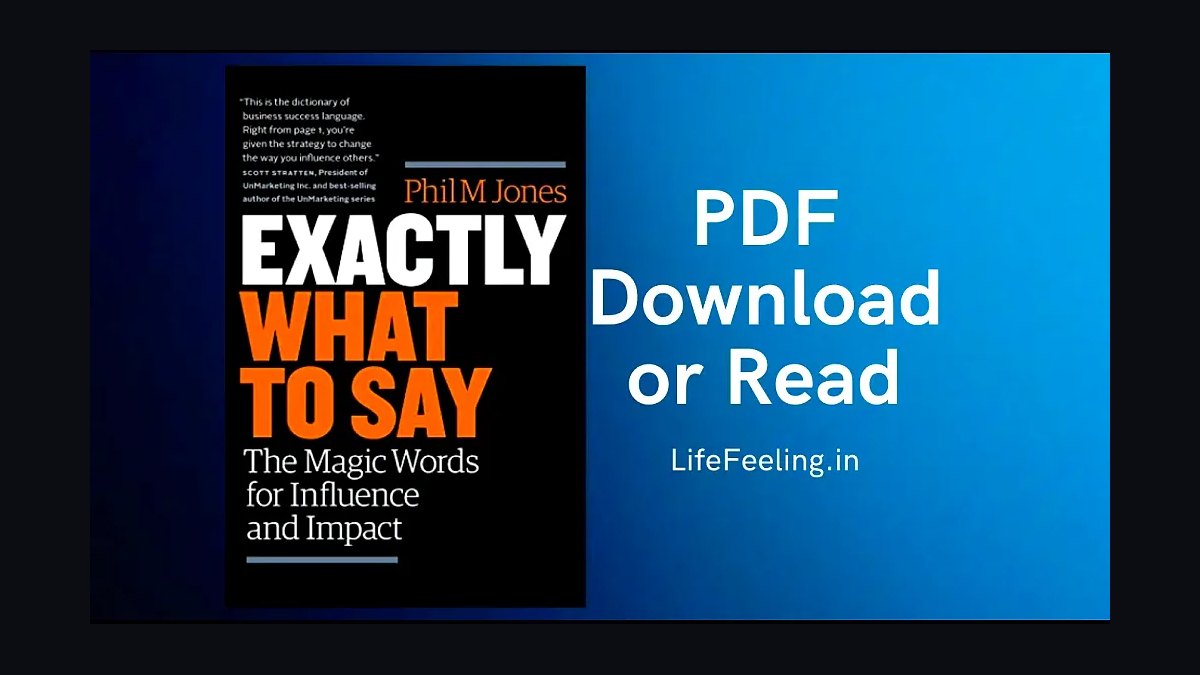
*Exactly What to Say* by Phil M. Jones is a short handbook of 23 rehearsed "Magic Words" — pre-scripted phrases that quietly lower buyer resistance and move stalled conversations toward a next step. This Cliff Notes Summary for Sellers holds that the real bottleneck is vocabulary, not knowledge: the right line, said reflexively, books the meeting.
The outcome you should expect
If you genuinely internalize the phrases rather than skimming them once, the payoff shows up in three measurable places: your meeting-book rate, your forward-motion rate, and how often you hear "let me think about it." Jones frames the whole book around one claim — most Sellers lose deals at the language layer, not the product layer. They know the product cold, they know the industry, they know their qualification framework, and then they freeze at the exact moment a buyer raises an objection or the conversation needs a nudge toward commitment.
The honest outcome for a rep who swaps default openings, objection-handlers, and closes for the Jones variants is a modest but compounding lift — not a magic doubling of pipeline. Expect the specific conversations where you used to fumble to start resolving cleanly: the awkward ask for a second meeting, the defensive scramble after "your price is too high," the over-explaining monologue that bored a senior buyer. The book is a vocabulary layer that sits *on top of* MEDDPICC, SPIN, or Sandler. It does not replace your qualification strategy; it makes each conversation inside that strategy run smoother.

Concretely, the highest-frequency win is the assumptive close. Sellers who default to "Would you like to schedule a follow-up?" invite a no. Switching to "When would be a good time — Tuesday or Thursday?" removes the should-we question entirely and asks only for timing. That single substitution, applied across every call, is where most of the early, visible lift comes from — and it takes about ten seconds to learn. Because the change is so small, it also survives the messiness of real quota pressure: you do not need to remember a framework mid-call, only a reflex you have already grooved.
What drives that outcome
The mechanism behind *Exactly What to Say* is that each phrase is deliberately engineered to lower one specific form of resistance and then hand the buyer an easy next move. Jones draws the underlying logic from psycholinguistics and from behavioral-economics thinkers — Cialdini, Kahneman, Ariely — but the payload is always a short 3-to-10-word line a Seller can deploy without conscious thought. That is the point of a prepared-phrase library: like a surgeon rehearsing a procedure or a pilot running a checklist, the Seller who has automated the language layer is freed to stay fully present with the buyer instead of scrambling for words.

The load-bearing phrases each attack a different moment in the conversation:
- "I'm not sure if it's for you, but…" signals non-attachment, so the buyer's "you're selling me" reflex never fires. Their natural reply — "well, what is it?" — is exactly the opening you wanted.
- "How open-minded are you about…" leverages self-image; people want to see themselves as open-minded, so they affirm openness and earn you the right to make your case.
- "What do you know about…" is a respectful diagnostic that calibrates your explanation to the buyer's real level and stops the over-explainer monologue cold.
- "Most companies your size…" is Cialdini-style social proof that frames your recommendation as the normal default — *only when the claim is factually true*.
- "Just imagine…" is a visualization prompt that makes the buyer emotionally pre-purchase, opening a loss-aversion gap between now and the imagined future.
- "What makes you say that?" is the objection excavator; most stated objections are surface statements masking a deeper concern.
- "The good news is…" is an acknowledge-bridge-resolve micro-pattern that moves *through* a concern instead of dismissing it.
- "When would be a good time — Day A or Day B?" is the two-option assumptive close that kills the open-ended "let me check my calendar" deflection.
The diagram matters because it shows the phrases are not a grab-bag — they map to a sequence. Open, frame, handle, close is the natural arc of nearly every sales conversation, and Jones supplies at least one rehearsed line for each junction so no junction is left to improvisation.

Benchmarks and realistic ranges
Because *Exactly What to Say* is a mass-market handbook rather than a controlled study, treat any hard percentage with caution. The book's power is qualitative, so the honest benchmarks here concern adoption and effort, not guaranteed conversion math.
Internalization timeline. Expect roughly 6-12 weeks of deliberate practice to make the phrases reflexive under live pressure. The drill most adopters use: pick three phrases per week, rehearse them out loud with a peer in mock calls, then deploy each in two to three real conversations per day. By around week 12 the full set of 23 is available to you without conscious retrieval. Skip the out-loud rehearsal and you will "know" the phrases intellectually but still freeze on live calls — reading is not the same as grooving a reflex.
Channel fit. The phrases are strongest in voice channels — calls, meetings, in-person — because several depend on the conversational pause. A subset translates cleanly to writing: "I'm not sure if it's for you, but…", "Just out of curiosity…", and "Most companies your size…" all read fine. Others lose force on the page; "What do you know about…" comes across as interrogative in text when it sounds warm in voice. Benchmark your written-channel expectations lower than your call expectations.
Book scale, honestly stated. The book is short by design — roughly 103 pages, readable in one sitting, first published in 2017 by Box of Tricks. Phil M. Jones is a British sales trainer who has run training for large numbers of Sellers across many countries, and the title carries a very high volume of Amazon reviews averaging in the high-4-star range. Specific "copies sold" or "adopted by N million Sellers" figures circulate widely, but they are marketing estimates — cite them as claims, not verified statistics. That distinction is itself part of the honest Sellers' strategy: the book teaches you to only use "most people" numbers you can stand behind.
Where the lift concentrates. Do not spread your expectation evenly across all 23 phrases. In practice the assumptive-close timing question and the two objection tools — "What makes you say that?" and "The good news is…" — carry most of the near-term, visible impact for a B2B rep, because those are the three moments where default vocabulary most reliably loses deals. If you only ever adopt three phrases, adopt those three and you will have captured the majority of the value.
Risks, edge cases, and failure modes

The central risk with *Exactly What to Say* is the manipulation charge, and it deserves serious treatment rather than a wave of the hand. Jones's defense rests on two conditions: every phrase preserves the buyer's autonomy — they can always decline — and the phrases are meant to *surface* the buyer's real concerns, not mask them. The moment a Seller uses these lines to push a product the buyer does not need, the phrases flip from trust-amplifier to trust-destroyer, and the reputational damage outlasts any single deal. The tools stay ethical only when the underlying offer is genuinely sound.
Specific failure modes to watch:

- Fabricated social proof. "Most companies your size choose X" collapses the instant a buyer checks with a peer and finds it untrue. Deploy the phrase only when the claim is factually accurate and actually load-bearing. Here the "no invented stats" discipline is not just ethics — it is self-preservation.
- Asking, then not listening. The most common execution error with "What makes you say that?" is that the Seller asks, hears the first sentence, and immediately starts building a rebuttal. The real concern usually emerges in the second or third sentence, so the discipline is to let the buyer talk for 60-90 seconds before responding.
- Scripted delivery. Delivered woodenly, the phrases sound like a telemarketer reading a card. They work only when the language layer is automatic enough that you can deliver them naturally and stay present — which is exactly why the 6-12 week rehearsal window matters.
- Wrong channel. Forcing a voice-optimized phrase into a cold email can misfire; "What do you know about…" in text reads like a quiz. Match the phrase to the channel.
- Over-reliance. The phrases are a vocabulary, not a methodology. A Seller who leans on Jones without a real qualification framework underneath — SPIN, MEDDPICC, Sandler — is polishing the delivery of an unqualified deal. The book explicitly positions itself as the micro-vocabulary layer; treating it as a full sales strategy is a misread.
- Senior-buyer fatigue. Experienced executive buyers have heard these lines. "Just out of curiosity…" still disarms because it flips the pitch dynamic, but a buyer who recognizes the script will discount an over-obvious, back-to-back stacking of Magic Words. Space them out and let the conversation breathe.
A practical rollout plan
Treat adoption as a 12-week deliberate-practice program rather than a weekend read. The rollout that works for most Sellers is sequenced by conversation type, not by chapter order.

Weeks 1-4 — the close and the openers. Start with the single highest-ROI change: replace every "Would you like to schedule a follow-up?" with "When would be a good time — [Day A] or [Day B]?" Layer in the two openers — "I'm not sure if it's for you, but…" for cold outreach and "How open-minded are you about…" for reframing conversations. Rehearse three phrases per week out loud with a peer before using them live.
Weeks 5-8 — discovery and objection handling. Move to the prospect-led discovery tools, "What do you know about…" and "Just out of curiosity…", which keep the buyer talking and stop you over-pitching. Then drill the objection pair — "What makes you say that?" to excavate the real concern and "The good news is…" to bridge to resolution. This is where the listening discipline matters most; practice staying silent after you ask.
Weeks 9-12 — framing, visualization, and choreography. Add "Most companies your size…" (only with true numbers) and "Just imagine…" for late-stage momentum, then practice *sequencing* them. Jones's own example runs a roughly 15-minute conversation that chains several phrases — open, diagnose, explore, frame, visualize, handle objection, reframe, close — so the whole thing feels natural to the buyer while being deliberately constructed by you.
Pair the book with three companions for the full stack: Cialdini's *Influence* for the psychological principles beneath each phrase, Chris Voss's *Never Split the Difference* for negotiation-specific vocabulary, and Neil Rackham's *SPIN Selling* for the discovery-question framework. Jones supplies the micro-vocabulary; those three supply the macro-frameworks the vocabulary rides on. Read in that order and each phrase stops being a trick and starts being an expression of a principle you actually understand.
Related questions

Is *Exactly What to Say* worth reading if I already use SPIN or MEDDPICC?
Yes. Jones is a vocabulary layer, not a competing methodology. SPIN and MEDDPICC tell you *what* to qualify and *when*; this book gives you the exact lines to say inside those steps. They stack rather than conflict.
How many phrases does the book actually contain?
Twenty-three core phrases, each mapped to a specific conversational moment — openers, diagnostics, framing, objection handling, and closing. The book is deliberately short, around 103 pages, so the phrases stay memorable and re-readable each quarter.
Which single phrase should a new Seller start with?
"When would be a good time — Tuesday or Thursday?" The two-option assumptive close removes the should-we decision and asks only for timing. It is the fastest to learn and the most reliable near-term lift for booking next steps.
Does the book work outside B2B software sales?
Yes. The phrases originated across consumer and B2B selling — real estate, financial advice, consulting — and Jones later co-authored an industry-specific real-estate edition. The core 23 are channel- and industry-agnostic, strongest in live voice conversations.
Is this the same as Cialdini's *Influence*?

No. Cialdini explains the principles — reciprocity, scarcity, social proof, authority; Jones supplies the specific verbal phrases that activate them in real time. Cialdini is the textbook, Jones is the field manual — most top Sellers read both.
FAQ
**Is *Exactly What to Say* manipulative?** Jones argues no, on two grounds: every phrase preserves the buyer's autonomy — they can always decline — and the phrases are built to surface the buyer's real concerns rather than mask them. Used to mislead or pressure, they become manipulation and destroy trust. Used as intended, they are conversational hygiene — clearer and more efficient than most Sellers' default vocabulary.
How long does it take to internalize the 23 phrases? Most adopters report 6-12 weeks of deliberate practice to make the phrases reflexive in live conversation. The recommended drill is three phrases per week — rehearsed out loud with a peer, then deployed in two to three real conversations per day — until the full set is automatic under pressure.
Does it work for written channels like email and LinkedIn?
Partly. Several phrases translate directly — "I'm not sure if it's for you, but…", "Just out of curiosity…", "Most companies your size…". Others depend on the conversational pause and lose force on the page. The book is most powerful in voice channels — calls, meetings, in-person.
What's the single highest-ROI phrase to adopt first? "When would be a good time — [Day A] or [Day B]?" It replaces the weak "Would you like to schedule a follow-up?" with an assumptive timing question that skips the yes/no decision entirely. It takes seconds to learn and pays off across an entire career of conversations.
**How does the strategy compare to *Never Split the Difference*?** Chris Voss's book is a negotiation-specific system built on tactical empathy and calibrated questions; Jones is a broader, lighter vocabulary for everyday selling moments. They complement each other — many Sellers use Jones for openers and closes and Voss for high-stakes negotiation.
Are there ethical limits to using these phrases? Yes, and Jones is explicit about them. The phrases amplify trust only when the underlying offer genuinely fits the buyer. Deploy them to push something the buyer does not need and the same lines that opened the conversation will torch your reputation. Ethics here is also self-interest.
Sources
- https://www.philmjones.com/
- https://www.amazon.com/Exactly-What-Say-Influence-Impact/dp/1989025005
- https://www.goodreads.com/book/show/36067200-exactly-what-to-say
- https://www.forbes.com/sites/forbescoachescouncil/
- https://www.inc.com/
- https://en.wikipedia.org/wiki/Robert_Cialdini
- https://www.hubspot.com/sales
- https://www.penguinrandomhouse.com/books/601582/never-split-the-difference-by-chris-voss-and-tahl-raz/
Related on PULSE
- Shoe Dog by Phil Knight — Cliff Notes Summary for Sellers
- The 12 Week Year by Brian Moran and Michael Lennington — Cliff Notes Summary for Sellers
- Contagious by Jonah Berger — Cliff Notes Summary for Sellers
- The Tipping Point by Malcolm Gladwell — Cliff Notes Summary for Sellers
- Antifragile by Nassim Taleb — Cliff Notes Summary for Sellers
- Steve Jobs by Walter Isaacson — Cliff Notes Summary for Sellers
This page will be disappearing soon. Save it to your device for $1 — or read it free while it is here.
@Kory-White- · if Venmo asks, the last 4 of my number are 2012
This page is gone.
This one is off the shelf now. $1 keeps it on your phone for good — the whole page, pictures and diagrams included.
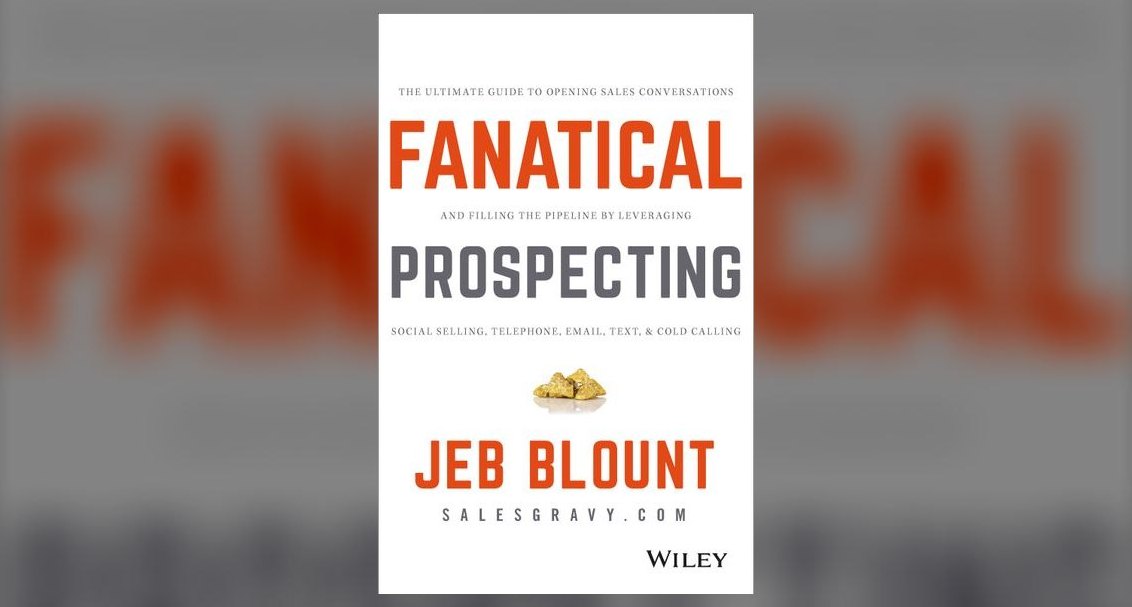 pulse-recentFanatical Prospecting by Jeb Blount — Top 10 Key Takeaways for Sales Leaders in 2027
 pulse-recentHow do you implement the Sandler Rules by David Mattson in your first 30 days as a new sales manager in 2027?
 pulse-recentWhat are the seven concrete steps to implement the Sandler Submarine technique from The Sandler Rules in 2027?
 pulse-recentSandler Rule #1: What is the first concrete step to build a prospect's trust in a sales conversation in 2027?
 pulse-recentStart with No by Jim Camp — Top 10 Key Takeaways for Sales Leaders in 2027
 pulse-recentWhat is the Blue Sheet from Strategic Selling by Miller Heiman and how do you fill it out in 2027?
 pulse-recent$100M Offers by Alex Hormozi — Top 10 Key Takeaways for Sales Leaders in 2027
 pulse-recentSnap Selling by Jill Konrath — Top 10 Key Takeaways for Sales Leaders in 2027
 pulse-recentHow to Apply Strategic Selling — Step-by-Step Playbook in 2027
 pulse-recentWhat is the first concrete step in The Sandler Rules by David Mattson for building a sales plan in 2027?