
High-Profit Prospecting by Mark Hunter — Top 10 Key Takeaways for Sales Leaders in 2027
 Curated byKory White · Fractional CRO · Maryland
 PULSEKNOWLEDGE LIBRARY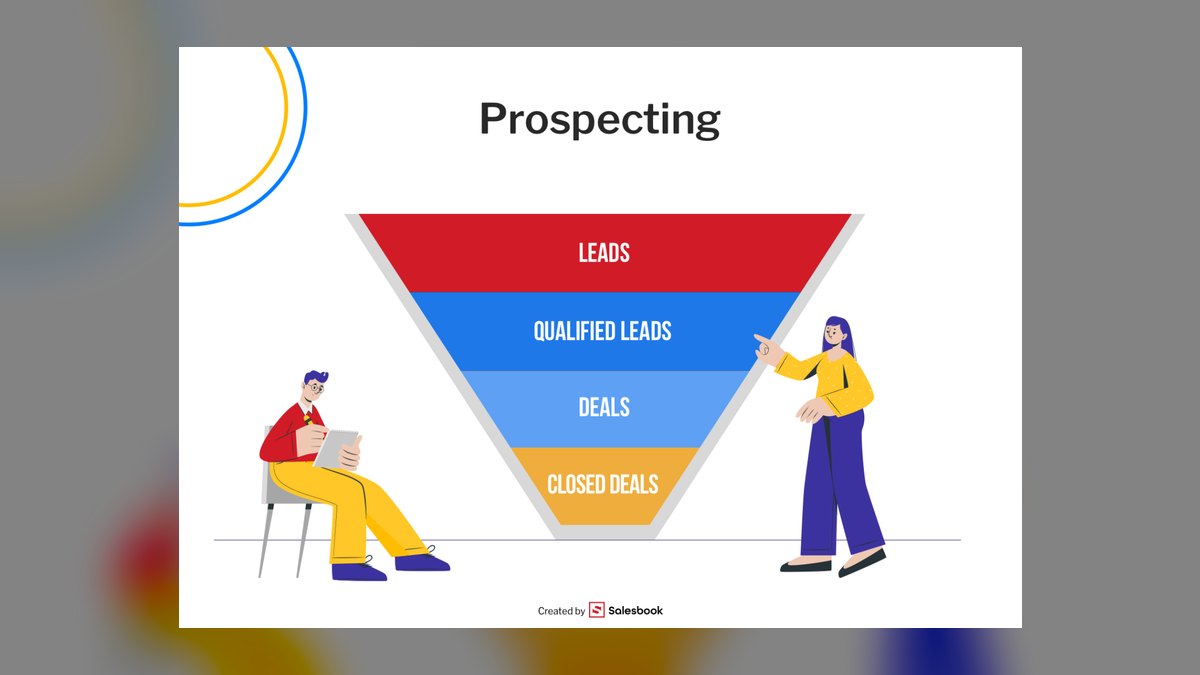
Mark Hunter's *High-Profit Prospecting* argues that prospecting is not dead — undisciplined, unqualified prospecting is. The core takeaways for sales leaders in 2027: prioritize profit-per-deal over raw volume, qualify prospects before investing time, blend voicemail/email/social outreach with a defined cadence, refuse to compete on price, and hold reps accountable to activity metrics that predict revenue, not just busywork.
A pipeline that looks full but earns nothing
Picture a mid-market sales team of twelve reps closing 60 deals a quarter. The pipeline dashboard looks healthy — hundreds of open opportunities, a forecast that always seems "on track." But margins keep sliding, and every deal review ends the same way: another discount, another concession, another deal that technically closed but barely moved the needle on profit. This is the exact scenario Mark Hunter built his book around, and it is the scenario every sales leader running a team in 2027 will recognize instantly, because the tools have changed but the failure pattern has not.
The root cause is almost never a lack of activity. Reps are dialing, emailing, and posting on LinkedIn constantly. The root cause is that the prospecting is aimed at the wrong targets and measured by the wrong yardstick. A rep who books ten meetings with companies that can never pay full price, or that were never going to buy in this fiscal year, generates activity that looks like progress on a spreadsheet while quietly destroying the sales leader's margin targets. Hunter's framing is blunt: prospecting exists to find the right buyer, not just a buyer. A "yes" from the wrong account is more expensive than a "no" from the right one, because the wrong yes consumes onboarding, support, and account-management resources that never get recovered in the deal's profit.
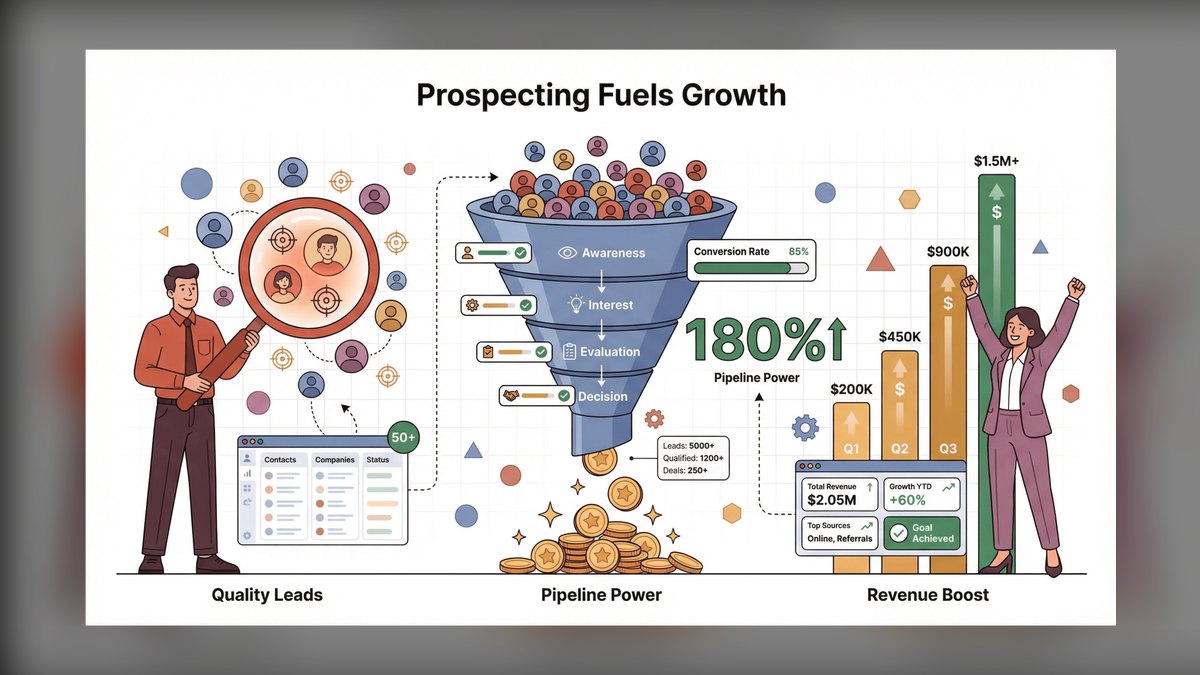
This scenario plays out differently by seniority. A frontline rep experiences it as pipeline anxiety — chasing anything that moves because the CRM demands a certain number of logged activities per week. A sales leader experiences it as a forecasting problem — deals slip or shrink in the final stage because they were never qualified against ability to pay, urgency, or fit. And an executive experiences it as a P&L problem — the sales organization hits its bookings number but gross margin on those bookings keeps eroding quarter over quarter. All three of these are symptoms of the same disease: prospecting strategy built around volume of contacts rather than value of contacts. Fixing it starts with redefining what a "good prospect" means before a single call is dialed, which is the mechanism covered next.
How disciplined prospecting actually works
Hunter's model treats prospecting as a filtering system, not a numbers game. The mechanism has four stages, and the failure most teams make is skipping straight from "identify a name" to "pitch the name" without the two filtering stages in between. A name becomes a qualified prospect only after it passes both a fit filter (does this account match the ideal customer profile on size, industry, and use case) and a readiness filter (does this account have a trigger — a budget cycle, a compliance deadline, a leadership change, an expiring contract — that creates urgency now rather than someday).

The reason this sequencing matters is that every hour spent on stage-F outreach against a name that never passed stage B or C is an hour subtracted from the reps who could be working genuinely qualified accounts. Hunter's "40% rule" — that roughly 40% of prospecting success comes from a rep's attitude and persistence, not the script or the tool — only pays off once the filtering has already narrowed the list to accounts worth being persistent about. Persistence against the wrong account is just waste dressed up as work ethic.
The multi-channel outreach stage (F) is where most of the tactical takeaways from the book live: a voicemail should be short, specific, and never ask the prospect to call back with information the rep should already have researched; an email should reference a real trigger event, not a generic template; and social touches should warm up a name before the call, not replace the call. None of these channels works in isolation — Hunter's data-driven argument (later formalized further in his follow-up work) is that combining three to five touches across at least two channels inside a compressed window dramatically outperforms a single channel hammered fifteen times. Sales leaders in 2027, working with AI-assisted sequencing tools, can automate the touch cadence, but the qualification filters in stages B and C still require human judgment about account fit — automating the wrong list just produces faster waste.

Benchmarks: what good prospecting looks like in numbers
Numbers give a sales leader something to coach against, and Hunter's book is unusually specific for a strategy title. A few of the benchmarks worth anchoring a team to: a qualified list should be small enough that a rep can work it seriously — Hunter recommends focusing on roughly 20-30 active target accounts per rep at any given time rather than a list of hundreds, because depth of research and follow-through beats sheer reach. Reps who try to actively work 100+ accounts simultaneously tend to default to generic, low-effort touches on all of them, which collapses response rates across the board.
On cadence, the widely cited industry range — consistent with Hunter's own guidance — is five to eight touches across multiple channels before writing off a prospect as unresponsive, spread over roughly two to three weeks. Giving up after one or two attempts (the most common mistake in the book) abandons a majority of prospects who would have engaged on a later touch; giving up too late (twelve-plus touches with no reply) burns time that should shift to nurture. Voicemail response rates in B2B outbound typically run in the low single digits — often cited in the 3-7% range for a callback — which is precisely why Hunter treats voicemail as a supporting channel that reinforces email and social rather than a standalone strategy.

On the profit side, the benchmark that separates this book from generic prospecting advice is margin-per-deal tracking at the rep level, not just bookings-per-rep. A sales leader should be able to see, per rep, the average discount given and the average gross margin retained on closed deals — Hunter argues that reps who prospect well (targeting accounts with real budget and urgency) need to discount less, often in the single-digit percentage range, while reps working weak, unqualified pipeline discount in the 15-25%+ range just to get anything across the line. That gap is the profit leaders are actually chasing when they call it "high-profit prospecting" rather than just "prospecting." Finally, a healthy qualified-to-closed conversion rate for a well-run outbound motion typically sits in the 15-25% range once a prospect has cleared both the fit and readiness filters described above — a number that should be tracked separately from the overall (much lower) raw-list-to-close rate, which conflates good and bad prospecting into one misleading figure.
Trade-offs and alternatives
Every sales leader implementing these takeaways faces a real trade-off between reach and depth, and Hunter's strategy comes down firmly on the side of depth — but that choice has costs a leader needs to plan for, not ignore. A volume-first strategy (cast a wide net, rely on high call/email counts, let statistics produce enough wins) scales predictably with headcount and requires less senior judgment from junior reps, which makes it attractive for teams with high turnover or a very low price point where the cost of a wrong-fit customer is small. Its weakness is exactly the profit erosion described earlier: it fills the pipeline with poor-fit accounts that require discounting to close and support to retain, so CAC and margin both suffer even when the top-line bookings number looks fine.

A targeted, profit-first strategy — the one the book actually advocates — trades raw activity volume for higher win quality: fewer touches overall, but each one aimed at an account that has already cleared a fit and readiness bar, so close rates and margins both improve. The cost is that it demands more from each rep: real account research, comfort holding firm on price, and the discipline to walk away from a name that doesn't qualify instead of chasing it because the CRM rewards activity counts. It is also slower to ramp — a new rep needs coaching on qualification judgment that takes longer to build than dial-volume habits.
In practice, most 2027 sales organizations land on a hybrid: an SDR or AI-assisted sequencing layer handles the wide, lower-cost first-touch volume to surface trigger events and interest signals, while account executives and senior reps apply Hunter's profit-first filters before investing real discovery time. The leader's job is choosing where that line sits based on deal size and price sensitivity — a $500/month product can tolerate more volume-driven waste than a $150,000 enterprise contract, where one wrong-fit deal can wipe out the margin of a dozen good ones.

Common pitfalls and how to avoid them
The single most common pitfall Hunter calls out is competing on price the moment a prospect pushes back, which trains the market that the rep's value is negotiable and starts every future renewal conversation from a weaker position. The fix is preparing a value-justification statement before the call — a specific outcome or cost-avoidance number tied to that prospect's situation — so the rep has something other than a discount to offer when resistance shows up.
A second pitfall is treating every inbound or outbound lead the same regardless of source, which skips the fit and readiness filters entirely. Leaders should require every new opportunity to log which trigger event created the urgency; if a rep can't articulate one, the deal likely isn't qualified yet and shouldn't be forecast as if it were. A third pitfall is abandoning a channel too early — reps often stop after one unanswered email and conclude the prospect isn't interested, when the data suggests most engagement happens on the third through sixth touch. Coaching reps to a defined, written cadence (not a vague "keep following up") removes the guesswork.

A fourth pitfall specific to sales leaders rather than reps: measuring the team purely on activity counts (calls made, emails sent) instead of on qualified-pipeline generated and margin retained. Activity metrics are easy to game — a rep can hit a call quota by dialing bad-fit numbers all day — so leaders should pair activity dashboards with a weekly review of list quality, not just volume. Finally, many teams let their target account list go stale, working the same names for months after a trigger event has expired; building a recurring 60-90 day refresh into the process (visible in the nurture loop in the earlier diagram) keeps the qualified pool current instead of dead weight.
Related questions
What is Mark Hunter's "40% rule" in prospecting?
Hunter estimates roughly 40% of prospecting success comes from a rep's attitude, persistence, and mindset — not the script, tool, or channel used. It only pays off once outreach targets are already properly qualified.
How many touches should a cadence include before giving up on a prospect?
Five to eight touches across at least two channels over roughly two to three weeks is the commonly cited range; fewer abandons engaged prospects too early, and many more wastes time better spent on fresh accounts.
Why does discounting hurt profit more than losing the deal?
A discounted deal trains the account to expect concessions at every renewal and often costs more in onboarding/support than it returns in margin, whereas a lost deal costs nothing beyond the sunk prospecting time.
Is cold calling still relevant for prospecting in 2027?
Yes, as one channel among several — Hunter's framework treats calls, voicemail, email, and social as complementary touches in a cadence, not competing tactics, with calling remaining the fastest way to confirm real interest.
FAQ
What is the main idea of High-Profit Prospecting by Mark Hunter? The book argues that prospecting fails not because the tactic is dead but because most reps prospect broadly and unprofitably; the fix is qualifying accounts on fit and urgency before investing outreach time, then protecting margin instead of discounting to close.
Who should read this book — reps, managers, or executives? All three benefit differently: reps get tactical cadence and objection-handling guidance, sales leaders get coaching frameworks and metrics to track beyond raw activity, and executives get the profit-margin argument for why prospecting quality matters to the P&L.
Does the book recommend a specific number of prospecting touches? It recommends a defined multi-touch, multi-channel cadence rather than a single fixed number — commonly implemented as five to eight touches across calling, voicemail, email, and social over two to three weeks before deprioritizing a name.
How is "high-profit" prospecting different from regular prospecting? Regular prospecting is often measured by activity volume and bookings; high-profit prospecting measures success by margin retained per deal, requiring reps to qualify for ability-to-pay and urgency before investing time, and to hold price rather than discount reflexively.
What role does voicemail play if response rates are low? Voicemail reinforces other channels rather than standing alone — a short, specific message primes the prospect to recognize the rep's name when the follow-up email or social touch arrives, raising the combined cadence's overall response rate.
How should a sales leader measure whether their team is prospecting well? Track qualified-pipeline generated per rep, average discount given, and gross margin retained on closed deals — not just call/email counts — since activity metrics alone don't reveal whether reps are targeting the right accounts.
Sources
- https://www.salesgravy.com
- https://hbr.org
- https://www.forbes.com
- https://www.gartner.com
- https://www.gong.io
- https://www.rainsalestraining.com
- https://www.salesforce.com
- https://www.linkedin.com/business/sales/blog
Related on PULSE
- How to qualify a sales lead before investing discovery time
- Why sales reps discount and how to coach them out of it
- Building a multi-channel outbound cadence that actually gets replies
- Setting activity metrics that predict revenue instead of busywork
- How to run a 60-90 day account nurture cycle without losing the lead
- Cold calling vs. social selling: when each one wins
 pulse-recentStart with No by Jim Camp — Top 10 Key Takeaways for Sales Leaders in 2027
 pulse-recentBargaining for Advantage by G. Richard Shell — Top 10 Key Takeaways for Sales Leaders in 2027
 pulse-recentInfluence by Robert Cialdini — Top 10 Key Takeaways for Sales Leaders in 2027
 pulse-recentGetting Past No by William Ury — Top 10 Key Takeaways for Sales Leaders in 2027
 pulse-recentGetting to Yes by Roger Fisher and William Ury — Top 10 Key Takeaways for Sales Leaders in 2027
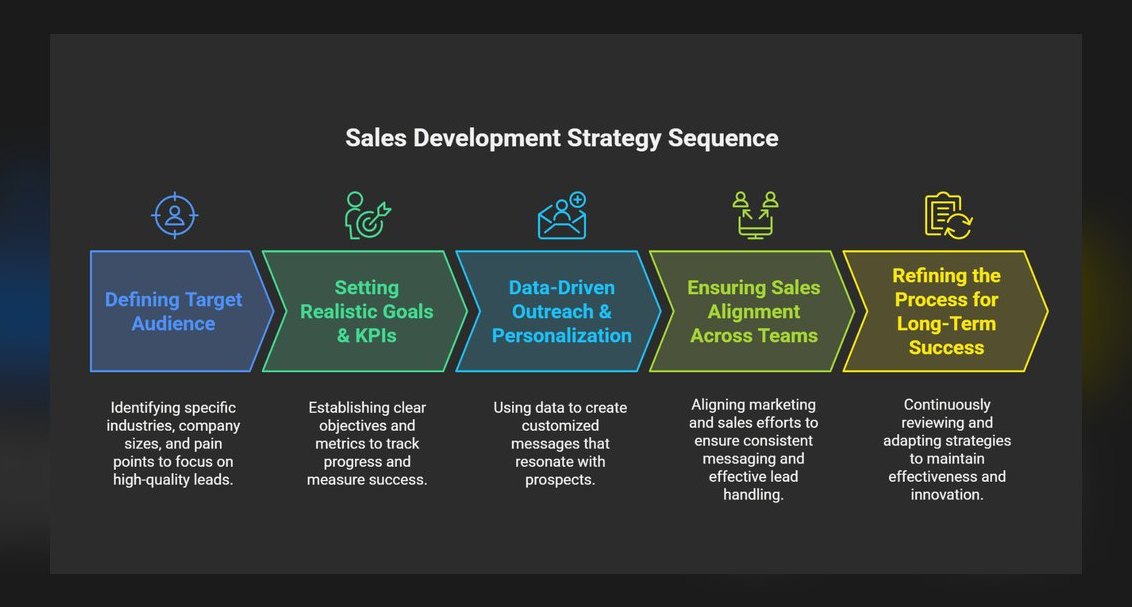 pulse-recentAligning Strategy and Sales by Frank Cespedes — Top 10 Key Takeaways for Sales Leaders in 2027
 pulse-recentFanatical Prospecting by Jeb Blount — Top 10 Key Takeaways for Sales Leaders in 2027
 pulse-recentThe Sales Acceleration Formula by Mark Roberge — Top 10 Key Takeaways for Sales Leaders in 2027
 pulse-recentHow I Raised Myself from Failure to Success in Selling by Frank Bettger — Top 10 Key Takeaways for Sales Leaders in 2027
 pulse-recentNew Sales Simplified by Mike Weinberg — Top 10 Key Takeaways for Sales Leaders in 2027