
The Sales Acceleration Formula by Mark Roberge — Top 10 Key Takeaways for Sales Leaders in 2027
 Curated byKory White · Fractional CRO · Maryland
 PULSEKNOWLEDGE LIBRARY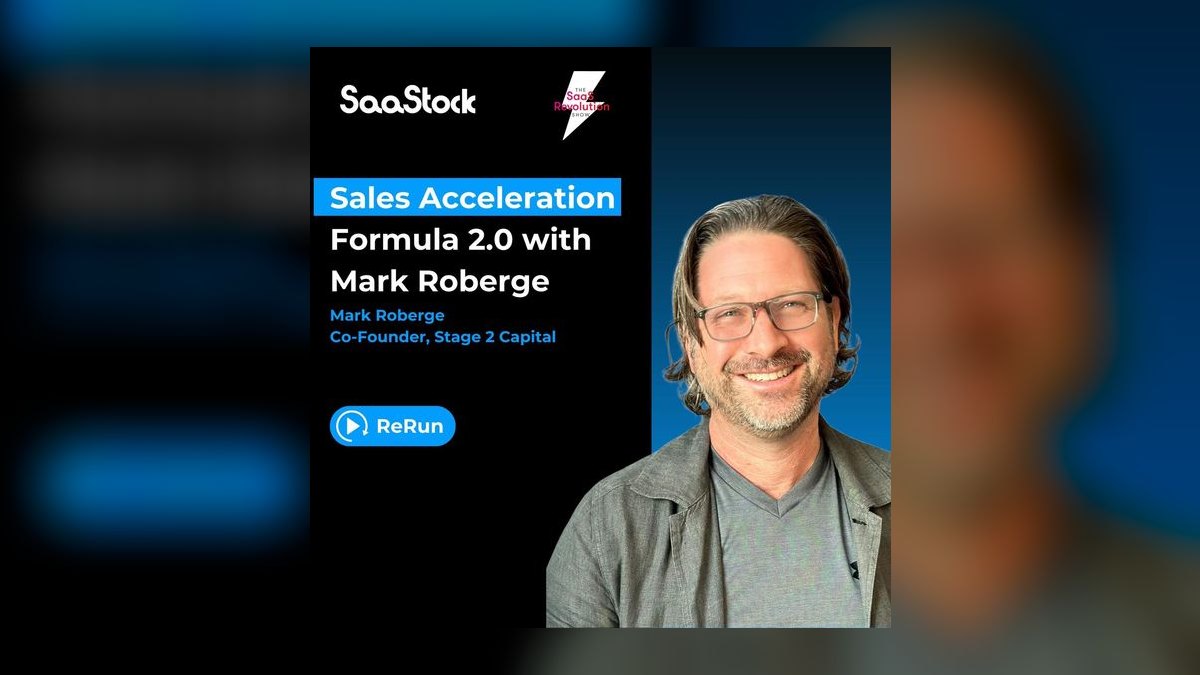
Mark Roberge's Sales Acceleration Formula distills into three replicable systems: a hiring formula that scores candidates on measurable traits instead of gut feel, a training formula built on a documented, testable sales process, and a demand-generation and management formula that treats pipeline and coaching as data problems. The core takeaway for 2027 sales leaders: stop relying on intuition — instrument every stage of the sales strategy so hiring, ramping, and forecasting all run on evidence.
A Sales Leader Staring at a Broken Ramp
Picture a VP of Sales at a 40-person SaaS company in early 2027. Revenue targets doubled year over year, but the last six hires ramped in nine months instead of the promised four, and three of them are already on performance plans. The VP pulls up the hiring scorecards and finds they're a mix of "gut feel," a LinkedIn headline, and whether the candidate was "likeable" in the interview. There's no consistent rubric, no historical data connecting interview scores to quota attainment, and no way to tell whether the problem is hiring, onboarding, or the leads themselves. This is exactly the scenario Roberge diagnosed at HubSpot between 2007 and 2012, when he scaled sales from $0 to $100 million in recurring revenue without a single professional sales hire on his founding team. His answer was to treat sales like an engineering problem: define inputs, measure outputs, and iterate. The Sales Acceleration Formula packages that experience into four repeatable systems — hiring, training, demand generation, and management — and the takeaways below map each one to what a 2027 sales leader can act on this quarter.
How the Formula Actually Works
Roberge's mechanism is a closed loop, not a one-time project. It starts with reverse-engineering what makes a rep succeed at your company specifically — not a generic "who is a good salesperson" checklist. At HubSpot, he built a hiring formula around five attributes he found correlated with performance: coachability, curiosity, prior success (in any field, not necessarily sales), work ethic, and intelligence. Each candidate was scored 1-4 on each trait during a structured process, and Roberge tracked those scores against actual quota attainment to validate the rubric over time — this is the "Formula" part of the name: it's a hypothesis you test with real outcomes, not a fixed template you copy from a book.
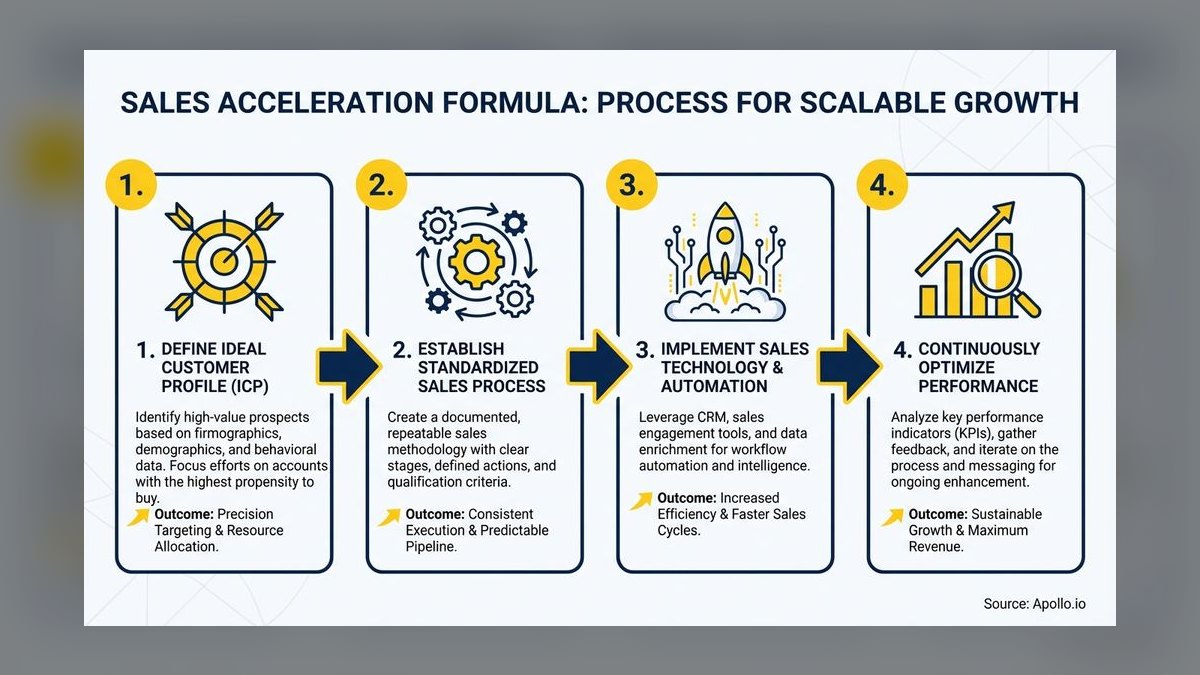
Once hired, reps enter a training program built around a documented sales process rather than "shadow a senior rep for two weeks and figure it out." Roberge's team wrote down the exact qualifying questions, objection responses, and stage-exit criteria that top performers used, then trained every new hire on that same script, measuring which parts of it correlated with wins. Training wasn't a one-time onboarding event; it was continuously updated as the product, market, and buyer changed — a living document, revised roughly every quarter at HubSpot's pace of change.
The demand-generation piece connects marketing content directly to where a buyer sits in their journey — a prospect googling "what is inbound marketing" gets educational content, not a demo pitch, while a prospect comparing vendors gets ROI calculators and case studies. This context-relevant approach fed a large volume of qualified leads to reps without requiring an army of cold-callers.

Finally, the management formula treats the sales manager's job as running experiments on the funnel: track lead-to-opportunity conversion, opportunity-to-close conversion, average deal cycle, and rep activity levels weekly, then adjust coaching, territory, or process based on where the data shows leakage — not where the manager's intuition points.
Real Numbers, Ranges, and Benchmarks From the Formula
Roberge is unusually specific with numbers in his book, and those specifics are what make the Sales Acceleration Formula usable rather than aspirational. At HubSpot, the hiring scorecard predicted performance well enough that Roberge could show a statistically meaningful correlation between candidate score and first-year quota attainment — reps scoring in the top quartile on the five-trait rubric closed at roughly double the rate of bottom-quartile hires in their first year. For 2027 sales leaders, the actionable benchmark is not the exact multiplier (which will vary by company and market) but the discipline of tracking it: if you cannot show a correlation between your interview scorecard and actual rep performance after 20-30 hires, the scorecard is decoration, not a hiring formula.

On ramp time, Roberge's team targeted getting a new AE to 100% of quota within their first four months, a number he arrived at empirically by tracking cohorts of hires against the documented training process and adjusting the curriculum until ramp time compressed. Most SaaS organizations in 2027 benchmark full productivity somewhere between three and six months depending on deal complexity — enterprise motions with 6-12 month sales cycles reasonably take longer than transactional SMB motions with 30-day cycles. The number itself matters less than the practice of measuring it as a controllable variable rather than an assumed cost of onboarding.
On demand generation, HubSpot's freemium and content-driven approach generated pipeline without proportional headcount growth in outbound prospecting — by 2010 a large share of new customers came through inbound channels rather than cold outreach, a ratio Roberge cites as evidence that content-to-context matching, not raw volume, drove efficient growth. For management cadence, Roberge advocates weekly (not monthly) review of leading indicators — calls made, meetings booked, opportunities created — because monthly cycles are too slow to catch a rep sliding off pace before the quarter is lost. A rep who is 20% behind on activity in week 2 of a 13-week quarter is a very different coaching conversation than the same rep discovered behind in week 10.

Trade-Offs and Alternatives to the Formula Approach
The Sales Acceleration Formula is not free — it trades speed for consistency, and that trade-off only pays off past a certain scale. Building a validated hiring scorecard requires enough hiring volume (Roberge suggests dozens of data points) to see real correlations; a five-person startup hiring its second AE doesn't have the sample size to run this scientifically and is often better served by founder-led, judgment-based hiring until the team is large enough to generate a meaningful signal. Similarly, documenting a rigid sales process can slow down a team in a market that's still being defined — if the ideal customer profile and buying process are shifting monthly, an overly codified script becomes stale faster than reps can be trained on it.
The alternative most sales organizations default to is a "hire experienced reps and let them run their own playbook" strategy. This works when you need revenue immediately and can afford inconsistent results, and it's genuinely faster to implement — there's no scorecard to build, no process to document, just experienced people executing what worked at their last company. Its failure mode shows up at scale: five reps with five different pitches means a sales leader can't diagnose why deals are lost, can't coach systematically, and can't forecast reliably because "it depends who's selling" isn't a repeatable input.

A middle path many 2027 organizations use is a hybrid: adopt Roberge's measurement discipline (weekly funnel reviews, tracked conversion rates by stage) without fully codifying the hiring scorecard until the company has hired enough reps to validate one. This captures the management-formula benefits early while deferring the harder, data-intensive hiring-formula work until it's statistically justified. The trade-off to watch: without at least directional hiring criteria, the data you collect on rep performance will be noisy, because you're not controlling for who you hired in the first place.
Common Pitfalls When Applying the Formula
The most common pitfall is copying Roberge's specific hiring scorecard (coachability, curiosity, prior success, work ethic, intelligence) verbatim without validating it against your own team's actual top performers. Roberge is explicit in the book that the five traits were what worked at HubSpot in a specific market and motion; a different company selling into a different buyer with a different sales cycle may find different traits predictive. The formula is the process of discovering and testing your own traits, not the specific list itself.

A second pitfall is treating the training process as a one-time document rather than a living system. Sales leaders write a playbook, ship it in a wiki, and never revisit it — six months later the product has changed, the ICP has shifted, and reps are still being trained on stage-exit criteria that no longer match how the top performers actually close deals. Roberge's team revised HubSpot's process on a near-quarterly cadence precisely because static documentation goes stale as fast as the market moves.
A third pitfall is over-indexing on inbound demand generation in a market where it doesn't fit. HubSpot's context succeeded because its buyer was actively searching for solutions to a well-understood problem (marketing). Companies selling into markets with low search intent or highly regulated, relationship-driven buying (certain enterprise IT, government contracting) that try to force a content-led, inbound-only demand engine often see anemic pipeline and blame the sales team rather than the mismatch between the Formula's original context and their own.

Finally, sales leaders frequently under-invest in the management formula's data infrastructure — trying to run weekly funnel reviews off spreadsheets manually updated by reps, which introduces lag and bias. Roberge's approach depended on CRM data captured as a byproduct of the sales process itself, not extra reporting work bolted on afterward. If reps have to do double-entry to produce the metrics leadership wants to review, the data will be incomplete and the whole management loop breaks down before it starts.
Related questions
Who is Mark Roberge and what is his background?
Mark Roberge was HubSpot's first VP of Sales, scaling revenue from $0 to $100M+ before becoming a Harvard Business School senior lecturer and later a general partner at Stage 2 Capital, focused on go-to-market strategy for early-stage SaaS.
Does the Sales Acceleration Formula apply outside SaaS?
The core discipline — measurable hiring, documented training, context-matched demand generation, data-driven management — applies broadly, but specific numbers (ramp time, inbound ratios) were derived from HubSpot's B2B SaaS motion and need re-validation elsewhere.
How is this different from traditional sales management books?
Most sales books rely on anecdote and personal philosophy; Roberge's formula is built on data he personally tracked as a metrics-driven, MIT-trained engineer running HubSpot's sales org, making it more testable and adaptable.
What's the single hardest part of the Formula to implement?
Building a validated hiring scorecard is hardest — it requires enough hiring volume and disciplined tracking of scorecard-to-performance correlation, which most growing companies skip in favor of faster, judgment-based hiring.
FAQ
What are the four main components of the Sales Acceleration Formula? The four components are: a hiring formula (scoring candidates on predictive traits), a training formula (a documented, testable sales process), a demand generation formula (context-relevant content matched to buyer stage), and a management formula (data-driven coaching and forecasting).
Is the book still relevant for sales leaders in 2027? Yes — the specific channel tactics (inbound blogging circa 2010) have aged, but the underlying discipline of measuring hiring, training, and management as data problems remains directly applicable, and arguably more so now that CRM and AI tooling make that measurement easier than it was for Roberge.
What was HubSpot's revenue growth under Roberge's tenure? Roberge led HubSpot's sales organization from effectively $0 to over $100 million in annual recurring revenue over roughly five years, a period he uses throughout the book to illustrate each formula with real internal data.
Can a small startup use this formula immediately? Partially — a startup with fewer than five reps typically lacks the hiring-decision volume to validate a scorecard statistically, so most benefit more from adopting the management formula's measurement habits early and building the hiring formula once they've made 15-20+ hiring decisions.
Does the formula replace the need for experienced sales leadership? No — the formula is a system for making experienced judgment more consistent and scalable, not a replacement for it; someone still has to interpret the data, design the scorecard, and decide when a trend requires a strategy change.
How does the training formula stay current as products change? By treating the documented process as a living asset revisited on a regular cadence (roughly quarterly at HubSpot's pace), pulling updates from what top current performers are actually saying and doing on live calls rather than relying on a static onboarding deck.
Sources
- https://www.harpercollins.com/products/the-sales-acceleration-formula-mark-roberge
- https://hbr.org/2015/02/how-to-accelerate-your-sales-hiring
- https://www.hubspot.com/sales-blog
- https://www.forbes.com/sites/markroberge
- https://www.hbs.edu/faculty/Pages/profile.aspx?facId=633825
- https://www.stage2.capital
- https://www.salesforce.com/resources/articles/sales-process/
- https://www.gartner.com/en/sales
Related on PULSE
- What makes a great VP of Sales hire in a scaling SaaS company?
- How do you build a repeatable sales onboarding program?
- What's the ideal ratio of inbound to outbound pipeline for B2B SaaS?
- How often should sales managers review funnel metrics with reps?
- What traits actually predict top sales performance?
- How long should new AE ramp time take in 2027?
 pulse-recentStart with No by Jim Camp — Top 10 Key Takeaways for Sales Leaders in 2027
 pulse-recentBargaining for Advantage by G. Richard Shell — Top 10 Key Takeaways for Sales Leaders in 2027
 pulse-recentInfluence by Robert Cialdini — Top 10 Key Takeaways for Sales Leaders in 2027
 pulse-recentGetting Past No by William Ury — Top 10 Key Takeaways for Sales Leaders in 2027
 pulse-recentGetting to Yes by Roger Fisher and William Ury — Top 10 Key Takeaways for Sales Leaders in 2027
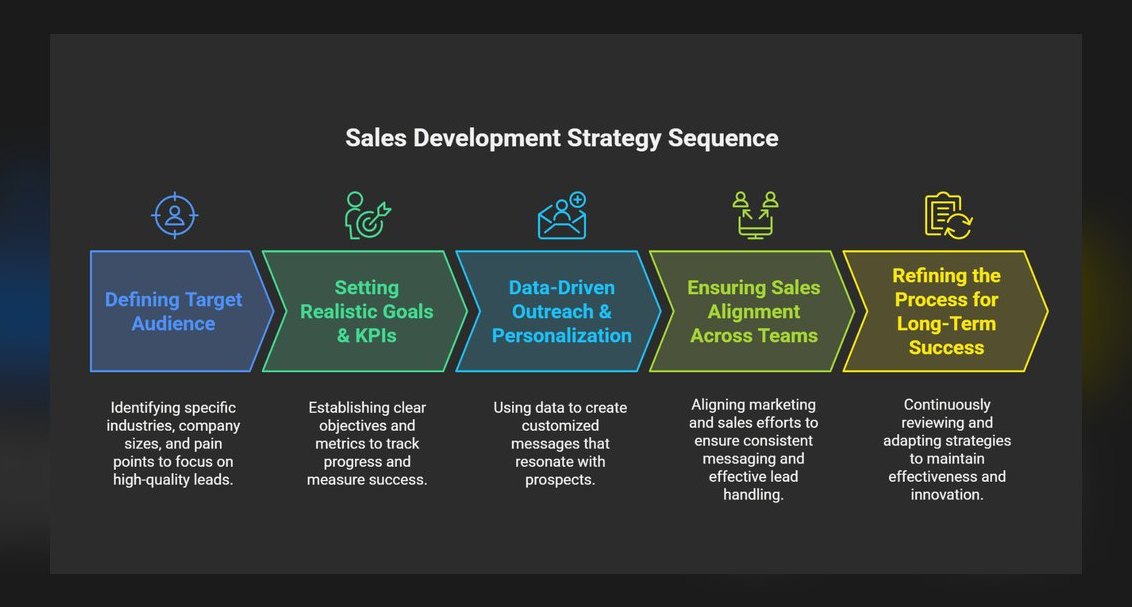 pulse-recentAligning Strategy and Sales by Frank Cespedes — Top 10 Key Takeaways for Sales Leaders in 2027
 pulse-recentFanatical Prospecting by Jeb Blount — Top 10 Key Takeaways for Sales Leaders in 2027
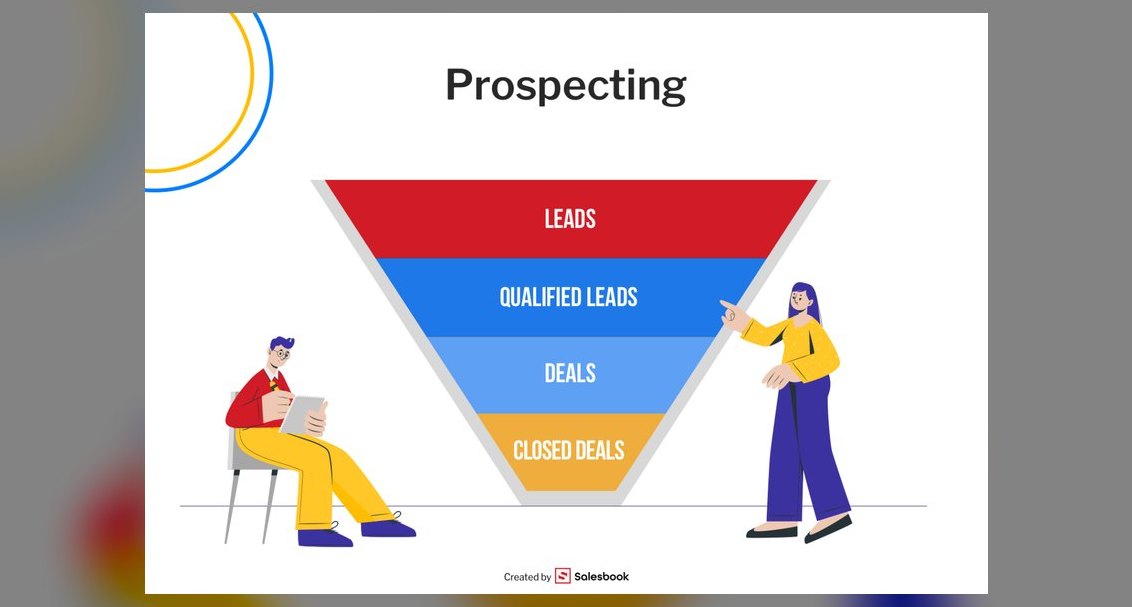 pulse-recentHigh-Profit Prospecting by Mark Hunter — Top 10 Key Takeaways for Sales Leaders in 2027
 pulse-recentHow I Raised Myself from Failure to Success in Selling by Frank Bettger — Top 10 Key Takeaways for Sales Leaders in 2027
 pulse-recentNew Sales Simplified by Mike Weinberg — Top 10 Key Takeaways for Sales Leaders in 2027