
Should I open or buy a More Space Place franchise in 2027?
 Curated byKory White · Fractional CRO · Maryland
 PULSEKNOWLEDGE LIBRARY
Quality
Certified

Only pursue a More Space Place franchise in 2027 if you can fund the full $200,000–$400,000 Item 7 range with $90,000–$160,000 liquid and you genuinely enjoy large-ticket design selling. Buying an existing profitable unit usually beats opening cold, because the showroom buildout and ramp are already paid for by someone else.
The outcome you should expect
Set your expectations against the actual model, not the brochure. More Space Place has been franchising custom storage since 1990, and the unit you are buying into is a showroom-plus-in-home-design-and-installation business selling custom closets, Murphy and wall beds, home offices, pantries, and organization systems. That combination produces a specific financial shape: high average ticket, low transaction volume, meaningful fixed overhead, and profit that lives or dies on close rate.
A mature, well-run unit grosses somewhere in the $700,000 to $1,800,000+ range, with owner earnings landing between roughly $100,000 and $320,000. Those are wide bands for a reason. The low end of that revenue range with a $200,000 showroom lease structure is a job that pays like a job. The high end with disciplined installation management is a genuine business that can be sold. The difference between those two outcomes is almost never product quality — the products are the same in every territory. The difference is lead flow and closing.
Run the math on a realistic mid-case: $1.2 million in revenue. Materials run about 36%, or $432,000. Installation and sales labor consume roughly 22%, or $264,000. Showroom rent and occupancy take about 12%, or $144,000. Royalty, marketing fee, and remaining operating expenses total around 14%, or $168,000. That leaves approximately $192,000 in owner earnings. Notice what happens if revenue drops to $800,000 while showroom rent stays fixed: the occupancy percentage climbs toward 18%, and the $192,000 becomes something closer to $60,000. Fixed showroom cost is the lever that punishes a slow year disproportionately.

If you open cold, expect 12 to 24 months to break even, with the wide range driven almost entirely by how fast you build a lead pipeline. Month one to month six is the expensive stretch: you are paying rent on a showroom that nobody in your market knows exists, paying a design consultant who has few appointments to run, and paying back the buildout. Working capital of $25,000 to $60,000 inside the Item 7 range is the minimum, and I would personally carry the top of that band or more, because the single most common failure pattern in showroom franchises is running out of marketing money in month eight, right when the pipeline was about to compound.
If you buy an existing unit instead, the outcome shifts. You inherit a lead history, a trained installer relationship, an established Google Business Profile with reviews, and — critically — a showroom that is already built and already depreciated by the prior owner. You pay for that in the purchase multiple rather than in ramp losses. For most first-time franchise buyers, that trade is worth taking, and the rest of this page treats "buy an existing unit" as the default recommendation and "open cold" as the exception that requires a specific reason, such as no seller existing in a market you have strong reason to want.
The honest summary of the expected outcome: this is a moderate-capital, high-skill-requirement business with a real product differentiator, a real competitive set, and returns that reward sales operators far more than they reward craftspeople. Nobody backs into $250,000 of owner earnings here by being nice and waiting for walk-ins.
What drives that outcome
Four variables move the number more than anything else, and none of them is the product catalog.
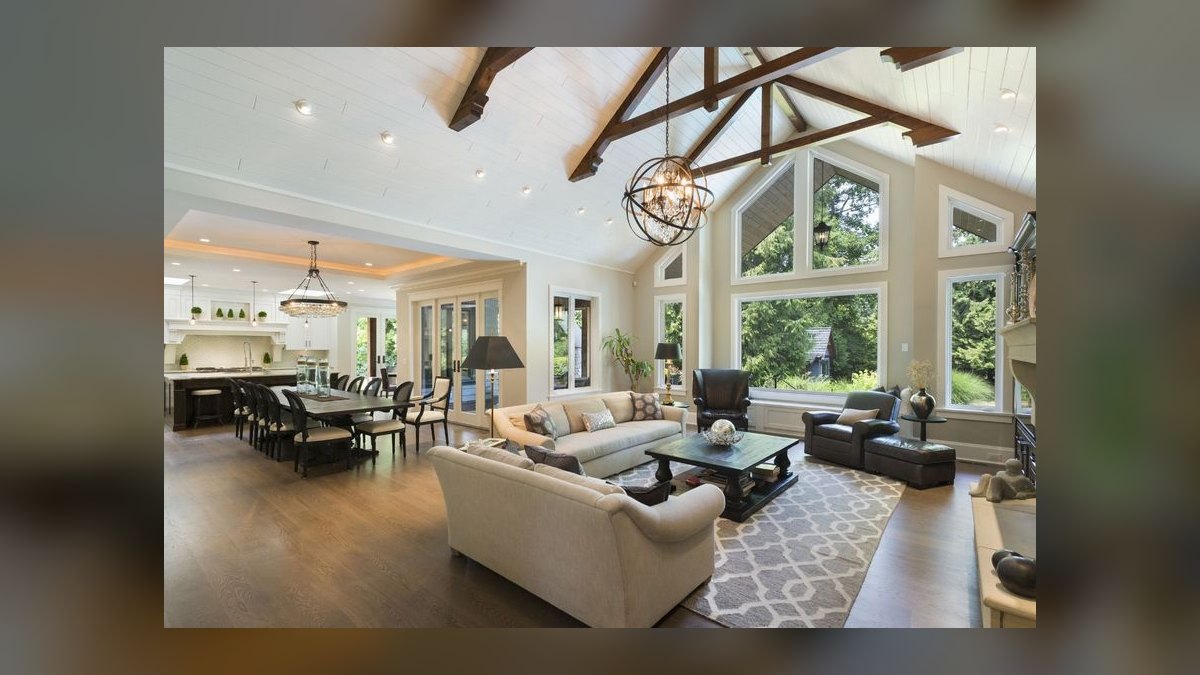
Close rate on in-home design appointments. Every dollar in this business traces back to a design consultation that converted. Projects run $2,000 to $15,000+, so a single point of close rate is worth real money. If you run 200 in-home appointments in a year at an $6,000 average ticket, moving from a 30% close to a 40% close adds $120,000 in revenue at nearly full contribution margin, because you already paid for the lead and the consultant's time. This is why the winning profile is a design-and-sales operator, not a carpenter. You do not need to know particle board. You need to know how to sit at a kitchen table, scope a job, handle a price objection, and ask for the order.
Lead source mix. The showroom is not a retail store and treating it like one is the classic beginner error. Strong operators generate the large majority of their appointments from paid digital targeting homeowners inside roughly a 20-mile radius, from referral relationships with realtors and interior designers doing pre-sale staging, and from repeat and word-of-mouth business. Walk-ins are a bonus, not a plan. Budget local marketing on top of the brand marketing fee — the corporate fee buys brand infrastructure and templates, not your territory's lead volume.
Product mix, specifically the Murphy bed share. This is the genuine differentiator versus a California Closets or a Closets by Design. Wall beds serve small spaces, guest rooms, and multi-use rooms — the home office that has to become a guest room when in-laws visit. Franchisees who lean into the wall bed category consistently report it representing a large share of revenue, and it tends to carry better margin than commodity closet work because fewer local competitors can quote against it credibly. If you buy a unit whose mix is 90% basic reach-in closets, you are buying a commodity business with a premium franchise fee attached.

Installation throughput and quality. Sold revenue is not recognized revenue until it is installed correctly. Install capacity caps your growth, install errors destroy your margin through callbacks and remakes, and install reviews drive your next quarter's organic leads. You can subcontract the labor; you cannot subcontract competence in scheduling and quality control. Track measure-to-install cycle time and callback rate from day one.
The loop matters more than any single box. Referral and review flow feeds back into lead generation, which is why year three economics look nothing like year one economics in the same territory. A unit that has been running well for five years has a compounding organic lead engine that a new opening simply does not have, and that engine is most of what you are paying for when you buy rather than open.
Benchmarks and realistic ranges
Work from the current Franchise Disclosure Document, not from any figure on a blog including this one. That said, here are the ranges to check your reading against.
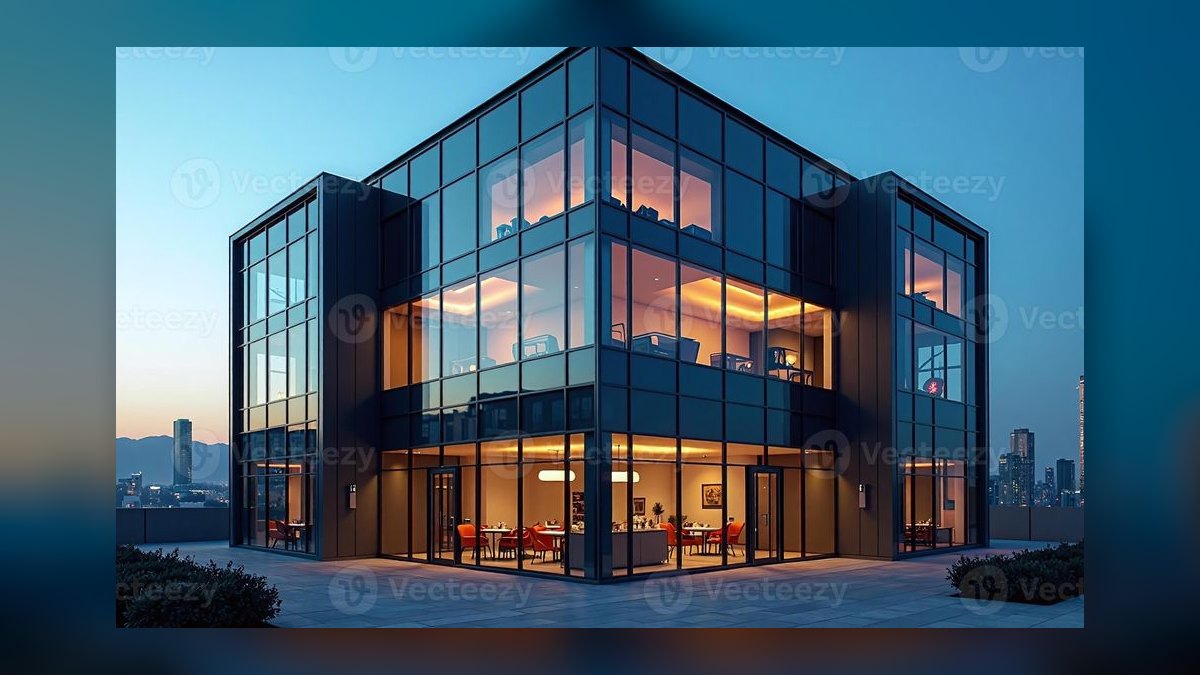
Capital. The franchise fee runs $40,000 to $50,000. Total Item 7 investment runs approximately $200,000 to $400,000. Inside that: showroom buildout $80,000 to $200,000, equipment and installation tools $30,000 to $70,000, signage and decor $15,000 to $40,000, initial inventory and displays $25,000 to $60,000, initial marketing $15,000 to $40,000, training and travel $10,000 to $28,000, and working capital $25,000 to $60,000. Liquidity requirement in practice sits around $90,000 to $160,000. Any figure you see quoting a $100,000 to $250,000 all-in start is wrong for this brand — the franchise fee plus showroom buildout alone can exceed $250,000 before you have bought a single display or run a single ad.
Ongoing fees. Royalty of roughly 5% to 6% of gross sales, plus a marketing fee in the neighborhood of 2%. Model those as coming off the top line, because they do — they are not calculated on profit, which means a low-margin year still pays full freight.
Revenue and earnings. Mature units gross $700,000 to $1,800,000+. Owner earnings run $100,000 to $320,000. The spread inside that band correlates with market homeowner density, close rate, and product mix far more than with showroom luxury.
Showroom tiers. The $80,000 end buys roughly 1,200 to 1,500 square feet in a modest strip center with functional displays, a small office, and a consultation area. The $200,000 end buys a flagship in a premium retail corridor with elaborate vignettes and a dedicated design studio. Be clear-eyed: the expensive showroom does not produce proportionally more revenue. It produces modestly more inbound interest in a high-traffic corridor, and it produces a lot more fixed monthly cost that you carry in slow months. Unless your market genuinely runs on retail corridor visibility, the middle of that range plus aggressive digital spend is usually the better allocation of the same dollars.

Ongoing display refresh. Materials, finishes, and configurations change. Plan on refreshing displays every 18 to 24 months and budget roughly $5,000 to $10,000 a year for it. A tired showroom actively undercuts the premium positioning you are charging for, and this line item is invisible in the initial investment table, so operators forget it.
Showroom staffing. The workable model is one full-time design consultant who both closes in the showroom and runs in-home consultations, on a base in the $40,000 to $55,000 range plus commission in the 5% to 10% of gross profit band, supported by a part-time administrative and scheduling person. That is roughly $70,000 to $100,000 in annual showroom labor. Trying to be the sole consultant while also owning the business is the most reliable way to cap yourself: you will miss appointments during install fires and lose sales you already paid to generate.
Resale. Units generally trade at roughly 2.5x to 4x adjusted EBITDA. A unit throwing $150,000 in owner earnings with $50,000 in legitimate add-backs presents around $200,000 EBITDA, which is a $500,000 to $800,000 business. A single unit in a mid-sized market realistically lands in the $400,000 to $600,000 zone. A multi-unit operator with three or four territories in a growing metro can command materially more, both because of scale and because the buyer pool widens to include financial buyers rather than only owner-operators.

Time to break even. Twelve to 24 months when opening cold. Immediately, in cash-flow terms, when buying a profitable existing unit — which is precisely the argument for buying.
Risks, edge cases, and failure modes
The showroom is a fixed cost in a variable-revenue business. This is the structural risk. Rent does not care that January was slow. Model your worst plausible quarter against your lease obligation and confirm you survive it with the working capital you actually have, not the working capital you plan to have after a good spring.
Weak large-ticket sales execution. If closing a $9,000 project against a homeowner's hesitation makes you physically uncomfortable, this is the wrong business and no amount of training fixes it. The brand can teach you the design software and the product line. It cannot install a sales temperament.
Low homeowner density. The customer is a homeowner with disposable income and a space problem. A territory with thin owner-occupied density, low median home value, or a dominant renter population will not support the ticket sizes the model needs. Validate this with census-level homeowner data for your specific radius before you sign anything, not after.

Underestimating installation management. Callbacks, remakes, damaged materials, and no-show subcontractors are margin events. A 36% materials cost assumes you order right the first time. Every remeasure and every remake pushes that number up and pushes your earnings down.
Treating it as a closet franchise. Buyers who ignore the wall bed and space-saving specialty compete head-on with California Closets, Closets by Design, and every local custom storage shop on price. That is a losing position. The Murphy bed niche is the reason to pay a franchise fee here at all; not using it means you paid for a differentiator and then discarded it.
Competition dynamics. You will face national custom closet brands with heavier ad budgets and independent local shops with lower overhead. Your defensible middle ground is brand credibility plus a product category the locals cannot easily source and the nationals do not emphasize.

Buying-specific risks. When acquiring an existing unit, three things routinely blow up deals or post-close performance. First, owner-dependence: if the seller personally ran every design appointment, the revenue is the seller's, not the business's, and it walks out with them. Ask for the appointment log by consultant. Second, lease term: a unit with 18 months left on a showroom lease in a corridor with rising rents has an unpriced liability. Push for a lease with meaningful remaining term or negotiate the renewal before closing. Third, deferred display and equipment refresh: a seller preparing to exit stops spending on the showroom, and you inherit that bill immediately on top of the purchase price.
Multi-unit risk. Each additional unit carries its own $200,000 to $400,000 showroom and its own staffing. Multi-unit here is not the low-marginal-cost expansion it is in a home-based service franchise. Prove one unit's economics thoroughly before you replicate them, and prove them across a full seasonal cycle, not across one strong quarter.
Territory and expansion edge case. If the franchisor is actively expanding in your region, your resale buyer pool improves but so does the chance of a neighboring unit compressing your marketing reach. Read the territory protections in the FDD literally — what is protected, what is not, and how territory is measured.

A practical rollout plan
Give yourself roughly five months from serious interest to opening day, or three to four months if you are buying an existing unit rather than building one.
Days 1 to 20 — read the documents. Get the current FDD and read Item 7 (investment), Item 19 (financial performance representations), Item 12 (territory), and Item 17 (renewal, termination, transfer) closely. Item 19 is where you separate marketing language from disclosed economics. If a number you are relying on does not appear in Item 19, treat it as unverified.
Days 21 to 40 — call operators. The FDD gives you a list of current and former franchisees. Call both. Ask current owners specific questions: what percentage of revenue is wall beds versus closets, what is your close rate on in-home appointments, what does your showroom actually cost you monthly all-in, how many appointments does one consultant run per week, and what did you net last year after paying yourself a salary. Ask former franchisees one question: what would you have needed to know. Twelve to fifteen calls is the right volume; three is not enough to see the pattern.
Days 41 to 60 — validate the market and the site. Pull owner-occupied housing density and median home value for the radius you would serve. Map the existing competition, including independents, not just the national brands. If you are buying, this is where you audit the seller's books: three years of P&Ls, the lease, the appointment log, the review history, and the customer list. If you are opening, tour showroom sites and price the buildout with a real contractor rather than the range in Item 7.

Days 61 to 100 — build and train. Complete franchisor training, hire the design consultant early enough to train them before opening rather than after, line up installation capacity, and build out the showroom. Start local marketing before the doors open — a pipeline that begins on opening day means an empty first month.
Days 101 to 130 — open and drive lead flow. Launch paid digital targeting your radius, open the realtor and interior designer referral conversations, and run space-optimization events that give local homeowners a reason to walk in. Measure appointments booked, appointments run, and close rate weekly from week one.
Beyond day 130 — build the asset, not the job. Document standard operating procedures, vendor relationships, and training materials from the beginning. Add maintenance and adjustment service as a recurring revenue line; buyers pay a premium for predictable income and it costs you little to offer. Every system you write down is a point on your exit multiple, because a business that runs without you is worth more than one that is you.
Related questions
Is it cheaper to buy an existing More Space Place unit than to open one?
Not in sticker price, but usually in total cost. Opening cold means $200,000–$400,000 plus 12–24 months of ramp losses. Buying a profitable unit at 2.5x–4x EBITDA costs more upfront but generates cash immediately, and the showroom buildout is already sunk.
Do I need construction experience to run this franchise?
No. Successful operators come from in-home design sales, retail management, and showroom businesses. The decisive skills are converting large-ticket leads and managing installation subcontractors — not carpentry. Product training comes from the franchisor; sales temperament does not.
How much of the revenue actually comes from Murphy beds?
It varies by operator and territory, and the FDD is the only reliable source. Operators who emphasize the wall bed category report it carrying a substantial revenue share at better margin than commodity closet work. Units that ignore it compete on price against national closet brands.
What is the single biggest cause of failure?
Fixed showroom cost meeting weak close rates. Rent, staffing, and royalties continue regardless of appointment volume, so a slow two quarters compounds fast. Underfunded working capital is the second cause — running out of marketing money in month eight kills pipelines that were about to compound.
Is a multi-unit More Space Place strategy worth pursuing?
Only after one unit proves out across a full seasonal cycle. Each additional unit carries its own $200,000–$400,000 showroom and staffing, so marginal cost stays high. The upside is exit value: multi-unit operators in growing metros reach financial buyers, not just owner-operators.
FAQ
What does a More Space Place owner actually make?
Mature units gross roughly $700,000 to $1,800,000+, with owner earnings in the $100,000 to $320,000 range. A realistic mid-case looks like $1.2 million in revenue producing about $192,000 after materials near 36%, sales and installation labor near 22%, showroom occupancy near 12%, and royalty plus marketing plus operating expenses near 14%. Verify all of it against the current FDD Item 19.
How much capital do I really need for 2027?
Total Item 7 investment runs approximately $200,000 to $400,000, including a $40,000 to $50,000 franchise fee and an $80,000 to $200,000 showroom buildout. Plan on $90,000 to $160,000 liquid. Carry the top of the $25,000 to $60,000 working capital band rather than the bottom — underfunded marketing in the ramp months is a recurring cause of failure.
What ongoing fees should I budget?
Royalty of roughly 5% to 6% of gross sales plus a marketing fee around 2%. Both come off the top line regardless of profitability. In exchange you get brand support, showroom design guidance, training, and proprietary product access. Local lead generation spend is yours on top of the marketing fee, and it is the line item that actually determines your revenue.
Why does the model need both a showroom and in-home design?
The showroom builds credibility and lets customers touch a wall bed before committing $8,000 to it — that tactile proof is hard to replicate online. The in-home appointment is where the project gets scoped and closed. The pairing supports large tickets, but it also means you carry retail-style fixed cost in a project-based business, which is exactly why close rate matters so much.
How long until I break even if I open a new location?
Typically 12 to 24 months, driven almost entirely by how quickly you build lead flow. Referral and review volume compounds, so year three usually looks far better than year one in the same territory. If you buy an existing profitable unit instead, you are cash-flow positive from takeover and you pay for that in the acquisition multiple.
What should I check hardest when buying an existing unit?
Owner dependence, lease term, and deferred refresh. If the seller personally ran every design appointment, the revenue leaves with them — ask for the appointment log by consultant. A showroom lease with short remaining term in a rising-rent corridor is an unpriced liability. And a seller planning to exit typically stops refreshing displays, so budget $5,000 to $10,000 immediately on top of the purchase price.
Sources
- https://www.ftc.gov/business-guidance/industry/franchises — FTC guidance on the Franchise Rule and Franchise Disclosure Document requirements
- https://www.franchise.org/ — International Franchise Association, industry data and franchising standards
- https://www.sba.gov/business-guide/plan-your-business/buy-existing-business-or-franchise — SBA guidance on buying an existing business or franchise
- https://www.morespaceplace.com/ — More Space Place corporate site, product lines and franchise information
- https://www.entrepreneur.com/franchises/franchise500 — Entrepreneur Franchise 500 rankings and franchise profiles
- https://franchisebusinessreview.com/ — Franchisee satisfaction research and performance benchmarking
- https://www.census.gov/programs-surveys/ahs.html — U.S. Census American Housing Survey, owner-occupancy and housing characteristics data
- https://www.bls.gov/oes/ — Bureau of Labor Statistics occupational wage data for design, sales, and installation roles
- https://www.consumerfinance.gov/ — Consumer Financial Protection Bureau, consumer lending and home-improvement financing context
Related on PULSE
- My Thoughts: How Do I Save on Buildout by Taking a Second-Generation Restaurant Space
- How Many Employees Should I Schedule Each Shift at My Coworking Space?
- How Do I Get My Reps to Expand Into White Space?
- How Do I Get My Real Estate Agents to Capture More Referrals?
- How Do I Score My AEs on More Than Just Closed-Won?
- How Do I Tie Commission to More Than One Product?
This page will be disappearing soon. Save it to your device for $1 — or read it free while it is here.
@Kory-White- · if Venmo asks, the last 4 of my number are 2012
This page is gone.
This one is off the shelf now. $1 keeps it on your phone for good — the whole page, pictures and diagrams included.
 pulse-qHow Many Sales Reps Do I Need to Hire for My Prefab Home Builder in 2026?
 pulse-qShould I Hire a Fractional CRO If My CAC Payback Exceeds 24 Months in 2026?
 pulse-qHow Many Sales Reps Do I Need to Hire for My Garage Door Company in 2027?
 pulse-qShould I open or buy a FirstLight Home Care franchise in 2027?
 pulse-qShould I Hire a Fractional CRO If My Net Revenue Retention Is Below 100 Percent in 2026?
 pulse-qShould I open or buy a Honor Yoga franchise in 2027?
 pulse-qShould I open or buy an Office Evolution franchise in 2027?
 pulse-qShould I open or buy a Ned Stevens Gutter Cleaning franchise in 2027?
 pulse-qShould I open or buy a The Lash Lounge franchise in 2027?
 pulse-qHow Many Baristas Should I Schedule Each Shift at My Coffee Drive-Thru in 2026?