
Should I open or buy a HomeWell Care Services franchise in 2027?
 Curated byKory White · Fractional CRO · Maryland
 PULSEKNOWLEDGE LIBRARY
Quality
Certified

Only if you can recruit caregivers. HomeWell Care Services is a low-capital, home-office franchise riding a real aging tailwind, but staffing — not demand — decides whether you clear six figures. Verify the current Franchise Disclosure Document, interview eight-plus operators about recruitment, and open only in a territory with senior density and an available labor pool.
What a HomeWell franchise actually is, and why the model matters
HomeWell Care Services sells non-medical in-home care: personal care, companion care, homemaker services, and in some states higher-acuity support delivered under state home care licensure. The caregiver drives to the client's house. There is no storefront, no build-out, no lease on a retail corridor. You run an office — frequently a home office at first, then a small commercial suite once headcount justifies it — and your assets are a scheduler, a phone system, a care-management platform, an insurance package, and a roster of W-2 caregivers.
That structure is why the investment is low relative to the revenue ceiling. A quick-service restaurant franchise can demand $500,000 to $1,500,000 before the doors open, most of it sunk into real estate and equipment that cannot be redeployed if the location fails. A home care agency's largest recurring cost is labor, which flexes with revenue. If you lose a client, you lose the hours and the caregiver cost simultaneously. You do not sit on a fifteen-year lease for a dark building. That asymmetry — low fixed cost, variable cost tied to revenue — is the single most attractive structural feature of the category, and it is why home care franchises consistently appear near the top of "low-investment, high-ceiling" lists.
The revenue mechanism is an hourly spread. You bill the client per hour of care and pay the caregiver per hour worked. The difference funds your office staff, your insurance, your royalty, your marketing, and your own income. Everything else in this business is downstream of two questions: can you find clients who will pay the billed rate, and can you find caregivers who will accept the paid rate and actually show up. Referral sources answer the first. Recruiting answers the second. Most franchise-buying analysis obsesses over the first because it is the one franchisors can help with. The second is the one that kills agencies.
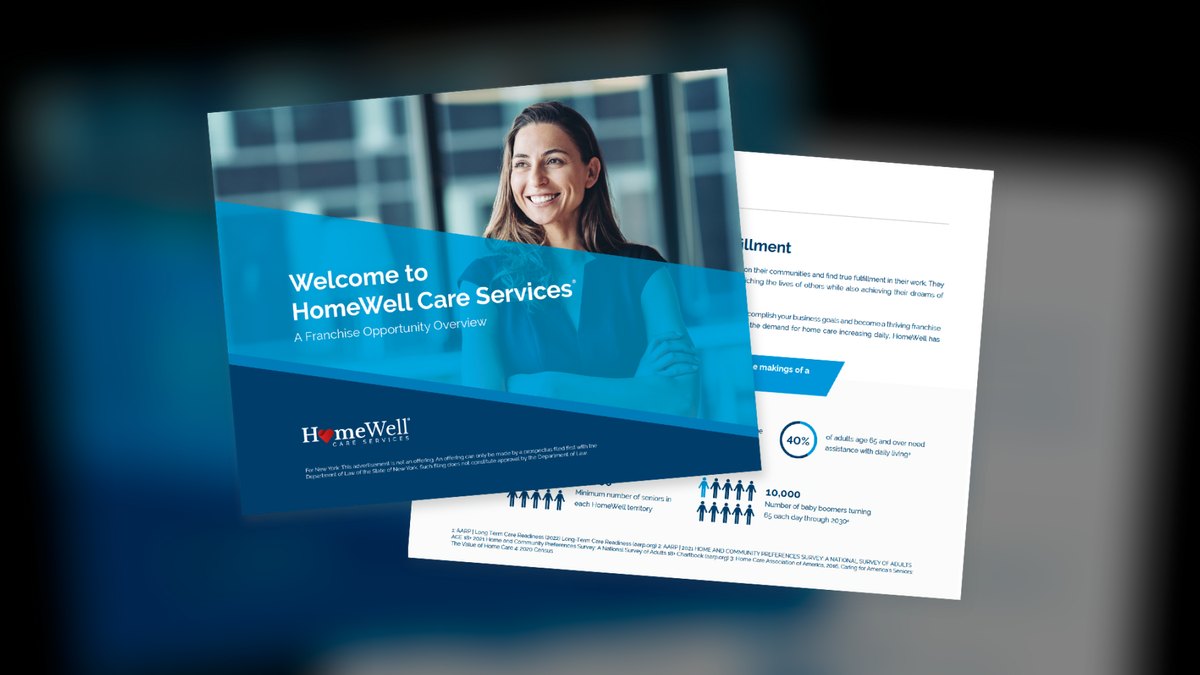
Why it matters for 2027 specifically: the demographic input is not a forecast, it is arithmetic that already happened. Everyone who will be 80 in 2032 is alive today and is 75 now. The U.S. Census Bureau projects the 65-and-over population to keep climbing through the 2030s, and the Bureau of Labor Statistics has for years projected home health and personal care aides as one of the fastest-growing occupations in absolute numbers in the entire economy. That second projection is the tell. BLS is not saying "demand will grow." It is saying the country needs hundreds of thousands more of these workers than it currently has. Read as a franchise buyer, that is a demand signal and a supply warning printed on the same page.
It also matters that this is a licensed, regulated business in most states. Depending on jurisdiction you may need a home care organization license, a registry license, or nothing at all beyond a business license — the variation between states is enormous. Some states impose caregiver training-hour minimums, background-check requirements through a state registry, supervisory visit schedules, and periodic surveys. Others are effectively open. Your licensing pathway can take a few weeks or the better part of a year, and that timeline sits directly on your break-even date. Do not treat it as paperwork. Treat it as a gating milestone you research before you sign anything, using your state's health department or licensing board as the source rather than a franchise broker's summary.
Finally, "open or buy" is not a rhetorical framing — it is a genuine fork with different risk profiles. Opening a new unit means paying the initial franchise fee, absorbing a ramp with zero revenue, and building a referral network from cold. Buying an existing HomeWell agency from a departing franchisee means paying a multiple of cash flow, inheriting a caregiver roster and a client census, and inheriting whatever reputational damage or compliance debt that owner accumulated. Both routes require franchisor approval and a transfer or new-unit agreement. The resale route front-loads cost and back-loads risk; the new-unit route does the opposite.

Working the process end to end
Treat this as a disciplined ninety-to-one-hundred-twenty-day evaluation, not a decision you make after a discovery day. The order matters, because each stage is designed to kill the deal cheaply before the next stage costs you more.
Stage one — the FDD, weeks one through three. Request the current Franchise Disclosure Document. You are legally entitled to it, and federal rules require a waiting period before you can sign or pay. Read Item 5 (initial fees), Item 6 (ongoing royalty, marketing fund, technology fees, transfer fees), Item 7 (the estimated initial investment table), Item 11 (what the franchisor actually obligates itself to provide — training days, software, launch support), Item 12 (territory definition and whether it is truly protected), Item 17 (renewal, termination, transfer, non-compete), Item 19 (financial performance representations, if any), and Item 20 (unit counts, openings, closures, terminations, and the contact list of current and former franchisees). Item 20 is the most under-read section in every FDD. If openings are flat and terminations are climbing, that pattern outweighs any Item 19 average.
Stage two — validation calls, weeks three through six. Call at least eight current franchisees and, critically, at least two former ones from the Item 20 list. Do not ask "are you happy." Ask specific, answerable questions: What is your caregiver turnover rate this year? How many caregivers do you have on the roster versus how many worked at least one shift last week? What percentage of referral requests do you decline because you cannot staff them? What is your average billed rate and average caregiver wage? How long from opening to positive cash flow? What did the franchisor actually do for you in your first ninety days versus what they promised? Would you buy this franchise again at today's fee? The decline-rate question is the one that separates real operators from optimistic ones — an agency turning away referrals has a staffing problem no marketing budget will solve.

Stage three — territory and licensing diligence, weeks six through nine. Pull independent demographic data on the proposed territory rather than accepting the franchisor's map at face value. Confirm the state licensure pathway with the actual regulator, in writing if possible, including the expected processing time. Count the competing agencies already operating in your radius. Identify your realistic referral sources by name: hospital discharge planners, skilled nursing facilities, assisted living communities, rehab centers, hospice organizations, elder law attorneys, geriatric care managers, and area agencies on aging.
Stage four — capital and legal, weeks nine through eleven. Have a franchise attorney — not your general business attorney — review the franchise agreement against the FDD. Model your cash needs with an explicit payroll-versus-receivables lag. Line up financing; SBA 7(a) loans are commonly used for franchise acquisition, and the SBA maintains a directory of franchise brands whose agreements it has reviewed for eligibility. Confirm HomeWell's current listing status yourself rather than assuming.
Stage five — pre-launch build, weeks eleven through sixteen. Recruit your first caregiver cohort *before* you need them. Secure insurance: general liability, professional liability, workers' compensation, and a fidelity/dishonesty bond. Stand up scheduling and EVV-capable software. Complete franchisor training.

Stage six — launch and referral build, month four onward. Field visits to referral sources, weekly, in person, every week, indefinitely. This is the job.
Costs, timelines, and the ranges you should actually model
Do not carry any dollar figure from a blog post — including this one — into your model. Franchise fees, royalty structures, and investment tables change with each annual FDD, and the only binding numbers are the ones in the document you are personally handed. What follows is how to *structure* the model, with the categories you must fill from the current FDD and from your own local quotes.
Initial investment categories. The Item 7 table will itemize: initial franchise fee; training and travel; office equipment, furniture, and computers; software and technology setup; initial licensing, permits, and professional fees; insurance deposits and bonding; initial marketing and grand-opening spend; and additional funds for a defined initial period. Build your own version of this table with three columns — franchisor low, franchisor high, and your own quoted number for your own market — and then confirm your line items sum to your totals. If a published summary's line items do not add up to the stated total, that summary is wrong; use the FDD table, which will reconcile.

Ongoing fees. Expect a royalty on gross revenue plus a separate brand-fund or marketing contribution, plus technology or software fees, all stated in Item 6. Some brands tier the royalty downward as revenue scales; whether HomeWell does, and at what breakpoints, is an Item 6 question you must answer from the current document rather than from any secondhand table. Model royalty at the top of the stated range, not the bottom, because early-year revenue sits in the highest tier if tiering exists at all.
The spread. Your model's engine is billed rate minus caregiver wage. Get both numbers locally, not nationally. Call three competing agencies in your target territory as a prospective client and ask their hourly private-pay rate. Then check current caregiver wages for your metro on the BLS Occupational Employment and Wage Statistics site, and cross-check against live job postings in your ZIP code. The delta between those two, minus employer payroll taxes, workers' compensation premium, paid time off, and any overtime exposure, is your true gross margin — and employer burden on hourly labor is meaningfully more than the posted wage. Model it explicitly.
The cash-flow trap. You pay caregivers weekly or biweekly. Clients and payers reimburse on their own schedule — private-pay families typically within thirty days, Medicaid and managed-care plans often considerably longer, and long-term care insurance carriers slowest of all. That gap is a working-capital hole that scales *with growth*. An agency growing 20% quarter over quarter needs more cash, not less, because every new client widens the lag before it narrows it. This is the mechanism behind most home care failures that look like "ran out of money while succeeding." Model a rolling thirteen-week cash forecast with payroll on its real calendar and receivables on their real aging, and hold reserve beyond your Item 7 additional-funds line.

Timelines. Realistic milestones: FDD to signature, six to twelve weeks. Signature to licensure, highly state-dependent — anywhere from a month to over a year. Licensure to first client, four to twelve weeks if referral development started during licensing. First client to break-even census, commonly twelve to twenty-four months. Break-even to a mature census, several years. Franchise Business Review and similar independent survey outfits publish franchisee-satisfaction and ramp data across brands; use them as a sanity check on any timeline a salesperson gives you.
Owner income. Item 19, if the FDD contains one, is the only performance data the franchisor may legally share, and it will define precisely which units are included — often only mature units, often only top performers. Read the footnotes, note the sample size, and note what is excluded. Then validate against your franchisee calls. If Item 19 shows averages that no one you call is achieving, believe the calls.
Where buyers get this wrong
Treating demand as the constraint. New owners spend their launch budget on client-acquisition marketing and arrive at month five with more referrals than caregivers. Declining a referral does not just cost that client — it costs the referral source's confidence, and discharge planners stop calling agencies that say no. Recruiting should get equal or greater budget and calendar time than client marketing from day one.

Underpricing the caregiver wage to protect margin. Setting your rate at the bottom of the local band saves a dollar an hour and costs you the roster. In a labor market where warehouses, retail, and food service compete for the same workers on wage and schedule flexibility, an agency that is a dollar under market simply does not get applicants. The correct move is to price the *billed* rate to support a competitive wage, then defend that billed rate on service quality — consistency of caregiver, responsiveness, and continuity — rather than racing competitors to the bottom.
Ignoring turnover math. Home care turnover runs high across the industry. Each replacement costs recruiting spend, onboarding hours, background-check fees, training time, and — the expensive part — client disruption. A client who gets four different caregivers in two months churns. Retention tactics that cost real money still pencil out against replacement cost, but only if you actually measure both. Most owners measure neither.
Buying an available territory instead of a winnable one. A territory is a population count on a map until you check senior density, household income capable of sustaining private-pay rates, the count of facilities that generate discharge referrals, the number of incumbent agencies, and the local unemployment rate that determines your caregiver supply. Two territories with identical population can differ by years in time-to-break-even.

Skipping former franchisees. Item 20 lists people who left. They will tell you what current franchisees, who have equity to protect and a franchisor relationship to maintain, will soften. Call them.
Misreading the payer mix. Private pay, Medicaid waiver programs, Veterans Affairs programs, managed care, and long-term care insurance each carry different rates, different administrative burdens, different documentation requirements, and radically different payment speeds. An agency that fills its census with the slowest-paying, lowest-rate payer because those clients were easiest to find can be busy and insolvent at the same time. Decide your target mix deliberately and revisit it quarterly.
Assuming the franchisor will build your referral network. The franchisor supplies brand, methodology, training, systems, and templates. Nobody at corporate is walking into your local hospital's discharge planning office. That is you, weekly, for years.

Under-resourcing compliance. Electronic visit verification, caregiver background screening, supervisory visit schedules, documentation retention, and payroll classification are all audit surfaces. A compliance failure can suspend your license, which stops all revenue instantly regardless of how good your census looks.
Deciding: open new, buy existing, or walk
The choice between opening a new HomeWell unit, acquiring an existing one, and passing entirely comes down to four inputs: your capital position, your tolerance for a revenue-free ramp, the quality of the available territory, and your honest read on whether you will do the recruiting and referral fieldwork personally.
Open new if the best available territory is unclaimed, you have working capital to survive twelve to twenty-four months of ramp, and you are energized rather than drained by cold relationship-building. You pay the initial fee, you control every hire and every process from the start, and you inherit no one else's compliance history or reputational baggage.

Buy an existing agency — HomeWell resale or otherwise — if you have more capital than patience and want revenue on day one. You will pay a multiple of adjusted cash flow. In exchange you get a client census, a caregiver roster, established referral relationships, and existing licensure. Diligence changes shape: audit caregiver turnover for the trailing twenty-four months, review the payer mix and receivables aging line by line, verify licensure is current and no survey deficiencies are outstanding, confirm the transfer is approvable by the franchisor and what transfer fee applies, and interview the top referral sources to learn whether the relationship follows the seller out the door. Assume some client and caregiver attrition at transition and price it in.
Walk if your target territory is saturated, if your state's licensing timeline exceeds your capital runway, if the franchisee calls surface high decline rates and turnover the franchisor cannot explain, or if you are looking for a passive investment. This is an owner-operator business with real payroll obligations and real regulatory exposure. If you want exposure to the aging thesis without operating an agency, index funds and healthcare REITs exist and do not call you at 6 a.m. because a caregiver did not show.
Compare against the alternatives honestly. Multiple established senior-care franchise brands compete in this space, and going fully independent avoids fees entirely at the cost of building every system, brand asset, and process yourself. The franchise premium buys speed, structure, and a peer network. Whether that is worth the fee depends almost entirely on how much operational scaffolding you would otherwise have to invent.
Related questions
How long until a home care agency reaches break-even?
Most owners model twelve to twenty-four months from first client to break-even census, gated primarily by state licensing time and referral-network development. Agencies that begin referral fieldwork during the licensing wait, rather than after, consistently compress the front end of that range.
Do I need a healthcare background to own a HomeWell franchise?
Generally no. Franchisors train the care methodology and typically require a licensed nurse or qualified care supervisor on staff where the state mandates one. Sales, operations, and recruiting backgrounds translate better than clinical ones, because the daily job is staffing and relationship-building.
What is the single biggest operational risk?
Caregiver recruitment and retention. Demand for services is durable; the ability to staff hours is not. Agencies that decline referrals because they lack caregivers lose the referral source, not just the client, and that damage compounds far faster than it repairs.
Should I choose private pay or Medicaid clients?
Private pay generally offers higher rates and faster collection; Medicaid and managed-care programs offer volume with slower payment and heavier documentation. Most stable agencies run a deliberate mix, weighted toward private pay early so working capital is not consumed by receivables lag during ramp.
Can I own multiple territories?
Multi-unit ownership is common in home care, but only after one unit reaches stable staffing and positive cash flow. Expanding on top of an unresolved recruiting problem multiplies the problem rather than diversifying it.
FAQ
Where do I get the real numbers instead of estimates?
The current Franchise Disclosure Document, which the franchisor must give you before you sign or pay anything, and which includes a federally required waiting period. Item 7 holds the investment table, Item 6 the ongoing fees, and Item 19 any financial performance representation. Every figure in a blog post, broker deck, or franchise portal is secondhand and possibly stale.
Is 2027 a good year to enter senior care specifically?
The demographic tailwind is arithmetic rather than forecast — the 65-plus and 80-plus cohorts keep expanding through the 2030s, per Census Bureau projections. That supports demand. It does not make execution easier, because the same demographics tighten the caregiver labor market. Timing helps you; it does not carry you.
How much working capital beyond the initial investment?
Enough to cover payroll across your full receivables cycle, plus a buffer, plus the licensing period during which you have costs and no revenue. Build a thirteen-week rolling cash forecast with real payroll dates and real payer aging. Whatever number that produces, add margin — undercapitalization while growing is the most common failure mode in this category.
Can I run this part-time?
Not realistically in the first two years. Scheduling, intake, caregiver recruiting, compliance, and referral development are full-time work, and after-hours call coverage is a service expectation in home care. Owners who treat it as a side project generally cannot maintain fill rates, and fill rate is the whole business.
What should I ask former franchisees from Item 20?
Why they exited, what they would have done differently, whether the franchisor's support matched the pitch, what their peak census and turnover were, and whether they sold, closed, or were terminated. Former franchisees describe the failure modes that current ones, who have equity and an ongoing relationship at stake, tend to phrase gently.
Is buying an existing agency safer than opening one?
Different risk, not less. You buy revenue and skip the ramp, but you inherit turnover patterns, receivables, compliance history, and referral relationships that may be personal to the seller. The diligence burden is heavier, not lighter, and you should model attrition through the transition rather than assuming the census holds.
Sources
- https://www.ftc.gov/business-guidance/resources/consumers-guide-buying-franchise
- https://www.bls.gov/ooh/healthcare/home-health-aides-and-personal-care-aides.htm
- https://www.bls.gov/oes/current/oes311120.htm
- https://www.census.gov/topics/population/older-aging.html
- https://www.sba.gov/funding-programs/loans/7a-loans
- https://www.franchise.org/
- https://www.franchisebusinessreview.com/
- https://www.medicaid.gov/medicaid/home-community-based-services/index.html
- https://www.entrepreneur.com/franchises/franchise500
Related on PULSE
- Should I open or buy an Amada Senior Care franchise in 2027?
- Should I open or buy a FirstLight Home Care franchise in 2027?
- Should I open or buy a Home Helpers Home Care franchise in 2027?
- Should I open or buy a Sploot Veterinary Care franchise in 2027?
- Should I open or buy a Shine Window Care franchise in 2027?
This page will be disappearing soon. Save it to your device for $1 — or read it free while it is here.
@Kory-White- · if Venmo asks, the last 4 of my number are 2012
This page is gone.
This one is off the shelf now. $1 keeps it on your phone for good — the whole page, pictures and diagrams included.
 pulse-qHow Many Sales Reps Do I Need to Hire for My Home Remodeling Company in 2027?
 pulse-qShould I open or buy a Dent Wizard franchise in 2027?
 pulse-qShould I open or buy an Office Evolution franchise in 2027?
 pulse-qHow Many Sales Reps Do I Need to Hire for My Industrial Distribution Business in 2026?
 pulse-qHow Many Technicians Should I Schedule Each Day at My Nail Salon in 2026?
 pulse-qShould I open or buy a Pinch A Penny franchise in 2027?
 pulse-qShould I open or buy an I Love Juice Bar franchise in 2027?
 pulse-qShould I open or buy a Bloomin' Blinds franchise in 2027?
 pulse-qIs a Fractional CRO Worth It for a Small Business in 2026?
 pulse-qShould I Hire a Fractional CRO If I Am Preparing for a Recapitalization in 2026?