
Should I open or buy an Amada Senior Care franchise in 2027?
 Curated byKory White · Fractional CRO · Maryland
 PULSEKNOWLEDGE LIBRARY
Quality
Certified
Open a new Amada Senior Care franchise if you have $100,000–$200,000 in capital and want to build territory from scratch; buy an existing unit if you can find one with staffed caregivers and active referral relationships already producing revenue. In 2027, the deciding factor is caregiver supply, not demand.
Opening a new unit versus buying an existing one
These are two genuinely different businesses that happen to share a brand. Opening a new Amada Senior Care franchise means you pay the initial franchise fee, take an unbuilt territory, and spend your first twelve to twenty-four months doing three things simultaneously: obtaining state care licensure, recruiting a caregiver bench, and building referral relationships with hospital discharge planners, senior centers, elder-law attorneys, and assisted-living communities. Revenue starts at zero. Your working capital is not a cushion — it is the thing that keeps payroll funded while accounts receivable float behind you, because you pay caregivers weekly or biweekly while clients and insurers pay on their own schedule.
Buying an existing unit means you are acquiring three assets, and only one of them shows up on a balance sheet. The first is the client roster — active care hours already scheduled. The second is the caregiver roster, which is worth more than most buyers realize and is also the asset most likely to evaporate at closing. The third is the referral network, which lives in the departing owner's personal relationships and may or may not transfer. A resale that looks like a bargain on a revenue multiple is often a business where the owner burned out on staffing and the caregiver bench has already thinned.
The trade is straightforward. Opening costs less cash up front and gives you a clean territory and no inherited reputation problems, but you carry a longer runway to breakeven and you do the hardest part — building a caregiver pipeline from nothing — with no revenue coming in. Buying costs more cash up front, typically a multiple of seller's discretionary earnings on top of any transfer fee the franchisor charges, but you inherit cash flow from week one and you inherit a functioning schedule. You also inherit whatever compliance history, client complaints, and caregiver turnover culture the previous owner created.
There is a third path worth naming: buying an existing independent home-care agency and converting it, or buying a territory that a franchisor has taken back. Both are situational and both require the franchisor's consent, but they occasionally price better than either standard route. Treat them as opportunistic, not as a plan.
What Amada actually sells, and why the model changes the comparison
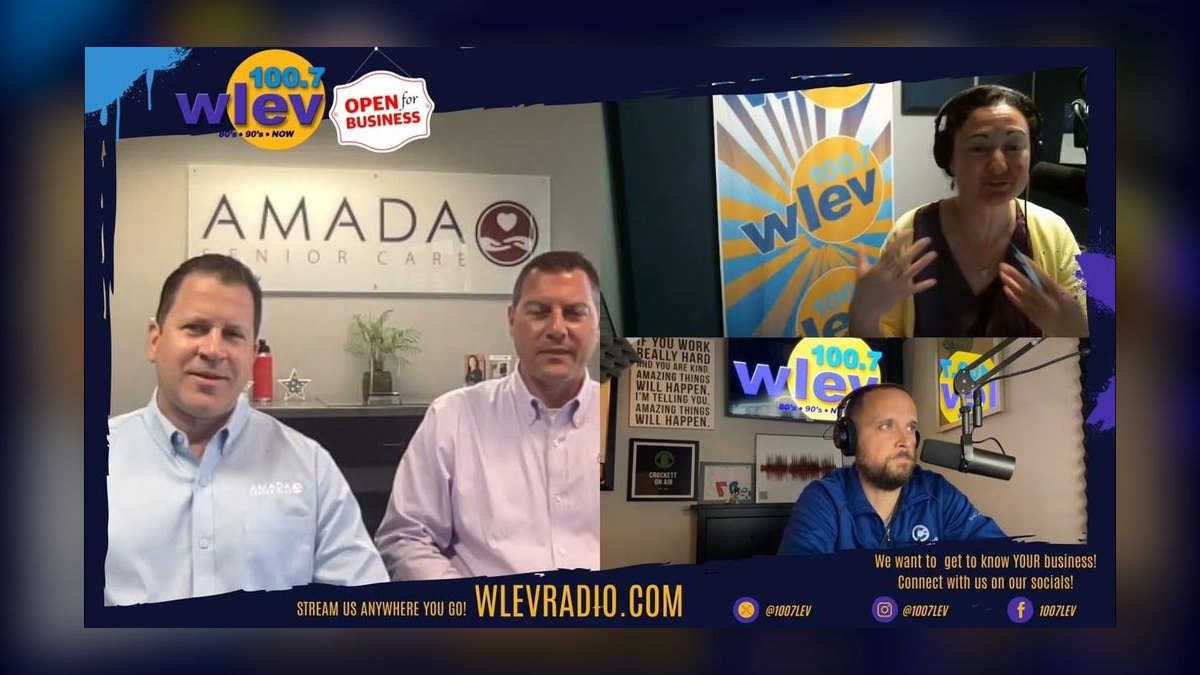
Amada Senior Care, founded in 2007, is not a pure home-care agency. It combines non-medical in-home care — companionship, personal care, assistance with activities of daily living — with a senior-housing advisory service that helps families identify assisted living and other care communities, and with long-term-care insurance claims assistance that helps clients access benefits they already own.
That structure matters enormously to the open-versus-buy decision, because the three lines mature at different speeds and a seller may have built only one of them.
In-home care is the recurring engine. It bills hourly, it scales with caregiver headcount, and its gross margin is thin: you pay caregivers in a rough band of $15–$22 per hour and bill in a rough band of $28–$40 per hour depending on market and service level, and after payroll taxes, workers' compensation, general liability, and unbilled travel and supervision time, the gross margin on care hours lands somewhere in the mid-twenties to mid-thirties percent. Subtract a tiered royalty in the 5%–8% range plus a marketing fee around 2% of gross, and the contribution before your own overhead is meaningfully thinner than the top-line revenue suggests.
The housing advisory line is structurally different. When you place a family into an assisted-living community, the community pays a referral fee — commonly structured as a share of the first month's rent, and in some arrangements approaching a full month. With assisted living pricing in the several-thousand-dollars-per-month range in most metros, a single placement produces a four-figure commission with no caregiver payroll attached, no scheduling burden, and no ongoing supervision liability. The volume is lower and lumpier than care hours, but the margin is nearly pure.
The LTC insurance claims line rarely produces large direct revenue. Its value is client acquisition. A family that discovers, with your help, that their parent has a long-term-care policy that will actually pay for care becomes a care client who can afford more hours than they thought. That is a real differentiator against care-only competitors, and it is a capability that a selling franchisee either built or did not.
So when you evaluate a resale, do not just look at gross revenue. Ask what percentage of net profit came from advisory placements versus care hours, and ask whether the LTC capability is a documented process or one employee's personal skill. An agency doing strong care revenue with no advisory practice is a partially built business — which can be an opportunity if you intend to build that line, or a trap if you assumed it was already there.
How to decide between opening and buying
The decision is not about temperament or capital alone. It is about which of the two hard assets — a caregiver bench or a referral network — you are more confident you can build yourself, and what the local market actually offers.
Work through it in this order. First, establish whether any resale exists in a territory you would accept. Most of the time none does, and the decision resolves itself. Second, if a resale exists, verify caregiver retention before you verify anything financial. Third, only then run the financials.
The two failure branches deserve emphasis. A resale whose caregiver bench is already collapsing is a startup wearing a resale price tag — you will rebuild the workforce anyway, but you paid a premium for the privilege. And a resale whose referral flow lives entirely in the departing owner's personal relationships will see revenue decline in the months after closing, because discharge planners refer to people, not logos. Negotiate a transition period with the seller and, where possible, tie part of the purchase price to revenue retention over the following six to twelve months.
Concrete numbers behind each option
Start with the franchisor's own disclosures. The initial franchise fee sits in a roughly $50,000–$60,000 band, and the total initial investment disclosed in Item 7 runs roughly $100,000 to $200,000 — low for a business with this revenue ceiling, largely because the model is home- or small-office-based rather than build-out heavy. Ongoing fees are a tiered royalty in the 5%–8% range plus a marketing contribution around 2% of gross revenue.
A representative breakdown of where that initial investment goes, for a new unit:
| Line item | Low | High | Note |
|---|---|---|---|
| Initial franchise fee | $50,000 | $60,000 | Per the current FDD |
| Office setup | $8,000 | $30,000 | Home or small leased office |
| Technology and systems | $5,000 | $18,000 | Scheduling, care management, payroll |
| Initial marketing | $20,000 | $50,000 | Referral development and lead generation |
| Training and travel | $10,000 | $28,000 | Owner plus initial staff |
| Licensing, bonding, insurance | $10,000 | $30,000 | State care license, GL, workers' comp |
| Working capital | $30,000 | $80,000 | Payroll and AR float |
| Total (Item 7 range) | ~$100,000 | ~$200,000 |
Liquidity requirements typically land in a $60,000–$100,000 range, with the balance financeable. SBA 7(a) lending is commonly used for franchise acquisition and startup; franchises listed in the SBA Franchise Directory streamline that process, and you should confirm current listing status yourself rather than taking a broker's word for it.
On the revenue side, mature Amada agencies gross in a wide band — roughly $1.0 million to $4.0 million or more — with owner earnings commonly falling in a $130,000–$500,000 range. That spread is not noise. It is the difference between an agency that solved caregiver staffing and one that did not, and between an agency that built the advisory line and one that only bills care hours.

Model the care side conservatively. Fifty active clients averaging thirty billed hours per week produce roughly 78,000 billed hours annually; at a mid-thirties hourly bill rate that is well over $2 million in gross revenue, but caregiver labor and burden will consume the majority of it. A workable planning frame for a mature unit at roughly $2 million gross: caregiver wages and burden near 58% of revenue, office and administrative payroll around 12%, royalty plus marketing fee near 9%, and other operating expenses around 8% — leaving owner earnings in the low-to-mid six figures. Move any one of those lines by three points and owner earnings swing by $60,000.
For a purchase, the price is usually anchored to seller's discretionary earnings, and small home-care agencies typically trade at low single-digit multiples of SDE, adjusted heavily for client concentration, payer mix, license transferability, and caregiver retention. Add the franchisor's transfer fee, legal and diligence costs, and a retention budget for the existing caregiver bench — signing bonuses or short-term wage adjustments at transition are cheap insurance compared to rebuilding a workforce.
The honest comparison over a three-year horizon: opening costs roughly $100,000–$200,000 and typically reaches positive cash flow somewhere in the twelve-to-twenty-four-month range depending on how fast you build both licensure and referrals. Buying costs the acquisition price plus transaction and retention costs, and produces cash flow immediately — but only if the caregiver bench holds. Price the risk of it not holding into your offer.

Territory economics, which cut both ways
Amada grants defined exclusive territories, generally a county or a cluster of ZIP codes. Territory quality determines your ceiling more than your operating skill does, and it applies to both paths — when you open, you choose it; when you buy, you inherit it.
What a strong territory looks like: a substantial resident population aged 75 and older, median household income high enough that families can pay privately for meaningful weekly hours, and a dense cluster of senior-living communities within a thirty-minute drive. That density is what makes the advisory line work — placements require a real menu of options to place people into.
What a weak territory looks like: a scattered rural senior population where caregiver drive time between clients is long and largely unbillable, and where there are few communities to place families into. Rural territories are not unworkable, but they compress margins on both revenue lines simultaneously.
The 85-and-older cohort is the fastest-growing age segment, and those clients need the most hours and the most complex care. A territory weighted toward that cohort has the highest revenue ceiling and the highest staffing difficulty — you need caregivers comfortable with dementia care, transfers, and end-of-life support, and that is a narrower labor pool.

Before you sign anything, do this work yourself: pull a demographic report for the proposed territory from a commercial provider, map every licensed senior-living community inside it, and call eight to ten of them. Ask how many placement inquiries they receive monthly and which agencies they currently work with. A community that says it fields several calls a week and works with two or three agencies is describing an opening. A community that says it is at capacity and rarely takes outside referrals is describing a closed door.
One 2027-specific factor to check: Medicare Advantage plans have increasingly offered non-medical in-home support as a supplemental benefit, and penetration varies enormously by county. High penetration means a payer source beyond private pay, but it also means claims administration, authorization tracking, and slower collection. If your territory is MA-heavy, budget for billing capability from day one rather than discovering it in month four.
The caregiver problem, which decides both paths
Every other variable in this business is downstream of one question: can you recruit and retain caregivers? Home care carries high annual turnover industry-wide, and the agencies that fail rarely fail for lack of clients — they fail because they had to turn away referrals they could not staff. A referral you decline does not come back; the discharge planner calls the agency that said yes.

The 2027 labor picture makes this harder rather than easier. Caregiving competes directly with retail, warehouse, and hospitality employers who often offer comparable or better hourly pay with predictable, contiguous shifts and none of the emotional weight. Home care offers split shifts, weekend and overnight coverage, unpaid travel between clients, and the genuine difficulty of dementia and end-of-life care. Minimum wage increases in many states compress the spread between your pay rate and your bill rate unless you raise bill rates in step — and raising bill rates on private-pay families has a ceiling.
Three practices separate operators who staff successfully from those who do not.
Schedule consistency beats hourly rate more often than owners expect. A caregiver given the same clients, the same days, and predictable weekly hours will stay through a modest pay gap. A caregiver bounced across clients with volatile hours will leave for a warehouse job at the same wage. Invest in scheduling discipline and in the software to support it; this is where the franchisor's systems earn their royalty, and where you should supplement if they fall short.
A real benefits package pays for itself arithmetically. Health insurance stipends, paid time off, mileage reimbursement, and retention bonuses cost real money per caregiver per year. Replacing a trained, background-checked, client-matched caregiver costs recruiting spend, onboarding hours, training time, supervisory attention, and often a temporary service-quality dip that risks the client relationship. Run the comparison for your own numbers before assuming you cannot afford retention.

Specialization narrows your labor market in a useful direction. Operators who focus — dementia care, post-hospital recovery, veteran clients through VA-related programs — attract caregivers who chose that work deliberately. Those caregivers stay longer, and the specialization simultaneously sharpens your referral pitch to discharge planners and community relations directors who need a specific problem solved.
Budget your own time honestly: expect staffing to consume a large share of your working week through the first two years, whether you open or buy. If that prospect sounds intolerable, this franchise is the wrong purchase regardless of the financials. If it reads as a solvable operating problem, it is also the moat — because your competitors are struggling with exactly the same thing.
Implementation details and sequencing
The sequence differs by path, but both start in the same place: the Franchise Disclosure Document. Read Item 7 for the investment range, Item 19 for any financial performance representation, Items 5 and 6 for fees, Item 12 for territory rights and any reserved rights the franchisor retains, and Item 20 for the outlet table — openings, closures, transfers, and terminations over the disclosed years. The transfer and termination counts in Item 20 tell you more about franchisee health than any brochure. Have a franchise attorney read it with you; this is not a document to skim.

Then talk to current and former franchisees. Item 20 gives you contact information. Call at least eight, and include at least two who left the system. Ask specifically: what is your caregiver turnover rate, how long did it take to reach positive cash flow, what percentage of your net profit comes from housing advisory placements, how much support did you get on licensure, and would you buy this franchise again.
If you open, the ordering constraint that trips people up is licensure. State requirements for non-medical home care vary widely — some states require a home care organization license with inspections and administrator qualifications, others require far less — and the timeline is outside your control. Start it first. Recruit your initial caregiver cohort before you take your first client, not after; nothing damages a new agency's referral reputation faster than accepting a case and failing to staff it.
If you buy, the ordering constraint is the caregiver roster. Meet key caregivers before closing where the seller permits it, structure retention incentives to pay at ninety and one hundred eighty days post-close, and negotiate a seller transition period long enough for you to be personally introduced to every meaningful referral source. Verify that the state license transfers or that a new one can be issued without a service interruption — in some states this is routine and in others it is the single longest item on the closing timeline. Confirm the franchisor's transfer fee and approval process early, because franchisor consent is a real gate, not a formality.
Whichever path you take, build the advisory line deliberately rather than hoping it appears. Set a monthly placement target, track which communities produce commissions, and treat community relations directors as accounts you call on regularly. Advisory revenue carries almost no incremental cost, so it converts directly into owner earnings — and it is the line that most reliably separates the $130,000 owner from the $400,000 owner.
Related questions
Is buying an existing Amada unit always more expensive than opening one?
Usually, because you pay for existing cash flow on top of transaction costs. But a distressed resale — burned-out owner, thinning caregiver bench — can price below what a startup plus eighteen months of runway costs. Verify why it is cheap before assuming it is a bargain.
Do I need healthcare experience to run one?
No, though it shortens the learning curve on compliance and care planning. Sales ability and staffing discipline matter more. Franchisors train on operations; they cannot train persistence in referral development, which is the skill that actually determines revenue.
How long until a new unit reaches positive cash flow?
Commonly twelve to twenty-four months, driven mostly by licensure timing and how quickly you build referral flow. Operators with existing local healthcare relationships often move faster. Fund working capital for the slow case, not the fast one.
What happens to the existing caregivers when I buy a unit?
They are at-will employees who owe you nothing. Expect meaningful attrition at transition unless you actively retain them. Retention bonuses paid at ninety and one hundred eighty days cost far less than rebuilding a trained, client-matched bench.
Can I own more than one territory?
Multi-unit ownership is common in home care, but sequence it. Add a second territory only after the first has an administrator who can run scheduling and staffing without you, since your constraint is management attention, not capital.
FAQ
What is the total investment to open an Amada Senior Care franchise?
The current FDD discloses a total initial investment in Item 7 of roughly $100,000 to $200,000, including an initial franchise fee in the $50,000–$60,000 range. That range covers office setup, technology, licensing and insurance, initial marketing, training, and working capital. Your actual figure depends on your state's licensing requirements, whether you run from home or lease space, and how much payroll float your market demands. Confirm the current-year numbers in the FDD you receive rather than relying on any published summary.
What are the ongoing fees?
A tiered royalty in the 5%–8% range on gross revenue, plus a marketing fee around 2% of gross. Because home care carries thin gross margins on care hours, that combined roughly 7%–10% off the top is a meaningful line in your model — build it into your pricing rather than treating it as an afterthought. Confirm the exact tier structure and any local advertising minimums in Items 5 and 6 of the FDD.
Which is riskier, opening or buying?
They carry different risks. Opening risks a longer-than-expected ramp: you fund payroll and marketing with no revenue while licensure and referral development take their own time. Buying risks inherited problems: caregiver attrition at transition, referral relationships that were personal to the seller, compliance history you did not create, and client concentration you did not price. Opening's risk is time; buying's risk is that the assets you paid for walk out the door.
How much of the profit comes from the housing advisory line?
It varies enormously by operator because it depends on whether the owner built the practice. Advisory placements generate four-figure commissions with essentially no incremental cost — no caregiver payroll, no scheduling, no ongoing supervision — so they convert almost entirely to profit. Care hours still supply most of the top line, but advisory can supply a disproportionate share of the bottom line. When you evaluate a resale, ask the seller to break out placement revenue separately.
Why does caregiver staffing dominate the decision?
Because demand is not the constraint — supply is. Home care turnover runs high industry-wide, and competing employers in retail, warehousing, and hospitality offer comparable pay with better schedules and less emotional load. An agency that cannot staff turns away referrals, and referral sources stop calling agencies that say no. Whether you open or buy, your ability to recruit and retain caregivers sets your revenue ceiling more than territory, marketing, or capital does.
Is the senior care market still attractive in 2027?
The demographic case is durable: the population aged 75 and older continues to grow, the 85-plus cohort fastest of all, and most seniors prefer to age at home. Care is closer to a necessity than a discretionary purchase, which makes demand relatively resilient across economic cycles. But favorable demographics attract competitors, and the same aging trend that creates clients also tightens the labor market. Attractive category, operationally demanding business.
Sources
- https://www.amadaseniorcare.com/ — Amada Senior Care corporate and franchising site
- https://www.ftc.gov/business-guidance/resources/franchise-rule-compliance-guide — FTC Franchise Rule compliance guide, including required FDD items
- https://www.bls.gov/ooh/healthcare/home-health-aides-and-personal-care-aides.htm — BLS occupational outlook for home health and personal care aides
- https://www.sba.gov/funding-programs/loans/7a-loans — SBA 7(a) loan program overview
- https://www.sba.gov/document/support-sba-franchise-directory — SBA Franchise Directory
- https://www.census.gov/topics/population/older-aging-populations.html — U.S. Census Bureau data on older and aging populations
- https://acl.gov/ — Administration for Community Living, federal aging and long-term services resources
- https://www.medicare.gov/health-drug-plans/health-plans/your-health-plan-options/medicare-advantage-plans — Medicare Advantage plan overview
- https://www.franchise.org/ — International Franchise Association
- https://www.franchisebusinessreview.com/ — Franchise Business Review franchisee satisfaction research
Related on PULSE
- Should I open or buy a HomeWell Care Services franchise in 2027?
- Should I open or buy a FirstLight Home Care franchise in 2027?
- Should I open or buy a Home Helpers Home Care franchise in 2027?
- Should I open or buy a Sploot Veterinary Care franchise in 2027?
- Should I open or buy a Shine Window Care franchise in 2027?
This page will be disappearing soon. Save it to your device for $1 — or read it free while it is here.
@Kory-White- · if Venmo asks, the last 4 of my number are 2012
This page is gone.
This one is off the shelf now. $1 keeps it on your phone for good — the whole page, pictures and diagrams included.
 pulse-qShould I open or buy a Bath Planet franchise in 2027?
 pulse-qHow Do I Get My Jewelry Staff to Offer Financing on Every Sale in 2026?
 pulse-qShould I open or buy a Concrete Craft franchise in 2027?
 pulse-qShould I open or buy a FirstLight Home Care franchise in 2027?
 pulse-qHow Do I Increase My Average Ticket Without Selling Anything Extra in 2026?
 pulse-qHow Many Sales Reps Do I Need to Hire for My Window Blinds Company in 2027?
 pulse-qDo I Need a Fractional CRO for My Multi-Unit Retail Business in 2026?
 pulse-qHow Many Sales Reps Do I Need to Hire for My Dental Equipment Company in 2026?
 pulse-qHow Do I Make My Sales Goals Visible to the Whole Team in 2026?
 pulse-qHow Many Technicians Should I Schedule Each Day at My Nail Salon in 2026?