

Should I open or buy a Taco Bueno franchise in 2027?
 Curated byKory White · Fractional CRO · Maryland
Quality
Certified
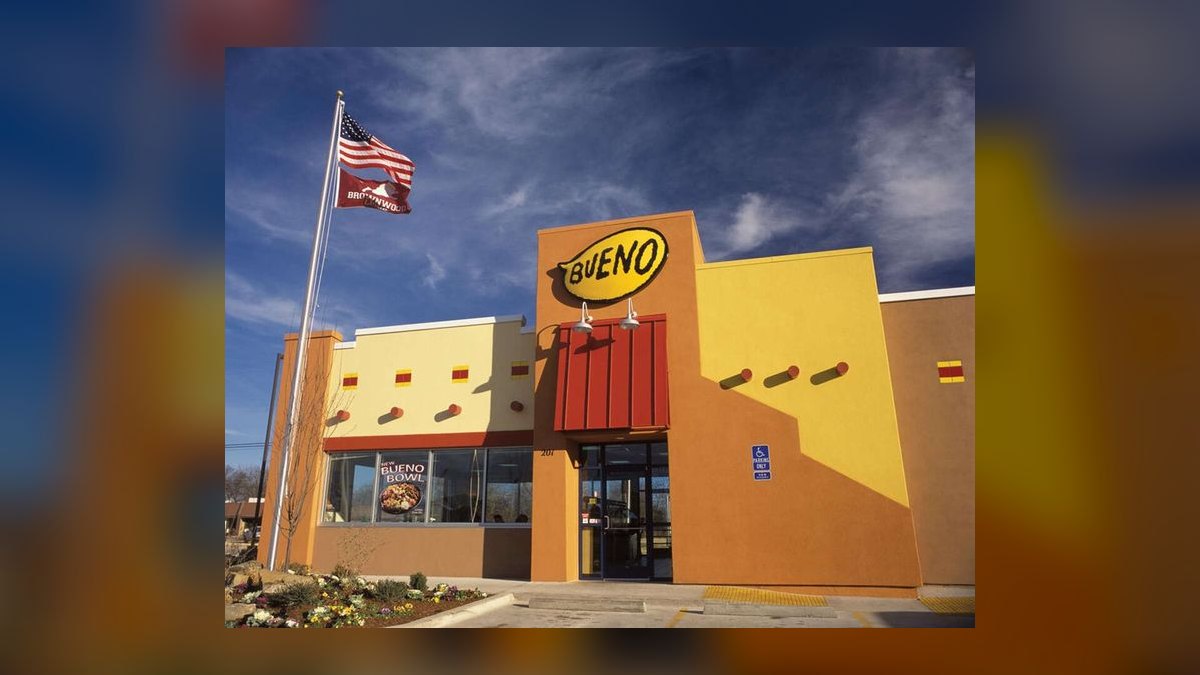
Only if the current franchisor proves stable and is actively franchising. Taco Bueno went through a 2018 bankruptcy and has run substantially company-owned since, so verify availability first. If open, budget roughly $600,000 to $1,200,000 total investment. Otherwise, buy into a stronger Tex-Mex concept instead.
Building new versus buying an existing Taco Bueno location
These are two genuinely different businesses wearing the same sign, and the mistake most first-time franchise buyers make is treating them as variations on one decision. They are not. Building new means you sign a franchise agreement, secure a site, negotiate a lease or purchase land, run a construction project for six to twelve months, hire and train a crew from zero, and then spend eighteen to twenty-four months building a customer base in a trade area that may or may not already know the brand. Buying an existing unit means you acquire a going concern with a sales history, an established crew, a landlord relationship already in place, and a customer base that walks in the door on day one — and you inherit every problem the previous operator created, including deferred equipment maintenance, a soured reputation from a bad health inspection, and a lease with three years left on it.
The financial shape of the two paths differs sharply. A ground-up build in the Texas or Oklahoma footprint puts most of your capital into physical assets: building shell, kitchen equipment, signage, drive-thru infrastructure. That capital is at least partly recoverable — equipment can be sold, a building can be leased to someone else. An acquisition puts a meaningful chunk of capital into goodwill and the multiple you pay above the hard asset value, and goodwill evaporates the moment the brand stumbles again. If you pay a 2.5x multiple on $180,000 of seller's discretionary earnings, roughly $450,000, you are betting that the trailing earnings are real and repeatable. If the seller was running lean on labor to inflate the numbers before listing, you find out in month four when your labor cost snaps back to normal and your earnings fall by a third.
There is also the question of what the franchisor will even permit. A brand that has spent years consolidating into company operation may allow a transfer of an existing franchised unit while refusing to grant new development rights — or may want to keep the strongest units in-house and only release the weaker ones. Any existing unit offered to an outside buyer deserves the question: why is this available and why did corporate not take it? Sometimes the answer is benign, a retiring operator or an estate sale. Sometimes it is a trade area that has been hollowed out by a new competitor two blocks away.
The third path deserves naming even though it is not what the question asks. If you want Tex-Mex quick service in the same footprint and the Taco Bueno franchisor turns out to be unavailable or shaky, established alternatives are actively franchising — Taco Bell and Del Taco at national scale, Taco John's and Fuzzy's Taco Shop as mid-size options, Taco Cabana with limited franchising, and fresh-Mex fast casual concepts like Salsarita's and Pancheros. Or you build an independent Tex-Mex concept and keep every dollar of royalty. The category demand is durable. The specific question here is whether this particular franchisor is a safe place to park $600,000 or more of your capital.
How the two paths actually compare on risk
Ramp risk belongs almost entirely to the new build. An existing Taco Bueno that has been operating for five years has a known weekly sales figure you can verify against POS exports, bank deposits, and sales tax filings. A new unit has a projection, and projections in quick service are optimistic more often than not. If mature units in the system gross somewhere in the $700,000 to $1,400,000 range, a new unit realistically lands well under that for the first year and a half while awareness builds — and every month you spend below breakeven burns working capital you cannot get back.
Condition risk belongs almost entirely to the acquisition. Fryers, walk-in coolers, and HVAC units have finite lives. A ten-year-old unit with original equipment is carrying $80,000 to $150,000 of deferred capital expenditure that will come due within your first three years, and the franchisor will likely require a remodel to current brand standards as a condition of the transfer — that alone can run $150,000 to $350,000 depending on how far behind the unit has fallen. Ask for the remodel requirement in writing before you agree on a price, and negotiate it off the purchase price.
Then there is the risk that sits on both paths equally: the franchisor. A bankruptcy in the brand's history is not automatically disqualifying — plenty of restaurant brands have restructured and come back stronger — but it changes what due diligence has to look like. You need to know who owns the brand today, what their capital position is, how many units exist now versus five years ago, whether that count is rising or falling, and whether the franchise support infrastructure that existed pre-bankruptcy still exists at all. A franchisor with a thin field-support team means you are paying a royalty for a logo and a supply agreement, not for the operational help a royalty is supposed to buy.
Supply chain deserves its own line here. A restructuring reshapes supplier relationships, sometimes permanently — vendors who took a haircut in a bankruptcy often demand tighter terms afterward or exit the relationship. A system with two or three primary distributors is materially more fragile than one with seven or eight. When a distribution center has a problem, a thin system has no second source, and a Tex-Mex restaurant without protein for four days does not simply lose four days of sales; it loses the customers who drove over and found the menu half-dark. Ask current operators directly how many out-of-stock events they had in the last twelve months and what the franchisor did about them.
How to decide between them

Work the decision in a fixed order, because the questions are not equally weighted and answering them out of sequence wastes months. The first gate is not financial at all — it is whether franchising is available. Contact the corporate development team directly and get a written answer on whether new franchise agreements are being granted and whether transfers of existing units to outside buyers are permitted. If the answer to both is no, the decision is made for you and you should move to an alternative concept immediately rather than spending another week on it.
If franchising is available, the second gate is franchisor health, and it has to be cleared before you spend a dollar on site work or a purchase agreement. Request the current Franchise Disclosure Document. Item 1 tells you the ownership structure and the brand's history, including prior bankruptcies. Item 3 lists litigation. Item 4 lists bankruptcy. Item 19 is the financial performance representation, and if it is absent or unusually narrow, that absence is itself information — a franchisor confident in unit economics generally publishes them. Item 20 gives you the unit count table showing openings, closures, and transfers over three years, plus a list of current and former franchisees. Call the former franchisees. They have no reason to sell you anything.
The third gate is your own capital position and your willingness to operate. Quick service is not a passive investment. An owner-operator working the business six days a week outperforms an absentee owner paying a general manager, reliably and by a wide margin. If you intend to be absentee, add $55,000 to $75,000 of annual general manager compensation to every projection you build and expect thinner results anyway.
The decision tree above has one property worth calling out: nearly every branch leads back to the alternative-concept node. That is not pessimism about Tex-Mex — the category is healthy — it is a reflection of how much weight franchisor stability carries when a brand has a restructuring in its recent past. You are not evaluating whether people want tacos. You are evaluating whether this particular franchise organization will still be providing support, supply, and marketing in year seven of a twenty-year agreement.

One more decision input that operators consistently underweight: the trade area itself. Regional loyalty to Taco Bueno is real and concentrated in Texas and Oklahoma, which cuts both ways. Inside the footprint, brand awareness does real work for you and reduces the marketing spend needed to build volume. Outside it, you are opening an unknown brand while paying a royalty for name recognition that does not exist in your market — which is the worst of both worlds. If the site under consideration is outside the core footprint, the case for an independent concept or a nationally-known brand gets substantially stronger.
What the numbers actually look like on each path
Start with the build. Total initial investment for a new unit runs roughly $600,000 to $1,200,000, and the components break down about like this: franchise fee of $30,000 to $40,000; building and site work of $350,000 to $700,000; kitchen equipment of $150,000 to $320,000; signage and interior decor of $25,000 to $70,000; opening inventory of $12,000 to $30,000; grand opening marketing of $15,000 to $40,000; training and travel of $12,000 to $35,000; and working capital of $40,000 to $110,000. Confirm every one of these against the current FDD Item 7 before you rely on them — franchise cost tables move year to year, and construction inflation has been unkind to restaurant builds.
That working capital line is where people get hurt. Forty thousand dollars of working capital is adequate for a unit that hits its numbers immediately and has never happened in the history of restaurant openings. Plan on $200,000 to $300,000 of liquid reserves beyond the initial investment. That reserve is what lets you pay above-market wages when the local labor market tightens, absorb a supply disruption, replace a compressor in month nine, and keep the doors open through a slow first summer. Operators who open with no cushion do not fail because the concept is bad; they fail because they run out of cash before the trade area learns they exist.

Now the operating math on a mature unit. Take a unit grossing $1,000,000. Food cost in Tex-Mex quick service typically runs in the low thirties as a percentage of sales — call it 31%, or $310,000. Labor runs high twenties to low thirties with crew wages in the $12 to $15 range and a general manager in the $45,000 to $65,000 band — call it 29%, or $290,000. Occupancy including rent, utilities, and insurance runs around 10% at $100,000 in a favorable lease and materially higher in expensive real estate. Royalty and other operating expenses together take roughly 15%, or $150,000. That leaves approximately $150,000 before debt service. It is a real income. It is not a windfall, and it assumes competent cost control.
Change the top line and the picture changes fast, because most of these costs are semi-fixed. At $700,000 of revenue, food and labor scale down proportionally but occupancy and much of the operating expense line do not, and pre-debt cash flow compresses toward $35,000 to $70,000 — a return that does not justify $600,000 of capital and sixty-hour weeks. At $1,400,000, the same cost structure throws off well north of $200,000. Unit volume is the whole ballgame in quick service, which is why site selection matters more than almost any other decision you will make.
Layer debt on top. An SBA 7(a) loan covering 75% of an $800,000 project is $600,000 of principal. At a ten-year amortization and rates in the range lenders have been quoting for restaurant deals, annual debt service lands somewhere around $85,000 to $100,000. Subtract that from $150,000 of pre-debt cash flow and you are taking home $50,000 to $65,000 while working full-time in the store — before you pay yourself a manager's salary, which you should be counting separately. That is the honest picture, and it is why the ramp reserve and the site quality are not optional details.

For the acquisition path, the arithmetic is different. Existing quick-service units typically trade at multiples of seller's discretionary earnings in the low-to-mid single digits, with the exact multiple driven by lease term remaining, equipment condition, sales trend, and brand strength. A weak brand pulls the multiple down, which is the one place where a troubled franchisor works in your favor as a buyer. Build your offer from the hard assets up: what would you pay for this equipment, this lease, and this trailing cash flow if the sign said something else? Then decide what the brand is worth on top. If the answer is "not much," you have learned something important about whether to buy in at all.
Verify the seller's numbers three ways. Pull three years of federal tax returns, not just a profit and loss statement. Pull sales tax filings and reconcile them to reported revenue. Pull twelve months of POS daypart data and look for the pattern of a seller who cut labor hours in the trailing six months to dress up earnings — declining labor cost with flat sales is the tell. If the seller will not produce tax returns, walk away. There is no version of this deal where that omission turns out fine.
Sequencing the first ninety days and beyond
The order of operations matters because several of these steps have long lead times and a few of them can kill the deal outright. Do the cheap disqualifying work first.
Weeks one and two: contact corporate development and establish, in writing, whether franchising or transfer is available and in which markets. Simultaneously, assemble your own financial package — personal financial statement, three years of tax returns, proof of liquid capital — because no franchisor and no lender will engage seriously without it. Get a pre-qualification conversation started with two SBA-preferred lenders that have restaurant experience.

Weeks three through six: read the FDD in full, twice, and have a franchise attorney read it once. Focus on Item 7 for the real investment range, Item 11 for what support you are actually promised, Item 12 for territory protection — or its absence, which is common and materially affects your risk — Item 17 for renewal and transfer terms, and Item 19 for whatever financial performance data exists. Then work the Item 20 franchisee list. Call fifteen operators, both current and former. Ask each one four specific questions: what did you actually net last year, how long did it take to get there, what does the franchisor do for you that you could not do yourself, and would you sign again.
Weeks seven through ten: if the brand cleared the earlier gates, do market and site work. Inside the Texas and Oklahoma footprint, look at daypart traffic counts, the competitive set within a two-mile radius, and daytime employment density. Tex-Mex quick service lives on lunch, so an area with heavy daytime employment beats a residential area with higher rooftop counts. If you are buying an existing unit, spend three separate days sitting in the parking lot counting cars at lunch and dinner and comparing your count to the reported transaction volume.
Weeks eleven through thirteen: negotiate. On a build, that means the lease — push for a tenant improvement allowance, a rent abatement period covering construction and the first sixty days of operation, and a personal guaranty that burns off after three to five years rather than running the full term. On an acquisition, that means the purchase agreement — allocate purchase price sensibly for tax purposes, escrow a portion against undisclosed liabilities, and require the seller's cooperation through a thirty-day transition.
Beyond opening, the operating disciplines that separate profitable units from marginal ones are unglamorous and specific. Count inventory weekly, not monthly — a monthly count hides a two-week theft or portioning problem until it has cost you thousands. Schedule labor against a forecast built on the same weekday last week, not on a fixed template. Watch transaction count as a separate metric from revenue, because a rising average ticket masking a falling transaction count means you are losing customers while price increases temporarily paper over it.
Turnover deserves planning rather than reaction. Crew turnover in quick service runs high enough that you should assume you will hire and train well over your headcount every year. Build a standing pipeline: keep applications open permanently, promote from within, and pay a referral bonus that is cheaper than the training cost of a stranger. In markets where warehouse and logistics employers are paying meaningfully above restaurant wages, competing on hourly rate alone is a losing game — schedule stability, predictable hours, and a real path to shift lead do more retention work per dollar.
Finally, plan the technology question before you sign, not after. Digital ordering, third-party delivery integration, and a functioning loyalty program are table stakes now, and if the franchisor's approved stack handles them poorly you will be doing manual order entry that adds minutes per ticket and generates errors that cost you refunds. Ask current operators specifically how delivery orders reach their kitchen and what a modernized point-of-sale setup cost them. If the answer is that operators are patching gaps with their own money, price that into your investment budget as a real line item, not a contingency.
Related questions
Is Taco Bueno currently accepting new franchisees?
The brand has operated substantially company-owned since its 2018 bankruptcy and restructuring, and no public 2027 franchise expansion program has been announced. Contact corporate development directly for a written answer on availability before doing any other work.
Does the 2018 bankruptcy disqualify the brand entirely?
No, but it raises the diligence bar considerably. Restaurant brands do restructure and recover. What matters is current ownership, capital position, unit count trend, and whether field support still exists — all verifiable through the FDD and franchisee interviews.
Should I look outside Texas and Oklahoma?

Generally no. Brand awareness is concentrated in that footprint and does real marketing work for you there. Outside it, you pay a royalty for recognition that does not exist locally, which is the weakest possible position.
How much liquid capital do I need beyond the investment?
Plan on $200,000 to $300,000 in reserves above the $600,000 to $1,200,000 total investment. That cushion covers the eighteen-to-twenty-four-month ramp, equipment failures, supply disruptions, and above-market wages during a tight labor market.
Is buying an existing unit safer than building?
Usually, if the books verify. You get real sales history instead of a projection. But you inherit deferred maintenance, a possibly mandatory remodel of $150,000 to $350,000, and the previous operator's reputation in that trade area.
FAQ
What is the total initial investment for a new Taco Bueno unit?
Roughly $600,000 to $1,200,000 all-in, covering a franchise fee of $30,000 to $40,000, building and site work of $350,000 to $700,000, kitchen equipment of $150,000 to $320,000, signage, opening inventory, grand opening marketing, training, and working capital. Confirm the current figures in FDD Item 7, since cost tables are revised annually and construction pricing moves.
What do mature units gross, and what does that leave in profit?

Mature locations have historically grossed in the $700,000 to $1,400,000 range. On a $1,000,000 unit with food at about 31%, labor near 29%, occupancy around 10%, and royalty plus operating expenses near 15%, you are left with roughly $150,000 before debt service. Debt on a typical SBA-financed project consumes a large share of that.
How do I verify a selling franchisee's numbers?
Demand three years of federal tax returns rather than a prepared profit and loss statement, reconcile reported revenue against sales tax filings, and pull twelve months of point-of-sale data. Watch for labor hours cut in the trailing six months with flat sales — that is a seller dressing up earnings before listing. No tax returns means no deal.
What are the biggest operational risks specific to this brand?
A thinner post-restructuring supply chain with fewer primary distributors, meaning out-of-stock events with no second source; a digital and point-of-sale stack that may lag competitors and require your own capital to fix; and uncertain field support depth, which determines whether your royalty buys real help or just a logo and a supply agreement.
How long does it take from signing to opening?
Six to eighteen months for a ground-up build, driven mostly by site control, permitting, and construction, with permit timelines varying widely by municipality. An acquisition of an existing unit can close in sixty to ninety days once financing and franchisor transfer approval are in hand, though a required remodel can extend that considerably.
What should I do if the franchisor turns out to be unavailable or unstable?
Move immediately to an alternative rather than waiting. Taco Bell and Del Taco franchise at national scale, Taco John's and Fuzzy's Taco Shop are mid-size options, and Salsarita's and Pancheros serve the fresh-Mex fast casual segment. An independent Tex-Mex concept eliminates royalty entirely at the cost of brand recognition.
Sources
- https://www.ftc.gov/business-guidance/resources/franchise-rule-compliance-guide — FTC guidance on the Franchise Rule and what an FDD must disclose
- https://www.ftc.gov/business-guidance/resources/consumers-guide-buying-franchise — FTC consumer guide to evaluating a franchise purchase
- https://www.sba.gov/funding-programs/loans/7a-loans — SBA 7(a) loan program terms, eligibility, and structure
- https://www.franchise.org/ — International Franchise Association, industry data and franchisee resources
- https://www.qsrmagazine.com/ — QSR Magazine, quick-service restaurant industry trends and unit economics reporting
- https://www.entrepreneur.com/franchises/franchise500 — Entrepreneur Franchise 500 rankings and evaluation criteria
- https://www.restaurant.org/research-and-media/research/ — National Restaurant Association industry research on cost and labor trends
- https://www.franchisebusinessreview.com/ — Franchise Business Review, franchisee satisfaction surveys and benchmarks
- https://www.bls.gov/oes/current/oes_nat.htm — Bureau of Labor Statistics wage data for food service occupations
- https://www.nasaa.org/industry-resources/corporation-finance/franchise-resources/ — NASAA franchise registration and state-level filing resources
Related on PULSE
- Should I open or buy a Taco Cabana franchise in 2027?
- How Many Employees Should I Schedule Each Shift at My Taco Shop?
- Should I open or buy a The Junkluggers franchise in 2027?
- Should I open or buy a Pak Mail franchise in 2027?
- Should I open or buy a PostNet franchise in 2027?
- Should I open or buy a Fish Window Cleaning franchise in 2027?
This page will be disappearing soon. Save it to your device for $1 — or read it free while it is here.
@Kory-White- · if Venmo asks, the last 4 of my number are 2012
This page is gone.
This one is off the shelf now. $1 keeps it on your phone for good — the whole page, pictures and diagrams included.
 pulse-qShould I open or buy a Sunny Street Cafe franchise in 2027?
 pulse-qShould I open or buy a Nekter Juice Bar franchise in 2027?
 pulse-qShould I Hire a Fractional CRO If I Need a 30-60-90 Plan Before a Board Meeting in 2026?
 pulse-qShould I open or buy a Cafe Rio franchise in 2027?
 pulse-qHow Does a Fractional CRO Fix a Broken Sales Comp Plan in 2026?
 pulse-qWhat Service Fees Should an Event Planning Business Charge in 2026?
 pulse-qShould I Hire a Fractional CRO If My Net Revenue Retention Is Below 100 Percent in 2026?
 pulse-qShould I open or buy a Hammer & Nails franchise in 2027?
 pulse-qShould I Hire a Fractional CRO If I Want a Revenue Audit Before I Commit Budget in 2026?
 pulse-qShould I Hire a Fractional CRO If I Have No RevOps Function Yet in 2026?