
Should I open or buy a Lightbridge Academy franchise in 2027?
 Curated byKory White · Fractional CRO · Maryland
 PULSEKNOWLEDGE LIBRARY
Quality
Certified

Open or buy a Lightbridge Academy franchise in 2027 only if you can fund a $500,000 to $6,000,000+ real-estate-driven project, absorb a one-to-three-year enrollment ramp, and manage licensed childcare staffing. Well-capitalized operators in family-dense suburbs can clear $200,000 to $650,000 at maturity. Undercapitalized buyers should not proceed.
The operator who almost signed the wrong lease
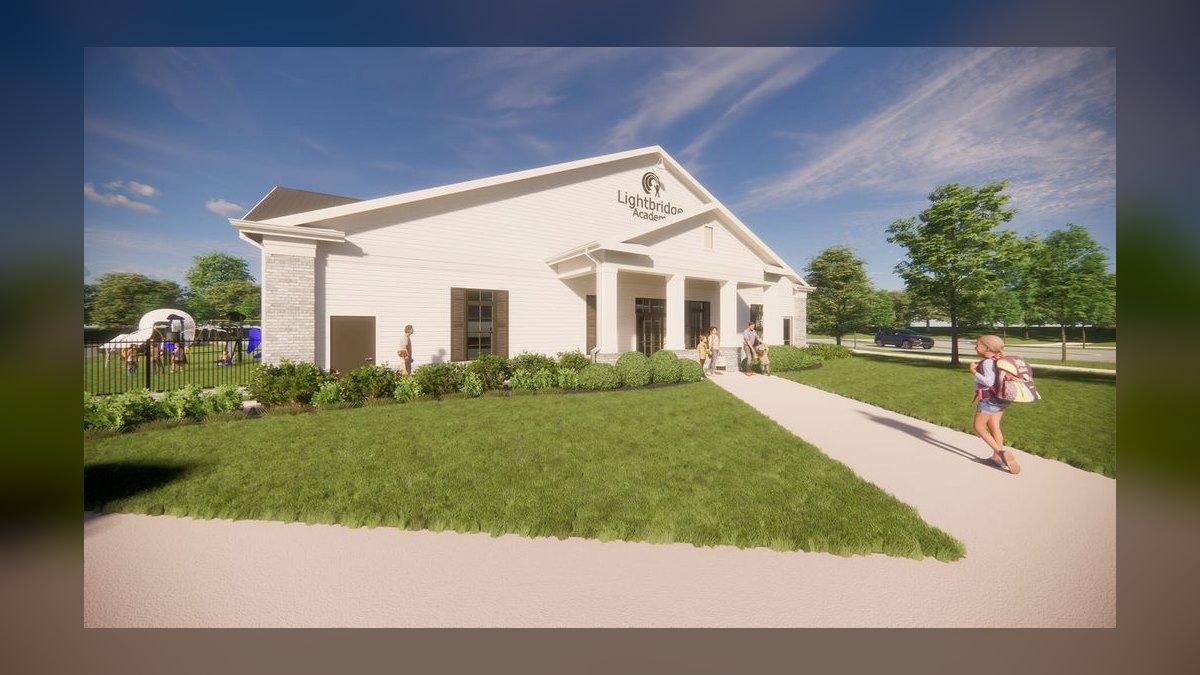
A prospective franchisee walks into this decision with $400,000 liquid, a home-equity line, and a spreadsheet that says a childcare center in a growing suburb prints money. That spreadsheet is usually right about the endpoint and catastrophically wrong about the path. Consider the shape of the actual commitment: a standalone 8,000 to 12,000+ square foot building, licensed for somewhere between 100 and 200 children, with a dedicated drop-off lane, fenced outdoor play space, and parking that can absorb 30-plus staff plus a morning surge of parents. That is not a strip-mall unit you sign for $6,000 a month. That is a pad site, a ground-up build or a heavy conversion, and a 15-year lease obligation or a mortgage.
Here is the scenario that separates a good outcome from a bad one. Two buyers look at the same brand in the same year. Buyer A finds a site in a census tract with roughly 2,000-plus households earning six figures, a visible corner on a commuter route, and a documented childcare supply gap. The rent is $31,000 a month, which stings. Buyer B finds a cheaper site four miles out — $21,000 a month, a $10,000 monthly savings that looks like $120,000 of annual profit on the spreadsheet. Buyer B signs.
Three years later Buyer A is running at 118 enrolled children against a licensed capacity of 140, grossing roughly $2.4 million, with a waiting list. Buyer B is stuck at 68 children because the household density simply is not there, grossing about $1.1 million, and the $10,000 monthly rent savings never came close to covering the enrollment gap. Buyer B's cheaper lease cost them roughly $1.3 million a year in revenue they can never recover, because you cannot relocate a licensed childcare center without starting the entire licensing and construction cycle over.

That is the framing problem with this franchise specifically. In most franchise categories, a mediocre site produces a mediocre business you can grind into a decent one with better marketing and better operations. In licensed childcare, the site sets a hard ceiling on enrollment, enrollment sets a hard ceiling on revenue, and no amount of operational excellence moves that ceiling. You are making a single, largely irreversible decision — where to put the building — and then spending the next decade living inside the consequences. Everything else in this analysis is downstream of that.
The second scenario worth internalizing is the buy-versus-open fork. Acquiring an existing center at, say, 85% enrollment means you skip the ramp entirely: cash flow starts in month one, the license is already granted, and the teaching staff already knows the parents. You pay for that in a purchase multiple, and you inherit whatever staffing culture and licensing history came with it. Opening fresh means you control the site, the build, and the culture — and you fund 18 to 36 months of construction, licensing, and ramp before the business pays you anything. Neither is wrong. But an operator with $400,000 liquid and no reserve should be looking at acquisition or at a different category entirely, not at ground-up construction.
How the center's economics actually work
The mechanism is simpler than most franchise models and more brutal. Revenue is recurring tuition, billed weekly or monthly, from a headcount that changes slowly. Costs are dominated by two lines that barely flex: payroll, governed by state-mandated teacher-to-child ratios, and occupancy, governed by a lease you signed years earlier. Everything profitable happens in the gap between those two fixed structures and your filled seats.
Start with ratios, because they drive the whole model. Every state sets maximum children per teacher by age group, and infants carry the tightest ratios — often something like one teacher per three or four infants, loosening progressively through toddlers, preschoolers, and school-age. That means an infant room generates the highest tuition per child and the highest labor cost per child simultaneously, and frequently the thinnest margin. Preschool and pre-K rooms, with far looser ratios, are where the contribution margin actually lives. A center that fills its preschool rooms and runs its infant rooms at 70% is often more profitable than one doing the reverse, even at lower gross revenue.
This is why "capacity" is a misleading number. A center licensed for 140 children has that capacity distributed across fixed rooms with fixed licensed ratios. You cannot take 15 toddler applicants and seat them in the empty infant room — the licensing and the ratios do not permit it. Realistic sustained enrollment lands around 85% to 90% of licensed capacity precisely because of this age-group mismatch. Budget to 85%, and treat anything above it as upside.
Now layer the franchise structure on top. The royalty runs near 7% of gross, with an additional marketing fee of roughly 2%. Those come off the top, before any expense, which means roughly nine cents of every tuition dollar leaves before you pay a teacher. On $2.5 million of gross that is about $225,000 annually — real money, and the price of the brand, the curriculum, the parent-engagement technology, and the enrollment marketing system.
The differentiator that drives the demand side is the brand's "Circle of Care" philosophy — supporting children, parents, and staff rather than children alone — expressed most tangibly through parent-engagement technology including live parent-cams. That matters operationally, not just in marketing copy. A parent who can watch their infant's room from a work laptop churns less. Lower churn means fewer empty seats to refill, and refilling seats is expensive: every departure costs you tour time, enrollment marketing spend, and often a partial month of vacancy. A center holding 90% annual family retention runs a materially different P&L than one at 70%, on identical tuition.

The feedback loop at the bottom of that diagram is the whole business. Enrollment funds payroll; payroll quality drives retention; retention drives referrals and waiting lists; waiting lists let you hold tuition and fill instantly when a family leaves. Break the loop anywhere — a lead teacher quits, a licensing citation spooks parents, a competitor opens two miles away — and it unwinds in the same direction, faster than it built.
Real numbers, ranges, and benchmarks
Treat every figure below as a planning range to be verified against the current Franchise Disclosure Document and against operators you interview yourself. Item 7 gives the investment range; Item 19, where provided, gives whatever financial performance representation the franchisor chooses to make. Nothing here substitutes for those documents.
Initial investment. The franchise fee runs roughly $100,000 to $150,000. Total Item 7 investment spans approximately $500,000 to $6,000,000+, and that enormous spread is almost entirely a real-estate artifact. A lease-and-improve deal on an existing suitable building sits near the bottom. A ground-up build on purchased land sits at the top. The rest of the budget is comparatively predictable:

- Real estate and buildout: $300,000 to $5,000,000+
- Classroom equipment and playground: $150,000 to $500,000
- Signage and interior brand package: $30,000 to $120,000
- Initial educational supplies and materials: $25,000 to $80,000
- Pre-opening enrollment marketing: $30,000 to $80,000
- Training and travel for owner plus director: $15,000 to $45,000
- Working capital through ramp: $150,000 to $400,000
Liquidity expectation lands around $300,000 to $700,000. If your liquid position is at the bottom of that and your total project is a ground-up build, the arithmetic does not work — you will run out of working capital in month nine of the ramp, which is the single most common way these deals die.
Ongoing fees. Royalty near 7% of gross revenue; marketing fee around 2%. Confirm exact percentages in the current FDD, since agreements vary and older agreements are not a guide to current terms.

Mature revenue and owner earnings. Mature centers gross roughly $1.5 million to $4.0 million+, with owners clearing approximately $200,000 to $650,000. Understand what drives position within that range. Gross revenue is enrollment times average tuition. Average tuition of $1,200 to $1,800 per child per month is a reasonable planning band, skewing higher in high-income Northeast and West Coast suburbs and lower in the Midwest and Southeast. At 120 enrolled children and $1,500 average tuition, you are at $2.16 million gross. To exceed $3 million you generally need licensed capacity above 160 *and* average tuition above $1,600 — that combination exists in a limited set of markets.
Cost structure at $2.5 million gross. Payroll including taxes and benefits typically runs 45% to 60% of gross, so $1.125 million to $1.5 million. States with high minimum wages and tight ratios push toward the top of that band. Occupancy commonly lands near 12% of gross, or about $300,000. Royalty and marketing at roughly 9% is $225,000. Food, educational supplies, insurance, utilities, and general operating expense run roughly 15% to 18%, call it $400,000. That leaves somewhere around $75,000 to $450,000 of owner earnings before debt service — an enormous spread that is almost entirely a function of where payroll lands.
The rent discipline rule. Do not sign a lease where rent exceeds roughly 15% of projected gross revenue at 80% enrollment. Targeting $2.5 million in tuition means keeping annual rent under about $375,000, or $31,250 a month. Leases in the $25,000 to $45,000 monthly range for 10,000 to 12,000 square feet are common in strong suburban markets. At $40,000 a month — $480,000 annually — you need to gross well north of $3 million for the model to breathe.

Labor market benchmarks. Lead teachers commonly command $18 to $25 per hour, assistants $14 to $18, with health insurance, paid time off, and sometimes a retirement match required to stay competitive. You are bidding against public school systems, hospital-based centers, and corporate childcare benefits for the same credentialed people. Annual turnover under 40% is a reasonable target; under 25% is excellent and worth paying for. Every point of turnover costs recruiting time, training hours, overtime coverage, and — most expensively — parent confidence when a familiar face disappears from a classroom.
Timeline. From signed franchise agreement to first enrolled child: commonly 12 to 24 months for a lease-and-convert, and 24 to 36 months for a ground-up build including site selection, entitlement, permitting, construction, and licensing. Then a further one to three years to reach stabilized enrollment. Model your capital as locked up for four to five years before it produces owner-level distributions on a new build.
Break-even. Most centers need somewhere around 75% to 80% of licensed capacity enrolled to cover fixed costs plus debt service. Below that you are funding the gap from working capital, which is exactly why the $150,000 to $400,000 working-capital line is not optional padding.

Trade-offs, alternatives, and the buy-versus-build fork
Every real decision here is a trade against something. Name the trades explicitly rather than discovering them after signing.
Open new versus acquire existing. Opening gives you site control, a purpose-built layout, a fresh license with no citation history, and a staff culture you author. It costs you 18 to 36 months of construction and a one-to-three-year ramp funded entirely out of your own pocket. Acquiring an operating center at 80%-plus enrollment gives you day-one cash flow, an existing license, and staff who already hold parent relationships — at the cost of a purchase premium and inherited problems you may not fully see in diligence. If you acquire, spend disproportionate diligence on three things: the state licensing inspection history, the teacher roster with tenure dates, and the month-by-month enrollment count for the trailing 24 months. Enrollment that has been sliding for six straight months is the seller's actual reason for selling, whatever the listing says.
High-tuition metro versus lower-cost suburb. A high-income Northeast or coastal market supports $1,700-plus average tuition and gets you toward the $3 million-plus gross tier. It also brings the highest rents, the highest wage floors, and the most competing centers. A mid-cost suburban market has cheaper real estate and cheaper labor, but caps your average tuition nearer $1,100 to $1,300, which caps gross revenue no matter how well you operate. Neither dominates. What kills operators is assuming metro-level tuition in a suburban-cost market or suburban-level rent in a metro market.

Owner-operator versus hired director. In the first 12 to 24 months, this business wants you in the building daily — licensing walkthroughs, hiring, parent tours, enrollment conversion. At maturity, a strong center director can run daily operations and the model becomes semi-absentee. But a director capable of that commands real compensation, and the gap between an adequate director and an excellent one shows up directly in enrollment and turnover. Budget for the excellent one.
Category alternatives. If the capital requirement does not fit, the honest alternative is not a smaller version of this — it is a different category. Lower-capital education franchises such as tutoring concepts operate at a fraction of the investment with correspondingly smaller revenue and no real estate exposure. Competing childcare brands including Kiddie Academy, The Learning Experience, Primrose Schools, The Goddard School, Celebree School, and Kids R Kids occupy the same category with differing investment structures, territory terms, and support models — compare their FDDs side by side rather than evaluating one in isolation. An independent childcare center eliminates the franchise fee and the 9% ongoing burden entirely, at the cost of the brand, the curriculum, the parent-engagement technology, and the enrollment playbook. For a first-time operator with no childcare background, that 9% is usually worth paying. For a second-generation childcare family with an existing brand and waitlist, it often is not.
Common pitfalls and how to avoid them
Underestimating working capital. The most frequent failure is not a bad concept or a bad site — it is running out of cash in month nine of a ramp that was budgeted for month six. Fund working capital to the top of the $150,000 to $400,000 range, and then hold a separate personal reserve outside the business. A center at 55% enrollment burning $30,000 a month is a solvable problem if you have 12 months of runway and an unsolvable one if you have four.
Treating licensed capacity as forecastable revenue. Building a pro forma on 140 children when the age-mix reality caps you near 120 overstates gross revenue by roughly $430,000 annually at $1,500 average tuition — and that entire overstatement lands on the owner-earnings line, because your fixed costs were sized for the larger number. Forecast at 85% of capacity. Treat the last 15% as upside that funds bonuses, not as the plan.

Choosing the cheaper site. Covered above, but it deserves restating because it is the pitfall that cannot be corrected later. Rent savings of $10,000 a month is $120,000 annually. An enrollment ceiling 50 children lower is over $900,000 of annual revenue at $1,500 average tuition. The trade is never close. Do the demographic work before you fall in love with a building: household counts by income band, births in the trade area, existing licensed childcare slots within a two-to-three-mile radius, and the resulting supply gap. If three competing centers already sit within two miles, expect your waiting list to stay thin and your ramp to stretch.
Treating turnover as a soft cost. At 50% annual teacher turnover, recruiting, training, overtime coverage, and productivity loss can consume something in the range of 8% to 10% of gross revenue — $200,000 to $250,000 on a $2.5 million center. A retention bonus pool paid quarterly against tenure and enrollment milestones, on the order of $500 to $1,500 per full-time teacher per quarter, costs a fraction of that and directly addresses the sector's defining constraint. This is where the brand's staff-support philosophy earns its keep, but only if you actually fund it rather than treating it as a poster in the break room.
Skipping validation calls. The FDD tells you what the franchisor is required to disclose. Operators tell you what actually happened. Interview at least eight current franchisees, ideally including two who opened within the last three years and one who has sold or wants to. Ask specific questions: how many months from opening to 80% enrollment, what your actual first-year payroll percentage was, how many licensing citations you received and for what, what you pay lead teachers now versus at opening, and what you would do differently on site selection. Vague answers are themselves information.

Underestimating licensing. State childcare licensing governs ratios, square footage per child, playground specifications, staff credentialing and background checks, food handling, and physical plant details down to outlet covers and water temperature. Licensing requirements shape your building before construction, not after — a design change discovered during final inspection is expensive and can push your opening a full quarter. Engage a consultant or attorney familiar with your specific state's childcare regulations during site selection, not during buildout.
Pricing tuition by feel. Survey every competing center in your trade area before you set rates, by age group, and understand what is included — meals, diapers, enrichment programming, extended hours. Underpricing infant care to fill seats fast is a common early mistake that is very hard to reverse, because raising tuition on existing families generates churn at exactly the moment you can least afford it. Set rates for the mature business and hold them.
Structuring the decision timeline sloppily. A realistic evaluation sequence: days 1 through 30, obtain and read the current FDD end to end, with particular attention to Items 7, 12, 19, and 20; days 31 through 60, complete eight-plus franchisee validation calls and pull demographic data on two or three candidate trade areas; days 61 through 90, engage a franchise attorney, model three financial scenarios at 70%, 85%, and 95% enrollment, and decide whether to proceed. Only after that 90-day window closes with a yes do you move into site control, licensing engagement, and construction — a multi-year phase that should never be compressed into the evaluation window.
Related questions
Is it better to buy an existing Lightbridge Academy than to open a new one?
Buying skips the 18-to-36-month build and the one-to-three-year ramp, delivering cash flow immediately, but costs a purchase premium and carries inherited licensing history and staff culture. Opening gives full site and culture control at the cost of years of funded runway. Capital position usually decides it.
How many children does a center need to break even?
Most centers need roughly 75% to 80% of licensed capacity enrolled to cover payroll, occupancy, royalty, and debt service. On a 140-child license that is about 105 to 112 children. Below that threshold, working capital funds the gap, which is why the reserve matters.
What single factor most determines profitability?
Site selection. Household density, median income, and the local childcare supply gap set a hard ceiling on enrollment, and enrollment sets a hard ceiling on revenue. No operational improvement raises that ceiling, and relocating a licensed center means restarting construction and licensing from zero.
How does the teacher shortage affect the investment case?
It raises the wage floor and makes turnover the largest controllable cost. Lead teachers at $18 to $25 an hour with benefits, plus retention bonuses, is the realistic cost of a stable staff. Centers that underpay pay more in churn than they saved in wages.
Should tuition be set at market or below market at opening?
At market, adjusted for what you include. Underpricing to accelerate the ramp creates a base of families anchored to low rates, and correcting later drives churn during the most fragile period. Set rates for the mature business and compete on quality and the parent-engagement experience.
FAQ
What is the total investment range for a Lightbridge Academy franchise?
Total Item 7 investment runs approximately $500,000 to $6,000,000+, with the franchise fee at roughly $100,000 to $150,000. The enormous spread is driven almost entirely by real estate: a lease-and-improve conversion sits near the bottom, while purchasing land and building ground-up sits at the top. Liquidity expectations land around $300,000 to $700,000. Verify all figures against the current FDD before making any commitment.
How long does it take to open a new center?
Plan on 12 to 24 months from signed franchise agreement to first enrolled child for a lease-and-convert project, and 24 to 36 months for ground-up construction including site selection, entitlement, permitting, build, and state licensing. Then add one to three additional years to reach stabilized enrollment. Local permitting and construction delays are common, so build schedule contingency into your working-capital plan rather than assuming the optimistic end.
What ongoing fees apply?
Royalty runs near 7% of gross revenue with a marketing fee of roughly 2%, so approximately nine cents of every tuition dollar leaves before you pay a single expense. On $2.5 million of gross that is about $225,000 annually. Exact percentages vary by agreement and change over time, so confirm current terms in the FDD rather than relying on figures quoted by an existing franchisee whose agreement may predate yours.
What can an owner realistically earn?
Mature centers gross roughly $1.5 million to $4.0 million+, with owners clearing approximately $200,000 to $650,000. Position within that range depends on enrollment percentage, age mix, average tuition, payroll as a share of gross, and occupancy cost. A center at 85% enrollment with payroll near 50% and rent under 15% of gross performs very differently from one at 65% enrollment with payroll at 60%. Model your own market rather than adopting a midpoint.
How is childcare affected by a downturn?
Childcare is comparatively recession-resilient because working parents need it in order to work — it functions closer to a necessity than a discretionary purchase. That supports durable recurring tuition and steadier enrollment than most retail or hospitality categories. It is resilience, not immunity: significant local job losses, employer closures, or a shift to remote work in a single-employer town can still reduce demand in a specific trade area.
What is the biggest risk in this deal?
Capital exposure combined with irreversibility. You are committing $500,000 to $6,000,000+ into a site-specific, licensed, purpose-built asset, then funding 18 to 36 months of construction plus a one-to-three-year ramp before meaningful distributions. If the site turns out to have insufficient family density, there is no operational fix — you cannot move a licensed center without restarting the entire cycle. Site diligence deserves more of your time than every other diligence item combined.
Sources
- https://www.sba.gov/funding-programs/loans — SBA loan programs commonly used for franchise and real-estate-heavy small business financing
- https://www.franchise.org/ — International Franchise Association, franchise industry standards and disclosure practices
- https://www.ftc.gov/business-guidance/resources/franchise-rule-compliance-guide — FTC Franchise Rule compliance guide covering FDD Items 7, 19, and 20
- https://www.childcareaware.org/ — Child Care Aware of America, state-level childcare cost, supply, and licensing data
- https://www.bls.gov/ooh/personal-care-and-service/childcare-workers.htm — Bureau of Labor Statistics occupational data on childcare worker wages and employment
- https://www.census.gov/programs-surveys/acs — American Community Survey, household income and family density data for trade-area analysis
- https://www.franchisebusinessreview.com/ — Franchise Business Review, franchisee satisfaction research across categories
- https://www.entrepreneur.com/franchises — Entrepreneur franchise listings and annual rankings
- https://childcareta.acf.hhs.gov/licensing — federal Child Care Technical Assistance Network, state licensing regulation references
Related on PULSE
- Should I open or buy a Kiddie Academy franchise in 2027?
- Should I open or buy a The Junkluggers franchise in 2027?
- Should I open or buy a Pak Mail franchise in 2027?
- Should I open or buy a PostNet franchise in 2027?
- Should I open or buy a Fish Window Cleaning franchise in 2027?
- Should I open or buy a Shine Window Care franchise in 2027?
This page will be disappearing soon. Save it to your device for $1 — or read it free while it is here.
@Kory-White- · if Venmo asks, the last 4 of my number are 2012
This page is gone.
This one is off the shelf now. $1 keeps it on your phone for good — the whole page, pictures and diagrams included.
 pulse-qHow Do I Make a Service Fee Tangible So It Adds Real Value in 2026?
 pulse-qShould I open or buy a Celebree School franchise in 2027?
 pulse-qHow Do I Set Attach Rates for My Service Fees in 2026?
 pulse-qShould I open or buy an I Love Juice Bar franchise in 2027?
 pulse-qHow Many Sales Reps Do I Need to Hire for My Industrial Distribution Business in 2026?
 pulse-qHow Many Sales Reps Do I Need to Hire for My Dental Equipment Company in 2026?
 pulse-qShould I open or buy a Curry Up Now franchise in 2027?
 pulse-qHow Do I Get My Jewelry Staff to Offer Financing on Every Sale in 2026?
 pulse-qShould I open or buy a Farmer Boys franchise in 2027?
 pulse-qShould I open or buy a Paul Davis Restoration franchise in 2027?