

Should I open or buy a Kiddie Academy franchise in 2027?
 Curated byKory White · Fractional CRO · Maryland
Quality
Certified

Only if you have $500,000 to $6,000,000+ in accessible capital, tolerance for a one-to-three-year enrollment ramp, and a plan for hiring licensed teachers. A Kiddie Academy franchise is a real-estate-and-labor business wearing a childcare brand. Well-capitalized operators in family-dense suburbs do well; under-capitalized ones bleed out before break-even.
What a Kiddie Academy actually is and why the distinction matters
Kiddie Academy has operated since 1981 and licenses its "Life Essentials" curriculum to franchisees running full-service early education centers for infants through school-age children. The consumer-facing story is education. The owner-facing reality is a capital-intensive real estate development project with a regulated labor operation running inside it.
That reframe matters because it changes which skills predict success. If this were a services franchise, your marketing ability would dominate. It isn't. The three variables that determine whether your academy makes money are: (1) whether you picked a site with enough qualifying households, (2) whether you can staff to state-mandated child-to-teacher ratios every single day, and (3) whether you survived long enough financially to reach the enrollment level where the model turns profitable. Curriculum quality matters for retention, but it is downstream of all three.
The revenue model is genuinely attractive once it works. Tuition is recurring and billed monthly or weekly, which gives you predictable cash flow that most franchise categories never get. Childcare is also structurally resilient: dual-income and single-parent households treat it as a near-necessity rather than discretionary spending, so demand holds up better than restaurants or retail through a downturn. Mature Kiddie Academy locations gross roughly $1,500,000 to $4,000,000+ annually, and owners clear somewhere in the $200,000 to $700,000 range depending on capacity, occupancy cost, and debt load.
The catch is that "mature" is doing enormous work in that sentence. A mature academy and a year-one academy are financially different businesses. The mature one prints money. The year-one one consumes it at a rate most first-time franchisees have never experienced.
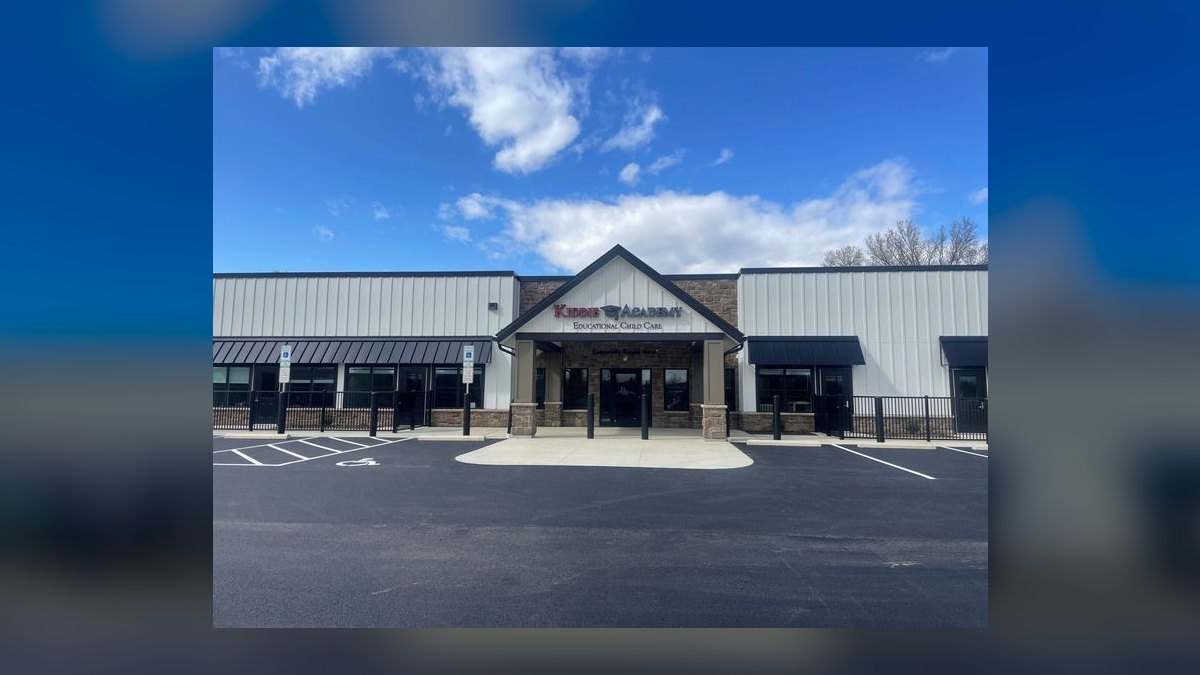
Here is the unit economics of a hypothetical $2,500,000 academy at healthy enrollment, using the cost structure typical of the category:
- Gross tuition revenue: $2,500,000
- Teaching and support staff at ~45%: $1,125,000
- Occupancy (rent, CAM, taxes, insurance) at ~12%: $300,000
- Royalty (~7%) plus marketing fund (~2%) at 9%: $225,000
- Food, supplies, utilities, other operating expense at ~16%: $400,000
- Owner earnings before debt service: ~$450,000
That's a strong business. But notice the two lines that move against you over time: staff at 45% and occupancy at 12% are both fixed-ish and both inflating faster than your ability to raise tuition. That structural squeeze is the single most important thing to understand before you sign anything.
Buying an existing location instead of opening a new one changes the risk profile substantially. You pay more upfront — you're buying enrollment, staff, licensure, and a track record rather than building them — but you skip the construction risk, the permitting timeline, and most of the ramp. Resale multiples in the category typically run in the 3–5x annual EBITDA range, so a location clearing $300,000 might trade for $900,000 to $1,500,000 plus assumption of the lease. Either path requires franchisor approval, and Kiddie Academy controls territory availability, so your practical first move is finding out what's actually open in the markets you'd consider.
Working the process from inquiry to open door
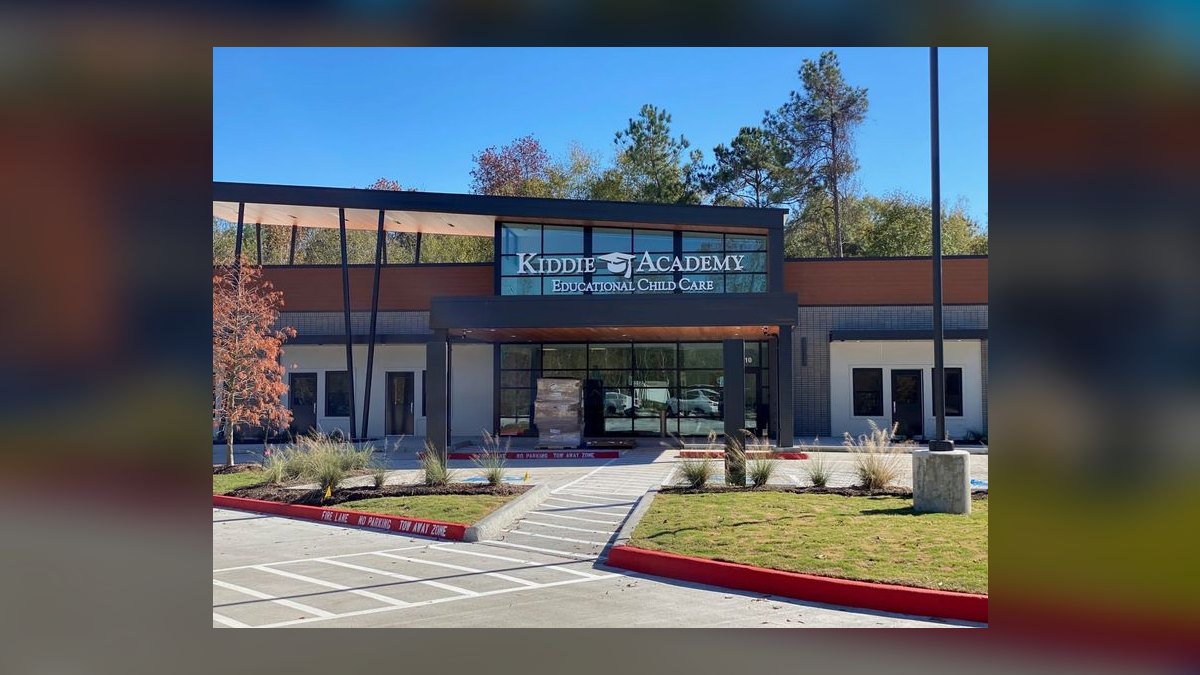
The sequence below is not optional and not reorderable. Every step gates the next one, and franchisees who try to compress the front end almost always pay for it at the back end.
Request and read the Franchise Disclosure Document. The FDD is a legally required document, and Item 7 (estimated initial investment) plus Item 19 (financial performance representations) are where the real information lives. Read Item 7 line by line and note the low-to-high spread on every row — the width of those ranges is telling you where your outcome is undetermined. Item 19, if the franchisor provides one, will describe actual unit performance. Note carefully what it does and does not include: whether it's an average or a median, whether it separates mature units from new ones, and whether it reports revenue only or revenue and expenses.
Validate with existing franchisees. Item 20 of the FDD includes contact information for current and former franchisees. Call at least eight to ten. Ask former franchisees too — they will tell you things current ones won't. The four questions that matter: How long from opening to break-even enrollment? How much working capital did you actually need beyond the FDD estimate? What is your current teacher turnover rate and what does it cost you? What is your net profit after debt service, in dollars?
Run your own market analysis before you fall in love with a site. You need a defensible count of qualifying households — families with the income to pay full-time tuition — within a realistic drive radius, and a count of existing licensed childcare slots competing for them. State licensing databases are public and will give you the competitor slot count. The FDD will not do this analysis for you. If you're not equipped to do it yourself, hiring a local market research firm typically runs a few thousand to low five figures, which is trivially cheap against a seven-figure commitment.

Secure financing before you secure real estate. SBA 7(a) loans are commonly used for franchise acquisition and buildout, and Kiddie Academy's presence on the SBA Franchise Directory affects eligibility mechanics. Get a term sheet with real numbers before you're under a lease, because the lease is where your personal guarantee gets signed.
Site selection, lease or land, and design. The franchisor participates here, but the personal guarantee is yours. Read the guarantee term and the make-good clause with a franchise attorney before signing.
Permitting, construction, and licensing in parallel. State childcare licensing is a separate track from building permits and has its own inspection sequence. Start the licensing conversation with your state agency early — some jurisdictions will not begin the process until construction has hit specific milestones, and knowing that sequence in advance can save you months.
Hire and train leadership before you hire line staff. Your director is the highest-leverage hire in the entire business. A strong director recruits teachers, retains parents, and passes inspections. A weak one costs you enrollment you'll never get back.
Pre-enrollment marketing during construction. Every child enrolled before opening day is a child you don't have to acquire during the burn period. Serious operators run tours of the construction site, build a waitlist, and open with a meaningful percentage of capacity already committed.
Costs, timelines, and the ranges nobody puts on the brochure
The franchise fee is $135,000. Total initial investment per Item 7 runs roughly $500,000 to $6,000,000+. That spread is not vagueness — it is the difference between taking over a second-generation leased space and building a facility from raw dirt. Ongoing: approximately 7% royalty and approximately 2% marketing fund on gross revenue, so plan on 9% off the top permanently.
The major cost components, in the ranges the category typically produces:

- Real estate and buildout: $300,000 to $5,000,000+. The single dominant variable. A lease-and-improve on an existing shell sits at the low end; ground-up construction on purchased land sits at the top.
- Equipment and playground: $150,000 to $500,000. Playground surfacing alone — rubber mulch or poured-in-place — commonly runs $20,000 to $80,000 depending on square footage and impact-attenuation requirements.
- Signage and interior decor: $30,000 to $120,000.
- Initial inventory and classroom supplies: $25,000 to $80,000.
- Grand opening and initial marketing: $30,000 to $80,000.
- Training and travel: $15,000 to $45,000.
- Working capital: $150,000 to $400,000. This is the line that kills people. See below.
Facilities typically run 8,000 to 12,000+ square feet and license for 100 to 200+ children depending on the state's square-footage-per-child rules and your room configuration. Leased space in retail or strip-center locations commonly rents in the $15 to $30 per square foot range annually before triple-net charges — meaning $120,000 to $360,000 a year in base rent alone on a 10,000 square foot box, before taxes, insurance, and CAM.
The timeline, honestly. Signing to opening day is commonly 12 to 18 months, and longer on ground-up construction where 18 to 24 months is realistic. Permitting alone consumes 6 to 12 months in restrictive jurisdictions. Construction delays are the norm, not the exception, and every month of delay costs you carrying charges — rent or loan payments, insurance, and your own household expenses — with zero offsetting revenue.
The enrollment ramp is the real financial event. New academies commonly open at 20% to 40% of licensed capacity. You are fully staffed to ratio from day one because licensing requires it, so you carry near-full labor cost against partial revenue. Operational break-even — covering all expenses including debt service — generally lands somewhere around 60% to 75% of licensed capacity. For a 150-child license, that's roughly 90 to 112 children enrolled. Reaching it takes one to three years depending entirely on market density and competition. In a strong suburb with weak competition you might get there fast. In a saturated market you may spend three years grinding toward it.

Which means owner compensation is a year-three event, not a year-one event. Budget to pay yourself a modest salary from operations if the model allows it, and treat any distribution above that as something you'll see after break-even holds steady. Franchisees who plan to replace their W-2 income in year one are the ones who blow through working capital and then have to raise emergency money on bad terms.
Build a working capital reserve above the FDD estimate. The Item 7 working capital figure is an estimate of a range, not a promise. If enrollment ramps slower than your model — and it usually does — the shortfall comes out of a reserve you either have or don't. Sizing that reserve to cover a ramp meaningfully longer than your base case is the cheapest insurance in this entire transaction.
Opportunity cost is a real line item. Capital of $500,000 to $1,000,000 deployed into diversified market exposure would generate returns you are forgoing for the entire ramp period. A business that eventually clears $300,000 to $500,000 annually is excellent — but the three years of forgone returns and forgone salary are part of the true cost of entry, and honest underwriting includes them.
Exit economics. Franchise agreements in this category commonly run 10 to 15 years with renewal options. Practically, you need five to seven years of ownership to build the enrollment history and EBITDA record a buyer will underwrite. First-generation locations tend to trade at the lower end of the 3–5x multiple range because buyers discount unproven units. If your entire plan depends on a quick flip, this is the wrong asset class.
Where buyers get it wrong
Underestimating working capital. This is the number one failure mode and it isn't close. The mistake is arithmetic: people budget the buildout precisely and then treat working capital as a rounding error. In practice the buildout is the predictable part — you have contractor bids. The ramp is the unpredictable part, and it's the one you funded loosely.

Signing a personal guarantee without understanding its duration. Landlords commonly require a personal guarantee running seven to ten years on a purpose-built childcare space. If the academy fails in year two, the lease obligation does not fail with it. This is how a business failure becomes a personal financial catastrophe. Negotiate a burn-down guarantee that steps down as you hit performance milestones, or cap the exposure at a fixed number of months' rent. Your leverage on this point is highest before you sign and zero afterward.
Treating the space as a general-purpose asset. A childcare facility is close to single-use. Commercial kitchen with hood and fire suppression, child-height fixtures, fire-rated classroom walls, infant-room air-exchange HVAC, fenced playground with impact surfacing — none of that helps the next tenant, and the make-good clause may require you to pay to remove it. That restoration cost is a real liability sitting quietly in your lease.
Believing the demographic story instead of measuring it. People fall in love with a building and then reason backward to justify the trade area. Do it in the other order. Count qualifying households first. Then count competing licensed slots — home-based daycares, church preschools, and the regional and national chains all take share, and home-based providers in particular compete hard on price. If the licensed slot count in your radius is already high relative to the population of children under five, you are entering a knife fight, and the FDD will not warn you.
Missing employer-provided childcare in the trade area. Locating near a hospital, university, or large corporate campus feels like a demand goldmine. Check whether that employer runs on-site care or subsidizes a specific provider. If they do, that population is effectively unavailable to you, and it may be the population you built your entire pro forma around.
Betting on a suburb that hasn't arrived yet. New-growth exurbs look perfect on a projection and can take five to ten years to fill in. You need families now, not in the planning department's forecast.
Underestimating the staffing problem. Early childhood education has had a persistent labor shortage since 2020 and it is the number one operational challenge in the sector. Wages compete directly against retail, warehouse, and fast-food employers offering comparable pay without the credentialing burden or the emotional load. Your labor cost pressure runs ahead of your tuition pricing power, and that gap compounds annually. Turnover compounds it further: every departure costs recruiting time, background checks, onboarding, and — most expensively — parent confidence. Families notice when their child's teacher disappears, and enrollment losses from turnover are far more damaging than the replacement cost itself.
Not planning for ratio coverage. State ratios are strict — commonly around one adult per four infants, one per six toddlers, and one per ten to twelve preschoolers, varying by state. You must hold ratio at all times. If a teacher calls out and you have no float staff, your options are to send children home (losing revenue and trust) or to work the classroom floor yourself (losing your management day). Owners who don't budget for a float pool spend their first year as an unpaid substitute teacher instead of running the business.
Assuming semi-absentee ownership from the start. The model can become semi-absentee at maturity with a strong director in place. It is not semi-absentee during the ramp, during licensing, or during a staffing crisis. Plan for full-time involvement through break-even.
Reading Item 19 as a projection. Financial performance representations describe what some units have done. They are not a forecast of what your unit will do, and the units in the sample are usually not comparable to a first-year location in your specific market.
Deciding: open new, buy existing, or walk

Match the path to your actual constraint. There are three honest answers and one of them is "no."
Open a new academy if you have the full capital stack including a generous ramp reserve, an open territory in a family-dense market you've verified with your own analysis, and the appetite for a 12-to-24-month construction and licensing project before you serve a single family. The upside is that you get the site and the configuration you want, and you build the culture from scratch. The cost is that you carry construction risk, permitting risk, and the entire ramp.
Buy an existing academy if you'd rather pay a premium to skip the ramp. You inherit enrollment, a licensed facility, trained staff, and an operating history you can diligence. The transaction is more expensive at close and the multiple typically lands in the 3–5x EBITDA range, but you're buying cash flow instead of building it. Diligence differently than you would a new build: pull three years of enrollment by classroom, teacher turnover history, the last several state licensing inspection reports, the remaining lease term and guarantee structure, and the reason the seller is selling. A seller exiting a location with declining enrollment or a bad inspection record is selling you the problem, not the asset.
Consider a lower-capital path if the numbers don't clear. Other educational-childcare franchises exist in the same category with different capital profiles, and independent operation gives you full control at the cost of brand, curriculum, and systems. Tutoring and supplemental-education franchises operate at a fraction of this capital requirement with a fraction of the facility complexity.
Walk if any of these are true: you can't fund a materially longer ramp than your base case; you can't get the personal guarantee negotiated to something survivable; your market analysis shows saturated licensed slot capacity; or you cannot commit full-time through break-even. None of those are fixable with optimism.
Related questions
How much liquid cash do I actually need before Kiddie Academy will approve me?

Franchisors screen on liquidity and net worth, and the practical floor for a capital-intensive childcare concept is well into six figures of unencumbered cash. The FDD and the franchisor's qualification criteria state the current thresholds — get them in writing before you spend money on market research.
Is buying an existing location cheaper than opening a new one?
Rarely at close, often over the life of the deal. You pay a premium for existing cash flow, but you skip construction risk, permitting delays, and the one-to-three-year ramp that consumes working capital. Compare total cash outlay through break-even, not just purchase price.
Can I run a Kiddie Academy without childcare experience?
Yes, and many owners do. The franchisor trains on curriculum and systems. What you cannot outsource is financial discipline, staff recruiting, and licensing compliance. Hiring a strong, experienced director substitutes for your own classroom background far better than a training week does.
What happens if I can't hire enough teachers?
Your licensed capacity becomes theoretical. You cannot enroll children you can't staff to ratio, so a teacher shortage directly caps revenue while your rent and debt service stay fixed. This is why staffing strategy belongs in your pro forma, not in your operations manual.
How long is the franchise agreement?
Agreements in this category commonly run 10 to 15 years with renewal options. Confirm the exact term, renewal conditions, transfer fees, and post-term restrictions in the FDD, and have a franchise attorney review them before signing.
FAQ
What is the franchise fee and what does it cover?
The franchise fee is $135,000. It covers the initial license, training, site selection support, and access to the "Life Essentials" curriculum and operating systems. It is paid upfront and is generally non-refundable. It is also the smallest line in your capital stack — real estate and buildout dwarf it.

What is the total investment range to open a Kiddie Academy?
Total initial investment per Item 7 runs roughly $500,000 to $6,000,000+. The dominant variable is real estate: converting an existing leased shell sits near the bottom of that range, while purchasing land and building a facility from the ground up sits at the top. Verify current figures in the most recent FDD.
What ongoing fees will I pay?
Approximately 7% royalty on gross revenue plus approximately 2% toward the brand marketing fund — roughly 9% off the top, permanently. These fund brand support, curriculum development, and national advertising. Model them as a fixed percentage in every scenario you run, including your worst case.
How long until the academy is profitable?
Break-even typically arrives at roughly 60% to 75% of licensed capacity, which most locations reach one to three years after opening. Meaningful owner distributions generally follow break-even rather than accompanying it. Fund working capital for a ramp longer than your base case, because slow ramps are common and fast ones are the exception.
How much can a mature academy earn?
Mature locations gross roughly $1,500,000 to $4,000,000+ annually, with owner earnings commonly in the $200,000 to $700,000 range before debt service. Actual results depend on licensed capacity, occupancy percentage, local tuition rates, labor cost, and how much debt you carried in. Item 19 of the FDD is the authoritative source.
What is the single biggest risk?
Staffing. Early childhood education has a persistent labor shortage, and you cannot enroll children you cannot staff to state ratio. Labor costs rise faster than tuition can, which compresses margin every year. An owner who solves recruiting and retention has a good business; one who doesn't has a fixed-cost problem with no revenue lever.
Sources
- https://kiddieacademy.com/franchising/ — Kiddie Academy franchise development, investment requirements, and territory information
- https://www.ftc.gov/business-guidance/resources/franchise-rule-compliance-guide — FTC Franchise Rule compliance guide explaining FDD Items 7, 19, and 20
- https://www.sba.gov/funding-programs/loans/7a-loans — SBA 7(a) loan program terms and eligibility for franchise financing
- https://www.bls.gov/ooh/personal-care-and-service/childcare-workers.htm — Bureau of Labor Statistics occupational data on childcare worker wages and employment outlook
- https://www.naeyc.org/accreditation — NAEYC early learning program accreditation standards
- https://www.childcareaware.org/ — Child Care Aware of America research on childcare cost, supply, and workforce
- https://franchisebusinessreview.com/ — Independent franchisee satisfaction survey data across franchise brands
- https://www.franchise.org/ — International Franchise Association regulatory guidance and industry resources
- https://www.acf.hhs.gov/occ — Office of Child Care, U.S. Department of Health and Human Services: state licensing and regulatory framework
Related on PULSE
- Should I open or buy a Lightbridge Academy franchise in 2027?
- Should I open or buy a The Junkluggers franchise in 2027?
- Should I open or buy a Pak Mail franchise in 2027?
- Should I open or buy a PostNet franchise in 2027?
- Should I open or buy a Fish Window Cleaning franchise in 2027?
- Should I open or buy a Shine Window Care franchise in 2027?
This page will be disappearing soon. Save it to your device for $1 — or read it free while it is here.
@Kory-White- · if Venmo asks, the last 4 of my number are 2012
This page is gone.
This one is off the shelf now. $1 keeps it on your phone for good — the whole page, pictures and diagrams included.
 pulse-qShould I open or buy a Jacuzzi Bath Remodel franchise in 2027?
 pulse-qHow Do I Score My Sales Reps Across Multiple KPIs in 2026?
 pulse-qHow Many Employees Should I Schedule Each Shift at My Ice Cream Shop in 2027?
 pulse-qHow Many Sales Reps Do I Need to Hire for My VoIP Company in 2026?
 pulse-qShould I open or buy a Spiffy franchise in 2027?
 pulse-qShould I open or buy a Sunny Street Cafe franchise in 2027?
 pulse-qShould I open or buy a Woof Gang Bakery franchise in 2027?
 pulse-qHow Many Sales Reps Do I Need to Hire for My Septic Service Company in 2026?
 pulse-qHow Do I Get My Reps to Sell Value Instead of Discounting in 2027?
 pulse-qHow Many Employees Should I Schedule Each Shift at My Florist Shop in 2027?