
Should I open or buy a Bach to Rock franchise in 2027?
 Curated byKory White · Fractional CRO · Maryland
 PULSEKNOWLEDGE LIBRARY
Quality
Certified

Open a Bach to Rock franchise in 2027 only if you can fund roughly $250,000 to $550,000, commit full-time as an operator rather than an instructor, and sit in a family-dense market with weak music-education options. The band-and-performance model drives retention, but instructor recruiting and a 12-to-36-month enrollment ramp decide your outcome.
The outcome you should expect
Set your expectations against the ramp, not against the mature-school numbers you will hear at discovery day. A Bach to Rock school is a recurring-enrollment business with a long fuse: you sign a lease, spend four to seven months building lesson rooms, band rooms, and a recording studio, and open with a student count in the low dozens. Enrollment compounds month over month through referrals, recitals, and school-break camps, which is exactly why year one looks nothing like year three.
The realistic shape of the first thirty-six months looks like this. Months one through six after opening: you are cash-flow negative, burning working capital, running paid local marketing, and staffing more instructor hours than your enrollment justifies because you cannot sell empty schedule slots. Months seven through eighteen: you cross into contribution-positive territory as recurring tuition covers rent, payroll, royalty, and marketing fee. Months nineteen through thirty-six: enrollment stabilizes, band programs fill, and the school starts producing owner earnings that resemble the ranges the brand publishes.
Mature Bach to Rock schools gross in the $400,000 to $1,000,000-plus range, and owners of those mature schools clear somewhere in the $80,000 to $250,000 band. Both numbers are wide for a reason — they span a first-quartile suburban school with 180 students and a top-quartile school with 350-plus students, multiple band programs, and a busy studio. Treat the low end as your planning case and the high end as your upside case. If your model only works at the top of the range, you do not have a model, you have a hope.
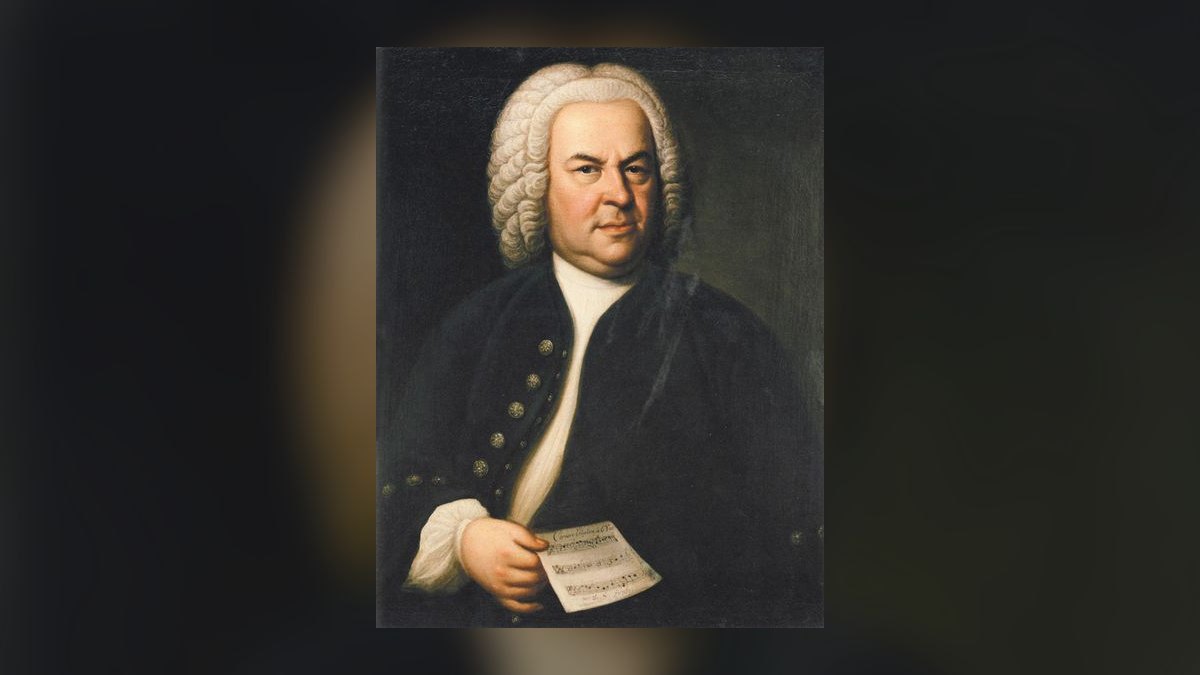
The other outcome worth naming plainly: this is not passive income. Plan for a full-time, on-site operator role for at least the first two years — hiring, scheduling, parent communication, community partnerships, recital logistics, and enrollment sales. Owners who plan to keep a day job and manage the school on evenings and weekends consistently underperform, because enrollment sales happen during the hours parents call and instructor recruiting happens on your schedule, not a spare one.
If you are buying an existing school rather than opening one, the outcome profile inverts. You pay a multiple of seller's discretionary earnings instead of burning through a startup ramp, and you inherit an enrollment base, a staffed roster, and a known revenue line. That is worth real money. What you also inherit is the previous owner's retention problems, deferred equipment maintenance, an aging lease, and whatever reputation the school has in the local parent network. A resale is generally the lower-variance path if — and only if — you can verify the enrollment and retention data rather than take it on the seller's word.
What drives that outcome
Four levers explain nearly all of the variance between a Bach to Rock school that clears $80,000 and one that clears $250,000: enrollment volume, retention, revenue mix, and instructor cost as a percentage of gross.
Enrollment volume is the top of the funnel and the hardest thing to fake. Your student count is a function of market density (how many households with kids aged five to fourteen sit inside a fifteen-minute drive), your visibility (retail-adjacent signage beats a back-office park every time), and your local referral engine (schools, PTAs, youth organizations, community events). A location that pulls thirty trial lessons a month and converts half of them is compounding; a location that pulls eight is stuck.

Retention is where the band-and-performance model earns its keep. Traditional lesson studios lose students to boredom — scales, drills, and a solo recital twice a year. Bach to Rock's structure puts kids in bands, in a recording studio, and on a stage, which is a social commitment as much as a musical one. Kids quit a practice regimen easily; they quit their band far less easily. Every point of monthly churn you avoid is compounding tuition you do not have to re-sell.
Revenue mix is the lever most new owners ignore for a full year. Beyond private lessons, a school can run band programs, group classes, school-break camps, recording-studio sessions, and birthday parties. The parties in particular are near-pure incremental margin — you already have the rooms, and often already have staff on-site for weekend lessons. Instrument, accessory, and sheet-music retail is a smaller line but adds margin against traffic you already generate. The catch is that none of these fill themselves; each one needs to be sold, scheduled, and staffed deliberately.
Instructor cost is the drag on all of it. You need working musicians who can actually teach children, which is a narrower talent pool than "musicians." Underpay and you churn your best teachers within a couple of semesters, and student retention follows them out the door — parents are loyal to their kid's teacher, not to your sign. Budget instructor compensation honestly and treat teacher retention as a leading indicator of student retention, because that is exactly what it is.

Notice what the diagram makes obvious: instructor pay sits upstream of student retention, which sits upstream of every revenue line. Cutting teacher compensation to protect margin is the one lever that reliably damages the thing it is trying to protect.
Benchmarks and realistic ranges
Work from the current Franchise Disclosure Document, not from a blog post — including this one. The FDD's Item 7 gives the estimated initial investment range, Item 6 gives ongoing fees, and Item 19 gives whatever financial performance representation the brand chooses to publish. Those three items are the only numbers that carry legal weight, and they are updated annually.
The published Item 7 range for a Bach to Rock school runs roughly $250,000 to $550,000 all-in. The initial franchise fee sits around $40,000. Ongoing, expect a royalty near 8% of gross revenue plus a separate brand/marketing fund contribution. The spread inside that Item 7 range is almost entirely build-out and market: a second-generation space with usable partitions in a low-cost metro lands near the bottom; a raw white-box in an expensive suburban retail corridor with full acoustic treatment and a purpose-built studio lands near the top.

A workable line-item planning frame, using the published range as the envelope:
| Line item | Low | High |
|---|---|---|
| Initial franchise fee | $40,000 | $40,000 |
| Build-out and leasehold improvements | $120,000 | $280,000 |
| Instruments, studio, and equipment | $50,000 | $120,000 |
| Signage, decor, and furnishings | $15,000 | $45,000 |
| Grand-opening marketing | $15,000 | $40,000 |
| Training and travel | $10,000 | $30,000 |
| Working capital (first several months) | $30,000 | $80,000 |
| Total | ~$250,000 | ~$550,000 |
Two things about that table. First, working capital is the line people shave to make the deal fit their budget, and it is the line that kills schools. If your build-out overruns by six weeks — and build-outs overrun — you are paying rent with no revenue for six extra weeks while your marketing spend is already committed. Carry more working capital than the low end, not less. Second, franchisors typically expect a liquidity floor separate from total investment; a common expectation in this investment tier is roughly $100,000 to $175,000 liquid, with net worth requirements above that. Confirm the current figures in Item 7 and the franchisor's qualification criteria before you build a financing plan around them.

On the space itself: plan for roughly 3,000 to 4,500 square feet to accommodate private lesson rooms, at least one band room, a recording studio, a lobby with sightlines for waiting parents, and a front desk. Acoustic isolation between rooms is not optional and is not cheap — a drum room adjacent to a piano room without proper treatment produces two unusable rooms.
On the operating side, the benchmarks that matter month to month are student count, monthly churn, average revenue per student, instructor cost as a percentage of gross, and occupancy cost as a percentage of gross. Track average revenue per student specifically — it is the number that tells you whether your revenue-mix work is landing. A student taking one weekly private lesson is worth a fraction of a student taking a lesson plus a band program plus two weeks of summer camp. Moving a meaningful share of your base from single-program to multi-program is usually cheaper than acquiring an equivalent amount of new enrollment.
For a resale, ask for at least three years of tax returns, a month-by-month enrollment history rather than an annual average, the current instructor roster with tenure and pay rates, the remaining lease term and renewal options, and the franchisor's transfer requirements and any required remodel obligations at transfer. A seller who will not produce month-by-month enrollment is hiding a trend line.
Risks, edge cases, and failure modes
The founder's trap. The single most common failure pattern is the owner who becomes the primary instructor. It is emotionally understandable — you bought a music school because you love music — and it is economically fatal. Teaching thirty hours a week caps your earnings at what one instructor produces while leaving nobody to run hiring, marketing, and enrollment sales. The franchise model pays you as an operator, not as a teacher. If you want to teach, teach a few hours a week as a deliberate, bounded choice, and never on the schedule's critical path.

Instructor supply. In a tight labor market, the constraint is not students, it is teachers. You are competing for working musicians against gigging income, other schools, and school-district positions. If you cannot staff a Tuesday-through-Thursday 4 p.m.-to-8 p.m. block — the hours families actually want — you cannot sell those slots regardless of demand. Build a pipeline before you need it: relationships with local university music departments, community music organizations, and the regional gigging scene. Recruiting reactively, after a teacher quits mid-semester, is how you lose their students too.
The wrong trade area. Music education demand is concentrated in family-dense, arts-prioritizing households with discretionary income. A market that has the households but already supports a well-funded competitor with several nearby locations is a hard fight; a market with the households and a twenty-minute drive to the nearest comparable school is a strong one. Do the demographic work on households with children aged five to fourteen, median household income, and existing supply before you sign anything. A great operator in a weak trade area loses to a mediocre operator in a strong one.
Under-capitalized opening. Covered above but worth repeating as a failure mode: the owner who funds the build-out fully and the ramp barely. When enrollment arrives slower than the pro forma, that owner cuts marketing and instructor hours, which slows enrollment further. It is a doom loop and it is entirely preventable with more working capital at the start.

Seasonality. Enrollment-based education businesses have real seasonal swings — a September surge, a summer dip, holiday-period attrition. Camps and studio time exist partly to smooth the summer trough, but if you model twelve identical months you will be surprised in July. Plan cash for the low months rather than averaging them away.
Underfunded school music programs cut both ways. Reduced public-school band and orchestra programs push families toward private options, which is a tailwind. But it also means some students arrive with no prior exposure and no instrument, which raises your onboarding effort and makes instrument rental or retail more of a practical necessity than a nice-to-have.
Online competition. App-based and video-lesson platforms have saturated the low end of the market at price points you cannot match, and you should not try. They compete on convenience and cost; you compete on social, in-person, performance-based learning — a band room, real instruments, other kids. Positioning against them on price is a losing move. Positioning against them on the experience they structurally cannot deliver is the whole thesis of the brand.
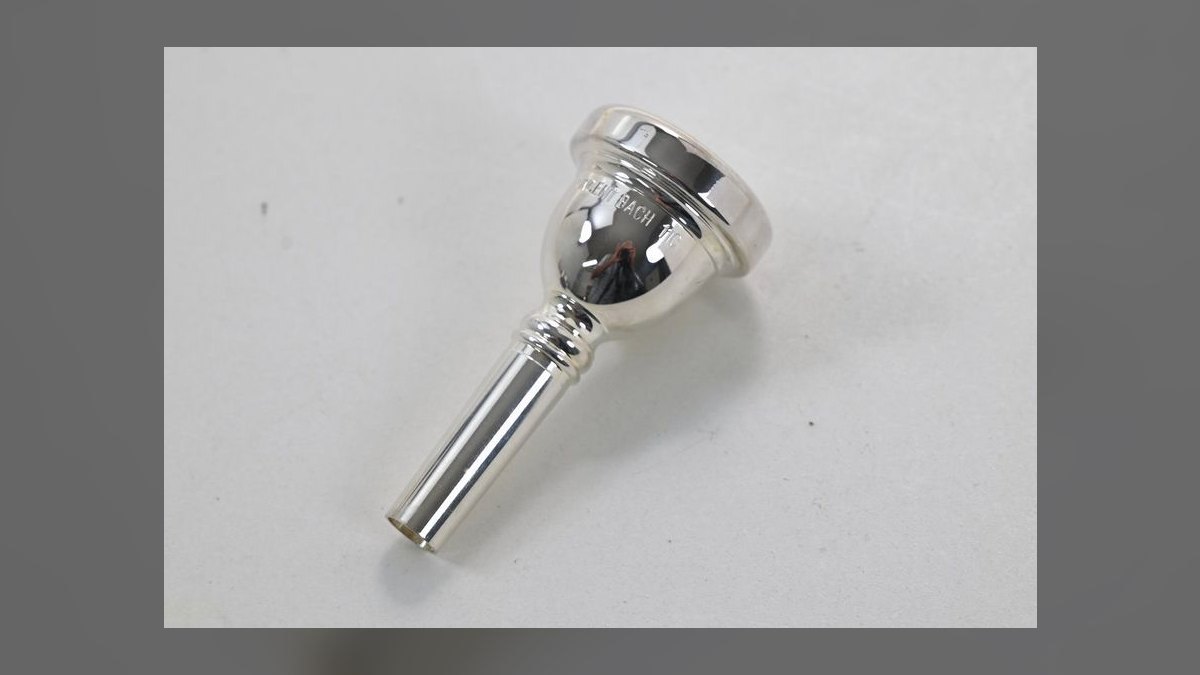
Independent and chain competition. Independent studios and regional chains carry no franchise fee and no royalty, which lets them undercut you on private-lesson pricing. Your defensible ground is the band, studio, and performance infrastructure, which is capital-intensive for an independent to replicate. If you find yourself selling on price against an independent, you have wandered off your own model.
Transfer and renewal terms. Read the FDD sections on transfer, renewal, and remodel obligations before you buy, not before you sell. A required mid-term refresh or a renewal-triggered remodel is a real capital event, and discovering it in year eight is a bad surprise.
A practical rollout plan
Treat this as a roughly four-to-five-month evaluation-and-signing window followed by a build, not as a ninety-day sprint. Compressing the diligence is where bad deals get signed.

Weeks 1–3 — Read the documents. Obtain the current FDD and read Items 5, 6, 7, 12, 17, and 19 carefully. Item 12 defines your protected territory, which shapes every growth assumption you will make later. Have a franchise attorney review it; this is a few thousand dollars against a quarter-million-dollar-plus decision.
Weeks 4–6 — Call franchisees. Item 20 lists current and former franchisees. Call both groups, and call more of them than feels comfortable — ten conversations, not three. Ask specific questions: current student count, monthly churn, instructor pay rates and turnover, months to break-even, actual build-out cost versus budget, and what they would do differently. Former franchisees will tell you more than current ones.
Weeks 7–9 — Validate the trade area. Pull household counts with children aged five to fourteen, median income, and a full inventory of competing music schools and independent teachers within a fifteen-minute drive. Visit competitors as a prospective parent. Confirm the territory the franchisor is offering matches the demographics you actually need.
Weeks 10–13 — Financing and site. Line up SBA or conventional financing with a lender familiar with franchise lending, using the FDD as the underwriting backbone. In parallel, work with a tenant-rep broker on sites — prioritize visibility, parking, safe parent drop-off, and a landlord who will contribute to build-out. Negotiate a rent-commencement date that accounts for construction, not lease signing.

Weeks 14–20 — Sign, build, and staff. Execute the franchise agreement and lease, start construction, and complete franchisor training. Critically: start instructor recruiting during construction, not after. Hire a front-desk or operations manager before opening day even though it hurts first-year profit — that role absorbs scheduling, billing, and parent communication, and without it you will be buried in administration instead of selling enrollment.
Weeks 21–26 — Pre-open enrollment. Run open houses, free trial lessons, and school and community partnerships before your doors open. The goal is a real book of students on day one rather than an empty schedule. Every student enrolled pre-opening shortens the cash-burn window directly.
Months 7–18 — Ramp and mix. Drive enrollment relentlessly, then layer the additional revenue streams: band programs first (they drive retention), then school-break camps, then studio sessions and parties. Watch monthly churn as your primary health metric, and watch instructor turnover as the leading indicator of that churn.
Related questions
Is buying an existing school safer than opening a new one?
Usually lower-variance, not automatically safer. You skip the build-out risk and ramp burn, but you inherit retention problems, staff turnover, lease terms, and local reputation. Demand month-by-month enrollment data and three years of returns; a seller who withholds the trend line is the risk.
How much liquid capital do I actually need?
Beyond the total investment range, franchisors typically require a liquidity floor — commonly around $100,000 to $175,000 for this investment tier — plus a net worth minimum. Confirm current figures in the FDD, and carry extra working capital beyond the stated minimum for build-out overruns.
Can I run this while keeping a full-time job?
Not well in the first two years. Enrollment sales happen when parents call, instructor recruiting happens on the market's schedule, and recitals and camps consume weekends. Absentee ownership is possible later with a strong operations manager, but it is not a viable opening posture.
What single metric predicts whether the school works?
Monthly student churn. It compounds against every other number: it determines how much new enrollment you must buy just to stay flat, and it tracks almost directly with instructor turnover. Watch teacher retention as the leading indicator of the metric that actually pays you.
How long until the school is genuinely profitable?
Plan for roughly twelve to thirty-six months to reach the mature-school earnings range, depending on trade area, pre-opening enrollment, and instructor staffing. Contribution-positive months typically arrive earlier than full owner-earnings targets, which is why working capital sizing matters so much.
FAQ
What does it cost to open a Bach to Rock franchise?
The published estimated initial investment runs roughly $250,000 to $550,000, including an initial franchise fee around $40,000. The spread reflects build-out condition and market cost — a second-generation space in a lower-cost metro sits near the bottom, a raw white-box in an expensive retail corridor near the top. Verify the current Item 7 range in the latest FDD before modeling anything, since it is updated annually.
What ongoing fees will I pay?
Expect a royalty near 8% of gross revenue plus a separate marketing or brand fund contribution. Both are calculated on gross, not net, which means they come out before your operating costs — a detail that matters enormously in the ramp months when gross is small and fixed costs are not. Item 6 of the FDD lists every recurring fee, including any technology or renewal fees.
How much do owners actually earn?
Mature schools gross in the $400,000 to $1,000,000-plus range, with owners clearing roughly $80,000 to $250,000. Those are mature-school figures, not year-one figures, and the range is wide because it spans very different enrollment levels. Item 19 is the only source with legal standing here; treat the low end as your planning case and validate it against franchisee interviews.
What makes the band model different from a traditional music school?
Students learn instruments and voice, then play in bands, record in a studio, and perform. Traditional lesson studios lose kids to boredom because practice is solitary and the payoff is distant. Putting a student in a band converts a personal commitment into a social one, which is why the model supports better retention and premium pricing than lessons-only competitors.
What is the hardest part of running one?
Recruiting and keeping instructors who can both play and teach children, and doing it during the after-school hours families want. Instructor turnover drives student turnover, because parents are loyal to their kid's teacher. Budget instructor compensation generously and treat teacher retention as an operating priority, not an HR afterthought.
Should I open in 2027 or wait?
Timing matters less than trade area and capitalization. Reduced public-school music programs push families toward private options, which supports demand. But a strong operator in a saturated market still loses to a modest operator in an underserved one. If the demographics and territory hold up and you are properly capitalized, timing is not your constraint.
Sources
- https://www.bachtorock.com/franchising/
- https://www.ftc.gov/business-guidance/resources/consumers-guide-buying-franchise
- https://www.ftc.gov/legal-library/browse/rules/franchise-rule
- https://www.sba.gov/funding-programs/loans/7a-loans
- https://www.franchise.org/
- https://www.franchisebusinessreview.com/
- https://www.entrepreneur.com/franchises
- https://www.nafme.org/
- https://nces.ed.gov/
Related on PULSE
- Should I open or buy a The Junkluggers franchise in 2027?
- Should I open or buy a Pak Mail franchise in 2027?
- Should I open or buy a PostNet franchise in 2027?
- Should I open or buy a Fish Window Cleaning franchise in 2027?
- Should I open or buy a Shine Window Care franchise in 2027?
- Should I open or buy an Image360 franchise in 2027?
This page will be disappearing soon. Save it to your device for $1 — or read it free while it is here.
@Kory-White- · if Venmo asks, the last 4 of my number are 2012
This page is gone.
This one is off the shelf now. $1 keeps it on your phone for good — the whole page, pictures and diagrams included.
 pulse-qShould I open or buy a Stanton Optical franchise in 2027?
 pulse-qHow Many Baristas Should I Schedule Each Shift at My Coffee Drive-Thru in 2026?
 pulse-qHow Do I Get My Jewelry Staff to Offer Financing on Every Sale in 2026?
 pulse-qHow Many Sales Reps Do I Need to Hire for My Window Blinds Company in 2027?
 pulse-qShould I open or buy Domino's franchise or open an independent sandwich shop in 2027?
 pulse-qHow Do I Raise Contribution Margin Without Raising My Prices in 2026?
 pulse-qShould I open or buy a Deka Lash franchise in 2027?
 pulse-qWhat Service Fees Should a Plumbing Company Charge in 2026?
 pulse-qDo I Need a Fractional CRO for My Multi-Unit Retail Business in 2026?
 pulse-qWhat Service Fees Should a Pool Service Company Charge in 2026?