
How Many Staff Should I Schedule Each Shift at My Bakery in 2027?
 Curated byKory White · Fractional CRO · Maryland
 PULSEKNOWLEDGE LIBRARY
Quality
Certified

Divide each shift's average gross profit by your per-employee daily gross-profit target. At a $160-per-person floor, a $960 Saturday morning needs six people; a $320 Tuesday afternoon needs two. Most bakeries land at 1–2 staff on slow shifts, 3–5 mid-volume, and 6–10 during weekend peaks.
The Saturday that ate your margin
Picture a neighborhood bakery that opens at 6 a.m. The owner has run four people on Saturday morning for as long as anyone can remember. Four is the number because four was the number when the shop opened, and nobody has revisited it since. Some Saturdays the line runs out the door and the case is stripped by 9:30 — customers who wanted a dozen bagels walk out with nothing because there was no one on the bench to finish the second bake. Other Saturdays it drizzles, traffic is soft, and four people spend the back half of the shift wiping down clean surfaces at $17 an hour plus payroll tax.
Neither of those days is a scheduling accident. They are both the same failure: the schedule was set by habit rather than by what the shift actually produces. And the cost compounds in a direction most owners never measure. The overstaffed rainy Saturday costs you maybe $170 in idle labor — annoying, visible, easy to feel bad about. The understaffed sunny Saturday costs you far more, because the customers who bounced at 9:30 do not just take their $14 order elsewhere; a share of them stop treating you as the reliable Saturday stop. Understaffing is the more expensive error, and it is invisible on the P&L because lost sales never post.
Now widen the frame. That same bakery runs a wholesale account delivering to three cafés on Tuesday and Thursday mornings. That production has to happen on the same clock, in the same oven rotation, with the same people. If you schedule counter staff off retail traffic alone and forget that Tuesday's 4 a.m. block is carrying 180 wholesale rolls, you will be short a set of hands exactly when the deck oven needs turning. The bakery scheduling problem is really two overlapping problems stacked on one timeline: front-of-house coverage driven by transaction volume, and back-of-house production driven by output volume — retail plus wholesale plus special orders.

The fix is arithmetic, not intuition, and it starts with one agreed number. You and whoever helps you run the shop decide what an average employee should produce in gross profit on an average day doing average work — serving an average number of customers, keeping the case full, closing out clean. In a bakery, where margins on bread and pastry are real but nowhere near jewelry-store territory, that number often lands around $160 a day. It is a floor, not a ceiling. The counter person who wants to actually earn does not coast to $160 and clock out; they hit $160 doing ordinary work, then upsell the dozen, move the special before it ages out, and dig for the next $160.
Once that number exists, every staffing argument in the building gets shorter. Nobody debates whether Saturday "feels busy." You pull the number, you divide, and the schedule falls out.
How the division actually works
The mechanism has three moves, and they run in order. Skip one and the whole thing degrades back into guessing.

Move one: set the per-person daily gross-profit target. This is a leadership decision, not a formula you look up. Take your annual gross profit, divide by the number of days you operate, divide again by the average number of people on the clock per day, and you get your current actual. That is your starting point, not your target — if your current actual is $128 and you know the shop is soft on attachment and upselling, you set the target somewhere north of it and coach toward it. Say it out loud to the crew so it stops being a manager secret: "If you show up, take care of an average number of customers, keep the case stocked, and give average service, you should produce no less than $160 a day in gross profit."
Move two: pull gross profit by shift, by day of week. Not revenue — gross profit, revenue minus cost of goods. A $6 laminated pastry and a $6 bag of drip coffee are not the same shift contribution, and if you schedule off revenue you will overstaff the low-margin dayparts. Average across a trailing three to six months so a single blowout weekend or a snowstorm does not distort the picture. You want a grid: fourteen cells for a seven-day operation running two shifts, or twenty-one if you split open/mid/close.
Move three: divide, then place against the receipt curve. The division tells you how many. The hourly transaction data tells you when. A bakery is brutally front-loaded — the commuter and breakfast rush hits within ninety minutes of opening, and in a lot of shops half the day's gross profit rings before 11 a.m. So the six people Saturday morning earned do not spread evenly across a six-hour block. You stack them on the open, trim hard through the dead early afternoon, and add a small bump for any after-school or evening bread pickup.
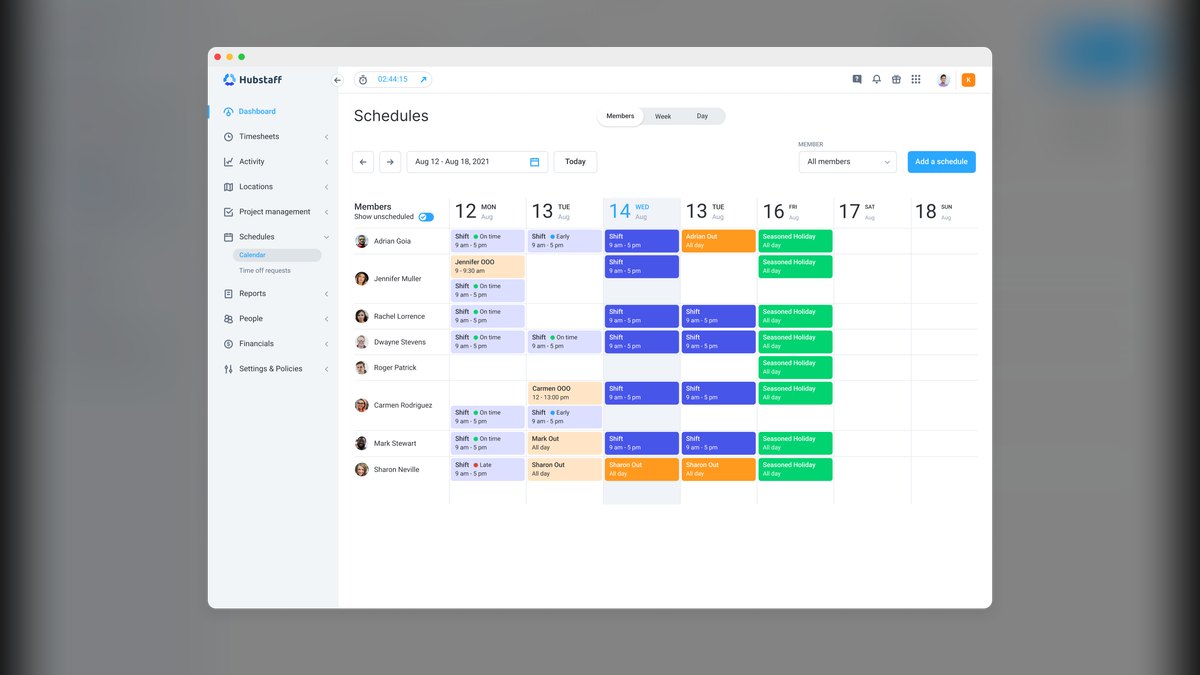
That last edge matters more than anything else in the diagram. The loop closes. You publish, the week runs, and then you compare what the shift actually produced against what the headcount assumed it would produce. If Saturday morning was staffed for $960 and delivered $1,140 four weeks running, your target moved and you owe that shift a seventh person — or you owe your crew a conversation about what they figured out, because something is working.
One caveat on the division: it produces a headcount, not a schedule. Two floors override it in both directions. The production floor says you need whatever number of bakers your output volume requires regardless of counter math — if the morning bake is 400 units and one baker moves 200 in the window, you need two, even if the retail gross profit only justifies one warm body. The service floor says you almost never run a single person alone on an open shift; someone has to be able to step to the back, hit the restroom, or handle a delivery without the counter going dark. Round up when the math lands between numbers on a shift with a rush in it, and round down on a shift that is genuinely flat.
The numbers that anchor the plan
Start with labor cost as a percentage of sales, because it is the guardrail that tells you whether your target number is sane. Food service operators generally run labor somewhere in the 25–35% band. Scratch bakeries with heavy production and lower ticket averages tend to sit toward the high end or above it, because you are paying skilled hands for hours that produce inventory rather than transactions. High-volume shops with a simplified menu and strong beverage attachment can pull it under 25%. If the schedule your gross-profit math produces pushes labor past 35% week after week, the problem is usually not the schedule — it is pricing, product mix, or waste.
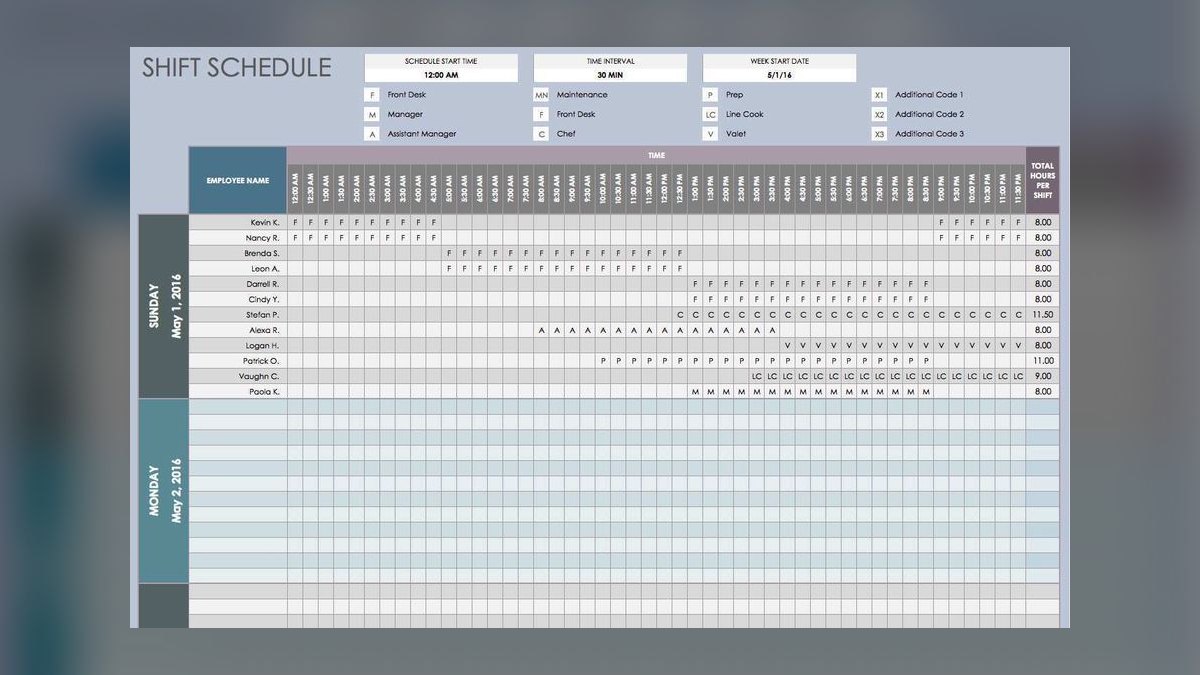
Here is how the division plays out at three scales.
Small neighborhood shop, one location, no wholesale. Weekday morning does $320–$480 in gross profit — two to three people, typically one baker who started at 3 or 4 a.m. and one or two on the counter through the rush. Weekday afternoon does $160–$320 — one to two. Saturday morning does $800–$1,100 — five to seven. Sunday, if you open at all, usually runs somewhere between a weekday and a Saturday. Total weekly labor hours in this shape land in the 150–220 range depending on hours of operation.
Mid-volume shop with a wholesale line. Now the back of house has its own demand curve that ignores retail entirely. Wholesale production is scheduled off order volume: total units divided by units-per-baker-hour, plus mixing, proofing, and pack-out time. A baker producing 60–90 units an hour on a familiar SKU is a reasonable planning figure; a laminated product with a fold-and-rest cycle produces far fewer per labor hour but occupies the schedule differently because proofing time is not labor time. This is where a lot of bakeries misschedule — they count the proof window as work and pay for a body that is standing around, or they fail to count it and the bake runs late. Three to five per shift is the common range here, split roughly 2 back / 2–3 front on retail days.
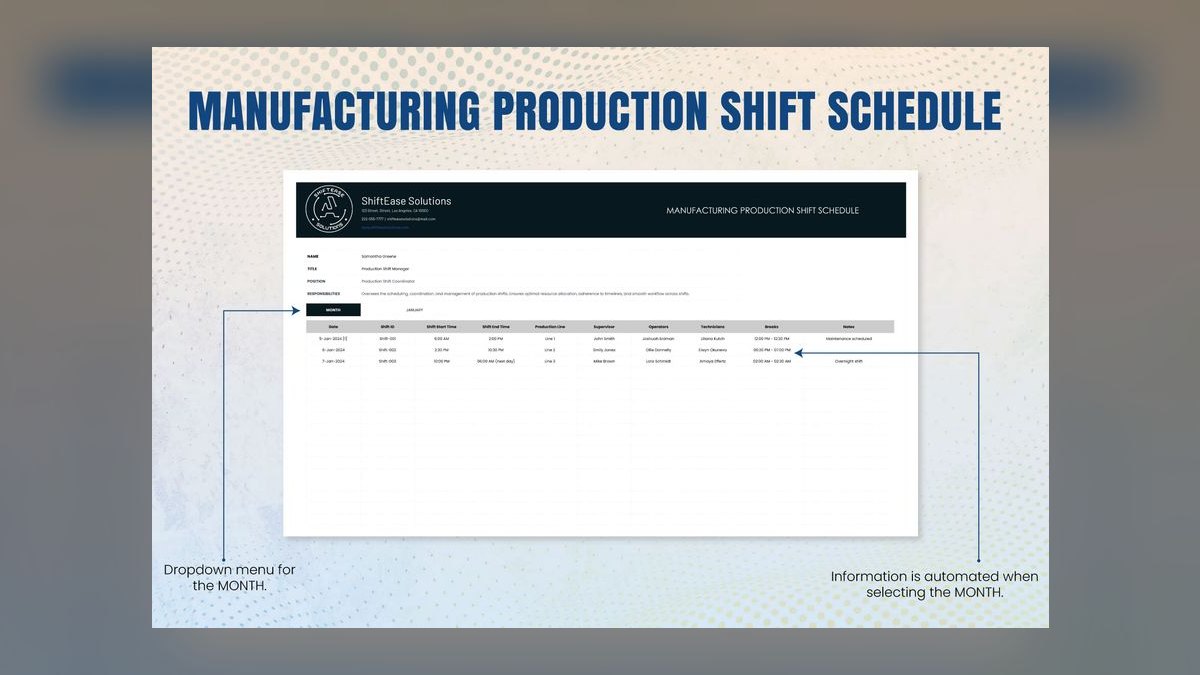
High-volume or multi-location with decorating. Six to ten per shift, and now you have genuine role specialization: decorators on custom cake work, a dishwasher position that pays for itself by keeping skilled hands off the sink, dedicated pack-out for wholesale. The gross-profit division still governs total headcount, but you allocate within it by role rather than treating everyone as interchangeable.
Two more numbers worth holding. Weekend front-of-house typically needs 30–50% more coverage than a comparable weekday, so if your Saturday plan is only marginally heavier than your Tuesday plan, check the data — you are probably running on a habit number. And on the full-time/part-time mix, most single-location bakeries land somewhere around 40–60% full-time, with the full-timers anchoring the predictable early production block and part-timers absorbing the peak-hour and weekend variance. Full-time bakers give you consistency in the one place where consistency is worth paying for; part-time counter help gives you the elasticity to match a demand curve that swings 3x within a single day.
Season shifts all of this. A bakery that does holiday pie volume or wedding-cake season has months where the ordinary grid does not apply, and the honest move is to build a separate seasonal grid off last year's same-period data rather than trying to flex the normal one by feel. Same method, different trailing window.

What you give up with each approach
The gross-profit division is not the only way to staff a bakery, and it is worth being clear about what the alternatives actually buy you.
Sales-per-labor-hour targets. A lot of food-service scheduling tools default to this — set a target like $60 in sales per labor hour and let the system back into headcount. It is simpler than gross-profit division because revenue is easier to pull than margin, and it is fine for a shop with a tight, uniform product mix. The trade-off is real, though: it is margin-blind. A shift heavy on low-margin beverage service and a shift heavy on high-margin pastry look identical to a sales-per-hour target, so it will overstaff your worst-margin dayparts and underserve your best ones. Use it if pulling COGS by daypart is genuinely out of reach; upgrade to gross profit when it isn't.
Fixed-ratio staffing. "One counter person per 25 transactions an hour" and similar rules. Fast to apply, easy to train a new manager on, and it does capture the service-quality dimension the money math ignores. But it says nothing about production, which in a bakery is half the labor. It also degrades badly when ticket size varies — twenty-five single-coffee transactions and twenty-five dozen-bagel orders demand very different staffing.

Pure demand forecasting. Modern scheduling platforms will forecast off historical POS data and weather. Genuinely useful at scale, and if you are running several locations the forecasting is worth the subscription. The trade-off is that a forecast tells you what will happen, not what you can afford — you still need the gross-profit target to decide whether the forecasted demand justifies the bodies.
Scheduling by feel. Cheap, instant, and it does encode real knowledge — an experienced owner knows the parade is next Saturday. But it does not scale past the owner's own presence, it drifts (last year's number becomes this year's number becomes the permanent number), and it opens the door to favoritism, where the manager's friends land the easy shifts and everyone can see it.
In practice the strong setup is layered, not exclusive. Gross-profit division sets the headcount. A transaction-ratio floor keeps service from collapsing on a shift the money math scored low. Forecasting, if you have it, adjusts for the known-abnormal week. Feel gets one job and one job only: flagging the thing the data cannot know yet, like the street festival that has not happened before.

On tooling, the landscape splits cleanly by pricing model. Per-location tools charge a flat monthly fee regardless of headcount, which is dramatically cheaper for a bakery running a deep bench of part-timers; several offer a free single-location tier that covers scheduling and a time clock. Per-user tools charge a few dollars per employee per month and make more sense when you have a small, stable crew. Restaurant-specific platforms add POS integration and labor-percentage tracking; general workforce tools add compliance features like automatic overtime and break calculation, which matter a lot in states with strict scheduling or break law. Whichever you pick, the gross-profit math is upstream of the tool — the software publishes and tracks the schedule; it does not decide what the schedule should be.
Where this goes wrong in real shops
Scheduling off revenue instead of gross profit. The single most common error. It systematically overstaffs low-margin dayparts. Pull COGS by daypart even if it is a rough allocation — a directionally correct margin figure beats a precisely wrong revenue figure.
Forgetting that production hours precede sales hours. The 4 a.m. baker produces gross profit that rings up at 8 a.m. If you assign labor to the hour it was worked rather than the hour it earned, the early block looks catastrophically unproductive and you will cut it. Assign production labor to the daypart it feeds.

Averaging across the whole day. A daily headcount hides a 3x intraday swing. Split at minimum into open / mid / close, and in a heavily front-loaded shop split the open block itself.
Letting a stale trailing window drive a changed business. If you added a wholesale account or lost one, if you changed hours, if a competitor opened across the street — the six-month trailing average is describing a business that no longer exists. Reset the window after any structural change and use four to six weeks of post-change data instead.
Cutting the dishwasher or the pack-out role first. These look like the most cuttable positions because they do not touch a customer or a product. Then a $22-an-hour decorator spends ninety minutes at the sink and you have converted skilled labor into unskilled labor at skilled prices. Support roles exist to protect the productivity of expensive hands.

Publishing late. A schedule posted two days out costs you in turnover and call-outs even if the headcount is perfect, and in some jurisdictions predictive-scheduling law makes it costly in a much more direct way. Two weeks out is the practical standard.
Never closing the loop. The division is a hypothesis. If you never compare planned gross profit against actual, you have replaced one static habit with a slightly better static habit. Set a monthly review: actual gross profit per shift against plan, labor percentage against target, and adjust. Every four to six weeks is enough cadence for a stable shop; weekly during a season change.
Solving a demand problem with a labor cut. If every shift's math says one or two people, the schedule is not the issue. Trimming labor on a shop with a traffic problem shrinks service, which shrinks traffic further. At that point the honest question is whether that daypart should be open at all — closing a genuinely dead afternoon block and redeploying those hours to the morning rush is often worth more than any amount of scheduling refinement.
Related questions
Should bakers and counter staff be scheduled on the same grid?
Yes, on one board but with separate math. Counter headcount comes from gross-profit division against transaction timing; baker headcount comes from production volume divided by units-per-labor-hour. One shared grid so overlap and handoff are visible; two different calculations feeding it.
How far out should a bakery schedule be published?
Two weeks is the practical standard, and some jurisdictions with predictive-scheduling ordinances require advance notice with penalty pay for late changes. Even where it is not law, two weeks measurably reduces call-outs and turnover among part-time staff who need to plan around it.
What labor cost percentage should a bakery target?
Generally 25–35% of sales. Scratch bakeries with heavy production sit toward the high end; high-volume shops with strong beverage attachment can run under 25%. If your gross-profit-derived schedule pushes past 35% consistently, look at pricing and product mix before cutting hours.
Does this method work for a bakery with a wholesale line?
Yes, with an addition. Wholesale production is scheduled off order volume, not retail gross profit — units divided by units-per-baker-hour, plus mixing and pack-out. Run the retail division for front-of-house, run the production calculation for back-of-house, then merge onto one timeline.
How do I handle holiday and seasonal spikes?
Build a separate grid from last year's same-period data rather than flexing the normal one. Holiday pie week and wedding season have their own demand shape. Same division method, different trailing window, and plan the temporary hires four to six weeks ahead.
FAQ
What's the biggest mistake bakery owners make when scheduling staff?
Scheduling from memory instead of from data. The number that was right three years ago becomes the permanent number, and nobody revisits it as traffic patterns, menu, and hours change. The correction is not complicated: pull gross profit per shift by day of week, divide by a per-person target, and let the arithmetic set the headcount. Then check it monthly.
How many bakers do I need for an early morning shift?
It depends on output volume, not on shop size. Take your total morning production in units, divide by realistic units-per-baker-hour for your products, and divide again by the hours available before open. A small shop finishing a modest bake often runs one or two bakers starting two to four hours early; higher-volume production or laminated products with fold-and-rest cycles push that higher.
Should I schedule the same number of staff every day of the week?
No. Weekend front-of-house commonly needs 30–50% more coverage than a comparable weekday, and Monday or Tuesday afternoons are often the softest blocks of the week. If your Saturday plan looks nearly identical to your Tuesday plan, that is a strong signal you are running on habit rather than on what each shift actually produces.
How do I decide between full-time and part-time staff?
Full-time anchors the predictable early production block, where consistency and skill retention are worth paying for. Part-time absorbs the peak-hour and weekend variance that a bakery's front-loaded demand curve creates. Many single-location shops land around 40–60% full-time, but your hours of operation and how sharply traffic swings should drive the actual split.
Do I need scheduling software to do this?
No — the division works in a spreadsheet. Software earns its cost once you are publishing to enough people that swaps, availability, and time-clock reconciliation become their own job, or once you want automatic labor-percentage tracking against POS sales. Per-location pricing is usually cheaper than per-user pricing for a bakery with a deep part-time bench.
How often should I review and adjust the schedule?
Compare planned versus actual gross profit per shift monthly, and adjust the grid every four to six weeks. Reset immediately after any structural change — new wholesale account, changed hours, a competitor opening nearby — because the trailing average is describing a business that no longer exists.
Sources
- U.S. Bureau of Labor Statistics, Occupational Outlook Handbook — Bakers: https://www.bls.gov/ooh/production/bakers.htm
- U.S. Bureau of Labor Statistics, Employment Cost Index and wage data: https://www.bls.gov/ncs/
- U.S. Small Business Administration — Hire and manage employees: https://www.sba.gov/business-guide/manage-your-business/hire-manage-employees
- U.S. Department of Labor, Wage and Hour Division — Overtime pay under the FLSA: https://www.dol.gov/agencies/whd/overtime
- National Restaurant Association — Research and operations resources: https://restaurant.org/research-and-media/
- Harvard Business Review — Research on retail scheduling and workforce stability: https://hbr.org/
- SCORE — Free small business mentoring and staffing templates: https://www.score.org/
- IRS — Employment taxes for small businesses: https://www.irs.gov/businesses/small-businesses-self-employed/employment-taxes
Related on PULSE
- How Do I Get My Bakery Staff to Sell Custom Orders?
- How Many Staff Should I Schedule Each Shift at My Sushi Restaurant?
- How Many Staff Should I Schedule Each Shift at My BBQ Restaurant?
- How Many Staff Should I Schedule Each Shift Across My Food Truck Fleet?
- Should I open or buy a Woof Gang Bakery franchise in 2027?
- Should I open or buy a 85C Bakery Cafe franchise in 2027?
This page will be disappearing soon. Save it to your device for $1 — or read it free while it is here.
@Kory-White- · if Venmo asks, the last 4 of my number are 2012
This page is gone.
This one is off the shelf now. $1 keeps it on your phone for good — the whole page, pictures and diagrams included.
 pulse-qWhat Service Fees Should a Mobile Mechanic Charge in 2026?
 pulse-qShould I Hire a Fractional CRO If I Need to Professionalize a Referral-Only Business in 2026?
 pulse-qHow Many Employees Should I Schedule Each Shift at My Language School in 2026?
 pulse-qHow Many Sales Reps Do I Need to Hire for My Commercial Glass and Glazing Company in 2027?
 pulse-qHow Many Sales Reps Do I Need to Hire for My Home Security and Alarm Company in 2026?
 pulse-qHow Do I Use Service Fees to Cover Back-Office Payroll in 2026?
 pulse-qShould I Hire a Fractional CRO If I Am Preparing for a Series B in Six Months in 2026?
 pulse-qShould I Hire a Fractional CRO If My Revenue Is Seasonal and Unpredictable in 2026?
 pulse-qHow Many Employees Should I Schedule Each Shift at My Shoe Repair Shop in 2027?
 pulse-qHow Do I Get My Optical Staff to Sell Premium Lenses and Coatings in 2026?