
Should I open or buy a Taco John's franchise in 2027?
 Curated byKory White · Fractional CRO · Maryland
 PULSEKNOWLEDGE LIBRARY
Quality
Certified
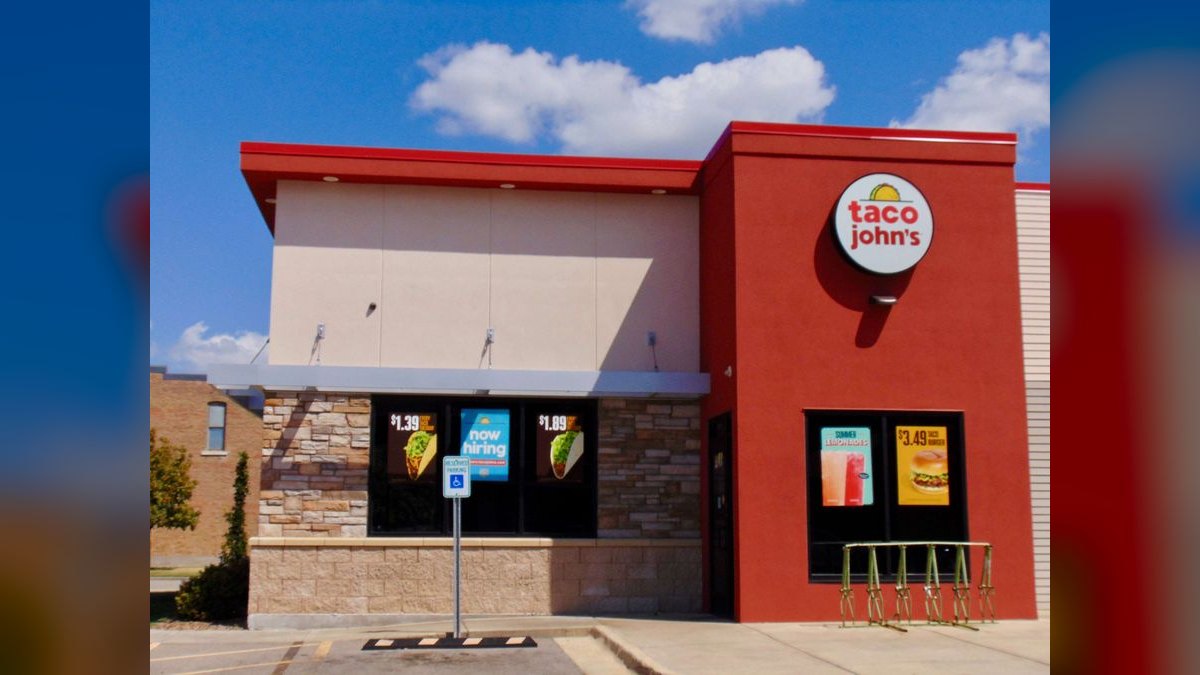
Yes — if you can write a $1.4M–$2.1M check, you have multi-unit QSR operating experience, and you can secure a freestanding pad in a Tier-2 Midwest or Mountain-West market where Taco John's has brand equity (Wyoming, the Dakotas, Iowa, Nebraska, Minnesota, Colorado). Realistic floor: $1,365,000 to $2,120,000 all-in (Item 7), $25,000 franchise fee, 4% royalty plus 4% ad fund, system-wide AUV around $1.21M with top-quartile freestanding-with-drive-thru AUVs of $1.88M+ per the 2026 FDD Item 19. Breakeven hits month 28-36 for a well-run freestanding unit; conservative Year-1 cash-on-cash is 6-9% on a $400K equity stack, climbing to 12-18% by Year 3. Probably not if you're a first-time operator targeting a coastal Sun Belt market where Taco Bell owns the mindshare.
The Real Numbers
Taco John's is a mid-tier QSR Mexican franchise with roughly 333 franchised units as of year-end 2024 and an aggressive "second national competitor" growth thesis targeting 1,000 units. The 2026 FDD is the most recent disclosure document a 2027 buyer will sign against; here's what Item 7 and Item 19 actually say.
| Line Item | Low | High | Notes |
|---|---|---|---|
| Initial Franchise Fee (Item 5) | $25,000 | $25,000 | $20,000 each additional unit |
| Site Selection & Real Estate Deposits | $5,000 | $25,000 | Typically pad lease in MW/MTN |
| Building & Site Improvements | $440,000 | $935,000 | Freestanding w/ drive-thru |
| Kitchen Equipment | $230,000 | $315,000 | Walk-in, line, fryers, POS |
| Signage | $35,000 | $75,000 | Pylon + building |
| POS & Tech Stack | $25,000 | $45,000 | Cloud POS rolled out 2025 |
| Opening Inventory | $15,000 | $25,000 | Food, paper, smallwares |
| Pre-Opening Training & Travel | $8,000 | $25,000 | Required for GM + owner |
| Insurance, Permits, Licenses | $7,000 | $20,000 | Varies by state |
| Working Capital (3 mo) | $50,000 | $100,000 | Recommended minimum |
| Grand Opening Marketing | $10,000 | $20,000 | Plus ongoing 4% ad fund |
| TOTAL INITIAL INVESTMENT | $1,365,000 | $2,120,000 | Non-traditional sites: $390K low |
Ongoing economics off the 2026 FDD Item 19:
| Metric | Value | Source |
|---|---|---|
| System-wide AUV | ~$1,210,000 | 2026 FDD Item 19 |
| Top-25% freestanding-with-drive-thru AUV | $1,881,809 | 2026 FDD Item 19 |
| Royalty | 4% of net sales (freestanding/end-cap); 6% non-traditional | 2026 FDD Item 6 |
| National Advertising Fund | 4% of net sales | 2026 FDD Item 6 |
| Food cost | 30-32% | Operator benchmarks |
| Labor cost | 28-31% | BLS QSR 2026 |
| Occupancy | 8-10% | NRA 2026 |
| Restaurant-level EBITDA margin | 14-18% (system avg), 20-22% (top quartile) | Industry comp |
| Restaurant-level cash flow (median unit) | $169K-$218K/yr | Calculated |
| Restaurant-level cash flow (top-quartile unit) | $376K-$414K/yr | Calculated |
| Liquid capital required | $350,000 single / $500,000 multi | FDD Item 7 |
| Net worth required | $500,000 single / $1,000,000 multi | FDD Item 7 |
| Payback period (median unit) | 5-7 years | Cash-on-cash basis |
| Payback period (top-quartile) | 3-4 years | Cash-on-cash basis |
Compare to peers: Taco Bell AUV runs $2.0M-$2.2M with 5.5% royalty + 4.25% ad and a $1.5M-$3.5M Item 7. Qdoba AUV $1.5M-$1.7M, 5% royalty, $1.0M-$1.5M Item 7. Del Taco AUV $1.3M-$1.5M, currently being divested by Jack in the Box. Moe's AUV $1.1M-$1.3M and shrinking. Taco John's sits in the mid-pack on AUV but below-pack on royalty load (4% vs. 5-6%) — that 1-2 point royalty delta is $12K-$24K of restaurant-level cash flow per year on a $1.2M unit.
Who Wins With This Business
Multi-unit QSR veterans are the ideal Taco John's franchisee profile, and the franchisor explicitly recruits them. The operator who wins with this brand checks the following boxes:
- Already operates 3+ QSR units (Subway, Domino's, Burger King, Arby's franchisees are the most common cross-pollination). Taco John's has been explicit in PRNewswire announcements that legacy franchisees signing 5- and 10-unit deals are the growth engine — the North Dakota 5-unit deal in October 2025 and Wyoming legacy operator expansion are the template.
- Has $500K+ liquid and $1M+ net worth so they can do an area development agreement (ADA) and ride out the 9-14 month build window without cash strain.
- Operates in the Midwest, Mountain West, or Upper Plains where the Taco John's "Bigger. Bolder. Better." brand has real consumer recall. Wyoming, the Dakotas, Iowa, Nebraska, Minnesota, Colorado, Wisconsin, Montana all over-index on brand awareness vs. national average.
- Can secure a freestanding pad with drive-thru — the AUV delta between freestanding-drive-thru and end-cap is roughly 15-25%, and the top-quartile $1.88M AUV is essentially a freestanding-drive-thru story.
- Has bench depth — a trained GM at $65K-$80K plus 2 shift leaders is the operating core; first-time operators who try to GM themselves usually burn out by month 14.
- Understands the breakfast daypart — Taco John's Potato Olés breakfast is a real differentiator vs. Taco Bell's struggling breakfast platform. Operators who lean into AM capture 12-18% incremental sales.
The win profile is a second-generation Subway or Arby's operator in Bismarck, Sioux Falls, Casper, or Lincoln who already owns the real estate or has the broker relationships to lock in a high-traffic pad. Those operators routinely clear $250K-$400K of restaurant-level cash flow per unit and build a 3-5 unit portfolio worth $3M-$6M at a 4-5x EBITDA multiple on exit.
Who Loses With This Business
First-time operators in coastal Sun Belt markets are the textbook losing profile. The losses come from a stack of compounding problems:
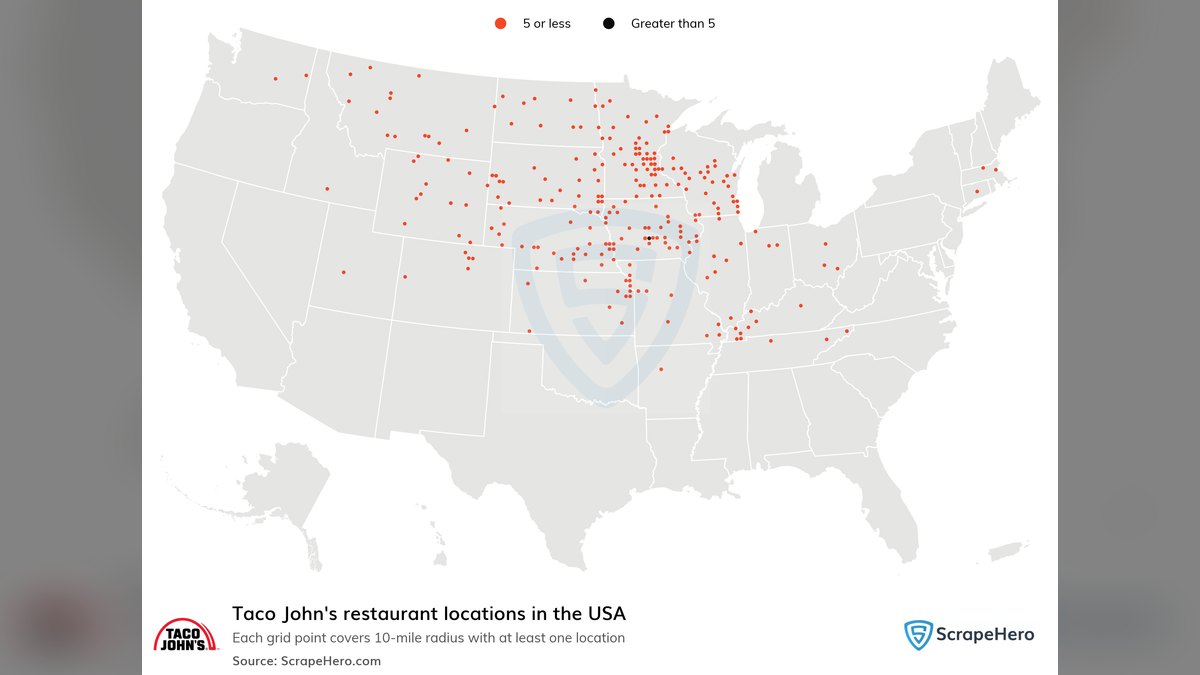
- Brand-awareness vacuum — outside the Upper Midwest and Mountain West, Taco John's awareness is below 15% vs. Taco Bell at 95%+. A new operator in Phoenix, Atlanta, or Tampa burns $50K-$100K extra in local marketing in Year 1 just to crack 60% trial.
- Real estate cost mismatch — a Sun Belt pad lease runs $12-$18 per sqft vs. $6-$10 in TJ's heartland. That's an extra $60K-$120K of annual occupancy on a 3,200 sqft box, eating 5-10 points of restaurant margin.
- Capital-constrained single-unit owners who write the $1.4M check with $200K equity and $1.2M of SBA debt at 8.5%. Debt service of $11K-$13K/month on a median-unit cash flow of $14K-$18K/month leaves almost no margin for error. One bad summer and they're out.
- Operators who buy a non-traditional unit (gas station, travel center, college campus) thinking the lower $390K-$700K Item 7 is the deal. Non-traditional units carry a 6% royalty instead of 4%, AUVs of $600K-$900K, and EBITDA margins of 8-12%. Cash flow rarely exceeds $80K-$110K per unit.
- Absentee owners — Taco John's prefers owner-operators. Investor-only ownership routinely produces labor cost overruns (32-35%), food cost slippage (33-36%), and brand-standard violations that trigger franchisor remediation.
- Operators in markets with high concentration of Taco Bell, Chipotle, and Qdoba — the Mexican QSR check-average compression in Texas, Southern California, and the Southeast crushes a 4th-place brand.
2027 Market Conditions
The 2027 environment for Taco John's specifically has four real dynamics worth modeling:
1. Mexican QSR is a $22B+ segment and growing high-single-digits, per Franchise Times Top 400 data. Taco Bell continues to dominate (8,700+ units, $1B+ profit, never a negative SSS quarter in 5 years), but the segment has structural room for a #2 national player, and Taco John's is publicly targeting that slot with a 1,000-unit goal.
2. Del Taco is for sale — Jack in the Box is divesting Del Taco, sales are down 1.8%, and the brand is in strategic limbo. That's a real-time vacuum in the value-Mexican space that Taco John's, Qdoba, and Bubbakoo's are all positioning to fill. A 2027 operator opens into a market where the #3 player is wounded.
3. Commodity and labor cost pressure — beef prices are up roughly 9-12% over 2024 baseline per BLS PPI; chicken is flat. Taco John's shifted menu mix toward chicken and Potato Olés in 2025-26 to insulate margin. Labor at $15-$17/hr in MW/MTN markets is still 30-40% cheaper than coastal states.
4. Tech and brand investment — Taco John's rolled out a unified cloud-based POS stack in 2025 (Qu Beyond + PAR Tech reported by QSR Magazine) and bumped national advertising spend. The 4% ad fund is materially better-deployed in 2026-27 than the 2022-23 baseline.
The 90-Day Decision Tree
- Days 1-15 — Brand and market fit screen. Pull the 2026 FDD from Taco John's franchise development team (
tacojohnsfranchise.com). Read Items 5, 6, 7, 19, and 20 front to back. Pull 3-year same-store-sales history (Item 19 Appendix) and the list of departing franchisees in Item 20. Call at least 8 current operators — focus on 2nd- and 3rd-year operators in markets analogous to yours.
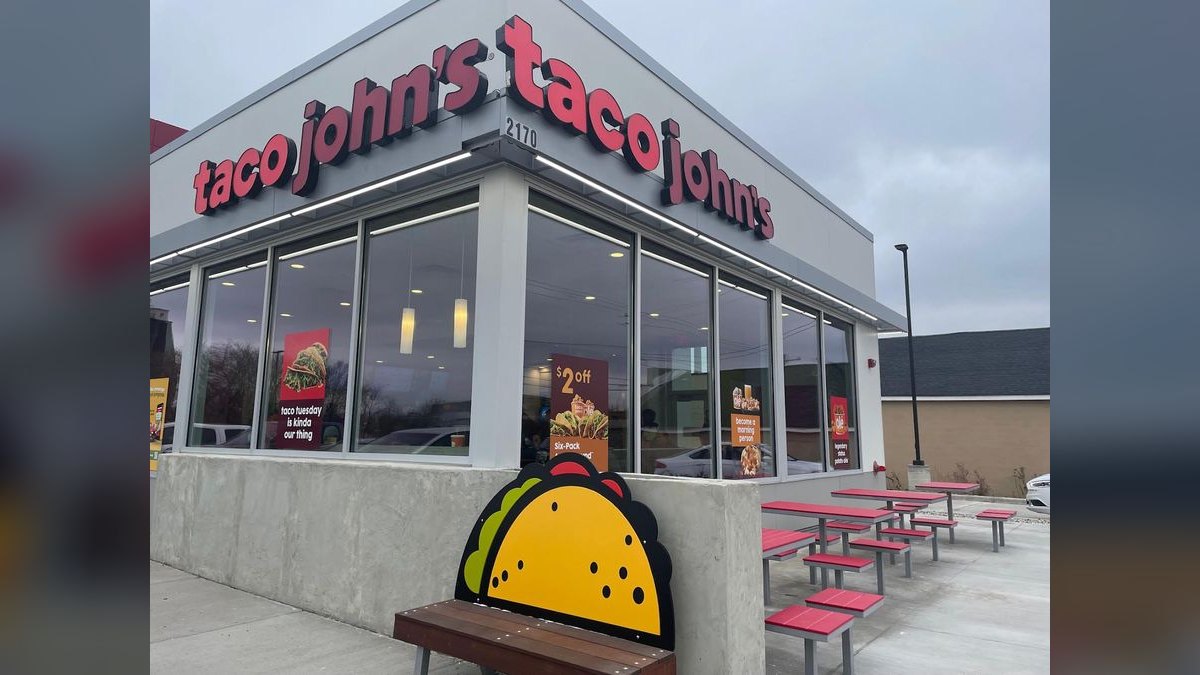
- Days 16-30 — Financial pre-qualification. Confirm $350K liquid / $500K net worth for a single unit, $500K / $1M for multi. Get a soft SBA 7(a) pre-qual for the $1.4M-$2.1M Item 7 range, assuming 25-30% equity injection. Build a 5-year P&L model at three AUV scenarios: $900K (P25), $1.21M (median), $1.88M (P75).
- Days 31-45 — Market and site analysis. Pull Placer.ai or Spatial.ai trade-area data for 3-5 target sites. Confirm household density of 40K+ within 3 miles, median HHI $55K+, daytime traffic of 25K+ vehicles/day on the primary corridor, and competitive set (count Taco Bell, Qdoba, Chipotle, Moe's within 2 miles).
- Days 46-60 — Franchisor diligence. Attend Discovery Day at Taco John's HQ (Minneapolis, MN). Meet the CEO, CFO, head of operations, head of marketing. Validate the 1,000-unit growth thesis with actual signed-but-unbuilt unit count (should be 75+ for the thesis to be credible).
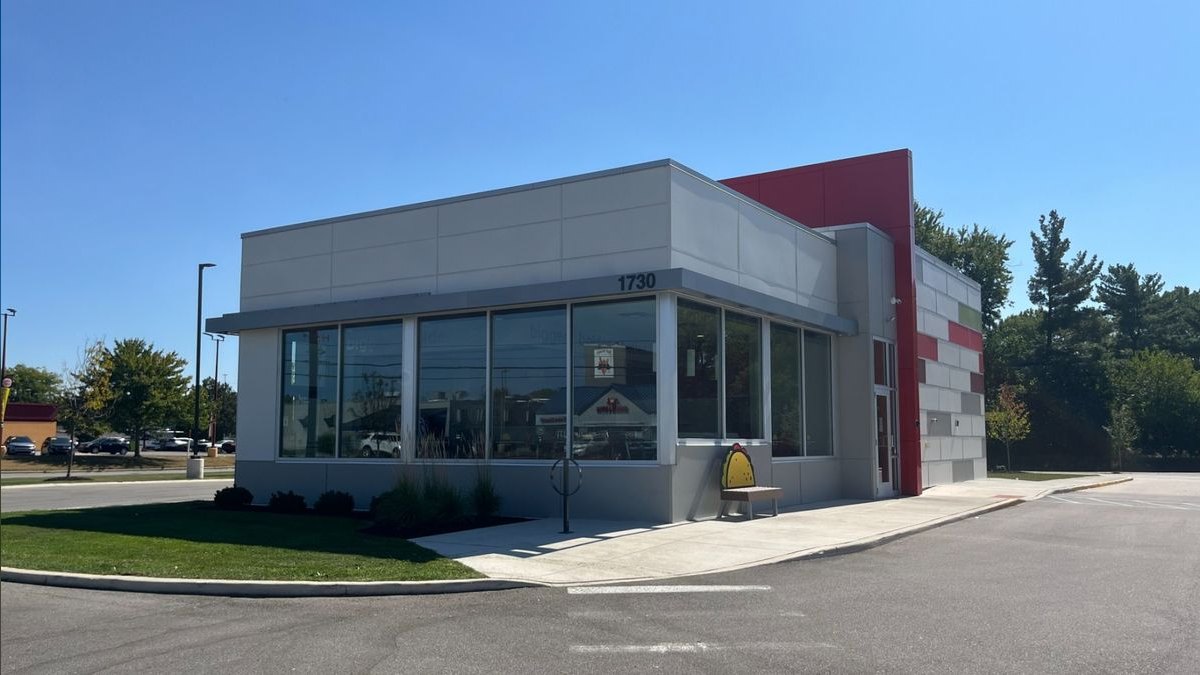
- Days 61-75 — Site control and lease negotiation. Get a signed LOI on a freestanding pad with 20-year primary lease + two 5-year options, base rent at 7-9% of pro-forma sales. Negotiate 180-day due diligence and 3-month rent abatement during build.
- Days 76-90 — Sign or walk. Final legal review of FDA + lease by a franchise attorney ($5K-$10K). Final SBA loan commitment. Sign the franchise agreement and pay the $25,000 fee, or walk and refund deposits.
Alternative Plays
If Taco John's fails any of the above gates, the logical adjacent plays in 2027 are:
- Qdoba Mexican Eats — fast-casual, $1.5M-$1.7M AUV, 813 units, +10.5% SSS in 2024, 5% royalty. More expensive Item 7 ($1.0M-$1.5M) but stronger comps and a clearer fast-casual moat. Best for operators in suburban Sun Belt trade areas.
- Bubbakoo's Burritos — fast-casual, 890+ units, +30% YoY growth, $1.1M-$1.4M AUV, $700K-$1.3M Item 7. The hot-growth play; less capital-intensive.
- Salata Salad Kitchen — fast-casual, lower Item 7 ($700K-$1.1M), AUV $1.2M-$1.5M; not Mexican but captures the same value-fast-casual operator profile.
- Buy an existing Taco John's — distressed sellers on BizBuySell and Restaurant Brokers Network typically transact at 2.5-3.5x SDE for single units, 3.5-5x EBITDA for 3+ unit portfolios. Saves $400K-$700K vs. greenfield build and eliminates the 9-14 month ramp.
- Convert to non-traditional — travel center, hospital, university locations carry lower Item 7 ($390K-$700K) but lower AUV and 6% royalty. Best for operators who already control the host real estate.
- Wait 18-24 months — if the Del Taco divestiture lands at a value buyer who restructures aggressively, the value Mexican QSR competitive set shifts, and Taco John's franchisee economics may improve or deteriorate materially. A defensible wait-and-see is a real option.
FAQ
What is the total investment needed to open a Taco John's franchise? The all-in cost ranges from roughly $1.4 million to $2.1 million, including the $25,000 franchise fee. This covers everything from construction and equipment to initial inventory and grand opening marketing. Actual costs depend on site selection, local real estate prices, and whether you build a freestanding unit with a drive-thru.
How much can I expect to earn in the first year? System-wide average unit volume (AUV) is around $1.21 million, but top-performing freestanding drive-thru locations average $1.88 million or more. Your first-year cash-on-cash return is typically 6–9% on a $400,000 equity investment, meaning you might see $24,000–$36,000 in cash flow. Profits usually grow as the location matures.
What are the ongoing royalty and advertising fees? You pay a 4% royalty on gross sales and a 4% contribution to the national advertising fund, totaling 8% of revenue. Some local co-op marketing may add another 1–2%. These fees are standard in the QSR industry and fund brand support, menu development, and regional campaigns.
How long does it take to break even? Breakeven typically occurs between month 28 and month 36 for a well-operated freestanding unit. This timeline assumes strong local marketing, efficient operations, and a site with existing brand recognition. Slower sales or higher-than-expected costs can push breakeven beyond three years.
Do I need prior restaurant experience to qualify? Taco John's prefers multi-unit QSR operating experience, especially for new franchisees. First-time operators may face higher scrutiny, though a strong business background and a proven team can help. The brand looks for candidates who understand food cost control, labor management, and local market dynamics.
What markets are best for a Taco John's franchise? The strongest markets are Tier-2 Midwest and Mountain-West states like Wyoming, the Dakotas, Iowa, Nebraska, Minnesota, and Colorado, where Taco John's has deep brand equity. Coastal Sun Belt markets are riskier due to Taco Bell's dominance. A freestanding pad with a drive-thru in a high-traffic area is ideal for maximizing sales.
Bottom Line
Taco John's is a legitimately attractive franchise for the right operator — multi-unit QSR veteran, $1M+ net worth, heartland market with freestanding pad availability, owner-operator mindset. The 4% royalty advantage, functional 4% ad fund, new cloud POS stack, Del Taco divestiture vacuum, and explicit franchisor growth thesis all stack the deck in the operator's favor. The $1.4M-$2.1M Item 7 is at the median for tier-1 QSR, the $1.21M system AUV is mid-pack but top-quartile $1.88M AUV is real and reproducible. The wrong operator profile — first-time, undercapitalized, coastal market, absentee — should walk to Qdoba, Bubbakoo's, or a non-franchise concept. Sign by Day 90 or refund deposits and pivot.
Sources
- Taco John's Franchise FDD, Costs & Fees (2026) — franchisepayback.com
- Taco John's Franchise Review 2026: Costs, Fees, News, Average Revenues — franchisechatter.com (January 2026)
- Taco John's Franchise Insights: FDD, Costs & Fees — vettedbiz.com
- Taco John's Franchise Analysis: Cost, FDD & More — franzy.com
- Taco John's New AUV Is Here — tacojohnsfranchise.com (official)
- Taco John's Accelerates Strategic Expansion, Nontraditional Growth, and Franchisee-First Investments — PR Newswire
- Taco John's Bolsters Midwest Presence with Five Unit Signed-Agreement in North Dakota — International Franchise Association (October 2025)
- Taco John's Unifies Operations with New Cloud-Based Technology Stack — QSR Magazine
- Taco John's expands Wyoming footprint with Legacy Franchisee Agreement — Nation's Restaurant News
- Bubbakoo's, Qdoba, Taco Bell Among Top 400 Leaders as Mexican Chains Generate $22B — Franchise Times
- Taco Bell's Sales Keep Climbing, No Matter the Economic Climate — QSR Magazine
- Taco Bell Unveils Bold Business Strategy For A Relentlessly Innovative Future — Taco Bell Newsroom
- U.S. Bureau of Labor Statistics QSR labor and PPI commodity data (2026)
- Restaurant Brokers Network QSR transaction multiples (2025-26)
Related on PULSE
- Should I open or buy a Long John Silver's franchise in 2027?
- Should I open or buy a Papa John's franchise in 2027?
- Should I open or buy a Jimmy John's franchise in 2027?
- Should I open or buy a Taco Cabana franchise in 2027?
- Should I open or buy a Taco Bueno franchise in 2027?
- Should I open or buy a Velvet Taco franchise in 2027?
This page will be disappearing soon. Save it to your device for $1 — or read it free while it is here.
@Kory-White- · if Venmo asks, the last 4 of my number are 2012
This page is gone.
This one is off the shelf now. $1 keeps it on your phone for good — the whole page, pictures and diagrams included.
 franchiseShould I open or buy a CarePatrol franchise in 2027?
 franchiseShould I open or buy a 1-800-GOT-JUNK franchise in 2027?
 franchiseShould I open or buy a Great American Cookies franchise in 2027?
 franchiseShould I open or buy a Pestmaster franchise in 2027?
 franchiseShould I open or buy a Domino's franchise in 2027?
 franchiseShould I open or buy a Salata Salad Kitchen franchise in 2027?
 franchiseShould I open or buy a Yard House franchise in 2027?
 franchiseShould I open or buy a Sunright Tea Studio franchise in 2027?
 franchiseShould I open or buy a Garage Living franchise in 2027?
 franchiseShould I open a short-term rental management business in 2027?