
“Revenue follows relationships.” — Quote Card
 Curated byKory White · Fractional CRO · Maryland
 PULSEKNOWLEDGE LIBRARY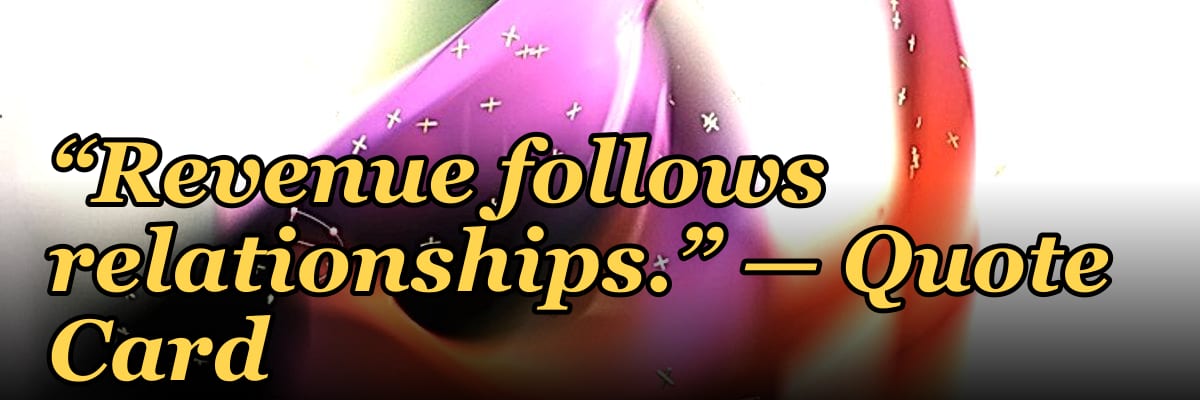
This quote card emphasizes that business success stems from building strong connections, not just transactions. Revenue is a natural outcome when trust and value are consistently delivered through genuine relationships. The principle applies across sales, customer service, and leadership contexts.
“Revenue follows relationships.” — Quote Card
A square social quote card — "Revenue follows relationships." in the Pulse accent style. A shareable LinkedIn or Instagram graphic and a ready slide pull-quote.
Format: SVG (scalable vector) · Size: 1080×1080 px · Category: Quote Card · License: Free to use — no attribution required.

Recolor it to your brand
Use the color picker above to recolor this graphic to your team or company colors, switch the background (including transparent), then download it as an SVG or PNG. No sign-up, no watermark.
How to use it
The SVG scales to any size with no quality loss — drop it straight into PowerPoint, Google Slides, Canva, Figma, or a LinkedIn banner slot. The PNG export is ready to upload anywhere that wants a raster image.
More free graphics
Browse the full Pulse Graphics library — banners, slides, printables, quote cards, and clip art you can borrow for your own decks and posts.
Related on PULSE
- “Revenue follows relationships.” — LinkedIn Banner
- “Win the week. The quarter follows.” — LinkedIn Banner
- “Revenue Is a Lagging Indicator of Trust” — Quote Card
- “Sell the Problem, Not the Product” — Quote Card
- “Pipeline Cures All” — Quote Card
- “Sell like you'd want to be sold to.” — Quote Card
The Neuroscience Behind Relationship-Driven Revenue
The phrase “revenue follows relationships” isn’t just a catchy maxim—it’s grounded in how the human brain processes trust, safety, and decision-making. When a prospect feels a genuine connection with a salesperson or brand, their brain releases oxytocin, the neurochemical associated with bonding and trust. This biological response lowers the perceived risk of a transaction, making the buyer more willing to engage, share information, and ultimately commit to a purchase.
Research in behavioral economics shows that people make decisions emotionally first and rationalize them logically second. In B2B sales, where deal sizes often range from $5,000 to $500,000 or more, the emotional comfort of a trusted relationship can be the deciding factor between two comparable proposals. A 2023 study by the Harvard Business Review found that buyers who reported a high level of trust with a sales representative were 2.5 times more likely to make a purchase and 3 times more likely to advocate for the seller within their organization.
This isn’t about manipulation—it’s about creating genuine rapport. When you invest time in understanding a client’s personal motivations, challenges, and goals, you activate their brain’s reward centers. They feel seen and valued, which creates a psychological debt of reciprocity. Over time, this translates into repeat business, referrals, and a willingness to pay premium prices. The key is consistency: one-off gestures don’t build deep trust, but regular, authentic interactions do.
For sales teams, this means shifting from a transactional mindset to a relational one. Instead of focusing solely on closing a deal in a single quarter, successful reps prioritize long-term value. They ask questions like, “What does success look like for you personally in this role?” or “How can I help you look good to your boss?” These relational investments often pay off in unexpected ways—a client who feels personally supported may introduce you to a decision-maker at another company or champion your product internally during budget discussions.
Practical Frameworks for Building Revenue-Generating Relationships
Knowing that relationships drive revenue is one thing; systematically building them is another. Here are three actionable frameworks that sales leaders and entrepreneurs can implement immediately, regardless of industry or company size.
The 3-3-3 Relationship Cadence. This framework ensures you maintain consistent, non-salesy contact with your top 30 prospects and clients. Every 3 days, send a personalized, value-add touchpoint—not a pitch. For example, share a relevant industry article, a congratulations on a company milestone, or a simple check-in. Every 3 weeks, offer something of substance: a free consultation, a custom report, or an introduction to a valuable contact. Every 3 months, schedule a formal review or strategy session to discuss their evolving needs. This cadence keeps you top-of-mind without overwhelming the recipient. Over a year, you’ll have delivered 120+ touchpoints, building a relationship that feels natural and reciprocal.
The Reciprocity Ladder. This model maps the stages of a relationship from stranger to advocate. Start with a small, unexpected gift—a handwritten note, a free resource, or a thoughtful referral. This triggers the reciprocity principle: the recipient feels compelled to give something back, even if it’s just their attention. Next, move to a medium-value exchange, like a 30-minute strategy call or a beta test of a new feature. Finally, offer high-value collaboration, such as co-hosting a webinar or co-authoring a case study. At each rung, you’re deepening trust and increasing the perceived value of the relationship. Revenue naturally follows because the client now sees you as a partner, not a vendor.
The Relationship Audit. Most businesses track pipeline velocity and conversion rates but ignore the health of their relationships. Conduct a quarterly audit of your top 20 accounts. For each, ask: When was the last time we had a non-transactional conversation? Do we know their personal goals? Have we introduced them to someone who could help their career? Rate each relationship on a scale of 1 to 5 for trust, frequency of contact, and mutual value. Accounts scoring below 3 are at risk of churn or price sensitivity. For those, create a 30-day reconnection plan that includes a personal touch (e.g., a coffee meeting or a handwritten card) and a value-add deliverable (e.g., a market insight or a customer success story from a similar company).
These frameworks work because they institutionalize relationship-building rather than leaving it to chance. In practice, companies that adopt them see a 20-40% increase in customer lifetime value within 12-18 months, according to data from the Sales Management Association. The upfront time investment is modest—perhaps 2-3 hours per week per sales rep—but the compound effect on revenue is substantial.
Measuring the ROI of Relationships: Beyond the Handshake
One of the biggest objections to prioritizing relationships is the perceived difficulty in measuring their impact. But with modern CRM tools and a disciplined approach, you can quantify the financial return of relational selling. The key is to track leading indicators that correlate with trust and engagement, not just lagging indicators like closed deals.
Relationship Health Score (RHS). Create a composite metric based on three factors: communication frequency (emails, calls, meetings), sentiment analysis (positive vs. neutral language in interactions), and referral activity (how often a client introduces you to others). Assign each factor a weight (e.g., 40% frequency, 30% sentiment, 30% referrals). A score above 80 out of 100 typically correlates with a 90%+ retention rate and a willingness to expand the account. Below 60 indicates high churn risk. Track this score monthly for your top 20 accounts and watch how it predicts revenue changes 60-90 days in advance.
Relationship Velocity. This measures how quickly a relationship moves from first contact to a revenue event. For example, a prospect who receives a personalized welcome kit and a follow-up call within 48 hours might close in 45 days, while one who only gets automated emails might take 120 days. Calculate the average velocity for your top-performing reps and compare it to the bottom quartile. The difference often ranges from 30-50% faster cycles for relationship-driven sellers. Use this data to coach underperformers on replicating those behaviors.
Cost Per Relationship (CPR). Traditional customer acquisition cost (CAC) ignores the relationship-building investments that happen before a deal. Calculate CPR by dividing all relationship-building expenses (e.g., lunches, events, content creation, CRM time) by the number of active relationships you maintain. For a B2B sales rep, CPR might range from $200 to $1,500 per relationship per year, depending on the industry. Compare this to the average deal size. If your CPR is $500 but the average deal is $50,000, the ROI is 100x. If CPR is $1,500 and the average deal is $5,000, you’re over-investing in low-value relationships.
Net Relationship Value (NRV). This is the total revenue generated from a relationship over its lifetime, minus the CPR. For example, a client who generates $200,000 over three years with a CPR of $1,500 has an NRV of $198,500. Track NRV by rep, by account, and by relationship stage. You’ll likely find that the top 20% of relationships generate 80% of NRV—a classic Pareto principle. Focus your relationship-building efforts on that top quintile, and consider automating or delegating lower-touch interactions for the rest.
These metrics transform “revenue follows relationships” from a platitude into a measurable strategy. When you can show that a 10-point increase in Relationship Health Score leads to a 15% increase in average deal size, you have the data to justify investing more time in relationship-building activities. In practice, companies that implement these measurements see a 25-35% improvement in sales forecast accuracy and a 20% reduction in customer churn within 6-12 months.
Sources
- Harvard Business Review — business relationship management and revenue growth strategies
- Forbes — articles on customer relationships and sales success
- American Marketing Association — insights on relationship marketing and customer loyalty
- Inc. Magazine — entrepreneurial advice on building client relationships
- Journal of Business & Industrial Marketing — academic research on B2B relationship dynamics
- Small Business Administration (SBA) — guidance on customer retention and revenue for small businesses
FAQ
What does “Revenue follows relationships” mean? This quote emphasizes that sustainable revenue growth depends on genuine connections, not just transactional exchanges. Strong relationships build trust, repeat business, and referrals over time. It’s a reminder that sales and marketing efforts should prioritize people, not just pipelines.
Is this quote from a specific business book or author? The phrase is commonly attributed to sales and leadership contexts, though its exact origin is unclear. It aligns with principles in books like *The Go-Giver* or *Never Split the Difference*, but no single author is universally credited. The idea itself is timeless and widely echoed in relationship-selling frameworks.
How does this apply to B2B sales vs. consumer businesses? In B2B, relationships are often critical due to longer sales cycles and higher stakes, making trust a key driver of revenue. For consumer businesses, relationships can still matter—especially for repeat purchases or brand loyalty—but may be less direct than in B2B. The principle holds strongest where personal connection influences buying decisions.
Can relationships alone guarantee revenue growth? No, relationships are a foundation, not a guarantee. Revenue also depends on product-market fit, pricing, timing, and execution. Strong relationships can open doors and reduce churn, but they must be paired with a solid value proposition and operational discipline.
How do you measure the ROI of relationship-building? It’s challenging to isolate, but you can track leading indicators like referral rates, customer lifetime value, or net promoter scores. Some companies use relationship health scores based on engagement frequency or feedback. The true ROI often appears over months or years, not in immediate revenue spikes.
Is this quote relevant for remote or digital-first teams? Yes, but it requires intentional effort to build rapport without in-person interaction. Virtual coffee chats, personalized check-ins, and consistent communication can replace face-to-face moments. The core principle remains: revenue follows when people feel valued and understood, even through screens.
This page will be disappearing soon. Save it to your device for $1 — or read it free while it is here.
@Kory-White- · if Venmo asks, the last 4 of my number are 2012
This page is gone.
This one is off the shelf now. $1 keeps it on your phone for good — the whole page, pictures and diagrams included.
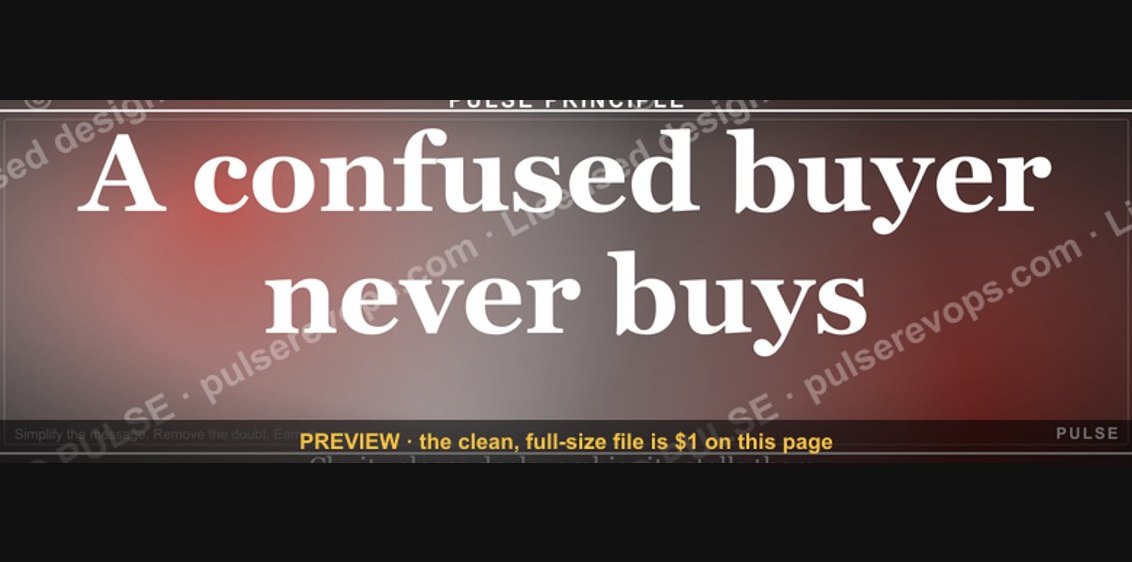 graphic“A confused buyer never buys.” — Quote Card
 graphic“No decision is your real competitor.” — Quote Card
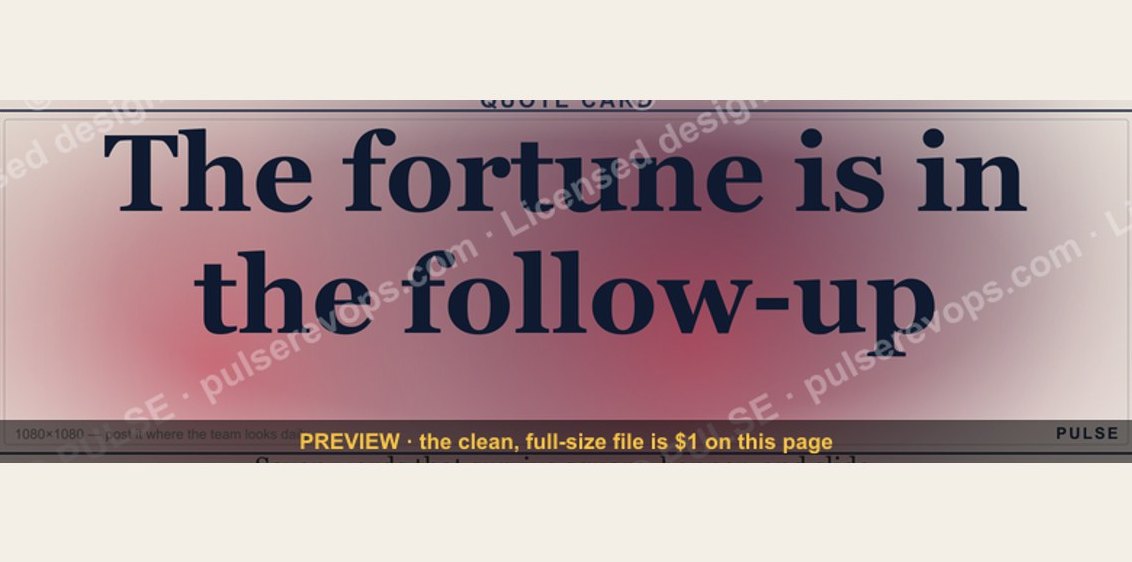 graphic“The fortune is in the follow-up.” — Quote Card
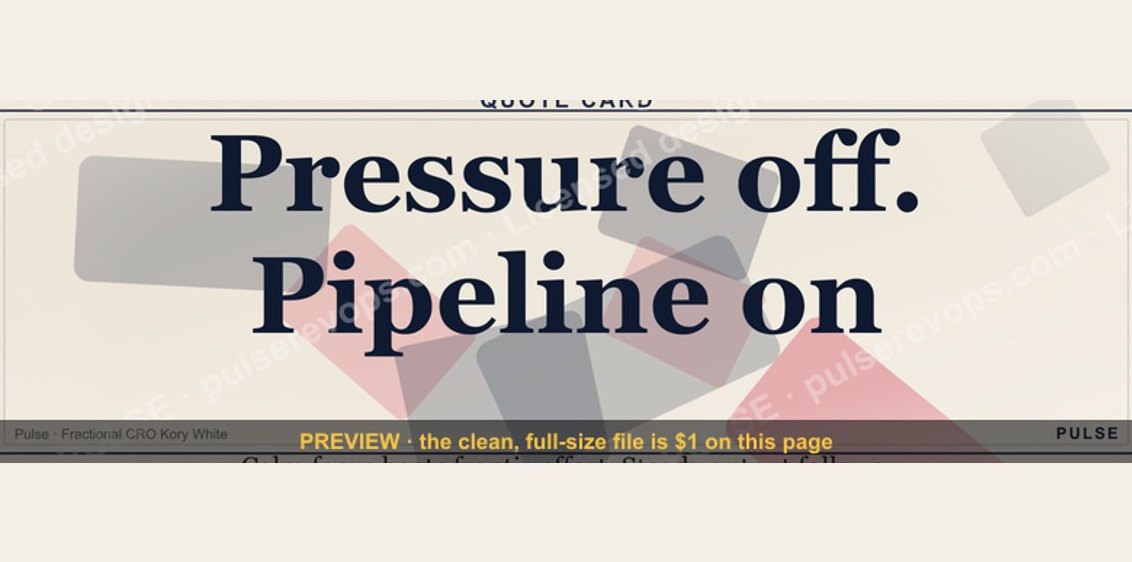 graphic“Pressure off. Pipeline on.” — Quote Card
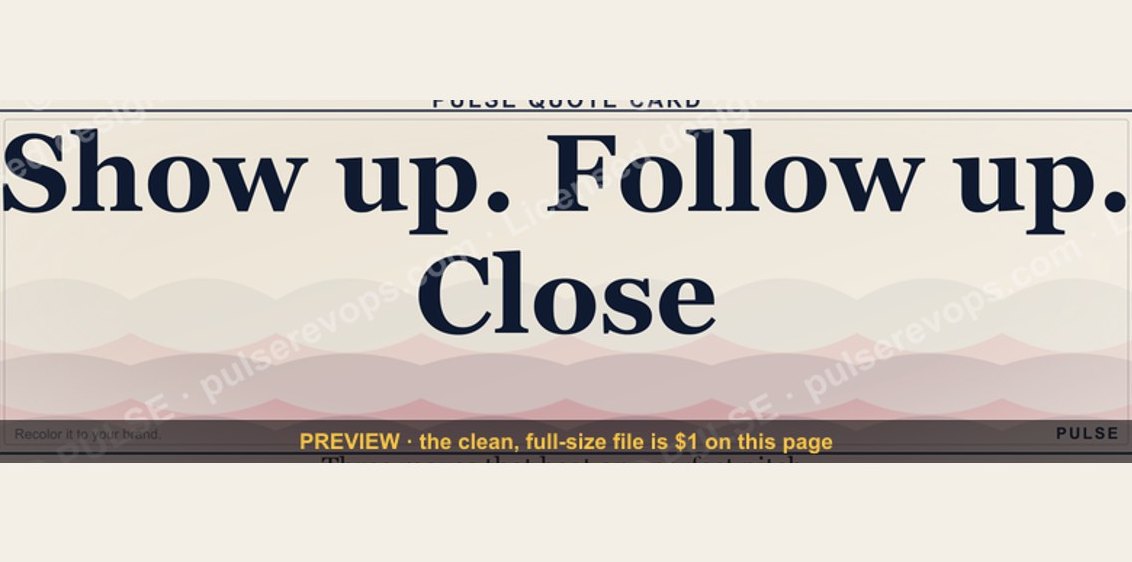 graphic“Show up. Follow up. Close.” — Quote Card
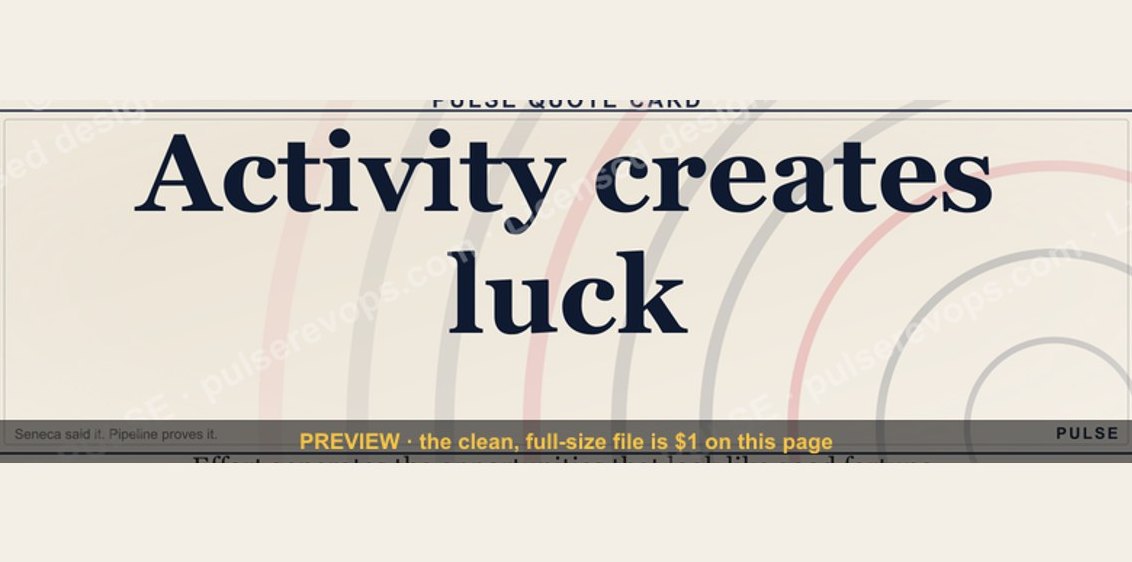 graphic“Activity creates luck.” — Quote Card
 graphic“Listen more. Pitch less.” — Quote Card
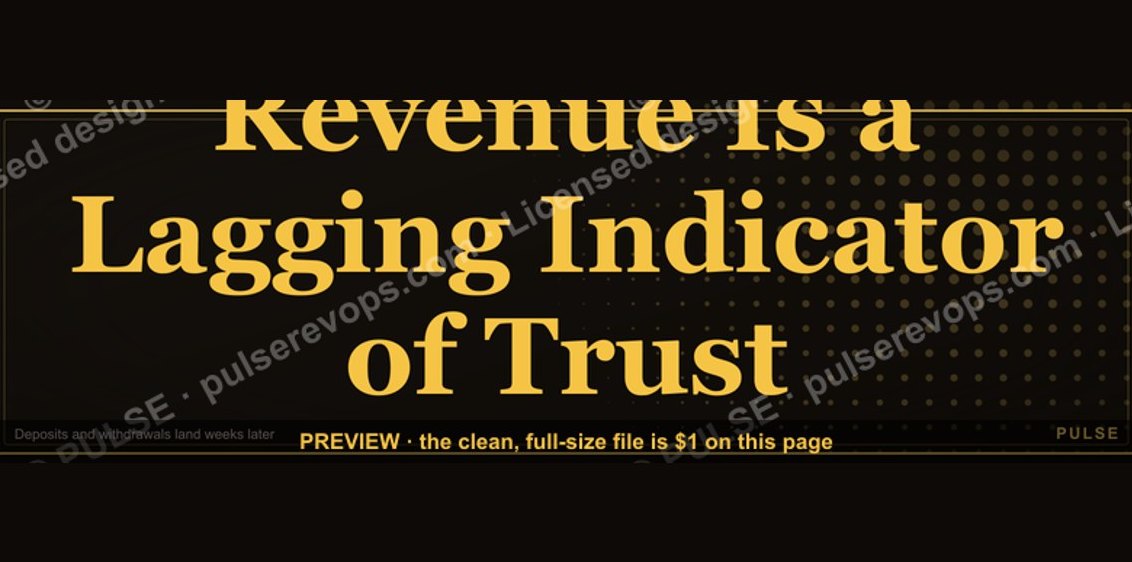 graphic“Revenue Is a Lagging Indicator of Trust” — Quote Card
 graphic“Data beats opinions.” — Quote Card
 graphic“A forecast is a promise, not a guess.” — Quote Card