
How to set up a hospital tank for fin rot without medicating the main display in 2026?
 Curated byKory White · Fractional CRO · Maryland
 PULSEKNOWLEDGE LIBRARY
Quality
Certified

Set up a bare 10–20 gallon tank with a heater at 78–80°F, an airstone, a sponge filter pre-seeded in your main tank for two weeks, and a lid. Move only the affected fish, then treat with daily 50% dechlorinated water changes and stable, dim conditions — healing fin rot without medicating the display at all.
What a hospital tank actually is and why isolation beats dosing the display
A hospital tank — sometimes called a treatment or quarantine tank — is a small, deliberately simple, bare-bottom aquarium that exists to hold one sick fish under conditions you fully control. It is not a second display tank. There is no substrate, no rock, no driftwood, no plants, and usually no decor beyond a couple of clean PVC elbows or a plastic plant for cover. That emptiness is the entire point: every element you remove is one less surface for bacteria to colonize, one less place for organic waste to trap, and one less thing that absorbs a dose if you eventually do need medication.
The reason to keep treatment out of the main display is mostly biological and partly financial. Fin rot is a bacterial infection — usually opportunistic gram-negative organisms such as *Aeromonas*, *Pseudomonas*, or *Flavobacterium columnare* — that takes hold when a fish's slime coat and immune response are already compromised by poor water quality, aggression, or chronic stress. The antibiotics that kill those organisms (kanamycin, nitrofurazone, erythromycin, oxytetracycline) do not distinguish between the pathogen on the fin and the *Nitrosomonas* and *Nitrobacter* colonies living in your display's filter media. Dose a 55-gallon planted tank with a broad-spectrum antibiotic and there is a real chance you stall the nitrogen cycle for one to three weeks, producing an ammonia spike that stresses every fish in the tank — including the one you were trying to help. You traded one sick fish for a tank-wide water quality event.
The cost math points the same direction. Medicating a 55-gallon display means dosing 55 gallons, typically for a 5–10 day course with a repeat dose after each partial water change. Medicating a 10-gallon hospital tank means dosing 10 gallons. That is roughly a fifth to an eighth of the medication for the same therapeutic concentration on the same fish. Add the invertebrate problem: most shrimp, snails, and other inverts are sensitive to copper-based treatments and to some antibiotics, and a planted display will also lose plant mass to certain medications. Carbon in the display's filter, meanwhile, actively strips medication from the water column, so you are dosing against your own filtration.
There is one more argument for isolation that gets overlooked: observation. In a display tank with driftwood and plants, a fish with early-stage fin rot hides, eats out of sight, and produces waste you cannot see. In a bare 10-gallon tank with dim lighting, you can see at a glance whether the fish ate, whether the fin margin is receding or regrowing, whether there is fuzz forming on the damaged edge, and whether uneaten food is fouling the water. That visibility is what lets you catch a mild case before it becomes a systemic one. Fin rot caught at the "frayed edge, no redness" stage frequently resolves on clean water alone in five to fourteen days. The same case caught two weeks later, with tissue receding into the caudal peduncle and red streaking at the fin base, may need antibiotics and may still cost the fish permanent fin structure.
The last thing worth naming plainly: fin rot is a symptom, not a root cause. A hospital tank buys you a controlled space to heal the fish, but if the display's nitrate is at 60 ppm, or a dominant male is nipping fins nightly, or the tank is overstocked and under-filtered, the fish will re-infect within weeks of going home. Use the isolation period to fix the display, not just the fish.

Building the tank, step by step
Work through this in order. The sequence matters because the filter seeding takes the longest and should be started first.
Seed the sponge filter (start two weeks early, or improvise). A sponge filter run in your main display's water column for 10–14 days will absorb enough nitrifying bacteria to handle a single fish's bioload from day one. This is the single most valuable piece of preparation you can do, and it is why experienced keepers permanently park a spare sponge filter in the back corner of the display — it is always ready. If a fish is sick right now and you have no seeded sponge, you have two acceptable substitutes: squeeze the mulm from your display's established filter media into the new sponge, or accept an uncycled tank and compensate with larger, more frequent water changes plus a dose of dechlorinator that binds ammonia (products based on sodium hydroxymethanesulfonate do this). Do not run a hospital tank on a hang-on-back filter with a carbon cartridge — carbon removes tannins and medication, both of which you may want present.
Pick the volume. Ten gallons handles a betta, a small gourami, most tetras, a young angelfish, or a single fancy goldfish for a short course. Twenty gallons is the better default for anything over about four inches, for adult angelfish, for goldfish beyond a couple of months, and for any case where you expect a two-to-four-week stay. Below ten gallons, water chemistry swings too fast between changes and the daily maintenance becomes punishing. Above twenty, you lose the medication-cost advantage and the water changes get heavy.
Go bare-bottom, and skip the substrate entirely. No gravel, no sand. Waste and uneaten food sit visibly on glass where you can siphon them in seconds. Substrate hides detritus, harbors the same opportunistic bacteria you are fighting, and binds some medications.
Heater sized modestly. Roughly 3–5 watts per gallon in a normal room — so 50W for a 10-gallon, 75–100W for a 20-gallon. Set 78–80°F for most tropical species. The warmth modestly accelerates metabolism and tissue regeneration. Two important exceptions: if you suspect *columnaris* (grayish-white saddle lesions, fast progression, cottony edges), heat makes it worse and you want to run cooler, around 75°F. And coldwater species — goldfish, white cloud minnows — should be treated near their normal range, not pushed to 80°F. Always run a separate thermometer; heater dials lie routinely by two to four degrees.
Aeration and flow. A sponge filter driven by an air pump gives you both biological filtration and oxygenation with no strong current. Healing fish with damaged caudal fins are poor swimmers, and a powerhead or strong HOB outflow will exhaust them fighting the flow. Aim for gentle surface agitation, nothing more. If you add an airstone, a single small one is plenty. Warm water holds less dissolved oxygen than cool water, so at 80°F aeration matters more than it does in the display.
Lid, dim light, and cover. Stressed fish jump. A lid, or even plastic wrap with gaps for air exchange, prevents the worst outcome. Keep lighting off or very low — ambient room light is usually sufficient. Four to six hours of low light daily is the ceiling. Darkness reduces stress, limits algae in a tank with no cleanup crew, and does not slow healing.

Hiding structure that cleans easily. One or two PVC elbows, a small ceramic cave, or a silk plant. Nothing porous. Anything you put in should tolerate a bleach dip afterward.
Fill it correctly. Use water from your main display for the initial fill so temperature, pH, GH, and KH match what the fish is already acclimated to — this eliminates transfer shock. Any tap water added afterward gets dechlorinated first, at temperature.
Transfer the fish, not the pathogens. Net or, better, cup the fish to minimize slime coat abrasion. A container transfer is gentler than a net for long-finned fish, whose fins snag and tear on netting. Afterward, disinfect the net or container in a 1:10 bleach-to-water solution, rinse thoroughly, and air dry — that is the same equipment discipline that keeps you from carrying the infection back into the display on a wet net.
Water parameters, the daily routine, and what regrowth looks like
Clean water is the treatment. Everything else is support.
Targets to hold every single day: ammonia 0 ppm, nitrite 0 ppm, nitrate under 20 ppm, pH stable and matching the display (typically 6.5–7.5 for community freshwater), temperature steady within one degree. Use a liquid reagent test kit, not paper strips — strips drift badly with age and humidity and routinely miss ammonia in the 0.25–0.5 ppm range, which is exactly the range that matters for a fish with open tissue. Test daily for the first week. In an uncycled hospital tank, test twice daily.
The water change. Fifty percent daily is the standard for a hospital tank holding a fish with an active bacterial infection. Match temperature to within a degree, dechlorinate before it goes in, and pour slowly rather than dumping. Siphon uneaten food and waste off the bare glass at the same time — with no substrate this takes under a minute. If the tank is genuinely cycled with a well-seeded sponge and ammonia holds at zero, you can drop to 30–50% every other day after the first week, but daily is the safer default while tissue is open. Skipping changes to "not stress the fish" is the most common self-inflicted setback; ammonia burn on damaged fin tissue is far more stressful than the change.
Aquarium salt, and its real limits. Non-iodized aquarium salt at one teaspoon per gallon is a reasonable, low-risk first escalation for mild to moderate fin rot in salt-tolerant species. It reduces osmotic stress, supports slime coat production, and modestly impairs some external pathogens. Some keepers go to two or three teaspoons per gallon for short courses. Important caveats: salt does not evaporate, so you only re-add salt in proportion to the water you removed — a 50% change means adding salt for five gallons, not ten. And several common fish are salt-intolerant: most Corydoras, otocinclus, loaches, and many other scaleless species react badly. Live plants also do poorly, which is another reason the hospital tank has none.
Botanicals as a gentler option. Indian almond leaves (catappa) or alder cones, at roughly one to two per ten gallons, release tannins that have mild antibacterial properties and are broadly calming for soft-water species. They tint the water tea-brown, which is cosmetically odd but harmless and reduces perceived light. Replace them every one to two weeks as they break down. If you use botanicals, do not also run carbon — it strips the tannins straight back out.
Feeding. Feed lightly, once daily, only what is consumed in about a minute, and siphon anything left within a few minutes. A fish under stress often eats poorly for the first day or two; that is normal and not cause for force-feeding. Uneaten food in a small bare tank is a direct ammonia source. High-quality frozen or live food is often accepted when pellets are refused.
Reading the fin, day by day. In the first 48 hours you are looking for *stabilization* — no further tissue loss — not improvement. Around days three to seven, the ragged margin stops advancing and the edge stops looking inflamed. New growth appears as a thin, clear-to-translucent, almost membranous fringe along the damaged edge; it is easy to miss and often mistaken for continued damage because it lacks color and rays. That clear fringe is the win condition. Over the following one to three weeks it thickens, rays extend into it, and pigment gradually returns — though a fin that lost tissue back into the fin base may never fully re-pigment or may regrow with a slightly ragged outline permanently.
Warning signs that change the plan: red or black streaking running into the fin base or body, white cottony or fuzzy growth on the damaged margin (suggests a fungal secondary infection or columnaris), receding tissue that reaches the body wall, rapid gill movement, or the fish clamping fins and sitting on the bottom. Any of these means clean water alone is not going to be enough, and it is time to medicate — in the hospital tank.
What this costs, how long it takes, and where the money actually goes
Equipment, one time. A 10-gallon tank is inexpensive and widely available; a 20-gallon long is modestly more. A small adjustable heater, a sponge filter, an air pump with airline and a check valve, a basic lid, and a thermometer round out the build. A liquid master test kit is the one item worth not economizing on — it lasts hundreds of tests and it is what tells you whether the water change schedule is working. A siphon or even a length of airline tubing handles water changes. The whole setup is typically the cheapest permanent insurance policy in the hobby, and once built it lives in a closet ready to redeploy.
Consumables per treatment cycle. Dechlorinator, aquarium salt if used, a few botanicals, and medication only if escalated. Because you are dosing 10 gallons rather than 55, a single package of most antibiotic treatments will cover several full courses in the hospital tank where it would barely cover one course in a large display.
Timelines you can plan around. Sponge filter seeding: 10–14 days ahead of need. Tank setup once you have a seeded sponge: under an hour. Stabilization of an active infection on clean water: 24–72 hours. First visible clear regrowth in a mild case: 5–14 days. Full cosmetic fin regrowth: two weeks for minor fraying, six to twelve weeks for substantial tissue loss, and longer for long-finned varieties like bettas, veiltail goldfish, and fancy guppies whose fins are structurally slower to rebuild. Temperature taper back toward display conditions: 2–3 days, roughly one to two degrees daily. Observation with no new damage before return: at least 48 hours, and 70–80% regrowth is a sensible bar. Quarantine for *newly purchased* fish, which is the preventive version of the same tank: two to four weeks.
The hidden cost is labor, not money. Daily water changes, daily testing, daily observation, and daily light feeding for one to three weeks is a real time commitment — perhaps ten to fifteen minutes a day. People underestimate this and then quietly skip changes on day four. If you know you cannot sustain daily maintenance, size up to 20 gallons at the start; the larger volume is more forgiving of a missed change.
Mistakes that turn a two-week recovery into a dead fish
Treating a symptom while the cause stays in the display. The fish heals in isolation, goes home to 50 ppm nitrate and the same fin-nipping tankmate, and relapses in ten days. Test the display while the fish is out. Increase display water changes, reduce feeding, address overstocking, and identify aggression. If two or three fish in the display show fin damage, the problem is the environment, not the individual — and a hospital tank for one fish is the wrong tool.
Running the hospital tank uncycled without compensating. A bare 10-gallon with no biological filtration and one fish will register ammonia within 24–48 hours. If your sponge isn't seeded, you must increase change frequency and volume, feed less, and test twice daily. Ammonia at 0.5 ppm against open fin tissue undoes everything the isolation was meant to accomplish.
Reaching for medication on day one. Most mild fin rot — clean, frayed margins with no redness — resolves on water quality alone. Starting antibiotics immediately means you never learn whether water quality was the issue, you expose the fish to unnecessary compounds, and you push selection pressure toward resistant organisms. Give clean water 5–7 days before escalating, unless you see red streaking or fast tissue recession from the start.
Stopping an antibiotic course early because the fish "looks better." If you do escalate, finish the full labeled course. Partial courses knock the infection down without clearing it and select for the hardier organisms. Follow the product's re-dosing instructions after water changes, since each change removes a proportional amount of the drug.
Leaving carbon in the filter during medication. Activated carbon adsorbs most medications out of the water within hours. Remove it during treatment, and add fresh carbon only *after* the course is finished to strip residual medication before the fish goes home.
Moving the fish back too fast. Returning at the first sign of clear growth, before the margin has thickened and stabilized, invites relapse into a tank that is still the environment that caused the problem. Wait for 70–80% regrowth and a clean 48 hours.
Temperature shock on the return trip. Dropping a fish held at 80°F back into a 76°F display in one move is a meaningful thermal shock to an already-compromised animal. Taper the hospital tank down over two to three days first, then drip acclimate for 20–30 minutes on the way back.
Cross-contaminating with shared equipment. One net used in both tanks, or one siphon, carries the pathogen straight back to the display. Dedicate equipment to the hospital tank or disinfect between uses with a 1:10 bleach dip, rinsed thoroughly and dried.
Overcrowding the hospital tank. Adding a second fish "since the tank is running" doubles the bioload in a tank with marginal filtration and risks transmitting the infection to a healthy animal. One patient at a time unless the whole group is affected.
Treating a fin injury as fin rot. Torn fins from a decoration, a net, or a nip look similar early on but have a clean tear line rather than a progressively receding, discolored margin. A clean tear needs good water and time, not salt, not antibiotics, and often not even isolation — just removal of whatever caused the injury.
Deciding when to isolate, when to fix the display, and when to escalate
Not every case of ragged fins warrants a hospital tank. Use the severity and the scope of the problem to route the decision.
Fix the display, do not isolate, when multiple fish show identical mild fraying, when nitrate is elevated or ammonia/nitrite are detectable, or when the display has been overdue for maintenance. This is an environment problem. Increase water change volume and frequency in the display, cut feeding, and re-test daily. Moving one fish out solves nothing.
Isolate without medicating — the default case — when a single fish shows frayed or receding fin margins, is otherwise eating and behaving normally, and display parameters are acceptable. Clean water, stable warmth, a quiet dim tank, optional salt or botanicals, and daily 50% changes. Reassess at day seven.
Isolate and medicate in the hospital tank when you see red or black streaking into the fin base, cottony white growth on the margin, tissue loss reaching the body, or no stabilization after five to seven days of pristine water. Kanamycin and nitrofurazone are the commonly used choices for gram-negative bacterial infections in freshwater fish; follow the product label exactly, remove carbon, and finish the course. The display is never dosed.
Escalate beyond home treatment when the fish shows systemic signs — bloating, popeye, lesions on the body, or refusal to eat for more than several days alongside worsening fins — or when a second full antibiotic course fails. Aquatic veterinarians exist, and for a valuable or long-held fish a consultation is a legitimate option.
The one branch people skip is the "do nothing to the fish, fix the water" path. It is frequently the correct answer and it is always the cheapest one. A hospital tank is a tool for a specific fish in a specific condition — not a reflex.
Related questions
Can I use my main display's water to fill the hospital tank?
Yes, and you should for the initial fill. Matching temperature, pH, GH, and KH removes transfer shock entirely. Top-offs and water changes afterward use dechlorinated tap water brought to temperature. The display loses only the volume you removed, which you replace as a normal water change.
Does removing the fish stop the fin rot spreading in the display?
Not reliably. The bacteria involved are usually already present in every tank and become pathogenic when fish are stressed or water quality slips. Isolation protects the individual and lets you treat cheaply — it does not sterilize the display. Correcting the underlying water quality or aggression is what prevents further cases.
How long can a hospital tank run without a cycled filter?
A few days at most before ammonia becomes a problem with one fish and light feeding. Compensate with 50% daily changes, twice-daily testing, and an ammonia-binding dechlorinator. The durable fix is keeping a spare sponge filter permanently running in your display so a seeded one is always available.
Is aquarium salt safe for every fish with fin rot?
No. Corydoras, otocinclus, loaches, and other scaleless or salt-sensitive species react poorly even at one teaspoon per gallon. Live plants also suffer. For those fish, rely on clean water, stable warmth, and botanicals instead, and escalate straight to a labeled antibiotic if the infection progresses.
Should the hospital tank stay set up permanently?
The tank itself can be stored dry and assembled in under an hour. What should stay permanently running is the spare sponge filter in your display — that is the component with the two-week lead time. Everything else is quick to deploy when you need it.
FAQ
What size hospital tank do I need for fin rot treatment?
Ten gallons handles most small to medium community fish — bettas, tetras, small gouramis, young angelfish. Go to twenty gallons for anything over roughly four inches, for goldfish, or when you expect a stay longer than two weeks. The larger volume buys chemical stability and forgiveness if you miss a water change, at the cost of slightly more medication if you eventually escalate.
Why not just medicate the display and skip the extra tank?
Antibiotics kill the nitrifying bacteria in your display's filter, which can stall the nitrogen cycle for one to three weeks and produce an ammonia spike affecting every fish. Copper-based and some antibacterial treatments also harm shrimp, snails, and plants, and carbon in the display filter strips medication as fast as you add it. Dosing ten gallons instead of fifty-five also costs a fraction as much.
How often should I change water in the hospital tank?
Fifty percent daily while the infection is active, matched to temperature and dechlorinated before it goes in. With a well-seeded sponge filter holding ammonia and nitrite at zero, you can ease to 30–50% every other day after the first week. Skipping changes lets ammonia accumulate against open tissue — the fastest way to stall recovery.
How do I know the fin is actually regrowing?
Look for a thin, clear-to-translucent fringe along the damaged margin. It has no pigment and no visible rays, so it is easily mistaken for further damage. Over one to three weeks it thickens, rays extend into it, and color gradually returns. Fin lost back to the base may regrow with a permanently uneven outline.
Do I ever need medication, or is clean water always enough?
Mild fin rot — clean frayed margins, no redness, fish eating normally — resolves on water quality alone in five to fourteen days. Medicate when you see red or black streaking into the fin base, white cottony growth, tissue receding into the body, or no stabilization after five to seven days of pristine water. Medicate in the hospital tank only, never in the display.
When is it safe to return the fish to the main tank?
After roughly 70–80% fin regrowth with no new fraying for at least 48 hours. Taper the hospital tank temperature toward display temperature over two to three days first, then drip acclimate for 20–30 minutes. Confirm the display's parameters have actually been corrected, or the fish returns to the conditions that caused the problem.
Sources
- Merck Veterinary Manual — Bacterial Diseases of Fish
- University of Florida IFAS Extension — Use of Salt in Aquaculture
- University of Florida IFAS Extension — Ammonia in Aquatic Systems
- Cornell University College of Veterinary Medicine — Aquatic Animal Health
- VCA Animal Hospitals — Aquarium Water Quality: Nitrogen Cycle
- NOAA Fisheries — Fish Health and Disease
- Michigan State University Extension — Aquaculture Fish Health Management
- World Organisation for Animal Health — Aquatic Animal Health Code
Related on PULSE
This page will be disappearing soon. Save it to your device for $1 — or read it free while it is here.
@Kory-White- · if Venmo asks, the last 4 of my number are 2012
This page is gone.
This one is off the shelf now. $1 keeps it on your phone for good — the whole page, pictures and diagrams included.
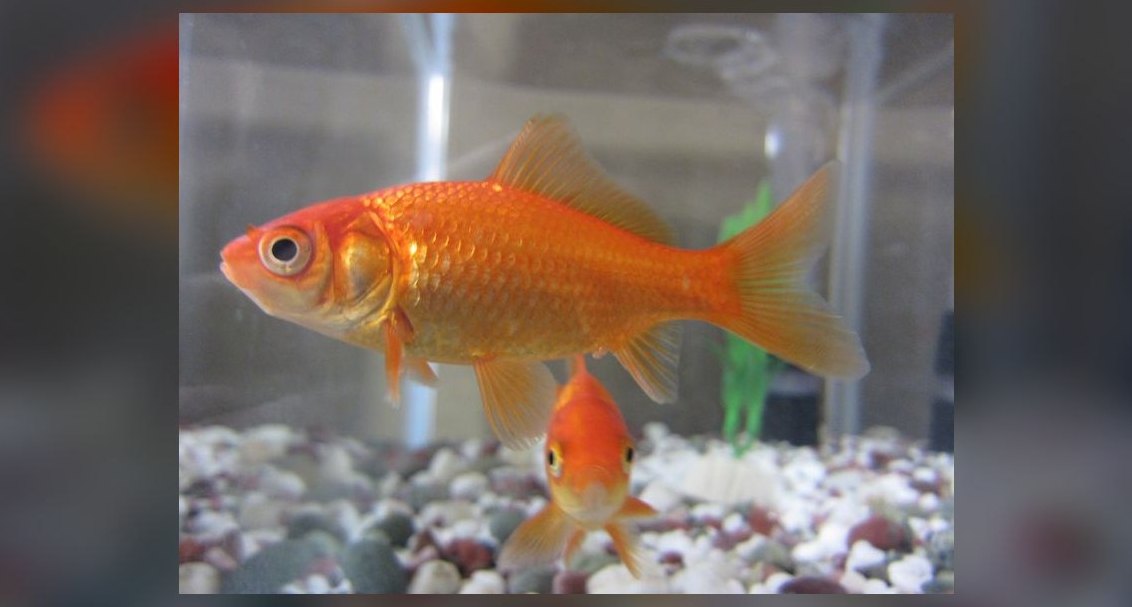 pulse-petsTop 10 Goldfish Varieties 2027
 pulse-petsTop 10 Blue Acara Peaceful Cichlids 2027
 pulse-petsTop 10 fish swim bladder issues 2027
 pulse-petsTop 10 CaribSea Substrates 2027
 petsWhat is the best quiet canister filter for a 40-gallon breeder tank in a bedroom in 2026?
 pulse-petsTop 10 Uaru Cichlid Herbivore Cichlids 2027
 petsTop 10 step-by-step aquarium water change procedures in 2027
 pulse-petsTop 10 SPS Corals for Advanced Reefs 2027
 pulse-petsTop 10 Celestial Pearl Danios 2027
 pulse-petsTop 10 Bucephalandra Varieties 2027