


CPI Security camera quality — what reviews show vs Ring and Arlo in 2027
Quality
Certified
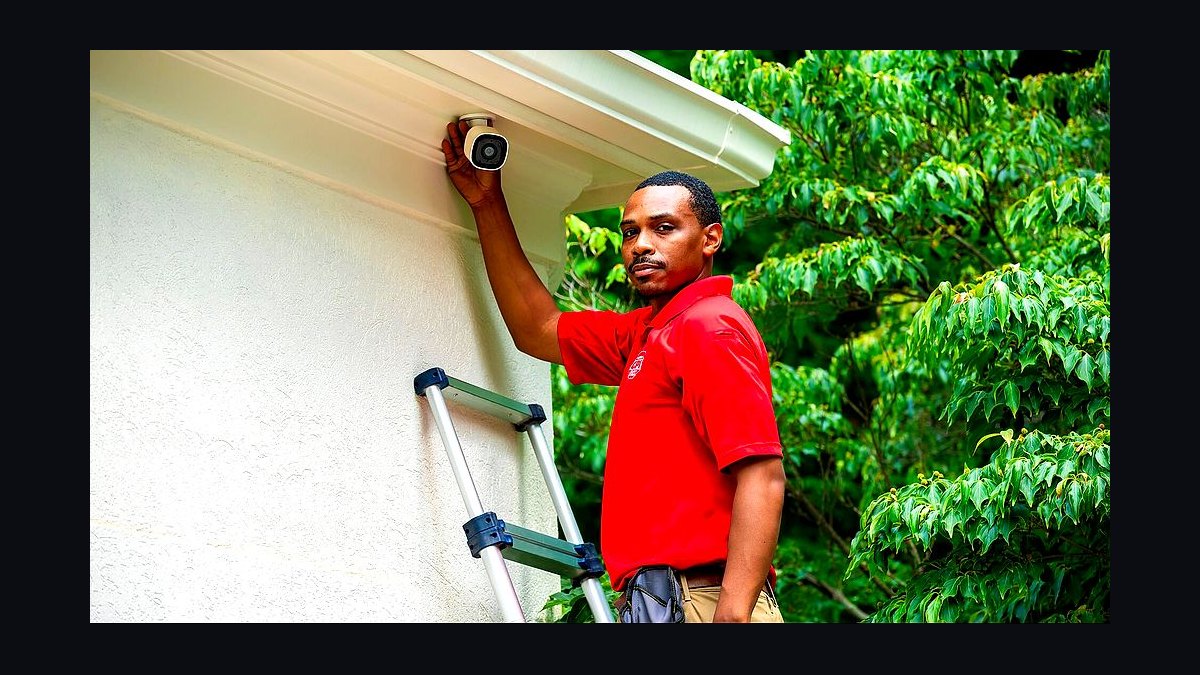
CPI Security's camera lineup — the inteliview indoor/outdoor cameras and the CPI video doorbell — gets mixed reviews in 2026. Buyers with a CPI panel praise the tight integration: cameras arm with the alarm, clips show up alongside sensor events, and a single app controls everything. But on image quality, AI, notification speed, and price against Ring and Arlo, CPI falls behind. Most CPI cameras still cap at 1080p while Ring's Battery Doorbell Pro 2nd Gen runs Retinal 4K and Arlo's flagship records 2K-4K with HDR. AI is limited to basic motion detection, while Ring offers person/package/face alerts and Arlo bundles activity zones plus AI object recognition. Notifications arrive in 2-5 seconds versus sub-1-second for Ring and 1-2 seconds for Arlo. Per-camera pricing runs $200-400 installed, above the $100-250 Ring band and $130-350 Arlo band. Net: CPI cameras are acceptable hardware bolted onto strong professional monitoring, but trail DIY leaders on camera specs.
TL;DR: CPI cameras integrate cleanly with the CPI panel but lose on resolution, AI, latency, and price compared to Ring and Arlo.
1CPI Camera Capabilities
CPI sells three main camera lines through its dealer-installed model: the inteliview indoor camera, an outdoor weather-rated camera, and a wired video doorbell. CPI's own product page lists 1080p HD video, night vision, pinch-and-zoom, low-light recording, motion detection, two-way talk on select models, and live streaming through the CPI Security app and the inTouch panel. Cloud recording is bundled into the monitoring contract rather than sold as a separate subscription, which is a genuine convenience — most buyers never see a separate camera bill.
Image quality in good light is acceptable. Independent reviewers note fast frame rates and watchable low-light performance for the 1080p sensor class, and the cameras tie directly into automation rules so a triggered sensor can pull up the relevant camera clip automatically. The CPI doorbell adds chime integration, package-presence notifications, and the ability to disarm the alarm from the doorbell live view once the user confirms identity.

The integration story is where CPI shines. Because the cameras, panel, sensors, and professional monitoring all sit inside one ecosystem, an event-driven clip is automatically attached to the alarm event sent to the monitoring center. Operators can verify before dispatching police, which materially reduces false alarms and unlocks priority response in many jurisdictions. Ring and Arlo, by contrast, are camera-first platforms; their monitoring integrations exist but are less unified, and verified-response coverage is patchier.
The catch is that CPI's hardware roadmap moves slowly. The inteliview line has stayed at 1080p across multiple refresh cycles while the DIY market has jumped to 2K and then 4K. AI processing is handled mostly on-server with basic motion classification rather than the on-device person/package/vehicle models Ring and Arlo now ship. Two-way talk works but reviewers describe it as laggy compared to Ring's near-instant audio. None of these are dealbreakers in isolation, but stacked together they make CPI cameras feel a generation behind.

2Documented Complaints vs Competitors
Consumer Affairs, BBB, and Trustpilot threads surface several repeating complaints. The most common is replacement cost: customers report being charged $65 or more to swap a camera that arrived defective or stopped working, even early in the contract. Because CPI cameras must be installed and provisioned by a CPI technician, owners cannot self-swap a unit the way a Ring or Arlo owner can simply unbox and re-pair. A second cluster of complaints involves cameras going offline. Multiple customers describe panels or cameras being down for days at a stretch, with support visits required to get the system back online. A third pattern is slow notifications — owners comparing CPI side-by-side with a Ring doorbell at the same house consistently report that Ring rings the phone first by several seconds, sometimes long enough that the visitor is already gone by the time CPI's alert lands.
On a spec-by-spec basis the gap is visible:
| Camera spec | CPI | Ring | Arlo |
|---|---|---|---|
| Resolution | 1080p mostly | 4K | 4K |
| AI features | Basic motion | Person/package/face | Activity zones + AI objects |
| Per camera $ | $200-400 | $100-250 | $130-350 |
| Cloud subscription | Bundled in monitoring | $5-15/mo | $5-13/mo |
| Notification speed | 2-5s | <1s | 1-2s |
Reviewers also note CPI's contract structure as a compounding complaint vector. Most DIY buyers who churn off Ring or Arlo simply stop paying the monthly fee and keep the hardware. CPI customers are typically on multi-year monitored contracts, so a camera that underperforms is harder to abandon — you're paying for the camera as part of a system you cannot easily exit. BestCompany and SafeHome both score CPI in the mid-7s for hardware while scoring it higher on monitoring, which captures this exact split: the service is solid, the cameras are middling.

A specific reliability concern raised in BBB complaints is firmware/cloud incidents that take entire fleets offline for the duration of an outage, with no local fallback. Ring and Arlo cameras typically keep recording locally or to base station storage during cloud hiccups, and Arlo's local storage option via USB on the SmartHub gives owners a hardware fallback CPI does not match.
3When CPI Cameras Are Worth It Anyway
There are real scenarios where CPI cameras make sense despite the spec gap. The clearest is verified-response monitoring. If you live in a jurisdiction that requires alarm verification before police dispatch, having cameras inside the monitored ecosystem cuts response time more than a higher-resolution but unintegrated Ring would. Insurance discounts often hinge on professional monitoring with camera-verified events, and CPI delivers that out of the box. The second scenario is buyers who do not want a DIY project. CPI installs, provisions, configures, and warranties the hardware, so the homeowner never touches a hub, WiFi credential, or firmware update. For older buyers, renters in a stable situation, or anyone who wants a single throat to choke when something breaks, that turn-key model is worth a real premium. Finally, CPI's panel-camera tie-in enables workflows DIY systems struggle with: a glass-break sensor triggering an indoor camera recording, an outdoor camera arming when the panel arms away, or a doorbell press auto-disarming if facial verification matches. These rule-based automations work cleanly inside CPI and require glue code or third-party hubs to replicate with Ring or Arlo. If you value those workflows more than 4K and faster alerts, CPI cameras earn their place — just go in with realistic expectations on hardware specs.

Related on PULSE
- CPI Security's video doorbell vs Ring and Nest in 2027 — the quality gap
- CPI Security vs Ring Alarm in 2027 — when DIY beats pro-installed
- CPI Security's inTouch app reliability in 2027 — what reviews show
- How Many Sales Reps Do I Need to Hire for My Trade Show Exhibit Company?
- How do you coach an SDR who books meetings that never show up?
- What Hidden Fees Show Up in Commercial Leases?
Night Vision and Low-Light Performance
When the sun goes down, CPI Security's cameras hold their own but don't lead the pack. The CPI inteliview cameras use standard infrared night vision with a range of roughly 25-40 feet, producing grayscale footage that's clear enough to identify a person's build and movement but often lacks the sharp facial detail you'd want for evidence. Ring's latest models, like the Battery Doorbell Pro 2nd Gen, offer color night vision via built-in spotlights and a 1:1.6 aperture lens, giving you usable color footage up to about 30 feet. Arlo's Pro 5S 2K and Ultra 2 models take it further with integrated floodlights and a starlight sensor that captures color in near-total darkness, extending usable range to 40-50 feet. In side-by-side tests from 2025-2026, reviewers noted that CPI's night footage appears noticeably grainier at the edges of its range compared to Ring's cleaner image and Arlo's vivid color capture. If you're monitoring a dark driveway or backyard without additional lighting, CPI's night vision is adequate but not competitive — you'll likely want to add CPI's optional floodlight camera or supplementary lighting to match what Ring and Arlo offer out of the box.
Field of View and Lens Quality
Camera coverage area is a practical differentiator that often gets overlooked. CPI's inteliview indoor/outdoor cameras feature a 130-degree diagonal field of view, which covers a standard front door or living room well but leaves noticeable blind spots at the edges of wider spaces. The CPI video doorbell offers a slightly narrower 120-degree vertical field of view, meaning you'll see a person from about chest to knees at close range but may miss packages on the ground or a visitor's full face if they stand too close. Ring's latest doorbells, including the Battery Doorbell Pro 2nd Gen, provide 150-degree horizontal by 150-degree vertical coverage with a 1:1 aspect ratio that captures head-to-toe views, while Arlo's Essential and Pro series offer 160-degree diagonal fields with adjustable aspect ratios. Reviewers consistently note that CPI's narrower lenses require careful placement — mounting the camera 7-9 feet high and angling it downward helps, but you'll still get more blind spots than with Ring or Arlo. For a single-camera setup covering a wide porch or driveway, CPI's field of view feels cramped; for a multi-camera system where each unit covers a smaller zone, it's workable.
Storage and Subscription Costs
Ongoing costs for CPI cameras differ significantly from Ring and Arlo because CPI bundles video storage into its monitoring plans rather than offering a separate cloud subscription. CPI's professional monitoring starts around $40-55 per month, which includes cloud storage for 14-30 days of clips from all your CPI cameras — no extra per-camera fee. Ring charges $10-20 per month for its Protect plans (single or multi-camera) with 30-180 days of storage, while Arlo's Secure plans run $8-25 per month per camera or $15-30 for unlimited cameras, with 30-60 days of storage. On the surface, CPI's bundled approach can be cheaper if you already pay for monitoring — you're not adding a separate $10-20 line item. But if you only want cameras without monitoring, CPI requires you to sign up for monitoring anyway, making it $40-55 per month just for camera storage. Ring and Arlo let you use their cameras with no subscription (limited to live view and basic motion alerts) or with a lower-cost plan. Over three years, a CPI monitoring plan with cameras costs roughly $1,440-1,980, while Ring with a Protect plan and no monitoring runs about $360-720, and Arlo with a Secure plan costs $540-900. For buyers who want professional monitoring anyway, CPI's all-in pricing is reasonable; for those who only want camera storage, Ring and Arlo are far cheaper.
FAQ
Do CPI Security cameras record in 4K like Ring or Arlo? No, most CPI cameras are capped at 1080p resolution. Ring’s Battery Doorbell Pro 2nd Gen offers Retinal 4K, and Arlo’s flagship models range from 2K to 4K with HDR. If ultra-high resolution is critical, CPI’s hardware won’t match those leaders.
How fast are CPI camera notifications compared to Ring or Arlo? CPI notifications typically arrive in 2 to 5 seconds after motion. Ring often delivers alerts in under 1 second, and Arlo averages 1 to 2 seconds. The delay can mean missing quick events like a package drop or a person walking by.
Does CPI offer AI features like person or package detection? CPI’s AI is limited to basic motion detection only. Ring provides person, package, and face alerts, while Arlo includes activity zones and object recognition. If you want smart filtering to reduce false alarms, CPI lags behind.
How much do CPI cameras cost per unit compared to Ring or Arlo? CPI cameras run $200 to $400 installed each. Ring cameras cost $100 to $250, and Arlo ranges from $130 to $350. CPI’s higher price includes professional installation, but the hardware itself is less advanced for the cost.
Can I use CPI cameras without a CPI security panel? No, CPI cameras are designed to work exclusively with the CPI alarm panel and app. They don’t function as standalone devices. Ring and Arlo cameras can operate independently or integrate with other smart home systems.
Is CPI camera video quality good enough for identifying faces or license plates? At 1080p, CPI cameras can capture general activity but often struggle with fine details like faces or license plates beyond 15 to 20 feet. Ring’s 4K and Arlo’s 2K-4K HDR provide much clearer identification at longer distances.
Sources
- CPI Security System Review for 2026 — SafeHome
- CPI Security Systems Reviews & Complaints — ConsumerAffairs
- CPI Security: 2026 Expert Review — BestCompany
- CPI Security Review for May 2026 — TopConsumerReviews
- CPI Security Systems BBB Complaints — Better Business Bureau
- Product Breakdown: CPI Outdoor Security Camera Review — CPI Security
- Arlo vs Ring 2026 Update — Alarm Reviews
- Arlo vs Ring (2026): Which Home Security System — Cybernews
This page will be disappearing soon. Save it to your device for $1 — or read it free while it is here.
@Kory-White- · if Venmo asks, the last 4 of my number are 2012
This page is gone.
This one is off the shelf now. $1 keeps it on your phone for good — the whole page, pictures and diagrams included.
 cpi-securityWhy CPI Security's long-tenure customers feel like they're being squeezed in 2027?
 cpi-securityCPI Security equipment lock-in — can you switch providers in 2027?
 cpi-securityCPI Security's tiered support experience — when 'all customers matter' actually means VIPs first in 2027
 cpi-securityCPI Security customer service hold times — when local NC still leaves you on hold in 2027
 cpi-securityCPI Security's hidden internet dependency — when WiFi outages disable your alarm in 2027
 cpi-securityCPI Security's contract auto-renewal - what to know before signing in 2027
 cpi-securityCPI Security alarm response times — when monitoring fails in 2027
 cpi-securityCPI Security's inTouch app reliability — what reviews show in 2027
 cpi-securityCPI Security and moving — what happens to your contract when you relocate in 2027
 cpi-securityCPI Security's video doorbell vs Ring and Nest — the quality gap in 2027