
Should I open or buy a Jersey Mike's franchise in 2027?
 Curated byKory White · Fractional CRO · Maryland
 PULSEKNOWLEDGE LIBRARY
Quality
Certified
Open a Jersey Mike's in 2027 only if you have roughly $300K liquid, a genuine A-tier daytime-traffic suburban site, and the willingness to run the store yourself for 18–24 months. FDD Item 7 puts a single unit at $381,503–$1,432,000. Absentee single-unit ownership is the reliable way to lose money here.
The situation most 2027 buyers are actually in
Picture the buyer who shows up on Jersey Mike's franchise development pipeline in early 2027. Mid-forties, twenty years in corporate — often sales, operations, or logistics — sitting on a severance package or a 401(k) rollover, with $350K in cash and a home with meaningful equity behind it. They have eaten at a Jersey Mike's, watched the line move, seen the grill sizzle and the slicers run, and concluded that a business doing north of a million dollars a year through a 1,400-square-foot inline space is a better use of capital than an index fund. They fill out the inquiry form and expect the hard part to be money.
The hard part is not money. The hard part is that this buyer usually wants two incompatible things at once: they want the sandwich shop's cash flow, and they want to keep their day job or at least their weekends. Every serious operator profile in the trade press — Franchise Times, QSR Magazine, Restaurant Business — tells the same story in different words: the owner who is physically in the store during the lunch rush for the first two years runs materially higher volume than the owner who hires a general manager on day one and checks the P&L on Sunday nights. The gap is not a rounding error. It is the entire difference between a business that pays you and a business that owns you.
There is a second wrinkle specific to 2027. Blackstone took a majority stake in Jersey Mike's in a deal announced in November 2024 valuing the company around $8 billion, and the trade press has reported the company exploring a public listing since. Whatever the exact IPO timing turns out to be, private-equity ownership headed toward a liquidity event changes the texture of being a franchisee in predictable ways: a faster unit-growth cadence, tighter remodel enforcement at lease renewal, more standardization of technology, and a franchisor whose internal scoreboard is system-wide unit count and same-store sales rather than any individual operator's comfort. None of that is inherently bad — a franchisor pushing brand standards is usually pushing the thing that made you want the brand — but it means the 2027 franchise agreement is a tighter box than the 2017 one, and you should underwrite it that way.
So the honest framing of the decision is not "is Jersey Mike's a good brand?" It plainly is a strong one; it is consistently ranked at or near the top of the sandwich category and has been taking share while Subway has been shrinking. The framing is: given a specific site, a specific capital stack, and a specific number of hours you will personally work, does this particular deal clear your hurdle rate? A great brand in a B-site with a thin cash cushion and an absentee owner is a bad deal. A good brand in an A-site with a hands-on operator and adequate working capital is a good one. The brand is a constant. The three variables are yours.
How the franchise economics actually work, step by step
The mechanism is simple to describe and brutal in its arithmetic, because the fee burden comes off the top line before you see a dollar. Jersey Mike's charges a royalty on gross sales plus a mandatory national advertising fund contribution, and most franchisees also carry a local marketing or cooperative obligation. Combined, the off-the-top burden lands in the low teens as a percentage of gross sales — meaningfully heavier than the roughly 9–10% you would carry at Jimmy John's or Firehouse Subs. That premium buys you national advertising weight, a supply chain, brand momentum, and a real estate team. Whether it is worth it depends entirely on whether the brand's pull actually delivers you the higher average unit volume that justifies it. In most markets it does; that is why the brand's AUV sits well above its lower-fee competitors.
Here is the sequence, in the order it actually happens rather than the order the brochure presents it.

Qualification. Jersey Mike's publishes minimums around $300,000 net worth and $100,000 liquid. Treat those as the floor to be considered, not the amount to bring. A lender will want real equity in the deal — 20–30% is typical for an SBA 7(a) restaurant loan, and franchisees who self-fund closer to 40% sleep considerably better through a slow first winter. If your entire liquid position is exactly the published minimum, you are the candidate profile that fails.
Application and validation calls. Once you are in the process you get the Item 20 franchisee list. This is the single most valuable document in the FDD and the most under-used. Call every operator within a couple hundred miles of your target market, plus a handful in mature markets, and ask specific questions: what was your actual Year 1 volume against the pro forma, what did your build-out actually cost against the Item 7 range, how long did it take you to find and keep a general manager, how responsive is corporate when something breaks, and would you sign again today. Vague answers are answers.
FDD review. Budget for a franchise attorney — this is not a document to skim. The items that matter most are Item 6 (ongoing fees), Item 7 (initial investment), Item 11 (what the franchisor does and what you must do, including training and marketing obligations), Item 12 (territory — read this carefully, because a "designated area" is not the same thing as an exclusive territory and encroachment disputes start here), Item 19 (the financial performance representation), Item 20 (unit counts, transfers, terminations, and the franchisee contact lists), and Item 21 (audited financials).
Discovery Day. You travel to corporate in Manasquan, New Jersey. This is a two-way interview, and a meaningful share of attendees do not get an offer. Show up having done the validation calls; the questions you ask are the evaluation.

Financing. SBA 7(a) is the standard instrument for a first unit. Several national lenders run dedicated franchise groups and Jersey Mike's is a well-understood credit for them. Terms for restaurant equipment and leasehold improvements typically run ten years, variable, priced at a spread over prime — which in a mid-single-digit prime environment puts you in the high single digits to low double digits all-in. Model your debt service at a rate 150 basis points above whatever you are quoted, because a variable-rate ten-year note will move on you.
Site selection and build. This is where the deal is won or lost, and it is covered in its own section below. Build-out typically runs several months from lease signature to opening, and permitting delays are the normal cause of overrun, not construction itself.
Two things about that flow deserve emphasis. First, the exits are real — a large fraction of people who start the process do not open a store, and most of those exits are healthy. Second, note where the branch points sit. Two of the three hard gates are about you (capital, hours) and one is about geography (the site). None of them are about the brand. That is the correct mental model for franchise underwriting generally: you are not evaluating whether the concept works, you are evaluating whether it works for you, here, at this cost of capital.

Real numbers: what it costs, what it earns, what you keep
Start with the investment range, because this is where the corrections matter. Jersey Mike's Item 7 total initial investment for a single traditional unit spans roughly $381,500 at the low end to about $1,432,000 at the high end. That is an enormous spread, and understanding why it is so wide is most of the underwriting work. The low end assumes a second-generation restaurant space with usable infrastructure — existing hood, grease trap, adequate electrical service, and a landlord contributing meaningful tenant improvement allowance. The high end assumes cold vanilla shell in an expensive construction market where you are running new utilities, building a hood system from scratch, and absorbing the cost yourself.
The individual lines behave differently from one another:
- Initial franchise fee is fixed and small relative to everything else — well under $20,000 for a single unit, with reduced deposits on additional units under a multi-unit agreement. It is not the number to negotiate around.
- Leasehold improvements are the largest single line by a wide margin and the one with the widest range. Construction cost inflation has been meaningful since 2022 across commercial build-out generally, and it has not reversed. If your Item 7 was compiled a year before you build, index the middle of the range upward rather than assuming you will land at the midpoint.
- Equipment, signage, and smallwares is the second-largest line. Slicers, cold tables, the grill line, hood and refrigeration, point-of-sale hardware, and exterior signage. Signage in particular is a frequent overrun because municipal sign codes and landlord criteria constrain what you can install after you have already budgeted.
- Real estate deposits, insurance, opening inventory, and pre-opening marketing are each comparatively small and predictable.
- Working capital is the line everyone under-funds, and the range in Item 7 runs from around $50,000 up to nearly a quarter of a million dollars. The high end is not padding. It is the franchisor telling you, in the only language a disclosure document permits, that a slow first six months is a normal outcome and you need to survive it.

On the revenue side, Item 19 gives you a system average unit volume in the neighborhood of $1.29 million for traditional units open a full prior year, with a median meaningfully below that — around $1.2 million. That gap between mean and median is the single most useful number in the whole document, because it tells you the distribution is right-skewed: a minority of very high-volume stores pull the average up above what a typical store does. Underwrite to the median, not the mean, and stress-test below it. The top quartile clears well north of $1.7 million; the bottom quartile sits under $900,000.
Now the store-level P&L on a mid-pack unit at roughly $1.29 million in sales:
| Line | % of sales | Approximate annual $ |
|---|---|---|
| Gross sales | 100% | $1,290,000 |
| Food and paper | 30–32% | ~$400,000 |
| Labor including management and payroll taxes | 26–29% | ~$355,000 |
| Occupancy: rent, CAM, utilities | 9–11% | ~$129,000 |
| Royalty, national ad fund, local marketing | ~12.5% | ~$161,000 |
| Other operating: R&M, supplies, card fees | 6–7% | ~$84,000 |
| Store-level EBITDA | 15–19% | ~$160,000–$245,000 |
Three cautions on reading that table. First, store-level EBITDA is not your take-home. Subtract debt service — on a $500,000 ten-year note at a low-double-digit rate you are looking at roughly $75,000–$80,000 a year in principal and interest — and subtract any manager salary you pay in place of your own labor. If you work the store, your "salary" is embedded in that labor line and the EBITDA is closer to real owner cash. If you hire a GM at market, you are paying for a role you would otherwise fill, and that comes straight out of the same pool.
Second, the 15–19% band assumes competent operations. Food cost above 33% or labor above 30% is not a market condition, it is a management outcome, and each point of either is roughly $13,000 a year at this volume. Four points of drift across the two lines erases a quarter of your profit.
Third, capital expenditure is not in that table. Equipment wears out. Jersey Mike's, like every mature franchisor, requires remodels at defined intervals and at lease renewal, and a mid-cycle refresh to a current design package is a six-figure item. Reserve for it from year one rather than discovering it in year eight.

Payback, honestly stated: a well-sited, owner-operated single unit that lands near or above the system median typically returns the equity investment somewhere in the five-to-seven-year range. Absentee ownership pushes that materially longer, often to eight or ten years, and that is before accounting for the higher probability of a bad outcome. Compare that against your alternative uses of capital before you sign. A five-to-seven-year payback on an illiquid, personally-guaranteed, labor-intensive asset is a reasonable return only if you actually want the job that comes with it.
Trade-offs: building new, buying a resale, or going elsewhere
There are three distinct ways to end up owning a Jersey Mike's, and they are genuinely different investments.
Build a new unit. You get a fresh build, a new lease you negotiated, current equipment, and the full length of the initial franchise term ahead of you. You also get the entire construction and ramp risk. Your first year will run below system average — that is normal, not a failure — and you carry full debt service through a period when the store has not found its customers yet. This is the highest-variance path and the one with the most upside if your site is genuinely good.
Buy an existing unit. Resales trade on a multiple of seller's discretionary earnings — a mid-single-digit multiple is typical for small franchised restaurants, generally in the three-to-five range depending on lease term remaining, remodel status, and market. You buy cash flow that already exists, you skip construction, and you can underwrite against actual historical P&Ls rather than a pro forma. The trade-offs are real: you inherit the seller's lease including whatever rent escalations and remaining term it carries, you inherit deferred maintenance and any remodel obligation coming due at renewal, and you inherit the store's reputation in its trade area. Diligence on a resale is fundamentally different work from diligence on a new build — you are reading three years of sales by daypart, labor schedules, and health inspections rather than traffic counts and co-tenancy.
Ask specifically why the seller is selling. Retirement and relocation are fine answers. "The market changed" and "I'm consolidating" deserve a second question.
Sign a multi-unit development agreement. Franchisors in growth mode, particularly ones under private-equity ownership with a growth thesis, increasingly favor developers over single-unit operators. A three-to-five unit agreement gets you better territory access and lets you amortize overhead — one bookkeeper, one district manager promoted off a GM bench, shared supply relationships — across several stores. Three mature units run properly generate several times a single unit's cash flow with less than three times the management burden. The catch is that a development agreement is a binding schedule. You commit to opening on dates, and missing them is a default. If your second site takes eighteen months to find, you are in breach on a business you are otherwise running well.
Or go somewhere else entirely. The adjacent sandwich brands trade lower fee burden for lower average volume. Jimmy John's and Firehouse Subs both carry noticeably lighter royalty-plus-ad-fund structures and lower build costs, with correspondingly lower system AUVs. The relevant question is not which fee is lower but which combination of investment, volume, and fee burden throws off the most cash on your capital. A cheaper build doing $875,000 at a 9% fee load can beat an expensive build doing $1.2 million at 12.5% — or lose to it — depending entirely on your occupancy cost and your labor market.

The five pitfalls that actually kill units
Signing a cheap lease. This is the number one destroyer of sandwich units and it is almost always rationalized as prudence. Jersey Mike's is a daytime business — lunch dominates the daypart mix — and the site has to sit in the path of daytime traffic: office concentration, medical campuses, schools, retail employment, and the co-tenants that signal all of those. An A-tier inline space in a strong daytime corridor at a premium rent will out-earn a cheaper B-site by far more than the rent differential. Run the math explicitly: an extra $15 per square foot on 1,400 square feet is $21,000 a year. If the better site does even $150,000 more in annual sales, it wins on the first pass and keeps winning. Do not let a broker sell you a discount on the one input that determines your revenue.
Under-funding working capital. Item 7's working capital range exists because the franchisor has watched this failure repeatedly. Fund the high end of that range, not the low end, and hold it in an account you do not touch. The failure pattern is mechanical: owner opens with a thin cushion, the first six months come in below pro forma (which is normal), the owner starts funding payroll from personal savings, cuts marketing to preserve cash, sales soften further because marketing was cut, and the unit is in distress by month eighteen. Nothing about that sequence requires bad operations. It only requires a thin cushion.
Buying yourself a job you did not want. Be brutally specific with yourself about hours. The first eighteen to twenty-four months are fifty-plus-hour weeks in the store — opening, closing, covering call-outs, training the crew that will eventually let you leave. If you are not willing to do that, you have two honest options: buy a resale that already has a functioning general manager and price the deal accordingly, or do not buy a restaurant. The dishonest option — building new and hiring a GM on day one — is the highest-failure-rate configuration in the category, and it fails for a specific reason: nobody enforces standards in a new store's chaotic first year except an owner who is there.
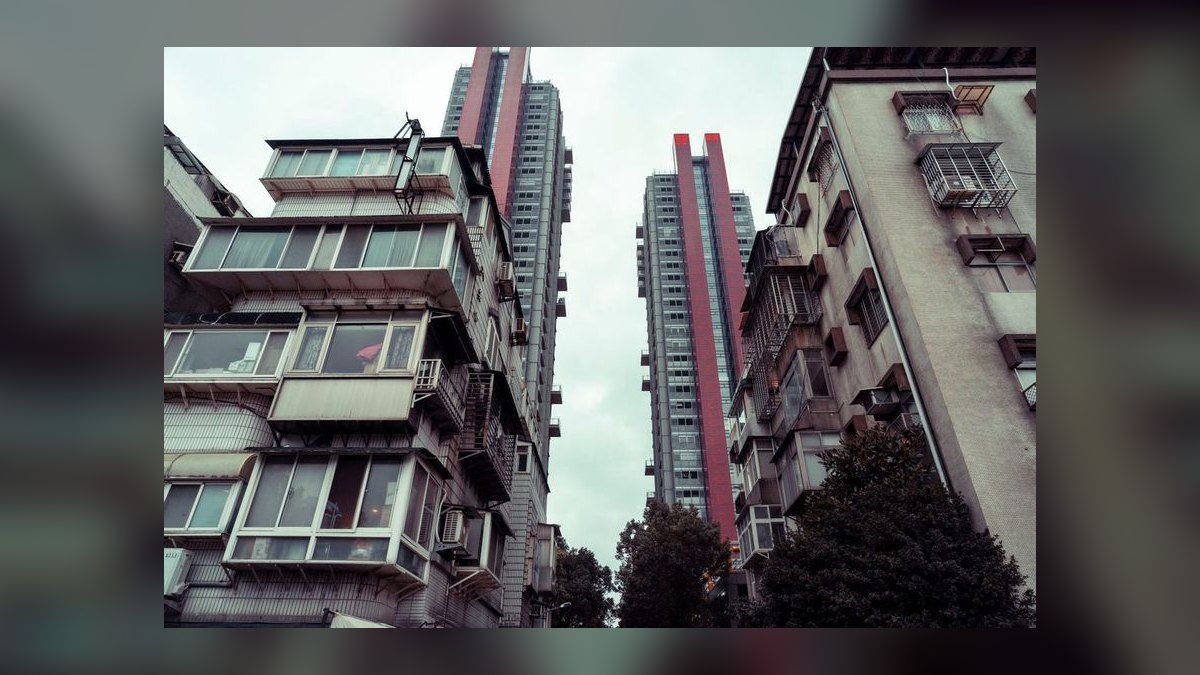
Ignoring your labor market's math. Minimum wage is not uniform, and in high-wage jurisdictions the difference is not marginal. States with fast-food-specific wage floors well above the national norm push labor from the high twenties as a percentage of sales into the low thirties, and every point is real money at this volume. Three to five points of additional labor cost is $40,000–$65,000 a year off store-level EBITDA — enough to convert a healthy unit into a marginal one. If you are buying in a high-wage market, you need correspondingly higher volume to clear the same return, which usually means an even better site and often means a bigger check. That is a solvable problem, but only if you solve it during underwriting rather than discovering it in month nine.
Treating Item 19 as a promise. The financial performance representation is a historical disclosure about existing units, not a projection for yours. It includes only units open a full prior year, which structurally excludes the ramp period you are about to live through. Your Year 1 will be below system average. Build your model that way, get to break-even on a below-median assumption, and let outperformance be upside rather than the base case. Franchisors are legally careful about this precisely because the failure mode of over-reading Item 19 is so common.
One meta-pitfall worth naming for anyone who arrived here from the RevOps side of this library: the discipline is the same discipline. You are building a unit-economics model, identifying the two or three variables that actually drive the outcome, stress-testing them against a realistic downside, and refusing to sign until the downside case still clears. A franchise pro forma is a pipeline model with a physical location attached. The people who are good at one are usually good at the other.
Related questions
How much liquid cash should I actually have before applying?
The published floor is around $100,000 liquid against $300,000 net worth. That gets you considered. To close a single-unit deal comfortably you want enough equity for a 20–30% down payment plus the high end of Item 7's working capital range untouched — realistically $250,000–$350,000 for a typical build.
Is buying an existing Jersey Mike's safer than building one?
Generally yes on risk, lower on ceiling. A resale gives you real historical financials, existing cash flow, and no construction exposure, at a mid-single-digit multiple of earnings. You inherit the lease, the equipment condition, and any remodel obligation at renewal — diligence those three hard before agreeing on price.
What does the Blackstone ownership mean for franchisees?
Expect a faster unit-growth cadence, tighter enforcement of remodel and technology standards, and more system-wide standardization. Historically that combination is good for brand strength and demanding on individual operators' capital. Budget for a mid-cycle remodel and mandated technology upgrades rather than treating them as surprises.
Can I run a Jersey Mike's as a passive investment?
Not a single unit, realistically. Absentee single-unit ownership is the most consistent predictor of underperformance in the category. If passivity is the goal, the workable structures are buying a resale with a proven general manager already in place, or building to three-plus units where a district manager layer is economically justified.
How long from signing the franchise agreement to opening?
Plan six to twelve months. Site selection and lease negotiation typically consume the first several months, permitting is the most common source of delay, and construction itself runs a few months. Training in Manasquan and in-store runs several weeks and overlaps the build.
FAQ
What is the total initial investment for a Jersey Mike's franchise?
FDD Item 7 discloses a total initial investment range of roughly $381,500 to $1,432,000 for a single traditional unit. The spread reflects whether you are taking over a second-generation restaurant space with usable infrastructure or building out a cold shell, plus wide variation in local construction costs, landlord tenant-improvement allowances, and how much working capital you fund.
What are the ongoing fees?
A royalty on gross sales plus a mandatory national advertising fund contribution, plus local marketing or cooperative obligations. Combined, the burden lands in the low teens as a percentage of gross sales — heavier than several competing sandwich brands. That is charged on gross sales, not profit, so it comes out whether or not the store is making money.
What does a typical store earn?
Item 19 reports a system average unit volume around $1.29 million for traditional units open a full prior year, with a median closer to $1.2 million. A mid-pack owner-operated unit produces store-level EBITDA of roughly 15–19%, or about $160,000–$245,000 before debt service. Underwrite to the median and stress-test below it.
How long until I get my money back?
Five to seven years is a reasonable expectation for a well-sited, owner-operated unit that reaches system-median volume. Absentee ownership commonly stretches that to eight or ten years with meaningfully higher failure risk. Debt service, remodel reserves, and any manager salary all extend the timeline beyond simple EBITDA arithmetic.
Do I have to work in the store myself?
For the first eighteen to twenty-four months of a new build, effectively yes. Owner presence during the ramp is the strongest differentiator between top-quartile and bottom-quartile units. After that you can taper to thirty or forty hours once a general manager is trained and holding standards without you.
Which markets still have open territory?
The Northeast corridor and parts of the Southeast are the most developed. Newer white space tends to sit in the Upper Midwest, Mountain West, Pacific Northwest, and select international markets. Availability changes continuously — ask the franchise development team directly for current territory status in your target metro rather than relying on any published map.
Sources
- https://www.jerseymikes.com/franchise
- https://www.sba.gov/funding-programs/loans/7a-loans
- https://www.ftc.gov/business-guidance/resources/franchise-rule-compliance-guide
- https://www.franchise.org/
- https://www.restaurantbusinessonline.com/
- https://www.qsrmagazine.com/
- https://www.franchisetimes.com/
- https://www.nrn.com/
- https://www.dfpi.ca.gov/franchise-investment-law/
- https://www.bls.gov/oes/current/oes353023.htm
Related on PULSE
- Should I open or buy a Mountain Mike's Pizza franchise in 2027?
- Should I open or buy a Mr. Mike's SteakhouseCasual franchise in 2027?
- Should I open or buy an Oxi Fresh Carpet Cleaning franchise in 2027?
- Should I open or buy a KidStrong franchise in 2027?
- Should I open or buy a Premier Garage franchise in 2027?
- Should I open or buy an Oil Can Henry's franchise in 2027?
This page will be disappearing soon. Save it to your device for $1 — or read it free while it is here.
@Kory-White- · if Venmo asks, the last 4 of my number are 2012
This page is gone.
This one is off the shelf now. $1 keeps it on your phone for good — the whole page, pictures and diagrams included.
 pulse-qHow Do I Set Attach Rates for My Service Fees in 2026?
 pulse-qShould I open or buy a Junk Doctors franchise in 2027?
 pulse-qHow Many Agents Do I Need to Recruit for My Real Estate Brokerage to Grow Production in 2026?
 revopsTop 10 ServiceNow migration pitfalls to avoid in 2027
 pulse-qShould I open or buy a Golden Corral franchise in 2027?
 pulse-qHow Many Employees Should I Schedule Each Shift at My Martial Arts Studio in 2026?
 pulse-qShould I open or buy a Garage Experts franchise in 2027?
 pulse-qShould I open or buy an It's A Grind Coffee franchise in 2027?
 pulse-qShould I open a yoga teaching business in 2027?
 pulse-qShould I open or buy a Mo' Bettahs Hawaiian Style Food franchise in 2027?