
How is vendor consolidation affecting the negotiation leverage of mid-market buyers in 2027?
 Curated byKory White · Fractional CRO · Maryland
 PULSEKNOWLEDGE LIBRARY
Quality
Certified

Vendor consolidation in 2027 has shifted negotiation leverage toward large platforms and away from mid-market buyers. When only two or three viable vendors remain per category, buyers lose the competitive tension that once forced discounts. Mid-market teams now offset this by benchmarking independently, capping price escalators, enforcing evaluation deadlines, and demanding data-portability terms before signing.
A mid-market renewal that went sideways
Consider a $45M ARR software company in early 2027. Its RevOps team is renewing a CRM plus a revenue intelligence layer that were originally bought from two separate vendors. Three years ago, that split gave the buyer real optionality: if the intelligence vendor raised prices, the CRM vendor's native reporting was a credible fallback, and vice versa. That option no longer exists. The intelligence vendor was acquired, its roadmap folded into a larger platform suite, and the standalone contract now renews as an add-on SKU inside the parent agreement.
The practical effect shows up in the paperwork. The renewal quote arrives as a single bundled proposal with one blended number, which makes line-by-line comparison nearly impossible. The buyer's RevOps lead asks for an itemized breakdown and gets a two-week delay, then a version that groups AI features into a single "intelligence tier" with no per-feature pricing. Meanwhile the account team mentions, without much subtlety, that the legacy standalone product will stop receiving feature updates in 2028.
That is the mechanism of lost leverage in miniature. The buyer still has a budget, a business case, and a renewal date. What it no longer has is a credible walk-away. When a counterparty can predict that you cannot leave, your negotiation range narrows to whatever they consider acceptable, and every concession has to be manufactured rather than won. Mid-market buyers feel this most acutely because they are large enough to be worth locking in but too small to command the custom terms that enterprise accounts negotiate as a matter of routine.

The rest of this page breaks down how that dynamic actually operates, what the numbers look like, where the trade-offs sit, and which mistakes cost buyers the most.
How the leverage mechanism actually works
Consolidation does not remove leverage by itself. It removes it through four linked channels, and understanding each one is what lets a buyer push back on the specific point where they are weakest.
Channel one: reduced credible alternatives. Negotiation leverage is a function of what happens if you say no. When a category has six plausible vendors, a buyer can run a real bake-off and let the bids compete. When it has two, and one of them is already the incumbent in an adjacent category, the "no" option is expensive. Buyers routinely underestimate how much of their historical discount came from nothing more than a third bidder existing.

Channel two: bundled pricing opacity. Consolidated vendors increasingly quote a single platform number rather than module prices. That is not an accident. A blended quote prevents the buyer from identifying which components are overpriced, which prevents targeted counteroffers, which prevents the buyer from credibly threatening to drop one module.
Channel three: switching-cost engineering. Deep integration, custom workflow configuration, and trained models create real migration costs. Once a system has been in place 12 to 18 months, the cost of replacing it is not the license fee, it is the rebuild. Vendors know the buyer's internal estimate of that cost, often better than the buyer does.
Channel four: buying-committee fragmentation. When eight to twelve stakeholders each hold a veto, the vendor only needs to satisfy the blockers. A vendor that can address each stakeholder's specific objection separately, without ever giving the group a single consolidated offer, prevents the committee from forming a unified position.

The important insight in that flow is that the two exit paths are not symmetric. The left branch degrades quietly, one step at a time, and by the time the buyer notices the leverage is gone, the contract is already signed. The right branch requires the buyer to have done the exit-cost math before the renewal conversation starts, not during it.
Real numbers, ranges, and benchmarks
Precise figures vary enormously by category, company size, and incumbent relationship, so treat everything below as directional planning ranges rather than published statistics. What matters is the shape of the numbers and how you use them.
Vendor concentration. In several core revenue-tech categories, the practical shortlist for a mid-market buyer has narrowed to roughly two to three credible vendors, down from five to seven in the early 2020s. The narrowing comes from a mix of acquisition, bundling of formerly standalone capabilities into platform suites, and the rising cost of integrating a small vendor into an existing stack.

Discount compression. Mid-market buyers that previously cleared discounts in the high teens to low twenties on multi-year platform deals are now more often landing in the low double digits. A common planning assumption is that a buyer loses somewhere between five and ten percentage points of discount compared with what the same deal profile would have produced three years earlier. That range is a planning heuristic, not a benchmark you should quote to a vendor.
Escalator clauses. Annual uplift clauses on multi-year agreements commonly land between three and seven percent. The number that matters more than the rate is whether it is capped, whether it applies to the whole contract value or only the base license, and whether add-on modules are subject to the same cap. Uncapped escalators on bundled AI tiers are where three-year total cost quietly diverges from the year-one quote.
Add-on pricing. AI and analytics add-ons are frequently priced per user, per feature, or per consumption unit rather than folded into seat pricing. This is the single largest source of three-year cost surprise in mid-market renewals, because the year-one quote often reflects a promotional or introductory rate on those modules.

Evaluation timelines. Buying committees in the mid-market now routinely involve eight to twelve participants across sales, finance, IT, security, legal, and RevOps. Each additional approver adds calendar time. A 45 to 60 day evaluation window is realistic; anything under 30 days usually means someone is being bypassed.
Exit cost as a share of contract value. Migration and rebuild costs for a deeply integrated platform commonly run in the range of 30 to 50 percent of the original contract value once you count data migration, workflow reconstruction, retraining, and parallel-run overhead. This is the number that determines whether your walk-away threat is real.
Procurement tooling spend. Contract intelligence and benchmarking tools for a mid-market procurement or RevOps function typically run in the low tens of thousands of dollars annually. Whether that spend pays for itself depends entirely on whether the team actually uses the benchmark data at the table rather than filing it in a shared drive.
Trade-offs and alternatives
There is no free move here. Every tactic that restores leverage costs something, and the honest question is which cost you would rather pay.

Multi-year term versus flexibility. Committing to two or three years is the most reliable way to get a price cap and a discount, because vendors value predictable revenue. The trade-off is that you accept reduced flexibility precisely during the period when your own business may change shape. If your headcount plan or product architecture is genuinely uncertain, a shorter term with a higher unit price may be the better economic decision even though it looks worse on the quote.
Best-of-breed versus suite. Reassembling a best-of-breed stack restores competitive tension and often gets you better functionality in each category. It also multiplies integration work, vendor management overhead, and the number of security reviews you run per year. For a lean RevOps team, the integration tax can exceed the discount recovered.
Building versus buying. Some mid-market companies respond by building lightweight internal tooling for the specific functions where vendors have the most pricing power. This can work well for narrow, well-understood workflows. It fails badly when the internal tool needs to be maintained by a team that is already at capacity.

Public benchmarking consortiums versus going alone. Sharing anonymized pricing data with peer companies gives you the market context you cannot get from a single vendor relationship. The trade-off is governance overhead, confidentiality risk, and the fact that peer data is only as good as what peers are willing to disclose.
Hard deadlines versus relationship preservation. Enforcing a firm evaluation window is one of the highest-yield tactics available, because vendor sales cycles are built around the assumption that buyers will slip. It also carries real risk if you are mid-migration and the vendor is your implementation partner.
Notice that all four branches converge on the same outcome, but through different costs. The failure mode is not choosing the wrong branch, it is refusing to choose one and drifting into a renewal with no deliberate position at all.

Common pitfalls and how to avoid them
Pitfall one: negotiating the renewal instead of the exit. Teams spend their energy arguing about the renewal number and never model what leaving would actually cost. Fix this by building an exit-cost estimate before the renewal window opens. If the number is high, you know you need to negotiate portability terms now, while you still have something the vendor wants.
Pitfall two: accepting a blended quote. A single platform price feels simpler and is almost always worse. Ask for an itemized breakdown by module, including any AI or analytics tier, with the pricing basis stated explicitly. If the vendor refuses, treat the refusal itself as information.
Pitfall three: letting the committee communicate separately. When each stakeholder receives a tailored pitch and responds individually, the vendor accumulates information the buyer does not have. Fix this with a single shared channel where every vendor response is posted and every stakeholder sees the same version of the offer. The negotiation should have one voice on the buyer side.

Pitfall four: no pre-approved floor. If the RevOps lead enters the room without a CFO-approved minimum acceptable outcome, the vendor's account team will find the internal disagreement and use it. Agree the floor, the maximum term, and the non-negotiable clauses in writing before the first call.
Pitfall five: ignoring escalators while chasing the discount. A headline discount with an uncapped escalator can cost more over three years than a smaller discount with a firm cap. Model total cost of ownership across the full term, not the year-one number.
Pitfall six: no portability clause. Ask for structured export of configuration, workflow definitions, and any trained model data at no cost within a defined window after termination. Without this, your future exit cost is set entirely by the vendor.

Pitfall seven: treating the deadline as a threat you never execute. A deadline only works if missing it has a consequence. If you extend past your own stated window, you have taught the vendor that your timelines are decorative, and the next negotiation starts from a worse position.
Pitfall eight: benchmarking against vendor-provided comparisons. Vendor-supplied ROI models and peer comparisons are built to support the quote. Use independent data, your own historical contract terms, or peer consortium benchmarks instead.
The through-line across all eight is the same: consolidation shifts power to whoever holds better information. Mid-market buyers cannot restore the competitive tension that consolidation removed, but they can close the information gap, and in practice that is where most of the recoverable leverage actually sits.
Related questions
Does consolidation affect all mid-market buyers equally?
No. Buyers with deep internal usage data, multi-product contracts, and a credible alternative in at least one adjacent category retain far more room to maneuver than single-product buyers with no fallback. Sector and vendor dependency matter more than company size.
What is the single highest-yield tactic for regaining leverage?
Enforcing a firm evaluation deadline with a real consequence. Vendor sales cycles are built on the assumption that buyer timelines slip, so a deadline that actually holds changes the vendor's internal prioritization more than most price arguments do.
Can a buyer recover leverage after the contract is signed?
Partially. Mid-term you can negotiate portability and export rights, request an itemized pricing breakdown for planning, and build the exit-cost model that you should have had at signing. Those moves improve your position at the next renewal rather than this one.
How does RevOps specifically get involved?
RevOps typically owns the usage data, the integration map, and the internal business case. That makes RevOps the natural owner of the exit-cost estimate and the benchmarking work, and the function best positioned to give the buying committee a single consolidated view of the vendor's offer.
Is best-of-breed always the answer to consolidation?
No. Reassembling a best-of-breed stack restores competitive tension but adds integration, security review, and vendor management overhead. For a lean team, the integration tax can easily exceed the discount recovered, so it should be a deliberate trade-off rather than a default.
FAQ
How is vendor consolidation affecting the negotiation leverage of mid-market buyers in 2027? It reduces leverage by shrinking the credible vendor shortlist to roughly two or three options per category, which weakens the walk-away threat. Vendors reinforce this with blended pricing and high switching costs. Buyers offset it through independent benchmarking, capped escalators, portability clauses, and enforced deadlines.
Why does a smaller vendor shortlist matter so much?
Because leverage depends on what happens if you decline the offer. With five or six plausible vendors, bids compete and the buyer can credibly walk. With two, and one already embedded in an adjacent system, the alternative is expensive enough that the threat stops being believable to the vendor.
What does a blended platform quote hide?
It hides which modules are priced above market. When AI or analytics tiers are folded into a single platform number, the buyer cannot isolate the overpriced component, cannot target a counteroffer at it, and cannot credibly propose dropping it. Itemization is the fix.
How much discount are mid-market buyers actually losing?
Directionally, buyers report landing several percentage points below what comparable deals produced a few years earlier, with planning ranges often cited around five to ten points. Treat that as a heuristic for budgeting, not a figure to quote at a vendor, since it varies widely by category.
What contract clause matters most in a consolidated market?
A data portability and export clause covering configuration, workflow definitions, and model-related data, delivered at no cost within a defined window after termination. It is the clause that determines what your next negotiation costs, because it sets your floor on exit cost.
Can procurement AI tools actually restore leverage?
They help by closing the information gap, since vendors have long used behavioral and pricing data the buyer could not see. The tools only pay off if the benchmark data is actually brought into the negotiation rather than summarized after the fact.
Sources
- Gartner Sales Insights
- Forrester Research
- McKinsey B2B Pricing and Sales Insights
- Bessemer Venture Partners Cloud Atlas
- SaaStr
- Harvard Business Review on Negotiation
- Bain and Company Technology Report
Related on PULSE
- How does the 2027 trend of vendor consolidation affect renewal negotiation leverage for enterprise accounts?
- How are vendor consolidation decisions in 2027 affecting the cost of RevOps headcount?
- How do mid-market buyers benchmark vendor pricing when only two vendors remain?
- What contract clauses protect mid-market buyers from AI add-on price escalation?
- How should RevOps build an exit-cost model before a platform renewal?
This page will be disappearing soon. Save it to your device for $1 — or read it free while it is here.
@Kory-White- · if Venmo asks, the last 4 of my number are 2012
This page is gone.
This one is off the shelf now. $1 keeps it on your phone for good — the whole page, pictures and diagrams included.
 revopsHow does AI affect the velocity of mid-funnel opportunities in 2027?
 revopsWhy are 40% of B2B deals stalling in the legal review phase despite AI contract analysis tools in 2027?
 revopsHow are college athletic departments balancing budgets under the revenue-sharing cap in 2027?
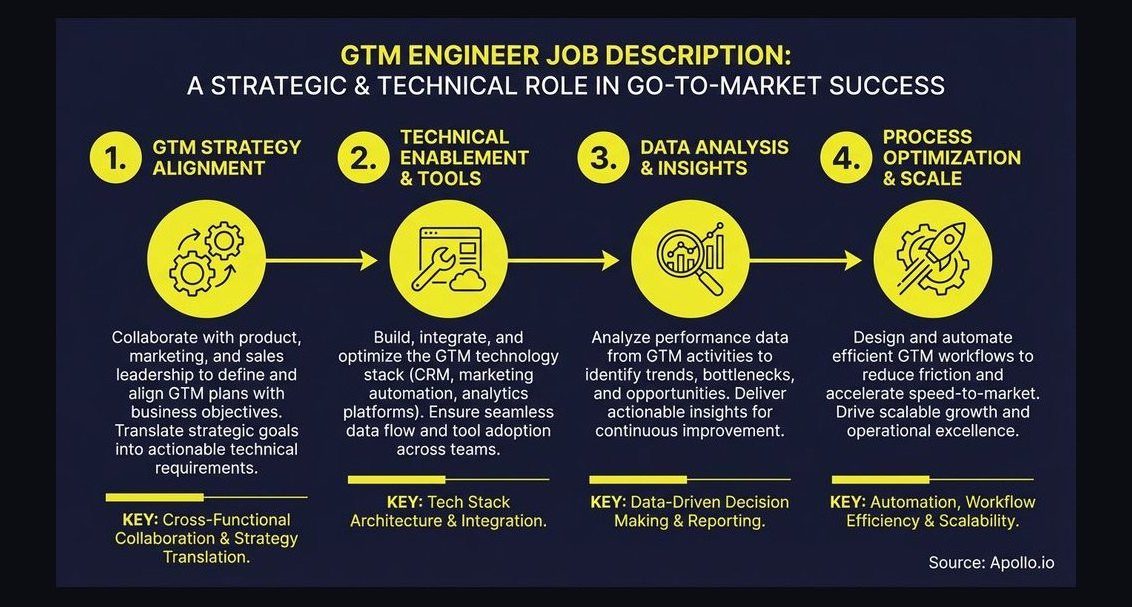 revopsWhat is a GTM engineer and why is the role exploding in 2027?
 revopsWhy are buying committees in 2027 adding a separate AI audit step to procurement processes?
 revopsHow do you rebuild a sales team's trust in the forecast after a mid-year quota reset in 2027?
 revopsWhy are 2027 sales cycles 40% longer for AI-native product launches?
 revopsHow does vendor consolidation impact sales tech stack integration costs in 2027?
 revopsWhich AI in the funnel features are buying committees in 2027 treating as non-negotiable?
 revopsHow do you improve your LTV to CAC ratio in 2027?