
How do 2027 AI SDR tools distinguish between intent signal and noise in a saturated funnel?
 Curated byKory White · Fractional CRO · Maryland
 PULSEKNOWLEDGE LIBRARY
Quality
Certified

They score signals against outcome data rather than activity volume. A 2027 AI SDR fuses first-party CRM behavior, conversational evidence, and account-level context, then weights each event by how often that exact pattern historically preceded a closed deal. Noise is anything a RevOps team's own conversion history says is statistically inert.
What signal-versus-noise actually means in a saturated funnel
The word "intent" gets used as if it were a property of an event. It is not. Intent is a property of a *relationship between an event and an outcome*, measured across enough history to be trustworthy. A pricing page visit is not inherently high-intent; it is high-intent at your company, for your ICP, in your sales motion, if accounts exhibiting that behavior have historically converted at a materially higher rate than accounts that did not. At another company, with a self-serve tier and a public pricing table indexed by search engines, the same event may be almost meaningless because half the visitors are competitors, students, and analysts.
Saturation is what breaks the naive version of this. When every vendor in a category runs automated outreach, buyers are touched constantly, and the observable behavioral surface inflates without the underlying buying population growing at all. More opens, more clicks, more form fills, more third-party topic surges — and roughly the same number of real deals. The ratio degrades. A scoring model calibrated in a low-noise period keeps firing at the same thresholds while the population behind those thresholds gets progressively worse. Reps stop trusting alerts. That distrust is the actual business failure, because a model nobody acts on is worth nothing regardless of its AUC.
There is a second, subtler mechanism. Buyers adapt. When people know that opening an email triggers a call, they stop opening emails, or they open them from a personal device, or they route research through a channel you cannot observe. Anonymous research, peer communities, private Slack groups, and AI assistants that summarize vendor sites without ever loading your page all shift evaluation activity off your telemetry. So the signals you *can* see get noisier at the same time that the highest-intent behavior partially goes dark. Any honest system has to account for both directions: rising false positives and rising false negatives.

The practical definition a RevOps team should adopt is therefore uncomfortable but useful. A signal is an event or pattern whose presence changes your estimate of an account's probability of buying, by an amount large enough to change what you would do next. If knowing about the event does not change the action, it is not a signal for operational purposes — it may still be interesting for reporting, but it should not generate a task, an alert, or a sequence enrollment. Most funnel data fails this test. That is not a defect in the data; it is a defect in expecting all data to be actionable.
Adjacent to the SDR use case, the same framing governs customer success health scores, product-led growth qualification, and churn-risk models. A CS team that alerts on every drop in weekly active users produces the same alert fatigue an SDR team gets from every whitepaper download. The design pattern that fixes both is identical: define the outcome, measure lift against a base rate, and only surface patterns whose lift is big enough to justify a human's time.
How a modern signal pipeline is actually built
The pipeline has recognizable stages, and most vendor marketing collapses them into one word — "AI" — which obscures where the real engineering happens. Understanding the stages is what lets a RevOps team debug their own system instead of filing tickets with a vendor.
Collection and identity resolution. Events arrive from web analytics, marketing automation, the CRM, product telemetry, call recording and conversation intelligence tools, enrichment providers, and third-party intent vendors. Before anything can be scored, events must be attached to the right person and the right account. This is where most pipelines silently lose fidelity. Personal email addresses, shared IP ranges, VPNs, corporate proxies, subsidiaries with different domains, and reverse-IP resolution that maps a coworking space to a Fortune 500 all inject errors upstream of the model. A misattributed event is worse than a missing one, because it contaminates training data as well as live scoring.

Normalization and deduplication. The same underlying action often appears several times. A form fill can produce a marketing automation event, a CRM task, an enrichment webhook, and a webhook from the chat tool. If each is scored independently, the pipeline triple-counts one act of interest. Deduplication rules — same person, same asset, same time window — are boring plumbing that materially improves precision.
Feature construction. Raw events become features: counts within windows, recency, distinct-person counts per account, asset category, page depth, whether the person is on a known buying committee, whether their role matches the ICP, whether the account has open pipeline. Good pipelines build *relative* features, not just absolute ones — this week's activity divided by the account's trailing baseline, for instance. Absolute counts favor big accounts that generate traffic no matter what. Relative counts surface change, and change is where intent lives.
Scoring. A model estimates probability of a target outcome. The choice of target matters enormously and is frequently botched. Scoring for "becomes an MQL" teaches the model to predict marketing's own definitions, which is circular. Scoring for "books a meeting that is held" is better. Scoring for "reaches a qualified opportunity stage" is better still, and scoring for closed-won is the most business-aligned but has the longest feedback lag and the fewest positive examples.

Thresholding and routing. A probability becomes an action only when it crosses a threshold tied to capacity. This is the step teams skip. The correct threshold is not a round number like 70; it is whatever score cutoff produces the volume a team can actually work at the quality they need.
Feedback capture. Reps mark alerts as useful or not; outcomes are joined back to the signals that preceded them; the model retrains. Without this, the system cannot adapt to saturation, and adaptation is the entire point.
Two details in that loop deserve emphasis. First, the alert carries *reason codes and evidence*, not just a number. A rep who sees "score 84" learns nothing; a rep who sees "three people from this account viewed implementation documentation in six days, first activity in four months" knows what to say in the first sentence of the call. Second, the no-alert branch still feeds the outcome join. If you only learn from accounts you worked, you can never discover that a suppressed pattern was actually good — you have built a system that confirms its own priors forever.

What this costs, how long it takes, and what "good" looks like
Cost falls into four buckets, and teams routinely budget for the first while being blindsided by the rest.
Data acquisition. Third-party intent and enrichment are the visible line items. Pricing in this category is generally seat-based, credit-based, or account-volume-based, and quoted annually. The important budgeting insight is not the number but the shape: these contracts tend to be sold on topic breadth and account coverage, which encourages buying more coverage than a team can act on. A team of six SDRs cannot meaningfully work ten thousand surging accounts a month. Buying coverage you cannot staff is the single most common way to overspend here.
Platform. Sales engagement, conversation intelligence, and account intelligence platforms are typically per-seat with a platform fee, and the AI-specific tiers usually sit above the base tier. Budget for the tier, not the base.
Integration and data engineering. This is the underestimated bucket. Getting reliable identity resolution, clean event streams, and a working outcome join is real engineering work — usually weeks of a data engineer or RevOps engineer's time up front, then ongoing maintenance every time a CRM field changes, a website is redesigned, or a product event is renamed. Plan for a standing maintenance allocation rather than treating it as a project that ends.

Human calibration time. A monthly review where reps and managers audit a sample of fired and suppressed alerts costs a few hours across several people. It is the highest-ROI recurring expense in the whole program, and the first thing cut when quarters get tight.
On timelines, a realistic sequence looks like this. Instrumentation and identity cleanup take the first several weeks. Then you need history: a model cannot learn what predicts a closed deal without observing enough closed deals. For a team with a long sales cycle and modest deal volume, that means the first genuinely trustworthy model is quarters away, not weeks, and the interim system should be transparent rules that humans can inspect and argue with. For a high-volume, short-cycle motion, meaningful signal can appear within a quarter because outcomes arrive fast.
What good looks like is best expressed as a small set of operating metrics rather than a model quality score:

- Alert precision as judged by reps. What fraction of fired alerts does the rep working it consider worth the time? If this sits low, reps will stop working the queue regardless of what the model says.
- Lift over base rate. Accounts that fired an alert should convert to held meetings and to qualified opportunities at a visibly higher rate than accounts that did not. If lift is small, the model is expensive decoration.
- Coverage. What fraction of eventual won deals fired an alert *before* the opportunity was created? Precision without coverage means you found the deals you would have found anyway.
- Time-to-touch on high scores. A perishable signal worked five days late is a missed signal. Measure the distribution, not the average — the tail is where the losses hide.
- Disposition rate. What fraction of alerts get an explicit outcome recorded? Below a healthy rate, the retraining loop is starving and quality will decay silently.
A useful discipline: publish these five numbers monthly, next to the contract cost of the data feeding them. Programs that cannot survive that comparison usually should not.
The failure modes that show up again and again
Scoring events instead of patterns. Point-based lead scoring assigns fixed values to individual actions and sums them. It is easy to explain and it fails predictably, because the same action means different things in different contexts, and because sums reward volume. A contact who does twenty low-value things outranks a CFO who did one high-value thing. Saturation makes this worse, since automated and incidental traffic inflates exactly the cheap, high-frequency events.
Training on the wrong label. If the target is "MQL," the model learns marketing's rules. If the target is "rep marked it interesting," the model learns rep preferences, including their biases toward familiar logos and easy conversations. Pick an outcome that the business actually cares about and that cannot be gamed by the people generating the training labels.

Ignoring the denominator. A vendor reports that surging accounts convert at some rate. Compared to what? Without the conversion rate of non-surging accounts in the same segment during the same period, the number is uninterpretable. Always demand the base rate. Many "intent works" claims dissolve when you notice that the surging accounts were also the largest accounts, which convert better for reasons that have nothing to do with the signal.
Threshold set once, never revisited. Saturation is a moving target. A cutoff that produced a workable queue last year may produce triple the volume now with worse composition. Thresholds should be recalibrated on a schedule tied to capacity, not left as a config value nobody owns.
Alerting without evidence. A number in a queue produces generic outreach, which the buyer recognizes instantly and which performs no better than a cold list. The signal's value is largely in *what it tells you to say*. If the alert does not carry the specific observation, most of the value is discarded before the rep opens the record.

No suppression memory. If an account gets alerted, worked, and explicitly disqualified, and then re-alerts two weeks later on the same pattern, the system is generating negative expected value. Suppression windows, disqualification memory, and per-account cooldowns are unglamorous and essential.
Confusing correlation with causation on outreach. Accounts you contact more convert more; therefore contacting more causes conversion — except that reps contact accounts they think will convert, and score-driven routing bakes that preference in. Without holdouts, you cannot distinguish a model that finds good accounts from a model that finds accounts reps like. A small, permanent, randomized holdout that never receives score-driven outreach is the only clean way to measure lift, and almost nobody runs one.
Third-party data treated as ground truth. Topic-level surge data from external providers is directional at best. It typically infers activity at the account level from content consumption across publisher networks, and the resolution from IP or cookie to company is imperfect. Use it as a tiebreaker or a prioritization nudge on accounts already in your ICP; do not let it originate outreach on its own. The saturation problem applies here too — if every vendor in a category buys the same surge feed, everyone calls the same accounts in the same week, and response rates collapse for reasons unrelated to the accuracy of the data.

Over-suppression. The mirror-image failure. Aggressively filtering out low-fidelity activity can hide early-stage accounts that would have become deals if touched. This is why the suppressed population must stay in the outcome join, and why some fraction of low-score accounts should be worked deliberately as an exploration budget.
A decision framework for what to build and when
The right architecture depends on three variables: how many outcomes you observe per period, how long your cycle is, and how clean your identity data is. Teams that skip this assessment tend to buy a sophisticated system their data cannot feed.
If you observe few closed outcomes per quarter, a learned model has nothing to learn from. Use transparent rules built from qualitative pattern-finding — interview reps about what preceded their last twenty wins, encode those patterns as explicit rules, and inspect them monthly. Rules have a real advantage here: they are auditable, and a human can tell immediately when one has gone wrong.
If you observe many outcomes and your cycle is short, a learned model earns its keep quickly because the feedback loop closes fast enough to correct itself.

If identity resolution is unreliable, fix that before anything else. Every downstream sophistication multiplies the upstream error. There is no model architecture that compensates for events attached to the wrong account.
Two governance rules make this framework durable. First, name an owner for thresholds. Unowned config values drift into irrelevance. Second, treat the exploration budget as a permanent line item — a defined slice of rep capacity spent on accounts the model did not surface. Without it, the system optimizes into a narrower and narrower slice of the market and mistakes that narrowing for accuracy.
The same framework generalizes cleanly to neighboring problems. Expansion and upsell prioritization in customer success has the same structure with different features. Product-led growth qualification — deciding which self-serve signups deserve a human — is the same problem with far more outcomes and much faster feedback, which is why PLG teams typically get to a trustworthy model faster than enterprise teams do. Support ticket triage, fraud review queues, and even recruiting pipeline scoring share the pattern: a stream of events, a scarce human resource, a threshold, and a feedback loop. If a team gets the loop right in one place, the second implementation is dramatically cheaper.
Related questions
Is third-party intent data worth buying at all?
As a prioritization layer on accounts already in your ICP, often yes. As an origination source that starts outreach on its own, usually not — resolution is imperfect and every competitor buys similar feeds, so the same accounts get contacted simultaneously.
How do you prove the model is adding value?
Run a permanent randomized holdout of accounts excluded from score-driven outreach, and compare conversion. Without a holdout you are measuring rep preference and account size, not model quality.
What should an alert contain?
The specific observation, who did it, when, how it compares to the account's baseline, and what changed. A bare score produces generic outreach that performs no better than a cold list.
Should low-scoring accounts ever be worked?
Yes — keep a defined exploration budget. Working only high scores means the training data only ever contains accounts the model already liked, which locks in its blind spots permanently.
How often should thresholds be recalibrated?
On a fixed cadence tied to capacity changes and ICP changes, with an owner named. Quarterly is a reasonable default; monthly if volume or headcount is moving fast.
FAQ
Why does the same scoring model get worse over time without anything changing?
Because the environment changes even when the model does not. Outreach volume across your category rises, buyers adapt their behavior, your website changes, and your ICP shifts. The model's thresholds were calibrated against a population that no longer exists. This is why recalibration cadence matters more than initial model sophistication.
What is the single biggest source of false positives?
Volume-weighted scoring of cheap, high-frequency events — content downloads, email opens, generic page views — especially when summed across a large account without normalizing for the account's own baseline traffic. Big accounts generate lots of incidental activity regardless of buying interest.
Can the SDR role survive if AI handles filtering?
The role shifts rather than disappears. Filtering is the commodity part; the scarce skill is interpreting a specific observation into a specific, credible opening, and exercising judgment on ambiguous cases the model cannot resolve. Volume dialing has less value in a saturated funnel; contextual judgment has more.
How do you handle signals you cannot see?
Assume a meaningful share of research happens off your telemetry — peer communities, analyst content, private conversations, AI assistants summarizing your site. Compensate by treating first contact quality as important even on cold accounts, and by asking discovery questions that surface prior research you never observed.
Does more data always improve the model?
No. Adding a noisy source can lower precision, and adding a source that correlates with account size can make the model an expensive proxy for firmographics. Evaluate each new source by whether it improves lift against a holdout, not by whether it increases the number of alerts.
What is the minimum viable version of this?
A defined outcome, clean identity resolution, a handful of transparent rules derived from interviewing reps about recent wins, a threshold set from team capacity, evidence attached to every alert, and a monthly review of a sample of fired and suppressed alerts. That configuration beats an unowned black-box score at most companies.
Sources
- Gartner — B2B Buying Journey research
- Forrester — research and reports on B2B buying
- HubSpot — lead scoring documentation
- Salesforce — Einstein Lead Scoring help
- Google — Rules of Machine Learning (ML engineering best practices)
- Google — Machine Learning Crash Course: classification metrics
- Bombora — how intent data works
- G2 — Buyer Intent
- Winning by Design — blog and frameworks
Related on PULSE
- What do you do when intent data and buying signals are saturated in 2027?
- How should a 2027 sales org distinguish ICP fit vs intent vs need?
- How should RevOps redesign lead routing when AI in the funnel changes intent score reliability?
- How do you validate 2027 intent data when the same AI tool generates both supply and demand?
- How will AI-driven intent data reshape B2B lead scoring by 2027?
This page will be disappearing soon. Save it to your device for $1 — or read it free while it is here.
@Kory-White- · if Venmo asks, the last 4 of my number are 2012
This page is gone.
This one is off the shelf now. $1 keeps it on your phone for good — the whole page, pictures and diagrams included.
 revopsWhy are 2027 sales cycles 40% longer for AI-native product launches?
 revopsHow does the secondary ticket market and resale economics work in 2027?
 revopsHow is AI changing sales territory and quota planning in 2027?
 revopsHow do longer sales cycles in 2027 change the optimal frequency of B2B follow-up communications?
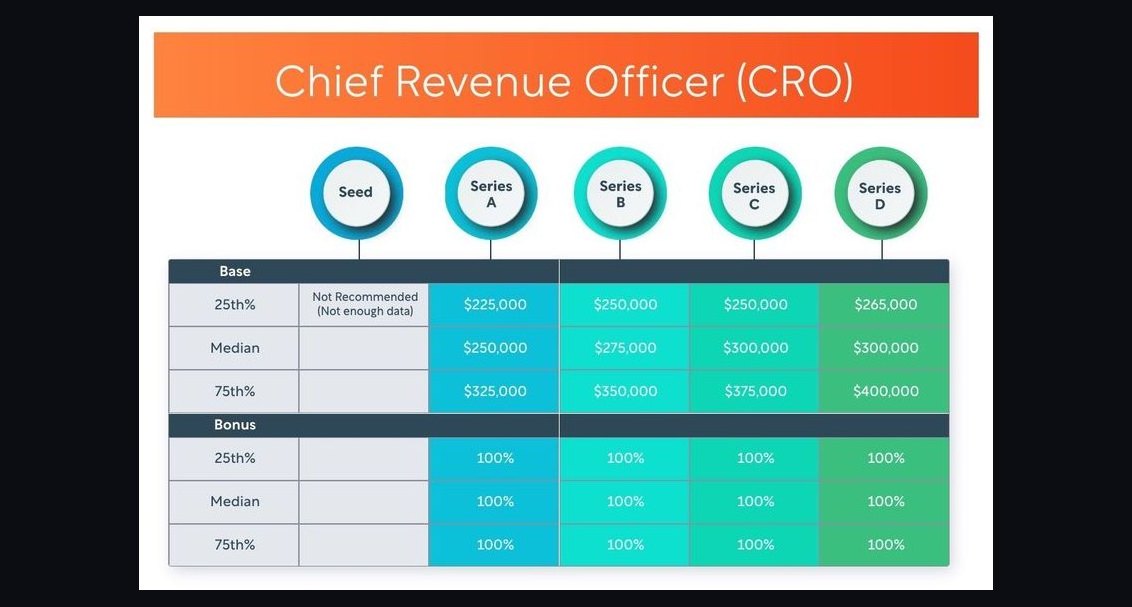 revopsCRO compensation — fractional, full-time, equity in 2027
 revopsHow do you measure outbound effectiveness in 2027?
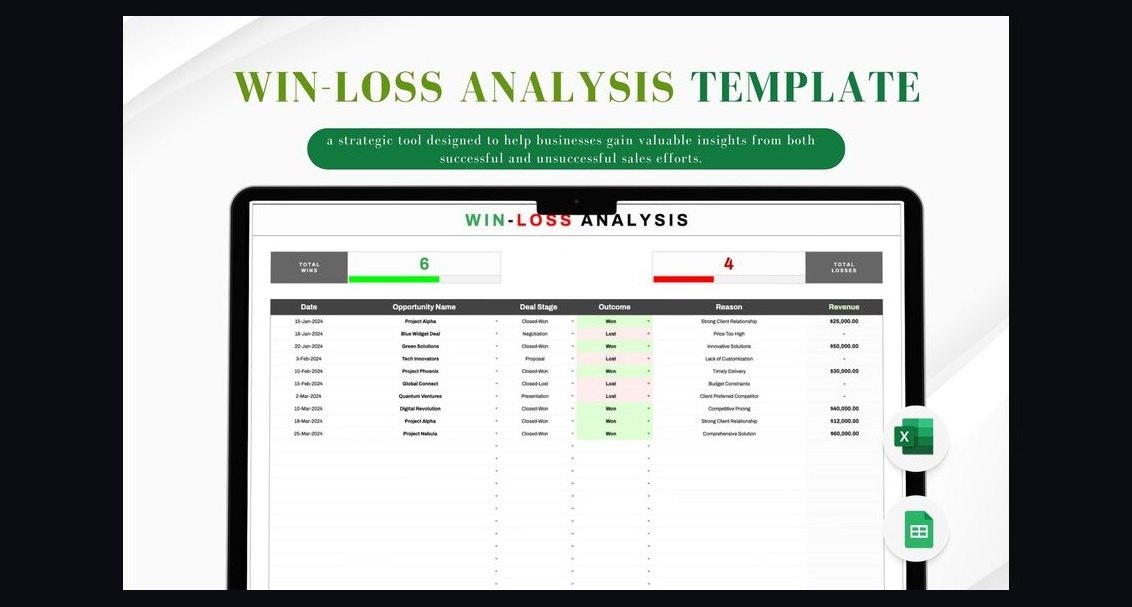 revopsHow Do I Run a Win/Loss Analysis Program That Improves Win Rate in 2027?
 revopsHow do you prioritize the RevOps backlog in 2027?
 revopsHow is AI in the funnel reshaping the scoring of B2B inbound leads in 2027?
 revopsWhich vendor consolidation strategies are causing the most friction in B2B sales handoffs in 2027?