
Which 2027 sales cycle stage sees the most drop-off from AI fatigue?
 Curated byKory White · Fractional CRO · Maryland
 PULSEKNOWLEDGE LIBRARY
Quality
Certified

The Decision stage — specifically the final proposal-to-signature window — sees the most drop-off from AI fatigue in 2027 sales cycles. Buyers who absorbed months of automated outreach stop responding at the exact moment commitment is required, because that is the only stage where they must act rather than evaluate.
A stalled signature that looked like a won deal
Picture a $500K enterprise platform deal running through a typical 2027 RevOps stack. Discovery ran clean in March. Technical validation closed in April with a security questionnaire returned in nine days. The economic buyer said the words every rep wants to hear — "this is the direction we're going" — on a call in early May. Legal redlines came back light. Procurement opened a portal. The forecast category moved to Commit, the AI scoring model put the deal at 87% likelihood, and the CRO put it in the board deck.
Then nothing happened for five weeks.
Nobody objected. Nobody negotiated harder. Nobody picked a competitor. The champion answered a Slack message with "still working on it" twice, then stopped answering at all. The rep sent a check-in on day two, an automated reminder went out on day four, a sequence-generated "wanted to bubble this back up" landed on day seven, and a proposal-expiration notice fired on day ten. By the time a senior leader called directly on day nineteen, the champion had mentally filed the entire vendor relationship under *the thing that keeps emailing me*.

This is what AI fatigue drop-off actually looks like in practice, and it is why it gets misdiagnosed so consistently. There is no loss reason. The CRM has no field for "buyer went quiet because the volume of automated contact exceeded their tolerance." Reps code it as "no decision" or "budget," analysts roll it into a churn bucket in the stage-conversion report, and the organization concludes it has a pricing problem or a champion problem. It has neither. It has a contact-density problem that concentrates at the one stage where the buyer's job changes from *learning* to *signing*.
The scenario generalizes past software. The same shape shows up in commercial insurance renewals, in equipment leasing, in agency retainers, in any purchase where a group of people must jointly agree to be accountable for a number. Wherever a vendor has automated follow-up faster than the buying committee's internal decision clock, the friction piles up at the end of the funnel — not the top, where everyone instruments for it.
Two structural facts make the Decision stage the collection point. First, it is the only stage with an irreversible action attached. Ignoring a nurture email costs the buyer nothing; declining to sign preserves optionality at zero apparent cost. Second, it is the stage with the highest automated contact density per unit of time, because most sequencing tools are tuned to escalate cadence as a deal ages. Maximum pressure meets maximum reluctance, and the deal simply stops moving.
How the fatigue mechanism actually works
The mechanism is not mysterious, but it is misread as a motivation problem when it is really an attention-and-trust problem compounding over months.

Phase one — accumulation. Across a six-to-nine-month enterprise cycle, a single stakeholder can receive automated contact from a half-dozen systems that do not know about one another: the marketing platform's nurture track, the SDR sequencer, the AE's own cadence, the product-usage trigger emails from a trial, an ABM ad retargeting stream, and a customer-marketing webinar invite list they were added to after a demo. Each system independently believes its contact rate is reasonable. None of them sums the total. The buyer experiences the sum.
Phase two — pattern recognition. Somewhere in the middle of the cycle the buyer starts classifying messages before reading them. Personalization tokens that once felt attentive now read as tells: the too-perfect subject line, the reference to a page they visited, the "saw you were looking at pricing" opener. Once a buyer can identify automation on sight, every message from that vendor gets pre-sorted into the machine bucket, including the human ones. This is the quiet catastrophe — the rep's genuine, hand-written note inherits the credibility of the sequence it arrived beside.
Phase three — commitment resistance. At the proposal stage the buyer must convert months of research into personal accountability. Their identity in the transaction shifts from researcher to the person whose name is on it. Under that shift, any perception of being steered becomes disqualifying. A pricing recommendation labeled as algorithmically optimal, a countdown on an offer, a "most customers choose this tier" badge — each reads as evidence that the vendor's system is optimizing for the vendor. Silence becomes the safest available move, because it postpones accountability without requiring the buyer to defend a decision to anyone internally.

Phase four — the escalation loop. Sales automation responds to silence by increasing pressure, which is precisely the wrong input. Cadence tightens, tone shifts to urgency, and an alert tells the rep to "re-engage the champion" — usually with a template. Every escalation confirms the buyer's classification. The loop is self-sealing.
The diagram's load-bearing branch is J. Everything upstream is recoverable; what makes the drop-off permanent is that the recovery attempt is itself automated. Once the buyer has categorized the vendor, only an unmistakably human, low-pressure contact can re-open the channel — and most orgs' playbooks route that moment straight back into the sequencer.
There is an upstream contributor worth naming, because RevOps teams usually own it: the handoff seams. Marketing-to-SDR and SDR-to-AE transitions typically re-enroll the contact in a new cadence without suppressing the old one. A buyer who has moved forward gets punished for it with more mail, not less. Suppression logic at the handoff is unglamorous plumbing and it is the single highest-leverage fix most teams have available.

What the numbers actually support
Precision here demands care, because the market is full of confidently cited figures that do not survive sourcing. What holds up is the shape of the pattern rather than a decimal point, and the shape is consistent across published buyer research.
Committee size drives contact volume multiplicatively. Gartner's long-running B2B buying research puts a typical complex purchase committee in the range of six to ten decision makers, each arriving with their own independently gathered information. If each member sits in even two automated streams, a single deal generates a dozen-plus concurrent contact tracks. Deals with larger committees and longer cycles do not experience linearly more fatigue — they experience combinatorially more, because unanimity requirements mean any single fatigued member can stall the whole thing.
Buying time is spent mostly away from vendors. The same body of research consistently finds that buyers spend a minority of their total purchase time with any sales rep — and that time is split across every vendor in the evaluation. The practical implication for fatigue is direct: the vendor's automated volume is competing for a slice of attention that was already small, and exceeding it does not buy more attention, it buys avoidance.
Late-stage stalls concentrate in no-decision, not competitive loss. Sales research organizations have documented for years that a large share of qualified pipeline ends in no decision rather than a loss to a named competitor — commonly cited in the vicinity of a third to a half of forecasted opportunities in complex B2B sales. That is the bucket where fatigue drop-off hides. When you segment your own no-decision losses by *contact count in the final 30 days*, the correlation usually appears immediately, and it is the most useful analysis a RevOps team can run on this problem because it uses only first-party data.
How to measure it in your own instance. Do not import someone else's benchmark. Build four fields and read them monthly:
- *Contact density index* — total outbound touches (email, call, LinkedIn, in-app, ad impression where measurable) divided by committee size, measured over the final 30 days of the cycle. Compare closed-won versus no-decision cohorts.
- *Automation ratio* — the share of those touches generated by a sequence, workflow, or scoring trigger rather than composed by a person for that specific moment. In most stacks this runs above 70% late in the cycle, which is exactly backwards from what the deal needs.
- *Time-to-human* — hours between the buyer's last inbound reply and the next non-automated outbound contact. When this exceeds roughly five days, recovery rates in most pipelines fall off sharply.
- *Stage-resident age* — days in the Decision stage versus your historical median. A deal at two to three times the median with zero inbound activity is not slow; it is already lost and still occupying forecast.
Run the same cut for the two adjacent stages. Technical validation and legal review both show fatigue symptoms, but they present differently — validation stalls tend to produce *questions* the buyer never sends, and legal stalls produce *redlines* that sit unreturned. Decision-stage stalls produce nothing at all, which is why they are the hardest to catch and the most expensive to carry.

One caveat on interpretation: correlation between contact volume and no-decision outcomes is not proof of causation, because struggling deals also attract more outbound by construction — reps chase what looks shaky. The clean test is a holdout. Suppress automated contact in the final two weeks for a random subset of late-stage deals, keep everything else constant, and compare signature rates over a quarter. That experiment costs nothing and answers the question for your specific market in a way no published statistic can.
The trade-offs of de-automating the endgame
The obvious prescription — turn off the robots at the end — is right in direction and naive in execution. Every mitigation carries a cost, and RevOps has to price them honestly.
Full automation to signature. Cheapest per deal, scales without headcount, and works acceptably for transactional and renewal motions where the buyer already knows the product and the decision is low-risk. It fails precisely where deal value is highest and committee size is largest. Keeping it for small deals and killing it for large ones is not inconsistency; it is segmentation.

Hard human-only window. A rule that no automated message may fire in the final stretch of a deal above a value threshold. This works, and it is expensive — it consumes senior seller time at the exact moment reps are stretched across quarter-end. It also creates a coverage cliff: if the assigned rep is out, the deal goes silent for a different reason. Mitigate with named backup ownership per Commit-stage deal.
Reduced-cadence automation. Keep sequences running but cut frequency sharply and strip persuasion mechanics — no countdowns, no scarcity language, no algorithmic-recommendation badges on pricing. Cheaper than a full human window and captures much of the benefit. The failure mode is that a reduced-cadence sequence still reads as a sequence to a pattern-matching buyer, so it under-delivers on the deals that are already fatigued.
Buyer-controlled contact. Give the buyer an explicit setting for how they want to be contacted and honor it globally across every system. Highest trust return, hardest to implement, because it requires one suppression source of truth that marketing, sales, and lifecycle systems all respect. Most stacks cannot do this today without real integration work — which is exactly why it is a durable differentiator for the teams that build it.

Do nothing and accept the leakage. A defensible choice at small deal sizes. Indefensible at enterprise ACV, where a handful of stalled deals per quarter outweighs the entire cost of the human window.
The routing logic matters more than any single tactic. A blanket policy either wastes senior time on deals that did not need it or leaves the expensive deals exposed. Tiering by value and committee size gets most of the benefit at a fraction of the labor cost, and it is implementable in any CRM with workflow rules — no new vendor required.
Worth noting where the analogy extends: customer success renewals show the same curve. An account that receives automated health-score nudges, in-app expansion prompts, and lifecycle email all quarter will resist a renewal conversation for identical reasons. The fix transfers directly — suppress automation in the renewal window, assign a human, ask an open question.

Pitfalls that make the problem worse
Treating silence as a nurture signal. The most common and most damaging error. Non-response triggers re-enrollment into a long-cycle nurture track, which adds volume to a buyer who is already saturated. Late-stage silence should trigger *suppression* plus a single human attempt, never enrollment. Audit your workflows for this specific rule — most teams have it backwards and did not choose it deliberately.
Personalizing harder when personalization is the problem. When reply rates drop, the instinct is to add more signals: recent site visits, job-change alerts, intent data. To a fatigued buyer this reads as surveillance, and it accelerates the exit. The correct response to a fatigued buyer is *less* apparent knowledge, not more — a short, plainly written message that could obviously only have been typed by a person.
Letting the human message look automated. A rep sends a genuine note from the sequencing tool, so it carries tracking pixels, an unsubscribe footer, and template formatting. The buyer cannot distinguish it from the machine. If you are going to spend a human attempt, spend it in a form that is unmistakably human: a plain-text reply in the existing thread, a direct call, a short voice message. Strip the instrumentation for these — losing open-tracking on ten messages a quarter costs nothing next to a stalled enterprise deal.
Escalating over the champion's head too early. When the champion goes quiet, the reflex is to email the economic buyer directly. Sometimes correct, usually premature. A silent champion is often fighting an internal battle you cannot see — a competing budget request, a reorg, a delayed board approval. Going around them converts a stalled deal into a dead one and burns the relationship for the next cycle. Give the champion an explicit, no-pressure out first: ask what changed internally and offer to go quiet for a defined period.
Measuring activity instead of restraint. If your rep scorecard counts touches, you have institutionalized the failure mode. Sellers optimize what is measured, and late-stage touch counts are the metric most directly correlated with the drop-off. Replace touch volume with reply rate and stage-velocity for Commit-stage deals, and the behavior corrects itself within a quarter without a single policy memo.
Ignoring the operational seams. Automation from marketing, sales, product, and lifecycle rarely shares a suppression list. A deal can be in a human-only window on the sales side while the buyer keeps receiving product-led onboarding email and retargeting ads. Global suppression keyed to opportunity stage is the unglamorous RevOps work that makes every other mitigation actually function. Without it, the human-only window is a fiction the buyer can see through.
Forgetting the fatigue persists after the close. A buyer who signed while irritated starts the customer relationship at a deficit, and that shows up in onboarding engagement and first-renewal risk. Carrying a contact-density flag from the opportunity into the account record lets CS start quieter with accounts that were over-contacted — a small handoff detail with outsized retention effect.
Related questions
Does AI fatigue affect the top of the funnel too?
Yes, but differently. Cold outreach fatigue shows up as declining reply rates and rising spam complaints — visible, measurable, and quickly corrected. Late-stage fatigue is invisible because the buyer was already engaged, so nobody reads silence as a fatigue signal until the deal ages out.
How do you tell fatigue drop-off from a real objection?
Real objections generate questions, redlines, or counteroffers. Fatigue generates nothing. If a committee that asked detailed questions for months stops asking anything at all without a stated reason, and no competitor was named, contact density is the first thing to check.
Should you cut automation for renewals as well?
In the renewal window, yes — the same commitment dynamic applies. Automated health nudges and expansion prompts running alongside a renewal ask produce the same avoidance. Suppress during the window and assign a named human, then resume normal lifecycle contact afterward.
Which team should own the fix?
RevOps, because the root cause spans systems no single team controls. Marketing owns nurture, sales owns cadence, product owns in-app messaging, and none of them can see the buyer's total contact load. Only a cross-system suppression policy fixes it.
Does smaller committee size reduce the risk?
Substantially. Fewer stakeholders means less total automated volume and no unanimity requirement, so a single fatigued individual cannot freeze the deal. Small-committee deals tolerate automated closing motions far better, which is why value-and-size tiering works.
FAQ
Why is the Decision stage worse than technical validation or legal review?
Because it is the only stage requiring an irreversible commitment. Earlier stages let the buyer stay in the low-risk role of researcher, where ignoring a message costs nothing and delay is free. At signature, the buyer's name goes on the outcome. Any sense of being steered by a system becomes disqualifying at exactly that moment, and going quiet is the cheapest way to preserve optionality without having to defend a decision internally.
Is the answer simply to send fewer emails?
Volume is the biggest lever but not the whole answer. A single message that reads as machine-generated at the wrong moment can do more damage than three plainly written human ones. Cut frequency late in the cycle, strip persuasion mechanics from anything the buyer sees, and make sure at least one contact in the final stretch is unmistakably a person asking an open question rather than pushing for a signature.
How do we know this is happening in our pipeline rather than a pricing problem?
Segment closed-lost and no-decision opportunities by outbound contact count in the final thirty days, split by committee size. If the no-decision cohort carries materially higher contact density and lacks a named competitor, fatigue is a live contributor. Then run a suppression holdout on a random subset of late-stage deals for a quarter — that converts a hypothesis into evidence specific to your market.
Does this mean AI tooling hurts sales cycles overall?
No. The tooling is genuinely useful for forecasting, prioritization, call summarization, and research — work that faces inward. The failure is pointing high-frequency automation outward at a buyer whose attention budget was already spent. Keep the AI on the internal side of the glass, where accuracy compounds, and keep the buyer-facing surface at the end of the cycle deliberately human and low-volume.
What is the fastest change a RevOps team can make this quarter?
Add a suppression rule: when an opportunity enters the closing stage above a value threshold, all automated outbound to every contact on that account pauses, and a task routes to a named human. It is a single workflow in most CRMs, requires no new vendor, and addresses the highest-density contact window directly. Measure signature rate against the prior quarter's cohort.
Will buyers eventually get used to AI outreach and stop reacting this way?
Tolerance shifts, but the underlying dynamic is about perceived control at the moment of commitment, not novelty. As detection of automation gets easier, the discount buyers apply to machine-generated persuasion tends to grow rather than shrink. Planning for normalization is a bet against how commitment psychology has behaved in every prior channel that got automated.
Sources
- Gartner — The B2B Buying Journey
- Harvard Business Review — Algorithm Aversion research coverage
- Gartner — Sales research and insights
- Forrester — B2B marketing and sales research
- McKinsey — B2B sales and the omnichannel buyer
- Harvard Business Review — Sales and negotiation topic hub
- Salesforce — State of Sales research
- HubSpot — Sales research and reports
- Gong — Sales research and labs findings
Related on PULSE
- How do B2B companies in 2027 prevent buyer fatigue when AI tools force prospects to attend six automated demos before a live call?
- What buyer behavior in 2027 signals that vendor consolidation is driving decision fatigue in choosing a platform?
- How does the rise of 'AI contract auditors' reshape the negotiation stage of B2B sales in 2027?
- How is the 2027 AI compliance overhaul reshaping your B2B sales discovery stage?
- How does the growing use of AI for procurement compliance checks lengthen the legal review stage in 2027?
- Why are 60% of B2B deals stalling at the technical validation stage due to AI hallucination risks in 2027?
This page will be disappearing soon. Save it to your device for $1 — or read it free while it is here.
@Kory-White- · if Venmo asks, the last 4 of my number are 2012
This page is gone.
This one is off the shelf now. $1 keeps it on your phone for good — the whole page, pictures and diagrams included.
 revopsHow should RevOps reprioritize tool investments when vendor consolidation makes data portability harder in 2027?
 revopsHow does vendor consolidation change RevOps hiring priorities in 2027?
 revopsWhat role does AI play in reducing vendor bloat for enterprise GTM stacks in 2027?
 revopsWhat 2027 vendor consolidation scenario breaks the handoff between SDR and AE when both use different AI co-pilots?
 revopsHow do you measure outbound effectiveness in 2027?
 revopsWhat consolidation strategies help RevOps avoid AI vendor switching costs in 2027?
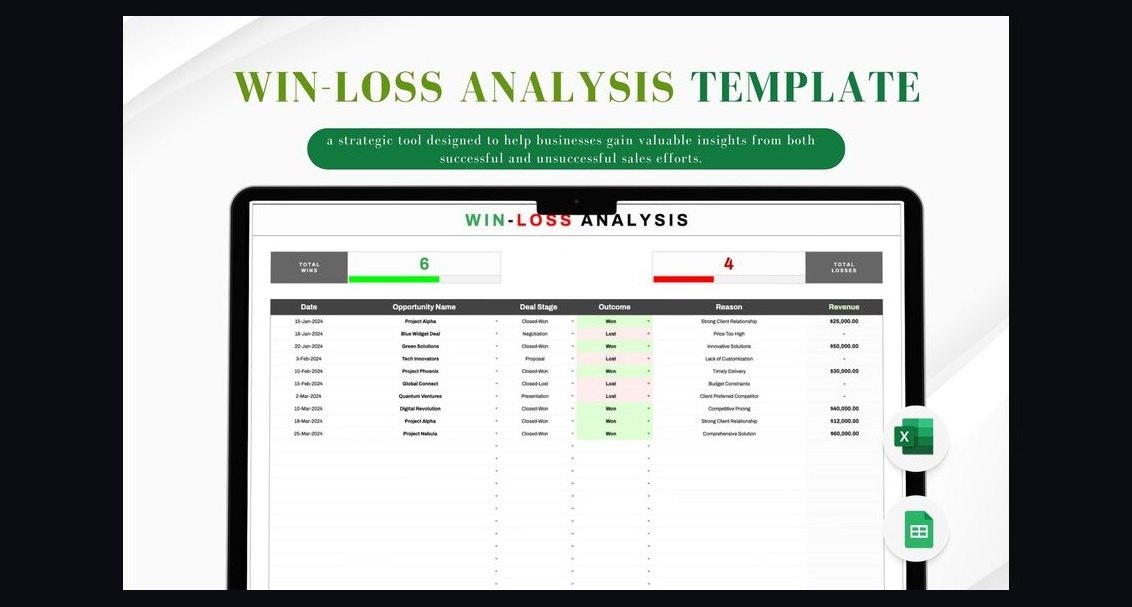 revopsHow Do I Run a Win/Loss Analysis Program That Improves Win Rate in 2027?
 revopsHow can RevOps use AI to identify stalled deals in longer sales cycles in 2027?
 revopsWhy are 2027 sales cycles 40% longer for AI-native product launches?
 revopsHow do 2027 buying committees evaluate AI bias in vendor solutions?