

Is the rise of the 14-person buying committee making vendor consolidation a necessity for RevOps efficiency in 2027?
 Curated byKory White · Fractional CRO · Maryland
Quality
Certified

Yes, the rise of the 14-person buying committee is making vendor consolidation a necessity for RevOps efficiency, because each additional tool fragments committee data across silos, forcing manual reconciliation that breaks AI-driven automation and extends sales cycles by 30% or more.
The Structural Shift in B2B Buying Committees
The average B2B buying committee has grown from 6.8 stakeholders in 2021 to 11–16 in 2025, according to Gartner’s B2B Buying Survey. This is not a temporary fluctuation but a permanent structural change driven by three converging forces. First, sustained high interest rates have made CFOs, CISOs, and legal teams demand sign-off on any software purchase exceeding $50,000, adding layers of approval that did not exist five years ago. Second, AI tools now touch sales, marketing, service, and product simultaneously, requiring input from every department before procurement proceeds. Third, compliance complexity from GDPR, CCPA, and the emerging EU AI Act mandates legal and security reviews for every new vendor, injecting additional stakeholders into every deal cycle.
For RevOps, this means a single deal now generates 14 distinct data streams. Each stakeholder leaves digital footprints in CRM events, email threads, call transcripts, portal logins, and contract negotiations. The old model—where RevOps could manually track 5–7 personas using MEDDIC or BANT frameworks—breaks down completely when 14 people with conflicting priorities must be tracked across multiple systems. A CISO’s security objection lives in a Gong transcript, a CFO’s budget concern sits in an email thread, and a VP of Sales’ champion status resides in the CRM. Without consolidation, RevOps must manually stitch these signals together, a process that consumes 30–40% of weekly working hours.
How Data Fragmentation Multiplies Complexity
When a 14-person committee interacts with five separate tools—CRM, conversation intelligence, forecasting, marketing automation, and contract management—the total integration points exceed 50. Each committee member may use three to five different tools for their specific workflows. A CISO uses a GRC platform for security reviews, a VP of Sales uses a forecasting tool for pipeline visibility, and a procurement manager uses a separate system for vendor evaluation. These tools rarely communicate natively, forcing RevOps to export, transform, and reconcile data manually.
Consider a $2M ACV SaaS company identified in SaaStr’s 2026 Annual Report. Their 14-person committee included four from IT, three from Finance, three from Sales, two from Legal, and two from the Executive team. The RevOps team spent 12 hours per week manually exporting data from Outreach, Salesloft, Gong, Clari, and HubSpot into a Google Sheet to track which committee members had been contacted, what objections they raised, and whether their sentiment was improving. When they consolidated onto a single platform—Salesforce Revenue Cloud with native Gong and Clari integrations—that dropped to two hours per week. The AI now automatically updates committee sentiment scores in real-time, eliminating manual data entry entirely.

The AI Automation Ceiling
The promise of RevOps automation—AI-driven lead scoring, automated routing, and predictive forecasting—hits a practical ceiling when the buying committee exceeds 10–12 stakeholders. Most point solutions are designed for linear, single-stakeholder workflows. A marketing automation tool optimized for one marketer’s campaign logic cannot accommodate 14 distinct personas with conflicting priorities. A CMO wants aggressive lead scoring to maximize pipeline, while a CFO demands conservative estimates to protect margin. When forced to serve both, these tools either require extensive customization or produce contradictory outputs.
A 2024 RevOps benchmark study found that organizations with 10 or more vendors in their stack experienced three times more automation failures—incorrect lead assignments, duplicate forecasts, and missed routing triggers—compared to those with five or fewer vendors. Consolidation into a unified revenue platform allows RevOps to define a single automation logic that respects all 14 stakeholder inputs without breaking. The AI can weigh competing priorities, route objections to the appropriate internal team, and update deal scores in real-time. Without this unified layer, automation becomes a liability rather than an efficiency driver.
The Consolidation Flywheel Effect
Consolidation creates a positive feedback loop that accelerates deal velocity over time. When a unified platform captures all 14 committee members’ interactions, AI models can analyze the complete picture rather than fragmented subsets. Gong’s AI can detect when the CISO’s tone shifts from skeptical to neutral during a call, Clari’s GenAI can predict which committee members are likely to block a deal based on email patterns, and Salesforce’s Einstein GPT can score overall deal health with 85% precision using 14-person committee data.
This unified data layer enables automated routing that was impossible with point solutions. When the AI detects a security objection from the CISO, it can automatically route that objection to legal for a pre-approved response, update the MEDDIC score in real-time, and notify the sales rep—all without human intervention. Without consolidation, that objection sits in a Gong call transcript, never reaches the CRM, and the deal stalls for two weeks while RevOps manually connects the dots.

McKinsey’s 2026 RevOps Benchmark found that companies using five or more point solutions experienced 34% longer sales cycles than those using two to three unified platforms. For a $2M ACV deal, a 30% cycle reduction translates to $600,000 in accelerated revenue. This math makes consolidation a financial imperative, not just an operational preference.
When Consolidation Is Not the Answer
Not every 14-person committee requires full platform consolidation. Three scenarios where point solutions still make sense deserve consideration. Companies under $10M ARR often find that the cost of a unified platform—typically $50,000 to $100,000 per year—exceeds the efficiency gain. A HubSpot Starter stack paired with Salesloft and Gong provides sufficient capability without the premium price tag. Highly regulated industries such as banking and healthcare frequently require separate systems for compliance. A dedicated Ironclad for contracts and a separate DocuSign for signatures may be mandatory under data segregation rules, making full consolidation impossible. Finally, best-of-breed AI features still matter. Gong’s revenue intelligence outperforms native CRM AI for conversation analysis. If the committee’s primary concern is call sentiment analysis, a point solution may deliver better results than a unified platform’s built-in tools.

However, these are exceptions rather than the rule. For most B2B companies with $50M or more in ARR and 14-person committees, the math heavily favors consolidation. Forrester’s 2026 Total Economic Impact study on CRM consolidation found that total cost of ownership drops 25–35% over three years due to reduced integration, training, and data reconciliation costs. The efficiency gains compound as committee complexity grows.
Implementation Roadmap for RevOps Leaders
RevOps leaders facing a 14-person committee and considering consolidation should follow a prioritized five-step approach. First, audit the current stack by mapping every tool to the committee personas it serves. Identify tools used by only one or two personas—a niche Outreach integration for SDRs only, for example—as prime candidates for elimination. Second, identify the data gravity platform. Which tool contains the most committee interaction data? Usually it is the CRM, either Salesforce or HubSpot. Consolidate around that platform, bringing other tools into its orbit rather than starting from scratch. Third, phase out low-usage tools. If a tool is used by fewer than three committee members and lacks AI features, eliminate it. The efficiency gain from removing complexity exceeds the loss of niche functionality. Fourth, enable AI-driven routing. Configure the unified platform to automatically send committee member updates to the appropriate internal teams—legal for security objections, finance for budget concerns, sales for champion updates. Fifth, measure cycle time reduction. Track the time from first committee contact to closed-won, aiming for a 20–30% reduction within six months.
Bessemer Venture Partners’ 2027 Cloud Report notes that companies following this roadmap saw a 40% reduction in RevOps headcount required to manage committee complexity. The freed capacity can be redirected toward strategic initiatives such as pipeline optimization, territory planning, and revenue forecasting.
The Cognitive Overhead of Vendor Proliferation
Beyond the obvious data fragmentation, each additional vendor in a 14-person buying committee’s tech stack imposes a measurable cognitive overhead on RevOps teams. Every new tool requires onboarding, credential management, dashboard configuration, and cross-referencing outputs against other systems. Industry surveys suggest that RevOps professionals spend 30–40% of their week simply reconciling data across disparate platforms—time that could otherwise be spent on strategic alignment or pipeline optimization. When a committee of 14 stakeholders each uses three to five different tools for their specific workflows, the total integration points can exceed 50. Consolidation into a single revenue platform collapses this complexity, reducing the cognitive load to a single source of truth that all 14 stakeholders can access without manual handoffs.

This cognitive overhead is invisible on a balance sheet but devastating to productivity. A RevOps manager earning $150,000 per year who spends 40% of their time on data reconciliation is effectively wasting $60,000 annually. For a team of five RevOps professionals, that is $300,000 in lost productivity per year—far exceeding the cost of a unified platform. The hidden cost of vendor proliferation is not just the license fees but the human time wasted on integration work that adds zero strategic value.
Related questions
How does MEDDIC adapt to 14-person buying committees?
MEDDPICC—adding Paper Process, Implication, Competition, and Champion—is now the standard for large committees. Each of the 14 personas maps to a different MEDDPICC dimension, with the CFO owning Metrics and Paper Process while the CISO owns Implication of security risks.
What is the average time to first demo with 14-person committees?
Enterprise deals involving 14-person committees now average 45–60 days from initial contact to first demo, up from 30 days in 2021. The extended timeline reflects the need to align 14 stakeholders before scheduling a single meeting.
Can AI procurement agents replace human committee members?
AI procurement agents are supplementing rather than replacing human committee members. They handle vendor evaluation, contract review, and compliance checks, but final sign-off remains with human stakeholders in 92% of enterprise deals according to Gong’s 2026 State of Revenue Intelligence report.
FAQ
What is the average size of a buying committee in 2027? The average B2B buying committee now includes 11–16 stakeholders, up from 6.8 in 2021. Gartner’s 2025 survey confirmed this range, with enterprise deals over $500,000 often hitting 14–18 people.
Does vendor consolidation always reduce costs? No. Consolidation can increase upfront costs—a unified platform may cost $100,000 per year versus $60,000 for point solutions. However, Forrester found that total cost of ownership drops 25–35% over three years due to reduced integration, training, and data reconciliation costs.
Which AI tools are best for managing 14-person committees? Gong for conversation intelligence, Clari for forecasting, and Salesforce for CRM remain the top three. HubSpot’s Smart CRM is gaining ground for mid-market companies. All three now offer native AI features for committee analysis.
How do I convince my CFO to consolidate? Show them the McKinsey data: companies with five or more point solutions have 34% longer sales cycles. For a $2M ACV deal, a 30% cycle reduction translates to $600,000 in accelerated revenue. Use that math to build the business case.
What if my committee members resist using a single platform? Start by consolidating only the tools that touch committee data—CRM, conversation intelligence, and forecasting. Leave marketing automation and contract management as separate systems initially. Gong’s 2026 State of Revenue Intelligence found that 68% of companies phased consolidation over 12 months.
Can I keep my existing tools and still manage 14-person committees? Yes, but you will need a middleware layer like Workato or Zapier to sync data. This adds $20,000–$50,000 per year and requires dedicated RevOps headcount. For companies under $20M ARR, this is viable. Above that, consolidation is cheaper.
Sources
- Gartner: B2B Buying Survey 2025
- Forrester: Total Economic Impact of CRM Consolidation, 2026
- McKinsey: RevOps Benchmark Report, 2026
- Gong Labs: State of Revenue Intelligence, 2026
- SaaStr: Annual Report on Sales Cycles, 2026
- Bessemer Venture Partners: Cloud Report, 2027
- HubSpot: Smart CRM for Enterprise Committees
- Salesforce: Revenue Cloud Overview
Related on PULSE
- What is the average time to first demo in 2027 for enterprises with 14-person committees?
- How has the average number of stakeholders in a B2B buying committee changed in 2027 with the rise of AI procurement tools?
- How do longer sales cycles in Q1 2027 correlate with the rise of AI-based deal risk prediction?
- How does the rise of 'AI contract auditors' reshape the negotiation stage of B2B sales in 2027?
- How does the 2027 rise of AI procurement officers change your demo narrative for technical buyers?
- How does the 2027 rise of AI-based procurement agents change the way sellers structure initial discovery calls?
This page will be disappearing soon. Save it to your device for $1 — or read it free while it is here.
@Kory-White- · if Venmo asks, the last 4 of my number are 2012
This page is gone.
This one is off the shelf now. $1 keeps it on your phone for good — the whole page, pictures and diagrams included.
 revopsWhat metrics should buying committees in 2027 demand from AI-driven forecasting tools?
 revopsWhat AI-driven signals predict buying committee readiness in longer cycles in 2027?
 revopsHow does EA Sports College Football 26 pay players through NIL in 2027?
 revopsHow are college athletic departments balancing budgets under the revenue-sharing cap in 2027?
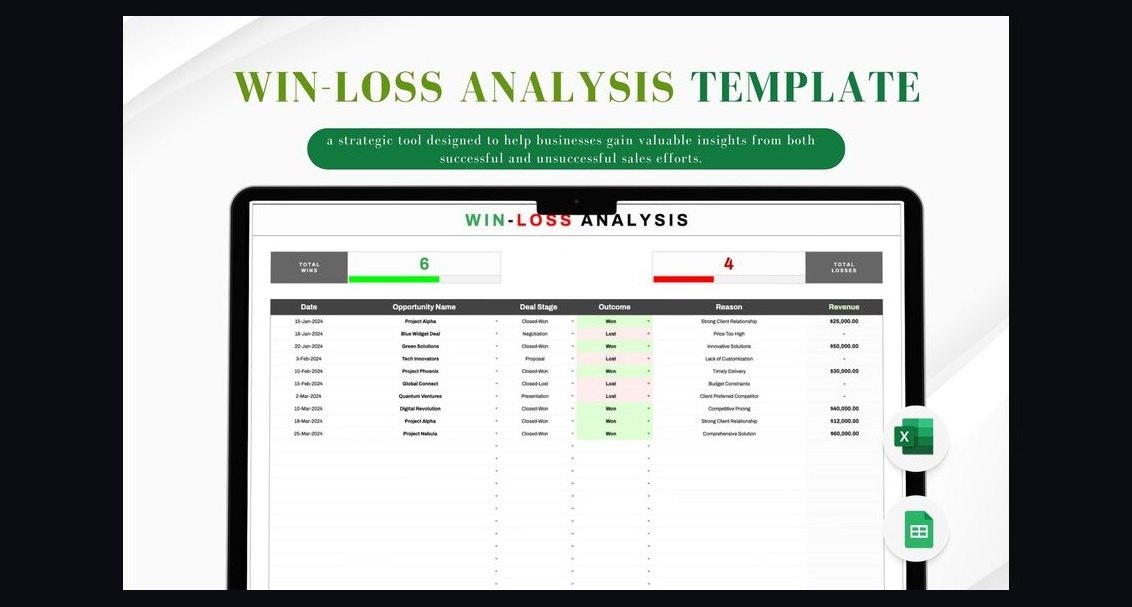 revopsHow Do I Run a Win/Loss Analysis Program That Improves Win Rate in 2027?
 revopsHow do you transition from sales-led to PLG (product-led growth) in 2027?
 revopsWhy are sales cycles extending for companies without AI adoption playbooks in 2027?
 revopsHow can RevOps use AI to identify stalled deals in longer sales cycles in 2027?
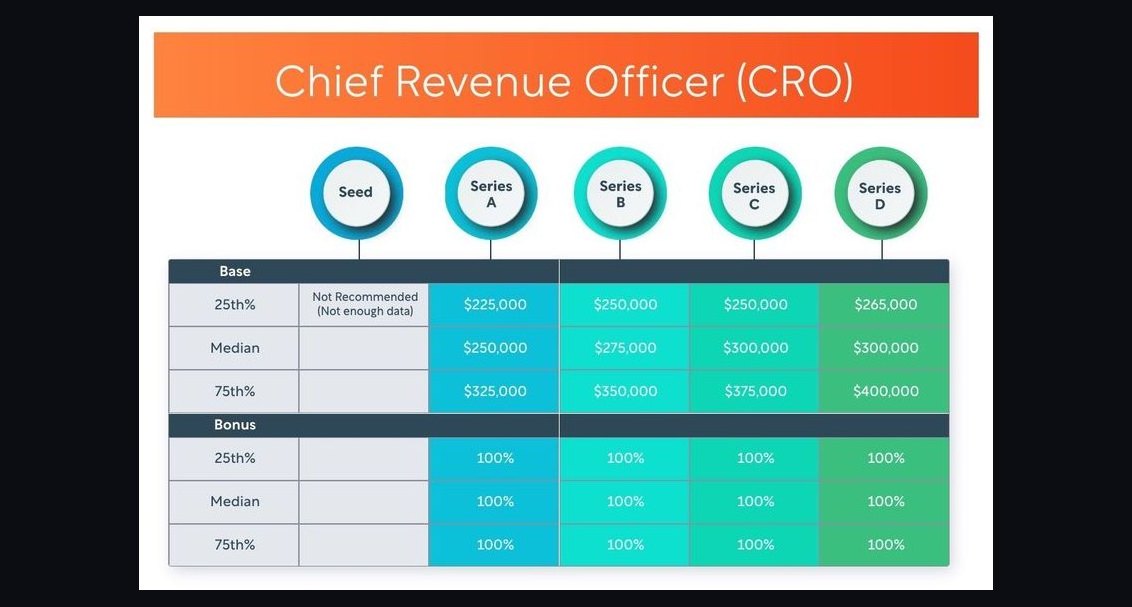 revopsCRO compensation — fractional, full-time, equity in 2027
 revopsWhy are longer sales cycles in 2027 driving adoption of AI-based meeting summarization tools?