

How do you start a vinyl wrap shop business in 2027?
 Curated byKory White · Fractional CRO · Maryland
Quality
Certified
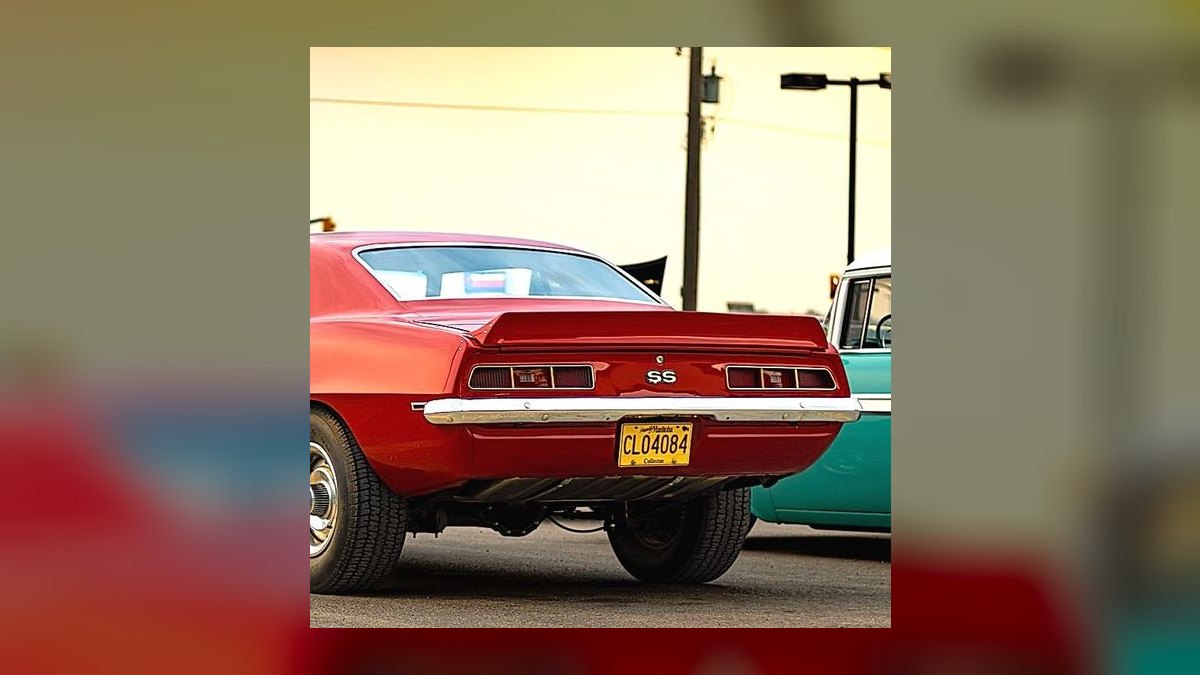
Start a vinyl wrap shop by picking one wedge — fleet graphics plus paint protection film is the strongest 2027 entry — leasing a climate-controlled bay, outsourcing printing for the first year, and opening for $45,000–$70,000. Price at the quality tier, deposit every job, and treat installation like manufacturing.
The bay that opened in March and closed by Christmas
Picture a shop that opens the way most of them open. The owner is a talented installer who spent six years at somebody else's shop, saved forty grand, and found a cheap 1,800 sq ft industrial unit at the back of a business park for $1,400 a month. No climate control. Two 400-watt shop lights and whatever daylight comes through the roll-up door. On day one he finances a 54-inch printer, a laminator, and RIP software — roughly $42,000 on a five-year note — because everyone told him printing in-house is where the margin lives. His pricing sheet undercuts the two established shops in town by about 12% so he can win work fast. His marketing plan is to post finished wraps on Instagram.
Every one of those decisions is individually defensible and collectively lethal. The cold bay means film will not conform in February and installs run 30% long; that overage never appears on an invoice, it just quietly eats the job's margin. The dust from the unfinished floor means contamination under the film, which means edge lifts at three months, which means redo work he does for free. The printer note is $780 a month whether or not anything runs through it, and he spends his first four months fighting color management and media profiling instead of selling — a trade he never trained for, learned on customer jobs, and paid for in wasted media. The 12% discount attracts price shoppers who negotiate harder, complain louder, and leave the one-star reviews that then suppress his map-pack visibility. And because he takes everything that rolls in — a boat, a golf cart, a set of one-off decals, a food truck, a color-change Camaro — his installers never repeat the same work often enough to get fast. Speed in this trade comes from repetition, and he has engineered repetition out of his own shop.
By month nine he is working 55 hours a week in the bay and another 15 on quotes and invoices, and he cannot tell you which jobs make money because he has never tracked a real install hour against a quoted one. By month fourteen the printer note, the rent, and a slow January land in the same three weeks. He closes owing on the equipment.
Now picture the same installer making four different decisions. He leases a 2,400 sq ft insulated bay with a working heater at $2,300 a month, spends $6,000 on 5000K LED lighting and sealing the floor, skips the printer entirely and sends print files to a trade-only printer, and prices at or slightly above the established shops. He picks one wedge — commercial fleet graphics plus PPF — and puts it on his homepage instead of "we wrap anything." He spends his first month introducing himself to detailers, two used-luxury dealerships, and every trades supply house within twenty miles. His opening cost is $52,000 instead of $95,000, his fixed monthly obligation is $2,300 instead of $3,080, and his install hours are predictable because he keeps doing the same two kinds of work. That is the whole difference, and it is decided before a single roll of film gets ordered.
How the wedge decision drives everything downstream
The strategic choice that determines your cost structure, your sales motion, your hiring, and your cash-flow rhythm is which vertical you lead with. There are four real ones, and they are genuinely different businesses that happen to share a squeegee.
Commercial fleet graphics. The customer is a business owner or fleet manager — plumbers, HVAC, electrical, landscaping, mobile detailing, food service, last-mile delivery. The sales motion is outbound and referral; these people are not browsing Instagram for wrap shops. Pricing is per-vehicle with volume tiers. Cash flow is predictable and weekday-shaped, often on net-15 or net-30 terms for larger accounts. The skill ceiling is moderate — partial graphics and cut vinyl are forgiving, full commercial wraps need real ability. Fleet is the backbone that keeps the bay utilized Monday through Friday, and it is the wedge most new shops neglect because it requires selling instead of waiting.
Color-change personal wraps. The customer is an enthusiast or someone who wants a statement vehicle — satin, matte, chrome delete, color shift, all reversible before a lease return or resale. The sales motion is inbound, driven almost entirely by visual proof on Instagram and TikTok. Ticket is the highest per job. Cash flow is lumpy and seasonal, surging in spring and summer. The skill ceiling is high: a bad color-change on complex body lines is visible from across a parking lot, and there is nowhere to hide.
Paint protection film. PPF is self-healing urethane that takes rock chips and swirls instead of your paint. The customer is a new-car buyer, a luxury owner, or increasingly an EV owner, often referred by a dealership or detailer. Pricing is premium and the buyer anchors on protection value rather than dollars. Cash flow is steady because new cars sell year-round. The skill ceiling is the highest in the category — patterns are computer-cut, but stretching urethane around a compound-curved bumper without lifting, silvering, or trapping contamination takes years to genuinely master. That difficulty is exactly why the margin holds.
Architectural and interior wrap. Retail, restaurant, office, property management. Design-led B2B selling, project-based pricing, project-lumpy cash flow, and thin competition because most shops never pursue it.
Generalists lose because being acceptable at all four means their marketing has no sharp message, their installers never specialize deeply enough to get fast, and their pricing is mushy. The recommended 2027 entry is fleet plus PPF, for a specific structural reason: the two customer bases barely overlap, so you are diversified, while fleet fills the weekday bay and PPF delivers the premium tickets and the dealership referral channel. Color-change gets added opportunistically once you have an installer who can carry it.
The diagram is not decoration — read it as a dependency chain. The wedge picks the sales channel, the sales channel picks the location, the location and wedge together pick the hiring plan, and the hiring plan is what produces installer velocity. Velocity is what makes your quoted hours match your actual hours, and that match is your margin. Break the chain at the top by staying a generalist and every link below it is weaker.
Real numbers: what it costs to open and what each job actually makes
The honest all-in figure to open a credible shop in 2027 is $45,000 to $140,000, and the entire spread comes down to two decisions: whether you print in-house and how built-out the space is.

Facility. First month, last month, and deposit on a 2,000–3,000 sq ft climate-controlled bay runs $6,000–$18,000 depending on metro. Build-out — 5000K LED lighting, electrical, a sealed clean install zone, a basic office — is $4,000–$15,000. Do not economize here. Lighting and climate control are equipment, not decoration; film has temperature windows for both install and post-cure, and a bay that swings from 45°F to 95°F costs you in failed installs and inflated labor hours.
Core install equipment. A plotter/cutter for vinyl and PPF pattern cutting, $2,500–$8,000. Heat guns and an infrared panel heater, $800–$2,000. A consumable kit of squeegees in a range of durometers, felt edges, knifeless tape, blades, gloves, and slip solution, $1,500–$3,500. A lift, or at minimum quality creepers and lighting carts, $0–$12,000. Air compressor and prep/detailing gear, $1,500–$4,000. Design and pattern software subscriptions on top.
PPF-specific. A computer-cut pattern subscription covering thousands of vehicle models — the dominant services run roughly $200–$600/month — plus PPF-grade slip solution, gloss-up tools, and tucking tools at $1,000–$2,500. The pattern subscription is non-negotiable; hand-cutting film on a customer's paint is how you damage cars.
The optional print package. A 54-inch eco-solvent or latex printer, $14,000–$32,000. Laminator, $6,000–$14,000. RIP software, $1,500–$4,000. Media inventory, $3,000–$8,000. This single package is what pushes a build from $60K to $130K+, and it is the most common cash-flow killer in the trade.
Working capital and soft costs. LLC formation. General liability plus garage keepers insurance, $1,800–$5,000/year. Opening inventory of premium cast vinyl and PPF, $4,000–$12,000. Website and branding, $1,500–$5,000. Signage and a shop vehicle to wrap as a rolling demo, $2,000–$6,000. And 8–12 weeks of operating runway, $15,000–$40,000.
Totaled: a printer-free fleet+PPF shop opens for $45,000–$70,000. A fully built shop with in-house print opens for $100,000–$140,000.
Now the per-job math, which is where most owners are flying blind. Revenue figures tell you nothing; contribution margin tells you everything.
Full color-change on a midsize SUV at $5,500. The vehicle consumes roughly 22–28 yards of premium cast film at $13–$22/yard wholesale, so $350–$600 in vinyl, plus tape, blades, and slip solution — call it $500–$750 in material. Labor is the swing factor: a clean installer does an SUV color-change in 22–40 hours, and at a fully loaded installer cost of $30–$55/hour that is $700–$2,200. So the job contributes $2,550–$4,300 before overhead. A slow or sloppy install at the top of that hour range collapses it toward $2,000. Install speed and quality *are* the economic levers — not pricing.

Fleet partial graphics at $850. Roughly $120 of material and 4–7 hours of labor ($150–$350), netting $400–$580 on a job you turn in a single day. And fleet customers buy in batches of three to fifteen vehicles. This is the economic sweet spot of the whole trade.
PPF full front at $1,800. $250–$450 of film, 6–10 hours of skilled labor ($250–$500), netting $900–$1,300 — and PPF buyers attach ceramic coating and window tint at high margin more often than any other customer type.
Typical price bands to calibrate your menu: full color-change $3,000–$6,500 on a sedan and $4,500–$9,000 on a truck or SUV; fleet partial graphics $350–$1,200 per vehicle; full commercial wrap $2,500–$5,000 per vehicle; PPF full front $1,200–$2,400 and full body $5,500–$9,000.

A healthy shop runs 45–60% gross margin after material and direct install labor, with net landing at 12–25%. Track three numbers weekly and you will never be surprised: revenue per installed bay-hour (are you utilized?), redo hours as a percentage of total install hours (is quality holding?), and material yield — film actually consumed versus estimated (are your quotes real?). Shops that skip these run busy and broke.
The five-year trajectory, so you can calibrate expectations against reality rather than against enthusiasm. Year 1 is survival and proof: owner-operator plus one installer, outsourced print, fleet+PPF lead, realistically $140,000–$320,000 at 12–22% net. The range is mostly about whether the owner can install (which doubles capacity) and whether an actual fleet sales motion got built. Year 2 is systematization — second installer, an apprentice, a documented workflow — commonly $300,000–$550,000, and net margin can *dip* here if you over-hire ahead of demand. Year 3 is the inflection: 3–5 installers, a dedicated estimator so the owner stops being the quoting bottleneck, in-house printing now possibly justified, $450,000–$900,000 at 15–25% net. Year 5, a strong single location plateaus around $900,000–$1.8M, with the ceiling set by bay count, installer count, and metro size.
Size your own metro before believing any of it. A US metro of one million people typically supports 18,000–40,000 small-business work vehicles; if 3–5% get graphics or a refresh annually, that is 540–2,000 fleet jobs flowing through the metro, and one disciplined shop realistically wants 150–400 of them. Then count real competitors: search "vehicle wrap" and "paint protection film" on Google Maps and count only shops with 4.5+ stars and 50+ reviews. Fewer than eight quality operators in a million-person metro means it is under-served and you can enter on quality alone. More than twenty-five means you must enter on a sharp wedge or a specific geographic pocket, or not at all.
The trade-offs you have to actually decide
Three decisions carry most of the risk, and each has a defensible answer in both directions depending on your situation.
Print in-house or outsource. The case for in-house sounds airtight: capture the print margin, control turnaround, do same-day decals. Four things kill it for a new shop. Capital — $25,000–$50,000 competing directly with the working capital you need to survive year one. Skill debt — large-format printing is its own trade with color management, ICC profiling, media calibration, and print-head maintenance, and on day one every hour of your scarce skill belongs in installation, not in becoming a part-time print technician. Utilization — a shop doing 8–15 jobs a month cannot generate the print volume to amortize the machine, so it depreciates while idle. And quality — trade-only printers run calibrated industrial gear with deep media inventory and will often deliver a better print than a beginner produces, frequently cheaper than your true in-house cost once you count depreciation and your own time. The trigger to insource: when your monthly outsourced print bill consistently exceeds roughly $2,500–$4,000 *and* your bay can absorb the workflow. Buy it out of cash flow in month 12–18, not on debt in month one. Plenty of excellent color-change and PPF shops never buy a printer at all, because their wedge is cut vinyl and film.
Price below, at, or above the quality tier. The temptation to undercut is enormous because customers cannot compare quotes intelligently — they do not know cast from calendared vinyl, do not know what surface prep costs, and cannot evaluate install quality until months later when the edges start lifting. That information asymmetry is precisely why undercutting fails: to a good customer, the cheapest shop signals rushed installs. Never be the cheapest. Price the prep as an explicit line item, because a vehicle with peeling old vinyl, rust, or adhesive residue costs real labor to make ready. Deposit everything — 50% down on retail, deposit plus signed art approval on fleet — because material is custom-ordered and a cancellation leaves you holding film you cannot resell. And reprice the menu every 6–9 months; the shops that get squeezed are running a price list they wrote two years ago while film costs moved 8–20% underneath them.
Own installer or hired installer. If you are the lead installer, your ceiling is your own hands and you cannot sell more than you can install — fine for proving the model, fatal as a permanent structure. If you are not an installer, your first and most important hire is a genuinely skilled lead, and you must be able to evaluate that hire's work. If you cannot judge an install yourself, bring in a trusted third party to assess a test install before you hire. You cannot run a quality-driven business in a skill you cannot judge. This matters more in 2027 than it did five years ago because the trade has a structural labor shortage: the training pipeline is informal, mastery takes years, and good installers know exactly what they are worth.
The same gated logic applies to every capital decision in the shop — the second bay, the lift, the next hire. Each one gets a utilization trigger and a cash-flow funding test, and neither gets waived because you feel busy. Feeling busy and being utilized are different measurements, which is why revenue per installed bay-hour is on the weekly KPI list.
Pitfalls that close shops, and the specific countermeasure for each
Buying the printer first. The single most common cash-flow killer. Countermeasure: outsource print for 12–18 months and buy on the trigger above.
Under-pricing to win volume. It attracts price shoppers, starves the rework budget, and the rushed installs that cheap pricing produces generate the bad reviews that then suppress your leads. Countermeasure: price at the quality tier from day one and compete on reliability and turnaround.
No signed pre-install inspection. The "you damaged my car" dispute is the most expensive and emotionally draining problem in this business. Countermeasure: before any film touches a vehicle, photograph it from every angle, document existing damage, rock chips, prior wrap residue, rust, and dents, and have the customer sign the inspection. This one habit kills most of those disputes outright.
Skipping garage keepers coverage. General liability covers someone slipping in your shop. Commercial property covers your equipment. Neither covers a customer's vehicle in your care, custody, and control — a fire, a theft, or an installer backing a customer's truck into a pole. Countermeasure: carry garage keepers legal liability, plus workers' comp once you have employees (blades, heat, repetitive strain, and lifting are real exposure), plus commercial auto if you run shop vehicles. Also confirm whether install labor is taxable in your state and whether your unit is zoned for automotive use before signing the lease — discovering that after the fact is catastrophic and entirely avoidable.

Taking every job. Boats, golf carts, one-off rush decals. Off-wedge work destroys installer velocity and muddies your marketing message. Countermeasure: a written job-acceptance policy you actually enforce.
Warranting more than the manufacturer does. Countermeasure: write warranty terms that match what 3M, Avery Dennison, or your PPF brand actually stands behind, and note that some PPF brands require certification or authorized-installer status for their warranty to apply — factor that into brand selection early.
Under-quoting install time. New owners estimate optimistically, then bleed on every job. Countermeasure: track real install hours obsessively against quoted hours for the first hundred jobs and reprice against the actuals.
Skipping fleet outbound. Waiting for the algorithm to deliver inbound while never building the predictable B2B base that stabilizes cash flow. Countermeasure: build a list of local trades and go direct — email, in person at supply houses, and a wrapped demo van parked where they congregate. Fleet customers are won by being shown a clean partial-wrap price and a one-day turnaround.
No review system. Your first ten five-star Google reviews are disproportionately valuable because they move you into the map pack, and reviews compound. Countermeasure: make the review ask a non-skippable step of every handoff.
Owner as permanent bottleneck. If the owner is the only installer and the only estimator, the business cannot grow and cannot survive the owner's absence. Countermeasure: build an apprentice pipeline against the labor shortage, and by year two deliberately hire out of the bottleneck role.
Underneath all of these sits the operational spine: intake and signed inspection, artwork approval on printed work, surface prep (full wash, decontamination, badge and trim removal, IPA wipe-down of every bonding surface, dust control), install with controlled heat and post-heating to lock the film's memory, post-install inspection against a written checklist, controlled-temperature cure, handoff with written care instructions and warranty terms, then a follow-up and review request a week later. Run that as a documented seven-stage process on a visible job board and you can quote accurate timelines, hold installers accountable, and scale past the owner-operator ceiling. Improvise it and you cannot do any of the three.
One closing note on how to think about this trade. Software is changing the front office — mockup tools, AI-assisted estimating, expanding pattern databases — which lowers your overhead and speeds your quoting. The bay stays human, because laying film on a compound curve is a dexterity-and-judgment task that resists automation. That is why the installer shortage is simultaneously your hardest constraint and your durable moat, and why the disciplines that make a shop profitable — systems, a trained team, recurring fleet contracts, clean separated books — are the same ones that make it sellable at the 2x–4x seller's discretionary earnings range that small service businesses generally trade in. Owner-dependence sits at the bottom of that range. A team, documented SOPs, and recurring revenue sit at the top.
Related questions
How much can an owner-operator realistically pay themselves in year one?
Modestly. At $140,000–$320,000 revenue and 12–22% net, the business generates roughly $17,000–$70,000 in profit before owner compensation adjustments — which is why 8–12 weeks of personal living expenses on top of the $45,000–$70,000 opening cost is not optional.
Do I need to be a certified installer to open a shop?
Not legally, but you must be able to evaluate install quality or you cannot manage it. Some PPF brands require certification or authorized-installer status for their warranty to apply, and manufacturer training programs double as a recruiting and marketing credential.
Is fleet or color-change better for a first-year cash flow?
Fleet. It bills Monday through Friday, sells in batches of three to fifteen vehicles, turns in a single day on partials, and does not swing seasonally. Color-change carries the higher ticket but arrives lumpy and concentrated in spring and summer.
What add-on services attach best to wrap work?
Ceramic coating and window tint attach naturally to PPF and color-change because the customer is already in a protection mindset. Wrap removal and refresh is recurring by nature — fleet graphics get rebranded, color-change comes off before resale.
How do I build a portfolio when I have zero finished jobs?
Wrap your own shop vehicle and personal car first, then run a small, capped number of near-cost portfolio jobs on photogenic vehicles in exchange for shooting rights. Treat it as a defined marketing budget, not an ongoing pricing strategy.
FAQ
How long does it take to learn to install well enough to sell the work?
Basic cut vinyl and fleet partials are learnable in months. Full color-change on complex body lines takes considerably longer, and PPF — stretching urethane around compound curves without lifting, silvering, or trapping contamination — typically takes one to three years to genuinely master. That gap is why partials are a reasonable place for an apprentice to start and PPF is not.
Should I buy premium cast film or the cheaper import tier?
Match the film to the job's warranty exposure. Premium cast lines from 3M, Avery Dennison, and KPMF are what you want on enthusiast color-change work because they conform, reposition, and remove cleanly within warranty. The cheaper import tier is materially improving and acceptable for budget fleet partials and practice panels, but it is a poor bet on warranty-critical color-change work where a failure means a full redo on your dime.
What size space do I actually need?
2,000–3,000 sq ft for a two-to-three-installer shop. Bay count and ceiling height matter more than raw square footage — you need enough bays for installers to work in parallel, enough door width and height for vans and box trucks, and a layout that physically separates the dusty prep zone from the clean install zone. Insulation and a working heater are requirements, not upgrades.
How do I handle a customer whose wrap fails at three months?
Fast and generously, if the failure is legitimately yours. Redo work is expensive but a bad-review cascade in the map pack throttles inbound leads for far longer than the redo costs. Track redo hours as a percentage of total install hours as a standing KPI — a rising number is telling you about your prep discipline or your climate control before your customers do.
When should I hire a salesperson or estimator instead of another installer?
When the owner is the quoting bottleneck — typically somewhere in year two to three at three-to-five installers. If quotes are going out slowly because the owner is in the bay, adding a fourth installer just deepens the backlog. The estimator hire is what converts existing demand you are already losing to slow response.
Does an EV-heavy market change how I should set up?
It shifts the job mix toward PPF and chrome delete, since EV owners buy protection at high rates. Panel shapes and sensor placement change install times, so track your actual hours on EV work separately until your quotes are calibrated. Getting good at EV-specific work early is a real edge in metros where those registrations are climbing.
Sources
- https://www.3m.com/3M/en_US/graphics-signage-us/
- https://graphics.averydennison.com/
- https://www.xpel.com/
- https://www.sba.gov/business-guide
- https://www.irs.gov/businesses/small-businesses-self-employed
- https://www.osha.gov/small-business
- https://www.oaaa.org/
- https://www.iii.org/article/business-insurance-basics
- https://www.sgia.org/
- https://www.bls.gov/ooh/
Related on PULSE
- How do you price commercial fleet graphics per vehicle?
- What does a paint protection film installation actually cost?
- How do you build an outbound sales motion for a local service business?
- What KPIs should a small shop track weekly?
- How do you value a small owner-operated service business for sale?
- How do RevOps principles apply to a single-location trade shop?
This page will be disappearing soon. Save it to your device for $1 — or read it free while it is here.
@Kory-White- · if Venmo asks, the last 4 of my number are 2012
This page is gone.
This one is off the shelf now. $1 keeps it on your phone for good — the whole page, pictures and diagrams included.
 auto-wrap-shopHow do you start an auto wrap shop business in 2027?
 window-tintingHow do you start a window tinting business in 2027?
 weldingHow do you start a custom welding fabrication business in 2027?
 paintless-dent-repairHow do you start a paintless dent repair (PDR) business in 2027?
 mobile-detailingHow do you start a mobile detailing business in 2027?
 mobile-oil-changeHow do you start a mobile oil change business in 2027?
 hvacHow do you start a HVAC service business in 2027?
 handyman-businessHow do you start a handyman business in 2027?
 epoxy-flooringHow do you start a epoxy garage flooring business in 2027?
 woodworking-shopHow do you start a woodworking shop business in 2027?