
How do you start a food truck business in 2027?
 Curated byKory White · Fractional CRO · Maryland
 PULSEKNOWLEDGE LIBRARY
Quality
Certified
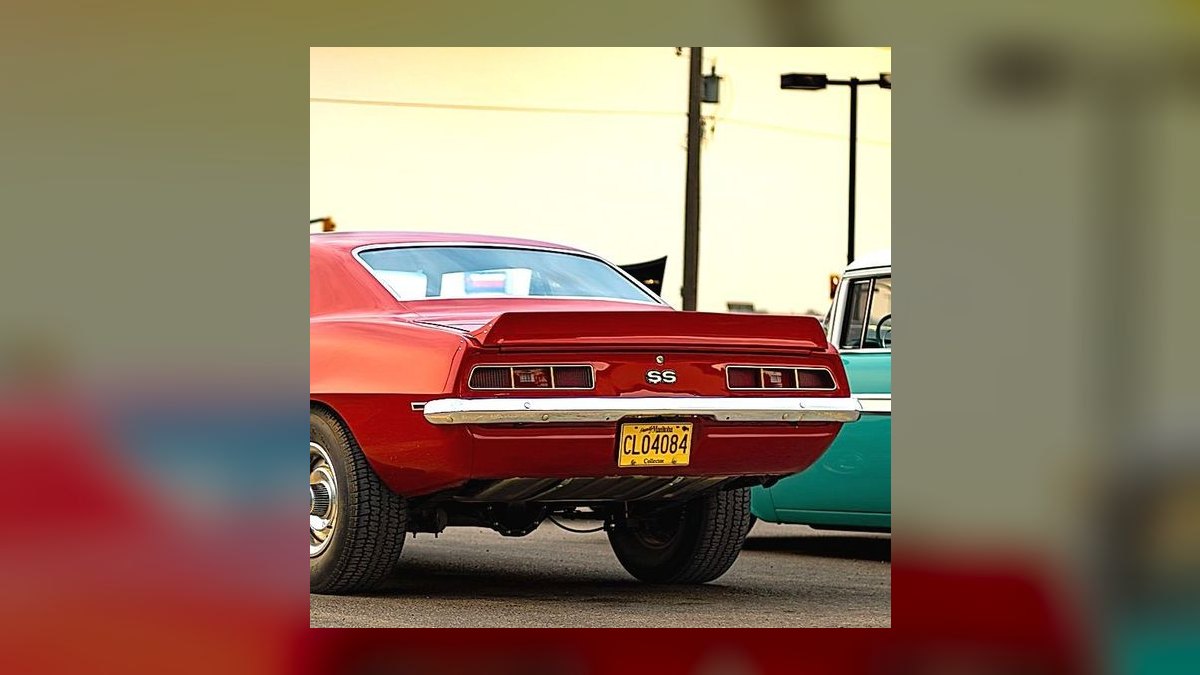
Starting a food truck business in 2027 means budgeting $70,000–$140,000 all-in for a used truck build, signing a commissary agreement, clearing health and fire permits over 6–16 weeks, and pre-booking 8–14 weekly service windows from breweries, office parks, and catering before you ever open the window.
What a food truck actually is as a business, and why the distinction decides your outcome
A food truck looks like a culinary venture and behaves like a logistics company. The kitchen is a 60–100 square foot box on wheels; the actual business is the calendar that box shows up on. Operators who internalize that reframe survive. Operators who buy a truck, pick a cuisine, and drive around hunting crowds churn out — industry turnover runs roughly 20–30% of active trucks per year, and the exits cluster inside the first 24 months.
The 2010–2015 novelty era is over. What replaced it is a permanent, structural slot in American food service, and the 2027 version of that slot is favorable for three reasons that have nothing to do with food.
First, the capital comparison has widened. A brick-and-mortar restaurant build-out runs $250,000–$900,000 and locks you to a lease and a neighborhood. A mobile unit runs $70,000–$140,000 used and can relocate when a district cools. If you want to test a concept, a menu, and a brand before committing to real estate, the truck is now the cheapest validated-learning instrument in food service — the same logic a software team applies when it ships a pilot before a platform build.
Second, the events economy has fully normalized trucks as a default vendor line item. Breweries and taprooms without kitchens, office parks, apartment complexes, wedding venues, corporate campuses, film sets, festivals — all of them now budget for mobile food. That means a truck marketing to *event organizers* has a bookable demand pipeline, while a truck marketing to *street traffic* has weather and luck. This is the single largest strategic difference between a truck that clears $400,000 and one that clears $160,000 with the same food.
Third, the tooling matured. Square, Toast, and Clover all handle mobile, offline, and event modes natively. "Where's the truck" location broadcasting is free through Instagram and TikTok. Commissary networks have professionalized in most metros. None of this existed in usable form a decade ago.

What got harder, and this is the part optimistic guides skip: permitting tightened, commissary agreements became legally mandatory in the large majority of jurisdictions, insurance costs rose, and the labor market stayed tight. The compliance bar is higher. Paradoxically that favors serious operators — a higher bar thins the casual competition.
The honest sizing: the US mobile food market runs roughly $1.8B–$2.6B annually across an estimated 38,000–58,000 active units, inside a ~$1.1 trillion food-service industry. But national TAM is irrelevant to a single operator. Your served market is your metro's channel split. A metro of 1–2 million people typically supports 150–450 active trucks, a weekly event calendar with 20–80 bookable slots, and 30–120 breweries and taprooms — many without kitchens, all of them recurring customers. Your realistic obtainable market in Year 1 is not "the city." It is 8–14 service windows per week at $800–$2,400 gross per window. That is the entire ballgame, and it is a pipeline problem, not a cooking problem.
Anyone who has run a RevOps function will recognize the shape immediately: the constraint is not the product, it is the repeatable motion that fills the calendar and the unit economics that survive it.
The step-by-step process from concept to first booked window
The sequence matters more than the individual steps, because doing them out of order is what produces a beautiful truck with an empty calendar and a $1,400 monthly payment.
Step one — define the concept before you price a truck. Six to nine menu items, maximum, built around one signature dish with maximum ingredient overlap. If your braised protein appears in the signature item, a variation, and a side, you buy one protein in bulk, prep it once, and both food cost and waste drop. Every additional item adds prep time, an inventory SKU, spoilage risk, line-speed friction, and customer decision fatigue. The structure that works: one signature item the brand is known for, two or three variations sharing 80% of the same mise en place, one or two fast-holding sides, one dietary-flexible option (group orders die when one person can't eat), and a beverage or dessert as a margin booster.

Step two — pick the channel before you pick the truck. You are not serving "people." You are serving one or two of five distinct segments, and the truck's physical layout, menu, and pricing differ by segment. Weekday lunch crowds (office parks, hospitals, universities) want a $12–$18 meal in under six minutes and reward speed and pre-prep. Brewery and taproom evening crowds run $16–$24 tickets because people are relaxed and drinking, and the brewery supplies the crowd — this is the backbone channel. Private catering (weddings, corporate appreciation events) is the highest margin in the business at $22–$45 per head with a guaranteed minimum and near-zero waste. Festivals produce big gross days and brutal operations once you net out booth fees of $200–$1,500. Late-night entertainment districts run high volume and high chaos. Pick a primary, pick a secondary, say no to the rest in Year 1.
Step three — pre-sell the calendar. Before the truck exists, get verbal or written commitments from two to four recurring locations. Pitch breweries, office parks, apartment complexes, coworking spaces. One signed recurring brewery contract is worth $40,000–$90,000 a year. If you cannot sell the calendar before the truck exists, that is critical information about your concept, and it costs nothing to learn now versus $110,000 to learn later.
Step four — choose the vehicle. Used step-van or box truck: $30,000–$70,000, plus build-out to $55,000–$110,000 all-in. Concession trailer: $15,000–$60,000 plus a tow vehicle, with the advantage that the kitchen and the engine are decoupled — if the truck breaks, the kitchen doesn't. New custom build: $120,000–$250,000+, and almost never correct for an unvalidated first concept.
Step five — permitting and infrastructure, in parallel, starting early. Call the health department before you build anything and get the checklist in writing. Form the LLC. Sign the commissary agreement (you cannot get permitted without it). Submit the health plan review. Schedule the fire inspection. Register for sales tax. Bind the insurance stack.
Step six — launch into a booked calendar, not into an empty one.

That loop from windows back through prep is the actual business. Everything upstream of it is setup; everything downstream is expansion.
Costs, timelines, and the ranges that are actually realistic
New operators under-budget with remarkable consistency, so here is the itemized picture.
The vehicle. $30,000–$70,000 used, depending on age, mileage, and installed equipment. Buying a truck that was already a food truck saves build-out cost but transfers risk: you inherit someone else's equipment choices, their deferred maintenance, and a layout that may not fit your menu. A trailer runs $15,000–$60,000. A new custom build from a reputable builder runs $120,000–$250,000+ and buys you an 8–15 year asset, a warranty, and serious debt before validation.
Kitchen equipment and build-out. $20,000–$60,000 if not already installed: cooking equipment, refrigeration, hood and fire suppression, generator or power system, water tanks and plumbing, work surfaces, storage, a three-compartment sink plus a separate handwash sink (health-code required, non-negotiable).
Wrap and branding. $2,500–$6,000. Not optional. It is a rolling billboard and probably the highest-ROI marketing dollar in the entire budget.

Permits, licenses, inspections. $500 in permissive jurisdictions to $5,000–$8,000 in strict metros. Business license, mobile food vendor permit, health department permits and plan review, fire inspection, parking and zoning permits, seller's permit, food handler and food manager certifications.
Commissary. $600–$1,500 per month plus a deposit. Annualized, $7,000–$18,000 of fixed cost.
Initial inventory and smallwares. $2,000–$5,000.
Insurance. $3,000–$8,000 annually for a single truck, typically $1,000–$2,500 down. The stack: general liability, commercial auto, property and equipment, workers' comp once you have employees, often product liability and business interruption. Critical and frequently botched — your personal auto policy will not cover a food truck and will deny the claim.
POS and technology. $500–$2,000 in hardware plus roughly 2.5–3% processing.

Marketing launch. $1,000–$4,000 for a website, location-broadcasting setup, initial social, and a launch event.
Working capital reserve. $10,000–$25,000. This is the line everyone skips and it is the line that kills them. Under-capitalized trucks die in month four through nine, when the transmission needs $4,000 of work during a slow stretch and payroll is due Friday.
Totals. Lean used-truck path: $70,000–$120,000. Comfortable used truck with a fresh build: $110,000–$160,000. New custom build: $170,000–$280,000.
The timeline. From "I want to do this" to legally serving customers is 6–16 weeks, longer if the truck fails initial inspection or plan review kicks back. Two traps inflate it. Jurisdiction fragmentation: your home-city permit often does not authorize the neighboring city or county, so cross-municipal routes may require multiple permit sets. And zoning: many cities restrict street vending heavily, require minimum distances from brick-and-mortar restaurants, or ban it in certain districts outright — another structural argument for private recurring locations over public curbs.
The four numbers that decide everything afterward. Food cost, 27–32% of revenue. Labor, 25–32% including a reasonable owner wage. The fixed monthly nut — commissary, amortized insurance, truck payment, fuel and generator, POS and software, phone and marketing — $2,800–$5,500 before you sell anything. And service windows, 8–14 per week. Prime cost (food plus labor) should land 55–65%; above 68% the math stops working at any volume.
Revenue per window by channel. Slow street lunch, $400–$700. Solid brewery night, $900–$1,800. Busy festival day, $2,000–$5,000 gross before booth fees. Private catering event, $1,500–$5,000 at the best margin in the business.

Trajectory. Year 1: gross $160,000–$320,000 at a thin 6–12% net, most of which services debt and the first repairs. The Year 1 wins are non-financial — a proven menu, a few recurring contracts, working systems. Year 2: gross $260,000–$420,000 at 12–18% net, owner income $55,000–$95,000. Year 3: gross $320,000–$520,000 at 15–22% net, owner income $75,000–$130,000, ideally with a truck lead so the owner sells instead of cooking every window. A strong single truck tops out around $400,000–$600,000.
Where operators get it wrong, and the adjacent traps nobody warns about
The failure modes are so consistent they read like a checklist, which means they are avoidable.
No working capital reserve. Every dollar goes into the truck. Month four arrives slow, the engine needs work, and there is nothing behind it. Fix: treat $10,000–$25,000 as a hard line item, not a nice-to-have.
Menu sprawl. Fifteen items produces 38%+ food cost, heavy waste, slow lines, and a customer staring at a board instead of ordering. One real archetype: an operator launched a sixteen-item fusion menu on a $190,000 new build with a $35,000 loan, grossed $210,000 in Year 1, and netted negative after debt service. Cutting to eight items in Year 2 dropped food cost to 31% and clawed back to break-even. Good cook, wrong operating decisions.
"Park and pray." No recurring contracts, no catering pipeline, just driving toward crowds. This exposes you to weather, foot traffic, competing trucks, and luck every single day, and it burns fuel, labor hours, and prepped inventory on low-yield locations. The binding constraint in this business is service windows multiplied by crew capacity — wandering spends that constraint on the worst-yielding option available.

Under-pricing. Operators benchmark against fast food. Your costs are higher than a national QSR's and your product is better. Benchmark against fast-casual — a good local sandwich or bowl shop — and target a $13–$19 average ticket. Then price by *channel*, not one list price everywhere: menu prices for street and lunch, naturally higher tickets at breweries, and per-head or flat-fee-with-minimum for catering, plus deposit, travel and setup fees, and written overage terms. Catering is where margin lives precisely because you control headcount and the contract.
New build for an unvalidated concept. Debt service before product-market fit. Same mistake a startup makes buying enterprise infrastructure before it has ten customers.
Ignoring the commissary until it blocks the permit. Health departments require it because a 60–100 square foot galley cannot legally function as a complete food production facility. You will do prep there, store food, dump gray water, refill fresh water, and often park overnight. A bad commissary — inconvenient hours, far from your routes, poor equipment — quietly taxes the operation every single day. Visit several, read the agreement, and confirm it satisfies *your specific health department* before signing.
Treating delivery apps as a channel. Commissions of roughly 18–30% against thin mobile margins make third-party delivery a garnish at best, never a strategy.
No catering contracts or deposits. One no-show wedding wipes out a week. A written contract with a 50% deposit, balance due before the event, and clear cancellation terms prevents the single most common catering disaster.

Skipping the commercial insurance stack. A denied claim ends the business.
No maintenance discipline. One archetype worth remembering: a genuinely excellent pitmaster in Kansas City ran the business as 100% culinary and 0% logistics — no booking system, no recurring contracts, no reserve. The transmission failed in month seven during a slow stretch. He couldn't make payroll and closed in month nine. The food was never the problem.
Concentration risk. If one brewery contract is 40% of revenue and they install a kitchen, you're in trouble. Keep any single account under roughly 25–30%.
Owner burnout. The most underrated failure mode. A two-window day is 12–16 hours, six operating days a week is common, and the schedule is anti-social by design — you work nights, weekends, holidays, and festivals precisely when everyone else is off. Mitigation is unglamorous: documented systems, cross-trained crew, a genuine day off, and a truck lead hire as soon as cash allows.
The meta-lesson across all of them: none of these are surprises. They are scheduled events. A real business plan has a line item for each one before the truck is on the road.

A decision framework: which path, which vehicle, which channel
Run the honest self-assessment before committing $70,000–$250,000 and two physically demanding years.
Capital test. Do you have the all-in cost *plus* the reserve, and can your household survive 6–12 months on a modest owner wage? If not, take the de-risked path — commissary plus trailer, heavy prep off-truck, the mobile unit as a finishing-and-service station. One husband-and-wife team in Portland ran exactly this shape: a $34,000 trailer, 70% corporate catering and brewery contracts, almost no street vending, Year 1 gross $185,000 at a healthy 19% net because catering margins are high and waste was near zero. Lower ceiling, better margin, far less stress.
Concept test. Can you describe it in one sentence and name the signature dish? "Good tacos" is not a concept. A hyper-focused birria truck in Phoenix — seven items, all built off one braise, $82,000 all-in, two recurring brewery contracts signed before launch — grossed $245,000 in Year 1 and $390,000 in Year 2. Sharpness is what makes people seek you out instead of eating from whichever truck is closest.
Demand test. Can you get two to four recurring commitments before launch? If not, the concept or the channel is wrong, and finding out now is cheap.
Operations test. Are you good at logistics, systems, and managing chaos — not just cooking? The food is roughly 20% of the job.

Physical and lifestyle test. Can you and your household tolerate 12–16 hour days, nights, weekends, and physical work for two years? Be honest. This is the most common reason good cooks quit.
Market test. Does your metro have breweries without kitchens, an active events calendar, and corporate-catering demand — and is the permitting environment workable? Call the health department before you decide, not after.
Pass all six and this is a defensible business with real growth optionality. Fail capital, de-risk with the trailer path or wait. Fail demand or operations, and the business will likely fail regardless of how good the food is. Fail the lifestyle test and do not start; nothing else compensates.
By Year 4 the fork is real. A second truck repeats the capital and crew problem but leverages the shared commissary, brand, booking systems, and supplier relationships — and only works if someone other than you can run a window. Brick-and-mortar is $250,000–$900,000 and a different operation, but the truck pre-validated the hardest questions: menu, unit economics, and following. Licensing turns your operating systems into the product and makes you a franchisor rather than an operator. Staying single is underrated: a disciplined truck netting $90,000–$140,000 on manageable hours, with a salable asset, is a genuinely good outcome.
Looking toward the early 2030s, the forces worth building for: AI lands in the back office, not the galley — demand forecasting for prep quantities, menu optimization from POS data, automated catering-inquiry handling, route planning. The cooking stays human, which is a durability feature. Commissary networks keep professionalizing, lowering the entry barrier. Battery and solar power systems keep displacing noisy generators at event venues. Permitting keeps tightening, which thins casual competition. Labor stays tight, which keeps crew capacity as the ceiling and pushes serious operators toward catering and contracts, where revenue per labor hour is best.
Related questions
How much does it cost to start a food truck with no experience?
Budget the same $70,000–$140,000, but add a working stint. Spend three to six months cooking on someone else's truck first — the operational lessons are far cheaper to learn on their payroll than on your loan.
Can you run a food truck part-time while keeping a job?
Only in the catering-and-events shape. Weekend-only private catering and one recurring brewery night is workable. Weekday lunch windows are not — they require 4 AM commissary prep and a daytime presence that no full-time job accommodates.
Is a trailer better than a truck for a first mobile food business?
Often yes. A trailer costs less, frequently offers more usable kitchen space per dollar, and decouples the kitchen from the engine — a breakdown takes out one, not both. The trade-offs are towing, parking, maneuverability, and different treatment under some city permits.
What's the fastest way to fill a food truck calendar?
Direct outreach to breweries and taprooms without kitchens. They supply the crowd and the alcohol, you supply the food, and the booking is recurring. One signed weekly brewery contract can be worth $40,000–$90,000 annually.
FAQ
Do you legally need a commissary kitchen to operate a food truck?
In the large majority of US jurisdictions, yes. A commissary agreement is part of the health department application, and you generally cannot get permitted without one. Options include dedicated commissary networks, shared commercial or ghost kitchens, or a private agreement with a restaurant or church kitchen. Confirm your specific health department accepts the arrangement before you sign.
How long does food truck permitting actually take?
Plan for 6–16 weeks from decision to legally serving customers, and longer if the truck fails initial inspection or plan review is returned. The stack includes business registration, mobile food vendor permit, health department plan review and physical inspection, fire inspection, parking and zoning permits, sales tax registration, and food handler certifications.
What profit margin should a food truck target?
Net margin runs 6–12% in Year 1, 12–18% in Year 2, and 15–22% by Year 3 for a well-run operation. Prime cost — food plus labor combined — should stay in the 55–65% range. Above 68% prime cost, no amount of volume makes the business profitable.
Is street vending or catering more profitable?
Catering, by a wide margin. You negotiate a per-head price of roughly $22–$45 or a flat fee with a guaranteed minimum, you know the headcount in advance so waste is near zero, and you carry no weather or foot-traffic risk. Street vending at menu prices sits closer to break-even once the fixed monthly nut is covered.
Should a food truck use DoorDash or Uber Eats?
Use it as a garnish, not a channel. Commissions of roughly 18–30% against a business already running 55–65% prime cost leave essentially nothing. The margin math that works for a high-volume fixed kitchen does not survive mobile cost structure.
How many people do you need to run a food truck?
Two to three per service window — one or two on the line cooking and assembling, one at the window taking orders, handling payment, and expediting. The owner is usually one of them through Year 1 and often Year 2. Cross-train everyone so a single no-show doesn't cancel a window, and keep a bench of reliable part-timers.
Sources
- https://www.sba.gov/business-guide/plan-your-business/calculate-your-startup-costs
- https://www.fda.gov/food/retail-food-protection/fda-food-code
- https://www.restaurant.org/research-and-media/research/
- https://www.irs.gov/businesses/small-businesses-self-employed/starting-a-business
- https://www.ibisworld.com/united-states/market-research-reports/food-trucks-industry/
- https://squareup.com/us/en/townsquare/how-to-start-a-food-truck-business
- https://www.usda.gov/topics/food-and-nutrition
- https://www.score.org/resource/business-plan-template-startup-business
- https://www.bls.gov/ooh/food-preparation-and-serving/
- https://www.nolo.com/legal-encyclopedia/llc-basics-30163.html
Related on PULSE
- How do you build a recurring revenue pipeline for a small business?
- What does a healthy prime cost look like in food service?
- How do you price catering versus retail for the same product?
- When should a small business owner hire their first manager?
- How do you decide between scaling a second location and optimizing the first?
- What working capital reserve does a new small business actually need?
This page will be disappearing soon. Save it to your device for $1 — or read it free while it is here.
@Kory-White- · if Venmo asks, the last 4 of my number are 2012
This page is gone.
This one is off the shelf now. $1 keeps it on your phone for good — the whole page, pictures and diagrams included.
 pizza-truckHow do you start a pizza truck business in 2027?
 coffee-shopHow do you start a coffee shop business in 2027?
 ice-cream-truckHow do you start an ice cream truck business in 2027?
 personal-chefHow do you start a personal chef business in 2027?
 daycareHow do you start a daycare business in 2027?
 fitness-studioHow do you start a fitness studio in 2027?
 restaurantHow do you start a pop-up restaurant business in 2027?
 wine-barHow do you start a wine bar business in 2027?
 tax-preparationHow do you start a tax preparation business in 2027?
 digital-marketingHow do you start a digital marketing agency in 2027?