
A Team Kickoff Speech to Rally a New Quarter
 Curated byKory White · Fractional CRO · Maryland
 PULSEKNOWLEDGE LIBRARY
A kickoff Speech that rallies a new Quarter runs five to eight minutes: name one honest fact about last quarter, declare exactly one priority for the next 90 days with a behavioral threshold and date, state what leadership gives back in return, then close with a repeatable phrase and an action people take before leaving the room.
The Monday morning that decides your next 90 days
Picture the actual scene, because the room is the constraint before anything else is. It is the first Monday of the quarter. Forty people sit in a conference room or on a video grid. Eleven of them missed their number last quarter and know it. Three are quietly interviewing elsewhere. Six joined in the last sixty days and have no felt sense of what the previous quarter was even like. The VP has twenty-two slides. Slide four carries nine bullets. By minute nine, six people have opened Slack and one has started answering email.
That is the default outcome of a quarterly kickoff, and it is not a delivery problem. It is a design problem. The leader tried to communicate a plan when the room needed a decision. A plan is a document, and you can send a document. A Speech exists to do the one thing a document cannot: put forty people into the same emotional state at the same moment and hand them a single thing to carry out the door.
Here is the concrete failure pattern, step by step. A revenue leader opens with "Q3 was a mixed bag" — a phrase that tells nobody anything and signals that hard truths are off the table today. Then comes the number: a target 34% above last quarter's actual, presented without the reasoning that produced it. Then five priorities, delivered as equals: pipeline coverage, win rate, expansion, new-logo velocity, and CRM hygiene. Then a slide with everyone's name on it. Then "any questions?" into silence. The team leaves the room holding the target and nothing else. Within nine days the target has decayed into whatever each rep was already going to do anyway, because five priorities is functionally zero priorities.
Now the version that works. Same room, same people, same disappointing numbers, radically different design. The leader stands and waits — genuinely waits, ten full seconds — until the side conversations die on their own. Then: "Last quarter we closed $4.1 million against a $4.6 million number. We missed. Two of the deals that slipped were already slipping in week three, and I didn't ask the right questions in forecast calls, so that part is mine." Twelve seconds in, and the room is fully present, because someone just told the truth in a setting where truth is not standard equipment.

Then the pivot: "Here is the only thing that matters for the next 90 days. Multithreading. Every open opportunity over $50K has three named contacts with logged activity by the end of week four. Not five things. One." Then the reciprocal promise: "What you get from me — I am killing the Thursday pipeline review and replacing it with twenty minutes of actual deal work. I will tell you the truth about the number every two weeks, including when it's bad. And any deal you flag as at-risk, I'm on the call within 48 hours." Then a closing line short enough to survive being pasted into Slack, and one small action taken before anyone stands up.
Total elapsed time: under seven minutes. What changed is not eloquence. What changed is that the leader spent the room's finite attention on one decision instead of spreading it thin across nine. The rest of this page is how that machinery works, what the numbers around it look like, where the real trade-offs sit, and the specific ways this Kickoff goes wrong.
How the mechanism actually works
A kickoff Speech does its job through four sequential state changes in the audience. Skip one and everything after it fails to land. This is why speeches that feel great in the room evaporate by Wednesday — the leader reached for belief without buying credibility first, so the belief had nothing underneath it.
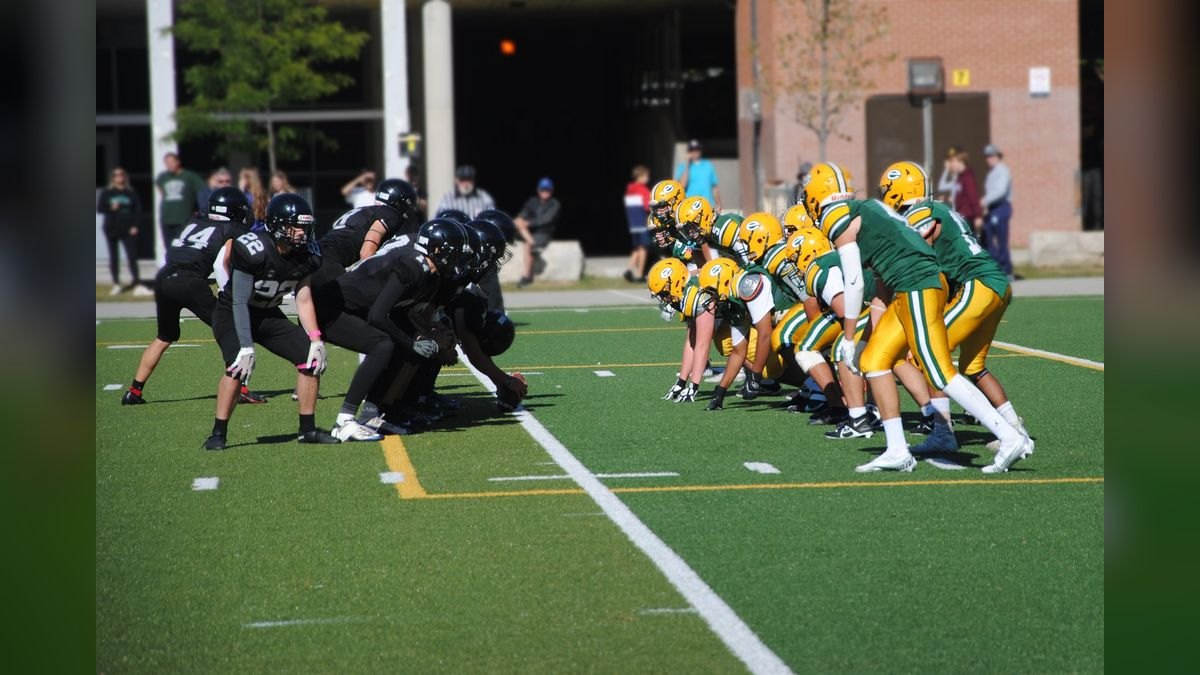
Stage one: attention. You have roughly the first 30 seconds before the room decides whether this is a meeting to be present for or a meeting to be endured. Attention is bought two ways: silence — waiting for the room rather than talking over it — and specificity in the first sentence. "Last quarter we lost the Henderson renewal in the final week" beats "let's talk about last quarter" by an enormous margin, because a specific fact signals that the next six minutes will contain information rather than framing.
Stage two: credibility. This is the stage most leaders skip, and skipping it is fatal. Credibility comes from naming the unflattering thing before anyone else does. Teams already know what went wrong; they discuss it in DMs and in the parking lot. When the leader says it out loud — including their own share of it — the gap between the official story and the real story closes, and everything said afterward gets evaluated as honest by default. When that gap stays open, every subsequent claim is discounted at a steep rate. This is precisely why "we had a great quarter" delivered to a team that missed by 18% actively destroys the rest of the Speech.
Stage three: clarity. One priority, stated in behavioral terms, with a threshold and a date attached. Not "improve pipeline quality" but "every opportunity over $50K has three logged contacts by end of week four." The test is simple: if you stopped ten people in the hallway an hour later and asked what the priority is, would eight of them say the same sentence? Under three clauses, that number stays high. Past three clauses, it collapses fast.
Stage four: reciprocity. The team has just been asked for something. If nothing is offered back, the Speech is an extraction and reads as one. The reciprocal promise — what you will remove, defend, or disclose — is the single most underused move in quarterly kickoffs and the one that most reliably converts compliance into commitment. It has to be specific and genuinely costly to you: a meeting you are canceling, an approval you are absorbing, a truth you are committing to tell on a fixed cadence whether or not it flatters you.

The dotted failure edges matter as much as the main path. A Speech that jumps straight from attention to the priority produces a room that heard the words and does not believe them. A Speech that names five priorities produces a room where every person silently selects the one they were already good at, which is the same as no direction at all.
Real numbers, ranges, and benchmarks
Kickoff speeches have a physics to them, and most failures are dimensional — wrong length, wrong count, wrong cadence. Practical ranges that hold up in real revenue organizations:
Length: five to eight minutes for the Speech proper. At a normal speaking pace of 130–150 words per minute, that is roughly 650–1,200 spoken words. Under four minutes and the reciprocal promise almost always gets cut, which guts the whole thing. Past ten minutes you are no longer giving a Speech, you are giving a briefing, and the emotional arc flattens out. If the full kickoff meeting runs 60 minutes, the Speech should occupy 8–12% of it, with the balance going to functional detail and open questions.

Priorities: exactly one. Not a range. The reason is retention, not aesthetics — a single behavioral instruction with a threshold survives a week in working memory; three compete with each other; five decay into ambient noise within days. If your leadership team insists on more, the correct construction is one *priority* plus up to three *commitments* that ladder into it, clearly subordinate and clearly labeled as subordinate.
Supporting commitments: two to three maximum, each with a named owner and a numeric threshold. An example set for a revenue org running a multithreading quarter: (1) every opportunity above $50K carries three named contacts with logged activity by end of week four — owner: sales ops, tracked in CRM; (2) each rep runs twelve discovery conversations per week, floor not target — owner: frontline managers; (3) every top-20 account gets one executive-level touch by week six — owner: the VP personally. Each of those is checkable on a dashboard without convening a meeting to interpret it.
Recognition: one to three named people, maximum. Naming one person for one specific act — "Priya rebuilt the demo environment the night before the Q3 renewal call" — lands hard. Naming twelve people generically produces a list nobody listens to and quiet resentment from the thirteenth. Recognition should function as *evidence for your argument*, not as ceremony: name the person whose behavior already is the priority you are about to declare.
Numbers to disclose: the actual and the target, both, to the dollar or the point. "We closed $4.1M against $4.6M" beats "we came up a bit short." If you feel uncomfortable saying the real number out loud, that discomfort is the signal that saying it is exactly what buys you the room. Directional framing is acceptable for forward-looking figures that are genuinely unconfirmed — but never round the past in your own favor, because someone in that room has the dashboard open.

Q&A: ten to twenty minutes after the Speech, and do not skip it. A Speech that draws no questions has usually failed rather than succeeded; silence typically means the room did not feel safe or did not care. Seed it if you have to — ask a manager in advance to open with a real question. If time genuinely runs out, commit to a written follow-up within 48 hours and then actually hold that.
Follow-up: written summary within 24 hours, three lines long. The priority, the commitments with owners, the closing phrase. If your summary needs a second page, your Speech had too much in it and you now know that for next quarter.
Rehearsal: three full out-loud runs minimum, one of them recorded. Reading a Speech silently never surfaces the sentence that takes fourteen words to do what six would. The recording is where you discover you say "obviously" nine times, or that your voice drops at the end of every sentence containing a number — which is exactly the sentence that needs to land.

Cadence for reinforcement: every two weeks, 60 seconds. The most common failure of all is treating the Kickoff as a one-time event. The priority needs restating at the top of the biweekly team meeting in one sentence with the current number attached, for the full 90 days. That is roughly six restatements across a quarter, each under a minute. Without them, measurable decay begins around day twelve.
Trade-offs and alternatives
Every choice in a kickoff Speech trades something away. Knowing which trade you are making is what separates a deliberate Speech from an accidental one.
Honesty versus short-term morale. Naming a miss costs energy in the room for about 90 seconds and buys credibility for the remaining 89 days. The trade is almost always worth taking, with one real exception: if the team has just been through layoffs or a genuinely brutal quarter and the failure has already been discussed to exhaustion, re-litigating it is not honesty, it is grinding. In that case the acknowledgment should be a single sentence — "That was hard and you showed up anyway" — and the weight shifts to what changes structurally rather than what went wrong.
One priority versus organizational reality. A real business has more than one thing that matters, and the executives above you may have handed down four. The honest resolution is not to pretend the other three vanished overnight. It is to say so out loud: "There are four things on the company scorecard. Three of them we handle in the normal course of business, and I'll cover them in the ops review Thursday. In this room, for the next 90 days, we optimize for one." That sentence protects clarity without lying about the environment everyone can already see.

Live Speech versus recorded video. A live all-hands creates shared emotional state; recorded video does not, but it scales and it survives time zones. For a team under roughly 60 people spanning two or fewer time zones, live is materially better. Past that, the common failure is one leader broadcasting to 300 people who mostly cannot see their face. The stronger pattern at scale is a cascade: the leader delivers the Speech to eight to fifteen direct reports, hands them the exact priority sentence and the commitments verbatim, and each of them delivers it to their own team within 72 hours. You lose some fidelity of delivery and gain enormously from rooms small enough for real questions.
Aspirational framing versus operational framing. "Best quarter this team has ever had" is aspirational — it moves people already inclined to be moved and reads as noise to skeptics. "Three named contacts on every deal over $50K by week four" is operational — unambiguous, checkable, and it moves skeptics precisely because it can be argued with. Most speeches over-index on aspiration. A stronger ratio is roughly one aspirational sentence for every three operational ones, with the aspiration reserved for the opening and the closing line.
Slides versus no slides. Slides reduce delivery risk and reduce emotional impact in roughly equal measure. If you use them: three slides maximum — the priority, the commitments with owners, the closing phrase — and no bullet lists anywhere. If your slides can be read without you, the room will read them instead of listening to you. For a leader genuinely uncomfortable speaking without support, three slides is a fair trade for the steadiness they buy.

A Rally Speech versus no Speech at all. Sometimes the correct call is to skip it entirely. If the quarter's plan is genuinely unchanged and the team is executing well, a mandatory Rally reads as theater and costs you credibility. Send a three-line written note instead and save the room for a quarter that actually needs it. Speeches are a finite currency; a leader who delivers a stirring one every 90 days regardless of whether anything changed will find that by the fourth one, nobody is listening.
Common pitfalls and how to avoid them
The five-priority Speech. By far the most common failure. It happens because the leader is managing upward — every priority on the slide is one they were handed and are afraid to be seen dropping. The fix is the explicit subordination sentence above: name the other priorities, assign them to a different forum with a date, and reclaim this room for one. If you cannot bring yourself to do that, at minimum rank them out loud and say which one you would protect if you could only protect one.
The fabricated number. A leader inflates a target, invents a market statistic, or attributes a quote to a study they have not read. Revenue teams contain people who will look it up during the Speech. One fabricated figure costs the credibility of every real figure in the room. If you do not know the number, say "I don't have that number, I'll have it Thursday" — that sentence costs nothing and pays for itself the moment you deliver on Thursday.
Spin in the opening. "Mixed bag," "some headwinds," "not where we wanted to be but a lot of positives" — these are heard as evasion and they set the register for everything that follows. Replace them with the actual figure and the actual cause. The rule: if your first sentence could have been said about any quarter at any company, it is the wrong first sentence.

No reciprocal promise. The Speech asks for more effort and offers nothing in return. That is the difference between a Rally and an extraction, and teams tell them apart instantly. The promise has to cost you something visible — a meeting you cancel, an approval you absorb, a commitment to disclose the number on a fixed cadence even when it is ugly.
Recognition as a roll call. Naming everyone to avoid leaving anyone out flattens into noise, and the specific contributions get lost inside the list. Name one to three people for specific acts, and if you are worried about the people you did not name, send individual notes afterward — a private, specific note lands better than being item nine on a slide anyway.
Ending with "any questions?" into silence. Predictable and entirely avoidable. Ask a manager beforehand to open with a real, slightly uncomfortable question; one genuine question makes the second and third far likelier. Alternatively, end with a directed question — "Who has the biggest reason this won't work?" — which gives explicit permission for the objection already sitting in the room.

No action before people leave. Energy in a room has a half-life measured in hours. The counter is a small, immediate, physical action: write one personal commitment for the quarter and hand it to the person next to you; post your name and your number in the channel before you close your laptop. It takes 90 seconds and converts a feeling into a record.
Delivery over-effort. Volume is not energy. Shouting reads as performance; a steady, certain voice about a half-step warmer than your normal register carries much further. Slow down deliberately for the priority sentence — say it, then stop, and let three full seconds of silence sit there. That pause does more work than any adjective you could add.
Treating it as a one-time event. The single largest source of decay. A Speech delivered once and never referenced again is entertainment. Sixty seconds at the top of every biweekly meeting, restating the priority with the current number attached, is what makes the 90 days actually operate differently. Put those six restatements on your calendar the same day you give the Speech, before the energy fades.
Ignoring the newest people in the room. A quarter of your audience may have zero context for the story you are telling. One sentence of orientation — "for those who joined recently, last quarter we rebuilt how we qualify" — costs three seconds and prevents a fifth of the room from tuning out in the first minute.
Related questions
How do you rally a team that is openly skeptical after a missed quarter?
Name the skepticism out loud before anyone else raises it, take your specific share of the miss, then make the reciprocal promise structural rather than emotional — a meeting removed, an approval absorbed, a fixed cadence of honest numbers. Skeptics respond to changed mechanics, not to renewed enthusiasm.
What if leadership hands you four company priorities?
Say so explicitly. Acknowledge all four, route three of them to a different forum with a date attached, and declare that this room optimizes for one over the next 90 days. That preserves clarity without pretending the other priorities disappeared, which nobody would have believed anyway.
Should the Speech include individual recognition?
Yes — one to three people, each for a specific act, chosen because their behavior demonstrates the priority you are about to declare. Recognition then functions as evidence rather than ceremony. Send private notes to everyone else instead of extending the list until it stops meaning anything.
How do you adapt a kickoff Speech for a distributed team?
Keep it to four or five minutes on video, put the single priority on one visible slide, call on people by name rather than waiting for volunteers, and use chat for real-time reactions. Follow with a written three-line summary within 24 hours so time-shifted people get identical wording.
How long does the energy from a kickoff Speech actually last?
Roughly a week to twelve days without reinforcement. That is why the biweekly 60-second restatement matters more than the Speech's polish — six short reinforcements across a quarter keep the priority operational, while a single brilliant Speech decays before the first month closes.
FAQ
How long should a team kickoff Speech be?
Five to eight minutes for the Speech itself, which is roughly 650–1,200 spoken words at a normal pace. If the full Kickoff meeting runs an hour, the Speech should be about 8–12% of it, with the rest going to functional detail and open Q&A. A two-minute compressed version works for a stand-up format, but at that length you must still keep the reciprocal promise — cut the recognition instead.
What is the best way to open?
With silence, then a specific fact. Wait until side conversations stop — ten seconds feels endless and works — then open with a real number or a real event from last quarter. "We closed $4.1 million against $4.6 million" earns attention instantly. Generic openings like "I hope everyone had a good weekend" signal that the next several minutes are optional listening.
Should I share exact revenue targets?
Share last quarter's actual and target precisely — rounding the past in your own favor is the fastest way to lose the room. For forward-looking figures that genuinely are not locked yet, directional framing is honest and acceptable. Either way, translate the number into the behavior that produces it, because a target alone gives nobody an instruction they can act on tomorrow morning.
How do I address underperformance without demoralizing the team?
Name it once, precisely, include your own share of the cause, and then move on. "We missed by $500K, and two of those deals were slipping in week three while I wasn't asking the right questions in forecast calls" takes eight seconds and buys the entire rest of the Speech. Never single out individuals for the miss; do single out individuals for wins.
What tone works best?
Steady and specific, warmer than your normal register by about half a step, and never loud. Volume reads as performance; certainty reads as leadership. Use "we" for the goal and "I" for the accountability — the inversion of that ("I set the target, we missed it") is the tonal tell of a leader deflecting, and rooms catch it immediately.
What makes a kickoff Speech memorable a month later?
One repeatable phrase short enough for a whiteboard or a Slack channel name, said three times during the Speech, plus an action people take before they leave the room. Then sixty seconds of restatement at the top of every biweekly meeting for the full 90 days. Memorability is mostly repetition on a schedule, not eloquence on a Monday.
Sources
- Harvard Business Review — Leadership Communication
- Nancy Duarte: The Secret Structure of Great Talks (TED)
- Simon Sinek: How Great Leaders Inspire Action (TED)
- SHRM — Employee Engagement
- Gallup — Employee Engagement Research
- MIT Sloan Management Review — Leadership
- McKinsey & Company — People & Organizational Performance
- Toastmasters International — Public Speaking Tips
Related on PULSE
- [A Speech for a Team Offsite Kickoff](/knowledge/sp0195)
- [A New Manager’s First Speech to the Team](/knowledge/sp0097)
- [A Speech for a Sales Kickoff](/knowledge/sp0190)
- [A Motivational Speech for a Sales Team](/knowledge/sp0056)
- [A Welcome Speech for a New Neighbor Gathering](/knowledge/sp0093)
- [A Speech to Welcome New Members to a Club](/knowledge/sp0071)
@Kory-White- · if Venmo asks, the last 4 of my number are 2012
 pulse-moviesTop 10 Movies on Netflix 2027
 pulse-moviesTop 10 Movies on Max 2027
 pulse-moviesTop 10 Fantasy Movies of All Time in 2027
 pulse-moviesTop 10 Documentaries of All Time in 2027
 pulse-moviesTop 10 Superhero Movies of All Time in 2027
 pulse-moviesTop 10 Romance Movies of All Time in 2027
 pulse-moviesTop 10 Westerns of All Time in 2027
 pulse-moviesTop 10 Musical Movies of All Time in 2027
 pulse-moviesTop 10 Thriller Movies of All Time in 2027
 pulse-moviesTop 10 Crime Movies of All Time in 2027