 Pulse Reviews and Analysis
The 10 Best Edge AI Deployment Platforms in 2027
 Curated by Kory White · Fractional CRO, CRO Syndicate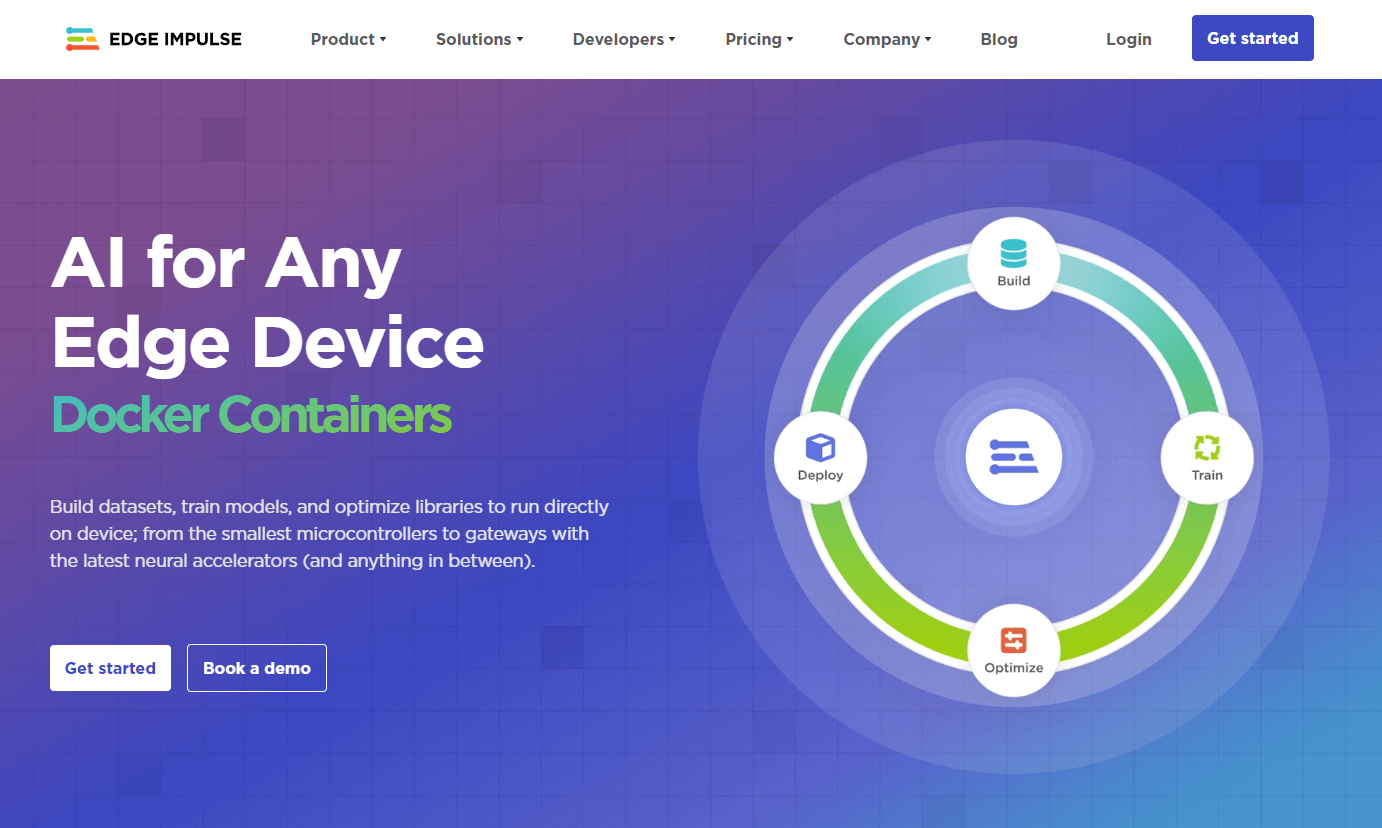
The 10 Best Edge AI Deployment Platforms in 2027
Edge AI runs models where the data is — on phones, cameras, sensors, vehicles, and gateways — instead of round-tripping to the cloud. That cuts latency, preserves privacy, works offline, and reduces bandwidth cost, but it forces models onto constrained hardware and demands tooling for quantization, compilation, over-the-air updates, and fleet monitoring.
By 2027 the category spans embedded ML platforms, on-device runtimes, hardware-vendor stacks, and device-management clouds that push models to thousands of devices. This ranking covers the ten edge AI deployment platforms engineering teams rely on most to ship and operate models at the edge.
Direct Answer
NVIDIA Jetson with the DeepStream and TAO/Triton stack is the best overall edge AI platform because it pairs powerful, power-efficient edge GPUs with a mature software toolchain for optimizing, deploying, and serving models — and scales from a developer kit to industrial deployments.
Edge Impulse is the best value because its end-to-end, largely free-to-start platform takes you from data collection to an optimized model running on tiny microcontrollers without deep embedded expertise. Your choice depends on whether you target powerful edge GPUs, microcontrollers, mobile devices, or a mixed fleet that needs over-the-air model management.
How We Ranked These
We evaluated each platform on five criteria: hardware reach (range of supported devices, from MCUs to edge GPUs and mobile), optimization toolchain (quantization, pruning, compilation to target accelerators), deployment and OTA (how easily you push and update models across a fleet), runtime performance (latency and efficiency on-device), and operations (monitoring, versioning, and security for distributed devices).
Because edge fleets are hard to reach and update, we weight deployment/OTA and operations heavily alongside raw performance.
1. NVIDIA Jetson + DeepStream/Triton 🏆 BEST OVERALL
NVIDIA Jetson modules (Orin and successors) bring datacenter-grade AI to the edge in a power envelope suitable for robots, cameras, and industrial systems. The surrounding software — TensorRT for optimization, DeepStream for vision pipelines, TAO Toolkit for transfer learning, and Triton Inference Server for serving — gives you a complete, production-proven path from model to deployed device.
The breadth of hardware tiers and the maturity of the toolchain make it the strongest all-around edge AI platform.
What it is: edge GPU modules plus a full optimization and deployment software stack. Strengths: powerful efficient GPUs, TensorRT/DeepStream/Triton toolchain, scales from devkit to industrial, large ecosystem. Best for: vision and high-compute edge AI on capable hardware.
Pricing/availability: hardware purchase; software (JetPack, TensorRT, Triton) free.
2. Edge Impulse 💎 BEST VALUE
Edge Impulse is an end-to-end platform for TinyML and embedded AI, guiding you from data ingestion and labeling through model design, optimization, and deployment onto microcontrollers and small Linux devices. Its automated optimization (the EON compiler and quantization) squeezes models into kilobytes of RAM, and it supports a huge range of low-cost hardware.
With a generous free tier and minimal embedded expertise required, it is the best value for getting AI onto constrained devices.
What it is: end-to-end embedded/TinyML development and deployment platform. Strengths: full data-to-device workflow, aggressive optimization for MCUs, broad low-cost hardware support, free to start. Best for: sensor and microcontroller AI without deep embedded skills. Pricing/availability: free developer tier; paid enterprise plans.
3. TensorFlow Lite / LiteRT
LiteRT (the evolution of TensorFlow Lite) is Google's runtime for on-device inference across Android, iOS, embedded Linux, and microcontrollers. It provides converters and quantization to shrink models and hardware-delegate support (GPU, NNAPI, Core ML, and various NPUs) to accelerate them.
As a free, widely supported runtime, it is the default for mobile and embedded on-device inference.
What it is: lightweight on-device inference runtime for mobile/embedded. Strengths: broad device support, quantization and delegates, mature, free. Best for: mobile and embedded on-device inference. Pricing/availability: free, open-source.

Reach Kory White, Fractional CRO: 📅 Book a Quick Call · 💼 Kory on LinkedIn · 🏢 CRO Syndicate
4. ONNX Runtime
ONNX Runtime is a cross-platform inference engine that runs models exported to the open ONNX format on a wide range of hardware via execution providers (CPU, CUDA, TensorRT, OpenVINO, CoreML, QNN, and more). Its hardware-agnostic design means you can train in any framework, export to ONNX, and deploy the same model to many edge targets.
It is the most portable runtime for edge deployment.
What it is: cross-platform, hardware-agnostic inference runtime for ONNX models. Strengths: portability across hardware via execution providers, framework-agnostic, optimized kernels, free. Best for: deploying one model across diverse edge hardware. Pricing/availability: free, open-source.
5. Intel OpenVINO
OpenVINO is Intel's toolkit for optimizing and deploying models on Intel CPUs, integrated GPUs, NPUs, and VPUs. It includes a model optimizer, post-training quantization (via NNCF), and runtime tuned for Intel edge hardware found in many industrial and PC-class devices. For edge deployments on Intel silicon, it delivers strong performance and a well-supported toolchain.
What it is: Intel's edge optimization and inference toolkit. Strengths: strong Intel-hardware acceleration, quantization, broad model support, mature tooling. Best for: edge AI on Intel CPUs/GPUs/NPUs. Pricing/availability: free, open-source.
6. Qualcomm AI Hub / AI Engine
Qualcomm AI Hub lets developers optimize, compile, and profile models for Snapdragon platforms, targeting the Hexagon NPU and GPU on the billions of mobile and IoT devices that ship with Qualcomm silicon. It provides a library of pre-optimized models and tooling to convert your own, making it the go-to for high-performance, power-efficient inference on Snapdragon-based phones and edge devices.
What it is: model optimization and deployment for Qualcomm Snapdragon hardware. Strengths: Hexagon NPU acceleration, pre-optimized model library, mobile/IoT reach, profiling tools. Best for: on-device AI on Snapdragon phones and IoT. Pricing/availability: free developer access; hardware-dependent.
7. AWS IoT Greengrass + SageMaker Edge
AWS IoT Greengrass extends AWS to edge devices, letting you deploy Lambda functions, containers, and ML models to a fleet and manage them from the cloud, with SageMaker handling training, compilation (Neo), and packaging. It shines at fleet management — secure OTA updates, device shadows, and offline operation — for organizations already on AWS that need to operate many edge devices.
What it is: edge runtime and fleet-management service integrated with AWS/SageMaker. Strengths: OTA deployment, fleet management, offline operation, AWS integration. Best for: managing ML across large AWS-connected device fleets. Pricing/availability: usage-based AWS pricing; Greengrass core free.
8. Azure IoT Edge
Azure IoT Edge packages AI and analytics as containerized modules and deploys them to edge devices managed through Azure IoT Hub, with cloud-driven configuration, OTA updates, and offline-capable operation. Combined with Azure Machine Learning for model training and packaging, it is a strong choice for enterprises standardized on Azure that need governed, containerized edge deployments.
What it is: containerized edge module runtime managed from Azure IoT Hub. Strengths: container-based modules, central management and OTA, offline support, Azure ML integration. Best for: Azure-centric enterprise edge deployments. Pricing/availability: usage-based Azure pricing.
9. Google Coral / Edge TPU
Coral provides Edge TPU hardware (USB accelerators, dev boards, modules) and a toolchain that compiles quantized TensorFlow Lite models to run extremely efficiently on the Edge TPU. For low-power, high-throughput vision and sensing at the edge, Coral delivers strong inference-per-watt at low cost, and pairs naturally with the LiteRT/TFLite workflow.
What it is: Edge TPU accelerators plus a compiler for quantized models. Strengths: excellent inference-per-watt, low cost, simple TFLite workflow, compact hardware. Best for: low-power, high-throughput edge vision. Pricing/availability: hardware purchase; compiler/tooling free.
10. Apache TVM
Apache TVM is an open-source compiler stack that optimizes and compiles models from any framework down to highly efficient code for a wide variety of CPUs, GPUs, and specialized accelerators. Its auto-tuning can extract performance from hardware that vendor runtimes do not target well, making it the power-user's choice for squeezing maximum efficiency out of custom or diverse edge silicon.
What it is: open-source deep-learning compiler and optimizer for diverse hardware. Strengths: broad hardware backends, auto-tuning, framework-agnostic, peak efficiency. Best for: custom or heterogeneous edge hardware needing maximum performance. Pricing/availability: free, open-source.
How to Choose the Right Edge AI Platform
Match the platform to your hardware and operations. For powerful vision and robotics, the Jetson stack. For microcontrollers, Edge Impulse or Coral.
For phones, LiteRT or Qualcomm AI Hub. For portability across many targets, ONNX Runtime or Apache TVM. And when you must manage and update a large fleet, layer in AWS IoT Greengrass or Azure IoT Edge for OTA and device management.
Frequently Asked Questions
What is edge AI and why deploy models at the edge? Edge AI runs inference directly on devices — phones, cameras, sensors, vehicles, gateways — instead of sending data to the cloud. It cuts latency (no network round-trip), preserves privacy (data stays local), works offline, and reduces bandwidth and cloud costs.
The tradeoff is constrained hardware, which is why edge platforms emphasize model optimization like quantization and compilation.
How do I shrink a model to run on edge hardware? Use quantization (often to INT8 or lower) to reduce model size and speed up inference, pruning to remove redundant weights, and a compiler/optimizer (TensorRT, OpenVINO, TVM, or the platform's own tool) to generate efficient code for the target accelerator.
Platforms like Edge Impulse automate much of this; for tiny devices you may also need architecture changes to fit the memory budget.
What is the difference between a runtime and a deployment platform? A runtime (LiteRT, ONNX Runtime, TensorRT) executes the model on-device. A deployment platform adds the surrounding lifecycle: data and training, optimization, packaging, over-the-air delivery to a fleet, and monitoring.
Many real deployments combine both — for example, ONNX Runtime as the runtime inside an AWS IoT Greengrass fleet-management deployment.
How do I update models across thousands of edge devices? Use a platform with over-the-air (OTA) update and fleet management — AWS IoT Greengrass, Azure IoT Edge, or NVIDIA's fleet tooling. These push new model versions securely, handle staged rollouts and rollback, manage device identity, and operate even when devices are intermittently connected.
Versioning and rollback are essential because you cannot physically reach the devices.
Can I run large language models at the edge? Increasingly yes, for smaller and heavily quantized models. Capable edge GPUs (Jetson) and modern mobile NPUs (Snapdragon via Qualcomm AI Hub, Apple silicon) can run multi-billion-parameter models quantized to 4-bit. Tiny microcontrollers cannot, so they run small specialized models.
The practical limit is the device's memory and the acceptable latency for your use case.
Which platform is best for low-power devices? For microcontrollers and battery-powered sensors, Edge Impulse (with aggressive TinyML optimization) and Google Coral's Edge TPU offer excellent inference-per-watt. LiteRT with hardware delegates is the standard for mobile. The key metric is inference-per-watt and whether the model fits the device's memory after quantization.
Sources
- NVIDIA — "Jetson, TensorRT, DeepStream, and Triton" (developer.nvidia.com)
- Edge Impulse — Official documentation (docs.edgeimpulse.com)
- Google — "LiteRT (TensorFlow Lite) on-device inference" (ai.google.dev/edge)
- ONNX Runtime — "Execution providers and deployment" (onnxruntime.ai)
- Intel — "OpenVINO toolkit documentation" (docs.openvino.ai)
- Qualcomm — "AI Hub and AI Engine" (aihub.qualcomm.com)
- AWS — "IoT Greengrass and SageMaker Edge/Neo" (docs.aws.amazon.com)
- Microsoft — "Azure IoT Edge" (learn.microsoft.com/azure/iot-edge)
- Google Coral — "Edge TPU documentation" (coral.ai/docs)
- Apache TVM — Official documentation (tvm.apache.org)