 Pulse Reviews and Analysis
How Do I Budget a Sushi Restaurant Buildout?

<svg xmlns="http://www.w3.org/2000/svg" viewBox="0 0 1200 340" role="img" aria-label="How Do I Budget a Sushi Restaurant Buildout? — PULSE Buildouts"><rect width="1200" height="340" fill="#EBE9DE"/><rect width="14" height="340" fill="#C0531F"/><text x="58" y="116" font-family="Arial,Helvetica,sans-serif" font-size="32" font-weight="800" letter-spacing="3" fill="#C0531F">PULSE BUILDOUTS · COMMERCIAL REAL ESTATE</text><text x="56" y="198" font-family="Arial,Helvetica,sans-serif" font-size="60" font-weight="800" fill="#2b2b2b">Save money.
Don’t get screwed.</text><text x="58" y="258" font-family="Arial,Helvetica,sans-serif" font-size="30" font-weight="600" fill="#6b5b4d">Leases, TI, NNN & buildouts — negotiated in your favor</text><g transform="translate(1010,86)" fill="none" stroke="#C0531F" stroke-width="9" stroke-linejoin="round"><rect x="20" y="40" width="150" height="130"/><line x1="20" y1="40" x2="95" y2="6"/><line x1="170" y1="40" x2="95" y2="6"/><rect x="50" y="80" width="36" height="36"/><rect x="104" y="80" width="36" height="36"/><rect x="74" y="128" width="42" height="42"/></g></svg>
How Do I Budget a Sushi Restaurant Buildout?
Budget $300,000 to $900,000 for a sushi restaurant buildout, and understand that sushi is a refrigeration-and-fish-handling business with a full restaurant kitchen bolted on — that dual cost structure is why it runs higher than most quick-service food concepts. A traditional sushi bar in a 1,800 to 3,500 sq ft space needs a refrigerated sushi display case ($6,000–$20,000), multiple walk-in coolers ($8,000–$20,000 each) including a dedicated fish/seafood cooler held at 30–34°F, a blast chiller/freezer ($10,000–$30,000) for parasite-destruction freezing required by the FDA Food Code, plus a Type I hood ($20,000–$45,000) if you also run a hot kitchen for tempura, ramen, or robata.
The single biggest money move: get the fish cold chain right and inherited infrastructure delivered by the landlord — a former restaurant space with a working hood, grease interceptor, and adequate power can save $40,000–$90,000 versus building those into a raw bay. Plan $120–$250 per sq ft general construction (sushi restaurants skew design-heavy — the bar, millwork, and finishes carry the experience), and demand a TI allowance of $40–$80 per sq ft plus 6 months of free rent.
You get screwed when you fall for a beautiful raw shell, then learn the fish-grade refrigeration, blast freezer, hood, and high-end finishes blow past your budget — and when a landlord buries grease, drainage, and power upgrades in your scope instead of base building.
Why Sushi Costs More Than It Looks
Sushi carries three cost layers most concepts don't stack at once:
- Fish-grade cold chain. Raw seafood demands tighter temperature control than general food: a dedicated seafood walk-in at 30–34°F, a refrigerated sushi case at the bar, and a blast freezer capable of the FDA-mandated -4°F for 7 days (or -31°F for ~15 hours) parasite-destruction freezing for many species served raw. This is non-negotiable food-safety capital.
- A full hot kitchen, often. Most modern sushi restaurants also run tempura, ramen, robata, or hibachi, which means a Type I hood, fryers, ranges, and gas service on top of the cold side.
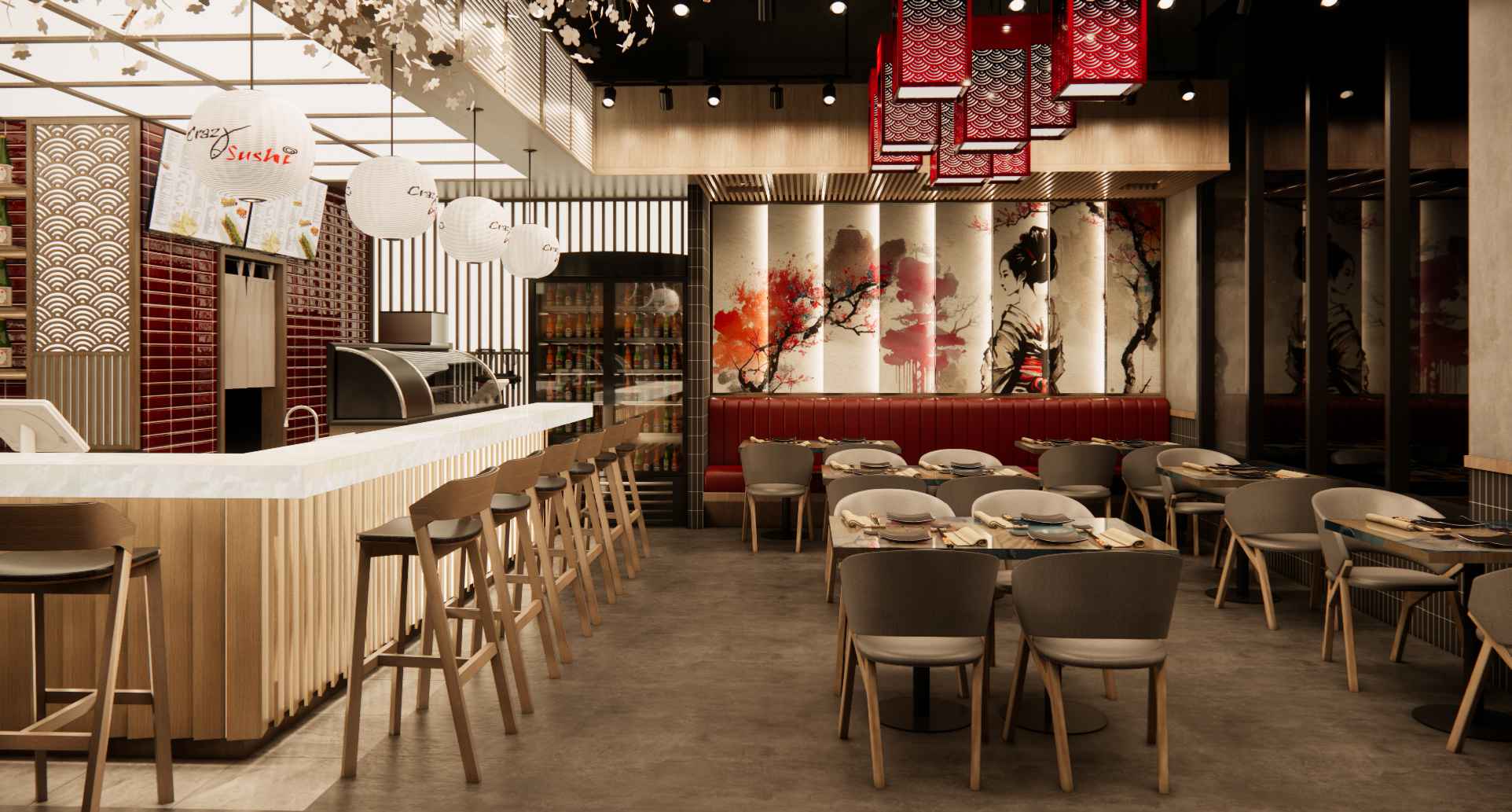
- Design-driven finishes. The sushi bar itself, millwork, lighting, and dining-room finishes are the product experience. Sushi rooms commonly spend $150–$250 per sq ft because guests pay for ambiance, not just fish.
Where The Money Goes In A 2,500 Sq Ft Restaurant
- General construction + finishes: $200,000–$450,000. The sushi bar, millwork, sealed floors, dining room, restrooms, and design finishes.
- Refrigeration + cold chain: $50,000–$130,000. Seafood walk-in, general walk-in, reach-ins, sushi display case, blast chiller/freezer.
- Hood, exhaust, fire suppression (if hot kitchen): $25,000–$55,000.
- Kitchen + bar equipment: $40,000–$110,000. Rice cookers/warmers, prep tables, fryers, ranges, dishwashing, possible liquor bar.
- Plumbing + gas + electrical: $25,000–$70,000. Grease interceptor, floor drains, dedicated circuits, gas upsize.
- POS, FF&E, signage, seating: $30,000–$85,000.
The most-skipped must-have is the blast freezer for parasite-destruction freezing. Serving many raw species without documented freezing (or a compliant supplier letter) is a health-code and liability failure. Either buy the blast freezer or build your menu around suppliers who provide the required freezing documentation — decide before you finalize the cold-storage plan.
Don't Get Screwed By The Landlord
Sushi restaurants are high-investment, design-heavy, long-lease tenants — which means landlords want you but will also let you overpay for infrastructure if you're not careful. Protect yourself:
- Inherit or extract the kitchen infrastructure. Confirm whether the space has a Type I hood, grease interceptor, adequate gas, and power before the LOI. If not, push them to landlord work or a bigger TI allowance — building a hood and grease system into a raw bay can run $40,000–$90,000.
- Demand a real TI allowance and long free-rent period. Sushi buildouts take 16–28 weeks plus permitting. Negotiate $40–$80 per sq ft in TI and 6 months free rent; never carry full NNN on a half-year construction shell.
- Match lease term to your investment. A $500,000+ buildout needs a long primary term plus renewal options so you're not forced out before you amortize. Lock renewal options at pre-agreed rent or a capped escalation.
- Cap or strike the restoration clause. Removing a sushi bar, walk-ins, blast freezer, hood, and gas at lease-end can cost $50,000–$120,000. Strike it or cap it; the next operator wants a built restaurant.
- Audit CAM and pin down grease/seafood waste. Seafood waste and grease-trap pumping are real costs. Define who pays, cap controllable CAM growth at 3–5%, and reserve an annual audit right.
- Lock signage, patio, and exclusivity. If you're paying premium rent, get exclusive-use protection (no competing sushi tenant in the center) and your signage and patio rights in writing.
Phasing And Smart Savings
- Take a second-generation restaurant space. Inheriting a hood, grease trap, gas, and walk-in shells is the single largest savings lever — potentially $40,000–$90,000 and months off the schedule.
- Spend on the cold chain and the bar; save on back-of-house. Buy prep tables, dish machines, and dry storage shelving used at 40–60% off, but buy refrigeration, the blast freezer, and the sushi case new or factory-refurbished with warranties — the cold chain is your food-safety backbone.
- Decide blast-freezer vs. Supplier documentation early. If reliable suppliers provide compliant freezing letters, you may defer the in-house blast freezer and redirect that $10,000–$30,000 to the dining room.
- Order long-lead items on lease signing. Custom millwork, the sushi case, the hood, and walk-ins have the longest lead times.
- Hold a 12–15% contingency. Sushi-build surprises cluster in refrigeration, grease/drainage, and finish-level upgrades the landlord and designer keep nudging upward.
FAQ
How much does it cost to open a sushi restaurant? A full-service sushi restaurant typically costs $300,000 to $900,000 to build out depending on size, whether you run a hot kitchen, and the design level. Add $40,000–$100,000 for opening inventory, deposits, liquor licensing if applicable, and working capital.
Why is a sushi buildout more expensive than other restaurants? Sushi stacks three cost layers at once: a fish-grade cold chain (dedicated seafood walk-in, sushi case, and often a blast freezer), a full hot kitchen for tempura/ramen/robata with its hood and gas, and design-heavy finishes centered on the sushi bar.
Few concepts carry all three simultaneously.
Do I need a blast freezer for a sushi restaurant? If you serve many species raw, the FDA Food Code requires parasite-destruction freezing (commonly -4°F for 7 days or -31°F for about 15 hours), achieved with a blast freezer ($10,000–$30,000) or by sourcing from suppliers who provide compliant freezing documentation.
Resolve this before finalizing your cold-storage plan.
What temperature does a sushi fish cooler need to hold? Fresh seafood for raw service should be held very cold — typically a dedicated walk-in or reach-in at 30–34°F, colder than general food storage, often on ice. This dedicated cold zone is a core capital item and a frequent health-inspection focus.
How long does a sushi restaurant buildout take? Plan 16 to 28 weeks of construction plus 8 to 14 weeks of permitting and health/fire review, usually overlapping. Custom millwork, the sushi display case, the hood, and refrigeration are the longest-lead items, so order them the moment the lease is signed.