


Building a StoryBrand by Donald Miller — Cliff Notes Summary for Sellers
Quality
Certified
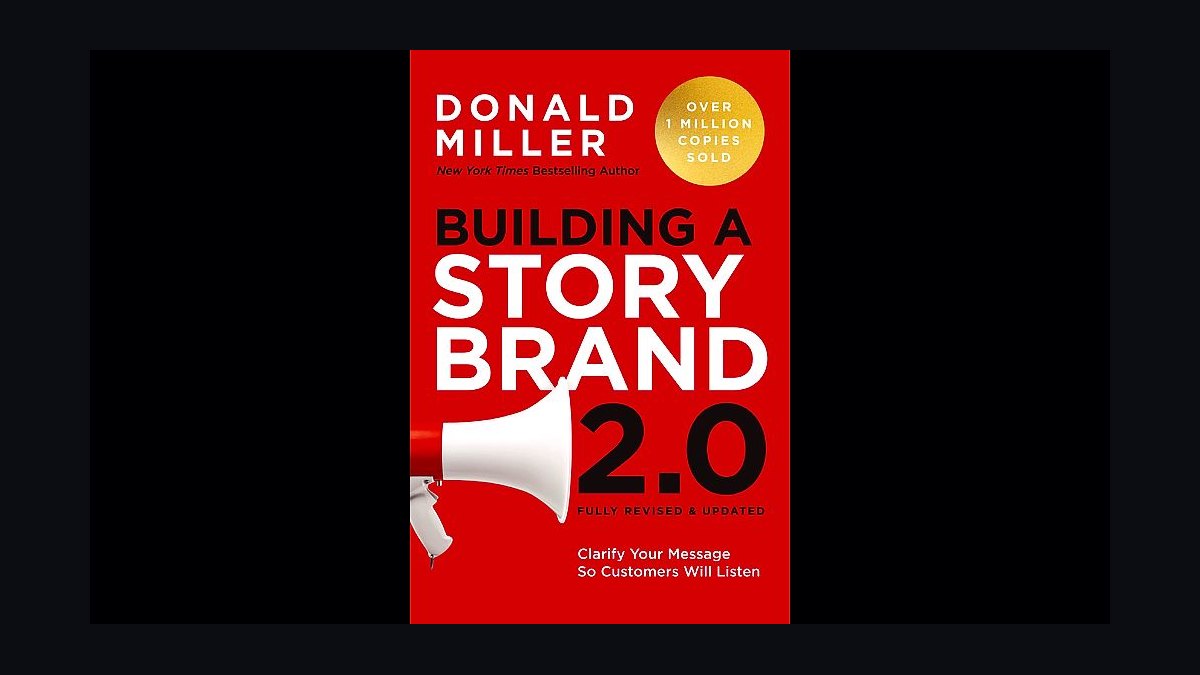
Building a StoryBrand by Donald Miller gives sellers a seven-part messaging strategy (SB7) where the buyer — never the brand — is the hero. This Cliff Notes Summary for Sellers distills it to one move: stop pitching features, and instead name the buyer's external, internal, and philosophical problems, then position yourself as the guide with a clear plan, a direct call to action, and a specific transformation.
The outcome you should expect
Apply the SB7 framework correctly for 60-90 days and the first measurable shift is not more leads — it is clearer conversion at every existing touchpoint. Discovery calls get shorter because the rep stops explaining the company and starts naming the buyer's situation back to them, which buyers interpret as competence. Demos restructure around a before/after state instead of a feature tour, and prospects start finishing sentences like "so this means we'd stop losing deals to..." without being prompted — that is the internal-problem language landing. Email open and reply rates on cold and warm outreach typically move first, because subject lines and openers that lead with the buyer's problem ("Still spending 15+ hours a week on manual forecast rollups?") outperform company-first openers ("Introducing our new forecasting platform") by a wide margin in most practitioners' informal testing, even without a controlled study to cite.
The second-order outcome is internal: sales and marketing stop arguing about messaging because the BrandScript becomes the single source of truth both teams write from. Proposals, one-pagers, and the homepage start repeating the same seven beats instead of drifting into five different descriptions of what the company does. Executive briefings get a spine — stakes and transformation at the close instead of a feature recap — which shortens the gap between "great meeting" and signed paper, because the economic buyer leaves with a specific cost of inaction instead of a vague sense that the product was impressive. None of this requires new tooling or budget; it requires rewriting what already exists through a different lens. The risk, covered later, is mistaking a clearer script for a guaranteed close — SB7 fixes clarity, not qualification, pricing, or timing, and a well-told story still cannot rescue a deal the buyer never had budget for.
What drives that outcome
The mechanism is entirely cognitive, not persuasive in the manipulative sense: human brains filter almost everything and conserve attention for messages that answer "will this help me survive or thrive" within a few seconds. Miller's claim — "if you confuse, you'll lose" — means any message spent on the company (founding year, headcount, awards) is attention stolen from the buyer's problem, and the buyer's brain discards it before it registers. The fix is structural, not stylistic: run every piece of copy, every opener, every deck through the same seven-beat skeleton so the buyer's brain recognizes the pattern it has responded to in every story it has ever consumed, from campfire tales to Pixar features.
The three problem levels do the heaviest lifting in this mechanism. The external problem is what the buyer says out loud ("our forecast is unreliable"). The internal problem is how that external problem makes them feel (anxious, exposed to the board, worried about looking incompetent), and it is almost always the real purchase driver — people buy relief from the feeling, not the spreadsheet fix. The philosophical problem is the moral frame, the reason it is simply wrong that the buyer has to deal with this at all ("no RevOps leader should have to guess at next quarter's number"). Messaging that only hits the external layer reads as a feature list; messaging that hits all three reads as understanding, and understanding is what earns the guide role Miller assigns to the seller — empathy plus authority, never hero plus sidekick.
Benchmarks and realistic ranges

Set expectations with real ranges rather than a single number. Building a first-draft BrandScript takes roughly two hours solo or a half-day as a team workshop; a usable, revised version takes another two hours of editing after the team reacts to the first draft out loud. Expect three to five internal revision rounds before copy stabilizes across homepage, deck, and email — this is normal, not a sign the framework failed. The Grunt Test — showing a one-pager to a stranger for ten seconds and asking what you offer, how it improves their life, and what they must do to buy — should get all three answered correctly by at least 8 of 10 strangers before copy ships; below that, the hero-not-guide reframe usually was not applied consistently.
Miller's cited figure that messaging addressing all three problem levels converts at 2-3x the rate of external-only messaging is directionally reliable and widely repeated across the StoryBrand-certified-guide community (10,000+ trained marketers), but it is not a controlled academic statistic and should be treated as a strong practitioner heuristic, not a number to put in a board deck. For sales application specifically, teams that rewrite their top-of-funnel email sequence around internal-problem openers commonly report reply-rate lifts in the 20-50% range within the first month, though this varies heavily by list quality and offer fit — a strategy this cheap to test is worth A/B testing on your own list rather than trusting any single benchmark. Plan structures should stay at 3-5 steps; every step beyond that measurably increases buyer hesitation in Miller's own consulting data, though he does not publish the underlying sample size.
Risks, edge cases, and failure modes
The single most common failure, even among teams that have read the book twice, is defaulting back to hero language under deadline pressure — "we are the leading provider of" creeps back into headlines because it is easier to write about yourself than to diagnose the buyer. The fix is mechanical: ban the word "we" as a sentence opener on anything buyer-facing, and force every headline to open with "you" or a verb describing what the buyer does or gets.

A second failure is addressing only the external problem because it is the easiest to research and the most comfortable to discuss in early-stage conversations — internal and philosophical problems require the rep to sit in genuine discomfort with the buyer's anxiety, which many reps skip past toward the pitch. A third, specific to B2B, is that Miller's examples skew consumer and small-business ("avoid being eaten by a saber-toothed tiger"), so translating stakes into enterprise language (a missed board forecast, a lost renewal, a churned logo) takes deliberate work the book does not do for you — lifting language verbatim without translating it reads as hollow to a sophisticated buyer. A fourth edge case: AI copy tools now generate StoryBrand-shaped drafts by default because the pattern is so heavily represented in training data, which means a generic AI draft can look correct structurally while still naming the wrong internal problem — the human judgment of which internal and philosophical problem is true for this specific buyer segment remains the bottleneck, and skipping it produces technically-formatted copy that still fails the Grunt Test. Finally, teams sometimes list three or four "wants" instead of committing to one singular desire per BrandScript; multiple competing wants fragment the narrative and the buyer disengages exactly the way Miller predicts when a homepage lists four benefits with equal weight.
A practical rollout plan
Start narrow rather than rewriting every asset simultaneously. In week one, build the BrandScript canvas for a single core offer — not the whole product line — and stress-test it with the Grunt Test on five people outside the company before touching any live copy. In week two, rewrite only the homepage hero section and the first 30 seconds of the standard discovery-call opener, since these are the highest-traffic, lowest-risk places to validate the new framing; measure reply/response behavior for two weeks before expanding further. In week three, rebuild the demo flow around the transformation arc (struggling-X to successful-Y) instead of a feature walkthrough, and add an explicit stakes paragraph to the executive-briefing template used in late-stage deals. In week four, extend the same seven-beat skeleton to cold email sequences and proposal templates, always leading with the internal problem before any mention of price or plan.

Treat this as a sales-enablement rollout, not a marketing redesign: train reps on the three problem levels specifically, since most objection-handling failures trace back to a rep who only ever diagnosed the external layer. Pair the rollout with a lightweight review cadence — every closed-lost deal in the first quarter gets checked against the BrandScript to see whether stakes or transformation language was actually used in the final call, not just the first one. This turns the framework from a one-time writing exercise into an ongoing diagnostic for why deals stall.
Related questions
Does StoryBrand replace a sales methodology like MEDDIC or SPIN?
No. StoryBrand shapes the words reps use; MEDDIC and SPIN shape the questions reps ask and the qualification logic. Most teams run both — SPIN or MEDDIC for process, SB7 for the actual language used in calls, decks, and emails.
Can a solo founder use StoryBrand without a marketing team?
Yes — the BrandScript worksheet is designed for one person to complete in about two hours, and solo founders are often Miller's primary audience since they write their own homepage and sales copy.
How is StoryBrand different from a brand positioning statement?
A positioning statement describes market category and differentiation for internal strategy use. A BrandScript is written to be spoken and read by the buyer directly — it is customer-facing copy, not an internal strategic document.
Does this apply to renewal and expansion conversations, not just new logos?
Yes — renewal conversations benefit heavily from restating the original transformation promised at the sale and naming the stakes of not expanding, which is often a weaker but still effective version of the original SB7 structure.
FAQ

Is StoryBrand only for marketing teams, or does it apply to sales? Both. The framework was written for marketers, but the application to live selling is direct: discovery openers, demo flow, executive briefings, proposals, and email outreach all benefit from the same seven elements, and many sales leaders find it more useful than their CRM's built-in sales methodology.
What is the difference between StoryBrand and Start with Why? Sinek argues brands should lead with purpose; Miller argues brands should lead with the buyer's problem. They are complementary — a company's "why" can become the philosophical-problem framing inside a StoryBrand. StoryBrand is the more tactical of the two.
How long does it take to build a usable BrandScript? A first draft takes about two hours, with another two hours of revision after the team reacts to it. Most teams run a half-day workshop and then let the output anchor marketing and sales copy for the next 12-24 months.
Is the framework still relevant now that AI tools generate copy automatically? Yes, arguably more so — AI tools default to StoryBrand-shaped drafts because the pattern is so common in training data, but identifying the buyer's true internal and philosophical problem still requires human judgment that AI cannot shortcut.
What is the single most common mistake teams make applying StoryBrand? Putting the company back in the hero role, usually under deadline pressure. The fix is mechanical: open every buyer-facing headline with "you" or a verb describing what the buyer does, never "we."
Should sellers read StoryBrand or Marketing Made Simple first? Read Building a StoryBrand first for the theory and the seven-element strategy, then Marketing Made Simple for the execution playbook — one-liner, lead magnet, and email sequences. Together they form a complete system for a working seller.
Sources
- https://storybrand.com
- https://www.harpercollinsleadership.com/9780718033323/building-a-storybrand/
- https://www.penguinrandomhouse.com/books/60774/start-with-why-by-simon-sinek/
- https://www.goodreads.com/book/show/32819651-building-a-storybrand
- https://chipheath.com/books/made-to-stick/
- https://www.aprildunford.com/obviously-awesome
- https://www.kindrahall.com/stories-that-stick
- https://www.goodreads.com/book/show/50446.The_Hero_with_a_Thousand_Faces
Related on PULSE
- ProActive Selling by William Miller — Cliff Notes Summary
- Outbounding by William Miller — Cliff Notes Summary
- Sticky Branding by Jeremy Miller — Cliff Notes Summary
- The New Conceptual Selling by Miller, Heiman & Tuleja — Cliff Notes Summary
- The New Strategic Selling by Miller & Heiman — Cliff Notes Summary & Key Takeaways
- The 12 Week Year by Brian Moran and Michael Lennington — Cliff Notes Summary for Sellers
This page will be disappearing soon. Save it to your device for $1 — or read it free while it is here.
@Kory-White- · if Venmo asks, the last 4 of my number are 2012
This page is gone.
This one is off the shelf now. $1 keeps it on your phone for good — the whole page, pictures and diagrams included.
 pulse-recentThe Collaborative Sale by Keith Eades — Top 10 Key Takeaways for Sales Leaders in 2027
 pulse-recentMonetizing Innovation by Madhavan Ramanujam — Top 10 Key Takeaways for Sales Leaders in 2027
 pulse-recentThe Greatest Salesman in the World by Og Mandino — Top 10 Key Takeaways for Sales Leaders in 2027
 pulse-recentSPIN Selling by Neil Rackham — Top 10 Key Takeaways for Sales Leaders in 2027
 pulse-recentHyper Sales Growth by Jack Daly — Top 10 Key Takeaways for Sales Leaders in 2027
 pulse-recentInsight Selling by Mike Schultz and John Doerr — Top 10 Key Takeaways for Sales Leaders in 2027
 pulse-recentStart with No by Jim Camp — Top 10 Key Takeaways for Sales Leaders in 2027
 pulse-recentSelling Above and Below the Line by Skip Miller — Top 10 Key Takeaways for Sales Leaders in 2027
 pulse-recentSnap Selling by Jill Konrath — Top 10 Key Takeaways for Sales Leaders in 2027
 pulse-recentWhat is the first concrete step in SPIN Selling by Neil Rackham for structuring a discovery call in 2027?