


They Ask, You Answer by Marcus Sheridan — Cliff Notes Summary
Quality
Certified
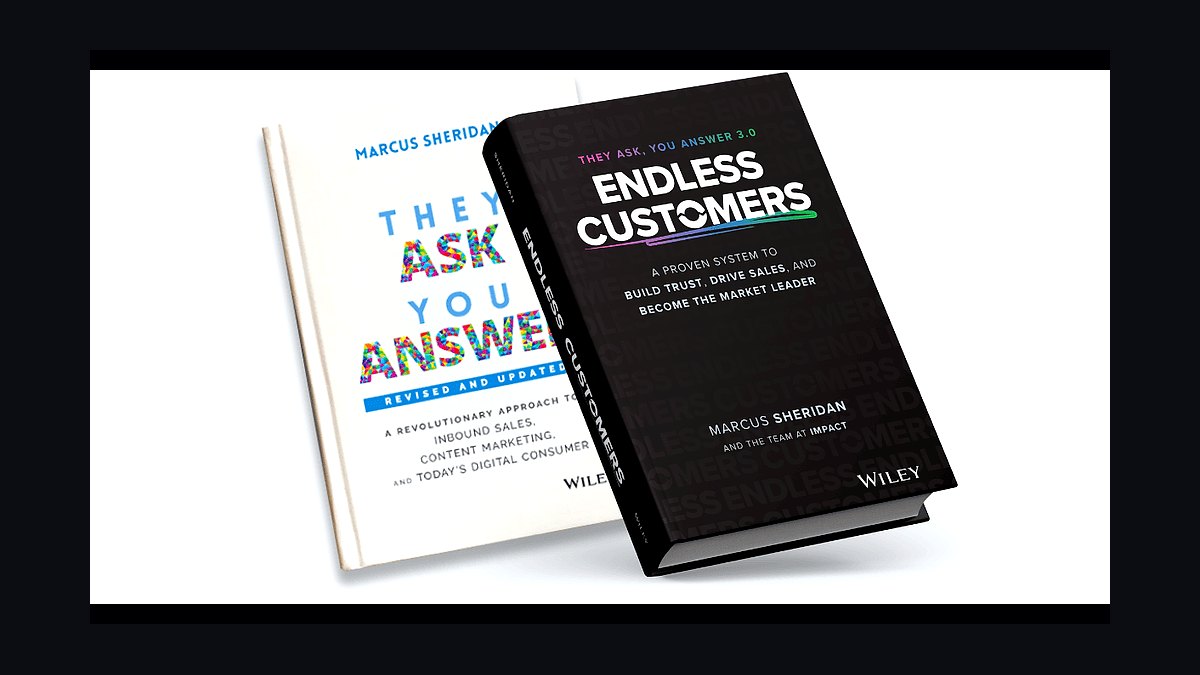
Marcus Sheridan's *They Ask, You Answer* argues that companies win buyers by publicly answering every question prospects ask — especially price, problems, and comparisons — instead of hiding that information behind a sales call. Sheridan proved the strategy at his own pool company during the 2008 crash, and this Summary distills the book's frameworks into a practical playbook any revenue team can run.
What it is and why it matters
Marcus Sheridan's book grew out of a real emergency, not a marketing theory exercise. In October 2008, his fiberglass pool installer, River Pools and Spas, faced $250,000 in deposit refund requests in a single week as the housing crash gutted consumer confidence. With no advertising budget left and radio spots, home shows, and Yellow Pages listings producing nothing, Sheridan made a decision that became the spine of the entire book: he stopped trying to interrupt strangers and started writing direct, honest answers to every question a buyer had ever asked him, in blog-post form, on the company website.
That habit — write down every question a customer asks on the phone, by email, or in the showroom, and publish an honest answer within days — is the literal meaning of the title. Sheridan treats "They Ask, You Answer" not as a slogan but as an operating rule: if a real buyer asked it, it goes on the public website, even if it is uncomfortable, even if a competitor might read it, and even if the sales team would rather save it for a call. Within about eighteen months of adopting this discipline, River Pools' organic search traffic surpassed every paid channel the company had ever run, and within a few years it was, by Sheridan's account, the most-trafficked swimming pool website in the world — while many competitors who kept information behind a "contact us for a quote" wall did not survive the downturn.

The deeper argument is about trust, not search engine optimization. Sheridan reframes marketing as a trust-manufacturing function: the reason transparent content converts is that it treats buyers like informed adults, and buyers reward that respect with attention, time on site, and eventually revenue. He backs this with research showing that modern buyers complete roughly 70 percent of their purchase decision before ever speaking to a salesperson — meaning a company's website, not its sales team, does most of the persuading. A company that refuses to publish pricing ranges, honest product downsides, or fair competitive comparisons does not stay neutral; it simply pushes that buyer to research the same questions on a competitor's site instead.
Out of this experience Sheridan distills The Big 5 — the five content categories he found, by analyzing which posts actually produced leads and revenue at River Pools, that every B2B or B2C company needs to cover: Cost and price, Problems, Versus/comparisons, Reviews, and Best-of lists. He later layers on The Selling 7, a set of content assets built specifically to shorten the sales cycle rather than to rank in search, and Assignment Selling, the sales technique of sending prospects specific articles or videos to read before a discovery call. Together these frameworks form a system that spans content strategy, the sales process, and company culture — which is why the book is read as much by sales leaders and CEOs as by marketers.
The step-by-step process (mermaid)

The book's mechanics run as a repeatable loop rather than a one-time content push. Sales and marketing start by pooling the actual questions buyers ask; that raw material becomes the editorial calendar; the resulting content both attracts new buyers organically and arms reps to pre-educate prospects before a call.
The Big 5 categories give the editorial calendar its shape. Cost and price content answers "how much does X cost" honestly, with ranges and the variables that drive them, rather than a single number — Sheridan's own *"How Much Does a Fiberglass Pool Cost?"* post is the proof point, credited with more than $3 million in tracked pool sales by 2015. Problems content gets ahead of "X problems" and "X disadvantages" searches by publishing the honest downsides of a product; River Pools' *"Top 5 Fiberglass Pool Problems and Solutions"* became one of its highest-converting pages because readers arrived pre-qualified. Versus/comparisons content answers "X vs Y" searches directly, including comparisons where the company's own product does not always win — Sheridan compared fiberglass to concrete and vinyl-liner pools and still attracted buyers who specifically wanted fiberglass, with their objections already handled. Reviews content aggregates third-party proof — Sheridan recommends a dedicated review hub pulling in sources like Google, G2, and Trustpilot, plus visible responses to negative reviews. Best-of content has the company publish its own curated "best X for Y" lists, even when it is not the obvious winner in every category, because buyers reward the curation and the SEO compounds regardless.
Once Big 5 content is attracting traffic, the Selling 7 assets convert attention into pipeline: a public pricing page with real numbers, a self-serve cost calculator, a quarterly-updated comparison guide against the top competitors, a comprehensive buyer's guide (ungated where possible), a named-customer success story video, a how-it-works product walkthrough under five minutes, and an objection-handling FAQ that doubles as a sales-enablement asset. The loop closes with Assignment Selling: before a discovery call, the rep sends the prospect three to five specific pieces of content with a request to review them first, so the prospect arrives roughly half-educated and the call can focus on fit and next steps rather than repeating information already on the website.
Costs, timelines, and typical ranges

Sheridan is specific about pace and investment, which is what makes the book usable as an operating plan rather than pure inspiration. He prescribes publishing two to three Big 5 articles per week for the first twelve months as the minimum cadence to see the flywheel take hold — companies that hold that rhythm tend to see organic traffic compound around month nine and lead volume compound around month twelve, according to his consulting experience at IMPACT.
The book lays out a rough first-year roadmap: months 1-3 get the Big 5 editorial calendar live and running at cadence; months 4-6 ship the Selling 7 sales assets (pricing page, calculator, comparison guide, and so on); months 7-9 roll Assignment Selling out to the sales team as a formal practice; and months 10-12 shift into measurement and optimization, using first-touch and multi-touch attribution — Sheridan recommends HubSpot or an equivalent CRM/marketing platform — around a single north-star metric: revenue influenced by content within 90 days of first touch.

On staffing, Sheridan sets concrete thresholds rather than vague advice. He argues any company doing more than $5 million in annual revenue needs at least one full-time content manager whose sole job is interviewing sales reps and writing and publishing the resulting content — and he provides a sample job description and salary range for the role. On video, the threshold is production volume: any company producing more than four videos per month needs an in-house videographer, because agency turnaround cannot sustainably keep pace with that cadence. He also argues the whole content function should be insourced rather than run through an agency, because an outside agency does not sit in on sales calls and cannot hear the buyer questions firsthand — agencies are better used for production amplification than for strategy or authorship.
The compounding argument extends past year one: Sheridan frames the content produced under this system as a moat — River Pools' archive, built continuously since 2009, represents well over a decade of accumulated search equity and buyer trust that a competitor cannot replicate without matching that multi-year investment. Assignment Selling's payoff is framed the same way, in cycle-time terms rather than dollars: Sheridan writes that the practice can cut the sales cycle roughly in half, and IMPACT's client work is cited as showing close rates improving two to three times faster once reps consistently send pre-call assignments instead of skipping straight to a pitch.
Where teams get it wrong
Sheridan is explicit that the methodology fails more often from internal politics than from external market conditions, and he catalogs the recurring failure patterns from years of consulting engagements.
The single biggest predictor of success or failure is CEO involvement. Sheridan argues the leader has to visibly champion the program for at least the first eighteen months; without that top-down commitment, the natural friction between sales and marketing departments — over who owns content, who gets credit for leads, and whose priorities the editorial calendar serves — tends to stall the initiative before it reaches the nine-to-twelve-month mark where results start to compound. A related trap is treating this as a marketing-only project. Because the best content comes directly from questions sales reps hear in live conversations, a program that marketing runs in isolation, without a structured weekly hand-off from sales, runs out of real material and drifts into generic, low-specificity posts that do not convert.

The second major failure mode is fear of competitor visibility — the objection that publishing pricing ranges or honest product downsides hands competitors a roadmap. Sheridan's counter, repeated throughout the book, is that competitors can already see this information by simply calling as a prospect; the only party actually disadvantaged by silence is the buyer, who is pushed to find the same answers somewhere else. He catalogs several other stock internal objections — "our pricing is too complex to explain," "legal will never approve this," "our sales team will lose control of the conversation" — and provides scripted rebuttals for each, because he found these objections recur nearly verbatim across industries.
The third failure mode is impatience. Because organic compounding tends to show up around month nine and lead-volume compounding around month twelve, teams that expect a quick win from a handful of posts frequently abandon the practice at month three or four, right before it would have started working. Sheridan treats this as the most avoidable failure, since the timeline is known in advance — companies that budget for a full year before judging results are far more likely to see the payoff. Related to this is a subtler trap the book flags directly: publishing content but never operationalizing Assignment Selling on the sales side. Content without a sales-side habit change captures search traffic, but a huge share of the cycle-time benefit Sheridan attributes to the methodology specifically comes from reps actively sending the content into live deals — a company that treats the two halves as separate initiatives captures only part of the value.
Decision framework: when to choose what (mermaid)

Not every company needs to build all of the Big 5 and Selling 7 assets simultaneously, and Sheridan's own rollout sequencing implies a practical decision framework for where to start and how to staff it as the program matures.
If a company has no content function at all, the first move is always the Big 5, starting with the two categories buyers search most aggressively and companies avoid most consistently: cost/price and problems. These require no new production capability — just a willingness to write down honest answers — and they are the fastest path to the initial traffic gains that justify further investment. Once Big 5 content is live and cadence is holding at two to three posts a week, the next decision is whether the sales team is ready for Assignment Selling; that only works once there is enough published material to assign, so it naturally follows rather than precedes the Big 5 buildout. The staffing decision follows revenue and production volume rather than calendar time: cross the $5 million revenue line and the case for a dedicated content manager becomes strong regardless of how long the program has been running; cross four videos a month in production and the case for an in-house videographer follows the same logic. Throughout, the book's implicit rule for outsourcing is binary — strategy and authorship stay in-house because only insiders hear the real buyer questions, while pure production and amplification work can safely go to an agency.
Related questions
What is the difference between the Big 5 and the Selling 7? The Big 5 (Cost, Problems, Versus, Reviews, Best Of) are organic-search-facing content categories meant to attract buyers. The Selling 7 are sales-facing assets — pricing pages, calculators, comparison guides — built to convert and shorten the sales cycle.
Does Assignment Selling require special software?
No. It is a sales habit: reps send existing Big 5 or Selling 7 content — links to articles or videos — to prospects before a scheduled call, typically by email, with no dedicated tooling required.
Can a small company with no content team use this method? Yes. Sheridan built the original version of this strategy with zero marketing budget; the method only requires someone willing to write down and answer real buyer questions consistently.
How is this different from generic content marketing advice? Most content marketing focuses on top-of-funnel topics designed to rank broadly. This method specifically targets the uncomfortable, high-intent questions — price, problems, competitors — that most companies avoid publishing, which is why Sheridan argues it converts at a higher rate.
Is there a follow-up book to They Ask, You Answer? Yes — Sheridan published *The Visual Sale* in 2020 as a companion focused on video methodology, extending the same transparency principle into video-based buyer communication.
FAQ
What exactly is the "They Ask, You Answer" method? It is a content approach where a company publicly answers every question its buyers ask, especially the uncomfortable ones about price, problems, and competitors. Marcus Sheridan proved this by writing blog posts for every customer query, turning his pool business into a leading industry resource during a period when most competitors had nothing to offer buyers online.
Does this method work for any industry, or just pools?

It applies to most B2B and B2C industries where buyers research online before purchasing, including home services, software, manufacturing, and professional services. Any field where trust and transparency influence a buying decision is a fit, because the underlying behavior — buyers Googling questions before talking to anyone — is not specific to pools.
How long does it take to see results from this approach? Results vary with content volume and consistency, but Sheridan's own experience and later consulting work point to meaningful traffic gains starting around month six to nine, with lead volume compounding closer to month twelve. Companies that stop before then typically abandon the method right before it would have paid off.
Do I need a large marketing budget to implement this? No. The method was born from having no marketing budget at all during the 2008 crash. It relies on existing team knowledge and consistent writing time rather than paid advertising or expensive tools, and many companies start with one person publishing two to three posts a week.
What are the hardest questions I should answer first? Price, cost comparisons, common problems, and honest competitor comparisons are the most commonly avoided yet most effective topics to publish first. Sheridan recommends starting with a direct cost article and an honest problems article, since those two categories tend to produce the fastest trust gains.
Is this book still relevant given how much marketing has changed? Yes. The core principle — directly and honestly answering the buyer's real question — has become more relevant as AI-driven search increasingly rewards content that answers questions precisely rather than content built purely to rank. The tactics around distribution have expanded since the book's release, but the underlying premise still holds.
Sources
- https://www.wiley.com/en-us/They+Ask%2C+You+Answer%3A+A+Revolutionary+Approach+to+Inbound+Sales%2C+Content+Marketing%2C+and+Today's+Digital+Consumer%2C+3rd+Edition-p-9781119610144
- https://www.impactplus.com/they-ask-you-answer-book
- https://www.hubspot.com/inbound-marketing
- https://www.gartner.com/en/sales/insights/b2b-buying-journey
- https://www.riverpoolsandspas.com/blog
- https://www.goodreads.com/book/show/34003676-they-ask-you-answer
- https://www.linkedin.com/in/justinwelsh
- https://www.amazon.com/They-Ask-You-Answer-Revolutionary/dp/1119312961
Related on PULSE
This page will be disappearing soon. Save it to your device for $1 — or read it free while it is here.
@Kory-White- · if Venmo asks, the last 4 of my number are 2012
This page is gone.
This one is off the shelf now. $1 keeps it on your phone for good — the whole page, pictures and diagrams included.
 pulse-recentWhat is the first concrete step in The Sandler Rules by David Mattson for a sales leader to implement the system in 2027?
 pulse-recentCoaching Salespeople into Sales Champions by Keith Rosen — Top 10 Key Takeaways for Sales Leaders in 2027
 pulse-recentWhat are the concrete steps in Sandler Rule #7 for handling a prospect's budget objection in 2027?
 pulse-recentBlue Ocean Strategy by W. Chan Kim and Renee Mauborgne — Top 10 Key Takeaways for Sales Leaders in 2027
 pulse-recentSnap Selling by Jill Konrath — Top 10 Key Takeaways for Sales Leaders in 2027
 pulse-recentHow to Apply Strategic Selling — Step-by-Step Playbook in 2027
 pulse-recentWhat are the seven concrete steps to implement the Sandler Submarine technique from The Sandler Rules in 2027?
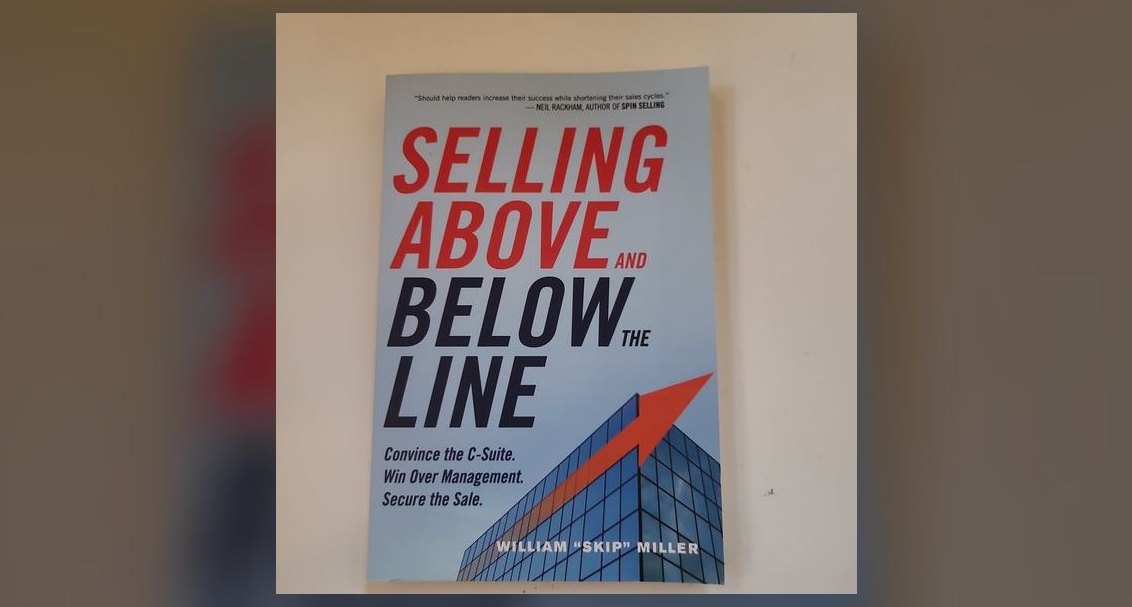 pulse-recentSelling Above and Below the Line by Skip Miller — Top 10 Key Takeaways for Sales Leaders in 2027
 pulse-recentWhat is the first concrete step in the Sandler Selling System for handling a prospect's initial brush-off in 2027?
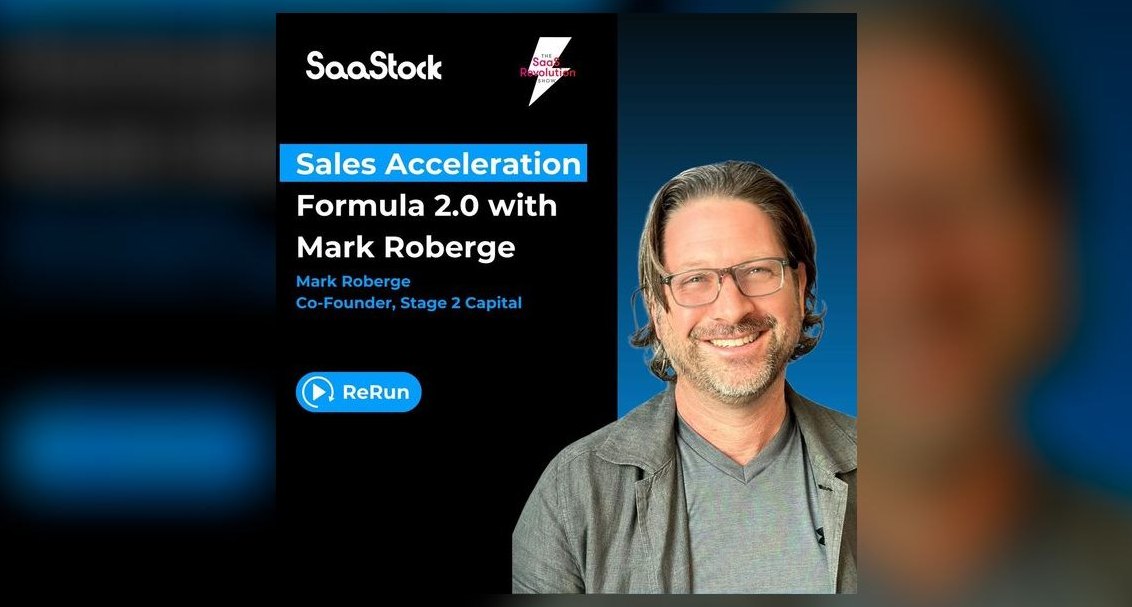 pulse-recentThe Sales Acceleration Formula by Mark Roberge — Top 10 Key Takeaways for Sales Leaders in 2027