


The Pumpkin Plan by Mike Michalowicz — Cliff Notes Summary
Quality
Certified

The Pumpkin Plan (Mike Michalowicz, 2012) borrows a prize-pumpkin grower's discipline: kill the weak vines so one giant thrives. Grade every client A through D, fire the worst, diagnose your Sweet Spot — unique strength × ideal customer × highest margin — then over-serve the survivors and replicate them through referrals. Concentration, not hustle, produces remarkable growth.
The agency that was busy, profitable on paper, and quietly dying
Picture a twelve-person marketing agency doing $2.1M in billings. On paper it looks healthy. Underneath, the founder is working sixty-hour weeks, the two best designers are threatening to quit, and the operating margin has slid from 22% to 9% over three years without a single lost account. Nothing broke. The business simply accumulated.
This is the exact condition Michalowicz writes for, and it is worth spending time in because the diagnosis is what makes the rest of the book usable. The agency has forty-one active clients. Eleven of them were signed in the first two years, when the founder took anything with a pulse. Those eleven pay 2019 rates, demand 2026 responsiveness, and consume roughly half the studio's production hours. Another dozen are decent — profitable, undemanding, forgettable. Six are genuinely excellent: they pay premium rates, they trust the recommendations, they refer, and they never call at 9 p.m. The remaining twelve sit somewhere in the mush.
The founder's instinct, and everyone's instinct, is to grow out of the problem. Hire two more producers, take on more work, dilute the bad accounts with volume. Michalowicz's argument is that this is precisely backwards, and the pumpkin metaphor is his device for making the backwardness visceral. A competitive grower does not plant more pumpkins to get a bigger one. The vine has a fixed sugar budget. Every pumpkin left on it is a claim against that budget. The 1,500-pound giants at the Topsfield Fair exist because a farmer walked the field with a knife and cut off everything else.
Apply the metaphor honestly and the agency's picture inverts. The founder's attention — not headcount, not cash — is the vine's sugar. The eleven legacy accounts are not "revenue we can't afford to lose." They are the reason the six excellent accounts get a junior producer and a status email instead of the founder's brain. The margin didn't erode because pricing got competitive. It eroded because the highest-value work is being subsidized by the highest-value person's time, which is being spent elsewhere.

The same shape appears far outside agencies. A regional HVAC contractor with 400 maintenance-plan customers, thirty of whom generate 70% of the replacement-equipment revenue. A boutique law firm where two partners' worth of billable capacity is absorbed by clients who dispute every invoice. A B2B SaaS company at $6M ARR where the ten largest logos each demanded a custom integration and the roadmap has not shipped a net-new feature in four quarters. In every case the underlying failure is identical: the organization is watering everything equally, and equal watering is a decision to starve the winners.
What makes the scenario framing matter is that it sets the success metric before the prescription arrives. The goal is not more revenue. It is more revenue per unit of founder attention, and the only lever available in the short run is subtraction.
How the mechanism actually works, step by step
The book's engine is a loop, not a list, and it helps to walk it as a sequence a practitioner can actually execute over one quarter.
Step one: grade every client A through D. Build a spreadsheet with one row per active account and score three columns. Column one is annual revenue. Column two is realized margin — revenue minus fully loaded delivery cost, including the hours nobody logs. Column three is a subjective 1–5 on how the relationship feels: payment behavior, scope discipline, respect for your process, willingness to take advice. A clients score high on all three. B clients are profitable but demanding. C clients hover around break-even and generate friction. D clients lose money, pay late, expand scope without expanding budget, and cost you staff.
The critical discipline is that column three carries real weight. Most firms rank by revenue alone, which is exactly how a D client ends up at the top of the list and becomes untouchable. Michalowicz's own numbers from his consulting practice — 47 clients, 4 rated A, those 4 driving 61% of profit on 12% of hours — only become visible when profit and friction are scored separately from revenue.
Step two: fire the D's. This is the chapter people skip. The mechanics are less dramatic than the language: a warm referral to a competitor who genuinely fits them better, a price correction to current rates that lets the client self-select out, or simply declining to renew. The printing-company case in the book is instructive because the fired account was the *top revenue* account — a D on every other dimension — and the replacement revenue arrived within ninety days from two A-grade prospects the owner finally had the bandwidth to chase.
Step three: diagnose the Sweet Spot. Three overlapping circles — what you uniquely do better than anyone, which customer profile values that most, and which offering carries the highest margin. The diagnostic is an interview, not a workshop. Sit with each A client and ask three questions: what do you actually buy from us, why did you pick us over the alternative, and what would you pay double for? The answers cluster tighter than any persona deck, and they are frequently surprising — firms routinely discover their A clients buy speed of decision, not creative quality, or buy risk absorption, not expertise.
Step four through seven: eliminate distractions, tend obsessively, make seeds. Kill the tangential service lines that exist because one client once asked. Call every A client monthly with one question — "what's annoying you this week that I might be able to fix?" — and act on the answer. Then, at the peak of a delivered win, ask for three introductions to people exactly like them. Feed the output back to step one.
The loop matters more than any single step. A firm that fires D clients but never documents the Sweet Spot will refill the roster with new D clients within eighteen months, because the intake filter never changed. Conversely, a firm that documents the Sweet Spot but cannot bring itself to prune has built a very precise description of work it does not have the capacity to take.
Real numbers: what the arithmetic actually looks like
The book's headline claim — fire your worst 20% and your top 80% grow 200% — is a rhetorical device, not a benchmark, and treating it as a forecast is the fastest way to get burned. The defensible version is narrower and more useful: pruning converts hidden delivery capacity into visible selling capacity, and the return depends entirely on how much of your cost base is attention rather than materials.
Run the agency's numbers. Forty-one clients, $2.1M billings, 9% operating margin, so roughly $189K of operating profit. The eleven legacy accounts contribute $410K of billings but consume an estimated 48% of production hours. Fully loaded delivery cost across the shop runs about $1.5M, so those accounts absorb roughly $720K of cost against $410K of revenue — a negative contribution of about $310K annually, masked because the top-line looks fine and nobody allocates cost by account.
Cut six of the eleven. Revenue drops roughly $230K. Cost drops roughly $400K. Operating profit moves from $189K to about $359K on lower revenue — and, critically, the founder recovers maybe fifteen hours a week. That recovered time is the actual asset. If a fraction of it goes into the wish list and closes two A-grade accounts at $120K each with 40% margins, the firm ends the year at roughly $2.1M again with margins near 17% and materially less strain.
Three ranges worth holding onto, stated as ranges because they vary enormously by model:
Concentration is real but rarely 80/20 exactly. Across professional services and B2B, top-decile accounts commonly deliver somewhere between half and three-quarters of profit. The distribution is more skewed for services (attention-bound) than for product businesses with low marginal delivery cost.
Warm introductions convert several multiples better than cold outbound. Referral-sourced pipeline routinely closes at rates many times cold-sourced pipeline, and shortens cycles. Treat the specific multiple as something to measure in your own CRM rather than a number to import — but the directional gap is large enough that reallocating even a few hours a week from cold prospecting to structured referral asks usually pays.
Firing is a cash-flow event before it is a margin event. Revenue disappears immediately; the cost savings lag by however long it takes to redeploy or reduce capacity. Plan on a trough of one to two quarters. This is why the phased approach — one D per month rather than all of them in a week — is the responsible reading of the book, and why a firm with under sixty days of runway should stabilize cash before pruning anything.
For a SaaS business the arithmetic changes shape. Marginal delivery cost is low, so an unprofitable account is unprofitable through support load, custom engineering, and roadmap distortion rather than direct cost. The measurement is support tickets per dollar of ARR, engineering hours logged against named accounts, and expansion rate by segment. The equivalent of firing is declining renewal, sunsetting a bespoke integration, or repricing the segment to reflect its true cost to serve. The pumpkin logic holds; the instrument changes.
Trade-offs, alternatives, and when concentration is the wrong strategy
Concentration is a bet, and the book undersells the downside. Deliberate honesty about the trade-offs makes the framework more useful, not less.
Concentration raises customer-concentration risk. A firm that goes from forty-one clients to twenty-two, with the top three at 40% of revenue, has traded margin for fragility. Losing one A client now hurts in a way it did not before. Acquirers price this in — customer concentration above roughly 20–25% in a single account tends to depress multiples or trigger earnouts. The mitigation is not to skip pruning; it is to run pruning and wish-list prospecting simultaneously so the denominator refills as the tail is cut.
Segment bets can go stale. Specializing in a vertical is powerful right up until that vertical has a bad cycle. Agencies that concentrated on crypto in 2021 or on venture-funded startups in 2021–2022 learned this. The Sweet Spot should be reviewed annually, and the wish list should include at least one adjacent segment as a hedge.
Pruning is not the only lever, and sometimes not the best one. Three genuine alternatives:
*Reprice instead of fire.* Many D clients are D's because of price, not character. A rate correction to current market often converts a D into a B or removes them without a difficult conversation. This is usually the first thing to try, and the book is too quick to reach for the knife.
*Productize instead of prune.* If the low-margin work is repeatable, the answer may be to strip it to a fixed-scope, fixed-price package delivered by junior staff or software, rather than to eliminate it. A bookkeeping firm that turns its worst hourly clients into a $400/month standardized package can keep the revenue and reclaim the partner's time — a Clockwork-style systemization answer rather than a Pumpkin Plan answer.
*Segment and route.* Larger organizations rarely fire; they tier. Enterprise gets a named CSM, mid-market gets pooled coverage, SMB gets self-serve and documentation. This is the Top-Client Assessment implemented as an operating model instead of an exit list, and it is what most companies above roughly fifty employees actually do.
The honest summary: the Pumpkin Plan is a strategy for attention-constrained businesses under roughly fifty people, where the founder is the bottleneck and subtraction is the only fast lever. Above that size, the same diagnosis usually resolves into tiering and pricing architecture rather than firing. The book's insight survives the translation; its scripts do not.
The pitfalls that turn a good prune into a bad quarter
Grading on revenue alone. The single most common failure. If the spreadsheet only has a revenue column, the biggest logo lands at the top and the exercise confirms the status quo. Force the margin and friction columns, and force yourself to estimate unlogged hours honestly — the "quick call" that happens three times a week is a line item.
Firing everything at once. The book's energy encourages a purge. Cash flow does not care about your energy. Phase it: one D per month for a quarter, starting with the smallest, so you learn the conversation on low stakes before you have it with a $200K account. Track the cash trough explicitly and have a floor you will not cross.
Skipping the Sweet Spot diagnostic and going straight to the wish list. A wish list built from imagination is a list of logos you find impressive. A wish list built from the A-client interviews is a list of companies that share a buying condition — the same trigger event, the same internal politics, the same reason your particular strength matters. The second list converts; the first is a vanity exercise that burns a quarter of business development.
Over-serving into unprofitability. "Tend obsessively" is not "give it away." Over-serving means proactive attention, faster response, and unrequested insight — not unbilled scope. Firms that read this chapter literally sometimes convert A clients into C clients by absorbing work that should have been a change order. The monthly question is a listening device, not a blank check.
Asking for referrals at the wrong moment. The three-referral ask works at the peak of a delivered win, framed specifically: not "know anyone who needs us," but "you mentioned the ops director at [peer company] has the same reporting problem — would you introduce us?" Vague asks produce polite deflection. Specific, named, timed asks produce meetings.

Failing to change the intake filter. If nothing changes about who you say yes to, the D population regenerates. Write the disqualification criteria down, share them with whoever takes inbound calls, and enforce a minimum engagement size. The prune is a one-time cleanup; the filter is the permanent fix.
Confusing a difficult client with a bad client. Some demanding accounts are demanding because they are ambitious, and they pay for it. The friction score is about respect and scope discipline, not about intensity. Firing a hard, high-standards, high-margin client because they are exhausting is how firms accidentally amputate their reference accounts.
Ignoring the staff signal. Before the spreadsheet says anything, your team already knows which accounts are D's. Ask the delivery team to independently grade the roster and compare. Where the founder's list and the team's list disagree, the team is usually right, because they absorb the friction the founder is insulated from.
Where the book holds up and where it shows its age in 2026
The core thesis has aged well, arguably better than the market it was written for. Product-led companies execute the Pumpkin Plan instinctively through telemetry: identify the account shape that activates several times faster than average, aim onboarding and pricing at that shape, and let mismatched accounts churn without a save campaign. Customer health scoring in tools like Gainsight, Totango, or ChurnZero is the Top-Client Assessment automated, and subscription analytics platforms surface negative-contribution accounts within a quarter of signing rather than three years later. The instrumentation Michalowicz did not have makes his framework easier, not obsolete.
What has aged is the execution layer. The firing scripts read as 2012 — a services world of month-to-month relationships and single decision-makers. Fire a modern SaaS customer mid-contract with an annual commitment, a shared Slack channel, and three champions who will land somewhere else next year, and you have bought a reputational problem. The 2026 translation is "decline the renewal, offer a clean migration path, and stay a good reference." Same outcome, different verb.

The book also predates the tooling that surfaces the "what's annoying you this week" signal without a phone call — support-ticket sentiment, call-recording analysis, product telemetry that shows a champion's usage decaying six weeks before they say anything. That does not remove the monthly call; it changes what you bring to it. Arriving with "I noticed your team stopped using the reporting module in March — what happened?" is a categorically better conversation than an open-ended check-in.
One more limitation worth naming: the book is written for owner-operated businesses, and its emotional argument depends on the owner personally feeling the drag of bad clients. Inside a larger company, the person who would fire the account is not the person who feels the pain, and the incentive structure usually rewards logo retention. Implementing Pumpkin Plan logic there requires changing what the CS team is compensated on before changing the client roster — otherwise the framework dies at the first QBR.
The through-line, and the reason this Cliff Notes summary of the strategy is worth keeping on the shelf: Michalowicz built a small-business decision rule for *which* customers deserve rigor, which is the question that enterprise frameworks like Challenger and MEDDPICC assume has already been answered. Pair the two and you get a complete system — the Pumpkin Plan chooses the field, the qualification frameworks work the field.
Related questions
Does firing clients actually work, or is it survivorship bias?
Both. Published cases are self-selected successes. The defensible mechanism is that attention freed from negative-contribution accounts gets redeployed into selling and delivery quality. Whether it pays depends on whether you actually redeploy it — pruning without a wish list just shrinks the business.
How does this differ from Profit First?

Profit First is a cash-allocation system — take profit off the top before expenses. The Pumpkin Plan is a customer-portfolio system. They stack: the Pumpkin Plan raises the margin, Profit First ensures the margin survives contact with the operating account.
What if I only have one large client?
Then pruning is not your problem — concentration risk is. Run the Sweet Spot diagnostic on that single account to document what makes it work, then build the wish list of companies that look exactly like it. Diversify toward the profile, not away from it.
Can a sales team apply this without owning the P&L?
Yes, at the territory level. Grade the book of business by margin and friction, stop working the D accounts, and reinvest the hours in named wish-list targets. The constraint is comp plan design — if quota is pure revenue, the rep is paid to keep the D's.
How long before pruning shows in the numbers?
Expect one to two quarters of flat or declining revenue while the cost savings catch up and replacement pipeline builds. Margin usually moves first, top line second. Firms that measure success at thirty days conclude it failed.
FAQ
What is the main idea of The Pumpkin Plan?
Grow a remarkable business by pruning rather than adding. Competitive pumpkin growers cut every pumpkin off the vine except one so the plant's entire sugar supply concentrates into a single giant. Michalowicz argues a business works the same way: your attention is the sugar, and spreading it evenly across every client guarantees no account ever becomes remarkable. Cut the worst, concentrate on the best.
How do I identify my best customers?
Use the Top-Client Assessment. List every active account and score three dimensions independently: revenue, realized margin after fully loaded delivery cost, and a subjective rating of how the relationship behaves — payment timeliness, scope discipline, respect for your process. A clients score well on all three. The independence of the three columns is what makes the exercise work; ranking by revenue alone reproduces the problem you are trying to solve.
Should I fire bad clients all at once?
No. Phase it — roughly one per month over a quarter or two, starting with the smallest so you learn the conversation at low stakes. Revenue disappears immediately while cost savings lag, so a mass purge creates a cash trough exactly when you need runway to pursue replacements. Set a cash floor you will not cross and stop if you approach it.
Is this only for small businesses?
It is written for owner-operated businesses under roughly fifty people, where the founder is the bottleneck and subtraction is the fastest lever. Larger organizations apply the same diagnosis differently: they tier service levels, reprice segments, and route low-value accounts to self-serve rather than firing anyone. The analysis transfers cleanly; the prescription needs translating.
How is this different from the 80/20 principle?
Pareto describes a distribution. The Pumpkin Plan prescribes an action against it — actively remove the bottom rather than merely noticing the top — and adds the Sweet Spot diagnostic, which tells you *why* your best clients are your best clients so you can find more of them. Pareto is a measurement; this is an operating loop.
What are the seven steps?
Plant promising seeds (focus on a few strategic customer types), water and feed (over-serve the top), weed out the diseased pumpkins (fire bad-fit clients), identify and nurture the biggest pumpkin (make the Sweet Spot profile your North Star), eliminate distractions (kill tangential offerings), tend obsessively (over-serve until they become references), and make seeds (replicate the profile through referrals).
Sources
- https://mikemichalowicz.com/the-pumpkin-plan/
- https://www.penguinrandomhouse.com/books/310431/the-pumpkin-plan-by-mike-michalowicz/
- https://www.goodreads.com/book/show/13330872-the-pumpkin-plan
- https://hbr.org/2014/10/the-value-of-keeping-the-right-customers
- https://www.gartner.com/en/sales/topics/ideal-customer-profile
- https://www.investopedia.com/terms/1/80-20-rule.asp
- https://www.gainsight.com/glossary/what-is-customer-health-score/
- https://www.sba.gov/business-guide/manage-your-business/grow-your-business
Related on PULSE
- Profit First by Mike Michalowicz — Cliff Notes Summary for Sellers
- Clockwork by Mike Michalowicz — Cliff Notes Summary
- The 1-Page Marketing Plan by Allan Dib — Cliff Notes Summary
- New Sales. Simplified. by Mike Weinberg — Cliff Notes Summary for AEs
- Sales Management. Simplified. by Mike Weinberg — Cliff Notes Summary
- Sales Truth by Mike Weinberg — Cliff Notes Summary
This page will be disappearing soon. Save it to your device for $1 — or read it free while it is here.
@Kory-White- · if Venmo asks, the last 4 of my number are 2012
This page is gone.
This one is off the shelf now. $1 keeps it on your phone for good — the whole page, pictures and diagrams included.
 pulse-recentWhat are the concrete steps in Sandler Rule #7 for handling a prospect's budget objection in 2027?
 pulse-recentWhat are the seven concrete steps to implement the Sandler Submarine technique from The Sandler Rules in 2027?
 pulse-recentProActive Selling by Skip Miller — Top 10 Key Takeaways for Sales Leaders in 2027
 pulse-recentHow does *The New Strategic Selling* define the first step in qualifying an opportunity in 2027?
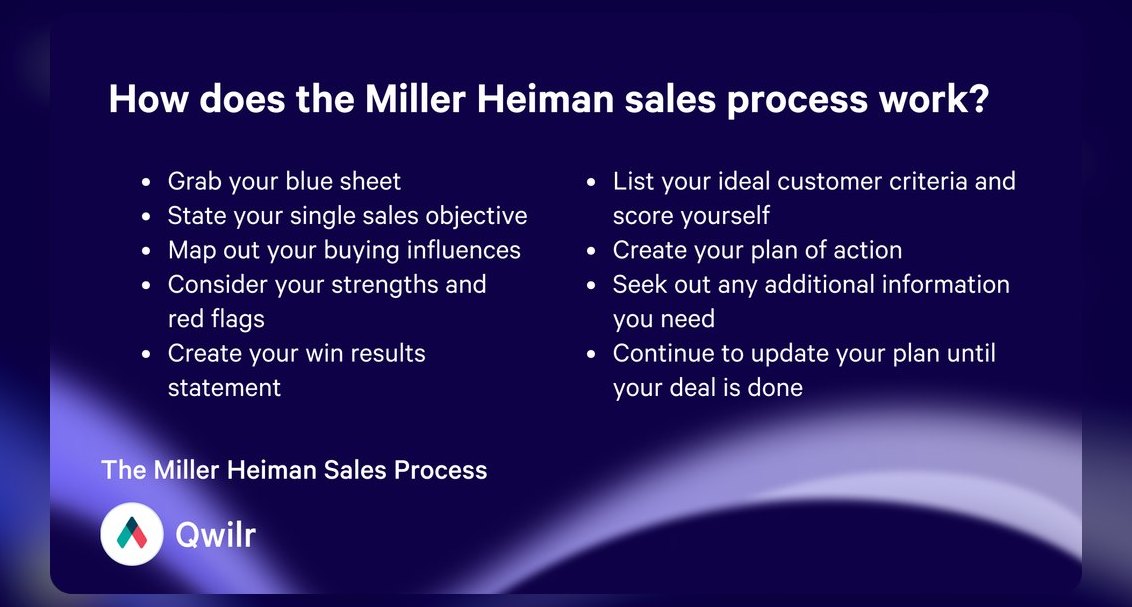 pulse-recentWhat is the step-by-step process for Strategic Selling by Miller Heiman in 2027?
 book-summaryMajor Account Sales Strategy by Neil Rackham: Summary, Key Lessons, and RevOps Takeaways
 pulse-recent$100M Offers by Alex Hormozi — Top 10 Key Takeaways for Sales Leaders in 2027
 pulse-recentNever Lose a Customer Again by Joey Coleman — Top 10 Key Takeaways for Sales Leaders in 2027
 pulse-recentWhat is the first concrete step in The Sandler Rules by David Mattson for building a sales plan in 2027?
 pulse-recentSales Engagement by Manny Medina — Top 10 Key Takeaways for Sales Leaders in 2027